
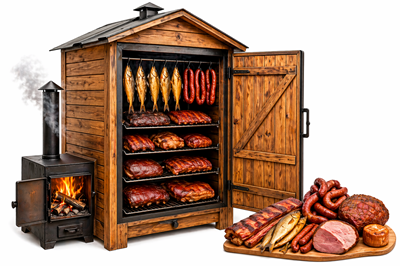
Building a Smokehouse is a practical survival-focused guide that explains how to construct and operate a small smokehouse for preserving meat without electricity. The document focuses on creating a low-cost, highly efficient meat drying and smoke-curing system using either cinder blocks or a repurposed refrigerator connected to a separate underground firebox. The guide emphasizes that smokehouses are extremely useful for producing jerky, smoked meats, hams, bacon, and other preserved foods while using far less wood and labor than traditional outdoor drying racks. One of the major advantages highlighted is the ability to operate continuously day and night while protecting meat from weather, insects, and moisture.
The guide provides detailed instructions for converting an old refrigerator into a functional smokehouse. It explains how to remove plastic components, rubber gaskets, compressors, and insulation materials before installing intake and exhaust pipes for airflow control. The document describes how the smokehouse works by pulling slightly warmed smoke from a separate underground firebox through natural convection. Proper airflow, low temperatures, and controlled smoke production are emphasized to prevent overheating the meat and ruining the drying process. The guide repeatedly warns that maintaining a very small hardwood fire is critical, especially when making jerky. Fruit woods are recommended because they produce cleaner smoke and better flavor.
A major portion of the document focuses on firebox design and temperature regulation. The firebox is ideally constructed underground using firebrick or concrete and connected to the smokehouse by masonry pipe angled slightly upward to promote airflow. The earth surrounding the firebox and pipe acts as a natural heat sink, helping cool the smoke before it reaches the meat. The guide explains how adjustable draft vents control oxygen flow and regulate heat levels while minimizing creosote buildup. It also describes the importance of maintaining low drying temperatures for jerky and slightly higher temperatures—around 130°F—for smoke-curing hams, bacon, and other meats.
The final sections explain practical operating techniques for long-term food preservation. The smokehouse can be used year-round, including during winter when outdoor drying racks are impractical. Instructions are included for opening the smokehouse door during sunny daytime conditions to aid drying while closing it at night to retain warmth and reduce moisture exposure. The guide also explains traditional salt-curing and sugar-curing methods used before smoking meats for long-term storage without refrigeration. Overall, the document serves as a straightforward preparedness and homesteading guide for preserving meat using traditional smoke-curing methods with minimal modern technology.
© Prepping Communities. This content is for informational purposes only and not professional advice. Use at your own risk.
Terms | Privacy | Guidelines