
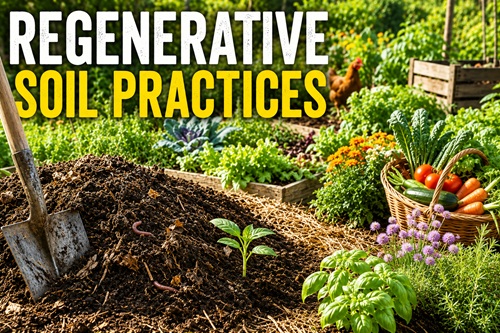
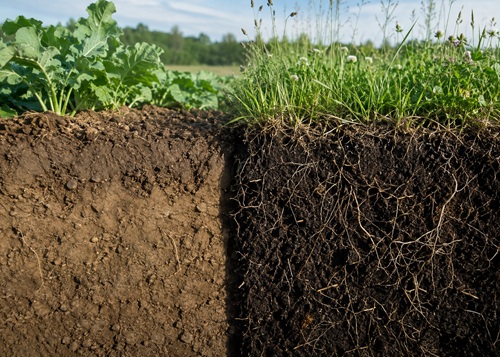
Healthy soil is the foundation of a productive garden. It does much more than hold plants in place. Beneath the surface is a living community of bacteria, fungi, earthworms, insects, plant roots, organic matter, air, and water. When these parts work together, nutrients become available to plants, water moves through the ground more effectively, roots can spread more easily, and the garden becomes better able to handle periods of heat, drought, and heavy rain.
Regenerative gardening is really about helping those natural soil processes continue rather than constantly replacing them with outside inputs. The idea is simple: protect the soil, return organic material to it, keep it biologically active, and avoid disturbing it more than necessary. Over time, these practices can create a garden that requires fewer purchased amendments while becoming more productive and resilient.
Build the Soil With Compost
One of the easiest places to start is compost. Much of what comes out of a garden can eventually go back into it. Vegetable scraps, old plants, leaves, grass clippings, straw, and other suitable organic materials can be broken down and returned to the soil instead of being discarded.
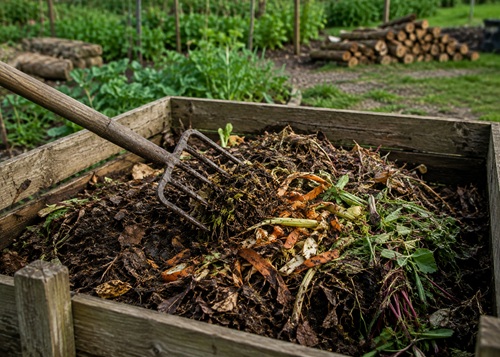
A compost pile works best when it contains a mixture of moist, nitrogen-rich material and dry, carbon-rich material. Fresh plant material, vegetable scraps, and grass clippings provide nitrogen, while dry leaves, straw, shredded cardboard, and similar materials provide carbon. There is no need to become obsessed with achieving a perfect ratio. A good mixture of both, enough moisture to keep the pile similar to a wrung-out sponge, and adequate airflow will usually get decomposition moving.
Turning the pile occasionally introduces oxygen and mixes material from the cooler outside edges into the center. Eventually, recognizable scraps disappear and the pile becomes dark, crumbly material with an earthy smell. That finished compost can be spread over garden beds where soil organisms gradually incorporate it into the ground.
Keep Bare Soil to a Minimum
Look at an undisturbed natural environment and there is usually very little exposed soil. Leaves, grasses, plants, fallen branches, and other organic material protect the ground. A garden benefits from similar protection.
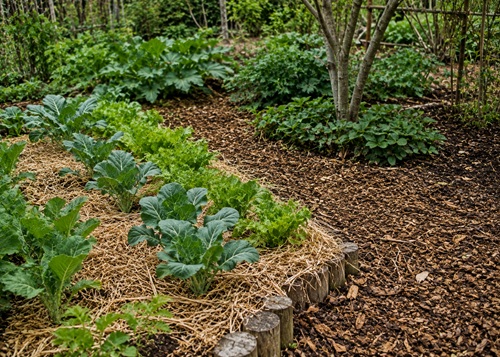
Mulch shields the soil from direct sunlight and reduces moisture loss during hot weather. It also softens the impact of heavy rain, reduces erosion, limits soil splashing onto plants, and makes it harder for many weeds to become established.
Straw, shredded leaves, untreated grass clippings, compost, wood chips, and other locally available organic materials can all be useful. The best material depends on where it is being used. Wood chips, for example, work particularly well around pathways, shrubs, trees, and perennial areas, while straw and shredded leaves are often convenient around annual vegetables.
A few inches of mulch is usually enough to provide protection without burying smaller plants. Leave some space immediately around stems and trunks so moisture isn’t constantly trapped against them. As organic mulch decomposes, it becomes another source of organic matter for the soil.
Grow Something for the Soil
Not everything planted in a garden has to end up on the dinner table. Cover crops are grown primarily because of what they can do for the ground.
A cover crop keeps living roots in the soil when a garden bed would otherwise be empty. Those roots help hold soil together, feed microorganisms, capture nutrients, and contribute organic matter when the plants eventually die or are cut down. Above ground, the vegetation protects the surface from wind, rain, and excessive sunlight.
Some legumes, including certain peas, beans, clovers, and vetches, can contribute nitrogen to the system through their relationship with nitrogen-fixing bacteria. Other cover crops produce large amounts of biomass or develop roots that help improve soil structure.
The best cover crop depends on climate, season, and what will be planted afterward. The important point is to avoid leaving productive soil exposed for long periods when something beneficial could be growing there.
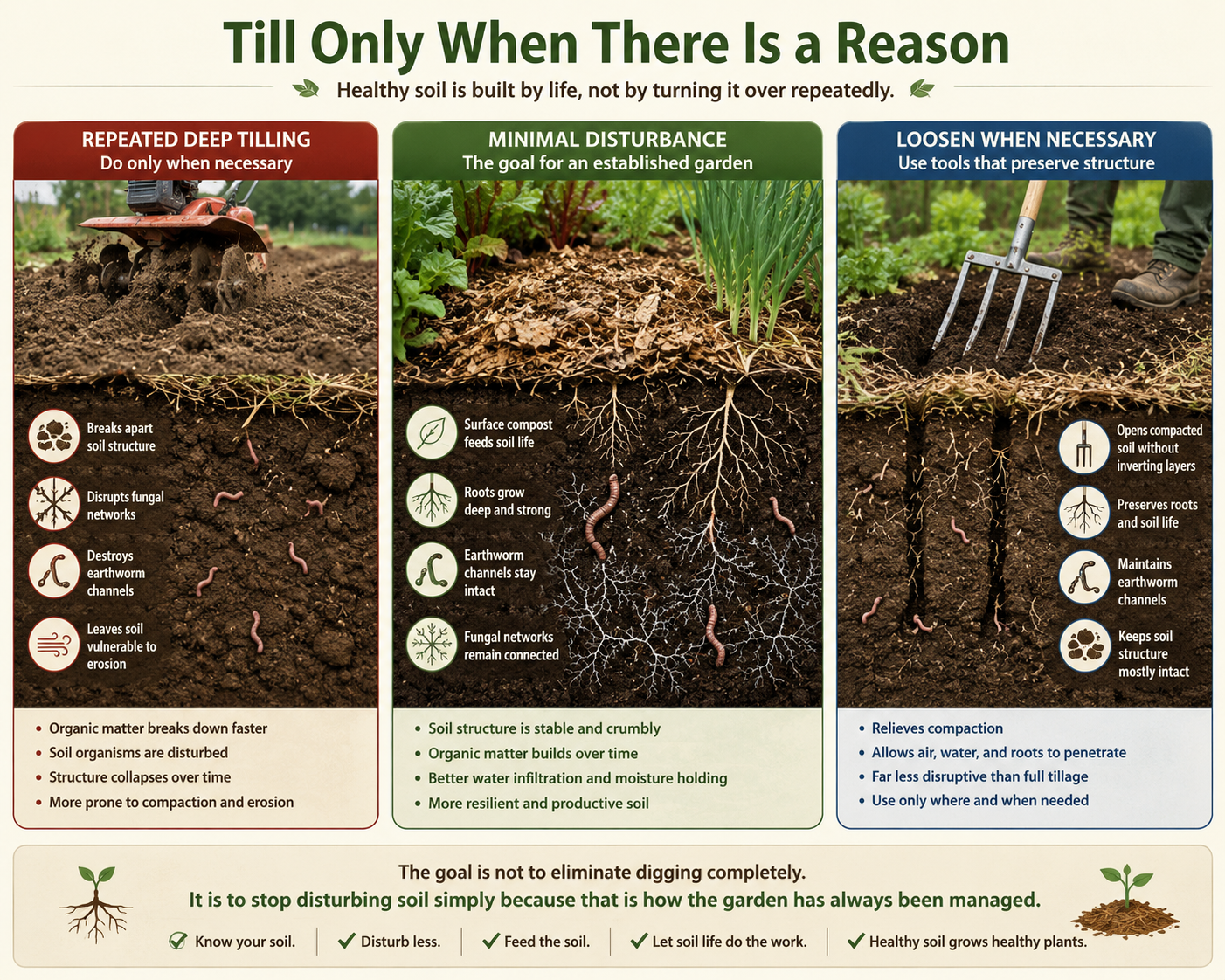
Till Only When There Is a Reason
Tilling isn’t automatically bad. A new garden may need to be established, heavily compacted soil may need attention, or amendments may occasionally need to be incorporated. Problems begin when deep tilling becomes an automatic yearly routine whether the soil needs it or not.
Repeated intensive tillage breaks apart soil structure and disrupts many of the organisms living beneath the surface. Fungal networks are torn apart, earthworm channels are destroyed, organic matter can break down more quickly, and freshly exposed soil becomes vulnerable to erosion.
Once a garden is established, considerably less disturbance may be necessary. Compost can often be added to the surface and allowed to work downward naturally. Plant roots, earthworms, insects, rainfall, freezing and thawing, and microorganisms all help move organic material through the upper layers.
When soil needs loosening without being completely turned over, a garden fork or broadfork can sometimes be used to open compacted ground while leaving much of the soil structure intact.
The goal isn’t to eliminate digging completely. It is to stop disturbing soil simply because that is how the garden has always been managed.
Rotate What You Grow
Growing the same vegetables in the same place year after year can create problems. Certain insects and diseases are associated with particular plant families, and repeatedly providing their preferred host in the same location can make it easier for those problems to persist.
Crop rotation changes that pattern. Tomatoes, peppers, potatoes, and eggplants, for example, are related plants. Moving from tomatoes one year to peppers the next isn’t much of a rotation from the perspective of pests and diseases that affect that plant family.
Where space permits, move entire plant families between different beds or sections of the garden. A three- or four-year rotation is useful for many crops, but a small garden doesn’t need to achieve a perfect rotation to benefit. Simply avoiding the same crop in exactly the same location every year is a worthwhile improvement.
Keeping a basic garden record makes this much easier. A quick sketch, photograph, or simple map showing what grew in each bed can save a lot of guessing the following spring.
Encourage Diversity in the Garden
A garden filled with different vegetables, herbs, flowers, and perennial plants creates a much more varied environment than one dominated by a single crop. Different plants flower at different times, develop roots at different depths, attract different insects, and use nutrients in different ways.
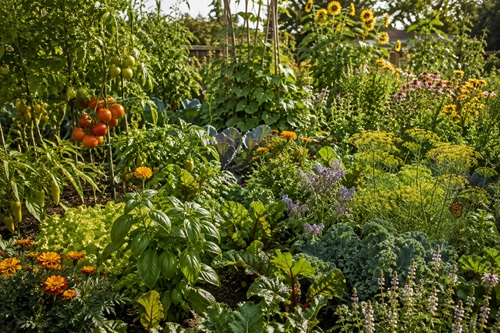
This is where companion planting can be useful, but it doesn’t need to become complicated. There are plenty of claims that one particular plant will magically protect another, and many of those claims are exaggerated. The more dependable principle is diversity.
Flowers and herbs mixed throughout the garden can provide food and habitat for pollinators and predatory insects. Different plant heights can make better use of available space, while varied root systems occupy different portions of the soil.
Instead of searching for the perfect companion for every vegetable, concentrate on building a garden containing many different kinds of plants.
Return Animal Nutrients to the Land
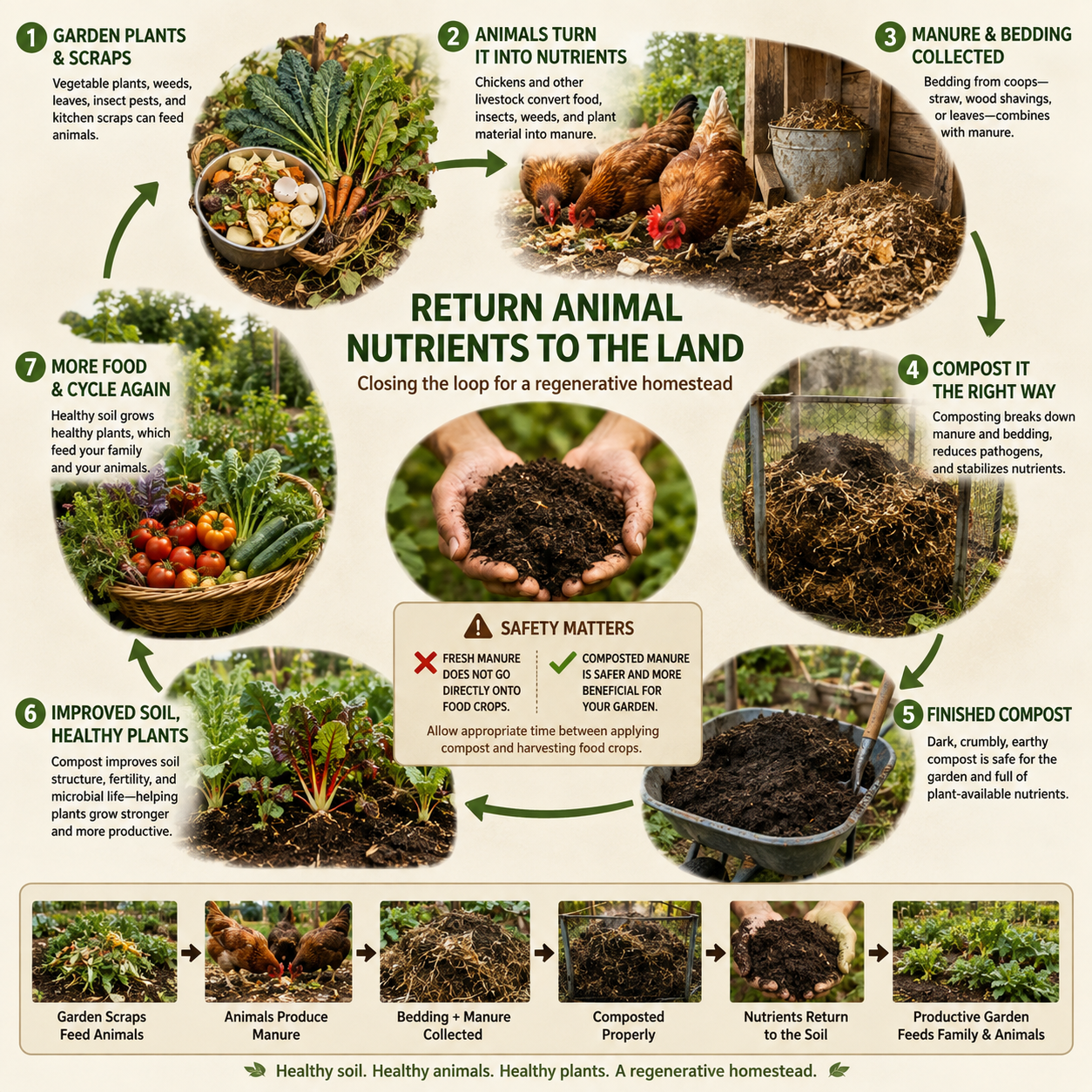
Animals can also become part of a regenerative system. Chickens and other livestock turn food, insects, weeds, and plant material into manure that contains nutrients useful to plants.
Bedding from chicken coops can be particularly valuable because it combines manure with carbon-rich materials such as straw or wood shavings. Rather than moving directly from the coop to vegetable beds, the material can be composted until it has broken down properly.
Fresh manure needs to be handled carefully around food crops because it can contain microorganisms capable of causing illness. Composting manure correctly and allowing appropriate time between manure application and harvesting food reduces that risk.
When managed properly, animals help close another loop on a homestead. Garden material can help feed animals, animal waste can become compost, compost improves the soil, and healthier soil produces more plants.
Compost Tea Isn’t Essential
Compost tea is sometimes promoted as an important part of regenerative gardening, but a garden doesn’t depend on it. Good soil management begins with much simpler practices: finished compost, organic matter, mulch, living roots, plant diversity, and sensible watering.
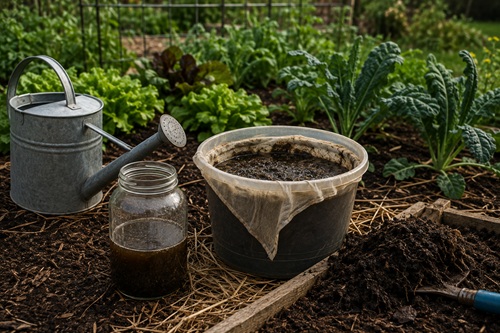
If compost tea is used, it should be made from properly finished compost with clean equipment. Homemade mixtures should also be handled carefully around vegetables that will be eaten raw because poorly prepared compost products can potentially introduce unwanted microorganisms.
For most home gardens, putting quality compost directly onto the soil is easier and provides a dependable way of adding organic material.
Think About the Soil, Not Just the Plant
It is easy to look at a struggling tomato or pepper plant and immediately reach for fertilizer. Sometimes fertilizer is appropriate, but regenerative gardening encourages looking a little deeper.
Compacted soil, poor drainage, insufficient organic matter, excessive watering, exposed ground, or weak biological activity can all affect plant growth. Adding more fertilizer doesn’t necessarily correct those underlying problems.
The longer-term objective is soil that can hold moisture while still draining excess water, allows roots to penetrate easily, contains plenty of organic matter, supports active soil life, and remains protected from erosion and extreme temperatures.
That kind of soil isn’t created in a weekend. It develops gradually as organic material is returned, plants grow and die, roots move through the ground, microorganisms multiply, and unnecessary disturbance is reduced.
Preparedness Action Plan
Start by looking at the soil already in the garden. Notice where it dries quickly, where water collects, where weeds dominate, where the surface remains bare, and where the ground becomes hard or compacted. Those observations provide more useful information than simply adding another bag of fertilizer.
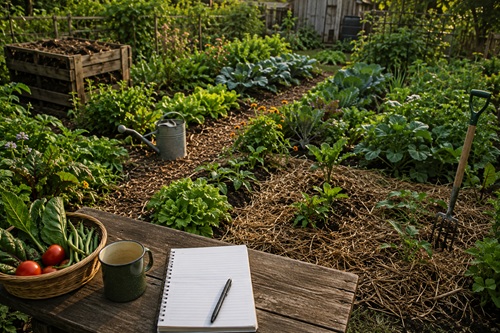
Choose a few improvements that can become normal parts of the gardening routine. Compost garden and kitchen waste. Cover exposed soil with organic material. Keep records of where crops are grown. Rotate plant families where space allows. Grow cover crops during unused periods and reduce unnecessary tilling.
The objective isn’t to create a perfect regenerative garden. It is to make the soil a little better every year.
For a preparedness garden, that matters. A garden that depends heavily on bags of fertilizer, purchased soil, and constant outside inputs is vulnerable when those supplies become expensive or unavailable. Building fertility directly into the soil creates a garden that is increasingly capable of supporting itself.
Key Takeaways
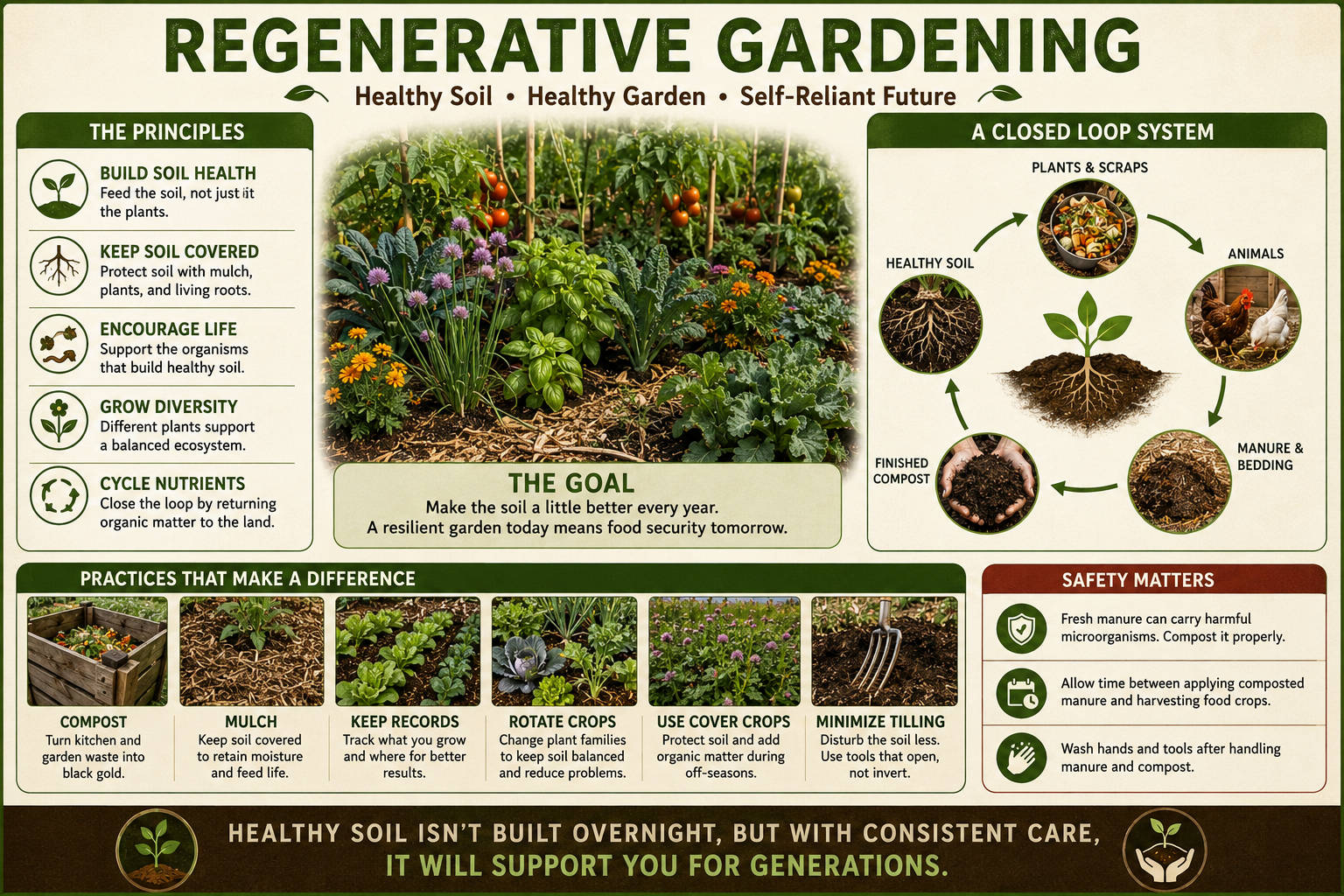
Regenerative soil management comes down to protecting and rebuilding the living system beneath the garden. Compost returns organic matter. Mulch protects the surface and conserves moisture. Cover crops keep roots working in the soil when vegetable beds would otherwise be empty. Reduced tillage preserves soil structure. Crop rotation helps limit recurring pest and disease problems, while greater plant diversity supports a wider range of beneficial organisms.
None of these practices needs to be complicated. The real benefit comes from using them consistently and allowing their effects to accumulate.
Good soil is something a gardener can build, and every season provides another opportunity to leave it in better condition than it was before.
© Prepping Communities. This content is for informational purposes only and not professional advice. Use at your own risk.
Terms | Privacy | Guidelines