
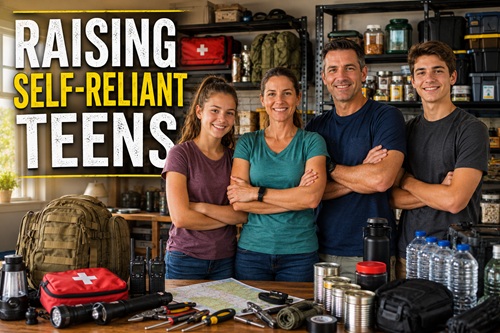
Parents naturally want to protect their children, but one of the greatest gifts they can provide is the ability to become independent. In today’s world, many teenagers graduate from high school with strong academic knowledge but little experience managing money, preparing meals, repairing household items, responding to emergencies, or solving everyday problems on their own. These practical skills are rarely emphasized in modern education, yet they form the foundation of confident, capable adults.
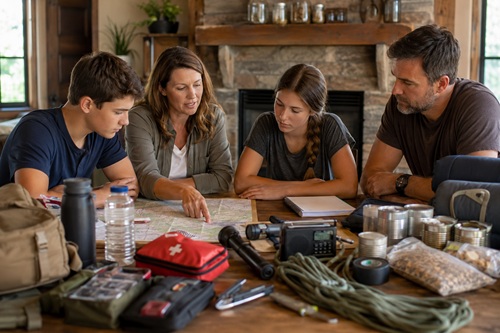
For preparedness-minded families, teaching these skills is just as important as storing food, collecting emergency supplies, or creating evacuation plans. Supplies can eventually be used up, lost, or damaged, but knowledge stays with a person for life. Every skill a teenager learns becomes another layer of resilience that strengthens both the individual and the family. The goal is not to prepare teenagers for disaster alone—it is to prepare them for life.
Financial Responsibility Builds Freedom
Learning how to manage money is one of the most valuable preparedness skills a teenager can develop. Financial emergencies happen far more frequently than natural disasters, and understanding how to budget, save, and spend wisely provides stability throughout adulthood. Teenagers should learn how to distinguish between needs and wants, understand the importance of saving before spending, and recognize that every financial decision has long-term consequences.
Parents can gradually introduce these lessons by allowing teenagers to manage portions of their own finances. Whether it’s earning money through part-time work, saving for a major purchase, or maintaining a monthly budget, real-world experience teaches lessons that cannot be learned from a textbook. As they become more comfortable with financial responsibility, they can also learn about banking, credit, investing, insurance, taxes, and the importance of maintaining an emergency savings fund. These habits not only improve financial security but also provide the confidence needed to navigate life’s unexpected challenges.
Cooking Is One of the Most Practical Survival Skills
Everyone needs to eat, yet surprisingly few young adults leave home knowing how to prepare healthy meals from basic ingredients. Cooking is about much more than following recipes. It teaches planning, organization, cleanliness, nutrition, patience, and resource management.
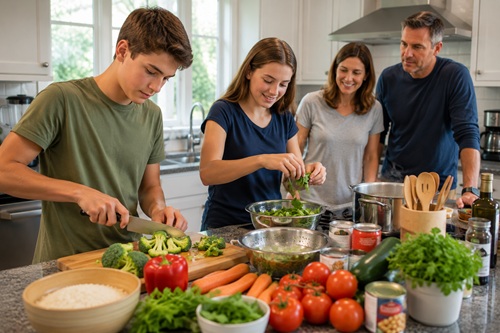
Teenagers should become comfortable preparing several complete meals without relying on processed convenience foods. Learning how to safely use kitchen knives, cook meat to proper temperatures, bake bread, prepare vegetables, and safely store leftovers creates confidence that lasts a lifetime. As their abilities grow, introduce them to cooking with shelf-stable foods such as rice, beans, canned vegetables, dehydrated foods, and long-term food storage ingredients. During emergencies, these foods often become the backbone of a family’s pantry, making familiarity with them an essential preparedness skill.
Understanding Basic First Aid Saves Lives
Accidents happen every day, and knowing how to respond quickly can prevent a minor injury from becoming something much more serious. Every teenager should understand how to clean and dress wounds, recognize signs of infection, treat burns, manage sprains, stop bleeding, and respond appropriately to choking or allergic reactions.
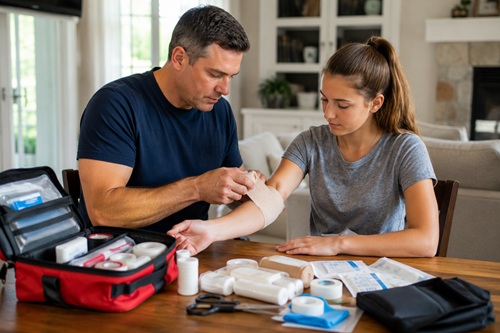
Formal first aid and CPR training provide valuable hands-on experience that can be used throughout life. Beyond certification, families should occasionally practice emergency scenarios together. Discuss what to do if someone falls, suffers heat exhaustion, experiences severe bleeding, or becomes unresponsive. Repetition builds confidence, and confidence reduces panic when every second matters.
Learning to Maintain a Home Creates Independence
Every home requires maintenance, and teenagers benefit greatly from understanding how household systems work. Learning where the electrical panel is located, how to safely reset a breaker, shut off the main water valve, replace furnace filters, unclog drains, and use common hand tools develops both confidence and practical problem-solving skills.
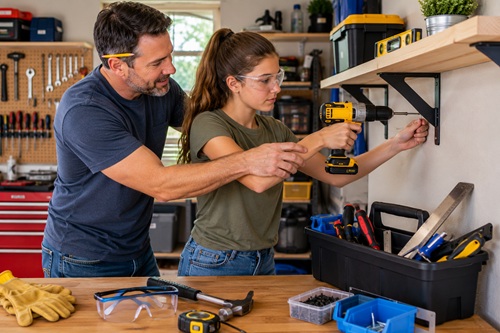
Rather than completing every household repair yourself, involve teenagers whenever possible. Allow them to help assemble furniture, paint walls, repair fences, install shelving, or complete seasonal maintenance tasks. These experiences teach patience, attention to detail, and the satisfaction that comes from solving problems independently.
Vehicle Knowledge Prevents Bigger Problems
Driving represents freedom, but owning and operating a vehicle also comes with responsibility. Teenagers should understand basic maintenance long before they receive their driver’s license.
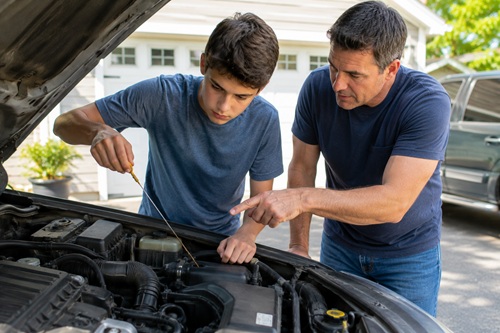
Simple tasks such as checking tire pressure, monitoring oil levels, replacing windshield wipers, changing a flat tire, and recognizing dashboard warning lights can prevent expensive repairs and reduce the likelihood of becoming stranded. Understanding how a vehicle functions also encourages preventative maintenance, which improves both safety and reliability.
Emergency Planning Should Become Second Nature
Preparedness plans only work if every family member understands them. Teenagers should know where emergency supplies are stored, how to contact family members if communication systems fail, where to meet during an evacuation, and what responsibilities they have during different types of emergencies.
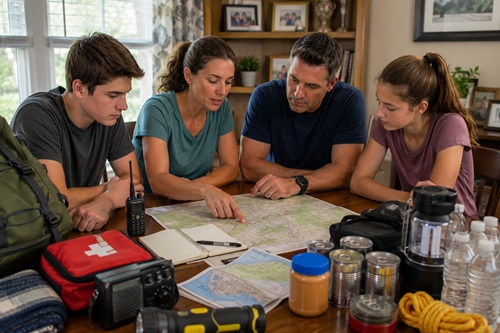
Encourage each teenager to assemble and maintain their own emergency backpack containing clothing, water, food, first aid supplies, flashlights, batteries, important documents, and other essentials. Reviewing these plans together several times each year helps ensure everyone knows what to do without hesitation.
Situational Awareness Prevents Many Emergencies
One of the most overlooked preparedness skills is simply paying attention. Situational awareness involves recognizing potential hazards before they become dangerous and making good decisions based on what is happening around you.
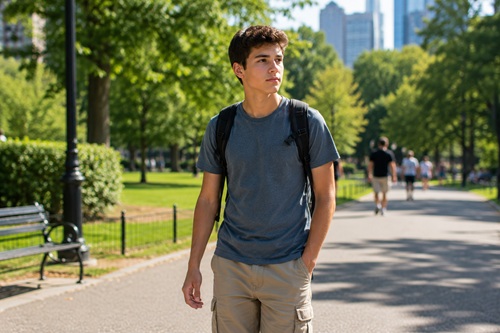
Teach teenagers to observe their surroundings, identify emergency exits in unfamiliar buildings, avoid unnecessary distractions while walking, and trust their instincts when something feels wrong. Good awareness often prevents accidents, theft, or dangerous encounters long before they develop into emergencies.
Digital Security Is Modern Preparedness
Today’s threats are not limited to storms and power outages. Identity theft, online scams, phishing attacks, and social engineering have become common risks that affect millions of people every year.

Teenagers should understand how to create strong passwords, recognize suspicious emails and text messages, protect personal information, and use social media responsibly. They should also understand that information shared online can remain accessible for many years. Developing good digital habits early protects both personal privacy and financial security.
Time Management Leads to Success
Preparedness depends upon planning ahead, and effective planning requires good time management. Teenagers who learn how to organize their schedules, prioritize responsibilities, and complete tasks before deadlines experience less stress and become more dependable adults.
Using calendars, planners, and simple to-do lists helps develop organizational habits that benefit school, employment, and family life. Learning to break large projects into smaller, manageable steps also reduces procrastination and improves productivity.
Communication and Leadership Strengthen Every Family
Preparedness is rarely an individual effort. Families, neighbors, and communities often work together during difficult times, making communication an essential life skill.
Teenagers should learn how to communicate respectfully, listen carefully, ask thoughtful questions, resolve disagreements peacefully, and express themselves with confidence. Leadership often begins with effective communication, and teenagers who develop these skills become valuable contributors both at home and within their communities.
Physical Fitness Supports Every Preparedness Goal
Physical health influences nearly every aspect of preparedness. Whether carrying supplies, hiking to safety, working in the garden, chopping firewood, or helping others during an emergency, strength and endurance make everyday tasks easier.
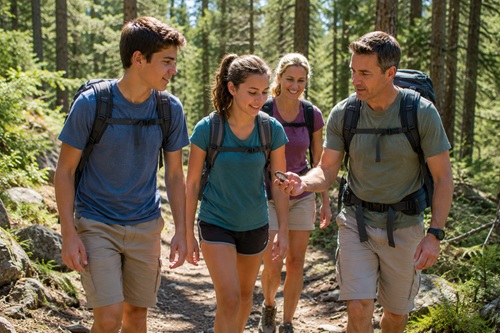
Encouraging regular physical activity, outdoor recreation, hiking, cycling, swimming, strength training, or martial arts builds both physical ability and self-confidence. Good health also reduces the risk of chronic disease while improving overall quality of life.
The Best Classroom Is Everyday Life
The most effective way to teach preparedness is by involving teenagers in everyday activities. Invite them to cook meals, help maintain the home, manage small budgets, care for the garden, plan family trips, repair equipment, and participate in emergency drills. Mistakes should be viewed as valuable learning opportunities rather than failures.
Confidence develops through experience, not lectures. Every task completed successfully adds another building block toward independence. Over time, these experiences create adults who remain calm under pressure, think critically, solve problems creatively, and contribute meaningfully to those around them.
Key Takeaways
Preparedness begins with people, not supplies. Teaching teenagers practical life skills equips them to handle both everyday responsibilities and unexpected emergencies with confidence.
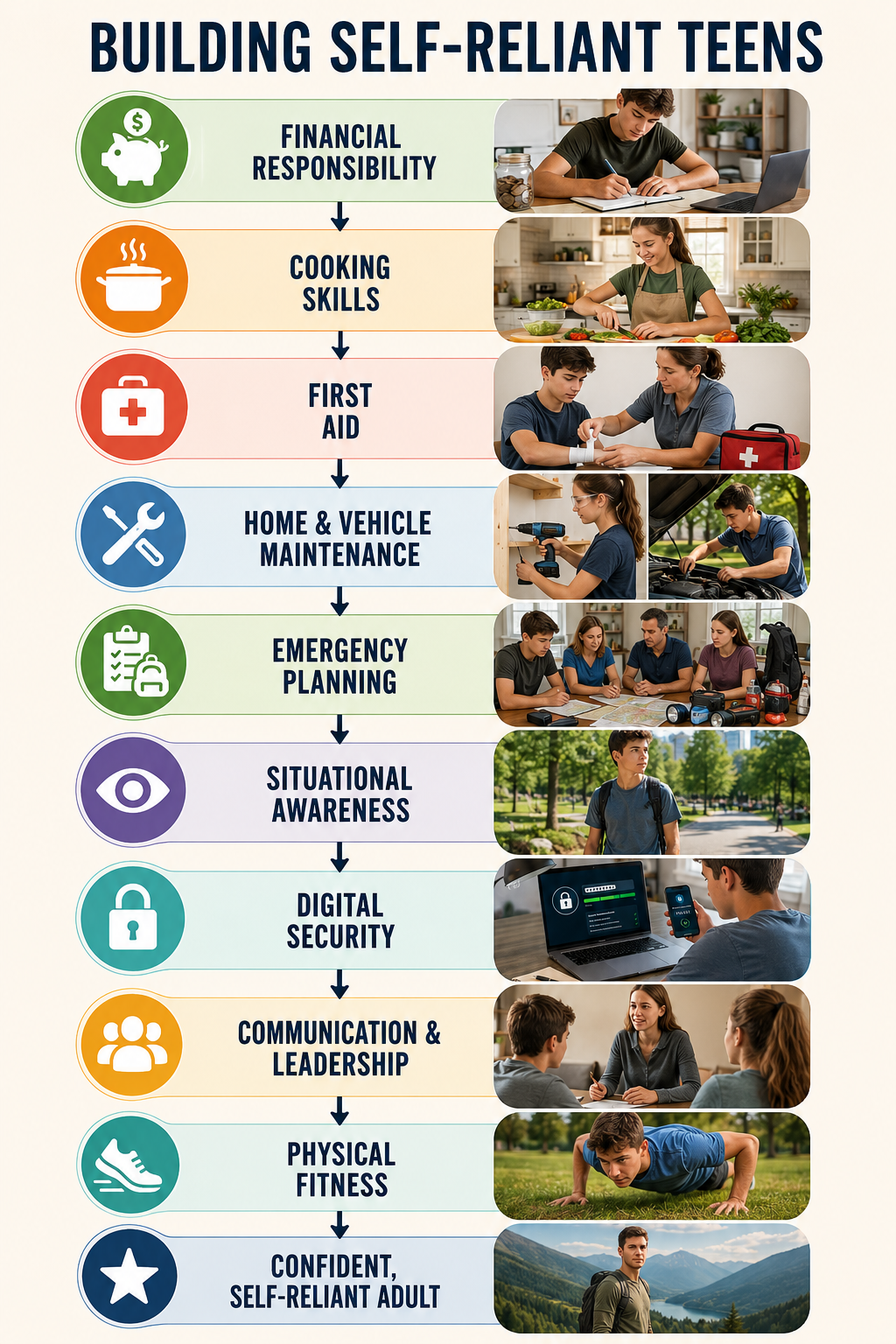 Financial literacy, cooking, first aid, home maintenance, emergency planning, communication, digital security, and physical fitness all contribute to greater independence and resilience. While no parent can prepare their child for every challenge life may present, investing time in these foundational skills creates capable young adults who are ready to face the future with confidence, responsibility, and self-reliance.
© Prepping Communities. This content is for informational purposes only and not professional advice. Use at your own risk.
Terms | Privacy | Guidelines