
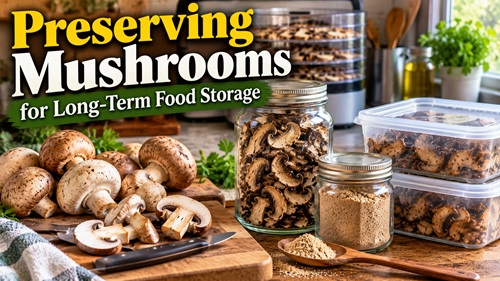
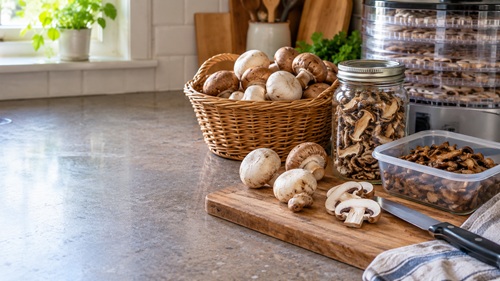
Mushrooms can be frustrating food to preserve because when they’re available, sometimes they’re really available. A good home-growing cycle, a sale on cultivated mushrooms or a successful day of foraging can leave you with far more than you’ll eat while they’re fresh. Then a few days later the opportunity is gone. Learning how to preserve that abundance gives you several options instead of racing against spoilage every time you have more mushrooms than you can immediately use.
For preparedness, mushrooms are interesting because the preservation method can completely change how useful they are later. Dried mushrooms can sit in the pantry and add flavor to soups and stews without depending on electricity. Cooked frozen mushrooms are convenient because they’re already partly prepared for meals. Freeze-dried mushrooms offer another long-term option if you have the equipment. Cultivated mushrooms can also be pressure canned using an appropriate tested process. None of these methods is automatically the best. The right choice depends on what kind of mushroom you have, how long you want to store it and, probably most importantly, how you expect to eat it later.
Wild mushrooms add another consideration that has to come before preservation: identification. Preservation doesn’t make a questionable mushroom safe. If you aren’t completely certain that a wild mushroom is edible, don’t dry it, freeze it or pickle it with the idea that you’ll identify it later. Some poisonous mushrooms resemble edible species, and cooking or drying shouldn’t be relied upon to eliminate mushroom toxins. Foraging and food preservation are really two different skills. Know exactly what you have first. Then worry about how you’re going to preserve it.
Drying, Freezing and Freeze-Drying Mushrooms
If I could learn only one mushroom-preservation method, drying would probably be it. Once mushrooms are properly dried, they don’t require freezer space or electricity to remain stored, and they take up surprisingly little room. They’re particularly useful for soups, stews, gravy, broth and sauces because those dishes naturally provide the moisture needed to rehydrate them. A fairly large fresh harvest can shrink down into a few jars on a pantry shelf.
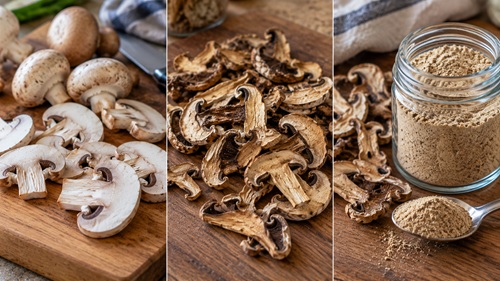
Clean the mushrooms appropriately, remove damaged portions and slice larger mushrooms so the pieces are reasonably similar in thickness. Spread them in a single layer in the dehydrator rather than piling them together. Drying times vary with the mushroom, thickness, humidity and equipment, so don’t become too attached to the clock. Six to twelve hours can be a useful rough range for many mushrooms, but the final test is the mushroom itself. A properly dried slice should be dry throughout and generally crisp or brittle rather than soft and flexible. Break one of the thicker pieces and look at the middle. If the outside appears dry but the center is still leathery or damp, it needs more time.
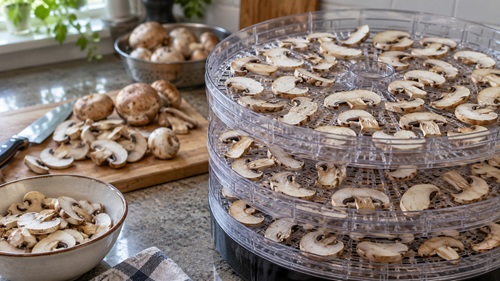
Let the finished mushrooms cool before sealing them in containers. That’s a small step that’s easy to rush. Warm food can create condensation after being enclosed, putting moisture right back into something you just spent hours drying. Once they’re cool, package them in airtight containers and store them somewhere cool, dark and dry. Check the containers during the first few days. Condensation inside the jar is a pretty good indication that the mushrooms weren’t dry enough when they were packed.
Some of the dried mushrooms can also be ground into powder. Make sure they’re completely brittle first, then use a spice grinder or blender. Mushroom powder doesn’t take up much space and a little can add a surprising amount of flavor to gravy, soup, rice, sauces and seasoning blends. From a preparedness standpoint, I like ingredients like this because stored food can become repetitive. A small jar of concentrated mushroom powder can make a fairly plain meal taste completely different. Just remember that powder readily absorbs moisture, so keep the container tightly closed.
Freezing gives you a different result. Mushrooms contain a lot of water, and raw mushrooms can become disappointingly soft and watery after freezing and thawing. Cooking them first generally works better. Clean and slice them, then sauté until they begin releasing moisture and start cooking down. You don’t need to turn them into a finished meal. You’re simply doing some of the cooking before the freezer does its work.
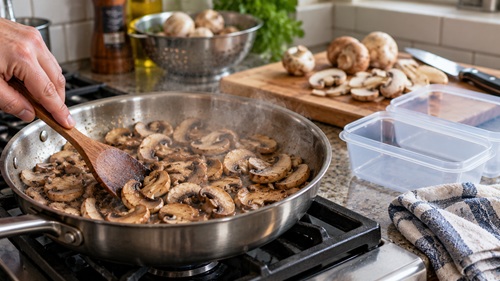
Once cooked, cool the mushrooms promptly and package them in amounts that match the way your household actually cooks. If you normally use a cup of mushrooms in pasta sauce, freezing roughly that amount per package makes more sense than freezing several pounds in one block. Later, those portions can go directly into soups, casseroles, pasta sauces and skillet meals. The texture won’t necessarily be identical to a fresh mushroom, but in a cooked dish that may not matter much.
This is something worth testing with a small amount before depending on it. Buy an extra package of mushrooms, sauté and freeze them, then use them in dinner a few weeks later. That’s a much better way to learn whether you like the result than filling half the freezer during a large harvest and finding out months later that nobody likes the texture.
Freeze-drying provides another option if you already own the equipment. It can preserve the structure, color and flavor of mushrooms particularly well, and the finished mushrooms become extremely light. But the freeze dryer is only part of the system. Once all that moisture has been removed, the food needs to remain dry. Freeze-dried mushrooms readily absorb moisture from the air, so long-term storage requires appropriate moisture-resistant packaging, good seals and suitable oxygen control for the packaging method being used. Store the finished food away from heat, moisture and unnecessary light.
A freeze dryer is a substantial investment, and I wouldn’t buy one simply because I wanted to preserve mushrooms. A dehydrator is a much easier and cheaper place to start. But if a freeze dryer is already part of your food-storage setup, mushrooms are a good food to experiment with because you can compare them directly with conventionally dried and frozen mushrooms and decide which result you actually prefer.
Canning and Pickling Mushrooms Safely
Canning is where mushroom preservation becomes much less forgiving. Mushrooms are a low-acid food, so plain mushrooms cannot simply be put into jars and processed in a boiling-water canner. When a tested home-canning procedure exists for a low-acid food, the higher temperatures produced by proper pressure canning are required.
Tested home-canning procedures exist for specific cultivated mushrooms such as common button and crimini mushrooms. Those instructions specify how the mushrooms are prepared, how they’re packed, the amount of headspace, permitted jar sizes, processing time and the pressure required for the type of canner and elevation. Those details aren’t suggestions. Follow the current tested recipe you’re using rather than deciding that a larger jar, shorter processing time or different mushroom should probably work.
Wild mushrooms are different. A morel, chanterelle, puffball and cultivated button mushroom may all be edible, but they can have very different structures, densities and moisture levels. A canning process developed and tested for specific cultivated mushrooms shouldn’t simply be transferred to a wild species because both happen to be mushrooms. If you come home with a large harvest of positively identified wild mushrooms, use another preservation method. Drying, freezing and freeze-drying are much better choices. Refrigerator pickling may also be useful depending on what you’re making.
A pressure canner and a pressure cooker aren’t automatically interchangeable either. The names make them sound as though they should be, but a pressure-canning process is developed around equipment capable of processing jars under specific conditions. If pressure canning is part of your preparedness plan, learn your actual canner while everything is normal. Know how to vent it, reach the required pressure, maintain that pressure, adjust for your elevation and allow it to depressurize correctly. Trying to learn all of that for the first time while food is spoiling around you isn’t much fun.
Pickling creates another distinction that matters. Refrigerator-pickled mushrooms remain refrigerated as part of the preservation method. Shelf-stable canned marinated mushrooms are different. If you’re making a product intended to sit at room temperature, use a current tested recipe and follow its specified mushroom type, acid concentration, ingredient proportions, jar size and processing instructions. Don’t create a vinegar mixture based on taste and assume that because it tastes sour enough, the food is safe for pantry storage.
I’d keep homemade pickled wild mushrooms refrigerated rather than assuming a cultivated-mushroom canning recipe applies to them. This is also a situation where a home pH reading shouldn’t be treated as a replacement for a validated canning process. If you’re uncertain whether a mushroom product has a tested shelf-stable process, keeping it refrigerated or frozen is the safer answer.
Use Everything You Can
Cooking mushrooms before freezing or preparing them for another purpose can leave you with surprisingly flavorful liquid. There’s no reason to automatically pour that down the drain. Mushroom cooking liquid can go into soup, gravy, sauces or rice. If you don’t need it immediately, freeze it in measured portions. Small amounts can even be frozen in trays and transferred to a freezer container once solid, giving you little portions of mushroom flavor whenever you’re making gravy or sauce.
I’d be more cautious about deciding to pressure can that liquid as mushroom broth. For shelf-stable broth, use a current tested canning recipe specifically intended for the product you’re making rather than assuming the processing instructions for whole mushrooms automatically apply to the liquid. Freezing is easy and avoids that uncertainty.
Storage doesn’t end the day you put food into a jar or freezer bag either. Check what you’ve preserved. Dried mushrooms that were once brittle shouldn’t suddenly become damp and flexible without a reason. Condensation means moisture is present somewhere it shouldn’t be. Moldy dried mushrooms should be discarded rather than sorted through looking for pieces that appear unaffected.
Completely dried mushrooms kept airtight in a cool, dark and dry place can remain useful for a long time, but I wouldn’t interpret that as permission to forget about them indefinitely. Label the container with the mushroom and date, use the older supply in normal cooking and replace it as you preserve more. Rotation teaches you something too. You’ll find out how the mushrooms rehydrate, whether you actually like them dried and how quickly your household uses them.
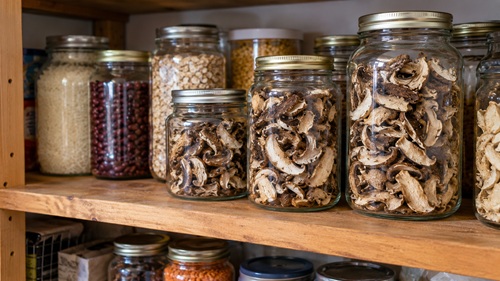
The easiest way to choose a preservation method is often to start with the eventual meal. Mushrooms intended for winter soups and stews are natural candidates for drying. Mushrooms destined for pasta sauce, casseroles or skillet meals may be more convenient sautéed and frozen. Freeze-drying makes sense when the equipment is already available and longer-term lightweight storage is the goal. Appropriate cultivated mushrooms can be pressure canned using a tested process when shelf storage without electricity is important.
You don’t need to choose one method for an entire harvest. Eat some mushrooms fresh while they’re at their best. Dry some. Freeze some. Grind a portion of the dried mushrooms into powder. If you’re working with an appropriate cultivated variety and know how to pressure can safely, perhaps preserve some that way too.
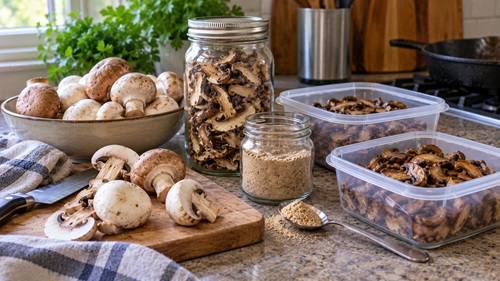
Having several forms available later is usually more useful than having twenty identical packages anyway.
Mushroom Preservation FAQs
What is the best way to preserve mushrooms? There isn’t one best method. Drying is probably the most versatile choice for simple pantry storage because the finished mushrooms take up little room and don’t depend on electricity once they’re stored. Cooked-and-frozen mushrooms are convenient for meals where you’d normally use cooked fresh mushrooms. Freeze-drying can provide excellent results when the equipment is already available, while tested pressure canning provides another shelf-storage option for appropriate cultivated mushrooms.
Can you can wild mushrooms at home? Don’t apply a pressure-canning procedure developed for specific cultivated mushrooms to wild mushrooms. Wild species vary considerably in structure, density and moisture content. Drying, freezing or freeze-drying are better options for a positively identified edible wild harvest.
Do mushrooms need to be cooked before freezing? You’ll generally get a more useful result if they’re cooked first. A quick sauté allows the mushrooms to release some of their moisture before freezing and tends to produce a better texture for later cooked meals. Cool them before packaging and freeze them in portions you’re likely to use at one time.
How long do dried mushrooms last? Properly dried mushrooms stored airtight under cool, dark and dry conditions can remain useful for a long time, but storage conditions matter more than simply writing a distant expiration date on the jar. Inspect them periodically and rotate them through normal meals. Moisture, condensation or mold are warning signs that shouldn’t be ignored.
Can mushrooms be water-bath canned? Plain mushrooms shouldn’t be water-bath canned because they’re a low-acid food. A tested acidified product such as a specific marinated cultivated-mushroom recipe is different because its acidity, ingredient proportions and processing method have been developed for that particular product. Simply adding some vinegar to mushrooms doesn’t turn an untested recipe into a safe shelf-stable one.
Preparedness Action Plan
If mushrooms are something your household eats regularly, start with one preservation method instead of trying to master everything at once. Drying is probably the easiest. Buy some cultivated mushrooms when they’re inexpensive, slice and dry them properly, store them for a few weeks and then actually cook with them. You’ll learn more from making one pot of soup with your own dried mushrooms than you will from reading another ten pages about dehydrating them.
Try freezing another small batch after sautéing. Use those mushrooms in pasta, soup or another familiar meal and compare them with the dried ones. Maybe you’ll decide dried mushrooms are perfect for soup but frozen mushrooms are better for pasta. That’s useful information because now your storage method reflects how your household actually eats.
If you forage, put identification ahead of preservation. Keep anything uncertain completely separate from mushrooms you know are edible. Don’t depend on an app, photograph or single identifying characteristic when a mistake can cause serious poisoning. When there is uncertainty, leave the mushroom out of the food supply.
If pressure canning interests you, learn it as its own preparedness skill. Use proper equipment and current tested procedures, and understand how your elevation affects the process. Don’t make an unusual mushroom harvest your first experiment with low-acid canning.
Label what you preserve with the mushroom, method and date, then use some of it. Food preservation becomes genuinely useful when you know how to take something fresh, preserve it safely and later turn it back into a meal people actually want to eat.
Key Takeaways
Mushrooms can be preserved successfully in several different ways, and each method solves a slightly different problem. Drying is inexpensive, compact and doesn’t require electricity once the food is stored. Freezing works particularly well when mushrooms are cooked first. Freeze-drying can preserve excellent quality when the equipment is already part of your food-storage system.
Canning requires more caution because plain mushrooms are a low-acid food. Water-bath canning isn’t appropriate for plain mushrooms, and tested pressure-canning procedures intended for specific cultivated mushrooms shouldn’t be extended to wild species simply because those species are edible. Pickled products intended for shelf storage also require tested recipes rather than improvised amounts of vinegar.
Wild mushroom preservation begins with positive identification. Drying, freezing, pickling or cooking doesn’t make a poisonous or incorrectly identified mushroom safe.
The best time to learn all of this isn’t when you suddenly have twenty pounds of mushrooms that need to be dealt with before they spoil. Practice with a small amount, compare the results and figure out which methods fit the meals you actually make.
That’s when preserving mushrooms stops being something you’ve read about and becomes another food skill you actually know how to use.
Food Safety Disclaimer
This posting is provided for preparedness education and general information. Wild mushroom identification can be difficult, and consuming a misidentified mushroom can cause severe poisoning or death. Do not eat or preserve a wild mushroom unless its identity and edibility have been reliably established.
Home canning of low-acid foods carries a risk of botulism when incorrect equipment, recipes, pressures, processing times or procedures are used. Plain mushrooms should not be processed in a boiling-water canner. Use current research-based tested procedures from recognized home-canning authorities when pressure canning cultivated mushrooms or canning tested acidified mushroom products.
Do not apply a cultivated-mushroom canning process to wild mushrooms, and do not assume that adding vinegar or measuring pH makes an untested recipe safe for room-temperature storage. When a tested shelf-stable process isn’t available for the particular product you’re making, refrigeration, freezing or dehydration is the safer choice.
© Prepping Communities. This content is for informational purposes only and not professional advice. Use at your own risk.
Terms | Privacy | Guidelines