
Preface
Every generation faces uncertainties that seem unique to its own time. Throughout history, people have prepared for wars, natural disasters, economic hardships, disease outbreaks, and countless other events that had the potential to disrupt everyday life. While the nature of these challenges changes over time, one principle has remained constant: families who understand the risks they face are generally better prepared to respond when circumstances change unexpectedly.
Among all emergency preparedness topics, few generate as much uncertainty as nuclear emergencies. The subject is often surrounded by dramatic headlines, fictional portrayals, technical language, and decades of misinformation. As a result, many people either dismiss nuclear preparedness as something that belongs to the past or assume that survival would be impossible if such an event were ever to occur. Neither perspective reflects the full picture.
The purpose of this handbook is not to encourage fear or speculate about future events. Its purpose is education.
Understanding how radiation behaves, how fallout forms, and why emergency officials recommend certain protective actions allows people to make informed decisions rather than reacting to rumors or panic. Knowledge reduces uncertainty, and reducing uncertainty is one of the most valuable forms of preparedness.
One of the greatest misconceptions about nuclear preparedness is that it requires specialized bunkers, expensive equipment, or extensive technical knowledge. While specialized facilities certainly exist, the reality is that many of the most effective protective measures rely on surprisingly simple principles that anyone can understand. Concepts such as time, distance, shielding, contamination control, and emergency planning have been studied for decades and continue to guide emergency response organizations around the world.
Another important goal of this handbook is to explain why recommendations exist. It is easy to tell someone to remain indoors, store water, or purchase emergency supplies. It is far more valuable to explain why those actions reduce risk and how they fit into a broader preparedness strategy. Once the underlying principles are understood, many preparedness decisions become logical rather than simply being rules to memorize.
Throughout this handbook, each lesson builds upon the previous one. We begin by understanding what nuclear emergencies actually are before exploring the science of radiation, the formation of radioactive fallout, methods of reducing exposure, practical household preparedness, and long-term recovery. Every topic has been organized to build understanding step by step so that readers develop confidence as their knowledge grows.
Although this handbook focuses on nuclear preparedness, many of the concepts discussed apply equally well to other emergencies. Maintaining emergency supplies, developing communication plans, understanding shelter options, storing food and water, and learning practical household skills improve resilience regardless of the type of disaster. In that sense, nuclear preparedness is not separate from emergency preparedness—it simply adds another layer of knowledge to an already strong foundation.
This handbook is intended to serve as a long-term reference rather than a document that is read once and forgotten. During an emergency, internet access, electrical power, and communication systems may not always be available. Having reliable information stored locally allows families to review important concepts, confirm recommended procedures, and continue learning even when outside resources are unavailable.
No handbook can eliminate every risk or answer every possible question. Every emergency is different, and local conditions will always influence the decisions that individuals and families must make. However, understanding the principles presented here will provide a strong foundation for making thoughtful, informed decisions under a wide variety of circumstances.
Preparedness begins with knowledge.
Everything else is built upon it.
How to Use This Handbook
This handbook has been designed as a learning guide rather than a simple collection of emergency checklists. While practical recommendations are included throughout, the primary objective is to help readers understand the principles behind those recommendations. Once the concepts are understood, they can be applied more effectively to a wide range of situations.
Each lesson follows a consistent format to make learning easier.
Every lesson begins by explaining why the topic matters and how it relates to preparedness. It then introduces the fundamental concepts in plain language before exploring the science or reasoning behind them. Once the reader understands the principles involved, the lesson concludes by discussing practical applications, correcting common misconceptions, and summarizing the most important points to remember.
This approach reflects an important philosophy that appears throughout Prepper Offline: understanding creates confidence. People who understand why something works are far more likely to remember it, apply it correctly, and adapt when circumstances change.
For that reason, readers are encouraged to work through the lessons in order during their first reading. Each lesson builds upon concepts introduced earlier in the handbook. Later sections discussing shelter selection, food safety, water storage, decontamination, and recovery all become much easier to understand after the reader has learned the science presented in the opening lessons.
Although the handbook is intended to be read from beginning to end, it has also been organized as a reference guide. During an emergency, readers may choose to review specific lessons or revisit individual topics as questions arise.
The ultimate goal is not simply to build an emergency supply kit.
It is to build understanding.
Because when people understand why protective actions work, they are better prepared to make informed decisions regardless of the circumstances they face.
Lesson 1
Understanding Nuclear Emergencies
Why This Lesson Matters
The phrase nuclear emergency is often used as though it describes a single type of disaster. In reality, it encompasses several very different situations, each with its own hazards, challenges, and recommended protective actions. Understanding these differences is one of the first and most important steps in nuclear preparedness because the safest response depends on the nature of the emergency rather than simply the presence of radioactive materials.
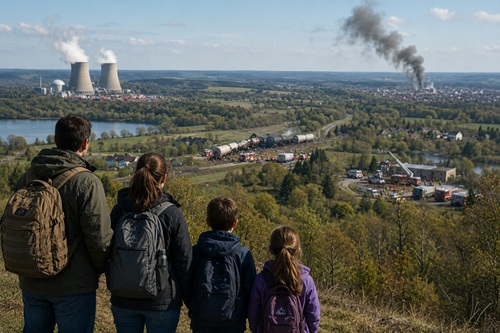
Many people assume that every nuclear emergency involves a massive explosion and widespread destruction. While that is certainly one possible scenario, it is far from the only one. Around the world, emergency planners prepare for a wide range of incidents involving radioactive materials, many of which do not involve nuclear weapons at all. Some develop over minutes, while others unfold over days or even weeks. Some create blast damage, while others involve little more than localized contamination.
Learning to distinguish between these different events allows families to better understand official guidance, evaluate potential risks, and make informed decisions rather than reacting to fear or misinformation.
What Is a Nuclear Emergency?
A nuclear emergency is any event involving radioactive materials or nuclear technology that has the potential to threaten human health, public safety, or the environment. The severity of these emergencies can range from relatively minor incidents involving small amounts of radioactive material to large-scale disasters affecting entire regions.
Although they differ significantly in cause and impact, most nuclear emergencies fall into one of five general categories:
- Nuclear weapon detonations
- Nuclear power plant accidents
- Radiological dispersal devices (dirty bombs)
- Transportation or industrial accidents involving radioactive materials
- High-altitude nuclear detonations capable of producing an electromagnetic pulse (EMP)
Each presents unique hazards, which is why emergency response procedures vary considerably from one event to another.
Nuclear Weapon Detonations
When most people think about nuclear emergencies, they immediately picture a nuclear weapon. These devices release enormous amounts of energy through nuclear reactions, producing intense heat, a powerful blast wave, ionizing radiation, and, in many cases, radioactive fallout.
The effects depend on many factors, including the size of the weapon, the altitude of the explosion, local weather conditions, surrounding terrain, and population density.
A weapon detonated high above the ground produces different effects than one detonated at ground level. An airburst generally produces greater blast damage over a larger area while creating less local fallout because relatively little soil is drawn into the fireball. In contrast, a ground burst pulls enormous quantities of soil, debris, and building materials into the rising fireball. As these materials become radioactive and eventually settle back to Earth, they create the fallout that concerns emergency planners long after the initial explosion has ended.
Understanding this distinction is important because many preparedness recommendations focus less on surviving the explosion itself and more on reducing exposure to radioactive fallout during the hours and days that follow.
Nuclear Power Plant Accidents
Commercial nuclear power plants operate very differently from nuclear weapons. Their purpose is to generate electricity through carefully controlled nuclear reactions that produce heat for steam turbines. Multiple engineered safety systems continuously regulate these reactions under normal operating conditions.
Although accidents are rare, equipment failures, natural disasters, or damage to critical systems can sometimes result in the release of radioactive materials into the surrounding environment. Events such as the Chernobyl disaster and the Fukushima Daiichi accident demonstrated that while reactor accidents can have serious local and regional consequences, they unfold very differently than nuclear weapon detonations.
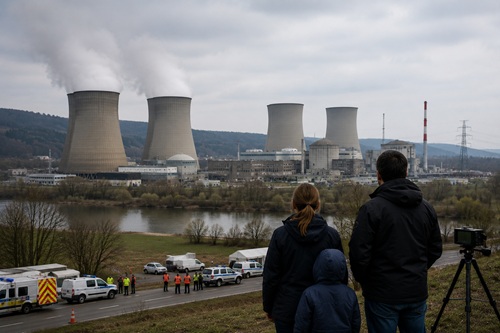
Unlike a nuclear explosion, reactor accidents do not produce massive blast waves or widespread thermal damage. Instead, emergency response efforts typically focus on monitoring radiation levels, protecting nearby populations, controlling contamination, managing evacuations where necessary, and ensuring the safety of food and water supplies.
For households, the practical response often centers on following official instructions, sheltering when advised, and understanding how radioactive materials may move through the environment over time.
Radiological Dispersal Devices (Dirty Bombs)
A radiological dispersal device, commonly called a dirty bomb, is designed to spread radioactive materials using conventional explosives rather than producing a nuclear explosion.
The explosive component functions much like any other bomb, causing injuries through the blast itself, flying debris, and structural damage. The radioactive material is intended primarily to contaminate the surrounding area rather than produce widespread radiation sickness.
Because of this, the immediate physical injuries caused by the explosion often represent the greatest danger to those nearby. The radioactive contamination that follows may require evacuation, cleanup, and long-term monitoring, but the overall effects are generally much more localized than those associated with a nuclear weapon.
Understanding this difference helps explain why emergency officials may emphasize contamination control, restricted access, and environmental cleanup rather than widespread sheltering over large regions.
Transportation and Industrial Incidents
Radioactive materials are used every day in medicine, scientific research, manufacturing, agriculture, and industry. Hospitals rely on radioactive isotopes for cancer treatment and medical imaging. Industrial companies use radioactive sources to inspect pipelines, measure material thickness, and perform quality control. Universities and research laboratories also use radioactive materials for scientific study.
These materials must occasionally be transported between facilities under strict safety regulations. Although transportation accidents are uncommon, they remain part of emergency planning because damaged containers or improperly handled radioactive sources may create localized hazards requiring specialized response teams.
Fortunately, most transportation incidents involve relatively small quantities of radioactive material and affect only limited areas. Nevertheless, they illustrate an important point: not every radiation emergency involves a large-scale disaster. Many incidents remain highly localized and are managed effectively through established emergency procedures.
High-Altitude Nuclear Detonations and EMP
One of the least understood nuclear scenarios involves a high-altitude nuclear detonation intended to produce an electromagnetic pulse, commonly known as an EMP.
Unlike ground-level nuclear explosions, these detonations occur high above the Earth’s surface. The primary objective is not blast damage but the generation of powerful electromagnetic energy capable of disrupting electrical systems over extremely large areas.
An EMP has the potential to damage portions of the electrical grid, communication systems, satellites, and electronic equipment. Because the explosion occurs at high altitude, many people on the ground may never experience blast effects or radioactive fallout directly. Instead, the greatest challenges involve prolonged power outages, communication failures, transportation disruptions, and interruptions to essential services.
For preparedness-minded families, this highlights an important principle: some nuclear-related emergencies may resemble long-term infrastructure failures more than traditional disaster scenarios.
Why Every Emergency Is Different
Although these events all involve nuclear technology or radioactive materials, no single preparedness plan fits every situation.
A family living near a nuclear power station may focus on understanding local emergency procedures, evacuation routes, and official alert systems. Someone living in a major metropolitan area may be more concerned about terrorism or infrastructure disruptions. Rural households may prioritize long-term self-sufficiency, while urban residents may place greater emphasis on sheltering in place.
The appropriate response depends on several factors, including the type of emergency, distance from the incident, prevailing weather conditions, local infrastructure, and official guidance.
This is one reason preparedness should always begin with education rather than assumptions. The more accurately people understand the nature of an emergency, the better equipped they are to make sound decisions.
Common Misconceptions
One of the most common misconceptions is that all nuclear emergencies are equally catastrophic. In reality, their severity varies tremendously. Many incidents remain localized and are managed safely by trained emergency responders without creating widespread public danger.
Another misconception is that every nuclear emergency results in immediate evacuation. Depending on the circumstances, emergency officials may instead recommend remaining indoors for a period of time. In some situations, sheltering in place provides greater protection than attempting to travel through potentially contaminated areas.
It is also important to recognize that nuclear preparedness is not limited to preparing for nuclear war. The same knowledge that helps people understand weapons, fallout, and radiation also applies to industrial accidents, transportation incidents, and other radiological emergencies.
Understanding the event is always the first step toward choosing the appropriate response.
Key Takeaways
Nuclear emergencies are not a single type of disaster but a collection of different events involving radioactive materials or nuclear technology. Each presents unique hazards and requires different protective actions. By understanding these differences, families can better interpret emergency information, avoid common misconceptions, and make informed decisions based on the specific situation they face.
Before exploring sheltering, emergency supplies, or decontamination procedures, however, one fundamental question remains:
What exactly is radiation?
It is a word almost everyone has heard, yet surprisingly few people fully understand. In the next lesson, we will examine what radiation is, where it comes from, why it exists naturally all around us, and why understanding it is the foundation of every recommendation that follows in this handbook.
Lesson 2
Understanding Radiation
Why This Lesson Matters
Few subjects in emergency preparedness are surrounded by more misunderstanding than radiation. It cannot be seen, smelled, tasted, or felt, yet it is often portrayed as one of the most dangerous and mysterious hazards imaginable. Movies, television, and popular culture have reinforced this perception for decades, frequently depicting radiation as an invisible force that instantly contaminates everything it touches or produces dramatic mutations. While these portrayals make for entertaining fiction, they bear little resemblance to how radiation behaves in the real world.
Understanding radiation is one of the most valuable skills a person can develop when preparing for any nuclear or radiological emergency. Nearly every recommendation made by emergency management organizations—whether it involves sheltering indoors, remaining upwind of an incident, removing contaminated clothing, or limiting time spent in affected areas—is based on the predictable behavior of radiation and radioactive materials.
Once these principles are understood, preparedness becomes much less intimidating. Rather than memorizing lists of instructions, readers begin to understand why certain actions reduce risk and why others may actually increase it.
Perhaps most importantly, understanding radiation replaces fear with knowledge. Radiation is not magic, nor is it completely unpredictable. It follows well-established scientific principles that have been studied for more than a century. Although the science can become highly technical, the concepts needed for practical preparedness are surprisingly straightforward.
What Is Radiation?
At its simplest, radiation is energy moving from one place to another.
This definition often surprises people because the word radiation is commonly associated only with nuclear accidents or weapons. In reality, radiation exists throughout nature and has always been part of our environment. Long before the first nuclear reactor was built or the first atomic bomb was tested, the Earth, the atmosphere, and even our own bodies were already being exposed to naturally occurring radiation.
Every day, we experience many forms of radiation without giving them much thought. Sunlight is radiation. The warmth you feel from a campfire is radiation. Radio waves carry music to your vehicle, microwave ovens heat food using electromagnetic radiation, and visible light allows us to see the world around us.
These are all examples of energy traveling from one location to another.
Most of these forms of radiation are harmless because they do not carry enough energy to damage living cells. In nuclear preparedness, however, our concern is with a specific category known as ionizing radiation.
What Makes Ionizing Radiation Different?
The human body is made up of trillions of atoms. These atoms combine to form molecules, cells, tissues, and organs that allow every biological process to occur.
Ionizing radiation carries enough energy to remove electrons from atoms. When this occurs, the atom becomes electrically charged, or ionized. This process can alter chemical bonds within living cells. Most of the time, the body is remarkably effective at repairing this type of damage. However, sufficiently large doses or prolonged exposure may overwhelm those repair mechanisms, increasing the risk of tissue damage or disease.
This is what separates ionizing radiation from ordinary forms of radiation such as visible light or radio waves. The difference is not simply the presence of energy, but the amount of energy carried by that radiation.
Understanding this distinction helps explain why emergency planners focus specifically on radioactive materials rather than every form of radiation encountered in everyday life.
Radiation Is Everywhere
One of the biggest misconceptions about radiation is that it exists only near nuclear reactors or weapons.
In reality, every person on Earth is exposed to small amounts of natural background radiation every day.
Some originates from space. High-energy particles produced by the sun and distant stars continually enter Earth’s atmosphere. Fortunately, much of this radiation is absorbed or deflected by our atmosphere and magnetic field before reaching the ground. People who live at higher elevations or who fly frequently may receive slightly greater exposure because there is less atmosphere above them to provide shielding.
Additional radiation comes from the Earth itself. Small amounts of naturally occurring radioactive elements are present in rocks, soil, and certain building materials. Even groundwater may contain trace amounts of naturally occurring radioactive minerals depending on local geology.
Perhaps even more surprising is the fact that food contains naturally occurring radioactive elements. Bananas, potatoes, beans, spinach, nuts, and many other foods contain small amounts of naturally occurring potassium. A tiny fraction of that potassium exists as a naturally radioactive isotope known as potassium-40.
This does not make bananas dangerous.
In fact, the amount of radiation received from eating a banana is so small that scientists sometimes jokingly refer to it as the “banana equivalent dose” when explaining extremely small radiation exposures to the public. The example serves as an excellent reminder that the mere presence of radiation does not automatically represent a health hazard.
The important questions are always:
- What type of radiation is present?
- How much is present?
- How long does exposure last?
- How close are you to the source?
Those four questions form the basis of nearly every radiation safety decision.
Natural and Human-Made Sources
Radiation comes from both natural and human-made sources.
Natural background radiation has existed since the Earth formed billions of years ago. It surrounds us continuously and contributes the majority of radiation exposure received by most people during their lives.
Human-made sources include medical imaging procedures such as X-rays and CT scans, certain cancer treatments, industrial inspection equipment, scientific research laboratories, and nuclear power generation.
These technologies provide enormous benefits because they use radiation in carefully controlled ways. Physicians rely on radiation to diagnose broken bones, detect disease, and treat cancer. Engineers inspect bridges, pipelines, and aircraft components using radiation to identify hidden defects that cannot be seen from the outside.
These examples illustrate an important principle that applies throughout this handbook.
Radiation itself is neither inherently good nor inherently bad.
Like electricity, fire, or powerful machinery, its safety depends on how it is produced, controlled, and encountered.
Radiation Is Not the Same as Radioactive Material
One of the most common points of confusion is the difference between radiation and radioactive material.
Although the terms are often used interchangeably in news reports and everyday conversation, they describe two different concepts.
Radiation is the energy being emitted.
Radioactive material is the substance producing that energy.
An easy way to think about the difference is to compare it with a flashlight.
The flashlight represents the radioactive material.
The beam of light represents the radiation.
When the flashlight is turned off or removed, the beam disappears.
Similarly, radioactive materials emit radiation because of the natural instability of certain atoms. As those atoms gradually become more stable, the radiation they produce changes over time through a process known as radioactive decay.
Understanding this distinction helps explain why simply moving away from a radioactive source can dramatically reduce exposure. It also explains why removing contaminated clothing or washing radioactive dust from exposed skin is so effective. In many situations, eliminating contact with the radioactive material also eliminates much of the ongoing radiation exposure.
Radiation Can Be Measured
Another misconception is that radiation is completely invisible and impossible to detect.
While it is true that humans cannot see, smell, taste, or feel most forms of ionizing radiation, specialized instruments can measure it with remarkable precision.
Emergency responders, nuclear facilities, hospitals, research laboratories, and environmental monitoring agencies routinely use radiation detection equipment to identify radioactive materials, measure exposure levels, and monitor changing conditions.
These instruments allow officials to determine whether an area is safe to enter, whether contamination is present, and when protective actions should begin or end.
The existence of reliable radiation detection equipment is one of the reasons emergency recommendations are based on measured conditions rather than guesswork.
Looking Ahead
Understanding what radiation is provides the foundation for everything else discussed in this handbook.
However, one important question remains unanswered.
Not all radiation behaves the same way.
Some forms travel only a few centimeters before stopping.
Others pass through walls.
Some become dangerous only if they enter the body.
Others can expose people from considerable distances.
Understanding these differences is essential because they determine the type of protection required during different emergencies.
In the next lesson, we will examine the four primary forms of ionizing radiation—alpha, beta, gamma, and neutron radiation—and learn why understanding their behavior is one of the cornerstones of effective nuclear preparedness.
Lesson 3
Understanding Radioactive Fallout
Why This Lesson Matters
When people hear the word fallout, they often imagine black ash drifting from the sky after a nuclear explosion. Movies and television frequently portray it as a thick blanket of soot covering buildings, roads, and entire cities. While dramatic images like these have shaped public perception for decades, they rarely reflect how radioactive fallout behaves in the real world.
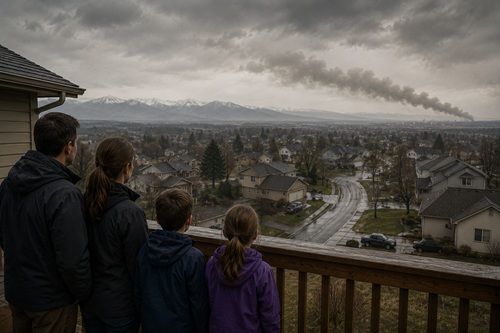
Understanding fallout is one of the most valuable lessons in nuclear preparedness because, in many nuclear emergencies, it presents the greatest long-term hazard to people who survive the initial event. Blast damage and intense heat occur within seconds, but fallout may continue affecting an area for hours, days, or even longer depending on the type of radioactive materials involved.
Fortunately, fallout does not behave randomly. Scientists have studied it for decades through atmospheric testing, accident investigations, environmental monitoring, and emergency planning. Today, its movement through the environment is well understood. Wind, weather, gravity, particle size, and time all influence where fallout travels and how long it remains hazardous.
By understanding these principles, families can make informed decisions about sheltering, travel, food, water, and cleanup rather than relying on fear or misinformation.
What Is Radioactive Fallout?
Radioactive fallout is the material that returns to the ground after radioactive particles have been carried into the atmosphere.
The term fallout does not refer to radiation itself.
Instead, it refers to tiny particles of dust, soil, ash, debris, and other materials that have become contaminated with radioactive substances and eventually settle back to Earth under the influence of gravity.
These particles continue emitting radiation until the radioactive materials they contain gradually decay.
This distinction is important.
Fallout is not simply energy moving through the air.
It is physical material carrying radioactive substances.
Because it is made of actual particles, fallout can collect on rooftops, roads, vehicles, crops, clothing, equipment, and exposed skin. It can also be carried indoors on shoes, clothing, pets, or equipment if proper precautions are not taken.
Understanding this difference explains why contamination control plays such an important role in emergency response.
How Fallout Forms
Although radioactive fallout is most commonly associated with nuclear weapons, several different types of nuclear emergencies have the potential to release radioactive materials into the environment.
Following a ground-level nuclear detonation, temperatures within the fireball become extraordinarily high. Buildings, vegetation, vehicles, pavement, and large quantities of soil are vaporized almost instantly. As the fireball rises, it carries this material thousands of meters into the atmosphere.
As the cloud cools, the vaporized materials begin condensing into tiny solid particles.
Some of these particles contain radioactive materials created during the nuclear reaction.
Others become radioactive after being exposed to intense neutron radiation during the explosion.
Eventually, gravity begins pulling these particles back toward the Earth’s surface.
This process is known as radioactive fallout.
Nuclear reactor accidents produce fallout differently. Instead of vaporizing large quantities of soil, damaged fuel or reactor materials may release radioactive gases and particles that are carried by wind before gradually settling onto the surrounding environment. Although the process differs, the basic principle remains the same: radioactive materials are transported through the atmosphere before eventually returning to the ground.
Not All Fallout Looks the Same
One of the biggest misconceptions about fallout is that it always appears as thick, black ash falling from the sky.
In reality, much radioactive fallout is nearly invisible.
The appearance depends on the amount of material involved, weather conditions, and the distance from the source.
Near the site of a ground-level nuclear explosion, larger particles may resemble coarse dust, sand, or gritty ash.
Farther away, particles become progressively smaller.
Many are too small to be seen with the naked eye.
Some may settle so gradually that people never notice them accumulating on outdoor surfaces.
This is one reason radiation monitoring equipment is so important.
The absence of visible dust does not necessarily mean an area is free of radioactive contamination.
Particle Size Changes Everything
One of the most important concepts in understanding fallout is particle size.
Large particles are heavy.
Small particles are light.
This simple difference determines where fallout travels.
Large particles lose altitude quickly and usually fall back to Earth relatively close to the original event.
Smaller particles remain suspended much longer and can be carried significant distances by prevailing winds before eventually settling.
The smallest particles may remain airborne for extended periods and spread contamination across very large regions.
This explains why emergency planners carefully monitor weather conditions following a nuclear incident.
Wind direction often becomes one of the most important factors in predicting where fallout may travel.
Weather Plays a Major Role
Fallout does not move in straight lines.
Once radioactive particles enter the atmosphere, they become subject to the same weather systems that influence clouds, smoke, dust, and pollution.
Wind determines the general direction of travel.
Atmospheric stability influences how widely particles spread.
Rain and snow can remove radioactive particles from the atmosphere more quickly by washing them onto the ground.
This process is sometimes called rainout or washout.
Although rainfall may help clear particles from the air, it can temporarily increase contamination where the rain falls because those particles become concentrated on the ground.
This is why emergency response agencies closely monitor changing weather conditions during nuclear incidents.
Why Time Matters
One of the most reassuring aspects of radioactive fallout is that its hazard decreases over time.
Many of the radioactive materials produced during a nuclear event decay relatively quickly.
As they decay, they emit less radiation.
This natural process begins immediately.
Although some radioactive materials remain hazardous much longer than others, the overall radiation level associated with fallout generally declines most rapidly during the first hours and days following an incident.
This is one reason emergency officials frequently recommend remaining sheltered immediately after fallout begins.
Simply allowing time for radiation levels to decrease before leaving shelter can significantly reduce exposure.
Later in this handbook we will examine this concept in greater detail, including one of the most useful planning tools in radiation protection: the 7-10 Rule, which provides a practical way of understanding how radiation levels decrease over time.
Fallout Is Primarily an Outdoor Hazard
Radioactive fallout becomes dangerous when people are exposed to it.
Fortunately, buildings provide protection.
Even ordinary homes reduce exposure by placing walls, roofs, and distance between occupants and contaminated outdoor surfaces.
Larger buildings constructed from concrete, brick, or other dense materials provide even greater protection.
Basements often offer the highest level of protection because surrounding soil acts as an additional radiation shield.
Understanding that fallout generally settles outdoors explains why emergency officials often recommend remaining inside rather than attempting immediate evacuation.
Simply staying indoors during the period of highest fallout intensity may substantially reduce radiation exposure.
Common Misconceptions
Many people believe fallout is a cloud of poisonous gas.
It is not.
Fallout consists primarily of solid particles carrying radioactive materials.
Another common misconception is that radioactive fallout remains equally dangerous forever.
While some radioactive materials persist for years, overall radiation levels begin decreasing immediately after the event as radioactive decay occurs.
Finally, many people assume they will always be able to see radioactive contamination.
In reality, some of the most hazardous particles may be far too small to notice.
Radiation detectors—not human senses—determine whether contamination is present.
Key Takeaways
Radioactive fallout consists of physical particles contaminated with radioactive materials that gradually settle back to Earth after being carried into the atmosphere. Its movement depends on gravity, wind, weather, and particle size, while its hazard naturally decreases over time as radioactive materials decay.
Understanding how fallout behaves explains many of the protective actions recommended during a nuclear emergency. Sheltering indoors, avoiding contaminated dust, limiting unnecessary outdoor exposure, and preventing contamination from entering clean living spaces all become logical responses once the science is understood.
In the next lesson, we will examine one of the most important principles in radiation protection: Time, Distance, and Shielding—the three concepts that form the foundation of nearly every radiation safety program in the world.
Lesson 4
The Three Principles of Radiation Protection
Why This Lesson Matters
Every emergency response organization, nuclear facility, military organization, and radiation safety program throughout the world relies on the same three principles to reduce radiation exposure.
These principles are remarkably simple.
They do not require advanced scientific knowledge, expensive equipment, or years of specialized training.
Instead, they rely on understanding how radiation behaves and using that knowledge to reduce unnecessary exposure.
The three principles are:
Time
Distance
Shielding
Whether responding to a nuclear power plant accident, cleaning up radioactive contamination, working in a hospital radiology department, or sheltering after radioactive fallout, these three concepts form the foundation of radiation protection.
Individually, each principle can reduce exposure.
When combined, they become even more effective.
Understanding them is one of the most valuable preparedness skills anyone can learn because they provide a logical framework for making decisions during a nuclear emergency.
Radiation Exposure Can Be Reduced
One of the biggest misconceptions surrounding radiation is that exposure is either unavoidable or all-or-nothing.
Neither is true.
Radiation exposure exists on a spectrum.
Just as spending five minutes in the summer sun produces less exposure than spending five hours without protection, radiation exposure depends on both the intensity of the source and the amount of time spent near it.
This means people often have opportunities to reduce their exposure through thoughtful decisions.
The goal is not necessarily to eliminate every possible source of radiation.
Instead, the objective is to reduce unnecessary exposure whenever practical.
This philosophy guides radiation protection programs throughout the world.
Principle One: Time
The first principle is remarkably simple.
The less time you spend near a radioactive source, the less radiation you receive.
Radiation exposure accumulates over time.
If two people stand in the same location but one remains there for ten minutes while the other stays for one hour, the second person will generally receive a greater radiation dose because they remained exposed for a longer period.
This concept influences nearly every emergency recommendation.
During a fallout event, emergency officials often advise people to remain indoors during the period when radiation levels are highest.
Maintenance workers at nuclear facilities carefully plan their tasks before entering controlled areas so they can complete their work efficiently without unnecessary delays.
Emergency responders rehearse procedures in advance because preparation reduces the amount of time spent in hazardous environments.
For households, the lesson is equally practical.
If outdoor exposure becomes necessary, completing essential tasks efficiently and returning to shelter promptly helps reduce unnecessary radiation exposure.
This does not mean rushing carelessly.
It means planning ahead so that time spent in potentially contaminated areas is kept to a minimum.
Principle Two: Distance
Distance is one of the most effective ways to reduce radiation exposure.
As you move farther away from a radioactive source, the intensity of the radiation reaching your body decreases.
In simple terms, radiation spreads outward from its source.
As that energy spreads over a larger area, less reaches any one location.
This is why emergency officials establish exclusion zones around serious nuclear incidents and why emergency workers use remote tools whenever possible when handling radioactive materials.
For families, the principle is straightforward.
The farther you remain from radioactive materials, contaminated dust, damaged reactors, or other radiation sources, the lower your potential exposure.
Distance also applies within buildings.
Moving away from contaminated windows, exterior walls, or rooftops and toward the center of a structure increases the amount of material between you and outdoor fallout.
Every additional layer of separation contributes to reducing exposure.
Principle Three: Shielding
The third principle involves placing protective material between yourself and the radiation source.
This is known as shielding.
Different materials block radiation with different levels of effectiveness.
Lightweight materials such as paper easily stop alpha particles.
Plastic, wood, and clothing provide increasing protection against beta radiation.
Gamma radiation, however, requires much denser shielding because it penetrates materials much more effectively.
Concrete, brick, steel, packed earth, and large volumes of water all absorb significant amounts of gamma radiation.
The thicker the shielding, the greater the reduction in exposure.
This explains why basements are frequently recommended during fallout emergencies.
The surrounding earth and concrete create substantial shielding between occupants and radioactive materials outside.
Even people without basements can improve protection by moving toward the center of a building, away from windows and exterior walls.
Every wall, floor, ceiling, and piece of dense furniture placed between you and fallout contributes to reducing radiation exposure.
Why Combining These Principles Works
Although each principle provides protection on its own, they become much more effective when used together.
Imagine a family sheltering in a basement following a radioactive fallout event.
They remain indoors during the period of highest radiation levels.
That reduces time spent exposed outdoors.
They position themselves below ground and away from exterior walls.
That increases distance from contaminated surfaces.
The surrounding concrete foundation and soil provide shielding.
Together, these three actions significantly reduce radiation exposure without requiring specialized equipment.
This is why emergency planners rarely rely on a single protective measure.
Preparedness works best when multiple layers of protection work together.
Applying These Principles at Home
One of the strengths of these principles is that they apply to nearly every nuclear emergency regardless of its cause.
Whether the incident involves fallout, a reactor accident, or localized radioactive contamination, reducing time near the hazard, increasing distance whenever practical, and using available shielding remain effective strategies.
These principles also explain many of the recommendations discussed throughout this handbook.
Choosing the most protected room in a home.
Closing windows.
Delaying unnecessary travel.
Removing contaminated clothing before entering clean living spaces.
Even organizing emergency supplies so they are immediately available reduces the need to move unnecessarily during the period of greatest risk.
Preparedness often succeeds because many small decisions work together.
Common Misconceptions
Some people believe that shielding must involve specialized bunkers or military facilities.
While purpose-built shelters certainly provide excellent protection, ordinary homes also reduce radiation exposure.
A basement generally provides more protection than a first-floor room.
An interior hallway often provides more protection than a room with several windows.
The goal is not perfection.
It is improvement.
Another misconception is that distance always means leaving the area.
In some situations, attempting to evacuate through contaminated fallout may actually increase exposure.
Depending on the circumstances, remaining inside a well-protected building may provide greater safety until emergency officials advise otherwise.
Finally, people sometimes assume that these principles apply only during nuclear war.
In reality, hospitals, research laboratories, nuclear power stations, industrial radiography teams, and emergency response organizations rely on the same concepts every day when working safely around radioactive materials.
Key Takeaways
Time, distance, and shielding form the foundation of radiation protection worldwide. These three principles are simple to understand, easy to remember, and remarkably effective when applied together. By spending less time near radioactive materials, increasing separation from the source whenever practical, and placing dense materials between yourself and radiation, individuals can significantly reduce unnecessary exposure.
These concepts also explain why so many preparedness recommendations focus on sheltering, limiting outdoor activity, and selecting the safest location within a building. Once these principles are understood, the logic behind emergency planning becomes much clearer.
In the next lesson, we will build directly on these concepts by examining how buildings protect against fallout, why some structures offer far greater protection than others, and how families can identify the safest shelter locations long before they are ever needed.
Lesson 5
Choosing the Best Shelter
Why This Lesson Matters
One of the first decisions people may face during a nuclear emergency is where to seek shelter. Fortunately, unlike many other emergencies, the safest location is often much closer than people expect. In many situations, the best shelter is not a specially constructed bunker or remote underground facility. It may simply be the building you are already in.
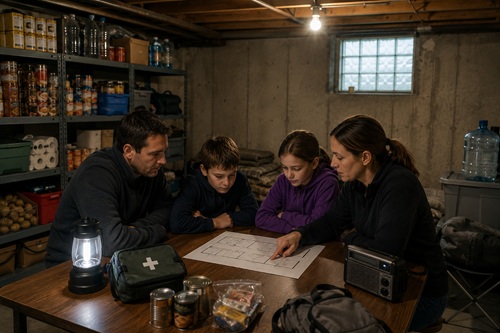
Understanding why buildings provide protection allows families to make better decisions regardless of where they happen to be when an emergency occurs. Whether you live in a downtown apartment, a suburban home, a rural farmhouse, or work in a commercial office, the same scientific principles determine how much protection a structure can provide.
Choosing shelter should never be based on guesswork or popular myths. Instead, it should be based on understanding how radiation travels and how different building materials reduce exposure. Once these principles are understood, identifying the safest location often becomes much easier than many people realize.
Shelter Works Because Buildings Block Radiation
Radioactive fallout generally settles on outdoor surfaces. Roofs, roads, vehicles, trees, sidewalks, and open ground may all collect radioactive particles after they fall from the atmosphere.
The objective of sheltering is simple.
Place as much material as possible between yourself and those radioactive particles.
Every wall, floor, ceiling, and layer of dense material absorbs some of the radiation coming from outside. The more material between you and the contamination, the lower your exposure is likely to be.
This concept is known as shielding, one of the three fundamental principles discussed in the previous lesson.
It is important to remember that buildings do not eliminate radiation completely. Instead, they reduce the amount that reaches the people inside. Even a modest reduction can become significant when exposure continues over many hours.
The Two Goals of Shelter
An effective shelter serves two important purposes.
First, it reduces radiation exposure by placing shielding between occupants and radioactive fallout outside.
Second, it helps prevent radioactive particles from entering the living space.
This second purpose is often overlooked.
Because fallout consists of physical particles rather than invisible gas, keeping those particles outside greatly reduces the chance of contamination indoors. Closing doors and windows, limiting unnecessary movement between indoors and outdoors, and removing contaminated clothing before entering clean living areas all help maintain this protective barrier.
In many ways, shelter is not simply a place to hide.
It is a controlled environment that separates people from the hazards outside.
Why Basements Are Often Recommended
Basements are frequently recommended during fallout emergencies because they provide two important advantages.
The surrounding soil acts as natural shielding, and the floors above create additional protection from radioactive particles that may settle on the roof.
Imagine standing outside in an open field.
Above you is open sky, and radioactive particles may settle all around you.
Now imagine standing in the center of a basement.
Between you and the outside environment are layers of soil, concrete, wood, insulation, flooring, and the entire structure of the house.
Each layer absorbs some of the radiation before it reaches you.
This is why basements consistently provide some of the highest levels of protection available in ordinary homes.
However, not every basement offers identical protection. A finished basement with large windows exposed above ground may provide less shielding than one located almost entirely below the surrounding soil. Likewise, spending time beside a basement window may increase exposure compared with remaining deeper inside the structure.
The goal is always to maximize the amount of shielding between yourself and the radioactive material outside.
What If You Do Not Have a Basement?
Many homes, particularly in warmer climates or areas with shallow bedrock, are built without basements.
Fortunately, a basement is not the only effective shelter.
Interior rooms located near the center of the building often provide significantly better protection than rooms along exterior walls. Hallways, storage rooms, laundry rooms, and interior bathrooms frequently contain fewer windows and more surrounding walls, increasing the amount of shielding available.
The objective remains the same.
Move away from exterior walls and windows whenever practical.
Each additional layer of building material between you and the outside environment contributes to reducing radiation exposure.
Even if your home provides less protection than a basement, remaining inside is often considerably safer than remaining outdoors during periods of active fallout.
Large Buildings Often Provide Greater Protection
One fact that surprises many people is that larger buildings often provide better protection than smaller ones.
Commercial office buildings, schools, hospitals, shopping centers, parking garages, and other large structures usually contain thicker walls, reinforced concrete, steel framing, and multiple interior rooms. These materials create additional shielding that helps reduce radiation exposure.
In many cases, moving toward the center of a large building and away from exterior windows provides substantially greater protection than remaining near entrances or upper floors.
This principle explains why emergency officials sometimes recommend sheltering in place within large buildings rather than immediately evacuating.
The structure itself becomes an important part of the protective strategy.
Apartments and Multi-Story Buildings
People living in apartment buildings often wonder whether they should remain in their own unit or move elsewhere within the building.
The answer depends largely on the building’s construction and the apartment’s location.
Units located near the center of the building generally provide better protection than corner units because they are surrounded by additional apartments on multiple sides.
Lower floors often benefit from greater shielding than upper floors because more building materials separate occupants from fallout that settles on the roof.
However, ground-level apartments with numerous windows or direct exterior access may receive less protection than interior units located several floors above.
Rather than focusing only on floor level, it is usually more helpful to think about shielding.
How many walls, floors, ceilings, and structural materials separate you from the outside?
The greater the amount of dense material, the greater the reduction in radiation exposure.
Mobile Homes and Temporary Structures
Not every structure provides the same level of protection.
Mobile homes, recreational vehicles, tents, sheds, and lightweight outbuildings contain relatively little dense material capable of blocking gamma radiation. While they may provide protection from weather and help prevent some contamination from settling directly on occupants, they generally offer less shielding than conventional homes or commercial buildings.
If time permits and it can be done safely before fallout arrives, relocating from a lightly constructed structure to a more substantial building may significantly improve protection.
However, once fallout begins, traveling through contaminated areas simply to reach another building may expose people to greater risk than remaining where they are.
Understanding local conditions and following official guidance remain important parts of this decision.
Windows Are the Weakest Part of Most Buildings
Glass provides very little shielding against gamma radiation.
Large windows also allow occupants to remain closer to contaminated outdoor surfaces.
For these reasons, emergency planners generally recommend moving away from windows whenever practical.
Closing curtains or blinds provides privacy and may reduce flying glass hazards during certain emergencies, but it should not be mistaken for meaningful radiation shielding.
Distance from the window is far more important than the curtain itself.
Simply moving several meters farther into the building increases the amount of shielding between you and outdoor contamination.
Shelter Is More Than a Location
Choosing a shelter involves more than selecting the safest room.
Families should also consider how they will remain there comfortably if they need to stay for an extended period.
Water, food, sanitation supplies, flashlights, medications, communication equipment, bedding, and basic first aid materials all contribute to making shelter sustainable.
If people are forced to leave repeatedly because essential supplies were forgotten, the protection offered by the shelter is greatly reduced.
One of the simplest preparedness steps is identifying your preferred shelter area long before it is needed and gradually storing essential emergency supplies nearby.
Doing so reduces unnecessary movement and allows families to remain safely sheltered if circumstances require it.
Common Misconceptions
Many people believe only purpose-built fallout shelters provide meaningful protection.
In reality, ordinary homes, schools, offices, and commercial buildings all reduce radiation exposure to varying degrees. While purpose-built shelters may provide superior protection, they are not the only effective option.
Another misconception is that opening windows improves ventilation without consequence. During periods of active fallout, open windows may allow contaminated dust to enter the building. Unless official guidance indicates otherwise, limiting the movement of outdoor air during the initial fallout period generally helps keep radioactive particles outside.
Finally, some people assume that leaving immediately is always the safest choice. In many situations, particularly during the period when fallout is actively descending, remaining inside a well-protected structure provides greater protection than traveling through contaminated areas.
Key Takeaways
An effective shelter works by placing dense materials between occupants and radioactive fallout while also reducing the amount of contamination that enters the living space. Basements, interior rooms, and large concrete or brick buildings generally provide better protection because they increase shielding and reduce exposure.
The safest shelter is not always the most distant location.
Often, it is the nearest well-constructed building that allows you to remain protected while radiation levels outside naturally decline.
Understanding how to evaluate shelter using the principles of time, distance, and shielding allows families to make informed decisions regardless of where they are when an emergency occurs.
Lesson 6
Understanding Radioactive Contamination
Why This Lesson Matters
One of the greatest sources of confusion during a nuclear emergency is the difference between radiation and radioactive contamination. Although these terms are often used interchangeably in news reports, movies, and everyday conversation, they describe two very different things.
Understanding that difference is one of the most valuable lessons in nuclear preparedness because many of the protective actions recommended during a fallout emergency are designed not to stop radiation itself, but to prevent radioactive materials from spreading.
Fortunately, contamination behaves in ways that are both predictable and manageable. Unlike radiation, which is energy emitted from radioactive materials, contamination consists of actual physical particles that can often be removed, isolated, or prevented from spreading. This means many of the most effective protective measures are surprisingly simple.
Learning how contamination moves—and how to keep it under control—helps protect not only you but also everyone sharing your shelter.
What Is Radioactive Contamination?
Radioactive contamination occurs when radioactive material is deposited on people, clothing, equipment, buildings, food, water, or other surfaces.
Unlike radiation, which passes through an area as energy, contamination remains behind until it is removed or naturally decays.
A useful way to understand the difference is to imagine walking through wet paint.
The paint sticking to your shoes is the contamination.
As long as you continue walking, you spread that paint everywhere you go.
If you stop at the door and remove your shoes, most of the paint never enters the house.
Radioactive contamination behaves much the same way.
The radioactive particles themselves are carried from one place to another unless they are removed.
This simple concept explains many emergency recommendations that might otherwise seem unnecessary.
Where Does Contamination Come From?
During a fallout event, radioactive particles gradually settle onto outdoor surfaces.
Roofs.
Vehicles.
Roads.
Trees.
Grass.
Sidewalks.
Clothing hanging outside.
Outdoor equipment.
Even pets that have been outside may collect contamination on their fur.
As people move through contaminated areas, some of these particles may cling to shoes, clothing, backpacks, tools, or exposed skin.
Wind can also carry fine particles into open windows, garages, workshops, and other sheltered areas.
Understanding how contamination spreads allows families to interrupt that process before it reaches living spaces.
Contamination Is Often Invisible
One of the most dangerous misconceptions is believing contamination will always be obvious.
Sometimes larger fallout particles resemble dust or fine sand.
Many times they do not.
Some radioactive particles are so small they cannot be seen with the naked eye.
A clean-looking jacket may still carry contamination.
The same may be true for boots, gloves, backpacks, or vehicle floor mats.
This is why emergency planners never rely solely on visual inspection.
Whenever possible, contamination is confirmed using radiation detection instruments rather than human senses.
For households without specialized equipment, following careful decontamination procedures remains the safest approach whenever exposure is suspected.
External Contamination
External contamination refers to radioactive material that remains on the outside of the body.
It may be present on:
- clothing
- shoes
- skin
- hair
- tools
- equipment
Fortunately, external contamination is often the easiest form to remove.
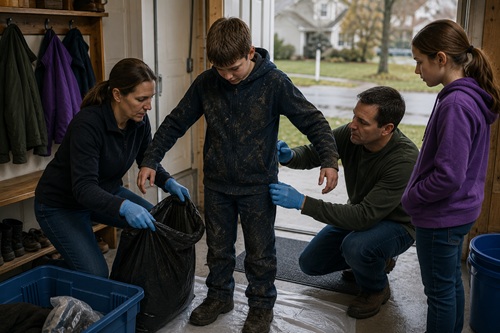
One of the simplest and most effective protective actions is removing outer clothing before entering clean living areas.
Numerous emergency preparedness studies have shown that this single step can remove a significant portion of contamination because most radioactive particles remain on outer garments rather than reaching the skin.
Once contaminated clothing has been removed, washing exposed skin and hair with soap and lukewarm water removes many remaining particles.
The goal is not to scrub aggressively.
Gentle washing is generally more effective because harsh scrubbing may irritate the skin without improving decontamination.
Internal Contamination
Internal contamination occurs when radioactive materials enter the body.
This may happen through:
breathing contaminated dust
eating contaminated food
drinking contaminated water
or through open wounds.
Unlike contamination on clothing or skin, radioactive materials inside the body cannot simply be washed away.
This is one reason emergency planners emphasize preventing inhalation and ingestion whenever possible.
Remaining indoors during active fallout.
Keeping windows closed.
Protecting stored food.
Covering drinking water.
Avoiding unnecessary outdoor activity.
These recommendations all reduce opportunities for radioactive materials to enter the body.
Prevention is almost always easier than treatment.
Preventing Contamination From Entering Your Shelter
Once radioactive fallout begins settling outdoors, your shelter becomes a clean environment that should remain as free of contamination as possible.
Every unnecessary trip outdoors increases the possibility of bringing radioactive particles back inside.
If someone must leave the shelter, planning ahead can greatly reduce contamination.
Whenever practical, remove outer clothing before entering the main living area.
Place contaminated clothing in a sealed plastic bag or another designated container away from living spaces until it can be safely handled later.
Remove shoes before walking through the shelter.
Wash exposed skin and hair if water is available.
These simple habits prevent contamination from spreading throughout the building.
Pets Can Carry Contamination Too
Many preparedness discussions overlook household pets.
Dogs and cats moving outdoors during a fallout event may collect radioactive particles on their fur and paws.
If they immediately return indoors, those particles may be transferred to floors, furniture, bedding, and people.
Whenever practical, pets returning from outside should be gently cleaned before entering primary living areas.
Brushing loose debris outdoors before bringing them inside may reduce contamination.
If water is available and conditions permit, washing paws and fur may remove additional particles.
Planning for pets before an emergency occurs allows families to reduce stress while protecting both animals and people.
Vehicles Can Become Contaminated
Vehicles parked outdoors during fallout may also collect radioactive particles.
The greatest concern is usually not the vehicle itself but the contamination carried inside.
Shoes, clothing, and equipment can transfer radioactive dust to seats, floor mats, steering wheels, and storage compartments.
For this reason, unnecessary vehicle use during active fallout should generally be avoided whenever possible.
If travel becomes necessary, minimizing contamination before re-entering your shelter reduces the amount carried indoors.
Later in this handbook we will discuss practical methods for cleaning vehicles safely after radiation levels have declined.
Clean Zones and Dirty Zones
One useful concept borrowed from emergency response organizations is separating areas into clean zones and dirty zones.
A clean zone is the primary living area where contamination is kept to an absolute minimum.
A dirty zone is a small transition area near an entrance where shoes, coats, tools, backpacks, and other potentially contaminated items can be temporarily stored until they are cleaned or safely handled.
Creating even a simple transition space helps prevent contamination from spreading throughout the shelter.
This concept becomes especially valuable if family members must occasionally leave the shelter for essential tasks.
Common Misconceptions
One misconception is that radioactive contamination behaves like poison gas.
It does not.
Contamination consists of physical particles that can often be removed from surfaces through careful cleaning.
Another misconception is that once contamination touches an object it remains permanently dangerous.
In reality, contamination may often be reduced or removed, while the radioactivity itself naturally decreases over time through radioactive decay.
Finally, many people believe contamination can only occur after a nuclear weapon detonates.
Radioactive contamination may also result from nuclear power plant accidents, industrial incidents, transportation accidents involving radioactive materials, and other radiological emergencies.
Understanding contamination therefore has value beyond nuclear war preparedness.
Key Takeaways
Radioactive contamination involves physical particles rather than invisible energy. Because those particles can often be removed or prevented from spreading, understanding contamination control becomes one of the most effective ways to reduce unnecessary radiation exposure.
Removing contaminated clothing, washing exposed skin, protecting indoor living spaces, preventing inhalation of contaminated dust, and establishing simple clean and dirty zones all contribute to keeping shelters safer during a nuclear emergency.
Perhaps most importantly, contamination control demonstrates a recurring principle found throughout this handbook:
Small actions, taken consistently, often provide significant protection.
Lesson 7
Why Time Is One of Your Greatest Allies
Understanding Radioactive Decay and the 7:10 Rule
Why This Lesson Matters
One of the first questions people ask after learning about radioactive fallout is surprisingly simple.
“How long will it remain dangerous?”
It is an understandable question, but the answer is not always straightforward.
Different radioactive materials remain hazardous for different lengths of time. Some lose most of their radioactivity within hours, while others remain detectable for years. Fortunately, following a nuclear detonation, many of the radioactive materials responsible for the highest radiation levels immediately after the event decay relatively quickly. This means the danger from fallout is greatest during the first hours and gradually decreases as time passes.
This natural reduction in radiation is one of the reasons emergency officials often recommend remaining sheltered rather than immediately evacuating. Every hour spent safely inside a well-protected building allows radiation levels outside to decline. In many situations, patience becomes one of the most effective forms of protection available.
Understanding why radiation decreases over time helps families make informed decisions rather than relying on arbitrary time limits or misinformation.
What Is Radioactive Decay?
Not all atoms are stable.
Some naturally seek a more stable form by releasing energy in the form of radiation. This process is known as radioactive decay.
Unlike many physical or chemical reactions, radioactive decay cannot be accelerated, slowed, or stopped by ordinary means. Heating, cooling, freezing, or exposing radioactive material to sunlight does not change the rate at which unstable atoms decay.
Each radioactive element follows its own predictable pattern. Scientists have studied these patterns for decades, allowing emergency planners to estimate how radiation levels change after different types of nuclear events.
This predictable behavior is one of the reasons radiation protection can be based on science rather than guesswork.
Understanding Half-Life
One of the most common terms associated with radioactive materials is half-life.
A half-life is the amount of time required for half of the radioactive atoms in a sample to decay into a more stable form.
The word half is important.
Imagine you have one hundred radioactive atoms.
After one half-life, approximately fifty remain radioactive.
After another half-life, about twenty-five remain.
After a third half-life, roughly twelve remain.
The process continues in the same pattern.
Notice something important.
The material does not suddenly become safe when one half-life has passed.
Instead, its radioactivity gradually decreases over time.
Different radioactive elements have very different half-lives. Some exist for only seconds before decaying. Others remain radioactive for decades or even centuries.
Fortunately, the mixture of radioactive materials produced immediately after a nuclear detonation includes many short-lived isotopes that lose their intensity rapidly during the first hours and days.
Why Radiation Drops So Quickly After Fallout
Many people assume radiation levels remain constant after a nuclear event.
Fortunately, that is not how fallout behaves.
Immediately after fallout reaches the ground, radiation levels are generally at or near their highest.
As time passes, many of the most active radioactive materials decay rapidly.
Because several different radioactive elements are decaying simultaneously, overall radiation levels decrease much faster than many people expect.
This natural decline forms the basis for one of the most useful planning tools in emergency preparedness.
Understanding the 7:10 Rule
Emergency planners have long used a practical guideline known as the 7:10 Rule to estimate how radiation levels decrease following fallout.
The rule is simple.
For every sevenfold increase in time, radiation levels decrease to approximately one-tenth of their previous level.
For example:
If radiation measures a certain level one hour after fallout begins, it will typically be about one-tenth as intense seven hours later.
After forty-nine hours—seven times seven—it will generally be about one-tenth of the seven-hour level.
Seven hours become forty-nine hours.
Forty-nine hours become approximately two weeks.
Each sevenfold increase in time results in another significant reduction in radiation.
This is not a precise prediction for every location or every radioactive material, but it provides emergency planners with a practical way to understand how radiation changes over time.
The important lesson is not the mathematics.
The important lesson is that radiation from fallout decreases rapidly during the early stages.
Time truly becomes one of your greatest allies.
Why Sheltering Makes Sense
Understanding the 7:10 Rule explains why emergency officials often recommend remaining indoors immediately after fallout arrives.
Some people instinctively believe they should leave as quickly as possible.
However, traveling outdoors while radiation levels are at their highest may result in significantly greater exposure than remaining inside a protected building.
Every hour spent safely sheltered allows radiation levels outside to continue declining.
Combined with the shielding provided by the building itself, this reduction can dramatically lower overall exposure.
This is why emergency planning focuses first on surviving the initial period safely rather than rushing into unnecessary movement.
Why Every Situation Is Different
Although the 7:10 Rule provides an excellent planning tool, it should never be interpreted as a fixed schedule.
Many factors influence actual radiation levels.
The amount of fallout deposited.
Weather conditions.
Wind.
Rain.
The type of nuclear event.
Distance from the source.
Local geography.
Building construction.
Because of these variables, emergency officials rely on radiation measurements whenever available rather than depending solely on estimated timelines.
For households without access to monitoring equipment, following official guidance remains the safest course of action whenever communication systems are functioning.
Planning for Extended Shelter
One of the practical lessons of radioactive decay is that families should prepare to remain sheltered for an extended period if necessary.
This does not mean remaining indoors indefinitely.
It means having enough food, water, medications, sanitation supplies, lighting, communication equipment, and other essentials to avoid unnecessary trips outside during the period of highest radiation.
Planning ahead reduces difficult decisions later.
A family that already has adequate supplies can remain sheltered with far less stress than one forced to venture outdoors because essential items were overlooked.
Preparedness is often about creating options.
Time allows radiation levels to decrease.
Supplies allow families to make use of that time safely.
Common Misconceptions
One misconception is that radiation remains equally dangerous forever.
In reality, many radioactive materials lose much of their intensity during the first hours and days following fallout.
Another misconception is that once twenty-four hours have passed, all danger has disappeared.
While radiation levels are generally much lower than immediately after the event, radioactive materials may still present hazards depending on local conditions.
Finally, some people believe they can determine radiation levels simply by waiting a certain number of days.
Radiation cannot be judged by appearance, smell, or intuition.
Whenever available, radiation monitoring equipment and official guidance provide the most reliable information for determining when conditions have improved.
Key Takeaways
Radioactive materials naturally become less radioactive over time through a process known as radioactive decay. Following a fallout event, this decline is often rapid during the first hours and days, making time one of the most effective protective tools available.
The 7:10 Rule provides a practical way of understanding this decline and explains why emergency planners frequently recommend sheltering during the initial fallout period rather than attempting immediate evacuation.
By combining time with effective shelter, contamination control, and thoughtful planning, families can significantly reduce unnecessary radiation exposure while allowing conditions outside to improve naturally.
Lesson 8
Leaving Shelter Safely
Understanding Protective Clothing, Decontamination, and Essential Travel
Why This Lesson Matters
One of the greatest misconceptions surrounding nuclear emergencies is that people should never leave their shelter until every danger has passed. While remaining indoors during the period of highest fallout is often one of the safest protective actions, circumstances may eventually require someone to venture outside. A medical emergency, fire, structural damage, or the need to obtain critical supplies may make temporary travel unavoidable.
Knowing how to reduce exposure during these situations is an important part of preparedness.
The objective is not to eliminate every possible risk. Rather, it is to understand how radioactive contamination behaves and to take practical steps that reduce unnecessary exposure while protecting both yourself and those waiting inside the shelter.
One of the most important lessons to remember is that protective clothing does not stop most penetrating radiation. Instead, its primary purpose is to prevent radioactive particles from settling on your body and clothing where they can later be carried back into your shelter.
Understanding this distinction helps explain why simple clothing, careful planning, and proper decontamination procedures are often more valuable than expensive specialized equipment.
Do You Need a Radiation Suit?
Movies often portray people entering contaminated areas wearing bulky protective suits connected to breathing apparatuses.
This has led many people to believe that such equipment is necessary for surviving radioactive fallout.
For most households, this simply is not true.
The specialized suits worn by hazardous materials teams are designed primarily to prevent contamination from contacting the body. They are not intended to make the wearer immune to radiation.
In fact, most protective suits provide very little shielding from penetrating gamma radiation.
A person wearing an expensive hazmat suit while standing in an area with high gamma radiation may receive nearly the same radiation exposure as someone wearing ordinary clothing.
The suit helps prevent contamination.
It does not stop the radiation itself.
This is one of the most misunderstood concepts in nuclear preparedness.
What Protective Clothing Actually Does
Although ordinary clothing cannot block significant amounts of gamma radiation, it performs another extremely important function.
It keeps radioactive particles off your skin.
Long sleeves.
Long pants.
Closed footwear.
Gloves.
Head coverings.
Eye protection.
These items reduce the amount of fallout that contacts your body.
After returning indoors, contaminated outer clothing can be removed before entering clean living areas.
Instead of bringing radioactive dust into the shelter, much of it remains on the clothing that is left behind.
This simple principle dramatically reduces contamination inside the shelter.
Planning Before You Leave
If travel outside becomes necessary, planning ahead reduces both exposure and stress.
Before opening the door, ask several important questions.
Is this trip absolutely necessary?
Can it wait until radiation levels have declined further?
Is there another way to accomplish the same task without leaving shelter?
If travel cannot be avoided, determine exactly where you need to go before stepping outside.
Know your route.
Know what you need to accomplish.
Know how you will return.
The less time spent outdoors, the lower your potential exposure.
Preparation inside the shelter often saves valuable minutes outside.
Minimize Time Outdoors
In Lesson Four we learned that time is one of the three primary principles of radiation protection.
That principle becomes especially important during necessary travel.
Moving efficiently does not mean rushing carelessly.
Instead, it means avoiding unnecessary delays.
Gather tools before leaving.
Avoid unnecessary conversations.
Complete essential tasks.
Return directly to shelter.
Every unnecessary minute outdoors increases potential exposure.
Planning allows essential work to be completed safely without wasting valuable time.
Avoid Disturbing Dust
Because radioactive fallout often settles as fine particles, disturbing accumulated dust may increase the amount suspended in the air.
Walking through dry soil.
Sweeping debris.
Driving rapidly over dusty roads.
Using leaf blowers.
These activities may increase airborne contamination.
Whenever practical, choose cleaner routes that minimize contact with accumulated dust and avoid creating unnecessary airborne particles.
Understanding how contamination spreads is often more valuable than wearing additional protective clothing.
Protecting Your Airway
One of the primary goals during outdoor travel is preventing radioactive particles from entering the lungs.
If contaminated dust is present, reducing inhalation becomes an important protective measure.
Appropriate respiratory protection can help reduce the inhalation of airborne particles, but no simple face covering provides complete protection against every hazard. The effectiveness of any respirator depends on the type of particles present, how well it fits the wearer, and whether it is used correctly.
Even when respiratory protection is available, limiting time outdoors and avoiding dusty conditions remain essential because reducing exposure at the source is generally more effective than relying on protective equipment alone.
Returning to Shelter
Returning safely is just as important as leaving safely.
Before entering the main living area, pause at the entrance.
Remove outer garments if contamination is suspected.
Remove shoes before walking through clean areas.
Place potentially contaminated clothing into a designated container or sealed plastic bag.
Wash exposed skin using soap and lukewarm water if available.
Wash hair thoroughly if it may have been exposed.
Avoid harsh scrubbing.
The goal is to remove particles, not damage the skin.
These simple procedures may remove a substantial amount of external contamination before it spreads throughout the shelter.
Protecting Other Family Members
One person’s contamination can quickly become everyone’s problem.
If contaminated clothing is carried through the shelter, radioactive particles may spread onto floors, furniture, bedding, and other family members.
Establishing a small transition area near the entrance greatly reduces this risk.
Emergency response organizations often refer to these as contamination control areas.
For households, the concept can be much simpler.
A mat for shoes.
A chair for removing boots.
A container for outer clothing.
Soap.
Clean towels.
Clean replacement clothing.
This small area becomes the boundary between the outside world and the protected living space.
When You Should Not Go Outside
One of the most valuable preparedness skills is recognizing when not to act.
Many unnecessary exposures occur because people become curious.
They want to see what happened.
Check the neighborhood.
Take photographs.
Inspect damage.
Watch events unfold.
During active fallout, curiosity can become a source of unnecessary risk.
If no essential task requires leaving shelter, remaining indoors continues to provide the greatest protection.
Preparedness often involves knowing when patience is the safest decision.
Common Misconceptions
Many people believe protective suits block radiation.
Most do not.
Their primary purpose is contamination control.
Another misconception is that more layers of ordinary clothing provide complete protection.
While additional clothing helps keep fallout off the body, it should never be viewed as a substitute for effective shelter or distance from radioactive materials.
Finally, some people assume decontamination requires specialized chemicals.
In many situations, simple soap, clean water, fresh clothing, and careful handling of contaminated items remove a large portion of external contamination.
Understanding the process is far more important than owning expensive equipment.
Key Takeaways
Leaving shelter should always be based on necessity rather than convenience. When travel becomes unavoidable, careful planning, minimizing time outdoors, avoiding contaminated dust, wearing appropriate protective clothing, and following proper decontamination procedures significantly reduce unnecessary exposure.
Protective clothing should be viewed primarily as a barrier against radioactive particles, not as armor against radiation itself. The greatest protection continues to come from limiting exposure, using effective shelter, and preventing contamination from entering clean living spaces.
Understanding these principles allows families to carry out essential tasks more safely while maintaining the integrity of their shelter.
Lesson 9
Building a Nuclear Preparedness System
Why This Lesson Matters
When people first begin preparing for emergencies, it is natural to focus on buying supplies. Store shelves filled with emergency food, first aid kits, flashlights, and survival equipment often create the impression that preparedness is simply a matter of purchasing enough gear.
While equipment certainly has an important place, supplies alone do not create preparedness.
Preparedness is built by creating systems that allow a household to continue functioning when normal services become unavailable.
A flashlight is useful.
A lighting system is far more valuable.
A case of bottled water is helpful.
A dependable water supply plan is far better.
Owning a radio provides information.
Having a communication plan ensures everyone knows how that information will be used.
This lesson introduces a different way of thinking about preparedness. Rather than asking, “What should I buy?” it asks, “What does my family need in order to continue living safely if normal services are interrupted?”
That simple shift in thinking often results in better preparedness while avoiding unnecessary purchases.
Every Household Depends on Basic Systems
Whether we realize it or not, every home relies on several basic systems every day.
We depend on electricity for lighting, refrigeration, communication, and heating or cooling.
We depend on clean water for drinking, cooking, sanitation, and personal hygiene.
We depend on grocery stores for food, pharmacies for medications, fuel stations for transportation, and communication networks for information.
Under normal circumstances these systems work so reliably that most people rarely think about them.
During an emergency, however, even temporary disruptions can create unexpected challenges.
A prolonged power outage affects refrigeration.
Communication failures limit access to news.
Transportation disruptions delay deliveries.
Water service interruptions complicate cooking and sanitation.
Understanding these dependencies allows families to prepare practical alternatives long before they become necessary.
Preparedness begins by identifying the systems your household depends upon every day.
The Goal Is Continuity
One of the best ways to think about preparedness is to imagine that everyday life continues with as little disruption as possible.
Children still eat regular meals.
Medications remain available.
Drinking water remains safe.
Family members stay informed.
Basic hygiene continues.
The objective is not simply survival.
It is maintaining health, safety, and routine under difficult circumstances.
Families who preserve ordinary routines often experience less stress during emergencies because familiar habits continue even when outside conditions have changed dramatically.
Preparedness is therefore about continuity as much as it is about emergency supplies.
System One: Water
Water is the foundation of every emergency plan.
Without a reliable supply of safe drinking water, even the best-stocked pantry quickly becomes difficult to use.
Water is needed for drinking.
Cooking.
Cleaning.
Hand washing.
Medical care.
Preparing infant formula.
Taking medications.
Sanitation.
Even simple tasks such as brushing teeth or washing dishes require clean water.
For this reason, households should think beyond bottled water and develop a complete water strategy.
How much water is already stored?
Where will additional water come from?
How will it be protected from contamination?
Can it be treated if necessary?
Understanding the answers to these questions is often more valuable than simply storing a few extra bottles.
Later lessons will explore emergency water planning in much greater detail.
System Two: Food
Food preparedness involves much more than storing calories.
Nutrition.
Meal preparation.
Fuel.
Cooking equipment.
Food safety.
Storage conditions.
Rotation.
Special dietary needs.
All influence how useful an emergency food supply will be.
One of the greatest strengths of a well-planned pantry is familiarity.
Families who regularly prepare meals using stored foods experience far less stress than those attempting to learn entirely new cooking methods during an emergency.
Preparedness is greatly strengthened when emergency foods are also everyday foods.
This principle reduces waste, improves food rotation, and builds confidence through experience.
System Three: Shelter
Earlier lessons discussed selecting the safest location during a nuclear emergency.
Shelter planning also includes maintaining the conditions needed to remain there comfortably.
Sleeping arrangements.
Lighting.
Ventilation.
Temperature management.
Sanitation.
Privacy.
Comfort.
These factors become increasingly important during extended shelter periods.
A room that provides excellent radiation protection may still require additional planning if people expect to remain there for several days.
Thinking through these details before an emergency occurs helps identify small improvements that make long periods of sheltering much easier.
System Four: Information
Information can be just as valuable as food or water.
Reliable updates help families understand changing conditions, official recommendations, weather forecasts, evacuation instructions, and recovery efforts.
During widespread emergencies, however, internet access, cellular service, and electrical power may become unreliable.
For this reason, every preparedness plan should include multiple methods of receiving information.
Battery-powered radios.
Hand-crank radios.
Backup power for communication devices.
Printed reference materials.
Offline maps.
Written emergency contact information.
No single communication method should be viewed as guaranteed.
Preparedness improves when several options are available.
System Five: Health
Medical preparedness extends far beyond first aid kits.
Prescription medications.
Eyeglasses.
Medical devices.
Infant supplies.
Chronic health conditions.
Mental health.
Personal hygiene.
Every family has unique medical needs that should be considered long before an emergency occurs.
A household with young children faces different challenges than one caring for elderly parents.
Someone living with diabetes prepares differently than someone with no chronic medical conditions.
Effective preparedness begins with understanding the specific needs of everyone living in the household.
System Six: Sanitation
Sanitation is often overlooked because it functions quietly during normal life.
Running water.
Flush toilets.
Garbage collection.
Wastewater treatment.
Soap.
Laundry.
All contribute to maintaining health.
When these systems become unavailable, disease risks increase rapidly.
Fortunately, many sanitation problems can be addressed with simple planning.
Stored hygiene supplies.
Waste collection materials.
Cleaning supplies.
Handwashing stations.
Alternative toilet arrangements.
These preparations protect health while making extended sheltering far more comfortable.
Building Layers Instead of Perfection
Many people postpone preparedness because they believe they must complete everything at once.
This often leads to frustration.
A more practical approach is building one layer at a time.
Perhaps this month you improve water storage.
Next month you organize emergency lighting.
Later you expand food storage.
Eventually you improve communication equipment.
Each improvement strengthens the entire preparedness system.
Preparedness is rarely completed in a single weekend.
It grows gradually as knowledge, experience, and resources increase.
Common Misconceptions
One of the most common misconceptions is that preparedness begins with buying expensive equipment.
In reality, understanding your household’s daily needs often identifies far more useful improvements than purchasing specialized gear.
Another misconception is that every family requires identical preparations.
Preparedness should always reflect the people who live in the home, their medical needs, available space, financial resources, and local risks.
Finally, many people believe preparedness is measured by the quantity of supplies they own.
A better measure is whether the household can continue functioning safely if normal services become unavailable.
Preparedness is about capability—not accumulation.
Key Takeaways
Strong preparedness plans are built around systems rather than individual pieces of equipment. Water, food, shelter, information, health, and sanitation work together to support everyday life during emergencies. By understanding these systems and gradually strengthening each one, families build resilience that benefits them not only during nuclear emergencies but also during storms, power outages, wildfires, and many other disruptions.
Perhaps the most important lesson is that preparedness is not created by purchasing everything at once.
It is built through thoughtful planning.
One improvement.
One skill.
One system at a time.
Lesson 10
Water: Your Most Critical Resource During a Nuclear Emergency
Why This Lesson Matters
Every emergency eventually becomes a water emergency.
People can survive for weeks without food under many circumstances, but only a few days without water. Beyond drinking, water is essential for preparing meals, taking medications, maintaining personal hygiene, cleaning wounds, washing away contamination, cooking stored foods, and supporting countless daily activities that often go unnoticed until they are no longer available.
During a nuclear emergency, water becomes even more important because it serves two separate purposes. It sustains life while also helping reduce radioactive contamination. At the same time, however, water itself may become vulnerable to contamination depending on where it comes from, how it is stored, and whether radioactive fallout has entered the environment.
Understanding how water systems work during a nuclear emergency allows families to prepare intelligently instead of relying on assumptions. Not all water sources present the same level of risk, and not every treatment method works against every type of contamination. Knowing the difference can make a significant difference when clean water becomes difficult to obtain.
Why We Depend on Water More Than We Realize
Most people think of water simply as something they drink throughout the day.
In reality, a typical household depends on water almost continuously.
Every meal requires it.
Coffee and tea.
Cooking pasta or rice.
Preparing soup.
Making bread.
Taking prescription medication.
Washing fruits and vegetables.
Brushing teeth.
Bathing.
Flushing toilets.
Laundry.
Cleaning dishes.
Washing hands.
Treating injuries.
Hydrating pets and livestock.
Water supports nearly every aspect of daily life.
When the tap stops working or the available supply becomes unsafe, the effects spread throughout the household almost immediately.
This is why emergency planners consistently place water at the top of every preparedness plan.
Understanding Where Your Water Comes From
One of the first steps in preparedness is understanding your household’s normal water source.
Some homes receive treated municipal water delivered through underground distribution systems.
Others rely on private wells.
Some rural properties use cisterns, springs, or rainwater collection systems.
Each source has different strengths and different vulnerabilities.
Municipal systems often contain large reserves and multiple treatment processes, but they depend on electricity, pumping stations, treatment facilities, and distribution infrastructure. A significant emergency affecting any part of that system may interrupt service or require boil-water advisories depending on local conditions.
Private wells are independent of municipal infrastructure, but many rely on electric pumps. If power is unavailable, the well itself may still contain water, but accessing it becomes difficult without backup power or manual pumping equipment.
Surface water sources such as rivers, lakes, ponds, and reservoirs are more directly exposed to environmental contamination. While they may remain valuable emergency resources, they require careful evaluation and appropriate treatment before being considered safe for use.
Understanding your own water source is the first step toward developing a realistic preparedness plan.
Can Radioactive Fallout Contaminate Water?
Yes.
However, the answer depends largely on the type of water source and when the contamination occurs.
When radioactive fallout settles onto the landscape, some particles may land directly on lakes, rivers, ponds, reservoirs, rooftop collection systems, or uncovered storage containers.
Rainfall can wash radioactive particles from rooftops, trees, and surrounding ground into surface water supplies.
Because fallout consists of physical particles, the greatest concern is often the particles themselves rather than the water.
Protected water stored in sealed containers before the event generally remains one of the safest water sources available because radioactive particles cannot enter containers that remain properly sealed.
This illustrates an important preparedness principle.
Protecting water before contamination occurs is almost always easier than attempting to remove contamination afterward.
Why Sealed Water Storage Is So Valuable
One of the simplest and most effective preparedness measures is maintaining a supply of water that has already been stored in clean, sealed containers.
Commercially bottled water is one option, but food-grade containers filled and stored properly can be equally effective.
The key advantage is protection.
If radioactive fallout occurs, properly sealed containers remain isolated from the outside environment.
Unlike open buckets, uncovered rain barrels, or exposed containers, sealed water supplies are not directly exposed to falling radioactive particles.
This makes pre-event storage one of the most dependable sources of drinking water during the early stages of a nuclear emergency.
It also reduces the need to venture outdoors while fallout is actively settling.
Why Boiling Water Is Not Enough
One of the most common misconceptions in emergency preparedness is that boiling water solves every contamination problem.
Boiling is highly effective for destroying many bacteria, viruses, and parasites.
It does not remove radioactive particles or dissolved radioactive materials.
In fact, boiling contaminated water until some of it evaporates may actually increase the concentration of certain contaminants remaining in the water.
This does not mean boiling has no place during emergencies.
It remains an excellent method for controlling biological contamination.
However, radioactive contamination presents a different challenge.
Understanding the difference between biological hazards and radioactive hazards helps families choose appropriate treatment methods rather than relying on a single solution for every situation.
Can Water Filters Remove Radioactive Contamination?
This is one of the most frequently asked questions in preparedness.
The answer depends on what is contaminating the water and what type of filter is being used.
If radioactive contamination is attached to suspended particles such as fine dust or sediment, filtration may remove many of those particles before the water is used.
However, if radioactive materials are dissolved in the water itself, not all household filters are designed to remove them.
Different filtration technologies are designed for different purposes. Some excel at removing sediment, others improve taste and odor, while specialized systems are capable of reducing certain dissolved contaminants.
For this reason, it is important to understand the capabilities and limitations of any filtration system before relying on it during an emergency.
Later in this handbook we will examine water treatment methods in greater detail and discuss where each technology fits within a comprehensive preparedness strategy.
Protecting Water After Fallout
If fallout has occurred, protecting remaining clean water becomes a priority.
Keep storage containers sealed whenever possible.
Avoid collecting rainwater immediately after fallout unless official guidance indicates it is safe to do so.
Prevent contaminated tools, clothing, or hands from contacting clean water containers.
If drawing water from larger storage tanks or cisterns, use clean equipment and minimize unnecessary exposure to outdoor contamination.
Small precautions taken early help preserve valuable water supplies throughout the emergency.
Water Planning Begins Before the Emergency
The strongest water preparedness plans are developed long before they are needed.
Families should know:
How much water they currently have.
How long it will last.
Where additional water can be obtained.
How it will be treated if necessary.
How it will be protected from contamination.
How it will be transported if the normal water system becomes unavailable.
Answering these questions before an emergency greatly reduces uncertainty when time and resources become limited.
Preparedness is rarely about having one perfect solution.
It is about having several dependable options.
Common Misconceptions
Many people believe boiling water removes every type of contamination.
While boiling remains one of the best methods for controlling disease-causing microorganisms, it does not remove radioactive particles or every dissolved contaminant.
Another misconception is that all water sources become equally dangerous after fallout.
In reality, protected, sealed water supplies often remain among the safest sources available, while open surface water may require much greater caution and evaluation.
Finally, some people assume that once fallout settles, all rainwater is permanently unsafe.
The level of risk depends on the timing of the fallout, local conditions, and official monitoring. Understanding how contamination occurs is far more useful than relying on broad assumptions.
Key Takeaways
Water is one of the most important resources during any emergency, and nuclear preparedness adds another layer of consideration to water planning. Protecting clean water before contamination occurs is often easier than attempting to restore contaminated supplies afterward. Understanding your household’s water sources, storing water in sealed containers, recognizing the limitations of boiling, and knowing how different treatment methods work all contribute to a stronger preparedness plan.
Perhaps the most important lesson is this:
Water preparedness begins long before you ever need to drink from your emergency supply.
Every gallon safely stored today is one less problem to solve during an emergency tomorrow.
Lesson 11
Food During a Nuclear Emergency
Building a Food System That Continues to Work
Why This Lesson Matters
Food is often one of the first things people think about when preparing for emergencies. Images of shelves lined with canned goods, buckets of grain, freeze-dried meals, and emergency rations have become closely associated with preparedness. While maintaining an emergency food supply is certainly important, food preparedness involves far more than simply storing calories.
During a nuclear emergency, food supports much more than physical survival. Regular meals help maintain strength, support immune function, reduce stress, preserve routines for children, and improve emotional well-being during what may be an uncertain and highly stressful situation. A dependable food supply also reduces the need to leave shelter while radioactive fallout presents the greatest risk outdoors.
Perhaps the greatest advantage of preparing food in advance is flexibility. Families with well-stocked pantries can make decisions based on safety rather than necessity. Instead of venturing outdoors because groceries are running low, they can remain safely sheltered while conditions improve. In many situations, that additional time may significantly reduce unnecessary radiation exposure.
Understanding how different foods respond to radioactive fallout also helps families protect the supplies they already have. Not every food faces the same level of risk. Packaging, storage location, preparation methods, and exposure to the environment all influence whether food remains suitable for consumption.
Food Security Begins Before the Emergency
One of the biggest misconceptions surrounding emergency food storage is that it begins when disaster strikes.
In reality, food security is built gradually over months or even years.
Every can placed on the pantry shelf.
Every bag of grain properly stored.
Every recipe learned.
Every meal prepared using stored ingredients.
These small decisions gradually create a food system capable of supporting a household during unexpected disruptions.
Preparedness is not measured by how much food someone owns.
It is measured by whether that food can continue feeding the household when normal supply chains are interrupted.
This distinction becomes especially important during a nuclear emergency, when avoiding unnecessary trips outside may become one of the safest protective actions available.
Understanding Food Exposure
Radioactive fallout affects food differently depending on whether the food is exposed to the environment.
Food stored inside sealed containers is generally well protected because radioactive particles cannot easily reach the contents.
Commercially canned foods.
Factory-sealed jars.
Sealed plastic containers.
Unopened bottled beverages.
Foods stored inside properly sealed Mylar bags.
These remain among the safest food supplies available because the contamination remains on the outside of the packaging rather than reaching the food itself.
Before opening these containers, simply wiping or washing the outside helps prevent radioactive particles from being transferred to hands, utensils, or preparation surfaces.
This simple precaution illustrates an important preparedness principle.
Sometimes protecting food is less about the food itself and more about preventing contamination during handling.
Fresh Foods Require More Care
Fresh fruits and vegetables growing outdoors when fallout occurs present different challenges.
Leaves, stems, fruit surfaces, and garden soil may collect radioactive particles settling from the atmosphere.
This does not automatically mean every crop must be discarded.
However, careful evaluation becomes necessary.
Some contamination may remain only on the surface and can be reduced through washing, peeling, or removing outer leaves.
Other situations may require waiting for official guidance before consuming produce grown in affected areas.
Understanding how contamination reaches food helps families make better decisions than simply assuming all outdoor crops are either completely safe or completely unsafe.
Preparedness often involves evaluating conditions rather than relying on absolute rules.
Gardens After Fallout
Many preparedness plans include vegetable gardens, fruit trees, berry bushes, and small-scale agriculture.
These resources remain valuable, but following a fallout event they should be approached thoughtfully.
Radioactive particles settling on leaves or fruit differ from radioactive materials absorbed through plant roots.
The amount of contamination depends on many factors, including rainfall, plant type, local soil conditions, and the specific radioactive materials present.
Because these variables differ widely from one event to another, emergency planners typically recommend following official agricultural guidance whenever available.
Understanding the science behind contamination allows gardeners to appreciate why recommendations sometimes differ between crops and locations.
Livestock and Dairy
Animals also interact with the environment in different ways.
Livestock grazing on contaminated pasture may consume radioactive materials deposited on grass and forage.
These materials may later appear in milk or certain animal products, depending on the specific radioactive substances involved.
This relationship has been studied extensively following several nuclear accidents and has influenced agricultural monitoring programs around the world.
Families raising livestock should understand that protecting stored feed before fallout occurs is just as important as protecting human food supplies.
Feed stored inside barns, silos, sealed containers, or other protected structures often remains far less vulnerable than pasture exposed directly to fallout.
Again, preparedness begins before the emergency.
Frozen Foods
Many households rely heavily on freezers.
During the early stages of a nuclear emergency, frozen foods remain valuable provided electrical power continues operating.
If power is interrupted, a full freezer often remains cold considerably longer than many people expect, especially when the door remains closed.
Understanding how long frozen foods remain safe depends on several factors, including freezer insulation, ambient temperature, and how often the door is opened.
This highlights another important preparedness principle.
Food preservation depends not only on the food itself but also on supporting systems such as electricity, backup power, and temperature management.
Cooking During Extended Shelter
Preparing food during a nuclear emergency involves more than simply having ingredients.
Families should also consider:
How meals will be cooked if electricity is unavailable.
Whether adequate water is available.
How dishes will be cleaned.
How food waste will be managed.
Whether indoor cooking methods produce dangerous carbon monoxide.
These practical considerations are often overlooked until they become immediate problems.
Developing simple meal plans before an emergency helps reduce uncertainty while making more efficient use of available food, water, and fuel.
Rotation Prevents Waste
Emergency food should not become forgotten food.
One of the strongest preparedness habits is incorporating stored foods into everyday meals.
Using older supplies while replacing them with newly purchased items naturally rotates inventory without requiring complicated tracking systems.
This approach offers several advantages.
Food remains fresher.
Families become familiar with preparing stored ingredients.
Recipes improve through practice.
Waste decreases.
Perhaps most importantly, confidence grows because emergency foods become ordinary foods rather than unfamiliar items waiting for a disaster.
Food Supports More Than Nutrition
Food provides more than calories.
Shared meals provide routine.
Routine reduces anxiety.
Children often respond positively to familiar foods during stressful situations.
Comfort foods may help reduce emotional stress during extended sheltering.
A warm meal can improve morale after an exhausting day.
These psychological benefits should not be overlooked.
Preparedness is not only about surviving.
It is about maintaining physical and emotional well-being under difficult circumstances.
Common Misconceptions
Many people believe emergency food must consist entirely of specialized survival meals.
While commercially prepared emergency foods certainly have value, ordinary pantry foods often provide excellent preparedness when properly stored and rotated.
Another misconception is that every outdoor food source automatically becomes unsafe after fallout.
In reality, contamination depends on many factors, and different foods require different evaluation methods.
Finally, some people focus entirely on storing food while overlooking preparation.
Food that cannot be cooked, opened, or safely prepared may become far less useful than expected.
Preparedness includes both supplies and the ability to use them effectively.
Key Takeaways
Food preparedness is not simply about storing enough calories to survive.
It is about creating a dependable food system that allows a household to remain safe, healthy, and self-sufficient during extended disruptions.
Protecting food from contamination, understanding how different foods respond to fallout, rotating supplies regularly, and developing practical cooking plans all contribute to stronger preparedness.
Perhaps the greatest lesson is that emergency food should become part of everyday life.
The more familiar families become with their stored foods before an emergency, the more confidently they can rely on them if one ever occurs.
Lesson 12
Medical Preparedness During a Nuclear Emergency
Understanding the Injuries Before Building the Medical Kit
Why This Lesson Matters
When people think about medical preparedness for a nuclear emergency, they often imagine treating radiation sickness. While radiation exposure is certainly an important concern, it is only one of many medical problems that may occur following a nuclear event. In fact, history has shown that many injuries during disasters have little to do with radiation itself.
Broken bones, cuts, burns, smoke inhalation, dehydration, infections, and the worsening of existing medical conditions often place a greater burden on healthcare systems than radiation injuries alone. Hospitals may become overwhelmed, transportation may be disrupted, pharmacies may close, and emergency responders may have difficulty reaching affected areas. Families who have prepared to manage routine medical problems at home are often better positioned to care for themselves while professional medical services focus on the most critically injured patients.
Medical preparedness therefore begins with understanding the types of injuries that are most likely to occur. Once those risks are understood, building an appropriate medical kit becomes far more logical than simply purchasing random supplies.
Most Medical Problems Will Not Be Caused by Radiation
One of the greatest misconceptions surrounding nuclear emergencies is that everyone who becomes injured will suffer from radiation poisoning.
The reality is usually much different.
Consider what happens during many disasters.
People trip over debris while evacuating.
Broken glass causes cuts.
Power outages increase the use of candles and generators, creating burn and carbon monoxide hazards.
Stress contributes to heart attacks and anxiety.
Chronic illnesses become more difficult to manage when medications are unavailable.
These injuries occur regardless of whether radiation is involved.
For this reason, a well-prepared household should first be capable of treating ordinary medical problems before focusing on the unique challenges associated with radiation.
Preparedness begins with the problems that are most likely to occur.
Understanding Radiation Exposure
Radiation exposure occurs when the body absorbs energy emitted by radioactive materials.
Exposure alone does not necessarily mean radioactive material has entered the body.
This distinction is important.
A person may receive radiation exposure without becoming contaminated.
Likewise, a person may become contaminated with radioactive particles without immediately developing symptoms.
The amount of radiation absorbed depends on several factors.
The intensity of the source.
The amount of time exposed.
The distance from the source.
The amount of shielding available.
Understanding these relationships helps explain why reducing exposure through sheltering, distance, and contamination control remains one of the most effective forms of medical protection.
Understanding Acute Radiation Syndrome
One of the most widely discussed medical conditions associated with high radiation exposure is Acute Radiation Syndrome (ARS).
ARS occurs only after exposure to very high doses of ionizing radiation received over a relatively short period.
Most people involved in a nuclear emergency will not develop ARS.
This point is important because movies often create the impression that any exposure immediately produces severe illness.
That is not how radiation behaves.
When ARS does occur, symptoms generally develop in stages.
Early symptoms may include nausea, vomiting, fatigue, and loss of appetite. Depending on the dose received, some individuals may experience a temporary period during which they feel relatively normal before more serious symptoms develop. Higher radiation doses can damage the bone marrow, digestive system, skin, and other rapidly dividing tissues, making professional medical care essential.
The severity of ARS depends on the total radiation dose received, the rate at which it was received, and the parts of the body exposed. This is why every lesson earlier in this handbook has emphasized reducing exposure whenever possible.
Burns May Be More Common Than Radiation Injury
Following a nuclear detonation, intense thermal energy may ignite buildings, vegetation, vehicles, and other combustible materials over a wide area.
Even individuals located far enough away to avoid the blast may suffer burns from intense heat or secondary fires.
Household fires may also occur from damaged electrical systems, overturned candles, cooking accidents, or malfunctioning generators used after power outages.
For many families, burns may represent a far more immediate medical concern than radiation itself.
Understanding basic burn first aid, preventing infection, and maintaining clean dressings are practical preparedness skills that remain valuable during many types of emergencies.
Cuts, Fractures, and Trauma
Broken windows.
Falling debris.
Collapsed structures.
Vehicle accidents.
Storm damage.
These are common sources of injury during many disasters, including nuclear emergencies.
Even simple lacerations may become serious if clean water, antibiotics, or professional medical care are difficult to obtain.
Knowing how to clean wounds, control bleeding, recognize signs of infection, and stabilize suspected fractures may significantly improve outcomes while waiting for additional medical assistance.
These skills remain valuable regardless of the cause of the emergency.
Chronic Medical Conditions
For many households, the greatest medical challenge during an extended emergency is not trauma.
It is continuity of care.
Individuals living with diabetes, heart disease, asthma, high blood pressure, epilepsy, kidney disease, or other chronic conditions often rely on daily medications, medical devices, or ongoing treatment.
Interruptions to these treatments may become life-threatening long before radiation exposure becomes a concern.
Preparedness therefore includes maintaining an adequate supply of prescription medications whenever possible, understanding proper storage requirements, keeping updated medication lists, and discussing emergency planning with healthcare providers before an emergency occurs.
Planning for chronic illness is often one of the most overlooked aspects of preparedness.
Mental Health Is Medical Preparedness
Disasters affect emotional health as well as physical health.
Fear.
Uncertainty.
Disrupted routines.
Isolation.
Sleep deprivation.
Concern for loved ones.
These factors place significant psychological stress on individuals and families.
Children may have difficulty understanding what is happening.
Adults may experience anxiety or become overwhelmed by uncertainty.
Maintaining routines, communicating openly, sharing meals together, staying informed through reliable sources, and focusing on practical tasks can help reduce stress during prolonged emergencies.
Mental well-being supports better decision-making, stronger family relationships, and improved physical health.
Preparedness should always consider both.
Building a Practical Medical Kit
Rather than asking, “What is the best first aid kit?”, a better question is:
“What medical problems am I most likely to face?”
Most households benefit from supplies capable of treating:
Minor cuts and scrapes.
Moderate bleeding.
Burns.
Blisters.
Headaches and fever.
Digestive problems.
Allergic reactions.
Routine illnesses.
Prescription medication continuity.
Personal hygiene.
Families should also consider the unique medical needs of every household member, including infants, older adults, and pets.
The goal is not to own every medical supply available.
It is to prepare for the situations most likely to occur.
Learn Skills Before You Need Them
Medical equipment is valuable only when people know how to use it.
A well-stocked first aid kit cannot compensate for a lack of basic knowledge.
Learning how to clean wounds, apply dressings, control bleeding, recognize dehydration, monitor fever, perform CPR, and respond to common emergencies provides benefits far beyond nuclear preparedness.
Skills remain useful long after supplies have been consumed.
Knowledge weighs nothing.
It requires no batteries.
It never expires.
It may become one of the most valuable preparedness resources a family possesses.
Common Misconceptions
Many people believe radiation sickness is the primary medical problem following every nuclear emergency.
In reality, ordinary injuries, chronic medical conditions, dehydration, burns, and infections often affect far more people.
Another misconception is that buying a large first aid kit automatically creates medical preparedness.
Preparedness depends just as much on training, planning, and understanding household medical needs.
Finally, some people focus exclusively on emergency trauma while overlooking routine healthcare. Maintaining prescription medications, treating minor illnesses, and supporting mental health are equally important components of preparedness.
Key Takeaways
Medical preparedness begins by understanding the injuries and health challenges most likely to occur. While radiation exposure deserves careful attention, ordinary medical problems often represent the greatest burden during disasters. Families who prepare for cuts, burns, dehydration, chronic illnesses, infection prevention, and emotional well-being are better positioned to remain healthy during prolonged emergencies.
Perhaps the most valuable medical supply is knowledge. Equipment can be lost, damaged, or consumed, but the ability to recognize problems, provide basic care, and make informed decisions remains with you wherever you go.
Lesson 13
Protecting the Air You Breathe
Understanding Airborne Fallout, Ventilation, and Respiratory Protection
Why This Lesson Matters
Breathing is something we rarely think about until the quality of the air around us changes. Smoke from wildfires, dust storms, industrial accidents, volcanic ash, and severe air pollution all remind us how quickly the atmosphere can become a health concern. During a nuclear emergency, the air presents a different challenge. The greatest risk is usually not the air itself, but the radioactive particles that may become suspended within it.
Understanding how airborne contamination behaves is essential because many of the protective actions recommended during a nuclear emergency are designed to reduce the inhalation of radioactive particles. These particles can settle onto the ground, become stirred back into the air by wind or human activity, and potentially enter the body through normal breathing.
Fortunately, this risk can often be reduced through practical measures such as sheltering indoors, limiting unnecessary travel, reducing the movement of contaminated dust, and understanding the capabilities and limitations of respiratory protection.
The goal is not to eliminate every particle from the air. It is to understand when airborne contamination is most likely to occur and how simple actions can significantly reduce unnecessary exposure.
Air Is Not the Hazard
One of the most common misconceptions is that the air itself becomes radioactive.
That is not how fallout normally behaves.
Air is simply the medium through which radioactive particles travel.
The radioactive material is attached to tiny particles of dust, ash, soil, building debris, or other matter suspended in the atmosphere.
If those particles are absent, the air itself is not the source of contamination.
This distinction helps explain why emergency planners focus on controlling dust rather than attempting to “clean” the atmosphere.
The objective is to avoid breathing radioactive particles—not to avoid breathing air.
How Fallout Moves Through the Air
Immediately following a nuclear detonation or a significant release of radioactive material, wind begins carrying particles through the atmosphere.
Large particles settle relatively quickly.
Smaller particles remain suspended longer.
Some may travel considerable distances before eventually falling to the ground.
Once particles settle, many remain undisturbed unless something causes them to become airborne again.
Strong winds.
Vehicle traffic.
Construction activity.
Sweeping.
Leaf blowers.
Dry conditions.
Even walking across dusty ground.
Each of these activities can lift settled particles back into the air, creating another opportunity for inhalation.
Understanding this cycle helps explain why minimizing dust becomes an important protective measure during recovery.
Why Inhalation Matters
Your lungs are remarkably efficient at transferring oxygen into your bloodstream.
Unfortunately, they are also capable of drawing very small airborne particles deep into the respiratory system.
If radioactive particles are inhaled, they may remain in the lungs for varying periods depending on their size and composition. Some may eventually be cleared naturally by the body’s defense mechanisms, while others may remain longer or be absorbed into the body depending on the specific radioactive materials involved.
This is one reason preventing inhalation is generally easier and safer than attempting to manage internal contamination after it has occurred.
Keeping particles outside the body remains one of the most effective protective strategies.
The Safest Air Is Usually Indoors
One of the simplest ways to reduce exposure to airborne fallout is to remain inside a well-constructed building during the period when fallout is actively settling.
Buildings naturally reduce the movement of outdoor air.
Walls.
Doors.
Windows.
Roofs.
All help limit the amount of dust entering the living space.
Closing windows and exterior doors during active fallout helps reduce the number of airborne particles entering the shelter.
This does not create a perfectly sealed environment.
Rather, it significantly reduces the amount of contamination entering compared with remaining outdoors.
As radiation levels decline and official guidance changes, ventilation practices may also change depending on local conditions.
Understanding Ventilation
People often wonder whether they should completely seal their homes.
For most houses, complete sealing is neither practical nor necessary.
Modern homes naturally exchange small amounts of air with the outside through tiny gaps, ventilation systems, and normal building leakage.
The objective during active fallout is simply to reduce unnecessary air exchange.
Closing windows.
Keeping exterior doors closed.
Turning off systems that intentionally draw outdoor air inside, if appropriate and if doing so does not create another safety hazard.
Avoiding unnecessary trips in and out of the shelter.
These actions reduce the amount of airborne contamination entering the building while still allowing the structure to function normally.
Air Filters and HVAC Systems
Many homes use heating, ventilation, and air-conditioning (HVAC) systems to circulate air.
These systems vary considerably in design.
Some primarily recirculate indoor air.
Others continuously introduce outside air.
Understanding how your own system operates is an important part of household preparedness.
Filters can capture many airborne particles, but not all filters perform equally. Higher-efficiency filters generally capture smaller particles more effectively than standard household filters, provided the HVAC system is designed to use them safely.
Rather than assuming every filter provides the same level of protection, homeowners should learn what type of filtration their system supports and how to replace filters safely after contamination concerns have passed.
Respiratory Protection
Respiratory protection is one of the most misunderstood topics in preparedness.
Face coverings, dust masks, and respirators do not block radiation itself.
Their purpose is to reduce the inhalation of airborne particles.
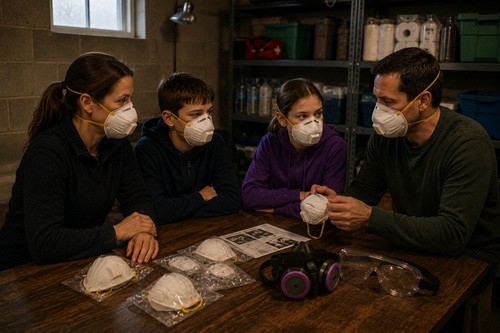
A properly fitted particulate respirator can reduce the number of contaminated particles entering the respiratory system, but its effectiveness depends on several factors.
A proper fit.
Correct use.
The condition of the respirator.
The size and type of airborne particles.
Even high-quality respiratory protection should be viewed as one layer of protection rather than a substitute for sheltering.
Remaining indoors during active fallout generally provides greater protection than relying solely on a respirator outdoors.
Indoor Air Quality Still Matters
While reducing outside contamination is important, maintaining healthy indoor air is equally essential.
Avoid using fuel-burning appliances indoors unless they are specifically designed for indoor use.
Generators should never be operated inside homes, garages, or enclosed spaces because they produce carbon monoxide, an odorless gas that can quickly become deadly.
Likewise, charcoal grills, camp stoves, and many outdoor heaters should remain outside.
Protecting yourself from radioactive contamination should never create a new hazard inside the shelter.
Emergency preparedness always involves balancing risks carefully.
Recovery and Airborne Dust
As recovery begins, new airborne dust may become a concern.
Cleaning debris.
Removing damaged building materials.
Driving on dry roads.
Working in contaminated soil.
These activities can disturb particles that settled days earlier.
Whenever practical, cleanup should be approached in ways that minimize dust generation.
Sometimes lightly dampening surfaces before sweeping or handling debris can help reduce the amount of dust becoming airborne, though the appropriate method depends on the situation and official guidance.
Understanding that settled fallout can later become airborne helps families remain cautious even after the initial emergency has passed.
Common Misconceptions
Many people believe the air itself becomes radioactive.
In most situations, the concern is the radioactive particles suspended within the air.
Another misconception is that respirators make it safe to remain outdoors indefinitely.
Respiratory protection reduces one pathway of exposure, but it does not eliminate radiation from nearby fallout or replace the protection provided by shelter.
Finally, some people assume sealing every opening in a house is always beneficial.
In reality, reducing unnecessary air exchange is usually sufficient. Completely sealing a home may create other problems related to ventilation, temperature, or indoor air quality.
Preparedness is about making informed, balanced decisions.
Key Takeaways
Protecting the air you breathe begins with understanding that radioactive fallout is primarily a particle problem rather than an air problem. Remaining indoors during active fallout, reducing unnecessary air exchange, avoiding activities that stir contaminated dust, understanding the capabilities of HVAC systems, and using appropriate respiratory protection when necessary all contribute to reducing unnecessary exposure.
Perhaps the most important lesson is that the safest air is often the air inside a well-protected shelter during the period when fallout is actively settling. By preventing radioactive particles from entering the body in the first place, families significantly reduce one of the most important pathways of internal contamination.
Lesson 14
Information May Become Your Most Valuable Resource
Understanding Emergency Communications and Decision-Making
Why This Lesson Matters
During almost every emergency, one of the first things people want is information. They want to know what happened, where it happened, how serious it is, whether their family is safe, and what they should do next. These questions are natural because uncertainty often creates as much stress as the emergency itself.
Unfortunately, major emergencies can also disrupt the very communication systems people depend upon. Electrical failures may interrupt television broadcasts. Cellular networks may become overloaded. Internet access may become unavailable. Rumors often spread more quickly than verified information, making it difficult to separate fact from speculation.
In a nuclear emergency, reliable information becomes especially important because conditions may change over time. Radiation levels decrease. Weather changes. Evacuation recommendations may be updated. Areas that were initially unsafe may later become accessible, while other areas may require additional precautions.
Preparedness therefore includes more than storing emergency supplies. It also includes developing reliable ways to receive information, evaluate what you hear, and make thoughtful decisions when communication systems are under stress.
Information Reduces Uncertainty
One of the greatest benefits of reliable information is that it reduces unnecessary fear.
People often imagine the worst when they have no reliable facts.
Questions begin multiplying.
Is the danger getting worse?
Should we evacuate?
Has another explosion occurred?
Is our water safe?
Should we stay inside?
Without reliable information, people often fill the gaps with assumptions.
Sometimes those assumptions are correct.
Often they are not.
Reliable information allows families to replace uncertainty with informed decision-making.
That is one of the most valuable forms of preparedness.
Understand the Difference Between Information and Rumors
During emergencies, information spreads rapidly.
Unfortunately, accuracy does not always spread at the same speed.
Social media, text messages, and conversations with neighbors can all provide useful information, but they can also unintentionally spread misunderstandings.
People may repeat outdated reports.
Misinterpret official statements.
Share unverified photographs.
Confuse one event with another.
Repeat dramatic stories without knowing whether they are true.
None of this is unique to nuclear emergencies.
It happens during hurricanes, floods, wildfires, pandemics, and nearly every major disaster.
Learning to pause before acting on unverified information is one of the most valuable preparedness habits anyone can develop.
Where Reliable Information Comes From
Emergency information generally comes from several different sources.
Emergency management agencies.
Weather services.
Public health organizations.
Local governments.
Law enforcement.
Fire departments.
Utility companies.
Licensed broadcasters.
Each organization provides different pieces of the overall picture.
No single source has every answer immediately.
One agency may report road closures.
Another may provide weather forecasts.
A utility company may report power restoration.
Emergency management may issue shelter or evacuation guidance.
Preparedness improves when families understand where different types of information originate.
Why Battery-Powered Radios Still Matter
Many people assume radios became obsolete once smartphones became common.
In reality, battery-powered emergency radios remain one of the most dependable communication tools available during widespread disasters.
Unlike internet services, broadcast radio can continue reaching large populations even when cellular networks become overloaded.
Portable radios require relatively little power.
Many operate for extended periods using ordinary batteries.
Some models include hand-crank generators or solar charging capabilities, providing additional resilience when electrical power remains unavailable for long periods.
The objective is not to replace modern technology.
It is to ensure that communication continues if modern technology becomes unavailable.
The Importance of Redundancy
One of the guiding principles of preparedness is redundancy.
Never depend entirely on a single system.
The same principle applies to communication.
A smartphone is valuable.
So is a portable radio.
Printed emergency contact lists.
Offline maps.
Written addresses.
Neighborhood communication plans.
Backup power for communication devices.
Each adds another layer of resilience.
If one system fails, another may continue working.
Preparedness is rarely about finding one perfect solution.
It is about having multiple dependable options.
Family Communication Plans
One of the most overlooked aspects of preparedness is discussing communication before an emergency occurs.
Families should know:
How will we contact one another?
Where will we meet if separated?
Who serves as an out-of-town contact?
What happens if phones stop working?
How long should someone wait before assuming another family member has changed plans?
Simple conversations held before an emergency often prevent confusion later.
Preparedness is not only about equipment.
It is also about expectations.
Written Information Is Surprisingly Valuable
Modern society depends heavily on digital information.
Phone numbers.
Addresses.
Medical information.
Maps.
Emergency contacts.
Insurance policies.
Many people no longer memorize this information because their smartphones do it automatically.
If batteries fail or devices become damaged, valuable information may suddenly become unavailable.
Keeping important information in printed form provides a dependable backup that requires no electricity.
Sometimes the simplest solutions remain the most reliable.
Managing Information During Sheltering
One challenge many families experience is deciding how often to monitor emergency news.
Watching continuous news coverage for hours can become emotionally exhausting.
Constant exposure to dramatic reporting may increase stress without providing significantly more useful information.
Instead, many emergency planners recommend checking reliable updates periodically while focusing the remainder of the time on practical tasks inside the shelter.
Preparing meals.
Caring for children.
Organizing supplies.
Maintaining hygiene.
Resting.
Supporting one another.
Preparedness includes protecting emotional well-being as well as physical safety.
Decision-Making Under Stress
Emergencies often require decisions with incomplete information.
Very few people receive perfect information before acting.
For this reason, preparedness should focus on building decision-making skills rather than expecting certainty.
Ask simple questions.
What do we know?
What do we not know?
What assumptions are we making?
Where did this information come from?
Has it been confirmed?
Does acting immediately provide a clear benefit, or is it safer to wait for additional information?
These questions encourage thoughtful decisions instead of emotional reactions.
Common Misconceptions
Many people believe more information always leads to better decisions.
In reality, overwhelming amounts of conflicting information can create confusion.
Reliable information is more valuable than constant information.
Another misconception is that smartphones eliminate the need for other communication methods.
Modern technology is extremely useful, but every communication system has limitations.
Preparedness improves when several independent systems are available.
Finally, some people assume official recommendations never change.
Emergency guidance often evolves as additional information becomes available.
Changing recommendations do not necessarily indicate mistakes.
They often reflect improving situational awareness.
Key Takeaways
Reliable information is one of the most valuable preparedness resources available during any emergency. Families who understand where information comes from, develop multiple communication methods, prepare written backups, and evaluate reports thoughtfully are better positioned to make informed decisions under changing conditions.
Perhaps the greatest lesson is that preparedness is not about knowing everything.
It is about knowing enough to make good decisions with the information available at the time.
Lesson 15
Recovery Begins Before the Emergency Ends
Understanding the Transition from Survival to Recovery
Why This Lesson Matters
Many emergency plans focus almost entirely on surviving the first few hours of a disaster. They explain where to shelter, what supplies to store, and how to respond during the initial crisis. While these are essential skills, emergencies do not simply end when the immediate danger has passed.
Recovery is often the longest phase of any disaster.
Electricity may remain unavailable.
Roads may still be closed.
Stores may not reopen immediately.
Medical services may continue operating under extraordinary pressure.
Communication networks may recover slowly.
Some areas may remain restricted while others gradually return to normal.
Families who prepare only for the emergency itself often discover that recovery presents an entirely different set of challenges.
Understanding how recovery unfolds allows people to make better decisions, conserve valuable resources, and avoid creating new problems while trying to solve old ones.
Preparedness is not simply about surviving an event.
It is about helping your household return to stability afterward.
Recovery Rarely Happens Overnight
One of the most common misconceptions about disasters is that recovery follows a predictable schedule.
Reality is usually far more complex.
Every emergency unfolds differently.
A localized incident affecting one neighborhood may be resolved relatively quickly.
A widespread disaster affecting multiple communities may require weeks, months, or even years before all services are fully restored.
Infrastructure repairs take time.
Power systems must be inspected.
Water systems require testing.
Roads may need debris removed.
Bridges, hospitals, schools, and communication systems all require careful evaluation before returning to normal operation.
Understanding that recovery is often gradual helps families prepare mentally as well as physically.
Patience becomes an important preparedness skill.
Returning Outside
Eventually, conditions may improve enough that leaving shelter becomes appropriate.
However, returning outdoors should be approached thoughtfully.
The fact that the immediate danger has decreased does not necessarily mean every hazard has disappeared.
Damaged buildings.
Downed power lines.
Unstable structures.
Contaminated debris.
Broken glass.
Flooding.
Fire damage.
These secondary hazards frequently injure people after disasters.
One of the most valuable habits is slowing down.
Observe your surroundings.
Evaluate conditions.
Avoid unnecessary risks.
Recovery rewards careful decision-making rather than speed.
Reopening Your Home
If your home remained sheltered during the emergency, reopening it gradually helps maintain a clean and healthy living environment.
Ventilation may become appropriate once official guidance indicates outdoor conditions have improved.
Windows and doors can be opened as needed to improve indoor air quality, but this should be done thoughtfully rather than automatically.
Outdoor contamination, weather conditions, and local recommendations all influence the best approach.
Cleaning should begin with areas most likely to have accumulated dust or debris.
Rather than creating clouds of dust through dry sweeping, cleaning methods that minimize airborne particles are generally preferable.
The objective is not simply to make the home look clean.
It is to avoid unnecessarily redistributing contamination that may still be present.
Inspecting Supplies
Recovery also provides an opportunity to evaluate emergency supplies.
How much food remains?
How much water has been used?
Are medications still available?
Have batteries been depleted?
Were important supplies difficult to locate?
Did any equipment fail unexpectedly?
These observations become valuable lessons for future preparedness.
Every emergency teaches something.
Families who review their experiences honestly often improve their preparedness far more effectively than those who simply replace consumed supplies without evaluating what worked well and what did not.
Supporting Physical Recovery
Stress places significant demands on the human body.
Sleep may have been interrupted.
Meals may have been irregular.
Hydration may have suffered.
Normal exercise routines may have stopped.
Recovery therefore includes returning to healthy daily habits.
Balanced meals.
Adequate water.
Regular sleep.
Physical activity as conditions allow.
Routine healthcare.
These simple practices help restore both physical strength and emotional resilience.
Preparedness does not end when the emergency ends.
Recovery is part of preparedness.
Supporting Emotional Recovery
Major emergencies affect people emotionally in different ways.
Some individuals appear calm during the crisis but experience stress afterward.
Others become anxious during recovery as they begin processing what happened.
Children may ask repeated questions.
Older adults may worry about the future.
Families may experience frustration, exhaustion, or uncertainty.
These reactions are normal.
Talking openly, maintaining routines, sharing responsibilities, and spending time together often help reduce stress.
Recovery is strongest when families support one another rather than trying to face every challenge alone.
Preparedness includes caring for emotional health just as much as physical health.
Helping Your Community Recover
Preparedness is often viewed as an individual activity.
In reality, recovery frequently depends on cooperation.
Neighbors checking on one another.
Sharing information.
Helping remove debris.
Supporting elderly residents.
Assisting families with young children.
Volunteering when it is safe to do so.
Communities that work together often recover more quickly than those where everyone struggles alone.
Helping others does not require extraordinary resources.
Sometimes reliable information, practical skills, or simply checking on a neighbor can make a meaningful difference.
Strong communities are built before emergencies occur, but they are strengthened during recovery.
Learning From Every Emergency
One of the most valuable habits any prepared family can develop is conducting an honest review after every emergency.
Ask simple questions.
What worked well?
What created unnecessary stress?
Which supplies were most valuable?
What skills proved useful?
What should be improved before the next emergency?
Preparedness is never truly finished.
Each experience provides an opportunity to improve.
Small adjustments made after one emergency often make the next one much easier to manage.
Building Long-Term Resilience
Recovery is ultimately about more than repairing damage.
It is about strengthening the household for the future.
Perhaps backup power becomes a higher priority.
Maybe additional water storage would reduce stress.
Perhaps printed emergency plans would be helpful.
Every lesson learned becomes another layer of resilience.
Preparedness grows through experience.
Families who continue improving after each challenge become increasingly capable of adapting to whatever comes next.
Common Misconceptions
Many people believe recovery begins once emergency officials declare the danger has passed.
In reality, recovery often begins much earlier, with decisions made while still sheltering.
Another misconception is that returning to normal means returning to old habits.
Preparedness encourages learning from experience and making thoughtful improvements rather than simply hoping the next emergency will be different.
Finally, some people believe recovery is solely the responsibility of government agencies.
While public services play an essential role, household preparedness and community cooperation remain equally important components of successful recovery.
Key Takeaways
Recovery is not a single event but an ongoing process that begins while the emergency is still unfolding. Families who understand this transition are better prepared to restore normal routines, protect their health, support one another, and strengthen their preparedness for the future.
Perhaps the most important lesson is this:
Preparedness is measured not only by how well you survive an emergency, but by how well you recover from it.
Every thoughtful decision made during recovery becomes an investment in future resilience.
Lesson 16
Potassium Iodide
What It Does, What It Doesn’t Do, and When It Matters
Why This Lesson Matters
Few preparedness products receive as much attention during discussions about nuclear emergencies as potassium iodide, often abbreviated as KI. It is frequently recommended in emergency preparedness guides, appears in many survival kits, and often sells out quickly whenever news reports mention nuclear accidents or rising international tensions.
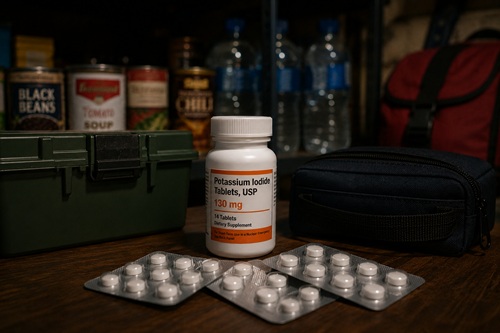
Despite its popularity, potassium iodide is also one of the most misunderstood items in emergency preparedness.
Some people believe taking KI provides broad protection against radiation. Others assume it is necessary after every nuclear event, while some dismiss it as unnecessary altogether. None of these beliefs accurately reflects how potassium iodide works.
The reality is both more specific and more practical.
Potassium iodide protects one organ—the thyroid gland—from one type of radioactive material—radioactive iodine. It does not block other forms of radiation, prevent radioactive contamination, or eliminate the need for sheltering and other protective measures.
Understanding these limitations is just as important as understanding its benefits. When used appropriately, potassium iodide can play an important role during certain nuclear emergencies. When used incorrectly, it may provide a false sense of security while doing little or nothing to reduce overall risk.
What Is Potassium Iodide?
Potassium iodide is a stable, non-radioactive form of iodine.
Iodine is an essential nutrient that the human body requires in small amounts to produce thyroid hormones. These hormones regulate growth, metabolism, and many other important biological functions.
Unlike many nutrients, iodine is used almost exclusively by one organ.
The thyroid gland.
Located in the front of the neck, the thyroid actively removes iodine from the bloodstream whenever it becomes available.
The thyroid cannot distinguish between stable iodine and radioactive iodine.
If radioactive iodine enters the bloodstream, the thyroid absorbs it just as readily as normal iodine.
This is where potassium iodide becomes useful.
How Potassium Iodide Works
The easiest way to understand potassium iodide is to imagine the thyroid as a sponge.
Normally, the sponge absorbs iodine whenever it is available.
If the sponge is already full of stable iodine, however, it has very little capacity to absorb additional iodine for a period of time.
Taking potassium iodide before or shortly after exposure saturates the thyroid with stable iodine.
As a result, if radioactive iodine is later inhaled or swallowed, much less of it is absorbed by the thyroid because the gland is already supplied with the iodine it needs.
Instead, much of the radioactive iodine passes through the body and is eventually eliminated.
Notice something important.
Potassium iodide does not remove radioactive iodine from the environment.
It simply reduces how much enters one specific organ.
Why the Thyroid Matters
The thyroid is particularly sensitive to radioactive iodine.
Following certain nuclear reactor accidents and some nuclear weapon detonations, radioactive iodine may be released into the environment.
If inhaled or consumed through contaminated food or water, it may accumulate in the thyroid.
Children, infants, adolescents, and pregnant individuals are generally at greater risk because their thyroid glands are more active and require more iodine during growth and development.
Protecting the thyroid during these situations may significantly reduce the long-term risk of certain thyroid diseases, including thyroid cancer associated with radioactive iodine exposure.
This is why emergency planning agencies around the world include potassium iodide in specific preparedness plans for communities located near nuclear power plants.
What Potassium Iodide Does Not Do
Understanding what potassium iodide cannot do is just as important as understanding what it can.
Potassium iodide does not protect against:
Gamma radiation.
Beta radiation.
Neutron radiation.
Alpha radiation outside the body.
Radioactive cesium.
Radioactive strontium.
Plutonium.
Most other radioactive materials.
It does not protect your lungs.
It does not protect your skin.
It does not protect your bone marrow.
It does not prevent contamination.
It does not replace sheltering.
It does not eliminate the need for evacuation if evacuation becomes necessary.
It is not an “anti-radiation pill.”
It is one protective measure for one specific radioactive hazard.
Timing Matters
Potassium iodide works best when taken shortly before or soon after exposure to radioactive iodine.
If taken too early, its protective effect may begin wearing off before exposure occurs.
If taken long after exposure, much of the radioactive iodine may already have been absorbed by the thyroid, reducing the benefit.
This is why emergency management agencies generally recommend taking potassium iodide only when directed by public health officials or emergency authorities.
The timing of administration is an important part of its effectiveness.
Who Benefits Most?
Not everyone benefits equally from potassium iodide.
Public health recommendations generally prioritize those most likely to benefit, particularly:
Infants.
Children.
Teenagers.
Pregnant individuals.
Breastfeeding mothers.
Young adults.
These groups are often considered higher priorities because protecting the developing thyroid provides the greatest long-term benefit.
Recommendations for older adults may differ depending on age, health status, and the expected level of radioactive iodine exposure. Public health guidance takes these factors into account when determining who should receive potassium iodide during an emergency.
Can Everyone Take Potassium Iodide?
Although potassium iodide is considered safe for many people when used appropriately, it is not suitable for everyone.
Some individuals have medical conditions involving the thyroid or allergies to ingredients in specific formulations. Others may take medications that require additional consideration.
For these reasons, potassium iodide should be used according to public health recommendations and healthcare guidance whenever possible.
Preparedness includes understanding both the benefits and the limitations of any medical intervention.
Why Governments Stockpile It
Many countries maintain emergency supplies of potassium iodide for communities located near nuclear power plants.
This sometimes leads people to assume that everyone should take it immediately during any nuclear emergency.
The reality is more specific.
Emergency planners stockpile potassium iodide because certain reactor accidents may release significant amounts of radioactive iodine.
Distributing stable iodine to nearby populations, when appropriate, helps reduce thyroid exposure during those particular situations.
Its inclusion in emergency planning reflects decades of scientific research rather than fear or speculation.
Potassium Iodide Is One Layer of Protection
Throughout this handbook we have discussed the concept of layered preparedness.
Shelter.
Time.
Distance.
Shielding.
Contamination control.
Food protection.
Water protection.
Communication.
Medical preparedness.
Potassium iodide belongs within this larger system.
It does not replace any of these protective measures.
Instead, it complements them when radioactive iodine presents a significant concern.
Preparedness is strongest when multiple protective strategies work together.
Common Misconceptions
One of the most widespread misconceptions is that potassium iodide protects the entire body from radiation.
It does not.
Another misconception is that taking larger amounts provides greater protection.
More is not necessarily better and may increase the likelihood of unwanted side effects.
Some people also believe they should take potassium iodide immediately after hearing any news involving nuclear technology.
In reality, its usefulness depends on the specific type of emergency and the potential release of radioactive iodine. Understanding the situation is far more important than acting on fear.
Key Takeaways
Potassium iodide is an effective tool for protecting the thyroid gland from radioactive iodine under specific circumstances. It does not provide general protection against radiation or replace the need for sheltering, contamination control, or other protective actions.
Perhaps the most important lesson is this:
Potassium iodide is one tool—not the entire toolbox.
Families who understand both its strengths and its limitations are far better prepared than those who rely on it as a universal solution.
Lesson 17
Understanding Radiation Detection
What Radiation Meters Measure and How to Use Them
Why This Lesson Matters
One of the first purchases many preparedness-minded individuals consider is a radiation detector. Often referred to as a Geiger counter, these instruments are commonly associated with nuclear emergencies, scientific laboratories, and emergency response teams. They appear in countless movies, documentaries, and online discussions, usually accompanied by a series of rapidly increasing clicks that signal rising danger.
While these instruments are valuable tools, they are also widely misunderstood.
Many people assume a radiation detector tells them everything they need to know about an environment. Others believe any inexpensive detector provides the same information as professional equipment. Some expect a single reading to answer every question about safety.
In reality, radiation detection is more nuanced.
Different instruments are designed to answer different questions. Some measure radiation levels in the environment. Others detect contamination on people or equipment. Some are extremely sensitive to low levels of radiation, while others are intended for high-radiation environments.
Understanding what a radiation detector measures—and just as importantly, what it does not measure—helps families make better decisions without placing unrealistic expectations on any single piece of equipment.
Why Radiation Cannot Be Detected by Human Senses
Unlike smoke, natural gas, or spoiled food, ionizing radiation cannot normally be seen, smelled, tasted, or felt.
A person standing in an area with elevated radiation may notice nothing unusual.
Likewise, an area with very little radiation may appear identical.
This is one reason radiation monitoring instruments are so valuable.
They provide objective measurements where human senses cannot.
Rather than relying on assumptions or appearances, emergency responders can measure actual conditions and make decisions based on data.
Preparedness is strengthened whenever decisions are guided by reliable information rather than uncertainty.
What Does a Radiation Meter Actually Measure?
At its simplest, a radiation meter measures the presence of ionizing radiation.
As radiation interacts with the detector inside the instrument, electrical signals are generated.
The instrument then converts those signals into information the user can understand.
Some meters display numbers.
Others produce audible clicks.
Many provide both.
The familiar clicking sound often heard in movies represents individual radiation detection events.
Contrary to popular belief, faster clicking does not automatically mean immediate danger.
It simply indicates that the detector is registering more radiation events.
Interpreting what those readings actually mean requires understanding the scale being displayed.
Understanding Count Rate
Many Geiger counters display counts per minute (CPM) or counts per second (CPS).
These measurements represent how many radiation events the detector records during a given period.
Think of it like counting raindrops hitting a roof.
More raindrops generally indicate heavier rainfall.
Likewise, more detected radiation events generally indicate higher radiation levels.
However, count rate depends not only on the radiation itself but also on the detector.
Different instruments have different sensitivities.
Two different meters placed side by side may display different count rates while observing the same environment because each detector responds differently.
For this reason, count rate alone does not always indicate the actual radiation dose received by a person.
Understanding Dose Rate
Many professional instruments display dose rate rather than simply count rate.
Dose rate estimates the amount of radiation energy that could be absorbed over time.
Common units include:
Microsieverts per hour (µSv/h)
Millisieverts per hour (mSv/h)
These units help emergency responders estimate how much exposure a person might receive if they remain in a particular location.
This information becomes especially useful when making decisions about sheltering, evacuation, work limits, and emergency response activities.
Understanding dose rate connects directly to one of the most important principles discussed earlier in this handbook:
Time matters.
A location with a higher dose rate may still be entered safely for a brief period if absolutely necessary, while prolonged exposure could result in a much higher accumulated dose.
Survey Meters and Contamination Meters
Not all radiation detectors perform the same job.
Some instruments are designed primarily to measure radiation levels in the surrounding environment.
These are often called survey meters because they help responders survey an area for elevated radiation.
Other instruments are optimized for detecting contamination on people, clothing, equipment, vehicles, or building surfaces.
These contamination monitors are often much more sensitive to low levels of surface contamination than general-purpose survey meters.
Understanding the difference explains why emergency response teams frequently carry several different instruments rather than relying on only one.
Each answers a different question.
What a Radiation Meter Cannot Tell You
A radiation detector is a powerful tool, but it has limitations.
Most instruments cannot identify exactly which radioactive material is present.
They cannot determine how contamination entered an area.
They cannot predict future radiation levels.
They cannot tell you whether food is safe to eat simply by taking one quick reading.
They cannot replace professional environmental monitoring or laboratory analysis.
Like every preparedness tool, radiation meters provide valuable information, but that information must be interpreted within the broader context of the situation.
Learning Your Normal Background Radiation
One of the most valuable things a meter owner can do is become familiar with normal background radiation before an emergency ever occurs.
Every location has some natural background radiation.
This varies depending on altitude, geology, building materials, and local environmental conditions.
By becoming familiar with normal readings at home, users are better prepared to recognize unusual changes should an emergency occur.
Preparedness is greatly improved when equipment is learned during calm conditions rather than for the first time during a crisis.
Caring for Your Instrument
Like every emergency tool, a radiation detector requires periodic attention.
Batteries should be checked regularly.
Operating instructions should be understood before an emergency.
Users should know how to perform basic function checks and recognize low-battery warnings.
The instrument should be protected from unnecessary moisture, physical damage, and extreme temperatures according to the manufacturer’s recommendations.
An emergency is not the ideal time to discover unfamiliar menus or depleted batteries.
Preparedness includes becoming comfortable with the equipment long before it is needed.
Common Misconceptions
One of the most common misconceptions is that every radiation detector is a “Geiger counter.”
While many instruments use a Geiger-Müller tube, modern radiation detection includes many different technologies designed for specific purposes.
Another misconception is that any reading above normal automatically indicates immediate danger.
Radiation measurements must always be interpreted within context, considering time, location, and the type of measurement being displayed.
Finally, some people believe owning a radiation detector eliminates uncertainty.
In reality, it is simply one tool that provides useful information. It complements—rather than replaces—knowledge, planning, official guidance, and sound judgment.
Key Takeaways
Radiation detection instruments provide valuable information that human senses cannot. Understanding the difference between count rate, dose rate, survey instruments, and contamination monitors helps readers appreciate both the strengths and limitations of these tools.
Perhaps the most important lesson is this:
A radiation detector does not make preparedness unnecessary. It makes informed decision-making possible.
Like maps, weather forecasts, or thermometers, these instruments provide information. Knowledge and good judgment determine how that information is used.
Lesson 18
Thinking Clearly During a Nuclear Emergency
Understanding Stress, Decision-Making, and Human Behavior
Why This Lesson Matters
A nuclear emergency is more than a physical event. It is also a psychological one. Even individuals with well-stocked emergency supplies may find it difficult to make good decisions if they are overwhelmed by fear, uncertainty, or conflicting information.
History has shown that human behavior often plays a greater role in disaster outcomes than the disaster itself. Some people react immediately. Others hesitate. Some underestimate the danger, while others overestimate it. Many become overwhelmed by the sheer number of decisions that suddenly need to be made.
Understanding how stress affects the mind allows families to prepare for something that emergency supplies alone cannot solve. Calm thinking, clear communication, and deliberate decision-making often become some of the most valuable survival skills during any emergency.
Preparedness is not simply about having equipment.
It is also about preparing the mind to use that equipment wisely.
Your Brain Changes Under Stress
The human brain is remarkably effective at responding to danger.
When a threat is perceived, the body releases stress hormones that prepare us for immediate action.
Heart rate increases.
Breathing changes.
Attention narrows.
Muscles become more alert.
These changes helped humans survive immediate dangers throughout history.
However, they can also make thoughtful decision-making more difficult.
Complex reasoning often gives way to rapid reactions.
People may overlook important information.
Simple mistakes become more common.
Memory becomes less reliable.
This is a normal biological response.
Understanding it allows us to prepare for it.
The First Reaction Is Often Confusion
Many disasters begin with uncertainty rather than certainty.
People hear unusual sounds.
Power goes out.
Phones stop working.
News reports conflict.
Neighbors begin asking questions.
Few people immediately understand exactly what has happened.
This initial period of uncertainty is often when the greatest number of poor decisions are made.
Rather than reacting immediately, one of the most valuable habits is to pause.
Gather information.
Observe.
Confirm what is actually happening before making major decisions whenever circumstances safely allow.
Preparedness rewards thoughtful action rather than impulsive reaction.
Panic Is Less Common Than Many People Think
Movies often portray disasters as scenes of uncontrolled panic.
While panic does occur in some situations, research into disaster behavior shows that many people remain surprisingly cooperative.
Neighbors help one another.
Families work together.
Strangers assist the injured.
Communities organize.
These positive behaviors occur repeatedly following hurricanes, earthquakes, floods, wildfires, and other emergencies.
Understanding this helps replace unrealistic expectations with a more balanced view of human behavior.
Most people want to help.
Preparedness becomes even stronger when families plan to cooperate rather than assume everyone will become irrational.
Denial Can Be Just As Dangerous
While panic receives considerable attention, denial may actually present a greater risk.
People often struggle to believe that something serious is happening.
They may delay taking shelter.
Assume the situation is exaggerated.
Wait for additional confirmation.
Continue normal routines despite changing conditions.
Psychologists sometimes refer to this as normalcy bias.
The mind expects tomorrow to resemble yesterday.
As a result, people sometimes underestimate unusual risks until valuable time has been lost.
Preparedness helps reduce this tendency because families have already considered possible scenarios before they occur.
Decision Fatigue
Emergencies require many decisions.
Should we shelter?
Should we leave?
Who should call relatives?
How much water should we use?
What should we cook?
Should someone go outside?
After hours or days of repeated decision-making, mental fatigue begins to develop.
This is known as decision fatigue.
Simple tasks become harder.
People become impatient.
Mistakes become more likely.
One way to reduce decision fatigue is through planning.
Families that have already discussed emergency procedures need to make fewer decisions during the emergency itself.
Preparedness simplifies decision-making before stress arrives.
Routines Create Stability
One of the most effective ways to reduce stress is maintaining familiar routines whenever possible.
Wake at regular times.
Eat regular meals.
Assign simple daily responsibilities.
Check news updates at scheduled intervals.
Maintain personal hygiene.
Spend time together.
These routines provide structure during uncertain circumstances.
Children especially benefit from predictable schedules because routines help restore a sense of normalcy even when the outside world has changed dramatically.
Preparedness is strengthened when families preserve ordinary life wherever possible.
Children Watch Adults
Children often take emotional cues from the adults around them.
If adults remain calm, communicate honestly, and demonstrate confidence, children are generally more likely to feel secure.
This does not mean pretending nothing is wrong.
Instead, it means explaining the situation in age-appropriate ways while focusing attention on the practical steps being taken to stay safe.
Simple explanations.
Honest answers.
Predictable routines.
Reassurance through action.
These approaches often provide greater comfort than lengthy discussions filled with uncertainty.
Preparedness includes helping every family member understand what is happening at a level appropriate for their age and experience.
Information Overload
One challenge unique to modern emergencies is the sheer amount of information available.
Television.
Radio.
Websites.
Social media.
Messaging apps.
Videos.
News alerts.
Friends.
Neighbors.
Not all information deserves equal attention.
Rather than attempting to monitor every update continuously, families often benefit from selecting a few reliable information sources and checking them at reasonable intervals.
The remaining time can be spent caring for one another and managing practical preparedness tasks.
Too much information can sometimes become as stressful as too little.
Leadership Begins at Home
During emergencies, every household benefits from someone willing to help organize information and coordinate decisions.
Leadership does not require military experience or specialized training.
It often consists of simple responsibilities.
Keeping track of supplies.
Checking weather updates.
Assigning household tasks.
Listening to concerns.
Encouraging cooperation.
Remaining patient.
Good leadership reduces confusion by creating clarity.
Preparedness is strengthened when everyone understands both the overall plan and their individual role within it.
Practice Before You Need It
One of the reasons emergency drills are so valuable is that they reduce uncertainty.
Practicing where supplies are stored.
Reviewing family communication plans.
Walking through shelter procedures.
Testing radios.
Discussing emergency responsibilities.
These simple exercises transform unfamiliar situations into familiar routines.
When people have practiced something before, they often perform it more confidently under stress.
Preparedness is not only about collecting knowledge.
It is about becoming comfortable using that knowledge.
Common Misconceptions
Many people believe they will naturally know what to do during a disaster.
Experience shows that stress often affects judgment in unexpected ways.
Planning and practice greatly improve decision-making.
Another misconception is that preparedness eliminates fear.
Fear is a normal human response.
Preparedness helps people act effectively despite that fear.
Finally, some believe strong leadership means making every decision alone.
In reality, good leaders encourage communication, gather information, and involve others whenever appropriate.
Key Takeaways
Emergencies challenge both the body and the mind. Stress, uncertainty, and rapidly changing conditions affect everyone differently. Families who understand these normal psychological responses are better prepared to manage them through planning, routines, communication, and thoughtful decision-making.
Perhaps the most important lesson is this:
Preparedness begins long before the emergency, but calm decision-making determines how well that preparedness is used.
Knowledge provides confidence.
Practice builds familiarity.
Clear thinking transforms preparation into effective action.
Lesson 19
A Timeline for Action
What to Do During the First Minutes, First Hour, First Day, and Beyond
Why This Lesson Matters
Knowledge is most valuable when it can be applied.
Throughout this handbook, we have explored the science of radiation, the formation of radioactive fallout, methods of reducing exposure, contamination control, shelter selection, emergency communications, food, water, medical preparedness, and recovery. Each lesson was designed to build understanding one step at a time.
During a real emergency, however, people rarely have the luxury of reading an entire handbook from beginning to end.
Stress changes the way we think.
Time may be limited.
Information may be incomplete.
People often ask one simple question:
“What should I do right now?”
This lesson answers that question.
Rather than replacing the detailed information found throughout the handbook, this timeline brings everything together into a practical sequence of actions that follows the progression of a nuclear emergency.
Remember that every emergency is different. Local conditions, official guidance, weather, and the nature of the event will always influence the safest course of action. This lesson is designed to provide a structured framework for decision-making, not a substitute for official instructions when they are available.
Phase One
The First Few Minutes
The first minutes following any suspected nuclear incident are often marked by uncertainty.
You may hear unusual news reports.
Experience a sudden power failure.
Receive emergency alerts.
Observe an unusual flash or distant explosion.
Notice interruptions to communication systems.
At this stage, avoid acting on rumors.
Instead, begin gathering reliable information while calmly assessing your immediate surroundings.
If you are already indoors, remain there while learning more about the situation.
If you are outdoors and believe fallout may become a concern, begin moving toward the nearest substantial building that offers good protection.
Do not waste valuable time trying to collect unnecessary possessions.
Your first priority is reaching effective shelter.
Phase Two
The First Hour
Once safely sheltered, your focus shifts from movement to protection.
Move toward the most protected area of the building.
Basements are often excellent choices.
If no basement is available, select an interior room away from windows and exterior walls.
Close windows and exterior doors.
Reduce unnecessary air exchange where practical.
Gather family members.
Account for everyone.
Turn on reliable sources of emergency information.
Avoid unnecessary phone calls that may overload communication networks.
If anyone entered the shelter after potential exposure to fallout, begin simple contamination control procedures before they move through the main living area.
Remove outer clothing.
Bag contaminated items.
Wash exposed skin if appropriate.
These actions help keep the shelter clean while reducing unnecessary exposure.
Phase Three
The First Day
The first twenty-four hours are often the most important period for reducing radiation exposure.
Remain sheltered unless leaving becomes absolutely necessary.
Use stored food and water whenever possible.
Establish routines.
Monitor emergency broadcasts periodically rather than continuously.
Conserve batteries and backup power.
Maintain personal hygiene.
Check on children, older adults, and anyone with medical conditions.
Review emergency supplies.
Avoid unnecessary outdoor activity.
Remember that radiation from fallout generally decreases over time.
Every hour spent safely sheltered allows conditions outside to improve.
Patience becomes an important part of your protection.
Phase Four
The Next Several Days
As time passes, conditions gradually begin changing.
Continue following official guidance whenever available.
Evaluate food, water, and medical supplies.
Maintain sanitation.
Keep contamination outside the primary living space.
If limited outdoor travel becomes necessary, plan carefully.
Complete essential tasks efficiently.
Return promptly.
Follow decontamination procedures before re-entering the shelter.
Support one another emotionally.
Continue maintaining routines.
Recovery begins long before the emergency officially ends.
Phase Five
The Recovery Period
Eventually, attention shifts toward restoring normal life.
Before resuming ordinary activities, evaluate your surroundings carefully.
Inspect your home.
Review emergency supplies.
Replace consumed items.
Document lessons learned.
Update emergency plans.
Continue monitoring reliable information.
Recovery rarely occurs all at once.
Some services return quickly.
Others require much longer.
Preparedness continues throughout this period.
Every lesson learned strengthens future resilience.
What Not To Do
Sometimes avoiding mistakes is just as important as taking the right actions.
Avoid rushing outdoors simply to observe events.
Avoid relying on rumors.
Avoid assuming every online report is accurate.
Avoid bringing potentially contaminated clothing directly into living areas.
Avoid consuming unprotected outdoor food or water without understanding the situation.
Avoid exhausting yourself physically or emotionally during the first hours of the emergency.
Avoid making permanent decisions based on incomplete information.
Thoughtful action is almost always safer than impulsive action.
Remember the Priorities
If you remember nothing else from this handbook, remember these priorities.
Protect yourself from unnecessary radiation exposure.
Prevent contamination from entering your shelter.
Preserve clean food and water.
Support the physical and emotional well-being of everyone in your household.
Stay informed using reliable sources.
Allow time to become one of your greatest allies.
These priorities apply regardless of the specific type of nuclear emergency.
The Preparedness Mindset
Perhaps the greatest lesson in this handbook is that preparedness is not built around fear.
It is built around understanding.
People often imagine preparedness as a collection of equipment.
In reality, preparedness begins with knowledge.
Knowledge leads to confidence.
Confidence supports calm decision-making.
Calm decision-making allows families to use their supplies effectively.
Preparedness is therefore not measured by the size of a pantry or the cost of an emergency kit.
It is measured by the ability to understand a situation, adapt to changing conditions, and make thoughtful decisions that protect the people you care about most.
Key Takeaways
Every emergency unfolds differently, but the principles remain remarkably consistent.
Understand the hazard.
Reduce unnecessary exposure.
Protect your shelter.
Preserve essential resources.
Stay informed.
Support one another.
Continue learning.
Preparedness is not a single action taken during a crisis.
It is a series of thoughtful decisions made long before the emergency begins and continued until recovery is complete.
Final Thoughts
If you have reached this point, you have accomplished something far more valuable than simply reading another preparedness guide.
You have built a foundation of understanding.
You now know that radiation is governed by science rather than mystery. You understand how fallout forms, why shelter works, how contamination spreads, why time reduces risk, and how thoughtful planning protects both individuals and families. You have learned that preparedness is not about collecting fear-driven gadgets or reacting to alarming headlines. It is about developing the knowledge, skills, and confidence needed to make sound decisions when normal systems are disrupted.
That confidence cannot be purchased.
It is earned through learning.
History has shown that communities recover more quickly when people understand the hazards they face, communicate effectively, support one another, and approach challenges with patience instead of panic. Whether the emergency involves a nuclear incident, a severe storm, a prolonged power outage, a wildfire, or another unexpected event, these same principles continue to apply.
Preparedness is not about expecting disaster.
It is about reducing uncertainty.
It is about creating options.
It is about protecting the people who depend on you.
Most importantly, it is about recognizing that knowledge is one of the few resources that becomes more valuable each time it is shared.
No one can predict the future.
No handbook can answer every question.
But by investing time in understanding the principles presented here, you have taken an important step toward becoming more capable, more resilient, and better prepared for whatever challenges may lie ahead.
The best preparedness plans are not built in a single weekend.
They are built one lesson…
One skill…
One thoughtful decision…
And one day at a time.
Nuclear Emergency Field Reference Guide
Quick Actions When Every Minute Matters
Immediate Action Checklist
If you believe a nuclear emergency has occurred:
✓ Stay calm.
✓ Do not rush outside to investigate.
✓ Move into the nearest substantial building.
✓ Go to the basement or an interior room.
✓ Stay away from windows.
✓ Close exterior doors and windows.
✓ Reduce unnecessary outdoor air entering the building.
✓ Turn on a battery-powered radio or other reliable information source.
✓ Account for everyone in your household.
✓ Prepare to remain sheltered.
If You Were Outside
If fallout may have occurred:
Remove outer clothing before entering your living space.
Place clothing in a sealed plastic bag or designated container.
Remove shoes.
Wash exposed skin with soap and lukewarm water.
Wash your hair if necessary.
Put on clean clothing.
Only after completing these steps should you move freely through your shelter.
Radiation Protection Checklist
Remember the three fundamentals.
Increase Distance.
Reduce Time.
Increase Shielding.
Every decision should improve one or more of these.
Shelter Checklist
Best locations include:
✔ Basement
✔ Underground room
✔ Interior room
✔ Lowest level
✔ Thick concrete structures
Avoid:
✘ Windows
✘ Exterior walls
✘ Vehicles
✘ Lightweight sheds
✘ Tents
Water Checklist
Use sealed water first.
Protect stored water from contamination.
Avoid collecting rainwater immediately after fallout.
Understand that boiling does not remove radioactive contamination.
Keep containers sealed whenever possible.
Food Checklist
Use sealed foods first.
Wash food containers before opening.
Protect food preparation surfaces.
Avoid unnecessary handling of contaminated packaging.
Rotate food supplies.
Medical Checklist
Monitor family members.
Treat routine injuries promptly.
Maintain hydration.
Continue prescription medications.
Watch for signs of dehydration.
Maintain hygiene.
Support emotional health.
Communication Checklist
Monitor official information.
Conserve batteries.
Write important information down.
Limit rumors.
Review updates periodically.
Maintain communication with family whenever possible.
Going Outside Checklist
Only leave if necessary.
Wear long sleeves.
Wear long pants.
Wear sturdy shoes.
Protect your hands.
Minimize time outside.
Avoid stirring dust.
Return directly to shelter.
Decontaminate before entering.
Recovery Checklist
Inspect your home carefully.
Ventilate when appropriate.
Replace emergency supplies.
Review lessons learned.
Update your emergency plan.
Continue monitoring official information.
Common Mistakes to Avoid
Do not panic.
Do not chase rumors.
Do not leave shelter too early.
Do not ignore contamination.
Do not assume boiling removes radioactive material.
Do not rely on potassium iodide alone.
Do not assume your emergency plan is complete after buying supplies.
Knowledge remains your greatest preparedness tool.
Nuclear Emergency Timeline
First Five Minutes
Find shelter.
Gather family.
Stay informed.
First Hour
Move to the safest part of the building.
Close the home.
Prepare emergency supplies.
Remain indoors.
First Day
Stay sheltered.
Eat.
Drink.
Rest.
Monitor reliable information.
Support your family.
First Week
Conserve supplies.
Evaluate conditions.
Avoid unnecessary travel.
Maintain routines.
Protect physical and emotional health.
Recovery
Inspect.
Clean.
Restock.
Learn.
Improve.
Household Preparedness Scorecard
Can you answer YES to these?
□ My family knows where to shelter.
□ Everyone knows our communication plan.
□ We have emergency water.
□ We have emergency food.
□ We have lighting.
□ We have backup communications.
□ We have medications.
□ We have sanitation supplies.
□ We know how to decontaminate.
□ We understand radiation basics.
□ We understand contamination.
□ We have practiced our emergency plan.
If you answered No to any question, you’ve identified an opportunity to strengthen your preparedness.
The Five Things to Remember
If you forget everything else in this handbook, remember these five principles:
1. Get Inside
A substantial building provides immediate protection from radioactive fallout.
2. Stay Inside
The highest radiation levels generally occur during the early stages of fallout. Sheltering reduces unnecessary exposure while radiation levels decline.
3. Keep Contamination Out
Remove contaminated clothing, clean exposed skin, and protect your living space from radioactive dust.
4. Stay Informed
Use reliable information sources. Avoid making decisions based on rumors or incomplete reports.
5. Think Before You Act
Preparedness is not about reacting quickly—it is about making informed, thoughtful decisions that protect your family.
Final Message
No one can eliminate every risk.
No one can predict every emergency.
But every family can become more prepared than they were yesterday.
Preparedness is not built through fear.
It is built through understanding.
Each lesson learned.
Each skill practiced.
Each gallon of water stored.
Each conversation with your family.
Each improvement to your emergency plan.
These small steps add up over time.
The goal is not perfection.
The goal is confidence.
Confidence that comes from knowing you understand the hazard, have a practical plan, and can make thoughtful decisions even when circumstances are uncertain.
That confidence is one of the greatest preparedness resources you can ever possess.
Lesson 20
Building Your Family’s Nuclear Preparedness Plan
Turning Knowledge Into Action
Why This Lesson Matters
Throughout this handbook, we have explored the science behind radiation, the formation of radioactive fallout, methods of reducing exposure, shelter selection, contamination control, emergency communications, water, food, medical preparedness, recovery, and decision-making under stress. Each lesson has introduced another piece of the preparedness puzzle.
Now it is time to put those pieces together.
A preparedness plan is more than a collection of supplies or a list of emergency phone numbers. It is a practical framework that helps every member of the household understand what to do before, during, and after an emergency. The purpose of planning is not to predict every possible situation. No plan can anticipate every detail of a rapidly changing event. Instead, the goal is to create a flexible system that helps your family respond calmly and confidently, even when circumstances are uncertain.
Perhaps the greatest benefit of a written preparedness plan is that it reduces the number of decisions that must be made under stress. Instead of asking, “What should we do now?” your family already has a starting point.
Preparedness begins long before the emergency ever occurs.
Start With Your Household
Every preparedness plan should begin with the people it is intended to protect.
No two households are exactly alike.
Some families include young children.
Others care for aging parents.
Some have family members who rely on daily medications or medical equipment.
Others may have pets, livestock, or neighbors who depend on them for assistance.
Before purchasing equipment or building supply lists, take time to understand the needs of everyone in your household.
Ask simple questions.
Who lives here?
Who may need extra assistance?
Who knows basic first aid?
Who will be responsible for children if schools are closed?
Who knows where emergency supplies are stored?
Preparedness becomes much more effective when responsibilities are discussed in advance.
Know Your Home
Your home is likely to become your primary shelter during many emergencies.
Take time to walk through it with fresh eyes.
Identify the safest interior locations.
Locate utility shutoffs.
Know where flashlights are stored.
Understand how your heating and cooling systems operate.
Identify rooms with the greatest protection from exterior walls and windows.
Consider where emergency supplies should be stored so they remain easily accessible.
A home that has been carefully evaluated before an emergency often performs much better than one being assessed for the first time during a crisis.
Build Your Supplies Gradually
Many people postpone preparedness because they believe they must purchase everything immediately.
This often becomes overwhelming.
A more practical approach is gradual improvement.
Begin with water.
Next, build your food supply.
Add lighting.
Develop communication capabilities.
Expand medical supplies.
Improve sanitation.
Increase comfort.
Each improvement strengthens your preparedness without creating unnecessary financial pressure.
Preparedness grows through consistency rather than speed.
A household that improves a little each month will often become far more resilient than one attempting to accomplish everything in a single weekend.
Create Written Plans
One of the simplest improvements any family can make is writing down important information.
Emergency contact numbers.
Medical information.
Prescription lists.
Meeting locations.
Utility account numbers.
Insurance information.
Out-of-town contacts.
Important addresses.
Maps.
These documents should be stored somewhere accessible and protected.
Digital copies remain useful, but printed copies provide valuable redundancy if electronic devices become unavailable.
The goal is not to create complicated binders.
It is to preserve information that may become difficult to remember under stress.
Practice Your Plan
Preparedness plans become much more effective when they are practiced.
Walk through your shelter location.
Locate emergency supplies together.
Practice using radios.
Test flashlights.
Review communication procedures.
Discuss different emergency scenarios.
These exercises need not be elaborate.
Even simple conversations help transform unfamiliar procedures into familiar routines.
Confidence grows through repetition.
Children especially benefit from practice because it replaces uncertainty with familiarity.
Plan for Different Situations
Although this handbook focuses on nuclear emergencies, many of the same preparations apply to other events.
Extended power outages.
Wildfires.
Floods.
Severe winter storms.
Earthquakes.
Supply disruptions.
Pandemics.
Preparing for one emergency often improves readiness for many others.
Rather than building separate plans for every possible disaster, focus on strengthening the systems your household depends upon every day.
Water.
Food.
Shelter.
Communication.
Medical care.
Sanitation.
Energy.
These systems support resilience regardless of the cause of the emergency.
Work With Your Community
Preparedness does not end at your property line.
Neighbors often become one of the most valuable resources during emergencies.
Take time to know the people living nearby.
Learn who may require assistance.
Identify useful skills within your neighborhood.
Consider how information might be shared if communication systems fail.
Communities that know one another before disasters generally recover more effectively afterward.
Preparedness is strengthened through cooperation rather than isolation.
Review Your Plan Regularly
A preparedness plan should never remain static.
Families change.
Children grow older.
Medications change.
Pets are added.
Homes are renovated.
New equipment is purchased.
Emergency plans should be reviewed periodically to ensure they continue meeting the household’s needs.
Even a brief annual review often identifies improvements that would otherwise be overlooked.
Preparedness is an ongoing process rather than a one-time project.
Teach the Next Generation
Perhaps the greatest preparedness investment any family can make is passing knowledge to others.
Children who learn basic emergency skills develop confidence rather than fear.
They learn how to solve problems.
How to remain calm.
How to help others.
How to think critically.
Preparedness becomes part of the family’s culture rather than simply another collection of stored supplies.
Knowledge shared today may continue protecting future generations long after today’s emergency supplies have been consumed.
Common Misconceptions
Many people believe preparedness plans must be highly detailed to be useful.
In reality, simple plans that everyone understands are often more effective than complex plans that no one remembers.
Another misconception is that preparedness is an individual responsibility.
Strong families and strong communities consistently demonstrate that cooperation improves resilience.
Finally, some believe planning creates fear.
The opposite is usually true.
Planning reduces uncertainty, builds confidence, and allows people to focus on practical solutions instead of worrying about unknowns.
Key Takeaways
A preparedness plan transforms knowledge into action. By understanding your household’s needs, evaluating your home, gradually building supplies, documenting important information, practicing emergency procedures, and reviewing your plans regularly, you create a foundation that supports confident decision-making during uncertain times.
Perhaps the most important lesson is this:
Preparedness is not something you own. It is something you practice.
Every conversation.
Every drill.
Every improvement.
Every lesson learned.
These are the building blocks of resilience.
Appendix A
Nuclear Preparedness Frequently Asked Questions
Practical Answers to Common Questions
Throughout this handbook, we have explored the science of radiation, radioactive fallout, contamination, sheltering, preparedness planning, and recovery. Even with that knowledge, many practical questions naturally arise. This appendix brings together some of the most common questions people ask about nuclear emergencies and provides clear, evidence-based answers that reinforce the principles discussed throughout the handbook.
No appendix can answer every possible question. However, understanding the principles behind these answers will help readers adapt to many different situations should an emergency ever occur.
Can I survive a nuclear emergency?
Yes.
History has shown that many people survive nuclear emergencies when they understand the hazards involved and take appropriate protective actions. Survival depends on many factors, including your distance from the event, the type of emergency, the quality of available shelter, and the decisions made during the hours and days that follow.
Preparedness does not guarantee a particular outcome, but it can significantly improve your ability to reduce unnecessary risk.
Is radiation always deadly?
No.
Radiation exists naturally all around us.
Every person receives small amounts of natural background radiation every day from the environment, the ground beneath our feet, cosmic radiation from space, and even naturally occurring radioactive materials found in food.
The health effects of radiation depend on several factors, including the amount of radiation received, the rate at which it is received, the type of radiation, and the parts of the body exposed.
Understanding dose is far more important than simply knowing that radiation is present.
What is the greatest danger after a nuclear explosion?
For many people located outside the immediate blast area, radioactive fallout may become one of the greatest concerns during the hours following the event.
Fallout can expose people to radiation while also creating contamination on clothing, buildings, vehicles, food, and water.
Fortunately, the principles discussed throughout this handbook—shelter, time, distance, shielding, and contamination control—provide effective ways to reduce these risks.
Should I immediately leave the area?
Not necessarily.
In many situations, remaining inside a well-constructed building during the period of highest fallout provides greater protection than attempting to travel through contaminated areas.
Evacuation may become appropriate later depending on official guidance and local conditions.
The safest decision depends on the circumstances rather than a single universal rule.
How long should I remain sheltered?
There is no single answer that applies to every emergency.
Radiation levels generally decrease over time, especially during the first hours and days after fallout.
Official guidance, radiation measurements, weather conditions, and local circumstances all influence how long sheltering remains appropriate.
Preparedness means understanding why time matters rather than relying on a fixed number of hours.
Can I see radioactive fallout?
Sometimes.
Larger fallout particles may resemble fine sand, ash, or dust.
Many radioactive particles, however, are too small to see with the naked eye.
This is why visual inspection alone cannot determine whether contamination is present.
Does rain wash radiation away?
Rain can move radioactive particles from one location to another.
It may wash contamination from rooftops, trees, and other surfaces into gutters, drains, streams, and low-lying areas.
Rain does not eliminate radioactivity.
It simply redistributes contamination.
Can I wash radioactive contamination off my body?
In many cases, yes.
Removing outer clothing and washing exposed skin with soap and lukewarm water can remove much of the radioactive material present on the body’s surface.
The goal is to remove particles before they spread or enter the body.
Gentle washing is generally preferred over vigorous scrubbing.
Should I shave my hair if it becomes contaminated?
Usually not.
Washing hair thoroughly with shampoo and clean water is often sufficient to remove contamination from most situations.
Shaving is generally unnecessary and may create small cuts that could complicate decontamination.
Can I drink tap water?
It depends on the condition of the local water system.
Municipal systems, private wells, stored water, and surface water each present different considerations.
If authorities issue restrictions or advisories, those recommendations should be followed whenever possible.
Having stored water available before an emergency provides valuable flexibility while conditions are being evaluated.
Does boiling water remove radioactive contamination?
No.
Boiling effectively destroys many microorganisms but does not remove radioactive particles or dissolved radioactive materials.
Water treatment methods must be matched to the type of contamination present.
Is canned food safe?
Food inside properly sealed cans generally remains well protected from radioactive fallout.
The outside of the container should be cleaned before opening to reduce the chance of transferring contamination to the food or preparation surfaces.
Can I eat vegetables from my garden?
It depends on the circumstances.
Produce exposed to fallout may require careful evaluation and cleaning.
The level of contamination varies depending on weather conditions, the type of crop, and the nature of the radioactive materials involved.
Official agricultural guidance should be followed whenever available.
Should I throw away everything that was outside?
Not necessarily.
Many items can be cleaned and safely reused depending on the level and type of contamination.
Understanding contamination is more useful than assuming every exposed object must be discarded.
Will a gas mask protect me from radiation?
No.
Respiratory protection may help reduce the inhalation of radioactive particles.
It does not block gamma radiation or replace the protection provided by effective shelter.
Will a hazmat suit protect me?
Hazmat suits primarily reduce contamination on the body.
They provide little protection from penetrating gamma radiation.
They should be viewed as contamination-control equipment rather than radiation shields.
Should I buy a Geiger counter?
A radiation detector can be a valuable preparedness tool when the user understands how to interpret its readings.
It should not be viewed as a substitute for knowledge, planning, or official guidance.
Preparedness begins with understanding rather than equipment.
Should every family own potassium iodide?
Potassium iodide may be appropriate under certain circumstances involving radioactive iodine.
It protects the thyroid gland from one specific radioactive material.
It does not provide general protection from radiation.
Its use should be guided by public health recommendations and an understanding of its benefits and limitations.
Are children more vulnerable?
Children have unique physiological characteristics that can make them more sensitive to certain environmental hazards, including some forms of radiation exposure.
They also depend heavily on adults for shelter, nutrition, emotional support, and decision-making.
Preparedness planning should consider their specific needs.
What about pets?
Pets should be included in every preparedness plan.
They require food, water, shelter, medications if applicable, and protection from contamination just as people do.
Animals returning from outdoors may also carry radioactive particles on their fur or paws and may require gentle cleaning before entering living areas.
Is a nuclear power plant accident the same as a nuclear weapon?
No.
Although both involve radioactive materials, they differ significantly in how they occur, the materials released, the scale of damage, and the protective actions that may be appropriate.
Understanding the specific type of emergency is essential for making informed decisions.
Can I prepare without spending thousands of dollars?
Absolutely.
Preparedness grows through knowledge, planning, and gradual improvement.
Simple actions such as storing water, organizing important documents, improving emergency communications, learning first aid, and developing family emergency plans often provide more value than expensive equipment purchased without understanding.
Preparedness is built one thoughtful improvement at a time.
Final Thoughts
Questions are a natural part of preparedness.
In fact, asking thoughtful questions is one of the best ways to strengthen your understanding. Every answer in this appendix points back to a common theme found throughout this handbook: preparedness is not about memorizing isolated facts or relying on fear-driven assumptions. It is about understanding how hazards behave, recognizing practical ways to reduce risk, and making informed decisions when circumstances are uncertain.
The more you understand the principles behind nuclear preparedness, the more confidently you can adapt them to the unique situation you may one day face. That confidence – not fear -is one of the greatest assets any prepared family can possess.
Appendix B
Nuclear Preparedness Glossary
Understanding the Language of Nuclear Emergencies
One of the greatest barriers to understanding nuclear emergencies is the terminology. News reports, emergency broadcasts, scientific articles, and preparedness guides often use technical language that can seem confusing to those unfamiliar with the subject.
Fortunately, most of these terms describe relatively simple concepts once they are explained clearly.
This glossary is intended to serve as a quick reference that readers can consult whenever they encounter unfamiliar terminology. Rather than providing highly technical scientific definitions, the explanations focus on practical understanding and how each term relates to emergency preparedness.
Absorbed Dose
The amount of radiation energy absorbed by a material or by the human body.
This measurement helps scientists estimate how much radiation has actually entered tissue rather than simply how much radiation is present nearby.
Acute Radiation Syndrome (ARS)
A serious illness that can occur after exposure to very high doses of ionizing radiation over a short period of time.
Symptoms may include nausea, vomiting, fatigue, and more severe health effects depending on the amount of radiation received.
Most people involved in a nuclear emergency will not develop ARS.
Alpha Radiation
One of the three major forms of ionizing radiation.
Alpha particles are relatively heavy and travel only a short distance.
They cannot penetrate human skin but may become hazardous if radioactive materials emitting alpha particles are inhaled or swallowed.
Background Radiation
The small amount of natural radiation present everywhere.
Background radiation comes from cosmic rays, naturally occurring radioactive materials in rocks and soil, certain building materials, and even foods that contain naturally occurring radioactive elements.
Everyone is exposed to background radiation throughout life.
Beta Radiation
A form of ionizing radiation consisting of fast-moving electrons or positrons.
Beta particles travel farther than alpha particles but generally cannot penetrate deeply into the body.
They may cause skin injury during significant exposure and become more hazardous if radioactive materials enter the body.
Contamination
Radioactive material that has settled on people, clothing, equipment, buildings, food, water, or other surfaces.
Unlike radiation itself, contamination consists of physical material that can often be removed or controlled.
Decontamination
The process of removing radioactive contamination from people, equipment, buildings, vehicles, or other surfaces.
Common methods include removing contaminated clothing, washing exposed skin, and cleaning affected surfaces.
Dose
The amount of radiation absorbed by a person or object.
Dose is one of the most important measurements used to estimate potential health effects.
Dose Rate
The amount of radiation received over a specific period of time.
Dose rate helps emergency responders estimate how much radiation someone might receive if they remain in a particular location.
Fallout
Radioactive particles that return to the ground after being carried into the atmosphere following a nuclear explosion or certain other nuclear incidents.
Fallout may contaminate buildings, vehicles, vegetation, soil, food, and water.
Gamma Radiation
A highly penetrating form of electromagnetic radiation.
Gamma rays travel long distances and can pass through many materials.
Dense materials such as concrete, brick, steel, and earth provide effective shielding.
Gamma radiation is often the primary reason substantial shelter is recommended following radioactive fallout.
Geiger Counter
A commonly used name for a radiation detector that uses a Geiger-Müller tube.
Many Geiger counters measure radiation levels but may differ significantly in sensitivity and intended use.
Not every radiation detector is technically a Geiger counter.
Half-Life
The amount of time required for half of the radioactive atoms in a material to decay into a more stable form.
Different radioactive materials have different half-lives.
Understanding half-life helps explain why radiation levels change over time.
Hot Spot
A localized area where radiation levels or radioactive contamination are higher than surrounding areas.
Hot spots may occur because radioactive materials are deposited unevenly.
Ionizing Radiation
Radiation carrying enough energy to remove electrons from atoms.
This process can damage living tissue under sufficient exposure.
Alpha particles, beta particles, gamma rays, X-rays, and neutrons are all forms of ionizing radiation.
Isotope
Different forms of the same chemical element that contain different numbers of neutrons.
Some isotopes are stable.
Others are radioactive.
Millisievert (mSv)
A unit used to measure radiation dose.
One millisievert equals one thousand microsieverts.
Emergency planners often use millisieverts when discussing larger radiation exposures.
Microsievert (µSv)
A very small unit used to measure radiation dose.
Many modern radiation detectors display dose rate in microsieverts per hour.
Neutron Radiation
A highly penetrating form of radiation produced primarily during nuclear reactions.
Neutron radiation is most significant near an active nuclear reaction or immediately following a nuclear detonation.
Potassium Iodide (KI)
A stable form of iodine used to help protect the thyroid gland from radioactive iodine under specific circumstances.
It protects only the thyroid and does not provide general protection from radiation.
Radiation
Energy traveling through space or materials.
Ionizing radiation carries enough energy to damage living tissue under sufficient exposure.
Radiation itself is different from radioactive contamination.
Radioactive Decay
The natural process by which unstable atoms gradually become more stable by releasing radiation.
This process explains why radiation levels generally decrease over time.
Radioactive Material
Any substance containing unstable atoms that emit ionizing radiation.
Some radioactive materials occur naturally, while others are produced through nuclear reactions.
Reactor
A facility designed to control nuclear reactions for the purpose of generating electricity, producing research materials, or supporting other scientific and industrial activities.
A nuclear reactor operates very differently from a nuclear weapon.
Respiratory Protection
Equipment designed to reduce the inhalation of airborne particles.
Respirators help reduce internal contamination from radioactive dust but do not block penetrating radiation.
Shielding
Any material placed between a person and a radiation source to reduce exposure.
Concrete, brick, steel, earth, and water are common shielding materials.
Survey Meter
A radiation detection instrument used to measure radiation levels in the surrounding environment.
Survey meters help responders identify areas with elevated radiation.
Thyroid
A small gland located in the front of the neck.
The thyroid uses iodine to produce hormones and is the primary organ protected by potassium iodide.
Time, Distance, and Shielding
The three fundamental principles of radiation protection.
Reducing time near radiation sources, increasing distance, and using effective shielding all reduce radiation exposure.
Final Thoughts
Learning the language of nuclear preparedness is about much more than understanding technical vocabulary. Each term represents an important concept that contributes to safer decision-making during emergencies. By becoming familiar with these definitions before they are needed, readers gain confidence in interpreting emergency information, understanding official guidance, and communicating more effectively with others.
Like every part of this handbook, this glossary is intended to transform unfamiliar scientific language into practical knowledge that remains useful when it matters most.
Final Reflection
Preparedness Begins Long Before an Emergency
If you have reached this final page, you have accomplished far more than simply reading another preparedness handbook.
You have invested time in understanding one of the most misunderstood subjects in emergency preparedness.
Throughout these pages, we have explored how radiation behaves, how radioactive fallout forms, why shelter works, how contamination spreads, and the practical steps families can take to reduce unnecessary risk. While the subject may have seemed complex at first, you have likely discovered that the principles behind nuclear preparedness are surprisingly logical once they are understood.
That understanding is the true purpose of this handbook.
Preparedness has never been about collecting the most equipment or expecting the worst to happen. It is about replacing uncertainty with knowledge and fear with understanding. When people understand how a hazard behaves, they are far better equipped to make calm, thoughtful decisions instead of reacting to rumors, panic, or misinformation.
Perhaps the most important lesson is that preparedness extends far beyond nuclear emergencies.
The habits that strengthen a family during a nuclear event are often the same habits that help during severe storms, prolonged power outages, wildfires, supply chain disruptions, economic hardship, and many of life’s unexpected challenges. Building a dependable pantry, storing clean water, maintaining emergency supplies, learning practical skills, strengthening communication, and developing a family emergency plan all contribute to a household that is more resilient regardless of the emergency.
Preparedness is also not a destination.
It is a lifelong process of continuous learning and gradual improvement.
No one becomes fully prepared overnight. Every family starts from a different place, with different resources, different priorities, and different challenges. What matters most is not where you begin, but that you continue moving forward.
One additional case of water.
One emergency radio.
One first aid course.
One written emergency plan.
One family discussion.
One new skill.
Taken individually, these may seem like small improvements. Over time, however, they become something much greater. They become confidence. They become experience. They become resilience.
As you move forward, remember that preparedness is not measured by the amount of equipment you own. It is measured by your ability to understand a situation, adapt to changing circumstances, solve problems, and protect the people who depend on you. Supplies support preparedness, but knowledge gives those supplies purpose.
Knowledge is one of the few resources that becomes more valuable each time it is shared.
Teach your children.
Help your neighbors.
Encourage your community.
Pass along practical skills.
Every conversation helps build a stronger, more resilient future.
Whether this handbook remains on your bookshelf, on a USB drive, an external hard drive, or within your copy of Prepper Offline, its purpose remains the same.
To provide reliable knowledge whenever it is needed.
The internet may not always be available.
Electricity may not always be be available.
Outside assistance may not always arrive immediately.
But knowledge that has been preserved, understood, and practiced will always remain one of the most valuable preparedness resources a family can possess.
Thank you for investing your time in learning these principles.
I sincerely hope you never need to apply them during a nuclear emergency.
However, if that day ever comes, I hope the information contained within these pages helps you remain calm, think clearly, protect your family, and make informed decisions with confidence.
Because preparedness is not about expecting disaster.
It is about building the confidence to face uncertainty with knowledge, planning, and purpose.
Knowledge preserved today may protect someone tomorrow.
© Prepping Communities. This content is for informational purposes only and not professional advice. Use at your own risk.
Terms | Privacy | Guidelines