
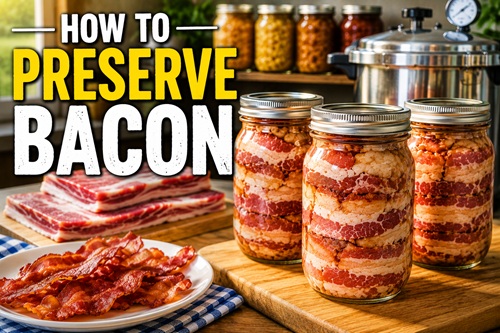
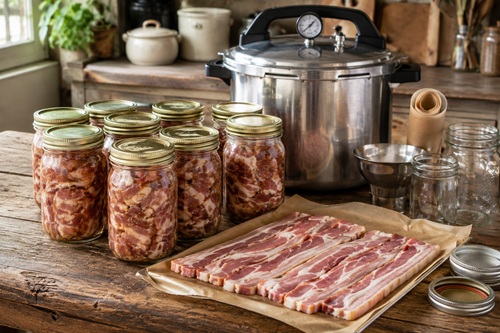
Bacon is a favorite ingredient in many kitchens because it adds flavor, richness, and protein to a wide variety of meals. Whether it’s served alongside breakfast, added to soups and stews, mixed into casseroles, or used to season vegetables and beans, bacon is one of the most versatile meats you can keep on hand. The challenge is that fresh bacon doesn’t last long. Even refrigerated or frozen, it has a limited storage life and, in the case of freezing, depends entirely on electricity.
Learning how to preserve bacon safely gives you another option. Instead of relying solely on refrigeration or freezer space, properly preserved bacon can be stored on the shelf and used whenever it’s needed. It also reduces waste by allowing you to preserve bacon before it reaches the end of its normal storage life. For anyone building a long-term pantry or simply wanting greater flexibility in food storage, preserving bacon is a practical skill that’s well worth learning.
Pressure canning has become one of the most reliable methods for preserving bacon because it produces the temperatures needed to safely process low-acid meats. Unlike fruits, jams, or pickled foods, bacon cannot be safely preserved using a boiling-water bath. Understanding this difference is one of the most important parts of the entire process. Safe preservation begins with choosing the correct method before you ever prepare your first jar.
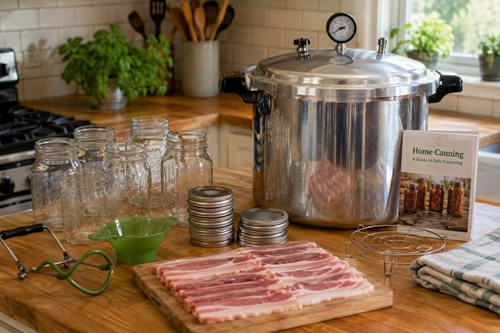
Before you begin preserving bacon, become familiar with the equipment you’ll be using. A pressure canner is designed specifically for safely preserving meats and other low-acid foods and should always be used according to the manufacturer’s instructions and current, tested canning recommendations. Inspect your jars, lids, and canner before every batch, and replace any damaged components. Developing these habits from the beginning helps produce reliable results and makes every future canning session easier.
The final decision before you begin is choosing how you want the bacon to be preserved. Some people prefer raw bacon because it offers the greatest flexibility when cooking later. Others prefer preserving fully cooked bacon that’s ready to heat and serve, while bacon bits provide a convenient way to add flavor to everything from eggs and baked potatoes to soups, salads, pasta dishes, and casseroles. Selecting the method that best matches your cooking habits will help ensure your preserved bacon becomes a regular part of your meals instead of something that’s forgotten on the pantry shelf.
Preparing the Bacon
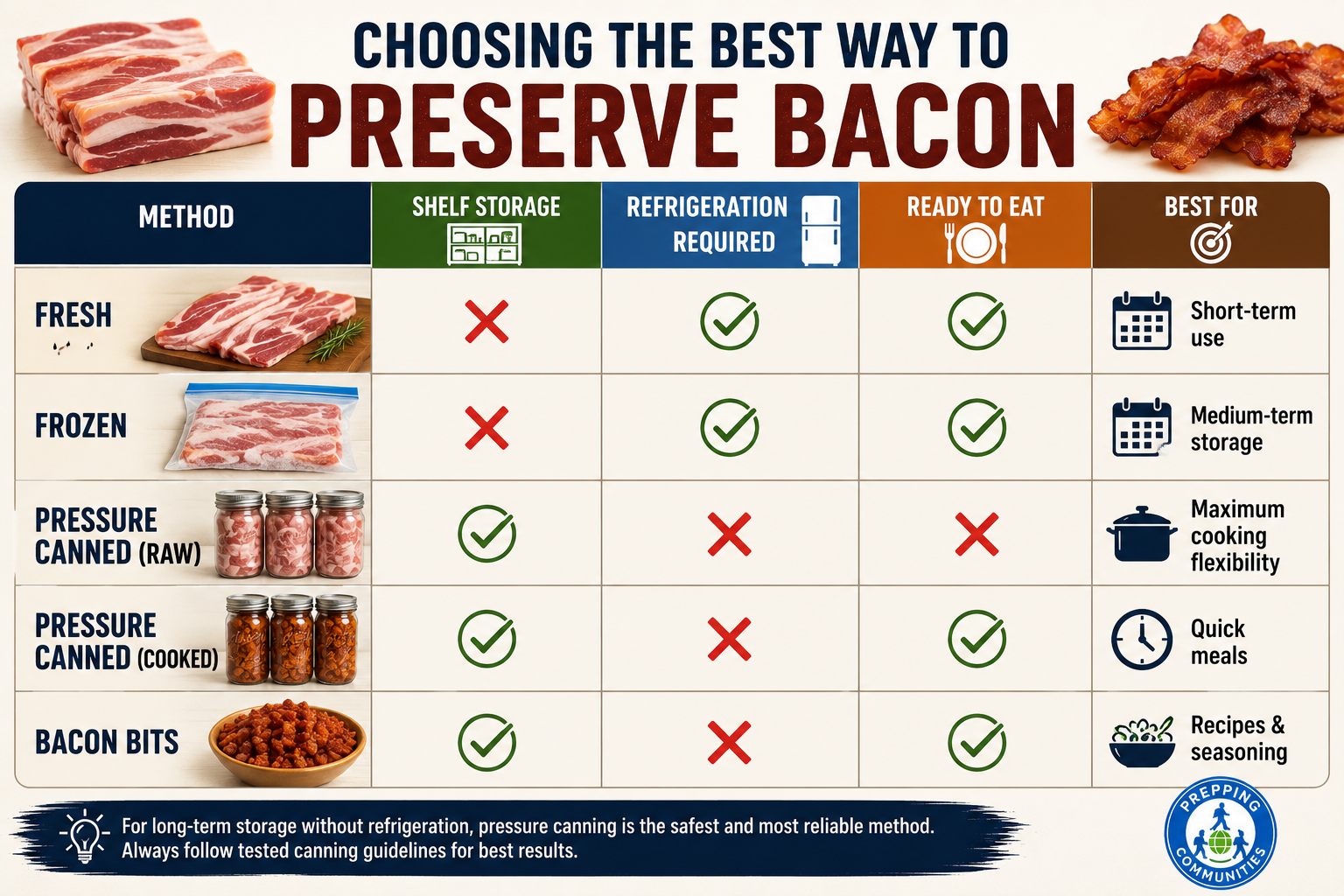
Once you’ve decided to preserve bacon, the next step is choosing how you want it to be stored. There isn’t a single right approach because each method offers different advantages. Raw bacon provides the greatest flexibility and can be cooked much like fresh bacon after opening the jar. Fully cooked bacon is convenient when you want something that’s ready to reheat and serve, while bacon bits are ideal for adding flavor to everyday meals with little preparation. Think about how you normally use bacon in your kitchen before deciding which method best fits your needs.
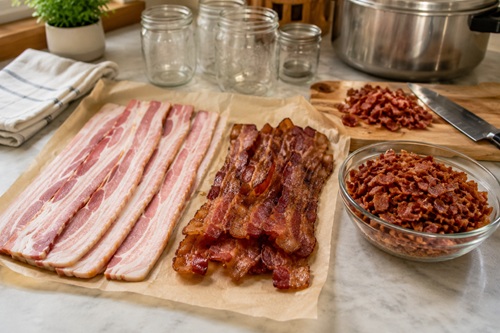
Begin with fresh, high-quality bacon that has been properly refrigerated and is still within its recommended use-by date. Food preservation is intended to extend the life of fresh food, not restore food that has already begun to spoil. Starting with quality ingredients gives you the best opportunity to produce bacon that maintains its flavor, texture, and appearance during long-term storage.
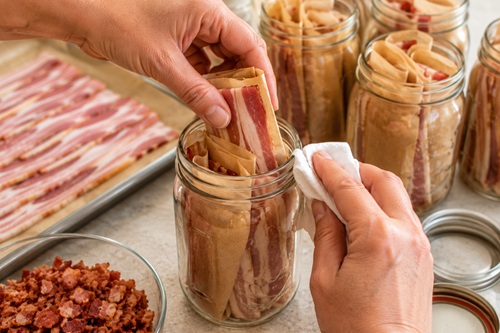
If you’re preserving bacon in strips, many home canners separate the slices with unwaxed parchment paper before rolling them into a compact bundle for the jar. This simple step helps prevent the slices from sticking together during processing and makes it much easier to remove individual pieces after opening the jar. If you choose to preserve cooked bacon, prepare it to the level of doneness you normally enjoy. If you’re making bacon bits, cook the bacon until crisp before chopping or crumbling it into small pieces that can be packed into the jars.
Take your time during preparation rather than rushing to fill the jars. Neatly arranging the bacon makes packing easier, helps produce more consistent results, and makes the finished product far more convenient to use later. A few extra minutes spent preparing the bacon properly will pay off every time you open a jar.
Packing the Jars
After the bacon has been prepared, it’s time to pack the jars. Whether you’re preserving strips or bacon bits, avoid forcing too much bacon into each jar. Leaving the recommended headspace gives the contents room to expand during processing and allows a proper vacuum seal to form as the jars cool. Overpacking may seem like a way to store more food, but it can interfere with both processing and sealing.
One question often asked by first-time canners is whether liquid should be added to the jar. Unlike many other pressure-canned foods, bacon naturally releases fat during processing, so additional liquid is generally unnecessary when following tested preservation methods. Resist the temptation to add ingredients or alter established procedures simply to experiment. Safe food preservation depends on following proven techniques that have been thoroughly tested.
Before applying the lids, carefully wipe each jar rim to remove any grease or food residue. Even a small amount of bacon fat on the sealing surface can prevent the lid from sealing properly. This is one of the simplest steps in the entire process, yet it’s also one of the most important. Taking a few extra seconds to clean each jar greatly improves the chances of achieving a dependable seal that will protect the bacon during storage.
Pressure Canning the Bacon
Once the jars have been packed and the lids have been secured, you’re ready to begin the pressure canning process. Although this is the most technical part of preserving bacon, success comes from following established procedures rather than rushing the job. Every pressure canner operates a little differently, so always begin by following the manufacturer’s instructions for preparing and operating your specific model.
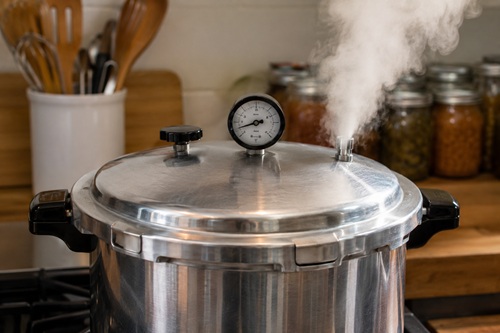
As the canner heats, steam begins to build inside the chamber. Before allowing the pressure to increase, the canner should be vented according to the manufacturer’s recommendations. This step removes trapped air and helps create a consistent processing temperature throughout the canner. While it may seem like a small part of the process, proper venting plays an important role in safe food preservation.
Once the required pressure has been reached, maintain it for the entire recommended processing time. Consistent pressure is just as important as the processing time itself. Allowing the pressure to fluctuate below the recommended level may prevent the bacon from reaching the temperatures needed for safe preservation. Resist the temptation to make adjustments unless they’re necessary to maintain the correct operating pressure.
Your altitude is another factor that should never be overlooked. As elevation increases, the pressure required for safe canning also changes. Before preserving bacon, determine your elevation and follow the appropriate pressure recommendations for your location. This simple adjustment helps ensure the bacon is processed safely regardless of where you live.
When processing has been completed, allow the pressure canner to cool naturally. Avoid forcing the pressure down by opening vents, removing weights too early, or cooling the canner with water. A gradual reduction in pressure helps the jars complete the sealing process and reduces the chance of food or liquid being forced from the jars during cooling.
After opening the canner, carefully remove the jars and place them on a towel or cooling rack where they can remain undisturbed until they have completely cooled. As the jars cool, the lids should seal, creating the vacuum that protects the bacon during storage. It’s best to leave the jars alone during this time. Tightening the screw bands, pressing on the lids, or moving the jars unnecessarily may interfere with the sealing process.
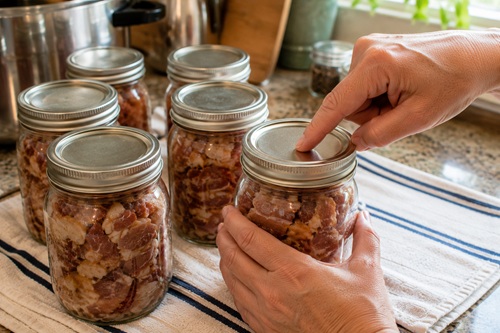
Once the jars have cooled, inspect every seal before placing the bacon into storage. A properly sealed lid should be slightly concave and should not flex when pressed gently in the center. If a jar has not sealed correctly, refrigerate the bacon and use it within a few days, or reprocess it using approved canning procedures if appropriate. Never place an unsealed jar into long-term storage.
Storing and Using Preserved Bacon
After the jars have cooled and you’ve confirmed that every lid has sealed properly, prepare them for storage. Wipe the outside of each jar to remove any grease or residue, then label it with the contents and the date it was preserved. While it’s easy to think you’ll remember when a batch was canned, that becomes much harder once several jars begin filling the pantry. Clear labels make rotating your food storage simple and help ensure older jars are used before newer ones.
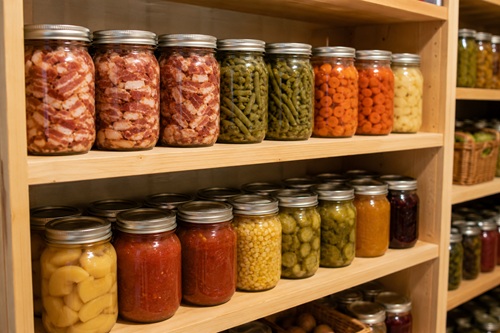
Choose a storage location that remains cool, dry, and protected from direct sunlight. Consistent temperatures help preserve both the quality of the bacon and the integrity of the seal. Avoid storing jars near furnaces, water heaters, windows, or anywhere they may be exposed to excessive heat, freezing temperatures, or frequent temperature changes. Although properly canned bacon is shelf stable, good storage conditions help maintain its flavor, texture, and appearance over time.
Before opening a jar, take a moment to inspect it carefully. The lid should still be firmly sealed, with no signs of bulging, leakage, rust, or damage.
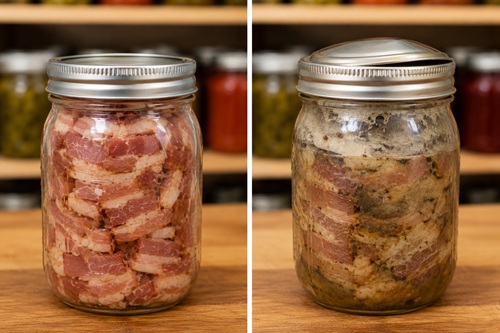
Look through the glass for anything that appears unusual, including unexpected discoloration or mold. These problems are uncommon when proper canning procedures have been followed, but developing the habit of inspecting every jar before use is one of the simplest ways to protect yourself and your family.
Once the jar has been opened, let your senses guide you. Properly preserved bacon should look and smell like bacon. If you notice an unusual odor, visible spoilage, or anything that causes you to question its safety, discard it immediately without tasting it. Never assume that cooking questionable food will make it safe. When it comes to home-preserved foods, it’s always better to lose a single jar than risk foodborne illness.
The way you preserved the bacon will determine how it’s used in the kitchen. Raw bacon can be cooked much like fresh bacon, although the texture may be slightly different after pressure canning. Cooked bacon usually needs only a quick reheating before serving, while bacon bits can be added directly to soups, stews, eggs, potatoes, vegetables, pasta, salads, and casseroles. Choosing the preservation method that matches the way you normally prepare meals makes your preserved bacon far more practical and increases the likelihood that it becomes part of your regular cooking routine.
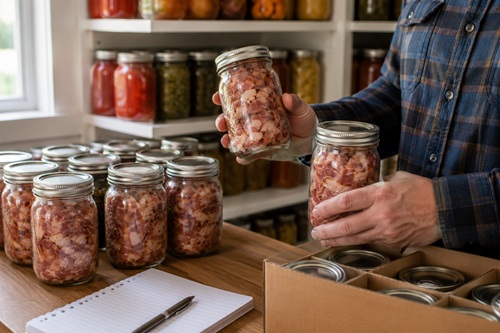
Like any home-preserved food, bacon should be rotated regularly rather than placed on a shelf and forgotten. Using older jars first and replacing them with freshly preserved batches keeps your food storage current and gives you regular opportunities to practice the preservation process. Over time, these routine batches build experience, improve consistency, and make preserving bacon a normal part of managing your pantry rather than a skill that’s only used once in a while.
Avoiding Common Mistakes
Most problems with home-preserved bacon can be traced back to a handful of common mistakes. Fortunately, they’re also some of the easiest to prevent once you understand what to watch for.
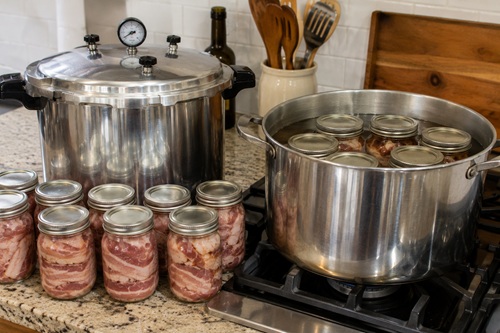
One of the most serious mistakes is attempting to preserve bacon using a boiling-water bath instead of a pressure canner. Because bacon is a low-acid meat, boiling water cannot reach the temperatures required to safely destroy harmful bacteria. No amount of additional processing time can compensate for using the wrong equipment. Always use a pressure canner designed for preserving low-acid foods.
Another common mistake is trying to improve or modify a tested preservation method. It can be tempting to add seasonings, liquids, or additional ingredients, change processing times, or pack more bacon into each jar to save space. While these changes may seem harmless, they can affect how heat moves through the jar and may compromise both the quality and safety of the finished product. When preserving meat, following tested procedures exactly as written is always the safest approach.
Rushing the process is another mistake that often creates unnecessary problems. Allow the pressure canner to vent properly before processing, maintain a steady pressure throughout the entire canning cycle, and let the canner cool naturally before removing the lid. These steps require patience, but they’re essential for producing a safe, properly sealed product. Trying to speed things up rarely saves much time and can increase the likelihood of seal failures or inconsistent results.
Poor storage habits can also shorten the life of preserved bacon. Storing jars where they’re exposed to heat, sunlight, freezing temperatures, or frequent temperature changes can gradually reduce quality and place additional stress on the seals. Choosing a cool, dark, and dry storage location gives your preserved bacon the best opportunity to maintain its quality over the long term.
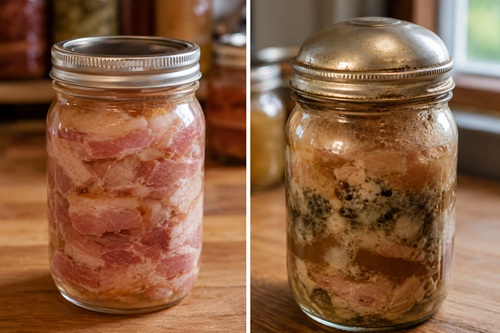
Finally, never ignore signs that a jar may no longer be safe. A broken seal, leaking lid, bulging lid, unusual appearance, mold, or an unpleasant odor after opening are all reasons to discard the contents immediately. Home food preservation is extremely rewarding when done correctly, but food safety should always come before avoiding waste. If there’s any doubt about the condition of a jar, the safest decision is to throw it away.
Bringing It All Together
Preserving bacon for long-term storage is a skill that combines careful preparation with proven food preservation practices. While the process requires attention to detail, it isn’t difficult once you understand the principles behind it. Starting with fresh bacon, using the proper equipment, following tested pressure canning procedures, and storing the finished jars correctly all contribute to producing a safe, shelf-stable product that can be enjoyed long after fresh bacon would normally have spoiled.
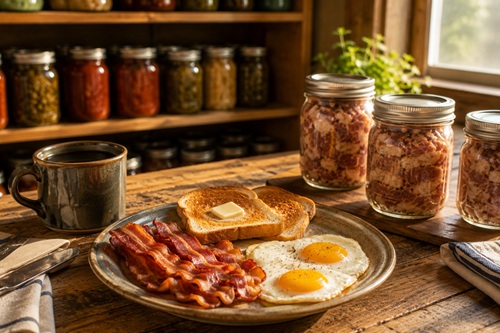
As you gain experience, you’ll also discover which preservation method works best for your household. Some families appreciate the flexibility of preserving raw bacon, while others prefer the convenience of fully cooked strips or bacon bits that can be added directly to everyday meals. There isn’t a universal right or wrong choice. The best approach is the one that fits the way you cook and helps ensure your preserved bacon becomes part of your normal pantry rotation.
Like any home-preserved food, bacon deserves regular attention after it has been stored. Inspect your jars before opening them, rotate your supply so older jars are used first, and continue preserving fresh batches as part of your normal food storage routine. These simple habits help maintain quality and ensure you’re continually practicing and improving your preservation skills rather than relying on something you learned years ago.
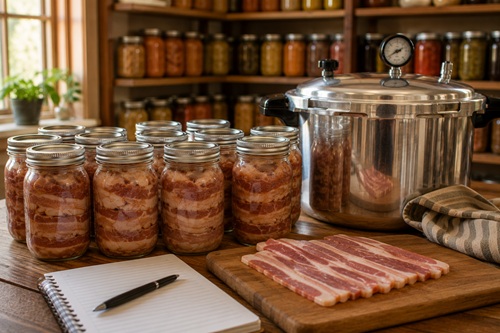
Perhaps the greatest benefit of preserving bacon is the confidence that comes from mastering another practical skill. Instead of depending entirely on refrigeration or freezer space, you’ll have another reliable way to keep one of your favorite ingredients available for future meals. Every successful batch builds experience, and every jar placed on the shelf represents another step toward becoming more capable in your own kitchen.
Whether you’re preserving a few jars each year or making bacon a regular part of your long-term food storage plan, the process becomes easier with practice. Take your time, pay attention to the details, and let each batch build your knowledge. Before long, preserving bacon will become a routine skill that serves you well for years to come.
Using Your Preserved Bacon
One of the advantages of preserving bacon is that it’s ready to use in a wide variety of meals. How you prepare it depends on whether you preserved raw bacon, cooked strips, or bacon bits.
Raw bacon can be fried, baked, or grilled much like fresh bacon. Fully cooked bacon usually requires only a quick reheating before serving, while bacon bits can be added directly to soups, beans, casseroles, pasta dishes, baked potatoes, salads, scrambled eggs, and many other recipes.
Because preserved bacon is already stored and ready to use, it can save valuable preparation time when cooking everyday meals or during emergencies.
Try This
If this is your first time preserving bacon, don’t start with several pounds. Preserve a single batch first and use it in your normal meals over the following weeks. You’ll quickly learn whether you prefer raw bacon, cooked strips, or bacon bits, making it much easier to decide how you’d like to preserve future batches.
© Prepping Communities. This content is for informational purposes only and not professional advice. Use at your own risk.
Terms | Privacy | Guidelines