

Cheese is useful, nutritious, and versatile, but it presents an obvious preparedness problem: most of the cheese we buy today depends on refrigeration. When electricity is available, that isn’t much of an issue. During an extended power outage, equipment failure, evacuation, or other disruption, refrigerated foods quickly become something that must either be used, preserved another way, or eventually lost.
One option worth understanding is homemade cheese powder. Cheese powder isn’t a replacement for a block of fresh cheese. You aren’t going to turn it back into slices of cheddar for sandwiches. Its value is different. It provides concentrated cheese flavor that can be added to pasta, potatoes, soups, breads, eggs, vegetables, sauces, and many other foods. It can also give you another way to make use of cheese before it goes to waste.
For preparedness, however, there is an important distinction to understand. Drying cheese and producing a powder does not automatically mean you have created the equivalent of commercially manufactured shelf-stable cheese powder. Commercial products are made under controlled conditions where moisture, temperature, sanitation, and other factors can be measured. Those conditions are much harder to duplicate in a home kitchen.
The better approach is to treat making cheese powder as another food-preservation skill while using conservative food-safety and storage practices.

Why Cheese Is More Difficult to Dry Than Many Foods
Dehydration works primarily by removing water. Microorganisms need available moisture to grow, which is one reason properly dried foods can last considerably longer than their fresh counterparts. Drying, however, doesn’t necessarily destroy microorganisms that were already present in the food.
Cheese presents another challenge because it contains fat. Dehydration removes water, but it doesn’t remove all of that fat. Even when the finished cheese seems completely dry, the remaining fat can oxidize and eventually become rancid.
This makes cheese different from many fruits, vegetables, and herbs commonly placed in a dehydrator. With cheese, you aren’t simply trying to remove moisture. You also have to think about the fat that remains afterward and how the finished product will be stored.
Choosing the Right Cheese
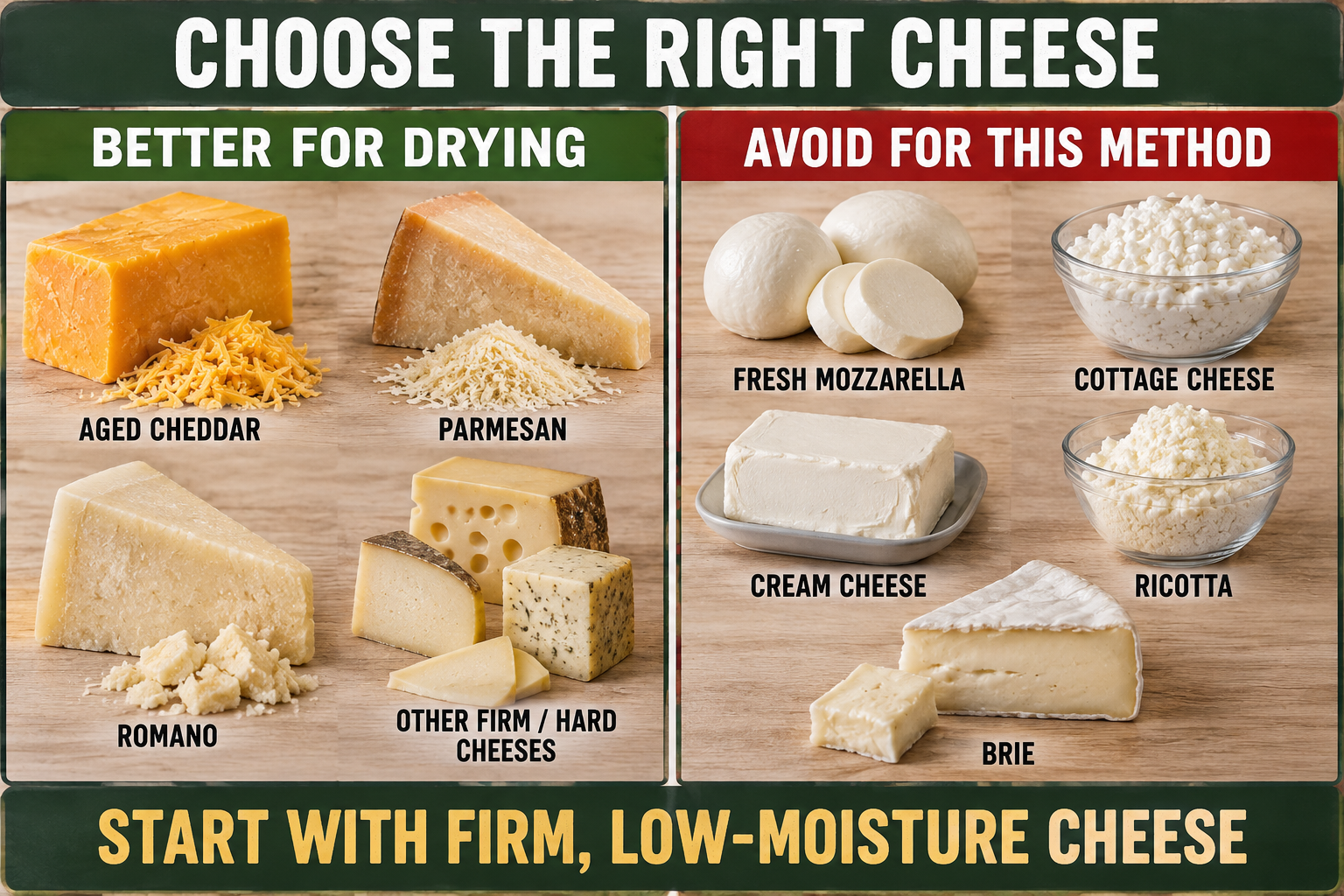
If you’re experimenting with homemade cheese powder, firm and hard cheeses are the most practical place to begin. A commercially produced, pasteurized aged cheddar, Parmesan, Romano, or another firm cheese contains considerably less moisture than something such as cottage cheese or fresh mozzarella.
High-moisture cheeses are poor candidates for this type of home dehydration. Fresh mozzarella, cream cheese, cottage cheese, ricotta, Brie, and similar cheeses contain considerably more water and shouldn’t simply be treated the same way as a block of aged cheddar.
Harder cheeses also tend to produce a stronger finished powder because their flavor becomes concentrated as moisture is removed. A sharp cheddar, for example, will generally retain more noticeable cheese flavor than a very mild cheese.
Whatever cheese you choose, start with a small amount. Learning the technique with a few ounces makes much more sense than risking several pounds of food on your first attempt.
Preparing the Cheese for Drying
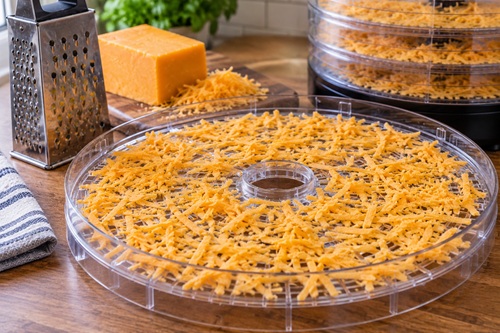
The objective when preparing cheese for the dehydrator is to expose as much surface area as reasonably possible. Large cubes may dry on the outside while retaining moisture inside, so shredding or finely grating the cheese is a much better approach.
Spread the shredded cheese in a thin, even layer on appropriately lined dehydrator trays. Avoid creating thick piles or clumps. Warm air needs to circulate around the cheese so moisture can escape evenly.
The same principle applies to almost everything placed in a dehydrator. Uniform pieces tend to dry more evenly, while thick or irregular pieces make it much harder to know whether moisture remains hidden inside.
Dehydrating the Cheese
Use a dehydrator that provides controlled heat and good airflow, and follow the manufacturer’s guidance for dairy products where available. Different dehydrators behave differently, so a temperature and drying time that works perfectly in one machine may not produce identical results in another.
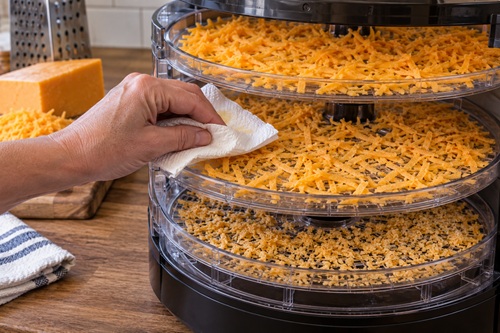
As the cheese dries, you may notice oil appearing on its surface. This comes from the fat in the cheese and can be carefully blotted away with clean paper towels during the drying process.
The cheese needs to dry thoroughly rather than simply developing a dry surface. Depending on the cheese, shred size, humidity, airflow, fat content, amount being processed, and dehydrator itself, drying time can vary considerably.
This is one reason food preservation should be learned through practice rather than simply memorizing a number of hours from a recipe. You need to become familiar with how properly dried food looks and feels in your own equipment.
Cooling Before Grinding
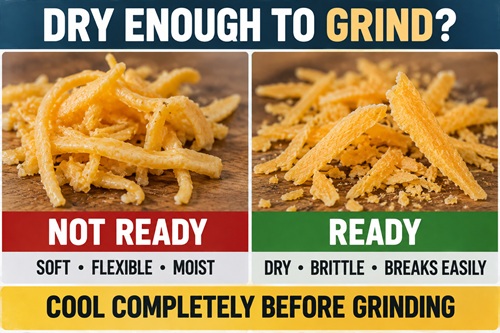
Once the cheese appears thoroughly dried, remove it from the dehydrator and allow it to cool completely. Don’t rush directly from the dehydrator to the grinder.
Warm cheese still contains softened fat. Grinding it immediately creates additional friction and heat, which can turn what should become powder into a greasy paste. Cooling also gives you another opportunity to examine the dried cheese.
Pieces that still bend, feel soft, or appear moist may require additional drying. Properly dried pieces should break apart readily rather than behaving like fresh cheese.
Turning the Dried Cheese Into Powder
Once everything has cooled completely, break the dried cheese into smaller pieces and place them in a blender, food processor, or spice grinder. Use short pulses rather than running the machine continuously.
Short pulses help prevent excessive friction from heating the remaining fat. Continue until the cheese reaches the consistency you want. If you want a finer powder, pass it through a fine sieve and return the larger pieces to the grinder.
Don’t worry if homemade cheese powder doesn’t look exactly like something from a commercial package. Commercial products may be manufactured using different processes and can contain additional ingredients designed to control texture and clumping.
The important thing is understanding what you’ve produced and how you intend to use and store it.

Storing Homemade Cheese Powder
Storage is where some caution is necessary. It is easy to assume that because something feels dry, it must automatically be safe to put in a cupboard for months or years. That isn’t necessarily the case.
Drying reduces the available moisture microorganisms need, but home dehydration conditions vary. Cheese also retains fat after drying, which introduces the additional problem of rancidity.
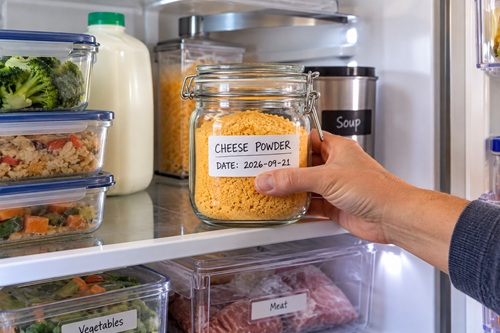
For homemade dehydrated cheese powder, a conservative approach is to place the completely cooled powder into a clean airtight container and keep it refrigerated or frozen unless you are following a tested process that establishes room-temperature stability for the particular product you’ve made.
Label the container with the contents and preparation date. This simple habit becomes increasingly important as a preparedness pantry grows. Six months from now, you shouldn’t have to guess what is inside an unmarked jar or when you made it.
Vacuum sealing and oxygen absorbers can be useful packaging tools for foods that are appropriate for them, but they shouldn’t be viewed as a way to turn inadequately preserved food into safe food. Packaging protects properly prepared food. It doesn’t fix a preservation process that wasn’t safe to begin with.
Knowing When to Throw It Away
Always examine preserved food before using it. Moisture appearing inside the container, unusual clumping, mold, discoloration, or an unpleasant odor are reasons to discard the product.
Because cheese contains fat, rancidity is another concern. Oxidized fats can develop stale, bitter, waxy, or paint-like odors and flavors. Once that happens, the food shouldn’t be considered something worth salvaging.
Preparedness isn’t about eating questionable food because you don’t want to waste it. Good preparedness means learning how to preserve food properly and recognizing when something should be discarded.
Using Homemade Cheese Powder
Cheese powder works best as an ingredient rather than as a replacement for fresh cheese. Stir a small amount into cooked pasta, mashed potatoes, soups, sauces, scrambled eggs, vegetables, biscuits, breads, or other foods where cheese flavor is useful.
Because removing moisture concentrates flavor, you may need less powder than expected. Start with a small amount, taste the food, and add more as necessary.
This is also where cheese powder can become useful in preparedness cooking. Many stored foods such as rice, pasta, potatoes, beans, and dehydrated vegetables are inexpensive and practical, but meals made from them can become repetitive. Seasonings and concentrated flavors can make basic stored foods considerably more enjoyable.
Food morale matters during a prolonged emergency. Eating the same bland meals repeatedly may technically provide calories, but having ways to improve flavor makes a stored-food plan much easier to live with.

Cheese Powder and Freeze-Dried Cheese Are Different
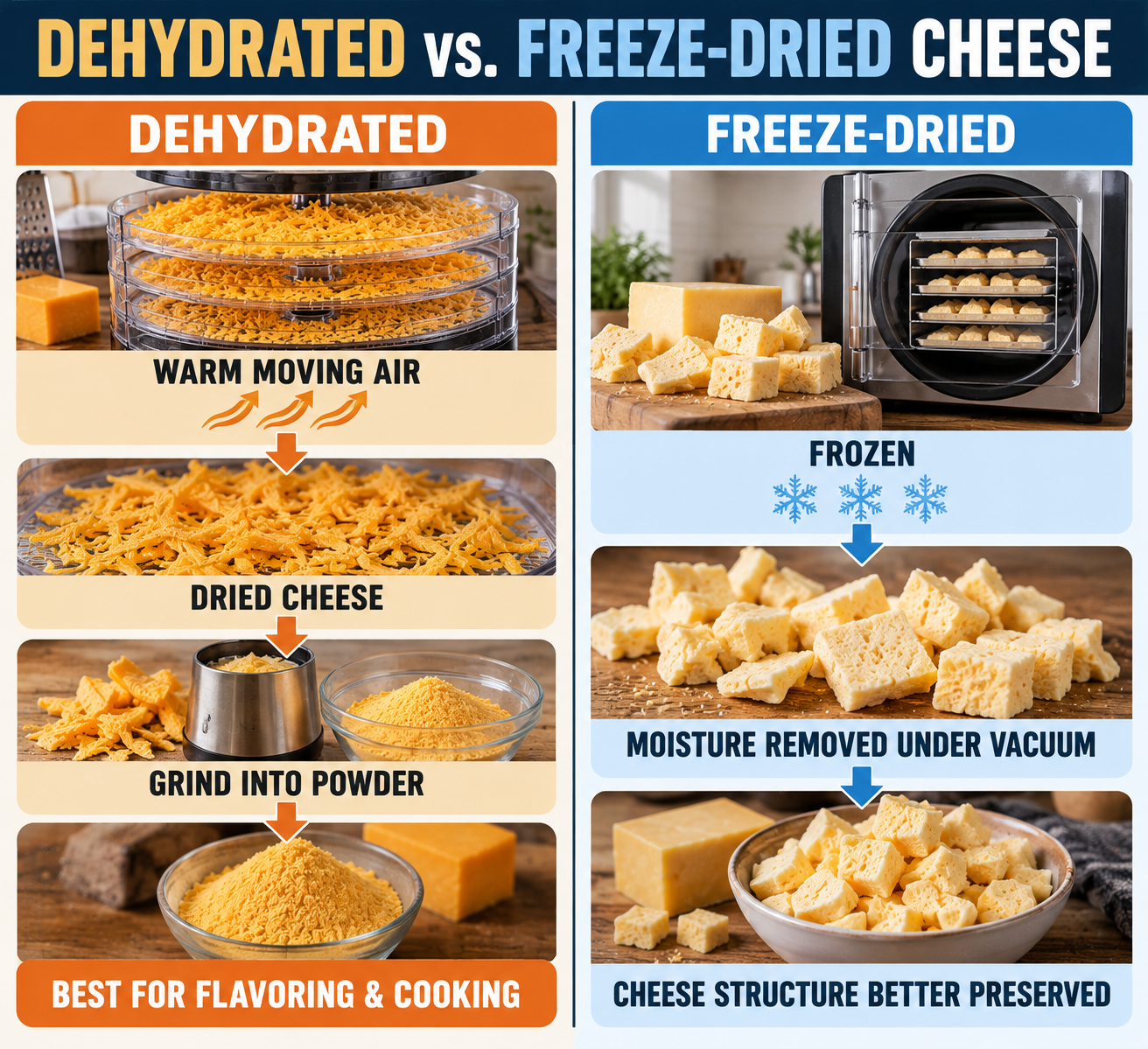
Homemade dehydrated cheese powder shouldn’t be confused with freeze-dried cheese. The two preservation methods work differently and produce different results.
Traditional dehydration removes moisture using warm moving air. Cheese dried this way becomes hard and can then be ground into a seasoning powder. Freeze-drying freezes the food and removes moisture under vacuum through a process called sublimation.
Freeze-drying can preserve foods in a form much closer to their original structure, making it useful when you want something closer to actual cheese rather than simply cheese flavoring. The obvious disadvantage is the cost of a home freeze-dryer compared with an ordinary dehydrator.
For preparedness purposes, neither method needs to be considered the single answer. They are simply different tools with different strengths.
Build Layers Into Your Food Preservation
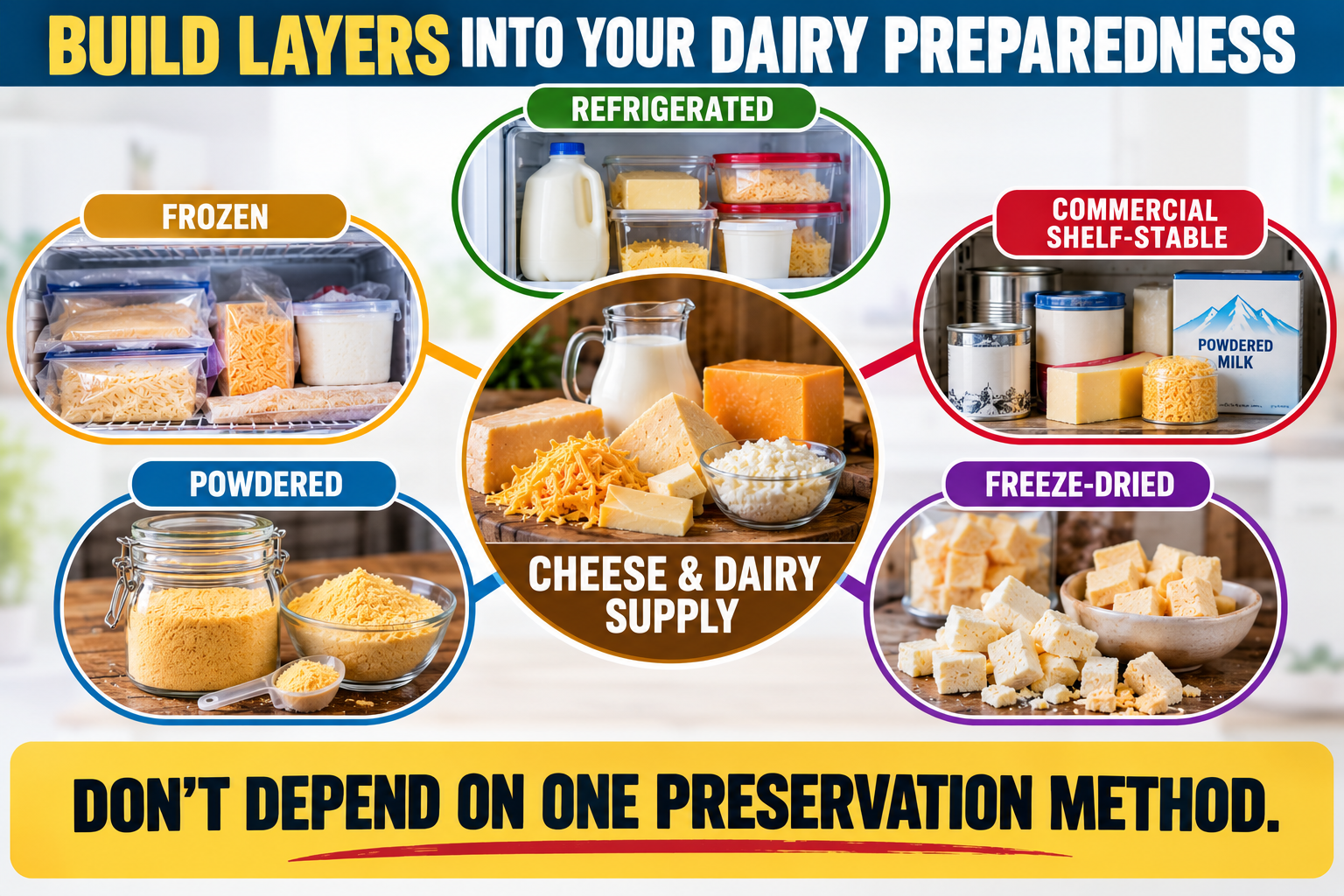
The larger preparedness lesson here goes beyond cheese powder. A resilient food supply shouldn’t depend entirely on one preservation method.
Fresh cheese might normally be kept in the refrigerator. Some cheese could be frozen. Commercial shelf-stable cheese products could provide another option. Powdered cheese can provide flavoring for stored meals. Households with freeze-drying equipment may have another preservation option available.
The same principle applies to meat, vegetables, fruit, grains, and many other foods. Refrigeration, freezing, canning, dehydration, freeze-drying, fermentation, and commercially packaged shelf-stable foods can all provide different layers of protection.
When one preservation method fails, the entire food supply shouldn’t fail with it.
Practice Before You Need the Skill
The worst time to learn food preservation is during the emergency that forced you to use it.
Try making a small batch of cheese powder while grocery stores are open, electricity is available, replacement food is inexpensive, and a mistake is merely inconvenient.
Learn how your dehydrator behaves. See how different cheeses respond. Pay attention to how the cheese changes during drying. Learn what thoroughly dried pieces look and feel like. Grind the finished product and use it in several ordinary meals.
Then decide whether the technique deserves a place in your preparedness system.
That experience is far more useful than simply owning a dehydrator and assuming you’ll figure everything out when an emergency occurs.
Preparedness Action Plan
Start with a small amount of commercially produced, pasteurized hard cheese and experiment with drying it under normal conditions. Record the type of cheese you used, how you prepared it, your dehydrator settings, approximate drying time, finished texture, and how you stored the resulting powder. Use it in several meals so you understand what it does well and where fresh cheese would still be preferable.
Then look beyond the experiment and examine your overall dairy preparedness. Consider what would happen to the milk, cheese, butter, and other refrigerated foods in your home if electricity disappeared for one day, three days, or a week. Determine what you would use first, what could be preserved another way, and what alternatives you already have stored.
The objective isn’t simply learning how to make cheese powder. It’s making sure the loss of refrigeration doesn’t leave you without options.
Key Takeaways
Homemade cheese powder can provide another way to use firm cheese and create a concentrated ingredient for preparedness cooking. Firm, pasteurized cheeses are more practical candidates than soft, high-moisture varieties, and careful preparation, thorough drying, complete cooling, grinding, and proper storage all matter.
Home dehydration shouldn’t automatically be assumed to create the equivalent of commercially shelf-stable cheese powder. Because cheese retains substantial fat and home processing conditions vary, conservative storage practices are appropriate.
Most importantly, cheese powder should be viewed as one small part of a broader food-preservation system. The strongest preparedness pantry isn’t built around one method. It uses several methods so that when refrigeration, electricity, equipment, or another part of the system fails, there are still other ways to preserve food and keep people fed.
© Prepping Communities. This content is for informational purposes only and not professional advice. Use at your own risk.
Terms | Privacy | Guidelines