
Introduction: The Hidden Risk Most Preppers Ignore
Most preppers focus on calories, shelf life, and storage.
But there’s a major issue that gets overlooked:
Food quality—especially toxins that build up over time.
You can have years of food stored…
…but if that food is contaminated or low quality, it can slowly work against your health instead of supporting it.
One of the biggest concerns raised in recent discussions is long-term exposure to environmental toxins—especially those that accumulate in food sources.
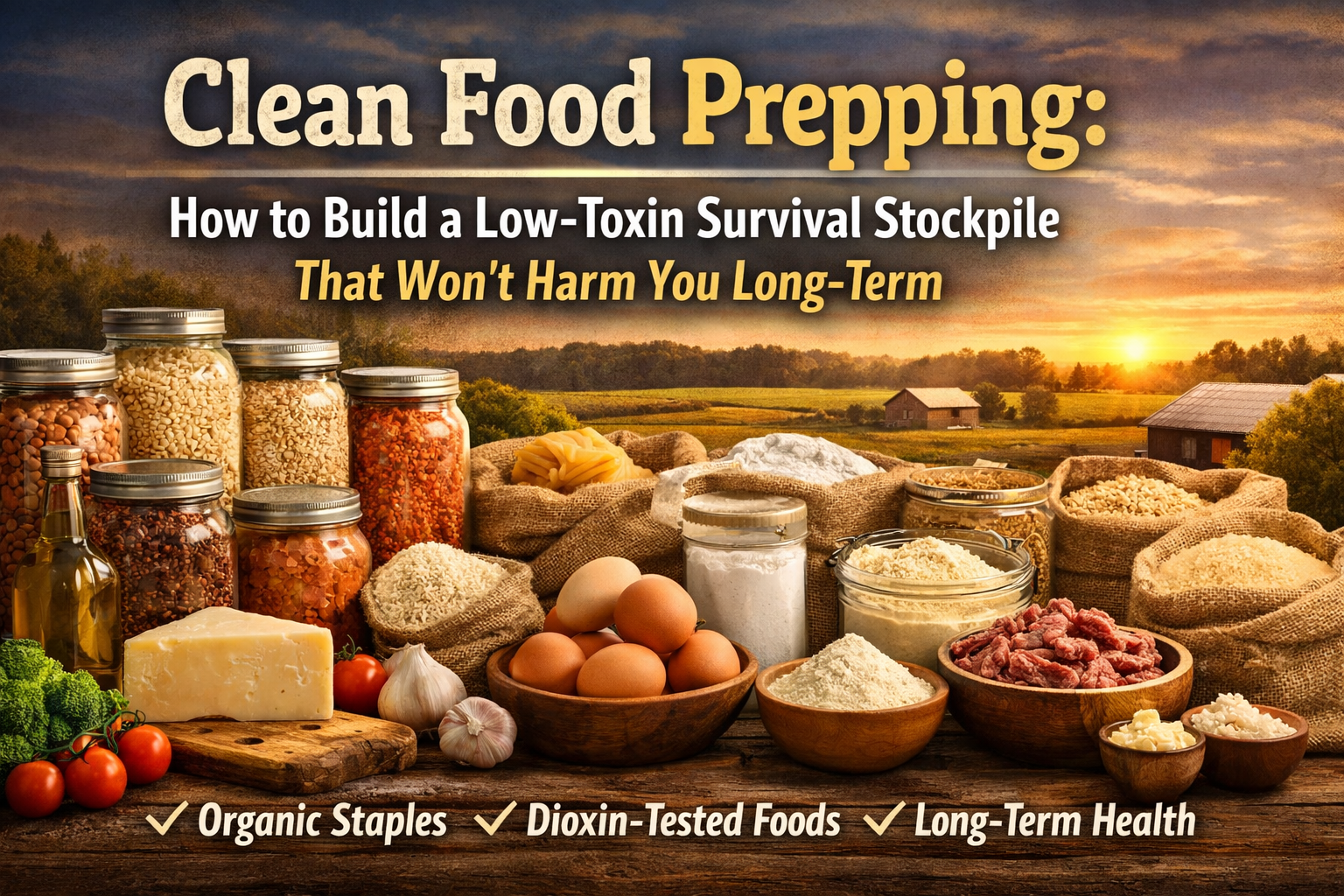
This guide walks you step-by-step through how to build a clean, practical, low-toxin prepper pantry that actually supports long-term survival.
Section 1: Understanding the Problem (Why This Matters)
Not all stored food is equal.
Many common survival foods:
- Come from industrial farming
- Contain additives or preservatives
- Use lower-quality fats or proteins
Over time, exposure to contaminants—especially in fatty foods—can build up in the body and create long-term health risks.
Key takeaway:
Preparedness isn’t just about having food.
It’s about having food that won’t degrade your health over time.
Section 2: The Core Principle — “Clean Over Convenient”
A lot of survival foods are designed for:
- Long shelf life
- Easy storage
- Quick preparation
But not necessarily:
- Nutritional quality
- Low toxin exposure
- Long-term health
Shift your mindset:
Instead of asking:
“How long does it last?”
Ask:
“What am I actually putting into my body for years?”
Section 3: Step-by-Step — Building a Clean Food Stockpile
Step 1: Audit What You Already Have
Go through your current stockpile and categorize:
Category A (Keep):
- Whole foods
- Simple ingredients
- Minimal processing
Category B (Limit):
- Highly processed foods
- Artificial additives
- Unknown sourcing
Category C (Replace over time):
- Cheap bulk items with questionable quality
- Heavily preserved or synthetic foods
Don’t throw everything out – just start upgrading gradually.
Step 2: Prioritize Clean Protein Sources
Protein is one of the hardest things to store long-term.
Better options:
- Freeze-dried meats (trusted sources)
- Dried beans and lentils
- Eggs (freeze-dried or powdered from quality suppliers)
Example setup:
- 50 lbs beans
- 20 lbs lentils
- Freeze-dried meat for backup
This gives you both longevity and flexibility.
Step 3: Choose Better Fat Sources
Fats are essential—but also where toxins tend to accumulate.
Focus on:
- Clean, stable fats
- Minimal processing
- Known sourcing
Examples:
- Coconut oil
- Olive oil (stored properly)
- Shelf-stable dairy powders from trusted sources
Avoid low-quality oils and heavily processed fats.
Step 4: Stock Smart Carbohydrates
Carbs are your calorie base.
Best options:
- Rice
- Oats
- Flour (rotate regularly)
- Pasta
Upgrade tip:
Whenever possible:
- Buy higher-quality sources
- Store properly (cool, dry, sealed)
Step 5: Reduce Processed Foods
Processed foods are:
- Easy
- Convenient
- Often lower quality
Examples to limit:
- Highly processed survival meals
- Artificial snacks
- Unknown ingredient mixes
These can still have a place—but shouldn’t be your foundation.
Section 4: Practical Example — A Balanced Prepper Pantry
Here’s a realistic setup:
Base Layer (Bulk Storage):
- Rice (100 lbs)
- Beans (50 lbs)
- Oats (25 lbs)
Protein Layer:
- Lentils
- Freeze-dried meat
- Powdered eggs
Fat Layer:
- Coconut oil
- Olive oil
- Shelf-stable dairy powders
Supplement Layer:
- Salt
- Sugar
- Spices
- Baking essentials
This gives you:
- Calories
- Nutrition
- Flexibility
Section 5: Rotation and Storage
Even the best food fails if stored poorly.
Key rules:
- Keep it cool
- Keep it dry
- Keep it sealed
Rotation method:
- Use oldest first
- Replace as you go
- Track dates
Think of your stockpile as a working pantry—not a backup pile.
Section 6: Reducing Exposure Day-to-Day
Preparedness isn’t just for emergencies.
You can reduce risk now by:
- Eating less processed food
- Choosing better ingredients
- Cooking more at home
Even small changes compound over time.
Section 7: Common Mistakes to Avoid
- Buying only cheap bulk food
- Relying fully on premade survival meals
- Ignoring food quality
- Not rotating stock
- Overcomplicating your setup
Keep it simple, clean, and practical.
Section 8: Real-World Scenario
Scenario: Supply chain disruption
Most people:
- Rely on store-bought processed foods
- Have limited backup
You:
- Have clean bulk staples
- Can cook real meals
- Maintain better health over time
That’s the difference.
Section 9: Simple Weekly Action Plan
If you want to start today:
Week 1:
- Audit your current food
Week 2:
- Add 1–2 clean staples
Week 3:
- Replace one lower-quality item
Week 4:
- Improve storage setup
Build over time – don’t rush it.
Section 10: Final Thoughts
Most people prepare for survival.
Very few prepare for long-term health during survival.
Your food isn’t just fuel – it’s your:
- Energy
- Immunity
- Strength
If your stockpile supports that, you’re ahead of the curve.
Closing
You don’t need to be perfect.
You just need to be intentional.
Start upgrading your food now—little by little—and you’ll build a stockpile that actually supports you when it matters most.
© Prepping Communities. This content is for informational purposes only and not professional advice. Use at your own risk.
Terms | Privacy | Guidelines