
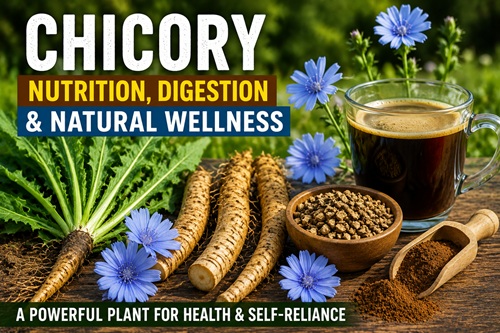
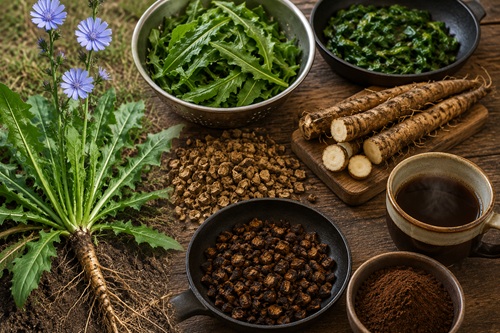
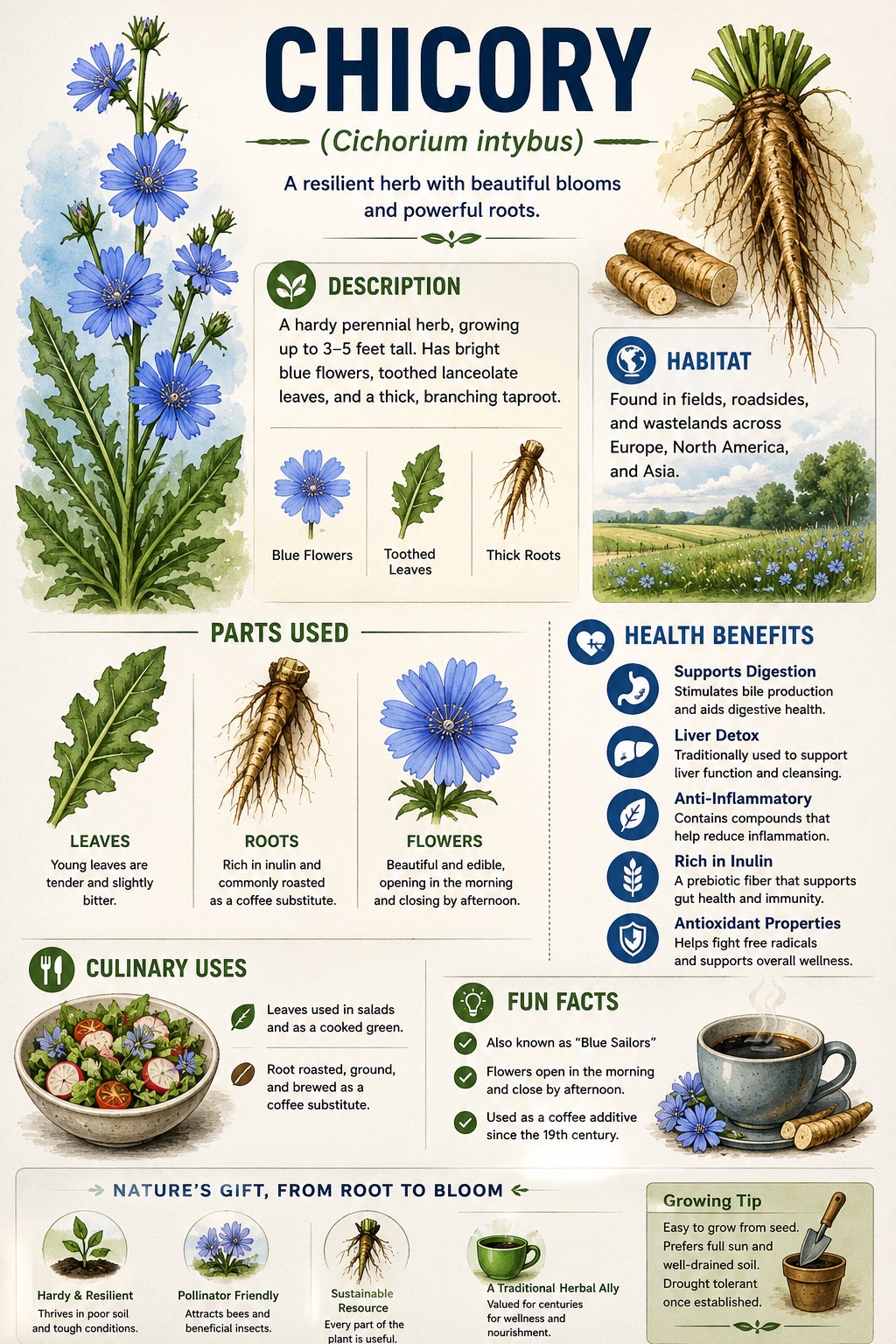
One of chicory’s greatest benefits is its edible leaves and roots. Young leaves can be harvested in spring and eaten fresh in salads or cooked like spinach, while older leaves become more bitter and are often boiled or sautéed. The thick taproot is perhaps its most famous feature. After cleaning, drying, roasting, and grinding, the root produces a rich beverage that has long been used as a coffee substitute or blended with coffee to extend supplies. During periods of war, economic hardship, and supply shortages, roasted chicory root became an important alternative when coffee was scarce. For preppers and homesteaders, this makes chicory an excellent example of a renewable local resource that can reduce dependence on commercial products.
Chicory also provides several nutritional and wellness benefits. The root is naturally rich in inulin, a prebiotic fiber that helps nourish beneficial bacteria within the digestive system. A healthy gut microbiome supports digestion, nutrient absorption, and overall immune function.
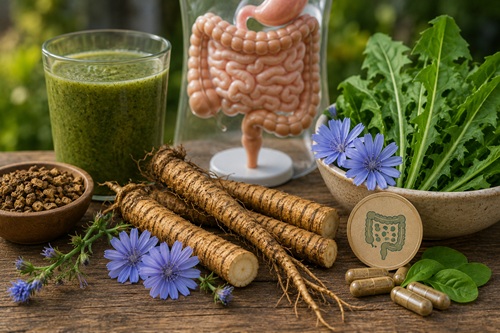
The leaves contain vitamins and minerals that contribute to a balanced diet, while the plant also supplies antioxidants that help protect cells from everyday oxidative stress. Although chicory has been used traditionally to support liver and digestive health, it should be viewed as part of an overall healthy lifestyle rather than a replacement for professional medical care.
From a preparedness perspective, chicory demonstrates the value of learning to identify useful wild plants before they are needed. Because it grows across a wide range of climates, requires no cultivation to find in the wild, and offers multiple practical uses, it can become part of a resilient food strategy. Understanding how to correctly identify, harvest, process, and preserve chicory builds valuable self-reliance skills that remain useful regardless of changing economic conditions or temporary supply disruptions. Like many wild edible plants, its greatest value comes from knowledge gained before an emergency occurs.
Perhaps the greatest lesson chicory teaches is that preparedness often begins with recognizing the resources already growing around us. A plant that many people consider a roadside weed can provide fresh greens, a coffee alternative, beneficial fiber, and valuable experience in wild food harvesting. Every new plant learned expands both confidence and capability. By adding chicory to your foraging knowledge, you are not simply learning about another edible plant—you are developing practical skills that increase resilience, reduce dependence on outside resources, and strengthen long-term self-sufficiency.
© Prepping Communities. This content is for informational purposes only and not professional advice. Use at your own risk.
Terms | Privacy | Guidelines