

30 Essential Foods Every Prepared Household Should Consider
Introduction
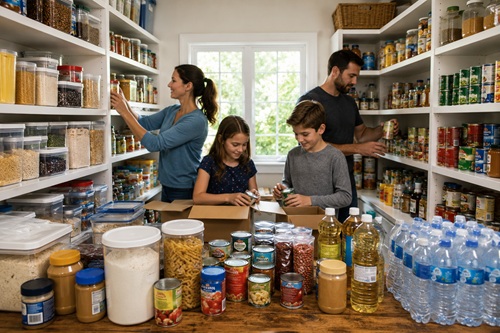
A well-stocked pantry is one of the simplest yet most valuable investments a family can make. It provides security during unexpected emergencies, reduces grocery expenses over time, and ensures that nutritious meals remain available even when shopping isn’t possible. Whether the disruption is caused by severe weather, temporary financial hardship, transportation problems, or a prolonged power outage, having food already stored at home allows your family to remain comfortable and focused rather than scrambling for basic necessities.
Many people mistakenly believe that emergency food storage requires purchasing expensive freeze-dried meals or filling an entire basement with supplies overnight. In reality, the strongest pantries are usually built slowly using everyday foods that families already enjoy eating. By adding just a few extra items during each shopping trip and rotating them into normal meal planning, a dependable food reserve can be built without placing unnecessary strain on the household budget.
Preparedness is not about expecting disaster around every corner. It is about recognizing that unexpected events happen to everyone at some point. Job losses, severe storms, illness, supply chain disruptions, and unexpected expenses can all make grocery shopping difficult for a period of time. A thoughtfully stocked pantry provides peace of mind by ensuring that your family always has access to nourishing meals regardless of temporary challenges.
Why Every Family Should Build an Emergency Pantry
Modern grocery stores are remarkable examples of efficiency. Products move from farms and manufacturers through warehouses and distribution centers before arriving on store shelves, often within days. While this system works exceptionally well under normal circumstances, it leaves very little margin when unexpected events interrupt transportation or increase consumer demand. A major winter storm, hurricane, wildfire, labor disruption, or transportation delay can quickly empty shelves as people rush to purchase the same essential items.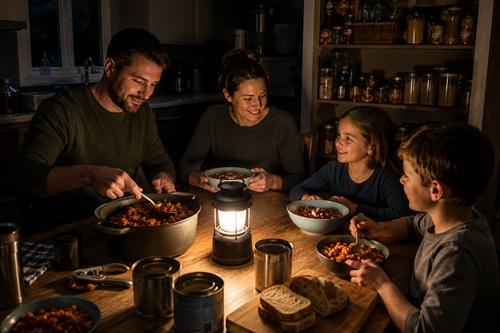
Building an emergency pantry creates a buffer between your family and these short-term disruptions. Instead of needing to visit crowded stores during emergencies, you already have the ingredients necessary to prepare familiar meals at home. This not only reduces stress but also minimizes unnecessary travel during hazardous conditions.
A well-managed pantry can also help reduce food costs throughout the year. Purchasing staple foods when they are on sale, buying larger quantities of items your family uses regularly, and maintaining a rotating inventory often results in lower grocery expenses over time. Rather than viewing food storage as an emergency expense, many families discover it becomes an effective budgeting strategy that provides benefits every week of the year.
The Building Blocks of a Practical Pantry
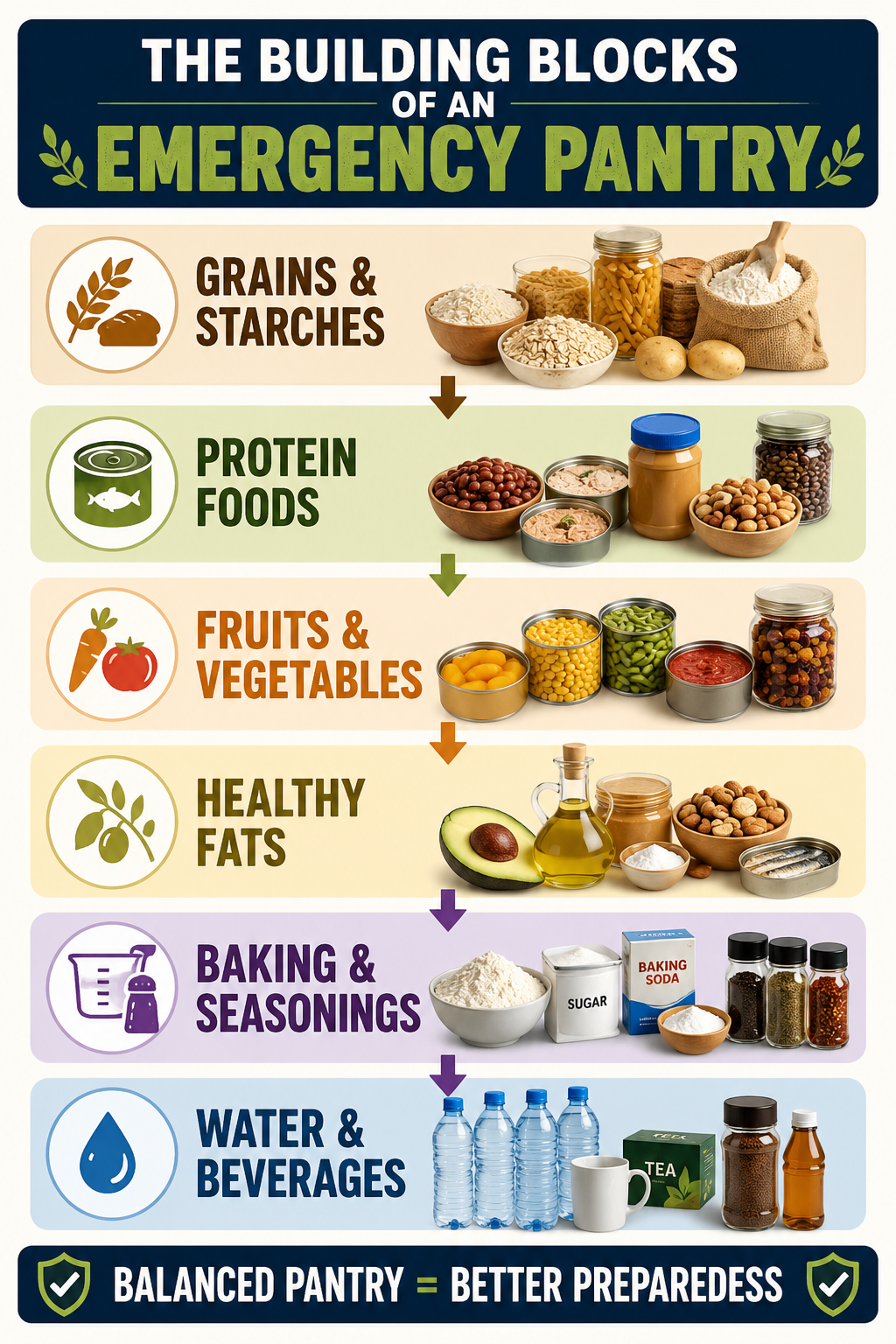
An emergency pantry should provide more than simply enough calories to survive. It should contain foods that work together to provide balanced nutrition while allowing you to prepare meals your family genuinely enjoys eating. The most successful pantries include a thoughtful combination of grains, proteins, fruits, vegetables, healthy fats, baking ingredients, seasonings, beverages, and clean drinking water.
Grains such as rice, oats, pasta, and flour provide the energy needed for daily activities and serve as the foundation for countless meals. Protein sources like beans, lentils, canned meats, peanut butter, nuts, and seeds help maintain muscle strength and keep people feeling satisfied longer. Fruits and vegetables contribute essential vitamins, minerals, and fiber, while cooking oils and healthy fats improve both nutrition and flavor.
Seasonings are frequently overlooked but play an important role in preventing meal fatigue. Salt, herbs, spices, vinegar, and other pantry staples transform simple ingredients into meals that people actually look forward to eating. When these categories are stored in appropriate quantities, even a modest pantry can produce hundreds of different meal combinations.
Building Your Pantry One Step at a Time
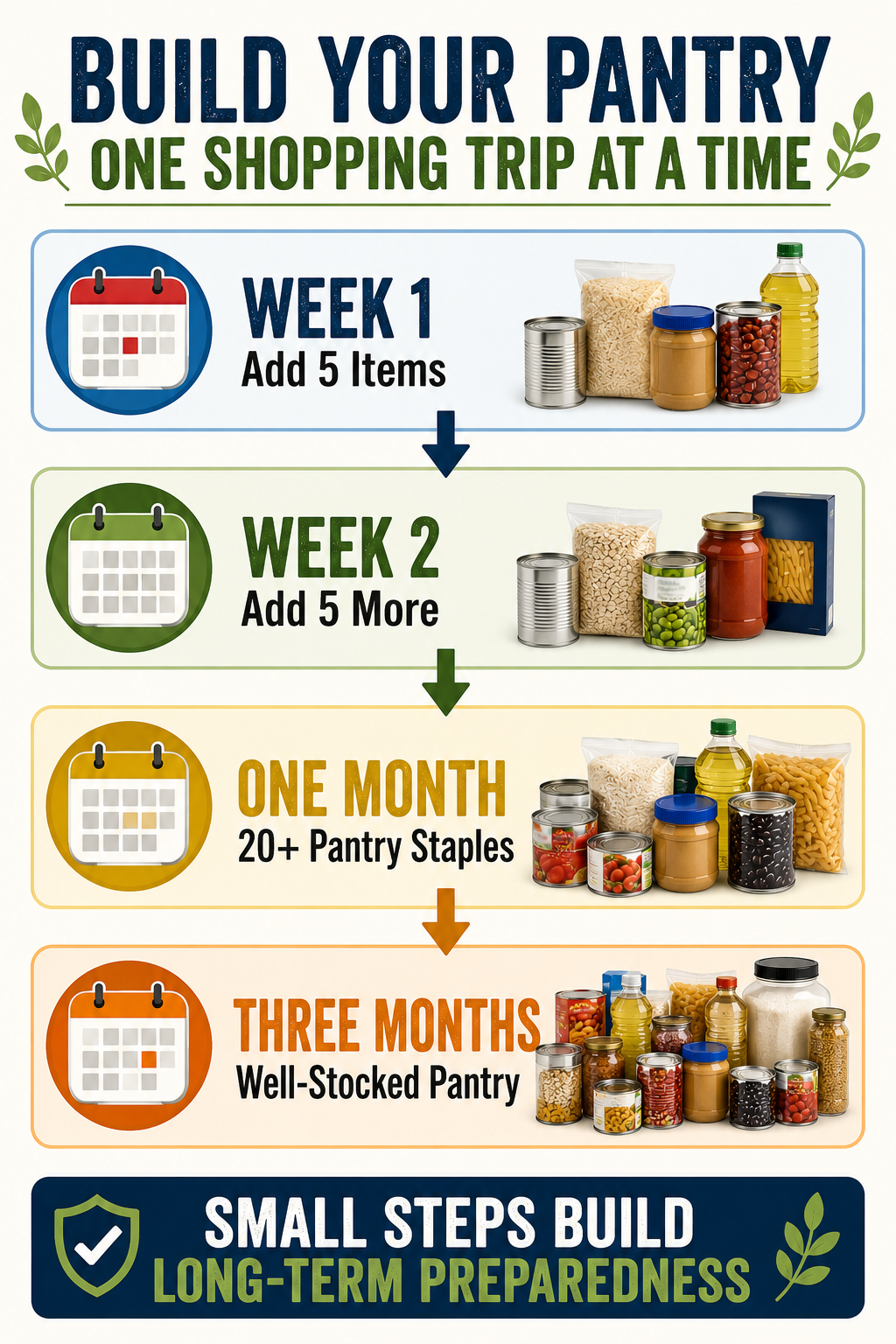
One of the biggest mistakes people make is believing they need to build a complete emergency pantry all at once. Attempting to purchase months of food in a single shopping trip is expensive and often overwhelming. A far better approach is to build gradually by adding a few extra pantry items each time you shop for groceries.
Many experienced preppers recommend beginning with a one-week supply of the foods your family already eats. Once that goal has been reached, gradually increase your inventory until you have enough food for two weeks, one month, or longer depending on your available space and preparedness goals. This method spreads the cost over time while allowing you to learn what works best for your household.
As your pantry grows, it is important to rotate your food regularly. The oldest items should be used first and replaced with newly purchased products. This simple practice keeps food fresh, reduces waste, and ensures your emergency pantry is always ready for use.
Choosing Foods That Offer the Greatest Value
Not every shelf-stable food deserves a place in your emergency pantry. The most valuable foods are those that store well, provide good nutrition, are reasonably affordable, and can be used in many different recipes. Foods that meet all of these criteria become the foundation of a resilient pantry because they remain useful during both everyday cooking and emergencies.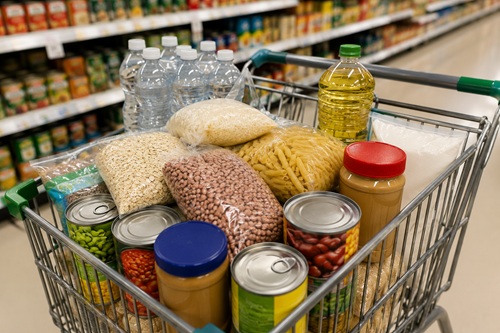
Versatility should always be one of your highest priorities. A single bag of rice, for example, can be combined with vegetables, beans, eggs, soups, canned meats, or fresh produce to create dozens of completely different meals. The same principle applies to flour, oats, pasta, and dried beans. Foods that work well together provide significantly more flexibility than highly processed convenience foods that serve only one purpose.
Preparation requirements are equally important. During power outages or fuel shortages, foods that cook quickly or require little preparation become especially valuable. Including a balance of ready-to-eat foods, quick-cooking ingredients, and traditional pantry staples helps ensure your food supply remains practical under a wide variety of circumstances.
The 30 Essential Foods Every Emergency Pantry Should Include
White Rice
Few foods have earned their reputation among preparedness experts as thoroughly as white rice. It is inexpensive, widely available, easy to cook, and remarkably versatile. Properly stored in airtight containers or food-grade buckets with oxygen absorbers, white rice can remain usable for decades under the right conditions. Even without specialized storage, it has an excellent shelf life compared to many other staple foods.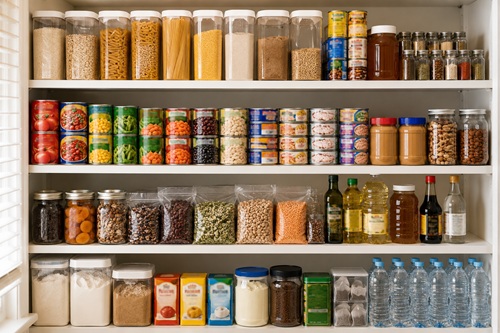
Rice also works well with nearly every other food in your pantry. It can be combined with beans, canned meats, vegetables, soups, eggs, or simple seasonings to create satisfying meals using only a handful of ingredients. Because of its flexibility, affordability, and long storage life, white rice often becomes one of the first foods families begin storing when building an emergency pantry.
Rolled Oats
Rolled oats provide far more than a quick breakfast. They are rich in fiber, store well, and can be used in a surprising variety of recipes. Beyond traditional oatmeal, rolled oats can be added to muffins, breads, cookies, meatloaf, granola, and even soups to increase both texture and nutrition.
Another advantage is their relatively short cooking time compared to many other grains. During emergencies where fuel conservation becomes important, foods that cook quickly become especially valuable. Storing several containers of rolled oats provides both nutritional diversity and meal flexibility.
Flour
Flour remains one of the most versatile ingredients any household can store. It serves as the foundation for breads, biscuits, pancakes, tortillas, muffins, dumplings, gravies, sauces, and countless other recipes. Few pantry items contribute to as many different meals.
Because flour has a shorter shelf life than grains like rice, proper storage and regular rotation become particularly important. Keeping flour in airtight containers in a cool, dry location helps preserve freshness while protecting it from moisture and insects. Rather than storing large amounts that may never be used, many families find it more practical to rotate flour regularly through everyday baking.
Pasta
Pasta is another pantry staple that offers exceptional value. It stores for long periods, cooks relatively quickly, and pairs with almost any protein or vegetable. Whether prepared with tomato sauce, canned chicken, tuna, vegetables, or simple herbs and olive oil, pasta provides filling meals that most families already enjoy.
Keeping several different shapes on hand also adds variety without increasing storage complexity. Spaghetti, macaroni, penne, and egg noodles each lend themselves to different recipes while requiring similar storage conditions.
Cornmeal
Cornmeal is sometimes overlooked in modern pantries, yet it remains one of the most useful staple foods available. It can be used to prepare cornbread, muffins, pancakes, polenta, breading mixes, and hot cereals. Because it stretches other ingredients effectively, cornmeal becomes especially valuable when preparing meals for larger families.
Stored properly in sealed containers, cornmeal remains an economical addition to any emergency pantry while adding welcome variety to grain-based meals.
Crackers
Although crackers are often viewed as snack food, they serve several important preparedness purposes. They require no cooking, pair well with canned meats, peanut butter, cheese, soups, and spreads, and provide an easy meal option when cooking is inconvenient or impossible.
Children often find crackers familiar and comforting during stressful situations, making them an excellent morale food as well. Rotating them regularly helps maintain freshness while ensuring they’re always available when needed.
Beans
Beans have earned their place in emergency food storage because they combine excellent nutrition with exceptional versatility. Whether purchased dried or canned, beans provide protein, fiber, complex carbohydrates, vitamins, and minerals that help create balanced meals. Black beans, kidney beans, pinto beans, navy beans, and chickpeas each offer slightly different flavors while serving similar nutritional roles.
Dried beans typically provide the greatest value for long-term storage, although they require soaking and longer cooking times. Canned beans, on the other hand, can be eaten immediately with little or no preparation, making them especially useful during short-term emergencies or power outages. Many experienced preppers store both forms to maximize flexibility.
Lentils
Lentils deserve special attention because they cook much faster than most dried beans while providing excellent nutrition. Unlike many legumes, lentils usually require no soaking before cooking, allowing them to be prepared quickly while using less water and fuel.
Their mild flavor makes them suitable for soups, stews, curries, casseroles, salads, and side dishes. They also blend well with rice, vegetables, and meats, making them one of the most efficient protein sources available for emergency food storage.
Peanut Butter
Peanut butter remains one of the most practical foods for emergency preparedness because it combines protein, healthy fats, calories, and convenience in a single jar. It requires no refrigeration until opened, needs no cooking, and can be eaten directly from the container if necessary.
Its versatility extends beyond sandwiches. Peanut butter can be added to oatmeal, smoothies, sauces, baked goods, and even savory dishes. Because it is familiar to most children and adults alike, it also provides a comforting source of nutrition during stressful times.
Canned Meat
Canned chicken, tuna, salmon, turkey, ham, and beef provide valuable sources of ready-to-eat protein that require little preparation. These products significantly expand meal options by allowing families to prepare casseroles, sandwiches, soups, salads, pasta dishes, and rice bowls using ingredients already found in most pantries.
When selecting canned meats, consider purchasing the varieties your family already enjoys. Rotating them through everyday meals ensures freshness while preventing waste.
Nuts and Seeds
Nuts and seeds provide concentrated nutrition in relatively small packages. Almonds, walnuts, sunflower seeds, pumpkin seeds, and similar foods contribute healthy fats, protein, fiber, vitamins, and minerals that are often lacking in heavily processed emergency foods.
Because of their higher oil content, nuts generally have shorter shelf lives than grains, but proper storage in cool environments or freezers can significantly extend their freshness. Including a variety of nuts and seeds also adds welcome texture and flavor to an emergency pantry.
Olive Oil
Olive oil is one of the most versatile ingredients you can keep in an emergency pantry. It adds flavor to otherwise simple meals, provides healthy monounsaturated fats, and serves as an essential cooking ingredient for everything from sautéing vegetables to making homemade salad dressings. A small amount can transform plain rice, pasta, or beans into a much more satisfying meal.
Like all cooking oils, olive oil should be stored in a cool, dark location to slow oxidation and preserve quality. Because oils gradually lose freshness over time, it’s best to rotate bottles through your everyday cooking rather than storing them indefinitely. Purchasing smaller containers more frequently often results in fresher oil and less waste.
Coconut Oil
Coconut oil offers another valuable source of healthy fat while providing excellent versatility in the kitchen. Its naturally higher saturated fat content gives it a relatively long shelf life compared to many other cooking oils, making it a practical addition to emergency food storage. It performs well in baking, frying, and many traditional recipes while also serving as an ingredient in homemade soaps, lotions, and other household products.
Many preparedness-minded households appreciate foods that serve multiple purposes. Coconut oil fits that philosophy well because it can support both food preparation and certain non-food household uses when appropriate.
Honey
Honey has been prized throughout history as both a food and a natural sweetener. One of its most remarkable characteristics is its exceptional shelf life. Properly stored honey may crystallize over time, but this is a natural process and does not necessarily indicate spoilage. Gently warming the container usually returns it to its liquid state.
Beyond sweetening beverages and baked goods, honey can add flavor to sauces, marinades, oatmeal, yogurt, and countless other recipes. Because it is highly concentrated, a small amount provides significant sweetness, making it a valuable pantry staple that stretches well over time.
Sugar
Although sugar is often viewed simply as a baking ingredient, it serves many practical functions in a well-stocked pantry. It contributes flavor, supports food preservation, and provides quick energy when needed. White sugar stores particularly well when protected from moisture, while brown sugar should be sealed carefully to prevent it from drying out.
During stressful times, familiar comfort foods often provide emotional reassurance in addition to nutrition. Having the ingredients needed to bake bread, cookies, muffins, or other family favorites can greatly improve morale during prolonged disruptions.
Canned Tomatoes
Few pantry items are as versatile as canned tomatoes. They provide the foundation for soups, stews, chili, pasta sauces, casseroles, and countless one-pot meals. Their natural acidity and rich flavor make them valuable for enhancing many recipes while adding vitamins and antioxidants to emergency meals.
Keeping a variety of diced, crushed, whole, or tomato sauce products allows you to prepare a wider range of meals without significantly increasing storage space. Because tomatoes combine well with nearly every protein and grain on this list, they become one of the hardest-working ingredients in any pantry.
Canned Corn
Corn adds color, sweetness, and texture to meals while requiring virtually no preparation. It works well as a side dish, ingredient in soups, casseroles, salads, and rice dishes, or simply heated and served with butter and seasonings.
For families with children, canned corn often becomes one of the easiest vegetables to include in emergency meals because of its familiar taste and broad appeal. Rotating canned vegetables regularly through everyday meals helps maintain freshness while preventing waste.
Canned Pumpkin
Pumpkin is frequently associated with holiday baking, but it deserves a place in emergency food storage because of its impressive nutritional value and versatility. Rich in vitamin A and dietary fiber, canned pumpkin can be added to soups, oatmeal, breads, muffins, pancakes, smoothies, and desserts.
Its naturally mild flavor allows it to blend easily into many recipes without overwhelming other ingredients. Including foods like pumpkin helps diversify the nutritional profile of an emergency pantry beyond simple carbohydrates.
Dried Fruit
Dried fruits such as raisins, cranberries, apricots, apples, and dates provide concentrated nutrition in compact packages. They supply natural sugars, fiber, vitamins, and minerals while adding welcome sweetness to breakfast cereals, baked goods, trail mixes, and snack foods.
Because they require no refrigeration and little preparation, dried fruits become especially useful during travel, evacuations, or situations where cooking facilities are limited. They also help satisfy cravings for fresh fruit when refrigeration or grocery access is temporarily unavailable.
Applesauce
Applesauce is one of those pantry items that quietly serves many purposes. It can be eaten as a snack, used in baking, mixed into oatmeal, or served alongside many meals. Unsweetened varieties are especially versatile because they can be incorporated into both sweet and savory recipes.
For households with young children or older adults, applesauce also provides an easily digestible source of fruit that requires no preparation. Its familiar flavor makes it a welcome comfort food during stressful situations.
Salt
Salt is one of the oldest and most important food preservation tools in human history. Beyond improving flavor, it plays a critical role in baking, food preservation, fermentation, and many cooking techniques. Because it stores indefinitely when kept dry, salt deserves a permanent place in every emergency pantry.
Many experienced preppers recommend storing more salt than initially seems necessary. Its usefulness extends beyond seasoning meals, making it one of the most valuable low-cost pantry items available.
Baking Soda and Baking Powder
These two ingredients often receive little attention until they’re suddenly unavailable. Baking soda and baking powder make it possible to prepare breads, biscuits, pancakes, muffins, and many other baked goods using ingredients already found in a well-stocked pantry.
Because they gradually lose effectiveness over time, both products should be rotated periodically. Keeping fresh supplies on hand ensures reliable results whenever baking becomes necessary.
Herbs and Spices
A pantry stocked only with rice, beans, and canned foods quickly becomes repetitive. Herbs and spices add variety, flavor, and enjoyment to everyday meals while requiring very little storage space. Garlic powder, onion powder, oregano, basil, paprika, cumin, cinnamon, black pepper, and chili powder are among the most versatile seasonings available.
Even simple ingredients can taste completely different depending on the seasonings used. Building a modest spice collection greatly expands your ability to prepare satisfying meals without purchasing additional specialty ingredients.
© Prepping Communities. This content is for informational purposes only and not professional advice. Use at your own risk.
Terms | Privacy | Guidelines