
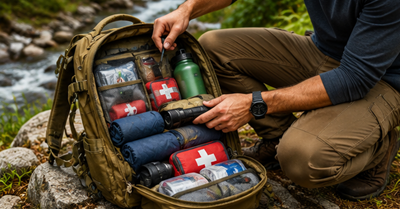
A Practical Guide For All Types of Preppers
by Natural Born Prepper
1 Introduction
A bug out bag is one of the most commonly discussed preparedness topics, yet it is also one of the most misunderstood. Many people immediately picture dramatic emergency scenarios, wilderness survival, or long-distance evacuations. In reality, a bug out bag is simply a collection of supplies designed to help you leave an area quickly and safely when circumstances require it.
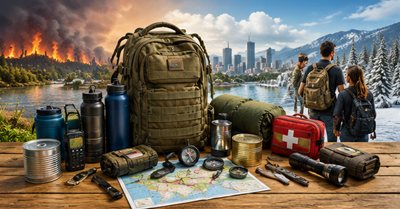 For some people, a bug out bag is intended to support them for 24 to 72 hours during an evacuation caused by a wildfire, hurricane, flood, or severe winter storm. For others, it may serve as a get-home bag designed to help them travel from work to home if transportation systems fail. The purpose of the bag depends entirely on the individual’s circumstances, location, family situation, and the risks they face.
The goal of this guide is not to provide a one-size-fits-all solution. Instead, it is designed to help you understand the many different types of bug out bags, how they are used, and how to build one that fits your own needs. Throughout this guide, we will examine planning considerations, equipment choices, common mistakes, and practical lessons learned from real-world emergencies.
A well-designed bug out bag is not about preparing for every possible scenario. It is about creating a realistic and practical tool that can help you navigate unexpected situations with greater confidence and resilience.
1.1 What Is a Bug Out Bag?
A bug out bag is a portable emergency kit that contains essential supplies needed to survive, travel, or remain self-sufficient for a specific period of time during an evacuation or emergency. It is designed to be grabbed quickly when leaving home and should contain enough equipment to support basic human needs such as water, food, shelter, clothing, navigation, communication, and first aid.
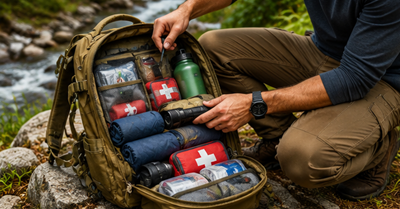 The term “bug out bag” originated from military and emergency preparedness circles, where personnel maintained ready-to-go kits in case rapid movement became necessary. Over time, the concept expanded into the civilian preparedness community and is now widely used by hikers, campers, travelers, emergency responders, and preparedness-minded individuals.
Despite the popularity of the term, not all bug out bags are the same. A commuter’s get-home bag may contain little more than water, walking shoes, and navigation tools, while a family evacuation bag may include supplies for multiple people and several days of self-sufficiency.
A bug out bag is best viewed as a tool that supports a plan rather than a complete solution by itself. Without planning, training, and realistic expectations, even the most expensive bug out bag may fail to provide the assistance its owner expects.
1.2 Why People Build Bug Out Bags
People build bug out bags for many different reasons. Some live in areas prone to natural disasters such as wildfires, hurricanes, floods, or severe winter storms. Others are concerned about infrastructure failures, transportation disruptions, civil unrest, or the possibility of being stranded away from home during an emergency.
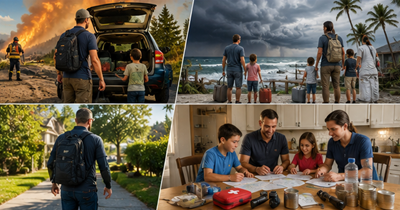 Preparedness is often less about fear and more about reducing uncertainty. A bug out bag provides a measure of confidence that important supplies are already gathered and organized should an unexpected event occur.
Common reasons people build bug out bags include:
- Wildfire evacuation
- Hurricane evacuation
- Flooding
- Winter storms
- Earthquakes
- Extended power outages
- Vehicle breakdowns
- Long-distance commuting
- Wilderness emergencies
- Family emergency preparedness
Many people discover that the process of building a bug out bag also encourages them to think more carefully about emergency planning in general. Questions about evacuation routes, communication plans, shelter options, and family preparedness often emerge naturally during the planning process.
In many ways, the bag itself is only one part of a much larger preparedness strategy.
1.3 When a Bug Out Bag Makes Sense
A bug out bag makes sense whenever there is a realistic possibility that you may need to leave a location quickly or remain self-sufficient for a period of time while traveling. The key word is realistic. Effective preparedness focuses on probable events rather than purely hypothetical scenarios.
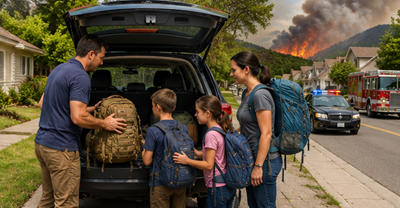 For example, someone living in a wildfire-prone region may have a very legitimate need for an evacuation bag. A person who commutes long distances through harsh winter conditions may benefit from a vehicle emergency kit. A family living in a flood zone may require supplies that support a temporary evacuation to safer ground.
A bug out bag may be useful when:
- Evacuation orders are issued
- Roads become impassable
- Utility services fail
- Travel disruptions occur
- Temporary shelter is required
- Communication systems are unreliable
- Family members become separated
At the same time, not every emergency requires evacuation. In many situations, sheltering in place may be safer and more practical than leaving. Understanding the difference between these situations is one of the most important aspects of preparedness planning.
A bug out bag should support your overall emergency plans rather than replace them.
1.4 The Difference Between Preparedness and Panic
One of the biggest misconceptions surrounding bug out bags is the belief that they are driven by fear. In reality, preparedness and panic are fundamentally different mindsets.
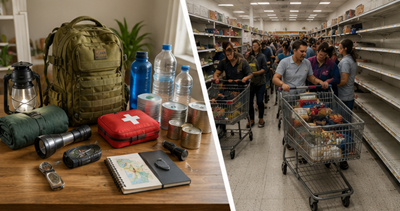 Panic is reactive. It occurs when people are caught off guard and must make decisions under stress with limited information and limited resources. Panic often leads to poor decision-making, rushed purchases, and unrealistic expectations.
Preparedness is proactive. It involves evaluating risks, creating plans, gathering resources, and practicing skills before they are needed. Prepared individuals are often able to respond more calmly because they have already considered potential problems and possible solutions.
Preparedness focuses on:
- Planning
- Organization
- Risk management
- Practical skills
- Realistic expectations
- Adaptability
Panic often involves:
- Emotional reactions
- Impulsive decisions
- Last-minute purchases
- Lack of planning
- Unrealistic assumptions
- Poor information
A bug out bag should never be viewed as a symbol of fear. Instead, it is a practical preparedness tool designed to help reduce stress and improve decision-making during difficult situations.
The objective is not to expect the worst. The objective is to be better prepared if something unexpected occurs.
1.5 Understanding Risk and Probability
One of the most important skills in preparedness is learning to distinguish between possibility and probability. Almost anything is possible, but only a limited number of events are likely enough to justify spending significant time, money, and effort preparing for them.
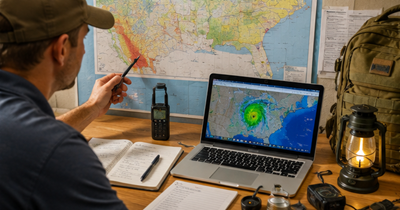 Risk assessment begins by examining the hazards most relevant to your location, lifestyle, and circumstances. A person living in a coastal hurricane zone faces different risks than someone living in the mountains. A family with young children has different considerations than a single individual. Urban residents often encounter different challenges than rural residents.
When evaluating preparedness priorities, consider:
- How likely is the event?
- How severe could the consequences be?
- How often has it happened historically?
- How much warning would be available?
- What resources would be needed to respond?
Many preparedness experts use a simple approach: prepare first for the events that are both likely and disruptive. This often includes severe weather, power outages, vehicle emergencies, medical emergencies, and temporary evacuations.
By focusing on realistic risks, you can build a bug out bag that addresses genuine needs rather than imagined scenarios. This approach usually results in a lighter, more practical, and more effective bag while ensuring that your time and resources are invested where they provide the greatest benefit.
Preparedness is ultimately a process of managing uncertainty. Understanding risk and probability helps ensure that your preparations remain grounded in reality and aligned with the challenges you are most likely to face.
2 The Bug Out Mindset – Planning Before Packing
One of the biggest mistakes people make when building a bug out bag is focusing on gear before developing a plan. While equipment is important, even the best gear cannot compensate for poor planning, unrealistic expectations, or a lack of understanding about the situations you may face.
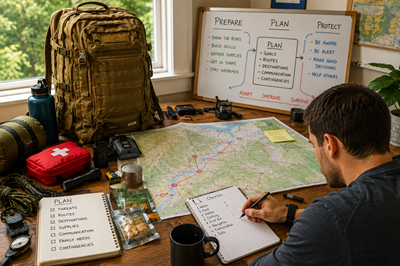 Preparedness is ultimately a decision-making process. A bug out bag is simply one tool within a larger preparedness strategy. Before selecting backpacks, water filters, sleeping bags, or survival tools, it is important to understand why you are building the bag and what situations you are preparing for.
The most effective bug out bags are built around realistic plans. They are designed to support specific goals, routes, destinations, family needs, environmental conditions, and emergency scenarios. Planning first helps ensure that every item in the bag serves a purpose and contributes to a well-thought-out response strategy.
This section focuses on developing the mindset needed to make good decisions before, during, and after an emergency. By understanding risks, defining priorities, and preparing mentally for stressful situations, you can build a bug out plan that is practical, adaptable, and effective.
2.1 Why Most Emergencies Are Not End-of-the-World Events
Popular media often portrays emergencies as catastrophic events that result in total societal collapse. Movies, television shows, and online discussions frequently focus on extreme scenarios involving widespread breakdowns of infrastructure, law enforcement, and government services.
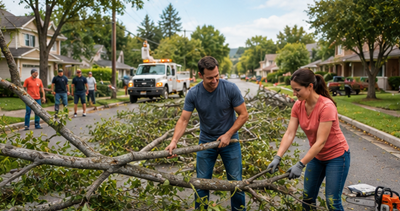 In reality, most emergencies are far less dramatic.
The majority of people who use emergency supplies do so during localized events such as:
- Wildfires
- Floods
- Hurricanes
- Winter storms
- Extended power outages
- Vehicle breakdowns
- Medical emergencies
- Temporary evacuations
These situations may be stressful and disruptive, but they are often limited in duration and geographic scope. Emergency responders, utilities, government agencies, and community organizations usually continue operating even when conditions are challenging.
Understanding this distinction is important because it helps guide practical preparedness decisions. Preparing for highly probable events often provides more value than focusing exclusively on unlikely worst-case scenarios.
A person who prepares for common emergencies will likely be better equipped to handle a wide range of situations. Food, water, first aid supplies, communication tools, and evacuation plans are useful in many different emergencies regardless of the cause.
Preparedness should be based on realistic assessments rather than fear-driven assumptions.
2.2 Shelter-in-Place vs. Evacuation
One of the most important decisions during an emergency is determining whether it is safer to stay where you are or leave the area.
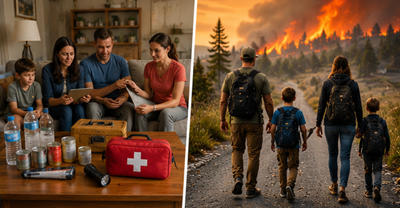 Many preparedness discussions focus heavily on evacuation, but in reality, sheltering in place is often the preferred option. Remaining at home allows access to stored supplies, familiar surroundings, medical equipment, sanitation facilities, and greater physical comfort.
Situations that may favor sheltering in place include:
- Severe winter storms
- Short-term power outages
- Pandemic events
- Extreme heat or cold
- Temporary transportation disruptions
On the other hand, some emergencies may require evacuation because remaining in place presents unacceptable risks.
Examples include:
- Wildfires
- Flooding
- Chemical spills
- Structural damage
- Mandatory evacuation orders
- Active threats to personal safety
A bug out bag is specifically designed to support evacuation. However, effective preparedness requires planning for both possibilities. In many cases, a well-prepared household may spend far more time sheltering in place than actually using a bug out bag.
The decision to leave should never be based solely on emotion. It should be based on available information, risk assessment, and pre-established plans.
2.3 Defining Your Personal Threats
Every person’s preparedness needs are different. Geography, climate, lifestyle, occupation, family structure, and health considerations all influence the types of emergencies that deserve attention.
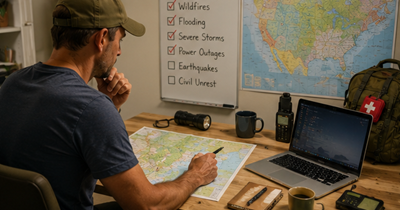 A person living in a hurricane-prone coastal area faces different challenges than someone living in a mountainous region susceptible to wildfires. Likewise, an urban commuter may prioritize transportation disruptions while a rural homesteader may focus on weather-related isolation.
When identifying personal threats, consider factors such as:
- Local weather hazards
- Natural disasters
- Transportation risks
- Medical concerns
- Employment-related travel
- Infrastructure vulnerabilities
- Family responsibilities
- Security concerns
Creating a simple threat assessment can be extremely helpful. List the events that are most likely to affect your area and estimate both their likelihood and potential impact.
For many people, the most probable threats include:
- Power outages
- Severe weather
- Vehicle emergencies
- Temporary evacuations
- Communication disruptions
Understanding your personal risks helps ensure that your bug out bag contains equipment that addresses real-world needs rather than hypothetical situations.
The goal is not to prepare for everything. The goal is to prepare intelligently.
2.4 Establishing Trigger Points for Leaving
One of the most difficult decisions during an emergency is determining when to leave. Waiting too long can increase danger, while leaving too early may create unnecessary hardship.
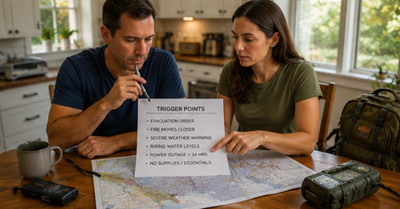 This is why many preparedness planners establish trigger points. A trigger point is a predefined condition that signals it is time to take action.
Trigger points help remove emotion from decision-making and provide clear guidance during stressful situations.
Examples of possible trigger points include:
- Official evacuation orders
- Wildfires reaching a predetermined distance
- Flood warnings exceeding a specific level
- Road closures affecting escape routes
- Loss of critical utilities for an extended period
- Security conditions deteriorating beyond acceptable limits
The specific trigger points will vary depending on the threat and the individual.
For example, a family living near a wildfire-prone area may decide to leave when a fire comes within a certain distance, even before official evacuation orders are issued. A winter traveler may establish a trigger point based on weather forecasts and road conditions.
The objective is to make important decisions before emotions and stress begin influencing judgment.
Planning ahead often leads to safer and more effective responses.
2.5 Developing Primary and Alternate Plans
Preparedness plans should never rely on a single solution. Emergencies are unpredictable, and conditions can change rapidly.
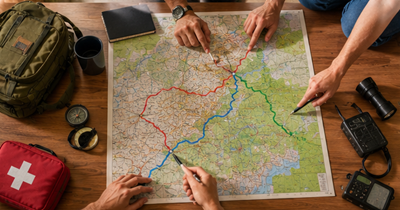 For this reason, many emergency planners use the principle of primary and alternate plans.
A primary plan represents the preferred course of action under normal emergency conditions. An alternate plan provides a backup option if the primary plan becomes unavailable.
Examples include:
- Primary evacuation route and alternate route
- Primary bug out location and alternate destination
- Primary communication method and backup communication method
- Primary transportation option and alternate transportation option
Questions worth considering include:
- What if the roads are blocked?
- What if fuel is unavailable?
- What if cell phone service fails?
- What if the intended destination becomes inaccessible?
Building redundancy into your plans helps reduce vulnerability to unexpected obstacles.
The goal is not to create dozens of complicated plans. Instead, it is to identify a small number of practical alternatives that can be implemented if circumstances change.
Flexibility is often one of the most valuable preparedness skills.
2.6 Training Your Mind for Stressful Situations
Equipment can be purchased. Knowledge can be learned. Skills can be practiced. Developing the proper mindset, however, often requires ongoing effort and experience.
 Stress affects people in different ways. Some individuals become highly focused, while others struggle with decision-making, memory, and communication. During emergencies, even simple tasks can become more difficult.
Mental preparedness involves developing habits that improve decision-making under pressure.
Useful practices include:
- Learning emergency procedures
- Conducting evacuation drills
- Practicing navigation skills
- Testing equipment regularly
- Building familiarity with emergency plans
Confidence often comes from experience. The more familiar you are with your equipment, routes, plans, and procedures, the less likely you are to become overwhelmed during an emergency.
It is also important to recognize that no plan survives unchanged. Unexpected challenges will occur. Conditions may evolve rapidly, and information may be incomplete.
A resilient mindset emphasizes adaptability rather than perfection.
The goal is not to eliminate uncertainty. The goal is to become comfortable operating within it.
When combined with realistic planning and practical preparation, mental resilience becomes one of the most valuable assets a person can possess during an emergency. It allows individuals and families to remain calm, think clearly, and make better decisions when circumstances become difficult.
3 Understanding Different Types of Bug Out Bags
One of the most common mistakes people make when discussing bug out bags is assuming that there is a single “correct” design. In reality, bug out bags come in many different forms, each designed to address specific situations, timeframes, environments, and individual needs.
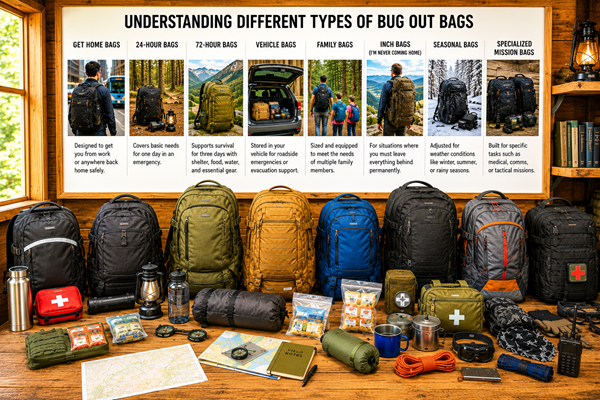 A commuter who works 30 miles from home may require a completely different bag than a family evacuating from a wildfire zone. A rural homesteader may prioritize tools and self-sufficiency, while an urban resident may focus on mobility and transportation. Likewise, a winter evacuation bag may contain equipment that would be unnecessary during the summer months.
The purpose of a bug out bag should always determine its contents. Understanding the strengths and limitations of different bag types can help ensure that your preparations match your actual risks and objectives.
As you review the various categories in this chapter, remember that there is no requirement to choose only one. Many preparedness-minded individuals maintain multiple bags designed for different situations. A get-home bag in a vehicle, a larger evacuation bag at home, and specialized kits for seasonal or family needs can all play a role in a comprehensive preparedness strategy.
The key is to understand what each bag is intended to accomplish and avoid trying to make one bag do everything.
3.1 Get Home Bags
A get-home bag is designed to help a person travel from their current location back to their home or another safe destination during an emergency. Unlike larger bug out bags, the primary objective is not long-term survival but mobility and self-sufficiency during a relatively short journey.
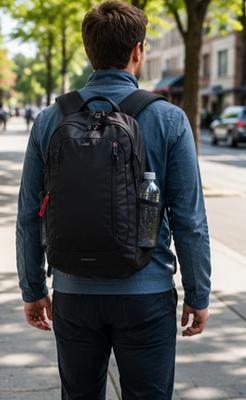 Get-home bags are commonly carried by commuters, business travelers, delivery drivers, utility workers, and anyone who regularly spends significant time away from home.
Many emergency situations can leave people stranded unexpectedly. Severe weather, transportation disruptions, fuel shortages, civil disturbances, or infrastructure failures may make it difficult or impossible to return home using normal methods.
A typical get-home bag may include:
- Water and purification supplies
- Lightweight food
- Navigation tools
- Comfortable walking shoes or socks
- Flashlight or headlamp
- Weather protection
- Basic first aid supplies
- Communication equipment
The emphasis is generally on portability and practicality. Since the user may need to walk long distances, every pound matters.
For many people, a get-home bag is one of the most realistic and frequently useful preparedness kits they can own.
3.2 24-Hour Survival Bags
A 24-hour survival bag is designed to provide essential support for approximately one day. These bags are often used during short-term emergencies, temporary evacuations, or unexpected situations where immediate access to home resources is unavailable.
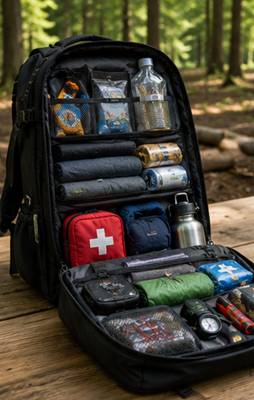 Compared to larger bug out bags, a 24-hour bag focuses on immediate needs rather than extended self-sufficiency.
The primary priorities typically include:
- Water
- Food
- Shelter
- Clothing
- First aid
- Communication
- Lighting
These bags are often smaller and lighter than multi-day kits, making them easier to carry and store. They can be useful in vehicles, workplaces, schools, recreational vehicles, boats, or other locations where a compact emergency kit may be needed.
Many people find that a properly equipped 24-hour bag addresses a surprisingly large number of real-world emergencies.
While it is not intended for extended survival, it provides an important bridge between normal daily life and more substantial emergency preparations.
3.3 72-Hour Bug Out Bags
The 72-hour bug out bag is perhaps the most widely recognized type of preparedness backpack. It is designed to support an individual for approximately three days during an evacuation or emergency situation.
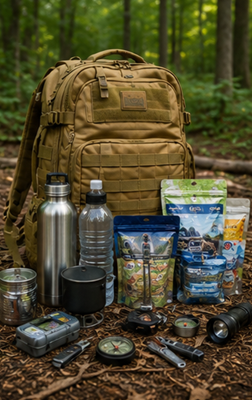 The concept is based on the observation that many emergency response efforts begin stabilizing within the first several days after a disaster. While circumstances vary, a three-day kit often provides enough supplies to bridge the gap between initial disruption and access to assistance.
A typical 72-hour bag may include:
- Water storage and purification
- Emergency food supplies
- Shelter equipment
- Clothing layers
- Sleeping system
- Fire-starting tools
- Medical supplies
- Navigation equipment
- Communication devices
- Basic repair tools
The challenge with 72-hour bags is balancing capability with weight. It is easy to overload a backpack with unnecessary gear, resulting in a bag that is difficult to carry when it matters most.
An effective 72-hour bag prioritizes essential needs while maintaining reasonable portability.
For many preparedness-minded individuals, the 72-hour bag serves as the foundation of their evacuation planning.
3.4 Vehicle Bug Out Bags
Vehicle bug out bags differ from traditional backpacks because they can take advantage of the carrying capacity provided by a car, truck, SUV, or recreational vehicle.
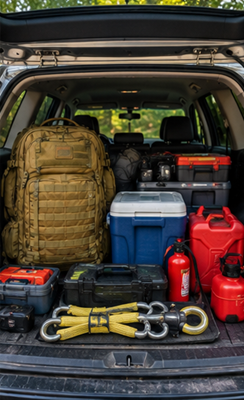 Since weight is less of a concern, vehicle kits often contain larger quantities of supplies and equipment.
Common vehicle kit items include:
- Extra water
- Food reserves
- Blankets and sleeping bags
- Seasonal clothing
- Recovery tools
- Tire repair equipment
- Fuel containers
- Medical kits
- Flashlights and batteries
- Vehicle-specific tools
Vehicle kits are particularly valuable in areas prone to severe weather, remote travel, or long commuting distances.
However, it is important to recognize that vehicles themselves can become liabilities. Roads may be blocked, fuel may become unavailable, or conditions may force evacuation on foot.
For this reason, many preparedness planners maintain both a vehicle kit and a portable backpack that can be carried if necessary.
A vehicle bag should complement, rather than replace, a broader evacuation strategy.
3.5 Family Evacuation Bags
Family evacuation bags are designed to support multiple people rather than a single individual. These bags often require more planning because family members may have different ages, physical abilities, medical needs, and comfort requirements.
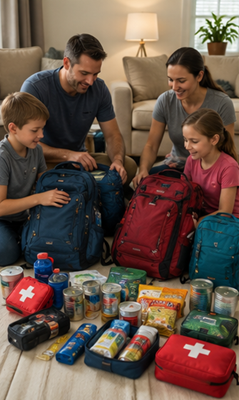 Parents must often balance survival priorities with practical family considerations.
Additional items may include:
- Children’s clothing
- Diapers and baby supplies
- Medications
- Comfort items
- Extra food and water
- Family communication information
- Identification documents
One of the biggest challenges with family evacuation planning is weight distribution. A single adult may not be capable of carrying supplies for an entire family.
Many families solve this problem by assigning age-appropriate responsibilities and distributing equipment among multiple bags.
Family planning should also address:
- Meeting locations
- Communication plans
- Transportation options
- Emergency contacts
- Alternate destinations
A family evacuation bag is often less about survival gear and more about maintaining safety, stability, and functionality during a stressful transition.
3.6 INCH Bags (I’m Never Coming Home)
The term INCH stands for “I’m Never Coming Home.” These bags are often discussed within preparedness circles as extremely comprehensive survival kits designed for long-term self-sufficiency.
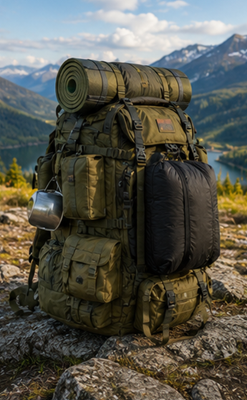 The concept assumes a situation where returning home is impossible and the individual must remain mobile for an extended period.
In theory, an INCH bag may contain:
- Advanced shelter systems
- Long-term food preparation equipment
- Extensive tools
- Navigation resources
- Hunting and fishing gear
- Repair supplies
- Medical equipment
- Long-term survival resources
While the concept is popular, many preparedness experts view true INCH bags with caution.
The reality is that carrying enough equipment to support long-term self-sufficiency is extremely difficult. Weight, mobility, fatigue, weather, and terrain quickly become limiting factors.
For many people, an INCH bag functions more as a planning exercise than a realistic evacuation solution.
Nevertheless, studying the concept can encourage deeper thinking about long-term resilience, resourcefulness, and adaptability.
3.7 Seasonal Bug Out Bags
Environmental conditions can dramatically affect preparedness requirements. A bag that works well during the summer may be inadequate during winter conditions, and vice versa.
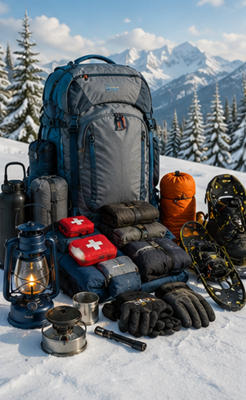 Seasonal bug out bags are designed to account for changing weather, temperatures, and environmental hazards.
Winter bags may include:
- Additional insulation
- Cold-weather clothing
- Extra fire-starting materials
- Snow travel equipment
- Hand and foot warmers
Summer bags may prioritize:
- Water storage
- Sun protection
- Lightweight clothing
- Insect protection
- Heat management
Seasonal planning is particularly important in regions that experience significant temperature variations throughout the year.
Many preparedness-minded individuals review and update their bug out bags at least twice annually to ensure equipment remains appropriate for expected conditions.
Adapting to the environment is one of the most important principles of preparedness.
3.8 Specialized Mission Bags
Some situations require equipment tailored to specific objectives. Specialized mission bags are designed around unique tasks, environments, or responsibilities rather than general emergency preparedness.
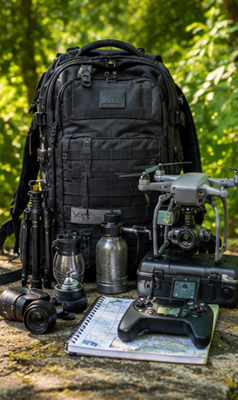 Examples may include:
- Medical response bags
- Search and rescue kits
- Communications bags
- Photography and documentation kits
- Wilderness expedition packs
- Community support bags
- Technical repair kits
These bags are often maintained by individuals with specific training, expertise, or responsibilities.
For example, a volunteer radio operator may carry communication equipment that would be unnecessary in a general-purpose bug out bag. A medically trained individual may maintain a more advanced medical kit than the average person.
Specialized bags are usually intended to supplement other preparedness systems rather than replace them.
The common thread among all specialized mission bags is purpose. Every item should directly support the mission for which the bag was designed.
When building any preparedness kit, clarity of purpose is one of the most valuable planning tools available. The better you understand the intended mission of the bag, the easier it becomes to determine what belongs inside and what should be left behind.
4 Choosing the Right Bug Out Bag
Selecting the right bug out bag is one of the most important decisions in the preparedness process. While much attention is often placed on the gear that goes inside the bag, the backpack itself plays a critical role in comfort, mobility, organization, and long-term reliability.
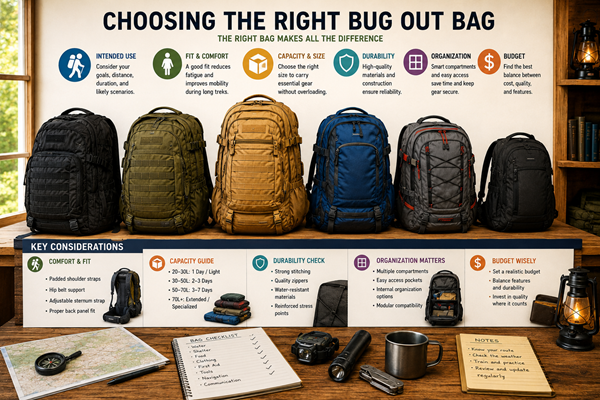 A poorly chosen bag can quickly become a liability. It may be uncomfortable to carry, difficult to organize, prone to equipment failure, or simply too small for the supplies required. Conversely, a well-designed bag can make transportation easier, improve accessibility, and reduce fatigue during stressful situations.
The ideal bug out bag is not necessarily the largest, most expensive, or most tactical-looking option available. Instead, it is the bag that best matches your intended use, physical capabilities, environment, and emergency plans.
When selecting a backpack, consider questions such as:
- How far might I need to carry it?
- How much weight will it contain?
- What climate will it be used in?
- How long must it support me?
- Will I be traveling on foot, by vehicle, or both?
- How physically capable am I of carrying the load?
Answering these questions before purchasing a bag can help avoid costly mistakes and ensure that your gear remains practical rather than burdensome.
4.1 Backpack Styles and Designs
Modern backpacks come in a wide variety of styles, each designed for specific activities and environments. Understanding the strengths and limitations of these designs can help you choose a bag that aligns with your preparedness goals.
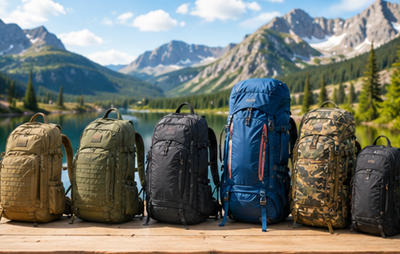 Many people are drawn to military-style backpacks because they appear rugged and capable. While these bags often provide excellent durability and attachment options, they may not always be the best choice for every situation.
Common backpack styles include:
- Hiking backpacks
- Tactical backpacks
- Travel backpacks
- Mountaineering packs
- Daypacks
- Expedition packs
- Hunting packs
Hiking backpacks are often favored because they are designed for long-distance comfort and efficient weight distribution. Tactical backpacks frequently offer extensive organizational features and rugged construction. Travel backpacks may prioritize accessibility and ease of movement in urban environments.
When evaluating backpack styles, focus on function rather than appearance. The best bug out bag is the one that performs effectively under realistic conditions rather than the one that simply looks impressive.
Comfort, fit, and practicality should always take priority over aesthetics.
4.2 Internal vs. External Frame Packs
One of the most important design choices involves the type of frame used within the backpack. The frame helps transfer weight from the shoulders to the hips and improves overall carrying efficiency.
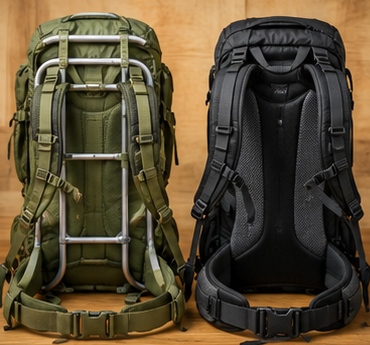 The two most common options are internal frame packs and external frame packs.
Internal frame packs contain a support structure built into the backpack itself. These packs are generally more streamlined and allow the load to remain close to the body.
Advantages of internal frame packs include:
- Better balance
- Improved mobility
- Reduced snagging on obstacles
- Greater comfort during movement
- Better performance on uneven terrain
External frame packs use a rigid frame mounted outside the bag.
Advantages of external frame packs include:
- Improved ventilation
- Ability to carry oversized loads
- Easier attachment of bulky equipment
- Better weight transfer for heavy loads
However, external frame packs can be more cumbersome in dense forests, narrow pathways, and urban environments.
For most bug out bag applications, internal frame packs have become the preferred choice due to their versatility and comfort. Nevertheless, external frame designs still have value for specialized situations involving larger loads or extended travel.
The best option depends on your intended mission and personal preferences.
4.3 Capacity and Size Considerations
One of the most common mistakes made by beginners is purchasing a backpack that is either far too large or far too small.
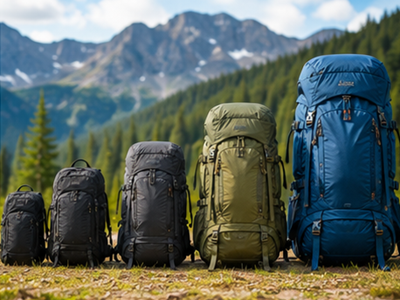 A bag that is too small may force important supplies to be left behind. A bag that is too large often encourages overpacking and unnecessary weight.
Backpack capacity is typically measured in liters.
General capacity guidelines include:
- 15–30 liters: Get-home bags and day kits
- 30–50 liters: 24-hour to 48-hour bags
- 50–70 liters: Typical 72-hour bug out bags
- 70+ liters: Extended-duration or specialized bags
These are only general recommendations. Individual needs vary depending on climate, equipment choices, family responsibilities, and physical abilities.
When selecting a size, remember that every item placed inside the bag must ultimately be carried. Larger bags often seem attractive because they provide additional storage space, but unused space frequently becomes an invitation to add unnecessary gear.
A properly sized bug out bag should provide enough room for essential supplies without encouraging excessive weight.
Efficiency is often more valuable than capacity.
4.4 Weight Distribution and Comfort
Even a relatively light backpack can become uncomfortable if the weight is poorly distributed. Comfort becomes increasingly important as travel distances increase and fatigue begins to accumulate.
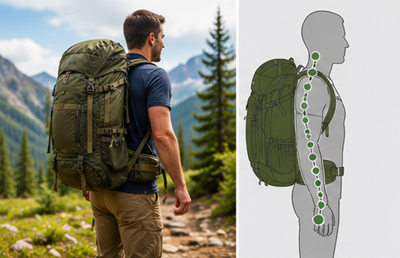 Proper weight distribution helps:
- Reduce strain on the shoulders
- Improve balance
- Increase endurance
- Reduce injury risk
- Improve mobility
A properly fitted backpack should transfer much of the load to the hips rather than relying entirely on the shoulders.
Key features that improve comfort include:
- Adjustable shoulder straps
- Padded hip belts
- Sternum straps
- Ventilated back panels
- Load lifter straps
- Adjustable torso lengths
Heavy items should generally be packed close to the body’s center of gravity and positioned to maintain balance.
The only reliable way to evaluate comfort is through actual use. Many people spend considerable time selecting gear yet never test their loaded backpack under realistic conditions.
Walking several miles with a fully loaded pack often reveals problems that are impossible to identify while standing in a store.
Testing should always be part of the selection process.
4.5 Durability and Materials
A bug out bag is intended to perform during difficult circumstances, making durability an important consideration.
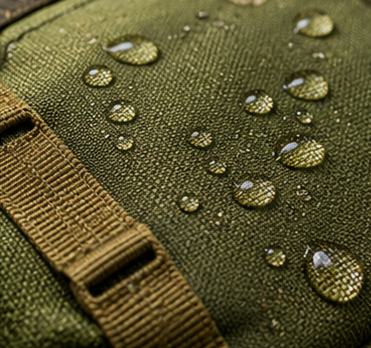 Backpacks are subjected to constant stress from weight, movement, weather exposure, and rough handling. Weak materials, poor stitching, or low-quality zippers can quickly become points of failure.
Common backpack materials include:
- Nylon
- Ripstop nylon
- Polyester
- Cordura fabric
- Waterproof laminates
When evaluating durability, pay particular attention to:
- Stitching quality
- Zipper construction
- Buckles and clips
- Stress points
- Reinforced seams
- Water resistance
Durability does not necessarily require the most expensive materials available. Many moderately priced backpacks provide excellent reliability when properly maintained.
A practical approach is to select equipment that balances durability, weight, and cost without paying for unnecessary features.
The objective is dependable performance rather than perfection.
4.6 Organization and Accessibility
A backpack’s organizational system can have a significant impact on efficiency during an emergency.
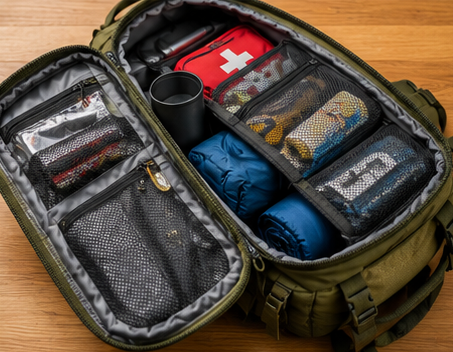 In stressful situations, the ability to quickly locate critical items may be just as important as having the items themselves.
Well-organized bags often separate equipment into categories such as:
- Water
- Food
- Shelter
- Medical supplies
- Clothing
- Navigation
- Communications
- Tools
Useful organizational features may include:
- Multiple compartments
- Internal dividers
- Mesh pockets
- External attachment points
- Quick-access pouches
- Compression straps
At the same time, excessive compartmentalization can become problematic. Some backpacks contain so many pockets that finding equipment becomes confusing.
Many experienced backpackers prefer simple organizational systems combined with color-coded pouches or packing cubes.
The goal is to create a system that remains easy to understand and maintain even under stressful conditions.
Good organization saves time, reduces frustration, and improves overall effectiveness.
4.7 Budget vs. Premium Bags
Many preparedness newcomers wonder whether they should invest in a premium backpack or purchase a more affordable option.
The answer depends largely on intended use, budget, and expectations.
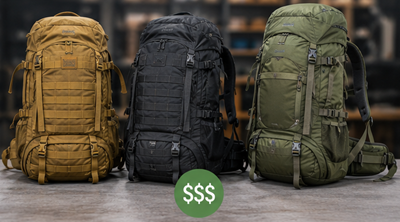 Premium backpacks often provide:
- Better comfort
- Improved durability
- Higher-quality materials
- Enhanced suspension systems
- Better warranties
- Greater long-term reliability
However, a high price tag does not automatically guarantee that a bag is the best choice for every user.
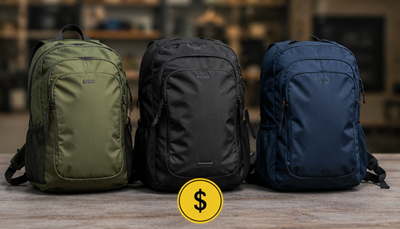 Many budget-friendly backpacks perform exceptionally well for occasional use and moderate loads.
Before spending significant amounts of money, consider the following:
- How frequently will the bag be used?
- How much weight will it carry?
- What conditions will it face?
- How important is long-term durability?
For many people, it is better to own a reasonably priced bag that has been thoroughly tested than an expensive backpack that has never left the closet.
Preparedness is not a competition to own the most expensive gear. It is a process of acquiring practical tools that support realistic plans.
Ultimately, the best bug out bag is the one that fits your needs, carries comfortably, and has proven itself through regular use. Reliability, familiarity, and practicality are often far more important than price alone.
5 Bug Out Bags by Person and Lifestyle
No two people face exactly the same preparedness challenges. Age, health, family responsibilities, occupation, location, physical abilities, and personal goals all influence what should be carried in a bug out bag.
One of the most common mistakes in preparedness is copying someone else’s gear list without considering individual circumstances. A bag designed for a young, physically fit backpacker may be completely unsuitable for a senior citizen. Likewise, a kit designed for a single individual may fail to meet the needs of a family with children.
The purpose of this chapter is to examine how lifestyle and personal circumstances influence bug out bag design. Rather than focusing on specific brands or equipment, the goal is to understand the priorities and challenges faced by different types of people.
As you read through these examples, remember that many individuals may fit into multiple categories. A rural homesteader may also be a senior. An urban resident may also be a parent. A preparedness plan should always reflect your unique circumstances rather than fitting neatly into a predefined category.
The most effective bug out bag is the one designed around your reality.
5.1 Individual Adults
For many preparedness-minded individuals, the bug out bag is designed primarily for personal use. Individual adults often have greater flexibility when making decisions about equipment, mobility, and travel plans because they are responsible only for themselves.
 This allows for greater emphasis on efficiency, mobility, and self-sufficiency.
Key priorities often include:
- Water
- Food
- Shelter
- Navigation
- Medical supplies
- Communication
- Personal security
- Clothing
Because there are fewer competing responsibilities, individual adults can often travel faster and carry equipment more efficiently than larger groups.
However, individual preparedness also comes with challenges. There may be no one available to assist during injuries, illness, equipment failures, or stressful situations.
For this reason, many solo preparedness plans place a strong emphasis on redundancy, self-reliance, and practical skills.
A bug out bag for an individual should focus on realistic needs rather than attempting to prepare for every possible situation.
5.2 Couples and Partners
Couples often enjoy significant advantages during emergencies because responsibilities and resources can be shared.
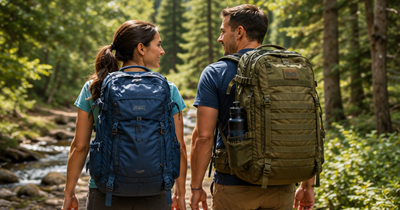 Rather than each person carrying identical equipment, couples can divide supplies between their bags and reduce unnecessary duplication.
For example:
- One person may carry shelter equipment.
- The other may carry cooking supplies.
- Medical equipment can be distributed.
- Food and water supplies can be balanced between packs.
Shared planning can improve efficiency and reduce overall weight.
At the same time, couples should avoid creating complete dependence on a single bag. If one person becomes separated, injured, or loses their equipment, both individuals should still have access to essential survival items.
Important considerations include:
- Communication plans
- Meeting locations
- Equipment redundancy
- Shared responsibilities
- Medical needs
Couples who train and plan together often discover that coordinated preparedness can significantly improve resilience during emergencies.
5.3 Families with Children
Families face unique challenges that extend beyond simple survival considerations. Children require additional food, water, clothing, comfort items, and emotional support during stressful situations.
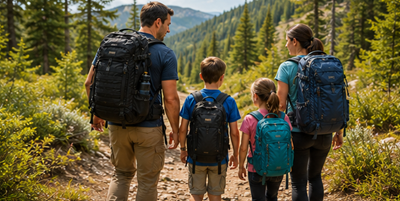 Parents must often balance preparedness priorities with practical caregiving responsibilities.
Family bug out bags commonly include:
- Children’s clothing
- Diapers and infant supplies
- Medications
- Comfort items
- Snacks
- Extra water
- Family documents
One of the biggest challenges is transportation. Young children may be unable to carry meaningful amounts of equipment, requiring adults to shoulder additional loads.
Families should also develop plans for:
- Emergency communication
- Meeting locations
- Transportation options
- Medical emergencies
- School-related contingencies
Preparedness for families is often less about maximizing survival gear and more about maintaining stability and functionality during disruption.
Keeping children safe, calm, and cared for may be just as important as carrying additional equipment.
5.4 Seniors and Elderly Individuals
Preparedness planning for seniors requires realistic consideration of physical capabilities, medical requirements, and mobility limitations.
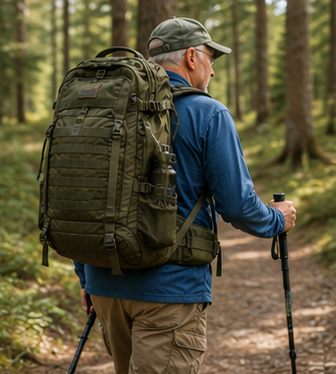 Many preparedness guides assume a level of physical fitness that may not apply to older individuals. Carrying a heavy backpack over long distances may be unrealistic for some people.
Priorities often include:
- Medications
- Medical records
- Mobility aids
- Communication equipment
- Weather protection
- Emergency contacts
Weight reduction becomes particularly important.
Questions worth considering include:
- How far can the bag realistically be carried?
- Are transportation options available?
- What medical conditions require accommodation?
- How long can medications be supplied?
For many seniors, evacuation planning may rely more heavily on transportation and support networks than extended travel on foot.
A smaller, lighter, and more focused bag is often more effective than an oversized pack filled with unnecessary equipment.
Preparedness should always reflect realistic capabilities.
5.5 People with Disabilities
Individuals with disabilities may face unique challenges during emergencies, but they can also achieve high levels of preparedness through thoughtful planning and adaptation.
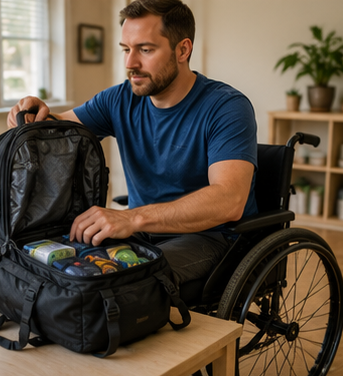 Preparedness plans should account for specific medical, mobility, communication, sensory, or cognitive needs.
Depending on the individual, considerations may include:
- Assistive devices
- Backup batteries
- Medical equipment
- Communication tools
- Specialized medications
- Transportation requirements
Planning should address questions such as:
- What equipment is essential for daily functioning?
- What backup systems are available?
- How will power outages affect critical devices?
- What support networks exist?
Many people with disabilities are already experienced problem-solvers because they routinely adapt to challenges in everyday life.
Preparedness planning should build upon those existing strengths while ensuring that critical needs remain supported during emergencies.
5.6 Urban Residents
Urban environments offer both advantages and challenges during emergencies.
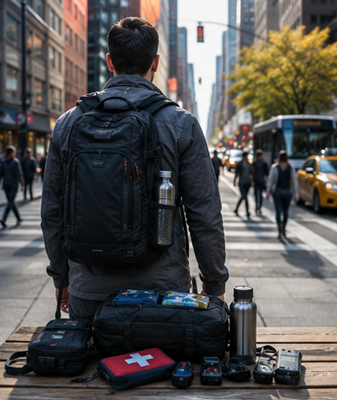 Cities often provide greater access to hospitals, services, transportation, and emergency resources. However, they may also experience higher population density, traffic congestion, infrastructure dependencies, and evacuation difficulties.
Urban bug out bags often emphasize:
- Mobility
- Navigation
- Communication
- Personal security
- Lightweight equipment
- Transportation flexibility
Urban residents may encounter situations involving:
- Transit disruptions
- Traffic gridlock
- Power outages
- Civil disturbances
- Building evacuations
Because space is often limited, urban preparedness tends to prioritize compact, efficient equipment.
Walking may become necessary if public transportation systems fail or roads become impassable.
An effective urban bug out bag focuses on movement, adaptability, and practical problem-solving.
5.7 Rural Residents
Rural residents frequently face a different set of preparedness challenges than their urban counterparts.
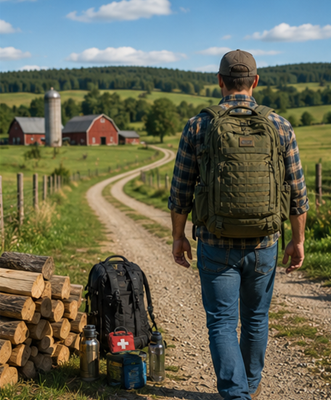 While population density is often lower, distances between services can be much greater. Emergency response times may be longer, and access to medical facilities, fuel, and supplies may be limited.
Common rural priorities include:
- Extended self-sufficiency
- Vehicle preparedness
- Communication systems
- Water access
- Weather protection
- Navigation
Rural residents often benefit from:
- Greater local resources
- Larger storage capacity
- Stronger community networks
- Familiarity with the local environment
However, rural evacuations can also involve long travel distances and limited alternate routes.
Preparedness planning should account for both isolation and self-reliance.
For many rural residents, the bug out bag is only one component of a much broader preparedness strategy.
5.8 Homesteaders
Homesteaders often approach preparedness differently than the average person because many aspects of self-sufficiency are already integrated into their daily lives.
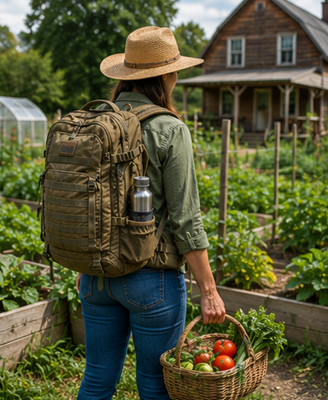 Food production, water collection, livestock management, energy systems, and practical skills frequently play a larger role in preparedness planning.
As a result, homesteaders may be less focused on evacuation and more focused on protecting and sustaining their property during emergencies.
Nevertheless, evacuation plans are still important.
Homesteader bug out bags may emphasize:
- Property documents
- Livestock records
- Communication equipment
- Specialized tools
- Vehicle preparedness
- Backup supplies
One of the most difficult decisions for homesteaders involves determining when to leave.
Years of investment in land, buildings, livestock, and equipment can make evacuation emotionally challenging.
Establishing clear trigger points and evacuation criteria before an emergency occurs can help guide decision-making when conditions become stressful.
5.9 Lone Wolf Preppers
The term “lone wolf” is often used to describe individuals who prefer to prepare independently rather than relying on groups or communities.
 While independence can offer flexibility and privacy, it also places the full burden of preparedness on a single individual.
Lone wolf preparedness often emphasizes:
- Self-reliance
- Mobility
- Redundancy
- Personal security
- Skill development
Because there may be no immediate support available, equipment failures and injuries can become significantly more serious.
Many lone wolf preppers prioritize:
- Backup systems
- Multi-purpose tools
- Navigation skills
- Medical knowledge
- Situational awareness
The challenge is balancing independence with realism.
No one can possess every skill or carry every resource. Effective preparedness requires recognizing limitations while maximizing strengths.
Even highly independent individuals often benefit from maintaining some level of connection with trusted friends, family members, or local networks.
5.10 Community and Mutual Assistance Group Members
Preparedness communities and Mutual Assistance Groups (MAGs) approach emergencies from a fundamentally different perspective. Rather than focusing solely on individual survival, they emphasize cooperation, resource sharing, and collective resilience.
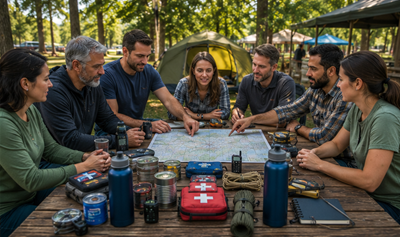 In these environments, bug out bags are often designed to complement group plans rather than operate independently.
Group members may coordinate:
- Communications
- Medical supplies
- Food storage
- Transportation
- Security responsibilities
- Specialized skills
This allows individuals to avoid unnecessary duplication while improving overall capability.
For example:
- One member may specialize in communications.
- Another may possess medical training.
- Others may focus on logistics, transportation, or navigation.
A group-oriented bug out bag should still contain essential personal supplies, but it may also include equipment that supports the broader community.
History repeatedly demonstrates that communities often recover more effectively than isolated individuals. While personal preparedness remains important, cooperation and mutual support can significantly increase resilience during difficult times.
The strongest preparedness plans often combine individual readiness with community-based capabilities, creating multiple layers of support when they are needed most.
6 Bug Out Bags by Emergency Type
Not all emergencies create the same challenges. A bug out bag designed for a winter storm may be completely inadequate during a flood. Likewise, a bag built for a wildfire evacuation may contain equipment that offers little value during a pandemic or a prolonged power outage.
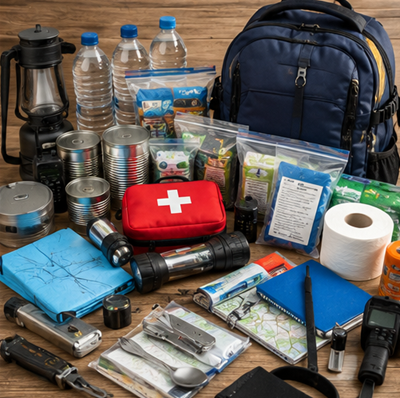 One of the most effective ways to improve preparedness is to build bug out bags around realistic threats rather than generic survival scenarios. Understanding the unique characteristics of different emergencies helps ensure that your equipment, plans, and priorities align with the situations you are most likely to face.
While many preparedness items remain useful across a wide range of emergencies, certain events require specialized considerations. Environmental conditions, travel routes, communication needs, medical concerns, and evacuation timelines can vary dramatically depending on the nature of the emergency.
This chapter explores how different types of emergencies influence bug out bag design and highlights the unique challenges associated with each situation.
6.1 Wildfires
Wildfires have become increasingly common in many regions, often forcing entire communities to evacuate with little warning. Unlike some emergencies that develop slowly, wildfires can move rapidly, change direction unexpectedly, and overwhelm evacuation routes within hours.
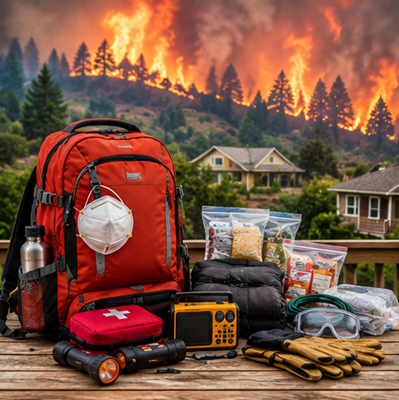 For this reason, wildfire preparedness places a strong emphasis on speed and mobility. A bug out bag designed for wildfire evacuation should be ready long before smoke appears on the horizon.
One of the most important considerations is air quality. Smoke can travel long distances and create hazardous breathing conditions even for people located far from the actual fire. Respiratory protection, eye protection, and extra water may become particularly valuable during these events.
Wildfires often require rapid evacuation by vehicle, but conditions can change quickly. Road closures, traffic congestion, and shifting fire behavior may force evacuees to alter their plans on short notice.
Important priorities often include:
- Identification documents
- Medications
- Respiratory protection
- Emergency communications
- Maps and alternate routes
- Water supplies
Many wildfire survivors report that having a pre-packed bag significantly reduced stress during evacuation. The less time spent gathering supplies, the more time available for making safe decisions.
6.2 Hurricanes
Hurricanes present a unique combination of threats. High winds, flooding, storm surge, infrastructure damage, and prolonged utility outages can affect large geographic areas simultaneously.
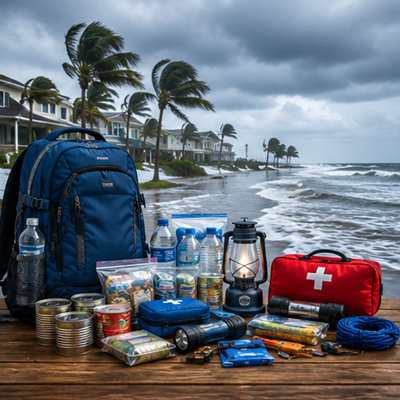 Unlike many disasters, hurricanes often provide days of warning before landfall. This additional preparation time allows families to secure property, gather supplies, and implement evacuation plans if necessary.
A hurricane bug out bag should support both evacuation and temporary displacement. Many evacuees spend days or even weeks away from home while damage assessments and recovery efforts take place.
In addition to basic survival supplies, hurricane preparedness often emphasizes:
- Waterproof document storage
- Backup communications
- Cash reserves
- Extra clothing
- Personal hygiene supplies
- Extended medication supplies
Because fuel shortages frequently occur before and after major storms, transportation planning becomes a critical component of hurricane preparedness.
The objective is not simply surviving the storm itself, but maintaining stability throughout the recovery period that follows.
6.3 Floods
Floods are among the most common and destructive natural disasters in the world. They can occur with little warning and often develop much faster than many people expect.
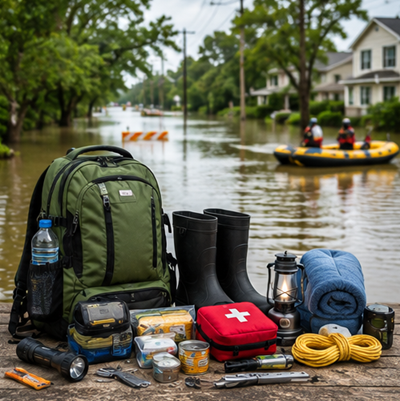 One of the most dangerous aspects of flooding is the tendency for individuals to underestimate moving water. Even relatively shallow floodwaters can sweep away vehicles, damage infrastructure, and isolate entire communities.
Flood-oriented bug out bags should focus heavily on evacuation readiness. In many cases, leaving early is significantly safer than waiting until conditions deteriorate.
Waterproofing becomes particularly important during flood events. Sensitive items such as documents, electronics, medications, and communication equipment should be protected from moisture whenever possible.
Flood preparedness may also emphasize:
- Waterproof storage containers
- Emergency communications
- Alternate routes
- Personal flotation devices where appropriate
- Extra clothing and footwear
Floodwaters often contain contaminants, sewage, fuel, and debris. As a result, sanitation and hygiene concerns frequently become major issues during flood recovery operations.
Preparation before the water arrives is often far easier than responding once roads and transportation routes become compromised.
6.4 Winter Storms
Winter storms present challenges that differ significantly from many other emergencies. In cold environments, maintaining body temperature becomes a critical survival priority.
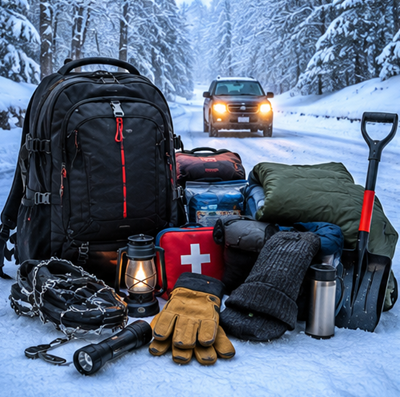 Exposure can quickly become life-threatening, particularly when combined with wind, moisture, and inadequate shelter.
Winter bug out bags often contain additional insulation, cold-weather clothing, gloves, hats, and emergency heat sources. The ability to stay warm may be more important than carrying additional food or gear.
Travel during winter conditions can also be difficult. Snow-covered roads, reduced visibility, and vehicle breakdowns frequently create secondary emergencies.
Many winter preparedness plans focus on:
- Layered clothing systems
- Emergency blankets
- Fire-starting equipment
- Extra calories
- Vehicle recovery supplies
- Backup lighting
Because winter emergencies often involve prolonged periods indoors, shelter-in-place strategies may be more practical than evacuation.
A winter bug out bag should support mobility if necessary while recognizing that staying put may sometimes be the safer option.
6.5 Earthquakes
Earthquakes are unique because they often occur without warning. Unlike hurricanes or severe storms, there may be little or no opportunity for last-minute preparation.
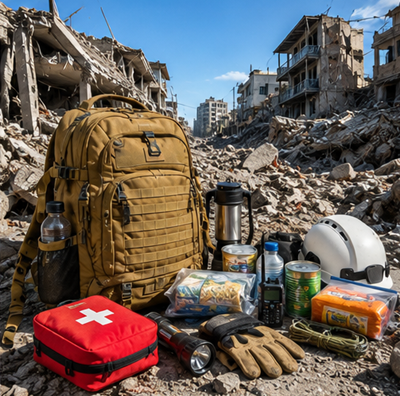 As a result, earthquake preparedness places significant emphasis on readiness before the event occurs.
Earthquakes can damage buildings, roads, bridges, utilities, and communication systems simultaneously. Even relatively moderate earthquakes may disrupt transportation and access to services.
Bug out bags designed for earthquake-prone regions often include supplies that support self-sufficiency during the first several days following the event.
Common priorities include:
- Water
- First aid supplies
- Dust protection
- Emergency communications
- Lighting
- Footwear
- Personal documents
One often-overlooked consideration is debris. Broken glass, damaged structures, and scattered hazards can make movement difficult after an earthquake.
The goal of earthquake preparedness is to remain functional during a period when normal services may be unavailable and transportation routes may be compromised.
6.6 Tornadoes
Tornadoes are among the fastest-developing natural disasters. Warning times are often measured in minutes rather than hours or days.
Because of this, tornado preparedness differs from many other bug out scenarios. In most cases, immediate shelter is the preferred response rather than evacuation.
Nevertheless, bug out bags still play an important role.
Following a tornado, individuals may find themselves displaced from damaged homes or forced to relocate temporarily while recovery efforts begin.
Tornado-related bug out bags often emphasize:
- Identification documents
- Emergency communications
- Medical supplies
- Clothing
- Personal necessities
- Flashlights and batteries
After a tornado passes, conditions can remain hazardous due to damaged infrastructure, downed power lines, debris, and disrupted services.
Preparedness planning should focus both on immediate survival during the event and recovery afterward.
6.7 Civil Unrest
Civil unrest presents a very different set of challenges than natural disasters. Rather than environmental hazards, concerns often involve crowds, transportation disruptions, property damage, and rapidly changing conditions.
Situational awareness becomes particularly important during these events.
The primary goal is usually avoidance rather than confrontation. Most preparedness experts recommend minimizing exposure to potentially dangerous areas whenever possible.
A bug out bag designed for civil unrest may prioritize:
- Communications
- Navigation
- Identification
- Cash
- Personal safety equipment
- Transportation alternatives
Information gathering is often just as important as physical supplies. Reliable information can help individuals avoid dangerous locations and make better decisions about movement and shelter.
Civil unrest situations are often highly localized. The ability to adapt quickly to changing conditions is one of the most valuable preparedness skills in these environments.
6.8 Power Grid Failures
Modern society depends heavily on electricity. Extended power outages can affect communications, transportation, water systems, fuel availability, food storage, and healthcare services.
Many power outages are relatively short-lived, but larger grid failures may last days or even weeks depending on the cause.
Interestingly, many grid-related emergencies do not require evacuation. Instead, preparedness often focuses on maintaining functionality while remaining at home.
However, a bug out bag can still serve as a mobile backup system if relocation becomes necessary.
Important considerations include:
- Lighting
- Power banks
- Radios
- Batteries
- Water storage
- Backup communications
The longer an outage continues, the more secondary effects begin to emerge. Food spoilage, fuel shortages, communication disruptions, and economic impacts can all complicate recovery efforts.
Preparedness for grid failures often involves balancing shelter-in-place strategies with contingency plans for evacuation if conditions deteriorate.
6.9 Pandemics
Pandemics differ from many emergencies because movement itself may increase risk. During infectious disease outbreaks, staying home is often safer than traveling.
As a result, pandemic preparedness focuses heavily on sheltering in place, hygiene, medical supplies, and maintaining access to essential resources.
Nevertheless, bug out bags may still serve useful functions.
Medical emergencies, quarantines, transportation disruptions, or temporary relocations may require individuals to move unexpectedly.
Pandemic-oriented preparedness often emphasizes:
- Medications
- Personal protective equipment
- Hygiene supplies
- Communication tools
- Medical records
- Food and water reserves
One lesson learned from recent global events is that supply chain disruptions can affect everyday necessities long before conditions become severe.
Preparedness is often less about dramatic survival scenarios and more about maintaining normal life during periods of disruption.
6.10 Wilderness Emergencies
Wilderness emergencies differ from many other situations because professional assistance may be limited or delayed. Distance, terrain, weather, and communication challenges can all complicate rescue efforts.
In these environments, self-sufficiency becomes particularly important.
A wilderness-oriented bug out bag often focuses on the core survival priorities of:
- Shelter
- Water
- Fire
- Navigation
- Signaling
- First aid
Environmental conditions frequently determine the specific equipment required. A mountain environment may present very different challenges than a desert, forest, or coastal region.
One of the most valuable tools in wilderness emergencies is knowledge. Navigation skills, fire-building techniques, weather awareness, and first aid training often contribute more to survival than any single piece of equipment.
While gear remains important, wilderness preparedness consistently demonstrates a fundamental preparedness principle: skills matter more than equipment.
A well-trained individual with basic equipment is often far more capable than an untrained person carrying expensive gear. For this reason, wilderness emergencies serve as an excellent reminder that preparedness is ultimately about knowledge, planning, adaptability, and sound decision-making rather than simply accumulating supplies.
7 The Biggest Bug Out Bag Mistakes
One of the most valuable ways to improve preparedness is to learn from the mistakes of others. While bug out bags are often discussed in terms of equipment and gear lists, many failures occur not because someone lacked a particular item, but because their planning process was flawed from the beginning.
 The preparedness community has accumulated decades of experience through real-world evacuations, natural disasters, wilderness emergencies, and personal testing. Certain mistakes appear repeatedly regardless of the specific emergency, location, or type of bug out bag being used.
Many of these mistakes are understandable. People often assume they will be stronger, faster, or more capable than they actually are. Others become distracted by marketing, social media, or survival entertainment that emphasizes dramatic scenarios rather than practical preparedness. Some simply build their bags once and never revisit them again.
The good news is that most of these problems are easily avoided. A realistic assessment of your needs, regular testing, and a willingness to learn from experience can dramatically improve the effectiveness of any bug out bag.
The goal of this chapter is not to criticize mistakes but to help identify common pitfalls before they become problems during an actual emergency.
Some of the most frequent bug out bag mistakes include:
- Overpacking
- Underpacking water
- Carrying too much food
- Carrying excessive ammunition
- Not testing equipment
- Ignoring physical fitness
- Carrying unnecessary gadgets
Understanding why these mistakes occur is often the first step toward building a more effective and practical preparedness system.
7.1 Overpacking and Excess Weight
Overpacking is perhaps the most common bug out bag mistake of all.
When people first begin building bug out bags, there is often a temptation to prepare for every possible scenario. Additional tools, extra clothing, backup equipment, comfort items, and specialized gear gradually accumulate until the backpack becomes far heavier than originally intended.
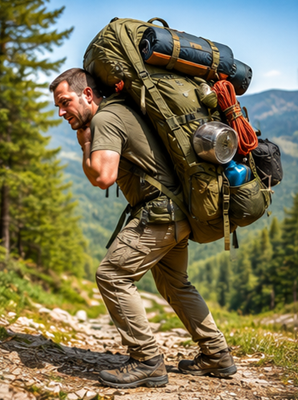 The problem is that every item has a cost. Even lightweight gear contributes to the total load, and those pounds add up surprisingly quickly.
A backpack that feels manageable while sitting in a living room may become exhausting after several hours of walking. Difficult terrain, bad weather, stress, and fatigue only magnify the problem.
Many experienced hikers and emergency planners eventually discover that reducing weight often improves capability rather than diminishing it. A lighter bag allows for faster movement, reduced fatigue, and greater flexibility.
Questions worth asking include:
- Have I actually used this item?
- Does it serve multiple purposes?
- Is there a lighter alternative?
- Am I carrying it because I need it or because I might need it?
The objective is not to carry everything imaginable. The objective is to carry what is most likely to be useful.
Preparedness often involves making difficult choices about what to leave behind.
7.2 Underestimating Water Requirements
While many people carry too much gear, they often carry too little water.
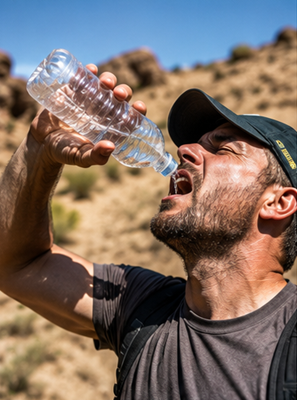 Water is unique because it is both essential and heavy. The average person can survive for weeks without food, but only a few days without water under many conditions. Physical activity, heat, stress, and environmental conditions can dramatically increase water requirements.
Unfortunately, water is also one of the heaviest items commonly carried in a bug out bag. This creates a difficult balancing act between carrying enough water and maintaining mobility.
Many beginners assume they can simply locate water along the way. In reality, suitable water sources may not be available, accessible, or safe.
Even when water is present, it may require treatment before consumption.
Effective preparedness often focuses on a combination of:
- Carrying sufficient water
- Having multiple collection options
- Possessing reliable purification methods
- Understanding local water availability
A person who runs out of water will quickly discover that many other preparedness concerns become irrelevant.
Water planning should always receive serious attention when building any bug out bag.
7.3 Depending on Unproven Gear
Modern preparedness markets offer thousands of products that promise to solve survival problems. Some are genuinely useful. Others exist primarily because they look impressive in advertisements.
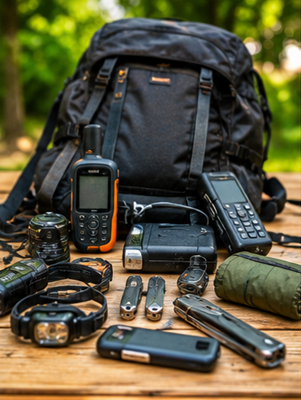 One of the biggest mistakes a person can make is assuming that equipment will work simply because it was purchased.
A water filter that has never been tested may fail when needed most. A fire starter may be difficult to use in wet conditions. A backpack may become uncomfortable after only a few miles. Batteries may be dead. Electronics may not perform as expected.
The first time you use a piece of gear should never be during an emergency.
Equipment should be tested under realistic conditions whenever possible. This not only reveals weaknesses but also helps build familiarity and confidence.
Many experienced outdoorsmen and emergency planners follow a simple principle:
“Trust what you have tested.”
Real-world experience often teaches lessons that cannot be learned from product descriptions, online reviews, or instructional videos.
Preparedness is not about owning gear. It is about knowing how that gear performs.
7.4 Ignoring Physical Fitness
Preparedness discussions often focus heavily on equipment while overlooking one of the most important survival tools available: the human body.
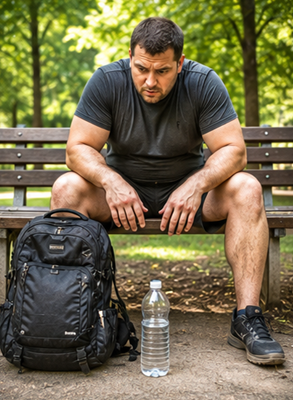 Physical fitness affects nearly every aspect of emergency preparedness. Strength, endurance, flexibility, balance, and mobility all influence a person’s ability to respond effectively during difficult situations.
A bug out bag may weigh 20, 30, or even 40 pounds. Carrying that weight over uneven terrain, through adverse weather, or during stressful conditions requires physical effort.
Many people are surprised when they attempt their first loaded walk and discover that the challenge is far greater than expected.
Preparedness does not require becoming an elite athlete. However, maintaining a reasonable level of physical fitness can significantly improve emergency readiness.
Activities such as:
- Walking
- Hiking
- Strength training
- Stretching
- Cardiovascular exercise
can all contribute to greater preparedness.
The strongest bug out bag in the world is of limited value if its owner cannot comfortably carry it.
Fitness is often one of the most overlooked forms of preparedness.
7.5 Packing for Fantasy Instead of Reality
Many preparedness mistakes stem from focusing on unlikely scenarios while ignoring more probable threats.
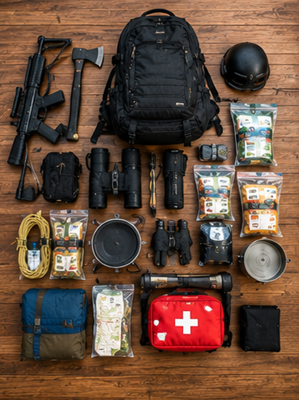 Movies, television shows, and online discussions often emphasize dramatic survival situations involving societal collapse, wilderness survival, or long-term self-sufficiency. While such scenarios may be interesting to discuss, they are not necessarily the events most people are likely to face.
In reality, many bug out bags are far more likely to be used during:
- Wildfires
- Floods
- Hurricanes
- Winter storms
- Vehicle breakdowns
- Power outages
- Temporary evacuations
Preparing for realistic events often leads to very different equipment choices.
For example, carrying important documents, medications, and emergency cash may prove far more valuable during an evacuation than specialized survival equipment designed for extreme situations.
Preparedness should begin with probability rather than imagination.
This does not mean ignoring low-probability events. It simply means ensuring that likely threats receive the attention they deserve.
A bug out bag should reflect your actual risks rather than someone else’s survival fantasy.
7.6 Failure to Practice and Test Equipment
A bug out bag is not a static object. It is a system that should be regularly tested, reviewed, and improved.
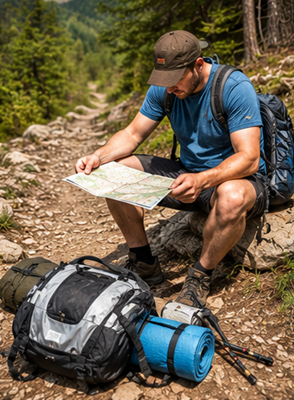 Many people assemble a bag, place it in a closet, and assume the job is complete. Months or years later, they may discover that equipment has failed, batteries are dead, food has expired, or important items are missing.
Practice reveals problems.
A simple overnight camping trip can expose weaknesses in shelter systems, sleeping arrangements, cooking equipment, and clothing choices. A short hike with a loaded pack can reveal fit and comfort issues.
Testing also helps answer important questions:
- Can I comfortably carry this weight?
- Can I locate critical equipment quickly?
- Do I know how to use every item?
- Does the system work as intended?
Every test provides an opportunity to learn and improve.
Preparedness should be viewed as an ongoing process rather than a one-time purchase.
The more experience you gain with your equipment, the more confidence you will have in your ability to use it effectively.
7.7 Not Updating Equipment
Even well-designed bug out bags require periodic maintenance.
Over time, circumstances change. Families grow. Children become older. Medical needs evolve. People move to new locations. Equipment wears out. Technology advances.
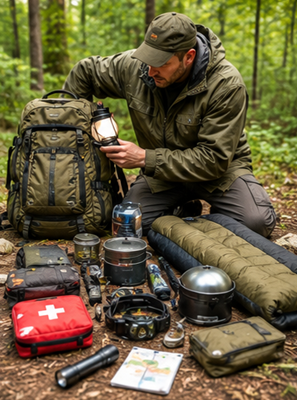 A bug out bag that was perfectly suited to your needs five years ago may no longer reflect your current situation.
Regular reviews help ensure that:
- Supplies remain functional
- Food remains fresh
- Batteries remain charged
- Clothing remains appropriate
- Documents remain current
- Equipment matches current risks
Many preparedness-minded individuals schedule inspections at least once or twice each year.
Seasonal changes often provide an excellent opportunity to review equipment and make adjustments. Winter gear may be unnecessary during the summer, while additional insulation may become essential as colder weather approaches.
Preparedness is not a destination. It is an ongoing process of adaptation and improvement.
The most effective bug out bags evolve alongside the people who rely on them. By periodically reviewing and updating your equipment, you can ensure that your preparations remain practical, relevant, and ready to support you when they are needed most.
Ultimately, the biggest bug out bag mistake is assuming that preparedness is finished. The most successful preparedness plans are those that continue to grow, adapt, and improve over time.
8 The Best and Worst Items Found in Typical Bug Out Bags
If you compare enough bug out bag lists, you will quickly notice that no two are exactly alike. Some people carry minimalist kits designed around mobility and efficiency, while others pack large amounts of gear intended to handle a wide range of scenarios. There is no universal equipment list that works for everyone.
However, after decades of real-world evacuations, backpacking experience, disaster response, and preparedness training, certain patterns begin to emerge. Some items consistently prove their value in emergencies, while others frequently remain unused despite occupying space and adding weight.
One of the biggest challenges in preparedness is distinguishing between gear that looks impressive and gear that actually performs when conditions become difficult. Marketing campaigns, social media videos, and survival entertainment often create unrealistic expectations about what equipment is truly important.
The reality is that most successful evacuations rely on relatively simple equipment. Water, shelter, clothing, navigation, communication, and medical supplies repeatedly demonstrate their value during emergencies. In contrast, many specialized gadgets and novelty products rarely justify the weight and space they consume.
This chapter examines the equipment that consistently earns its place in bug out bags, as well as the gear that often disappoints when tested under real-world conditions.
Some of the most important lessons involve:
- Items that consistently prove useful
- Gear that looks impressive but rarely gets used
- Equipment that adds unnecessary weight
- The value of multi-purpose tools
- Marketing hype versus practical performance
- Lessons learned from actual evacuations
Preparedness is often less about carrying more gear and more about carrying the right gear.
8.1 The Most Valuable Items in Real Emergencies
When people imagine survival situations, they often picture specialized tools and advanced equipment. Yet reports from real disasters repeatedly tell a different story.
The items that prove most valuable are usually the simplest and most practical. They are the tools that address basic human needs and support everyday problem-solving.
Water is almost always near the top of the list. Whether during wildfires, hurricanes, vehicle breakdowns, or evacuation events, access to clean drinking water remains one of the most important preparedness priorities.
Medical supplies are another category that consistently proves useful. Minor injuries, blisters, cuts, headaches, and common illnesses occur far more frequently than dramatic survival scenarios.
Other items that frequently demonstrate their value include:
- Flashlights and headlamps
- Communication devices
- Maps
- Weather protection
- Spare clothing
- Power banks
- Identification documents
Interestingly, many of the most valuable items are things people use regularly in normal life. This is one reason experienced preparedness practitioners often favor practical equipment over highly specialized survival gear.
Real emergencies tend to reward utility rather than novelty.
8.2 Lightweight Gear That Earns Its Place
Weight is one of the most important considerations in any bug out bag. Every ounce carried requires energy, and that energy becomes increasingly valuable during extended travel or stressful situations.
Some equipment earns a permanent place in bug out bags because it provides substantial benefits while adding very little weight.
Modern emergency blankets, for example, weigh almost nothing but can provide critical protection from wind and cold. Compact headlamps offer reliable illumination while occupying minimal space. Water purification tablets can serve as excellent backups despite their tiny size.
Many experienced backpackers and preparedness enthusiasts follow a simple principle:
If an item provides significant value relative to its weight, it deserves serious consideration.
Lightweight equipment often includes:
- Emergency blankets
- Water purification tablets
- Compact first aid supplies
- Headlamps
- Fire starters
- Whistles
- Lightweight rain gear
The objective is not merely reducing weight for the sake of reducing weight. Instead, it is maximizing the value provided by every ounce carried.
Over time, many people discover that a carefully selected collection of lightweight equipment can outperform a much heavier bag filled with less useful gear.
8.3 Multi-Purpose Equipment
One of the most effective ways to improve a bug out bag is to prioritize equipment that serves multiple functions.
Every item carried occupies space and contributes to weight. Multi-purpose gear helps maximize capability while minimizing the overall load.
A simple tarp provides an excellent example. It can function as a shelter, ground cloth, rain catchment system, windbreak, gear cover, emergency stretcher, or privacy screen depending on the situation.
Similarly, a quality fixed-blade knife may assist with food preparation, shelter construction, equipment repair, first aid tasks, and countless everyday chores.
Examples of highly versatile equipment include:
- Tarps
- Multi-tools
- Cordage
- Duct tape
- Bandanas
- Fixed-blade knives
- Metal containers
The value of multi-purpose equipment extends beyond weight savings. Fewer items often result in simpler packing systems, reduced complexity, and easier decision-making during emergencies.
Many experienced preparedness practitioners eventually discover that versatility often matters more than specialization.
The more ways an item can solve problems, the more valuable it becomes.
8.4 Commonly Overrated Items
Not all gear lives up to expectations.
Some products gain popularity because they appear impressive, generate excitement, or photograph well on social media. Others become popular because they promise to solve complex problems with minimal effort.
Unfortunately, real-world performance does not always match marketing claims.
Many overrated items share similar characteristics. They often serve extremely narrow purposes, provide limited practical value, or duplicate functions already performed by more versatile equipment.
Common examples include overly specialized survival gadgets, novelty tools, and products designed primarily to appeal to fear rather than practical preparedness.
This does not mean such items never have value. Rather, it means their usefulness is often exaggerated relative to their cost, weight, or space requirements.
One useful exercise is to ask:
“When was the last time someone actually used this item during a real emergency?”
If the answer is difficult to determine, the item may deserve closer scrutiny.
Preparedness should be driven by function rather than appearance.
8.5 Heavy Gear That Slows You Down
Some equipment can be extremely useful while simultaneously creating significant mobility challenges.
The problem is not always the individual item itself. Rather, it is the cumulative effect of multiple heavy items packed together.
Large tools, excessive ammunition, oversized cooking systems, multiple changes of clothing, and large quantities of food can quickly transform a manageable backpack into a burden.
The consequences of excessive weight include:
- Reduced mobility
- Increased fatigue
- Slower travel speeds
- Higher injury risk
- Greater energy expenditure
Many first-time bug out bag builders focus heavily on what they might need without adequately considering how they will carry it.
Every pound carried should justify its presence.
This does not mean avoiding all heavy equipment. Certain items may be worth their weight depending on the mission and environment. However, each addition should be evaluated carefully.
A lighter bag often allows a person to travel farther, move faster, and maintain energy longer than a heavily loaded alternative.
Mobility is one of the most important preparedness assets.
8.6 Equipment That Frequently Breaks
Reliability matters.
An expensive piece of gear that fails when needed is often less useful than a simpler, more dependable alternative.
Certain categories of equipment tend to experience higher failure rates than others. Electronics, moving parts, complex mechanisms, and poorly manufactured components are often more vulnerable to damage.
Common failure points include:
- Zippers
- Plastic buckles
- Batteries
- Cheap flashlights
- Low-quality multi-tools
- Inexpensive water filters
Environmental conditions can also accelerate equipment failures. Moisture, dust, temperature extremes, impacts, and prolonged storage all place stress on gear.
Regular inspections help identify potential problems before they become emergencies.
Many experienced preparedness practitioners maintain backup options for critical functions such as:
- Water purification
- Fire starting
- Lighting
- Navigation
- Communication
Redundancy does not mean carrying duplicates of everything. It means ensuring that critical needs can still be met if a primary tool fails.
Dependability is often more valuable than complexity.
8.7 Marketing Hype vs. Practical Reality
The preparedness industry is a business, and like any industry, it relies heavily on marketing.
Manufacturers constantly introduce new products that promise to revolutionize survival, improve preparedness, or eliminate uncertainty. Some innovations are genuinely useful. Others primarily exist to generate sales.
Marketing often emphasizes dramatic scenarios, worst-case events, and emotional appeals. Product descriptions may focus on extreme possibilities rather than realistic applications.
This can make it difficult for newcomers to distinguish between genuinely valuable equipment and products designed primarily to capture attention.
One useful habit is to evaluate gear through a simple lens:
- Does it solve a real problem?
- Is it reliable?
- Is it worth the weight?
- Have real users successfully employed it?
The most effective preparedness equipment is often surprisingly ordinary. Water bottles, tarps, flashlights, maps, first aid kits, and quality clothing rarely generate excitement, yet they consistently appear in after-action reports from real emergencies.
Practicality frequently outperforms marketing.
The goal is not to own impressive gear. The goal is to own useful gear.
8.8 Lessons Learned from Actual Evacuations
Perhaps the most valuable preparedness lessons come from people who have experienced real emergencies.
Wildfires, hurricanes, floods, earthquakes, and other disasters have forced millions of people to evacuate over the years. Their experiences provide important insights into what truly matters.
One recurring lesson is that documents, medications, communication tools, and personal necessities are often among the first items people wish they had packed.
Another lesson is that most evacuations involve uncertainty rather than survival adventures. People frequently spend time in hotels, community shelters, friends’ homes, or temporary accommodations rather than living in the wilderness.
Many evacuees report that comfort items, hygiene supplies, chargers, and basic clothing proved far more valuable than highly specialized survival equipment.
Perhaps the most important lesson is that preparation reduces stress. Individuals who had organized plans and ready-to-go supplies often reported greater confidence and better decision-making during emergencies.
Real-world events consistently reinforce several key principles:
- Prepare for likely events.
- Keep equipment practical.
- Prioritize mobility.
- Test your gear.
- Update your plans.
And remember that preparedness is ultimately about solving problems, not collecting equipment.
The best bug out bag is rarely the one with the most gear. It is the one that contains the right gear, carried by someone who understands how to use it and has realistic expectations about the challenges they may face.
9 Water – Collection, Storage, and Purification
If there is one subject that deserves special attention in any bug out bag, it is water. While food often receives significant attention in preparedness discussions, water is far more critical to immediate survival. The human body can function for weeks with limited food under certain conditions, but dehydration can become a serious threat in a matter of days.
Water plays a role in nearly every bodily function. It regulates temperature, transports nutrients, supports digestion, lubricates joints, and allows the body to perform physical work. During an emergency, stress, heat, physical exertion, and environmental conditions can increase water requirements dramatically.
One of the biggest challenges associated with water preparedness is that water is both essential and heavy. Carrying large quantities may improve self-sufficiency but can also reduce mobility. As a result, effective water planning typically involves a combination of storage, collection, and purification strategies.
A well-designed bug out bag should not rely entirely on carrying water. Instead, it should provide multiple ways to obtain safe drinking water if primary supplies become depleted.
This chapter explores the fundamentals of water preparedness, including how much water people need, methods of storing and transporting water, purification options, and strategies for locating additional water sources during emergencies.
9.1 Understanding Human Water Requirements
Water needs vary depending on age, health, activity level, climate, and environmental conditions. A person resting in cool weather requires significantly less water than someone performing strenuous activity during a hot summer evacuation.
Many preparedness organizations recommend planning for a minimum of one gallon of water per person per day for drinking and basic sanitation. While this serves as a useful guideline, actual requirements may be higher under demanding conditions.
Factors that increase water consumption include:
- High temperatures
- Physical exertion
- Illness
- High altitude
- Dry climates
- Heavy clothing and protective gear
One common mistake is assuming thirst is an accurate indicator of hydration needs. By the time a person feels significantly thirsty, mild dehydration may already be occurring.
Symptoms of dehydration can include fatigue, headaches, dizziness, reduced concentration, irritability, and decreased physical performance. As dehydration worsens, serious medical complications may develop.
Understanding your personal water needs is an important part of preparedness planning. Individuals who work outdoors, engage in physically demanding activities, or live in hot climates may need to carry and consume substantially more water than general recommendations suggest.
Water planning should always be based on realistic conditions rather than ideal circumstances.
9.2 Water Storage Options
Water storage is often the first line of defense during an emergency. Having access to a reliable supply of clean water reduces dependence on uncertain external sources and provides valuable flexibility when conditions become difficult.
Preparedness plans frequently incorporate multiple storage methods ranging from small portable containers to large long-term reserves.
Short-term storage often focuses on convenience and portability. Long-term storage emphasizes durability, protection from contamination, and ease of rotation.
Common storage options include:
- Commercial bottled water
- Refillable containers
- Water bricks
- Stackable storage containers
- Large water barrels
- Water tanks
Each method offers advantages and disadvantages. Smaller containers are easier to transport and rotate but store less volume. Larger containers provide greater capacity but may be difficult to move during an emergency.
Proper storage conditions are also important. Water should generally be protected from direct sunlight, extreme temperatures, chemicals, and contaminants.
Many preparedness-minded individuals prefer maintaining multiple layers of storage rather than relying on a single large reserve. This approach provides flexibility and reduces the impact of accidental contamination or container damage.
The goal is to create a reliable supply that can support both shelter-in-place and evacuation scenarios.
9.3 Water Bottles and Containers
Water containers are among the most important pieces of equipment in any bug out bag. Even the best water source is of little value if there is no practical way to collect, transport, or store it.
Container selection should balance durability, weight, capacity, and ease of use.
Many preparedness practitioners carry multiple containers rather than relying on a single bottle. This approach provides redundancy and allows water to be separated for different purposes.
Common options include stainless steel bottles, plastic bottles, collapsible containers, hydration bladders, and canteens.
Each design offers unique advantages.
Stainless steel containers are durable and can often be used for boiling water. Plastic bottles are lightweight and inexpensive. Hydration bladders provide convenient access while moving. Collapsible containers offer significant storage capacity while occupying minimal space when empty.
The ideal system often combines several container types to maximize flexibility.
Regardless of the specific container chosen, reliability is critical. Leaks, damaged caps, and structural failures can quickly become major problems during an emergency.
A dependable water container is one of the most valuable investments a person can make when building a bug out bag.
9.4 Water Filters
Water filters are among the most popular preparedness tools because they allow individuals to convert questionable water sources into safer drinking water.
Rather than carrying all required water, filters enable people to replenish supplies from streams, lakes, ponds, rivers, and other natural sources.
Modern filtration technology has improved significantly in recent years. Many compact filters are capable of removing bacteria, protozoa, sediment, and other contaminants while remaining lightweight enough for bug out bags.
However, not all filters perform the same functions.
Some filters are designed primarily for backcountry use, while others target a broader range of contaminants. Certain filters excel at removing biological threats but may be ineffective against chemicals, heavy metals, or industrial pollutants.
Understanding the limitations of a filter is just as important as understanding its capabilities.
A filtration system should be viewed as one component of a larger water strategy rather than a complete solution to every water-related challenge.
Regular maintenance, cleaning, and testing are also important. A filter that has never been used or maintained may not perform as expected when needed most.
Preparedness begins with understanding both the strengths and limitations of your equipment.
9.5 Chemical Treatment Methods
Chemical treatment offers another method of making water safer to drink. These techniques are often valued because they are lightweight, compact, inexpensive, and easy to carry as backup options.
Many preparedness practitioners include chemical treatments alongside filtration systems to create additional redundancy.
Chemical treatments generally work by neutralizing or killing microorganisms that may be present in untreated water.
Common treatment methods include chlorine-based products, iodine treatments, and specialized purification tablets designed for emergency use.
While chemical treatments can be highly effective against many biological contaminants, they also have limitations. Treatment times may vary, water temperature can influence effectiveness, and some methods may alter taste.
Another consideration is that chemical treatments typically do not remove sediment, debris, or many non-biological contaminants.
For this reason, many people combine filtration and chemical treatment when dealing with questionable water sources.
A layered approach often provides greater confidence than relying on a single purification method.
9.6 Boiling and Purification Techniques
Boiling remains one of the oldest and most widely recognized methods of water purification. It requires no specialized filtration technology and can be performed using relatively simple equipment.
When properly performed, boiling can eliminate many of the biological threats commonly found in untreated water.
One advantage of boiling is its reliability. Unlike certain filters or chemical treatments, boiling does not depend on replacement cartridges, tablets, batteries, or specialized components.
However, boiling also has limitations.
It requires:
- Fuel
- Time
- Appropriate containers
- A safe heat source
In some situations, fuel availability may be limited. During evacuations, carrying large amounts of fuel may not be practical.
Boiling also does not remove many chemical contaminants or heavy metals. As a result, source selection remains important even when boiling is used.
Many preparedness practitioners view boiling as an excellent backup method that complements filtration and chemical treatment systems.
Redundancy is often a hallmark of effective preparedness planning.
9.7 Water Collection Strategies
Having purification equipment is only useful if water can be located and collected.
Water collection strategies vary depending on geography, climate, season, and available resources. What works in a forested environment may be ineffective in an arid desert region.
Preparedness planning should begin with understanding local water availability.
Potential collection methods include:
- Streams and rivers
- Lakes and ponds
- Rainwater collection
- Snow and ice
- Springs
- Community water sources
Collection planning should also consider seasonal changes. A water source that is reliable during spring may become inaccessible or dry during late summer.
Maps, local knowledge, and familiarity with the surrounding environment can significantly improve water planning.
Many experienced preparedness practitioners study potential water sources long before they are needed.
Knowledge often weighs nothing yet provides tremendous value during emergencies.
9.8 Emergency Water Sources
During emergencies, people may be forced to obtain water from unconventional sources. Understanding where water may be available can improve resilience and expand options when normal supplies become unavailable.
Emergency water sources can include both natural and man-made locations.
Examples may include:
- Household water heaters
- Toilet tanks
- Melted snow
- Rainwater
- Streams
- Lakes
- Ponds
- Community collection points
Not all water sources are equal. Some may contain biological contaminants, chemicals, debris, or other hazards that require treatment before consumption.
One of the most important preparedness skills is learning how to evaluate water quality and identify potential risks.
Emergency water planning should always emphasize safety over convenience. Water that appears clean may still contain harmful microorganisms or contaminants.
Ultimately, successful water preparedness depends on combining several complementary strategies. Stored water provides immediate access. Containers allow transportation. Collection methods expand options. Filters and purification systems improve safety.
Together, these approaches create a layered water strategy that is far more resilient than relying on any single method alone.
Among all the supplies found in a bug out bag, few are as universally important as water. Understanding how to obtain, store, transport, and purify it may ultimately prove more valuable than almost any other preparedness skill.
10 Food – Emergency Nutrition and Calorie Planning
Food is one of the most discussed aspects of preparedness, yet it is often misunderstood. Many bug out bags contain either far too much food or the wrong types of food for the situations they are intended to support.
Unlike water, food is generally not an immediate life-or-death concern during the first few days of an emergency. Most healthy adults can function for extended periods with reduced food intake if necessary. However, food plays a critical role in maintaining energy, morale, decision-making ability, and physical performance.
During stressful situations, the body often requires additional calories. Travel, exposure to weather, carrying heavy equipment, and coping with uncertainty can significantly increase energy expenditure. At the same time, emergency food must remain portable, durable, and practical.
One of the biggest mistakes people make is treating emergency food as if they are packing for a camping vacation. Large quantities of canned goods, bulky meals, and heavy cooking equipment can quickly overwhelm a bug out bag.
The goal of emergency nutrition is not comfort dining. The goal is to provide sufficient calories, nutrients, and energy while maintaining mobility and flexibility.
This chapter examines common emergency food options, calorie planning considerations, storage concerns, and strategies for meeting nutritional needs during emergencies.
10.1 Caloric Requirements During Emergencies
The human body requires energy to function, and that energy is measured in calories. During normal daily life, calorie requirements vary depending on age, gender, activity level, body composition, and overall health.
Emergencies often increase those requirements.
Walking long distances, carrying a backpack, gathering resources, constructing shelter, coping with cold temperatures, and dealing with stress all place additional demands on the body. In some situations, calorie requirements may increase significantly compared to normal daily routines.
At the same time, appetite often decreases during stressful situations. It is not uncommon for people to eat less than usual during the first stages of an emergency despite increased energy expenditure.
Preparedness planning should focus on providing enough calories to maintain:
- Physical performance
- Mental clarity
- Body temperature
- Recovery and healing
- General health
Many people are surprised to discover how quickly physical activity can burn through available energy reserves.
Emergency food planning is not about achieving perfect nutrition. It is about providing sufficient energy to remain functional while navigating difficult circumstances.
A practical food plan balances calorie density, portability, shelf life, and ease of preparation.
10.2 Lightweight Emergency Foods
Weight is one of the most important considerations when selecting food for a bug out bag.
Heavy food may provide excellent nutrition, but if it significantly reduces mobility, it may create more problems than it solves. This is particularly important for individuals who may need to travel on foot.
Lightweight emergency foods are designed to provide substantial energy while minimizing weight and bulk.
These foods often emphasize:
- High calorie content
- Long shelf life
- Minimal preparation
- Durability
- Portability
Many emergency foods achieve their lightweight characteristics by removing water. Since water contributes significantly to weight, reducing moisture content can dramatically improve storage efficiency.
Preparedness-minded individuals often seek foods that provide the greatest amount of energy per ounce carried.
Examples may include:
- Dehydrated foods
- Trail mixes
- Nuts
- Energy bars
- Dried fruit
- Specialized emergency rations
The ideal emergency food is one that remains edible, provides meaningful nutrition, and can be consumed under difficult conditions.
Practicality should always take precedence over novelty.
10.3 Freeze-Dried Foods
Freeze-dried foods have become increasingly popular within the preparedness community because they offer an impressive combination of shelf life, nutritional value, and weight savings.
The freeze-drying process removes moisture while preserving much of the food’s original structure and nutritional content. The result is a lightweight product that can often be stored for many years when packaged properly.
One of the primary advantages of freeze-dried foods is their excellent weight-to-calorie ratio. Large quantities of food can be stored and transported with relatively little weight compared to many traditional alternatives.
However, freeze-dried foods also present certain challenges.
Most require water for preparation. During an emergency, water may be limited or difficult to obtain. This creates an important trade-off that preparedness planners must consider.
Additional considerations include:
- Cost
- Water requirements
- Preparation time
- Packaging durability
- Storage conditions
Freeze-dried foods are often most effective when integrated into a broader food strategy rather than serving as the sole source of emergency nutrition.
Their greatest strengths are long-term storage, portability, and efficiency.
10.4 MREs and Military Rations
Meals Ready to Eat (MREs) and similar military-style rations are designed to provide complete meals in environments where conventional food preparation may not be possible.
Unlike many freeze-dried foods, MREs are generally ready to consume without requiring additional water for preparation. This convenience makes them attractive for emergency use.
Many MREs contain:
- Entrées
- Snacks
- Desserts
- Beverage mixes
- Eating utensils
- Heating components
The primary advantage of MREs is simplicity. They require little preparation and can often be consumed directly from the package.
However, convenience comes with trade-offs.
MREs are typically heavier than freeze-dried alternatives because they retain moisture. They may also occupy more space within a bug out bag.
Many experienced preparedness practitioners use MREs selectively, particularly for vehicle kits, short-term evacuations, or situations where immediate access to food is more important than minimizing weight.
Understanding both the strengths and limitations of military-style rations helps ensure they are used appropriately within a preparedness plan.
10.5 Energy Bars and Snacks
Energy bars and compact snack foods are among the most common items found in bug out bags. Their popularity stems from their convenience, portability, and ability to provide quick calories with minimal preparation.
During an emergency, the ability to consume food while moving can be extremely valuable. Long travel days, evacuation efforts, or physically demanding activities may leave little time for meal preparation.
Compact foods often provide:
- Quick energy
- Convenient packaging
- Easy storage
- Minimal preparation
- Good portability
Many preparedness planners include energy bars as supplemental foods rather than relying on them as a primary food source.
While convenient, some bars may contain high amounts of sugar and relatively limited nutritional diversity. Others may become difficult to consume in extreme temperatures.
Testing foods before including them in a bug out bag is important. Personal preferences, digestive tolerance, and environmental conditions can all influence effectiveness.
The best emergency food is often the food you are willing and able to eat under stressful circumstances.
10.6 Cooking vs. No-Cook Food Strategies
One of the most important decisions in emergency food planning is determining how much reliance should be placed on cooking.
Cooking offers several advantages. Warm meals can improve morale, increase comfort during cold weather, and expand the range of foods that can be consumed.
However, cooking also introduces additional requirements.
A cooking-based food strategy may require:
- Fuel
- Cooking equipment
- Water
- Time
- Suitable locations
These requirements can complicate evacuation efforts and increase overall pack weight.
No-cook food strategies focus on foods that can be consumed immediately without preparation. This approach simplifies logistics and often improves mobility.
Many preparedness practitioners adopt a hybrid strategy. They maintain the ability to prepare hot meals when conditions allow while ensuring that sufficient no-cook foods are available if circumstances become difficult.
Flexibility is often more valuable than committing entirely to one approach.
Emergency food planning should account for a wide range of conditions and constraints.
10.7 Food Storage Considerations
Selecting emergency food is only part of the equation. Proper storage is equally important.
Food that becomes damaged, contaminated, spoiled, or inaccessible may provide little value during an emergency.
Storage considerations often include:
- Shelf life
- Temperature sensitivity
- Moisture protection
- Packaging durability
- Pest resistance
- Ease of rotation
Extreme heat is one of the most common causes of food degradation. Foods stored in vehicles, garages, sheds, or attics may experience reduced shelf life due to temperature fluctuations.
Regular inspections help identify problems before they become serious.
Preparedness planners should periodically:
- Check expiration dates
- Inspect packaging
- Rotate supplies
- Replace damaged items
- Update food selections as needed
Food storage is not a one-time task. It is an ongoing process that helps ensure supplies remain ready when needed.
Reliability is often just as important as quantity.
10.8 Special Dietary Requirements
Not everyone can rely on the same emergency food options. Allergies, medical conditions, religious practices, personal preferences, and dietary restrictions can all influence food selection.
Preparedness plans should account for these factors well before an emergency occurs.
Individuals may need to consider:
- Food allergies
- Diabetes
- Gluten sensitivities
- Lactose intolerance
- Religious dietary requirements
- Specialized nutritional needs
Emergency situations often limit food choices, making advance planning particularly important for those with dietary restrictions.
A person who cannot safely consume common emergency foods may face challenges if alternatives have not been identified beforehand.
Testing emergency food plans under realistic conditions can help identify weaknesses and ensure that selected foods meet both nutritional and practical requirements.
Ultimately, emergency nutrition is about more than simply carrying calories. It is about maintaining physical performance, supporting health, and preserving the ability to make sound decisions during difficult circumstances.
A well-designed food plan balances nutrition, portability, shelf life, preparation requirements, and individual needs. Combined with proper water planning, it provides one of the most important foundations for effective preparedness and successful emergency response.
11 Shelter – Protection from the Elements
When people think about survival, they often focus on food and water. While both are critically important, shelter frequently becomes the more immediate concern during many emergencies. Exposure to heat, cold, wind, rain, and snow can quickly create dangerous conditions, sometimes within a matter of hours.
The human body is remarkably resilient, but it functions best within a relatively narrow temperature range. Once environmental conditions begin pushing the body beyond its ability to regulate temperature, performance declines rapidly. Decision-making, coordination, energy levels, and overall health can all be affected.
This is why shelter is often considered one of the most important priorities in wilderness survival and emergency preparedness. A person with limited food but adequate shelter may remain functional for an extended period. A person exposed to harsh environmental conditions without protection may quickly find themselves facing a serious situation.
Fortunately, shelter does not necessarily require large tents, cabins, or complex equipment. In many cases, simple materials and basic knowledge can provide significant protection from the elements.
This chapter examines the role of shelter within a bug out bag, including various shelter options, insulation systems, seasonal considerations, and strategies for selecting safe shelter locations during emergencies.
11.1 Why Shelter Comes Before Comfort
One of the most important principles in preparedness is understanding the difference between comfort and survival.
Many people naturally focus on making themselves comfortable during an emergency. While comfort has value, shelter serves a much more important purpose. Shelter helps preserve body heat, reduce exposure to weather, conserve energy, and protect against environmental hazards.
In many environments, exposure becomes a threat long before hunger.
Cold rain, strong winds, excessive heat, and prolonged moisture can all create serious problems. Even relatively mild weather can become dangerous when combined with fatigue, injury, or inadequate clothing.
A properly designed shelter helps:
- Reduce heat loss
- Block wind
- Shed rain
- Provide shade
- Improve sleep quality
- Conserve energy
It is important to recognize that shelter needs vary dramatically depending on conditions. A lightweight tarp may be sufficient during a mild summer evening, while winter conditions may require significantly more protection.
The goal is not luxury. The goal is maintaining a safe and sustainable environment that allows the body to function effectively.
Preparedness often involves learning how to separate necessities from conveniences.
11.2 Tarps and Emergency Shelters
Among all shelter options available to preparedness-minded individuals, tarps are often considered one of the most versatile.
A simple tarp can provide protection from rain, wind, sun, and snow while weighing significantly less than many traditional shelter systems. When combined with cordage and basic shelter-building skills, a tarp can be adapted to a wide variety of environments.
One reason tarps remain popular is flexibility. They can be configured in numerous ways depending on weather conditions and available terrain.
Common tarp configurations include:
- Lean-to shelters
- A-frame shelters
- Diamond shelters
- Plow point shelters
- Ground covers
- Windbreaks
Tarps also offer advantages beyond shelter construction. They can serve as rain catchment systems, equipment covers, emergency stretchers, and protective work surfaces.
However, tarps require practice. Unlike tents, they do not provide an instant shelter solution. Users must understand knots, setup techniques, site selection, and weather considerations.
Many experienced outdoorsmen view tarp skills as one of the most valuable shelter-related abilities a person can develop.
Their combination of versatility, weight savings, and utility makes them a common component of many bug out bags.
11.3 Tents and Bivy Sacks
Tents and bivy sacks provide more structured shelter solutions than tarps.
Tents offer comprehensive protection from weather, insects, and environmental exposure. They are often easier to set up than improvised shelters and provide a greater sense of security and comfort.
Modern backpacking tents have become increasingly lightweight while maintaining impressive levels of durability and weather resistance.
Advantages of tents include:
- Excellent weather protection
- Bug protection
- Privacy
- Ease of setup
- Greater comfort
The primary disadvantages are weight, bulk, and cost.
Bivy sacks occupy the opposite end of the shelter spectrum. Essentially weather-resistant covers designed to surround a sleeping bag, bivies prioritize minimal weight and compact storage.
Bivy sacks are particularly attractive for individuals seeking lightweight shelter systems or emergency backup options.
However, their compact design often sacrifices interior space and comfort.
Choosing between a tarp, tent, or bivy sack ultimately depends on individual priorities. Some preparedness practitioners even combine multiple systems to create greater flexibility under changing conditions.
The best shelter is the one that matches both the environment and the intended mission.
11.4 Emergency Blankets
Emergency blankets are among the lightest and most compact shelter-related items available.
Often made from reflective materials designed to reduce heat loss, these blankets have become common components of emergency kits, first aid kits, and bug out bags.
Despite their small size, emergency blankets can provide meaningful protection in certain situations.
Potential uses include:
- Heat retention
- Wind protection
- Rain protection
- Signaling
- Ground covers
- Shelter construction
One of the reasons emergency blankets remain so popular is their exceptional weight-to-benefit ratio. They occupy very little space yet provide a useful layer of emergency protection.
However, it is important to understand their limitations.
Many people mistakenly assume that emergency blankets can replace sleeping bags or more substantial shelter systems. In reality, they function best as supplemental tools rather than complete shelter solutions.
Used correctly, they can significantly improve survival prospects during unexpected emergencies.
Used improperly, they may create unrealistic expectations.
Preparedness begins with understanding both capabilities and limitations.
11.5 Sleeping Bags
A shelter system is only as effective as the sleeping system that accompanies it.
Sleeping bags play a critical role in maintaining body temperature during rest periods. They help conserve energy and improve recovery, both of which are important during emergencies.
Sleep deprivation and cold exposure can significantly impair judgment, decision-making, and physical performance.
When selecting a sleeping bag, several factors deserve consideration:
- Temperature rating
- Weight
- Packed size
- Insulation type
- Moisture resistance
Different environments require different solutions. A sleeping bag suitable for summer use may be dangerously inadequate during winter conditions.
Likewise, an oversized winter sleeping bag may be unnecessarily heavy for warm-weather travel.
Many preparedness planners select sleeping systems based on the coldest conditions they reasonably expect to encounter.
A sleeping bag should be viewed as an investment in safety rather than comfort alone.
Adequate rest is an important component of preparedness.
11.6 Ground Insulation
Many people focus heavily on overhead shelter while overlooking what lies beneath them.
Ground insulation is one of the most frequently neglected aspects of shelter planning.
The ground can draw significant amounts of heat away from the body, particularly during cold weather. Even a high-quality sleeping bag may provide limited protection if there is inadequate insulation between the sleeper and the ground.
Ground insulation helps:
- Reduce conductive heat loss
- Improve comfort
- Improve sleep quality
- Protect against moisture
- Increase overall warmth
Common solutions include foam sleeping pads, inflatable sleeping pads, insulated mats, and natural materials such as leaves or evergreen boughs.
In many situations, improving ground insulation can provide greater benefits than upgrading other shelter components.
The shelter system should always be viewed as a complete package that includes overhead protection, sleeping insulation, and ground insulation.
Ignoring any one of these elements can reduce overall effectiveness.
11.7 Seasonal Shelter Considerations
Environmental conditions change throughout the year, and shelter systems should reflect those changes.
A shelter setup that works perfectly in July may perform poorly during January.
Seasonal considerations often influence:
- Shelter type
- Sleeping bag selection
- Clothing requirements
- Ground insulation needs
- Ventilation requirements
Winter environments typically emphasize heat retention, wind protection, and snow management. Summer conditions may prioritize shade, ventilation, and insect protection.
Rainy seasons may require additional waterproofing measures, while arid environments may focus more heavily on sun protection.
Many preparedness-minded individuals review and adjust their bug out bags seasonally to ensure equipment remains appropriate for expected conditions.
Adaptability is one of the most valuable preparedness traits.
Rather than building a static shelter system, it is often more effective to develop a shelter strategy capable of evolving with changing environmental conditions.
11.8 Shelter Site Selection
Even the best shelter equipment can perform poorly if placed in the wrong location.
Site selection is one of the most important shelter-building skills because the surrounding environment often determines whether a shelter remains comfortable, effective, and safe.
When evaluating potential shelter locations, several factors deserve consideration.
Protection from wind is often a high priority. Natural terrain features, vegetation, and landscape contours can provide valuable shelter from prevailing weather.
Drainage is another critical concern. Low areas may appear attractive at first glance but can collect water during rainfall and create uncomfortable or dangerous conditions.
Other considerations may include:
- Falling hazards
- Flood potential
- Access to resources
- Visibility
- Security
- Terrain stability
Experienced outdoorsmen frequently spend more time selecting a shelter location than constructing the shelter itself.
A well-chosen site can improve comfort, reduce exposure, conserve energy, and enhance safety without requiring any additional equipment.
One of the most valuable preparedness lessons is that knowledge often weighs nothing. Understanding how to select an effective shelter site can provide benefits equal to carrying significantly more gear.
Ultimately, shelter is not simply about possessing equipment. It is about creating a protected environment that allows the body to maintain temperature, conserve energy, and function effectively despite challenging conditions. Combined with water, food, and proper planning, shelter forms one of the most important foundations of emergency preparedness.
12 Clothing Systems for All Seasons
Clothing is one of the most overlooked components of many bug out bags. People often focus heavily on food, water, tools, and shelter while giving relatively little attention to what they will actually wear during an emergency.
In reality, clothing functions as a portable shelter system. It helps regulate body temperature, protect against environmental hazards, reduce heat loss, manage moisture, and improve overall comfort and performance. Proper clothing can help prevent hypothermia, heat-related illnesses, blisters, sunburn, and numerous other problems that may arise during extended travel or exposure to harsh conditions.
One of the biggest mistakes people make is assuming that everyday clothing will be adequate for emergency situations. While normal clothing may be perfectly suitable under ideal conditions, emergencies often involve weather changes, physical exertion, extended time outdoors, and limited opportunities to change or dry clothing.
Preparedness clothing should focus on function rather than appearance. The goal is not to look like an outdoor adventurer or survival expert. The goal is to remain safe, comfortable, and capable under a variety of environmental conditions.
This chapter explores the principles of clothing systems, layering strategies, footwear selection, seasonal considerations, and the essential spare clothing items that can make a significant difference during an emergency.
12.1 The Layering Principle
One of the most important concepts in outdoor preparedness is the layering principle.
Rather than relying on a single heavy garment, layering uses multiple clothing layers that can be added or removed as conditions change. This approach provides flexibility and allows individuals to regulate body temperature more effectively.
Weather conditions rarely remain constant. Temperatures may fluctuate throughout the day, physical activity levels may change, and environmental conditions can shift unexpectedly. A layered system allows a person to adapt without carrying multiple complete outfits.
A typical layering system consists of three primary components:
- Base layers
- Insulation layers
- Outer protective layers
Each layer serves a specific purpose, and together they create a system that can function across a wide range of temperatures and weather conditions.
One of the greatest advantages of layering is adaptability. A person hiking uphill with a heavy pack may need fewer layers than someone resting at camp later that evening.
Rather than preparing for a single temperature, layering allows preparation for changing conditions.
Flexibility is often one of the most valuable assets in preparedness.
12.2 Base Layers
The base layer sits closest to the skin and plays a critical role in moisture management.
When people exert themselves, they sweat. Moisture trapped against the skin can create significant problems, particularly in cold environments where wet clothing may contribute to heat loss.
The primary purpose of a base layer is to move moisture away from the body and help maintain a more stable temperature.
Effective base layers typically emphasize:
- Moisture management
- Comfort
- Breathability
- Temperature regulation
Material selection is important. Some fabrics perform significantly better than others under challenging conditions.
Many outdoor enthusiasts avoid cotton as a primary base layer because it tends to retain moisture and dries slowly. Once wet, cotton can contribute to chilling and discomfort.
Modern synthetic materials and certain natural fibers are often preferred because they manage moisture more effectively.
The right base layer helps create a foundation for the entire clothing system.
Without proper moisture management, even high-quality insulation layers may struggle to perform effectively.
12.3 Insulation Layers
Insulation layers provide warmth by trapping air and reducing heat loss from the body.
These layers become particularly important during cold weather, periods of inactivity, and overnight shelter situations.
While base layers manage moisture, insulation layers focus primarily on retaining heat.
Common insulation options include fleece, wool, synthetic insulation garments, and down-filled clothing.
Each option offers advantages and disadvantages depending on environmental conditions.
For example, some insulation materials perform exceptionally well in dry conditions but lose effectiveness when wet. Others maintain warmth even when exposed to moisture.
The amount of insulation required varies significantly depending on:
- Temperature
- Wind conditions
- Activity level
- Humidity
- Personal tolerance to cold
One common mistake is wearing excessive insulation while engaging in strenuous activity. Overheating can lead to excessive sweating, which may ultimately increase the risk of becoming cold later.
Effective layering requires continual adjustment based on changing conditions.
The objective is maintaining a comfortable temperature without becoming excessively hot or cold.
12.4 Rain and Wind Protection
Wind and moisture can dramatically reduce the effectiveness of even the best clothing systems.
Rain, snow, and strong winds accelerate heat loss and can quickly transform a manageable situation into an uncomfortable or dangerous one.
For this reason, most clothing systems include an outer protective layer designed to shield the wearer from environmental exposure.
The outer layer serves several important functions:
- Blocks wind
- Repels moisture
- Protects insulation layers
- Reduces heat loss
- Improves overall comfort
Rain gear is one of the most frequently used items in many emergency kits because it provides benefits beyond simple weather protection.
Remaining dry helps preserve body heat, reduce fatigue, and improve morale during challenging conditions.
The ideal outer layer balances weather protection with breathability. Completely waterproof garments may trap moisture generated by the body, while highly breathable garments may provide less protection during severe weather.
Like all preparedness equipment, outer layers involve compromises.
The goal is finding a balance that matches expected conditions and intended use.
12.5 Socks and Footwear
Few pieces of equipment are as important to mobility as footwear.
A bug out bag may contain excellent gear, but its usefulness is limited if the wearer develops blisters, foot injuries, or mobility problems.
Walking is often one of the most likely activities during an emergency. Whether traveling short distances or undertaking longer evacuations, foot care deserves serious attention.
Quality footwear should provide:
- Comfort
- Support
- Durability
- Weather protection
- Appropriate traction
Socks are equally important.
Many experienced hikers consider socks to be one of the most critical components of their clothing system. Proper socks help manage moisture, reduce friction, and improve comfort during prolonged movement.
A spare pair of dry socks can provide a surprising boost to both comfort and morale.
Preparedness planning should include realistic evaluation of footwear. Shoes that are comfortable for everyday errands may perform poorly during long walks carrying a loaded backpack.
Testing footwear under realistic conditions is essential.
The best emergency footwear is usually the pair that has already proven itself through regular use.
12.6 Gloves and Head Protection
The hands and head play important roles in temperature regulation and daily functioning.
Cold, wet, or injured hands can make simple tasks surprisingly difficult. Building shelter, operating equipment, preparing food, and administering first aid all become more challenging when hand protection is inadequate.
Gloves help protect against:
- Cold temperatures
- Wind exposure
- Abrasions
- Minor injuries
- Moisture
Different environments may require different glove systems. Some situations prioritize dexterity, while others emphasize warmth and protection.
Head protection is equally important.
A significant amount of heat can be lost through exposed areas of the body, particularly during cold weather. Hats, hoods, and other head coverings help conserve warmth while also providing protection from sun exposure and precipitation.
In hot climates, head coverings may help reduce heat stress and sun-related injuries.
Because gloves and hats are lightweight and compact, they often provide exceptional value relative to the space they occupy within a bug out bag.
Small items can sometimes have a disproportionately large impact on comfort and performance.
12.7 Seasonal Clothing Considerations
Preparedness clothing should never be viewed as a static system.
Environmental conditions change throughout the year, and clothing requirements change with them.
Summer conditions often emphasize:
- Sun protection
- Ventilation
- Moisture management
- Lightweight fabrics
Winter conditions frequently prioritize:
- Insulation
- Wind protection
- Moisture control
- Layering flexibility
Spring and autumn can be particularly challenging because temperatures may fluctuate dramatically within a single day.
Preparedness-minded individuals often review their bug out bags seasonally to ensure clothing remains appropriate for expected conditions.
This may involve:
- Replacing clothing layers
- Updating gloves and hats
- Adjusting footwear
- Modifying rain gear
A clothing system that works perfectly during one season may be inadequate during another.
Preparedness is most effective when it reflects actual environmental conditions rather than assumptions.
Adaptability remains one of the most valuable preparedness principles.
12.8 Spare Clothing Essentials
Few things can improve comfort during an emergency more quickly than changing into dry clothing.
Wet, damaged, or contaminated clothing can create significant problems, particularly when combined with cold temperatures or extended exposure.
For this reason, many bug out bags include a carefully selected set of spare clothing items.
The objective is not carrying a complete second wardrobe. Instead, the goal is identifying the items most likely to improve safety and comfort if primary clothing becomes compromised.
Common spare clothing priorities often include:
- Socks
- Underwear
- Base layers
- Gloves
- Hats
- Lightweight weather protection
The specific items will vary depending on climate, season, and individual needs.
Clothing should generally be stored in a manner that protects it from moisture and contamination. Waterproof bags, dry sacks, or sealed storage systems can help ensure spare clothing remains usable when needed.
One of the recurring lessons from both outdoor experience and real-world emergencies is that dry clothing has value far beyond comfort. It helps preserve body temperature, supports physical performance, improves morale, and contributes to overall resilience.
Ultimately, clothing is one of the most important systems within a bug out bag. It functions as a portable shelter, helps regulate body temperature, protects against environmental hazards, and supports mobility under difficult conditions. When combined with proper shelter, water, and food planning, a well-designed clothing system significantly improves a person’s ability to adapt and remain effective during emergencies.
13 Fire Starting Equipment and Methods
For thousands of years, fire has played a central role in human survival. Long before modern technology, fire provided warmth, protection, cooking capability, light, and a means of transforming harsh environments into more manageable ones. Even today, despite the availability of advanced equipment, fire remains one of the most valuable tools available during emergencies.
In many situations, fire serves multiple purposes simultaneously. A single fire can help purify water, cook food, dry wet clothing, provide heat, boost morale, and signal for help. Few preparedness tools offer the same versatility.
However, fire is often more difficult to create than many people assume. Television shows and survival videos frequently make fire starting appear simple, but real-world conditions are rarely ideal. Wind, rain, snow, cold temperatures, damp fuel, and fatigue can all complicate the process.
This is why fire preparedness involves more than simply carrying a lighter. Effective fire planning includes understanding ignition sources, gathering suitable tinder, selecting appropriate fuel, and practicing fire-building skills under a variety of conditions.
The ability to create and manage fire remains one of the most valuable preparedness skills a person can develop.
13.1 Why Fire Matters
Many modern conveniences have reduced our daily reliance on fire, but emergencies often remind us how important it can be.
Fire provides warmth when temperatures drop, helping reduce the risk of hypothermia and exposure. It allows food to be cooked and water to be boiled. It can improve comfort, boost morale, and create a sense of normalcy during stressful situations.
Fire also serves practical functions beyond heat.
A fire can:
- Dry clothing and equipment
- Provide light
- Deter some wildlife
- Signal rescuers
- Support cooking and sanitation
Psychologically, fire can be just as important as it is physically. During emergencies, a warm fire often provides reassurance, stability, and a focal point for problem-solving.
Many survival experts have noted that morale frequently improves once a reliable fire is established.
This does not mean every emergency requires a fire. In some situations, concealment, mobility, environmental conditions, or fire restrictions may make fires impractical. Nevertheless, understanding how to create one remains an important preparedness skill.
Fire is often more than a source of heat—it is a force multiplier that makes many other survival tasks easier.
13.2 Lighters
For most people, a lighter is the simplest and most effective fire-starting tool available.
Modern disposable lighters are inexpensive, lightweight, easy to use, and capable of producing hundreds of ignition attempts. Their simplicity makes them one of the most common fire-starting tools found in bug out bags.
One of the major advantages of lighters is speed. Under favorable conditions, a lighter can create a flame almost instantly. This allows the user to focus on preparing tinder and fuel rather than generating sparks through more complex methods.
However, lighters are not without limitations.
Extreme cold can affect performance. Mechanical components may fail. Fuel can eventually be exhausted. Moisture can also create challenges if the lighter becomes submerged or exposed to prolonged wet conditions.
Because of these limitations, many preparedness-minded individuals carry multiple lighters rather than relying on a single unit.
A simple disposable lighter often provides one of the highest value-to-weight ratios of any fire-starting tool.
The key is remembering that even the best lighter is only effective if suitable tinder and fuel are available.
13.3 Ferro Rods
Ferrocerium rods, commonly known as ferro rods, have become extremely popular within the preparedness and bushcraft communities.
Unlike lighters, ferro rods do not rely on fuel. Instead, they create extremely hot sparks when scraped with a hard edge.
These sparks can ignite properly prepared tinder and initiate the fire-building process.
One reason ferro rods are highly valued is durability. A quality ferro rod can often provide thousands of strikes and continue functioning even after exposure to water.
Many survival instructors appreciate ferro rods because they remain reliable under conditions that might render other ignition sources less effective.
However, ferro rods require skill.
A person who has never practiced with a ferro rod may struggle to produce a fire under difficult conditions. Proper technique, suitable tinder, and experience all play important roles.
This highlights an important preparedness principle: owning equipment is not the same as mastering it.
Ferro rods reward practice and preparation.
For those willing to develop the necessary skills, they can serve as highly dependable fire-starting tools.
13.4 Waterproof Matches
Matches have been used for generations and remain a practical fire-starting option.
Waterproof matches offer several advantages over standard matches. Their specialized coatings help protect them from moisture and allow them to continue burning longer than many conventional alternatives.
This additional burn time can be extremely useful when attempting to ignite damp tinder or establish a fire under less-than-ideal conditions.
Many preparedness kits include waterproof matches because they are simple, intuitive, and require little training.
Unlike ferro rods, which demand practice, most people can use matches effectively with minimal instruction.
However, matches are consumable items. Once used, they cannot be reused. A limited supply means each ignition attempt becomes more valuable.
Storage also matters. Even waterproof matches should be protected from unnecessary moisture, damage, and contamination.
Many experienced preparedness practitioners include matches as one layer within a broader fire-starting strategy rather than relying on them exclusively.
Redundancy remains an important preparedness principle.
13.5 Fire Starters and Tinder
Even the best ignition source will struggle if suitable tinder is unavailable.
Tinder refers to the materials used to catch an initial flame or spark and begin the fire-building process. In many situations, tinder is the true key to successful fire starting.
Preparedness planners often carry dedicated tinder because natural materials may be wet, frozen, scarce, or difficult to locate.
Effective tinder typically ignites easily and burns long enough to ignite larger materials.
Common examples include:
- Commercial fire starters
- Cotton-based materials
- Wax-treated products
- Natural tinder sources
- Prepared tinder bundles
The best tinder is often the tinder you have tested yourself.
Different products perform differently depending on weather conditions, humidity levels, and ignition sources.
Many experienced outdoorsmen maintain multiple tinder options because conditions can vary significantly from one environment to another.
A reliable ignition source paired with effective tinder creates a much more dependable fire-starting system.
13.6 Building Fires in Adverse Conditions
Starting a fire on a warm, dry summer day is very different from starting one during rain, snow, or strong winds.
Unfortunately, emergencies rarely occur under ideal circumstances.
Adverse conditions introduce challenges such as wet fuel, cold temperatures, reduced dexterity, limited daylight, and environmental stress.
Success often depends on preparation rather than improvisation.
Experienced fire builders frequently focus on:
- Shelter from wind
- Protecting ignition sources
- Preparing excess tinder
- Gathering more fuel than expected
- Keeping critical materials dry
One of the most common mistakes is attempting to build a fire before gathering sufficient fuel. Small fires often fail because users become distracted searching for additional materials while the initial flame is struggling to survive.
Preparation should occur before ignition whenever possible.
Building fires under adverse conditions is a skill that improves with practice. Individuals who regularly train in challenging environments are often far more successful than those who only practice under ideal conditions.
Difficult weather reveals weaknesses in both equipment and technique.
13.7 Fire Safety Considerations
While fire provides numerous benefits, it also introduces risks.
An uncontrolled fire can quickly become more dangerous than the emergency it was intended to address. Wildfires, property damage, injuries, and environmental impacts can all result from poor fire management.
Fire safety begins with location selection.
Factors worth considering include:
- Wind conditions
- Nearby vegetation
- Overhanging branches
- Ground conditions
- Escape routes
Maintaining control of a fire requires continuous attention. Even small fires can spread unexpectedly under the right conditions.
Many regions also enforce seasonal fire restrictions during periods of elevated wildfire danger. Understanding local regulations is an important part of responsible preparedness.
Preparedness is not simply about knowing how to start a fire. It is also about knowing how to manage, contain, and extinguish one safely.
A responsible fire builder always plans for both ignition and extinguishment.
13.8 Alternative Heat Sources
While fire remains one of the most versatile heat-producing tools available, it is not always the best option.
Environmental conditions, fuel availability, operational security concerns, and local regulations may make traditional fires impractical or undesirable.
For this reason, many preparedness plans incorporate alternative heat sources.
These alternatives may include:
- Portable stoves
- Chemical heat packs
- Catalytic heaters
- Insulated shelter systems
- Layered clothing systems
Alternative heat sources often provide advantages such as improved efficiency, reduced smoke, greater convenience, or better suitability for enclosed environments.
However, they also have limitations. Fuel supplies may be finite, equipment can fail, and certain devices require careful attention to ventilation and safety.
The most effective preparedness plans rarely rely on a single heat source.
Instead, they combine multiple layers of protection. Clothing helps retain body heat. Shelter reduces exposure. Fire provides warmth and utility. Alternative systems fill gaps when traditional fires are not practical.
Ultimately, fire remains one of the most important tools in the preparedness toolkit, but it is most effective when viewed as part of a broader strategy rather than a standalone solution.
The ability to create heat, manage it safely, and adapt to changing conditions is a skill that has served humans for thousands of years. In modern emergencies, that skill remains just as valuable as ever.
14 First Aid and Medical Supplies
Medical emergencies are among the most common situations people encounter during disasters, evacuations, and survival scenarios. While many preparedness discussions focus on food, water, and gear, injuries and illnesses are often far more likely to affect individuals and families during an emergency.
A simple cut can become infected. A minor blister can make walking difficult. A headache, allergic reaction, or gastrointestinal illness can reduce a person’s ability to function effectively. More serious injuries can quickly become life-threatening if proper care is unavailable.
The purpose of a bug out medical kit is not to replace professional healthcare. Instead, it is designed to help manage injuries and illnesses until more advanced medical care becomes available. The exact contents of a medical kit will vary depending on individual needs, training, environment, and the anticipated duration of an emergency.
One of the most common mistakes people make is purchasing a large medical kit without understanding how to use the contents. Medical preparedness is not simply about owning supplies. It is about possessing the knowledge and skills needed to use those supplies effectively.
A well-designed medical kit should balance practicality, portability, and capability. It should address the most likely medical problems while remaining compact enough to fit within the overall bug out plan.
This chapter examines the essential components of emergency medical preparedness, including first aid supplies, trauma equipment, medications, hygiene practices, and medical training considerations.
14.1 Building a Practical Medical Kit
Many commercially available first aid kits are designed to look impressive rather than provide meaningful capability. They often contain dozens of items, but only a handful may be genuinely useful during an emergency.
A practical medical kit begins with understanding likely needs rather than simply accumulating supplies.
Most real-world medical issues involve relatively minor problems. Cuts, scrapes, blisters, headaches, burns, sprains, and minor illnesses occur far more frequently than dramatic trauma situations. As a result, a practical medical kit should focus first on the injuries and illnesses most likely to occur.
A well-balanced kit typically includes supplies for:
- Wound management
- Bleeding control
- Blister treatment
- Pain management
- Hygiene
- Common illnesses
Organization is equally important. During a stressful situation, critical supplies should be easy to locate and access.
Many preparedness practitioners organize medical supplies into categories or use clearly labeled pouches to simplify treatment during emergencies.
The best medical kit is not necessarily the largest one. It is the kit that addresses realistic needs while remaining accessible, portable, and supported by appropriate training.
14.2 Trauma Supplies
Trauma supplies are designed to address serious injuries that involve significant bleeding or other life-threatening conditions.
While severe trauma is less common than minor injuries, the consequences of being unprepared can be significant. In many cases, immediate intervention during the first few minutes following a serious injury can dramatically improve outcomes.
Trauma kits often focus on controlling bleeding, protecting airways, and stabilizing injuries until professional medical care becomes available.
Many preparedness-minded individuals include trauma supplies because emergencies can occur unexpectedly. Vehicle accidents, workplace incidents, natural disasters, and outdoor activities all carry some degree of injury risk.
However, trauma equipment should be matched with training.
Advanced medical supplies are only effective when the user understands how and when to use them. Improper use may be ineffective or potentially harmful.
A practical approach is to view trauma preparedness as a combination of equipment and knowledge. Supplies alone do not save lives. The ability to use them correctly is equally important.
Preparedness should focus on realistic capability rather than simply owning specialized gear.
14.3 Wound Care
Wound care is one of the most common medical concerns during emergencies.
Even small cuts and abrasions can become problematic if left untreated. In normal circumstances, access to clean water, medical facilities, and pharmacy supplies helps reduce the risk of complications. During emergencies, those resources may be limited.
Proper wound care begins with cleaning and protecting the affected area.
The primary goals are to:
- Reduce contamination
- Control bleeding
- Protect the wound
- Promote healing
- Prevent infection
Blisters deserve particular attention in bug out scenarios. Individuals who are walking long distances may discover that foot injuries become one of their greatest challenges.
A relatively minor blister can quickly affect mobility and decision-making if left untreated.
Many experienced hikers consider blister prevention just as important as blister treatment. Proper footwear, quality socks, and regular foot inspections can help prevent problems before they occur.
Wound care is often not dramatic, but it is one of the most valuable skills a person can possess during an emergency.
Small problems are often easier to manage before they become large ones.
14.4 Medications
Medications play an important role in both short-term and long-term preparedness planning.
Many people focus exclusively on trauma supplies while overlooking the importance of managing common medical conditions. Headaches, allergic reactions, digestive issues, cold symptoms, and minor illnesses are far more likely to occur than severe traumatic injuries.
A bug out medical kit often includes medications intended to address everyday problems that can become more difficult to manage during emergencies.
When considering medications, preparedness planners should think about both immediate and ongoing needs.
Questions worth considering include:
- What medications are used regularly?
- What conditions occur frequently?
- What illnesses are common in the local environment?
- How long might resupply be unavailable?
Storage is also important. Heat, moisture, freezing temperatures, and improper packaging can affect medication stability.
Regular inspection and rotation help ensure medications remain effective and available when needed.
Medical preparedness is often most successful when it focuses on realistic and recurring health concerns rather than rare scenarios.
14.5 Personal Prescriptions
For many individuals, prescription medications are among the most important items in a bug out bag.
A person may be able to improvise shelter, find food, or purify water, but certain medical conditions require medications that cannot be easily replaced during an emergency.
Preparedness planning should account for:
- Daily medications
- Medical devices
- Prescription schedules
- Refill timelines
- Storage requirements
Many emergencies disrupt transportation, communications, and healthcare systems. Even short-term interruptions can create significant challenges for individuals who depend on prescription medications.
Maintaining an emergency reserve, when legally and medically appropriate, can provide valuable flexibility during unexpected situations.
Documentation is also important. Medical records, prescription information, dosage instructions, and physician contact information may prove useful if replacement medications become necessary.
Preparedness planning should always prioritize continuity of care for individuals with ongoing medical needs.
For many people, prescription medications are among the most critical supplies they carry.
14.6 Hygiene and Disease Prevention
In many emergencies, illness can become a greater threat than injury.
Crowded shelters, disrupted sanitation systems, limited water supplies, and reduced access to healthcare can all increase the risk of disease transmission.
Fortunately, many illnesses can be prevented through relatively simple hygiene practices.
Good hygiene helps reduce exposure to harmful microorganisms and contributes to overall health during stressful situations.
Preparedness planners often focus on maintaining:
- Hand hygiene
- Oral hygiene
- Personal cleanliness
- Waste management
- Food safety
Even basic hygiene supplies can provide significant benefits.
Soap, hand sanitizer, toothbrushes, and other small items may seem mundane compared to survival gear, but they often play an important role in maintaining health and preventing illness.
History repeatedly demonstrates that sanitation and hygiene have contributed more to public health improvements than many advanced medical interventions.
Preventing illness is often easier than treating it.
This principle remains just as relevant during emergencies as it is in everyday life.
14.7 Medical Training Considerations
Medical supplies are only part of the preparedness equation.
Knowledge and training frequently provide greater value than any individual piece of equipment.
A person with basic first aid training may be able to manage a wide range of injuries using relatively simple supplies. Conversely, a person with extensive medical equipment but little training may struggle to provide effective care.
Preparedness-minded individuals often benefit from learning:
- Basic first aid
- Bleeding control
- CPR
- Patient assessment
- Wound management
- Emergency response procedures
Training provides more than technical skills. It also improves confidence and decision-making during stressful situations.
Medical emergencies are often chaotic. Having a structured approach can help individuals remain calm and respond more effectively.
Like any skill, medical knowledge benefits from periodic review and practice.
Preparedness should be viewed as a combination of equipment, training, and experience.
Among those three elements, training often provides the greatest return on investment.
14.8 Common Medical Emergencies
Most medical emergencies encountered during evacuations and disasters are relatively ordinary.
People still experience headaches, cuts, allergic reactions, dehydration, sprains, illnesses, and chronic health problems even when larger emergencies are occurring around them.
Preparedness planning should therefore focus heavily on the medical situations that are most likely to occur.
Common concerns may include:
- Dehydration
- Heat-related illnesses
- Cold-related injuries
- Minor trauma
- Gastrointestinal illnesses
- Respiratory problems
- Allergic reactions
- Fatigue and exhaustion
Environmental conditions often influence which problems become most significant. Hot climates may increase dehydration risks, while cold environments may create concerns related to exposure and hypothermia.
Recognizing symptoms early can often prevent minor problems from becoming serious emergencies.
One of the most valuable preparedness habits is paying attention to small changes in physical condition. Fatigue, thirst, discomfort, and minor injuries often provide warning signs that should not be ignored.
Preparedness is ultimately about maintaining capability. Healthy individuals are generally better able to make decisions, solve problems, and adapt to changing circumstances.
A well-designed medical kit, combined with appropriate knowledge and realistic planning, helps ensure that medical concerns do not become obstacles during an emergency. Whether treating a blister during an evacuation, managing a chronic medical condition, or responding to an unexpected injury, medical preparedness provides an important layer of resilience within any bug out plan.
While no kit can solve every medical problem, thoughtful preparation significantly improves the ability to care for yourself and those around you when professional help may be delayed or unavailable.
15 Navigation, Communication, and Emergency Signaling
One of the most valuable resources during an emergency is information. Knowing where you are, where you need to go, what conditions exist around you, and how to communicate with others can significantly influence the outcome of almost any situation.
Many emergencies become more complicated because people lose access to information. Power outages can disable internet access. Cell networks may become overloaded. Road closures can alter travel plans. Weather conditions can change unexpectedly. Family members can become separated.
For these reasons, navigation, communication, and signaling equipment are important components of many bug out bags.
Preparedness planning should not assume that modern technology will always function as expected. While smartphones and online services are incredibly useful, emergencies often expose their limitations. Batteries fail, towers lose power, networks become congested, and electronic devices can be damaged.
A resilient preparedness strategy combines modern technology with traditional methods. Maps complement GPS devices. Radios supplement cell phones. Signaling tools provide backup communication methods when other systems are unavailable.
The goal is not to carry every communication device imaginable. The goal is to maintain the ability to gather information, make informed decisions, navigate effectively, and communicate with others when normal systems are disrupted.
15.1 Maps and Route Planning
Maps remain one of the most reliable navigation tools available.
Unlike electronic devices, paper maps require no batteries, no cellular service, and no satellite connections. They continue functioning regardless of weather, power outages, or technological failures.
A map provides more than simple directions. It offers a broader understanding of the environment, helping individuals identify alternate routes, terrain features, water sources, transportation corridors, and potential hazards.
Route planning should occur long before an emergency develops.
Many people assume they will simply use familiar roads during an evacuation. However, emergencies often involve road closures, traffic congestion, damaged infrastructure, and changing conditions that may require alternate routes.
Effective route planning often includes:
- Primary routes
- Alternate routes
- Meeting locations
- Fuel considerations
- Potential hazards
- Emergency destinations
Familiarity with local geography can significantly improve decision-making during stressful situations.
Many experienced preparedness practitioners periodically review maps of their area and identify multiple options for reaching important destinations.
Knowledge of the terrain often proves just as valuable as the map itself.
15.2 Compass Navigation
A compass is one of the simplest and most dependable navigation tools ever developed.
Although modern GPS technology has reduced reliance on traditional navigation methods, compasses remain valuable because they function independently of batteries, software, and communication networks.
A compass provides directional awareness and can help individuals maintain orientation even when visibility is limited or familiar landmarks are unavailable.
However, carrying a compass is not the same as knowing how to use one.
Many people purchase navigation equipment without investing time in learning basic skills. During an emergency, unfamiliar equipment often provides little benefit.
Compass navigation is most effective when combined with maps. Together, these tools allow individuals to determine their location, identify destinations, and plan routes through unfamiliar terrain.
Learning basic compass skills offers several benefits:
- Improved situational awareness
- Reduced dependence on technology
- Greater confidence in unfamiliar environments
- Enhanced emergency preparedness
Like many preparedness skills, compass navigation improves with practice.
Even a basic understanding can provide valuable backup capability when modern systems fail.
15.3 GPS Devices
Global Positioning System (GPS) technology has transformed navigation.
Modern GPS devices can provide highly accurate location information, route guidance, elevation data, and mapping capabilities. Smartphones, dedicated GPS units, vehicle navigation systems, and wearable devices all rely on satellite-based positioning technology.
GPS systems offer significant advantages during emergencies.
They can help users:
- Determine location
- Track movement
- Follow routes
- Locate resources
- Navigate unfamiliar areas
However, GPS technology also has limitations.
Devices require power. Batteries eventually discharge. Electronic components can fail. Signal reception may be affected by terrain, weather, structures, or technical issues.
Because of these limitations, many preparedness planners avoid relying exclusively on GPS systems.
Instead, GPS serves as one layer within a broader navigation strategy.
When combined with maps, compass skills, and local knowledge, GPS technology becomes a powerful tool that can improve both efficiency and confidence during emergencies.
Technology works best when paired with redundancy.
15.4 Radios and Communication Equipment
Communication is often one of the first systems affected during emergencies.
Cellular networks can become overloaded, internet access may be disrupted, and power outages can affect communication infrastructure. When normal communication methods fail, radios frequently become one of the most reliable alternatives.
Radio equipment allows individuals to gather information, communicate with others, and monitor changing conditions.
Different types of radios serve different purposes.
Some are designed primarily for receiving emergency broadcasts, while others allow direct communication between individuals or groups.
Preparedness-minded individuals often view radios as valuable because they provide access to information without depending on local infrastructure.
Information can influence critical decisions regarding:
- Evacuation
- Weather
- Road conditions
- Public safety
- Resource availability
The ability to receive timely information can significantly improve situational awareness during an emergency.
As with any equipment, communication devices are most valuable when users understand their capabilities and limitations before they are needed.
15.5 Emergency Alerts
Emergency alert systems exist to provide timely information during disasters and other significant events.
These systems may deliver notifications regarding severe weather, evacuation orders, public safety concerns, infrastructure failures, and other developing situations.
One of the most important preparedness habits is maintaining awareness of available alert systems within your region.
Alerts may be delivered through:
- Mobile devices
- Radio broadcasts
- Television
- Government notification systems
- Community networks
Receiving accurate information early often provides valuable decision-making time.
For example, an early warning about severe weather may allow individuals to secure property, gather supplies, or relocate before conditions deteriorate.
Emergency alerts should not be viewed as a replacement for preparedness. Rather, they serve as tools that help people implement their plans at the appropriate time.
Preparedness and awareness work best when combined.
15.6 Signal Mirrors and Whistles
Some of the simplest signaling tools remain among the most effective.
Signal mirrors and whistles are lightweight, inexpensive, durable, and capable of attracting attention over significant distances.
Unlike electronic devices, they require no batteries and are generally unaffected by most environmental conditions.
A whistle can be used to signal for assistance while conserving energy. Shouting for extended periods can quickly lead to fatigue, whereas a whistle can often be heard much farther away with significantly less effort.
Signal mirrors provide another valuable option.
Under favorable conditions, reflected sunlight can be visible at considerable distances and may help rescuers locate an individual who might otherwise be difficult to see.
These tools occupy very little space within a bug out bag yet offer substantial potential value.
Their simplicity is one of their greatest strengths.
Preparedness often involves carrying small items that can solve large problems when circumstances become difficult.
15.7 Family Communication Plans
One of the most stressful aspects of many emergencies is uncertainty regarding the safety and location of family members.
Communication disruptions can quickly create confusion, particularly when family members are separated by work, school, travel, or daily activities.
A family communication plan helps reduce uncertainty by establishing expectations before an emergency occurs.
Effective plans often address questions such as:
- How will family members communicate?
- Where will they meet?
- What happens if phones stop working?
- What alternate communication methods are available?
- Who should be contacted outside the affected area?
The goal is not to predict every possible situation. Instead, it is to create a framework that supports decision-making when normal communication methods become unavailable.
Many families discover that simply discussing emergency communication plans significantly improves preparedness.
Clear expectations often reduce stress and improve coordination during emergencies.
Communication planning is frequently overlooked, yet it remains one of the most valuable preparedness activities a family can undertake.
15.8 Information Gathering During Emergencies
Information is a resource.
Just as food, water, and shelter support physical survival, information supports decision-making.
During emergencies, conditions can change rapidly. Weather systems evolve. Roads close. Evacuation zones expand. Infrastructure failures develop. Public safety situations shift.
Individuals who actively gather information are often better positioned to adapt to changing circumstances.
Effective information gathering involves more than simply consuming large amounts of news. It requires evaluating sources, identifying reliable information, and recognizing misinformation.
Important information may include:
- Weather updates
- Evacuation notices
- Transportation conditions
- Public safety announcements
- Infrastructure status
- Resource availability
The challenge is balancing awareness with information overload.
Too little information can lead to poor decisions. Too much information can create confusion and anxiety.
Preparedness-minded individuals often focus on obtaining information from multiple reliable sources while remaining flexible enough to adapt as new details emerge.
Ultimately, navigation, communication, and signaling all serve a common purpose: helping people make better decisions during uncertain situations.
Knowing where you are, understanding what is happening around you, maintaining communication with others, and signaling for help when necessary can significantly improve resilience during emergencies. While technology continues to evolve, the underlying principles remain unchanged. Awareness, preparation, and reliable communication systems have always been essential survival tools, and they remain just as important today as they were generations ago.
16 Lighting, Power, and Charging Solutions
Modern preparedness relies heavily on the ability to produce light and maintain power. While people successfully survived for thousands of years without electricity, many of the tools we depend on today require batteries, charging systems, or reliable sources of illumination.
During an emergency, darkness can quickly complicate otherwise simple tasks. Finding equipment, administering first aid, preparing food, navigating unfamiliar terrain, or simply moving safely around a shelter all become more difficult when visibility is limited.
Power systems are equally important. Smartphones, GPS units, radios, emergency communication devices, and other electronic tools often depend on stored electrical energy. Once batteries are depleted, even the most advanced equipment becomes useless.
The challenge for preparedness planners is balancing capability with weight and complexity. Every additional battery, charger, or electronic device consumes space and adds weight to a bug out bag.
The most effective approach is often a layered system that combines multiple sources of light and power. Redundancy helps ensure that a single equipment failure does not leave a person without illumination or communication capabilities.
This chapter examines common lighting tools, portable power solutions, charging methods, and strategies for maintaining reliable access to both light and electricity during emergencies.
16.1 Flashlights
Flashlights remain one of the most useful and widely carried preparedness tools.
A quality flashlight provides immediate illumination for navigation, equipment retrieval, shelter setup, vehicle repairs, medical care, and countless other tasks. In many emergencies, access to reliable light can significantly improve both safety and efficiency.
One reason flashlights remain popular is their simplicity. Most people are already familiar with their operation, and modern flashlights offer impressive performance compared to earlier generations.
Today’s flashlights often provide:
- High brightness levels
- Long battery life
- Multiple operating modes
- Compact designs
- Improved durability
However, brightness alone should not be the primary consideration. Runtime, reliability, durability, and ease of use are often more important than maximum light output.
Many people are surprised to discover that a moderate light level is sufficient for most tasks while significantly extending battery life.
Preparedness planning should focus on practical performance rather than simply selecting the brightest flashlight available.
A dependable flashlight remains one of the most valuable tools that can be carried in a bug out bag.
16.2 Headlamps
Many experienced outdoorsmen and preparedness practitioners prefer headlamps over traditional flashlights for routine tasks.
The primary advantage of a headlamp is that it keeps both hands free. This allows individuals to perform tasks while maintaining illumination exactly where they are looking.
During emergencies, hands-free lighting can be particularly useful for:
- First aid
- Shelter construction
- Equipment repairs
- Food preparation
- Navigation
- Camp setup
Headlamps also tend to distribute weight efficiently and can be worn comfortably for extended periods.
Because they are worn on the head, users often find that they require less effort and attention than handheld lighting solutions.
Like flashlights, headlamps vary significantly in performance and features. Runtime, weather resistance, comfort, and battery compatibility are often more important than maximum brightness.
Many preparedness-minded individuals consider a headlamp their primary lighting tool and carry a flashlight as a secondary backup.
This layered approach helps ensure that lighting remains available even if one device becomes damaged or depleted.
16.3 Lanterns
While flashlights and headlamps excel at directional lighting, lanterns are designed to illuminate larger areas.
Lanterns can be particularly useful when spending extended periods in shelters, tents, cabins, or temporary living spaces. Rather than focusing light into a narrow beam, they provide broader illumination that supports group activities and general visibility.
This type of lighting often improves:
- Meal preparation
- Reading
- Equipment organization
- Group communication
- Shelter activities
One of the greatest advantages of lanterns is comfort. Broad lighting creates a more natural environment than the concentrated beam of a flashlight.
However, lanterns are generally less portable than flashlights or headlamps. They may also consume more power depending on the design.
For this reason, lanterns are often viewed as supplemental lighting rather than primary lighting.
A lantern may not be essential for every bug out bag, but it can provide significant benefits in situations where extended shelter occupancy is expected.
Lighting should always be matched to the environment and anticipated needs.
16.4 Batteries
Batteries are the foundation of many modern preparedness systems.
Regardless of how advanced a flashlight, radio, GPS device, or communication tool may be, it ultimately depends on stored electrical energy.
Preparedness planning should therefore treat batteries as critical supplies rather than afterthoughts.
Battery considerations often include:
- Shelf life
- Storage conditions
- Compatibility
- Reliability
- Environmental performance
Temperature can significantly affect battery performance. Extreme heat may shorten lifespan, while extreme cold can temporarily reduce available power.
Many preparedness practitioners standardize battery types across multiple devices whenever possible. This simplifies logistics and reduces the number of spare batteries that must be carried.
Regular inspections are also important.
Batteries stored for long periods should be checked periodically to ensure they remain functional and free from leakage or corrosion.
A well-maintained battery supply can dramatically improve the reliability of numerous preparedness tools.
16.5 Rechargeable Power Banks
Power banks have become increasingly popular as portable energy storage solutions.
These devices allow users to recharge smartphones, tablets, GPS units, radios, and other electronics without access to grid power.
For many people, power banks provide one of the simplest ways to extend the usefulness of essential electronic devices during emergencies.
The value of a power bank extends beyond convenience.
A charged phone may provide:
- Communication
- Navigation
- Emergency alerts
- Medical information
- Reference materials
As a result, maintaining access to electrical power can have a significant impact on overall preparedness.
Power banks vary considerably in size, capacity, weight, and charging speed. Larger units provide greater energy reserves but also add weight and bulk.
Preparedness planning should consider realistic power requirements rather than assuming more capacity is always better.
Efficiency often provides greater benefits than simply carrying additional batteries.
16.6 Solar Chargers
Solar chargers offer an appealing concept: the ability to generate electricity using sunlight.
For extended emergencies, this capability can provide valuable independence from conventional power sources.
Unlike batteries and power banks, which contain finite stored energy, solar systems can continue producing power as long as environmental conditions permit.
However, solar charging is not a perfect solution.
Performance depends heavily on:
- Weather
- Sun exposure
- Seasonal conditions
- Geographic location
- Equipment quality
Cloud cover, shade, and short winter days can significantly reduce charging effectiveness.
Many preparedness planners view solar chargers as supplemental systems rather than primary power sources.
When paired with rechargeable batteries or power banks, solar charging can help extend operational capability during prolonged disruptions.
Understanding the strengths and limitations of solar technology helps ensure realistic expectations.
Preparedness works best when systems are evaluated under real-world conditions rather than ideal scenarios.
16.7 Power Management Strategies
Generating power is only part of the challenge. Managing power effectively is often equally important.
Many emergencies involve limited energy resources. Every device, light source, and communication tool consumes power, making conservation an important preparedness skill.
Effective power management begins with prioritization.
Not every device deserves equal access to limited energy reserves.
Questions worth considering include:
- Which devices are essential?
- How often must they be used?
- Can brightness levels be reduced?
- Can unnecessary functions be disabled?
Simple habits often produce significant benefits.
Reducing screen brightness, turning off unused devices, and limiting non-essential usage can dramatically extend battery life.
Preparedness planning should focus on efficiency rather than consumption.
The goal is maximizing capability while minimizing energy expenditure.
Individuals who manage power carefully often discover that relatively small energy reserves can last much longer than expected.
16.8 Backup Lighting Options
One of the most important principles in preparedness is redundancy.
No single lighting system is immune to failure. Batteries become depleted, bulbs fail, devices are damaged, and equipment can be lost.
For this reason, many preparedness planners maintain multiple layers of lighting capability.
A typical approach may include:
- Primary lighting
- Secondary lighting
- Emergency backup lighting
Backup options are often lightweight and simple. Their purpose is not necessarily to replace primary systems entirely but to provide continued functionality if problems occur.
Candles, chemical light sources, compact flashlights, and other emergency lighting tools are commonly used for this purpose.
The specific solution matters less than the principle behind it.
Preparedness assumes that some equipment will eventually fail. Redundancy helps reduce the consequences of those failures.
Ultimately, lighting and power systems support many other preparedness functions. Communication devices depend on electricity. Navigation tools often require batteries. Medical care frequently requires adequate illumination. Shelter activities become easier when reliable lighting is available.
By combining dependable light sources, practical power solutions, and effective energy management strategies, individuals can significantly improve their ability to function safely and efficiently during emergencies. In many situations, a simple source of light may prove every bit as valuable as food, water, or shelter, making lighting preparedness an essential component of any well-designed bug out bag.
17 Tools, Repair Equipment, and Survival Gear
Preparedness is ultimately about solving problems. While food, water, shelter, and medical supplies address many basic needs, tools often provide the means to adapt, improvise, repair, and overcome unexpected challenges.
A well-chosen tool can perform dozens of functions during an emergency. It may help construct a shelter, repair damaged equipment, process firewood, prepare food, maintain vehicles, or solve countless small problems that arise during stressful situations.
One of the biggest mistakes people make when selecting tools is focusing on quantity rather than utility. A bug out bag filled with specialized equipment may look impressive, but excessive tools add weight, increase complexity, and often provide limited practical benefit.
The most effective preparedness tools tend to be versatile, reliable, and familiar. They are the items that consistently solve problems across a wide range of situations.
This chapter examines common tool categories found in bug out bags, including cutting tools, repair supplies, cordage, and specialty equipment. The goal is not to create the largest collection of gear possible, but rather to identify the tools that provide the greatest value relative to their weight, size, and intended purpose.
In many emergencies, resourcefulness matters more than equipment. However, having the right tools available can make resourcefulness significantly easier.
17.1 Knives and Cutting Tools
Few tools are as universally useful as a good cutting tool.
Knives have been essential survival tools throughout human history because they support a wide variety of tasks. Food preparation, shelter construction, equipment repair, fire preparation, first aid tasks, and countless daily activities often involve some form of cutting.
The usefulness of a knife is not determined solely by its size. In fact, many experienced outdoorsmen prefer moderate-sized knives because they balance capability with portability.
A practical knife should be:
- Reliable
- Comfortable to use
- Easy to maintain
- Appropriate for intended tasks
Many preparedness discussions focus heavily on large survival knives, but most real-world tasks involve relatively simple cutting jobs rather than dramatic survival scenarios.
The best knife is often the one that is actually carried, maintained, and used regularly.
In addition to knives, many people include other cutting tools such as scissors, utility blades, or compact saws. These tools often complement each other and improve overall capability.
Cutting tools are among the most frequently used items in many bug out bags because they help solve everyday problems efficiently.
17.2 Multi-Tools
Multi-tools have become extremely popular because they combine numerous functions into a compact package.
Rather than carrying separate pliers, screwdrivers, wire cutters, blades, and other tools, a multi-tool provides access to many capabilities in a single device.
This versatility makes multi-tools particularly attractive for bug out bags where space and weight are limited.
One of the greatest strengths of a multi-tool is convenience. Small repairs that would otherwise be impossible can often be completed quickly using a tool that fits in a pocket.
Common applications include:
- Equipment repairs
- Gear adjustments
- Vehicle maintenance
- Shelter construction
- General troubleshooting
However, multi-tools also involve compromises.
While they provide many functions, they rarely perform individual tasks as effectively as dedicated tools. Pliers may be smaller, screwdrivers may be less comfortable, and cutting surfaces may be more limited.
Despite these compromises, multi-tools remain one of the most practical pieces of equipment found in many preparedness kits.
Their ability to address a wide range of minor problems often justifies their inclusion.
17.3 Folding Saws
Processing wood is a common requirement in many outdoor and emergency situations.
Whether gathering firewood, clearing obstacles, constructing shelters, or performing basic camp tasks, cutting larger materials can quickly become difficult without the appropriate tools.
Folding saws offer an effective solution.
Compared to axes and hatchets, folding saws often provide greater cutting efficiency relative to their weight. They are also generally safer to transport and easier to store within a bug out bag.
Many preparedness practitioners appreciate folding saws because they:
- Cut efficiently
- Pack compactly
- Require less energy
- Improve safety
- Reduce overall tool weight
A folding saw may not be necessary for every bug out scenario, particularly those focused on urban environments or short-term evacuations.
However, individuals who spend significant time outdoors frequently consider them among the most useful tools available.
The ability to process wood efficiently can improve shelter construction, fire building, and overall self-sufficiency.
17.4 Cordage and Rope
Cordage is one of the most versatile categories of equipment found in preparedness kits.
Few items offer as many potential applications while occupying so little space.
Cordage can be used for shelter construction, equipment repairs, securing loads, building improvised tools, hanging food, constructing stretchers, and countless other tasks.
One reason cordage remains so valuable is its flexibility. A relatively small amount can solve a surprising variety of problems.
Preparedness-minded individuals often carry cordage because it enables improvisation. Materials that would otherwise be difficult to use become significantly more useful when reliable cordage is available.
However, cordage is most effective when paired with basic knot-tying skills.
A person who understands a handful of useful knots can dramatically expand the usefulness of their available equipment.
Knowledge and equipment often work together.
Cordage may appear simple, but it consistently proves its value in both outdoor activities and real-world emergencies.
17.5 Duct Tape and Repair Materials
Equipment failures are inevitable.
Zippers break, straps tear, containers crack, clothing becomes damaged, and gear experiences wear over time. During normal circumstances, replacements may be readily available. During emergencies, repairs may be the only option.
This is why repair materials deserve consideration in many bug out bags.
Duct tape has become particularly popular because it is lightweight, compact, and remarkably versatile. While it is not a permanent solution to every problem, it often provides temporary repairs that allow equipment to remain functional.
Repair materials can help address issues involving:
- Clothing
- Backpacks
- Shelters
- Footwear
- Containers
- Tools
The objective is not carrying a full workshop. Rather, it is maintaining the ability to solve small problems before they become larger ones.
Many experienced preparedness practitioners view repair capability as an important component of self-reliance.
A small repair kit can often preserve the usefulness of equipment worth hundreds of times more than the repair supplies themselves.
17.6 Small Tool Kits
While multi-tools address many situations, some individuals choose to carry small dedicated tool kits for additional capability.
These kits are often tailored to specific needs, environments, or equipment.
A vehicle-oriented bug out bag may contain tools for minor automotive repairs. A homesteader may carry equipment suited to maintaining infrastructure. A communications specialist may include tools related to radio equipment.
The contents of a small tool kit vary considerably depending on the intended mission.
What remains consistent is the underlying purpose: maintaining functionality when something breaks.
Preparedness planning should focus on realistic repair needs rather than attempting to address every possible mechanical failure.
A well-designed tool kit emphasizes:
- Utility
- Portability
- Reliability
- Familiarity
Carrying tools is only useful if you understand how to use them.
Training and experience often provide greater value than the tools themselves.
17.7 Hunting and Fishing Considerations
Many preparedness discussions place significant emphasis on hunting and fishing as food acquisition strategies.
While these activities can provide valuable resources under certain circumstances, they are frequently misunderstood in bug out planning.
One common misconception is that hunting and fishing automatically solve food problems during emergencies. In reality, both activities require equipment, knowledge, favorable conditions, and often considerable time and effort.
Success is never guaranteed.
For short-term bug out scenarios, carried food is often far more reliable than attempting to harvest food from the environment.
That does not mean hunting and fishing skills lack value. On the contrary, they can be important long-term self-reliance skills.
However, preparedness planning should remain realistic.
Questions worth considering include:
- How likely is food acquisition to be necessary?
- Do local conditions support it?
- Do you possess the required skills?
- Is the equipment worth the weight?
Many preparedness practitioners prioritize food certainty over food opportunity.
The ability to obtain food from the environment can be valuable, but it should not replace practical planning.
17.8 Specialty Survival Equipment
Specialty survival equipment includes tools designed for highly specific purposes or environments.
Examples may include:
- Signal devices
- Water procurement equipment
- Navigation aids
- Specialized shelter systems
- Environmental monitoring tools
- Technical rescue equipment
Some specialty tools provide genuine value when matched to the appropriate mission. Others are carried primarily because they appear useful rather than because they solve likely problems.
This distinction is important.
A useful question when evaluating specialty equipment is:
“What specific problem does this solve?”
If the answer is clear and the problem is realistic, the equipment may deserve consideration.
If the answer is vague or based on highly unlikely scenarios, the item may not justify its weight and space requirements.
Preparedness often benefits from simplicity. Every item should earn its place within the bug out bag.
Ultimately, tools, repair equipment, and survival gear exist for a common purpose: solving problems. Whether repairing damaged equipment, processing materials, building shelter, maintaining communications, or adapting to unexpected circumstances, tools expand a person’s ability to influence their environment.
The most effective bug out bags rarely contain the most tools. Instead, they contain the right tools, selected thoughtfully, maintained properly, and supported by the knowledge required to use them effectively. In many situations, practical skills and versatile tools will outperform specialized equipment and excessive gear, reinforcing one of the most important principles of preparedness: capability matters more than quantity.
18 Personal Documents, Cash, Security, and Essential Records
When people think about bug out bags, they often focus on physical survival needs such as food, water, shelter, and medical supplies. While those items are certainly important, many real-world evacuations reveal another category of resources that can be equally valuable: information, identification, financial access, and personal records.
In many emergencies, individuals do not spend days surviving in the wilderness. Instead, they may find themselves staying in hotels, shelters, with family members, or in temporary accommodations while attempting to rebuild normal life. During these situations, having access to critical documents can significantly reduce stress and improve recovery efforts.
Imagine trying to file an insurance claim without policy information. Consider replacing prescription medications without identification. Think about accessing financial accounts when internet access is limited or unavailable. These situations occur far more frequently than dramatic survival scenarios.
Preparedness is not simply about surviving an emergency. It is also about recovering from one.
A well-designed bug out bag should include copies of important documents, emergency contact information, financial resources, and backup records that help maintain continuity during periods of disruption.
This chapter examines the role of personal documents, emergency cash, digital backups, and security considerations within a comprehensive preparedness plan.
18.1 Identification Documents
Identification documents are among the most important items that can be carried during an evacuation.
Many aspects of modern life depend upon the ability to prove identity. Accessing medical care, obtaining emergency assistance, checking into temporary accommodations, crossing borders, replacing lost property, and accessing financial services may all require identification.
During an emergency, original documents may be lost, damaged, destroyed, or left behind. For this reason, many preparedness planners maintain copies of important identification records.
Examples may include:
- Driver’s licenses
- Passports
- Birth certificates
- Citizenship documents
- Social insurance or social security information
- Marriage certificates
Copies should be protected from moisture, physical damage, and unauthorized access.
While digital copies can be valuable, physical copies often remain useful when electronic devices are unavailable or inaccessible.
The objective is not to carry an entire filing cabinet. Instead, it is to ensure that critical identification information remains available when needed.
Identity is often one of the most important resources a person possesses.
18.2 Medical Records
Medical information can become critically important during emergencies, particularly if individuals are injured, separated from healthcare providers, or forced to seek treatment in unfamiliar locations.
Medical records help healthcare professionals understand important aspects of a patient’s history and current needs.
Relevant information may include:
- Medical conditions
- Allergies
- Medications
- Blood type
- Emergency contacts
- Physician information
Even a simple summary of medical information can significantly improve care during stressful situations.
This is especially important for individuals with chronic health conditions, specialized treatments, implanted medical devices, or medication dependencies.
Many preparedness planners create condensed medical summaries that provide essential information without requiring extensive documentation.
The goal is to ensure that critical health information remains accessible when normal healthcare records may be difficult to obtain.
Preparedness often involves making important information available before it becomes urgently needed.
18.3 Insurance Information
Insurance may not seem like a survival item, but it often becomes extremely important after disasters.
Wildfires, floods, hurricanes, storms, vehicle accidents, and other emergencies frequently result in property damage and financial losses. Recovering from these events often requires interaction with insurance providers.
Unfortunately, many people discover too late that they do not have immediate access to policy numbers, contact information, or documentation.
A preparedness plan should include copies of relevant insurance information whenever appropriate.
This may include:
- Home insurance
- Renters insurance
- Vehicle insurance
- Health insurance
- Life insurance
- Property inventories
Photographs of important possessions can also simplify claims processes following disasters.
The purpose of maintaining insurance records is not simply administrative convenience. It is to accelerate recovery and reduce confusion during already stressful situations.
Preparedness extends beyond immediate survival into the recovery phase that follows.
18.4 Maps and Contact Lists
Technology has transformed how people communicate and navigate, but emergencies frequently remind us that electronic systems are not infallible.
Smartphones may lose power. Networks may become overloaded. Internet access may become unavailable. Digital contact lists can suddenly become inaccessible.
For this reason, physical maps and printed contact information continue to play an important role in preparedness planning.
A printed contact list may include:
- Family members
- Friends
- Emergency contacts
- Medical providers
- Insurance companies
- Employers
- Community contacts
Maps provide similar value.
Even individuals who rely heavily on GPS systems may benefit from maintaining paper maps of local areas, evacuation routes, and regional transportation networks.
Redundancy often provides peace of mind.
When electronic systems fail, traditional information sources can continue functioning without batteries, connectivity, or external infrastructure.
18.5 Emergency Cash
Modern financial systems are remarkably convenient, but they depend heavily on technology and infrastructure.
Debit cards, credit cards, mobile payment systems, and online banking all require functioning networks, electricity, and operational financial institutions.
During emergencies, these systems may become unavailable.
Power outages, network failures, equipment damage, and infrastructure disruptions can limit access to electronic payments even when individuals have money in their accounts.
For this reason, many preparedness planners maintain a reserve of emergency cash.
Cash can be useful for:
- Fuel purchases
- Food purchases
- Lodging
- Transportation
- Small emergency expenses
The amount varies depending on personal circumstances, travel plans, and local conditions.
Emergency cash should be stored securely and protected from moisture, damage, and unauthorized access.
While cash cannot solve every problem, it provides flexibility during situations where electronic payment systems are unavailable or unreliable.
Financial preparedness is often an overlooked component of emergency planning.
18.6 Digital Backups
Many important records now exist primarily in digital form.
Photographs, financial documents, insurance policies, identification records, medical information, and legal documents are frequently stored on computers, phones, or online services.
Digital backups help protect these records from loss due to hardware failure, theft, disasters, or other unexpected events.
A well-designed backup strategy often involves multiple copies stored in different locations.
Preparedness-minded individuals frequently maintain backups of:
- Personal records
- Family photographs
- Financial information
- Medical records
- Legal documents
- Emergency plans
The specific method is less important than the principle itself.
Critical information should not exist in only one location.
A disaster that destroys a home should not also destroy all access to important records.
Information resilience is an increasingly important aspect of modern preparedness.
18.7 Personal Security Considerations
Emergencies often create uncertainty.
People may be forced to travel through unfamiliar areas, interact with large numbers of strangers, or spend time in temporary accommodations. These situations can introduce personal security concerns that deserve thoughtful consideration.
Personal security involves more than equipment. It begins with awareness, planning, and decision-making.
Important considerations may include:
- Situational awareness
- Route selection
- Communication plans
- Travel timing
- Secure storage of valuables
- Avoidance of unnecessary risks
One of the most effective security strategies is simply avoiding situations that increase exposure to danger.
Preparedness planning often focuses on reducing vulnerability before problems occur rather than reacting after they develop.
Security should be approached realistically.
The objective is not paranoia. The objective is reducing unnecessary risk while maintaining flexibility and mobility.
Awareness frequently provides greater protection than equipment alone.
18.8 Protecting Sensitive Information
Information can be valuable, but it can also create risks if it falls into the wrong hands.
Personal records often contain details that could be misused if accessed by unauthorized individuals. Identification documents, financial records, account information, and medical records all deserve appropriate protection.
Preparedness planners should think carefully about how sensitive information is stored, transported, and accessed.
Important considerations include:
- Physical security
- Password protection
- Encryption
- Backup procedures
- Access controls
Balancing accessibility and security is important.
Documents must remain available during emergencies, but they should not be unnecessarily exposed to theft, loss, or misuse.
Many people focus heavily on protecting physical supplies while overlooking the importance of protecting information.
In today’s world, information is often as valuable as many physical resources.
Ultimately, personal documents, financial resources, medical records, and essential information play a critical role in emergency preparedness. They help establish identity, facilitate recovery, support medical care, maintain financial access, and reduce uncertainty during difficult situations.
While these items may not seem as exciting as survival gear, they are among the resources most frequently used during real-world evacuations and disasters. A person who protects important records, maintains emergency cash, and safeguards critical information often recovers more quickly and experiences less disruption than someone who focuses exclusively on physical supplies.
Preparedness is not only about surviving an emergency. It is also about preserving the ability to rebuild, recover, and move forward once the immediate crisis has passed.
19 The Ultimate Bug Out Bag Checklists
Throughout this handbook, we have examined the principles behind building an effective bug out bag. We have discussed water, food, shelter, medical supplies, clothing, navigation, communications, tools, documents, and numerous other preparedness considerations.
The purpose of this chapter is to bring those concepts together into practical examples.
It is important to understand that there is no single “perfect” bug out bag. Every person faces different risks, lives in a different environment, and possesses different capabilities. A bag designed for an urban apartment resident may look very different from one built by a rural homesteader. Likewise, a short-term evacuation kit differs significantly from a long-term self-reliance system.
The checklists in this chapter are intended as starting points rather than rigid rules. Readers should adapt them to their own circumstances, climate, skills, and anticipated risks.
Remember that preparedness is not about carrying everything. It is about carrying the right things.
19.1 Ultimate Get Home Bag
A Get Home Bag is designed to help an individual travel from work, school, or another location back to their home during an unexpected disruption.
Unlike larger bug out bags, a Get Home Bag focuses on mobility and simplicity. Most are intended to support travel for several hours or a single day rather than extended survival situations.
A practical Get Home Bag often includes:
- Water bottle
- Water purification backup
- Energy bars or snacks
- Weather protection
- Headlamp
- First aid supplies
- Comfortable footwear
- Navigation tools
- Phone charger or power bank
- Communication equipment
- Cash
- Personal documents
The emphasis should remain on lightweight, highly portable equipment.
Many people store Get Home Bags in vehicles, workplaces, or daily-use backpacks.
The goal is not to survive indefinitely. The goal is simply to get home safely.
19.2 Ultimate 24-Hour Bag
A 24-Hour Bag is designed to support an individual during short-term emergencies that may require temporary evacuation or unexpected overnight stays away from home.
These bags bridge the gap between a Get Home Bag and a larger bug out bag.
Typical priorities include:
- Water and purification methods
- Emergency food
- Shelter materials
- Spare clothing
- Medical supplies
- Lighting
- Communication equipment
- Navigation tools
- Emergency cash
Because the intended duration is relatively short, weight can often be kept manageable while still providing meaningful capability.
The focus should remain on immediate needs and maintaining comfort, safety, and mobility during a brief disruption.
19.3 Ultimate 72-Hour Bag
The 72-Hour Bug Out Bag is one of the most common preparedness configurations.
Many emergency management organizations recommend maintaining supplies sufficient to support at least three days of self-sufficiency.
A well-designed 72-hour bag typically includes:
- Multiple water solutions
- Emergency food
- Shelter system
- Sleeping system
- Clothing layers
- Medical kit
- Fire-starting equipment
- Navigation tools
- Communication devices
- Repair supplies
- Personal documents
This bag should provide the ability to function independently during a wide range of emergencies.
The challenge is balancing capability and weight.
Many first-time preparedness planners overload their 72-hour bags. The objective should be sustainability rather than excess.
A bag that cannot be comfortably carried may ultimately be less useful than a smaller, more practical alternative.
19.4 Ultimate Family Bug Out Bag
Family bug out bags differ significantly from individual systems because they must support multiple people with different needs.
Children, elderly family members, and individuals with medical requirements all introduce additional considerations.
Family-oriented systems often include:
- Additional food and water
- Children’s supplies
- Hygiene items
- Family medical needs
- Communication plans
- Identification documents
- Comfort items
- Group shelter systems
Many families distribute equipment among multiple bags to reduce the burden on any single individual.
Preparedness for families often emphasizes logistics and coordination as much as equipment.
The objective is maintaining the safety and well-being of the entire group rather than maximizing individual capability.
19.5 Ultimate Vehicle Bug Out Kit
Vehicles dramatically expand preparedness options by increasing carrying capacity.
A vehicle bug out kit can contain equipment that would be impractical to carry on foot.
Such kits often include:
- Additional water
- Larger food reserves
- Fuel supplies
- Vehicle recovery equipment
- Larger medical kits
- Blankets
- Tools
- Spare clothing
- Communication equipment
Vehicle kits should complement personal bug out bags rather than replace them.
A vehicle may become disabled, inaccessible, or abandoned during an emergency.
Preparedness planning should account for the possibility of transitioning from vehicle travel to travel on foot.
The most resilient plans maintain capability under both circumstances.
19.6 Ultimate Winter Bug Out Bag
Cold weather significantly increases preparedness requirements.
A winter bug out bag should focus heavily on maintaining body temperature and preventing exposure-related injuries.
Winter-specific additions often include:
- Additional insulation
- Cold-weather clothing
- Winter gloves
- Hats
- Emergency blankets
- Sleeping systems rated for lower temperatures
- Extra calories
- Fire-starting materials
Water management also becomes more challenging during winter.
Frozen water supplies and cold-weather equipment failures should be considered during planning.
In many environments, shelter and warmth become more important than food during the early stages of an emergency.
Winter preparedness should always emphasize exposure prevention.
19.7 Ultimate Urban Bug Out Bag
Urban environments present unique preparedness challenges.
Population density, transportation issues, infrastructure dependencies, and limited space often influence equipment selection.
Urban bug out bags typically emphasize:
- Mobility
- Navigation
- Communications
- Personal documents
- Cash
- Lightweight shelter
- Medical supplies
- Situational awareness tools
Urban evacuations often involve navigating crowded environments and disrupted transportation systems.
Compact equipment is frequently preferable to bulky alternatives.
Preparedness in urban environments is often less about wilderness survival and more about adaptability and mobility.
The ability to move efficiently may be one of the most valuable assets available.
19.8 Ultimate Rural Bug Out Bag
Rural environments often involve greater distances, fewer services, and longer response times.
As a result, rural preparedness frequently emphasizes self-sufficiency.
A rural bug out bag may place additional emphasis on:
- Water procurement
- Shelter capability
- Navigation
- Communication equipment
- Repair supplies
- Extended food reserves
Rural residents may have greater access to natural resources but also face challenges related to isolation and transportation.
Equipment selection should reflect local conditions and realistic travel distances.
Preparedness should always align with the realities of the surrounding environment.
19.9 Ultimate Homesteader Bug Out Bag
Homesteaders often approach bug out planning differently because much of their preparedness capability is tied to a specific property.
In many cases, sheltering in place remains the preferred option.
However, evacuation plans are still necessary.
Homesteader bug out bags often include:
- Property records
- Livestock information
- Communication equipment
- Navigation tools
- Extended food supplies
- Vehicle equipment
- Backup documentation
One of the most difficult aspects of homesteader preparedness is determining when to leave.
Years of investment can create strong emotional attachments to property and infrastructure.
Clear trigger points established before an emergency can help guide decision-making when conditions become stressful.
19.10 Ultimate INCH Bag
INCH stands for “I’m Never Coming Home.”
These bags represent the most extreme end of the bug out spectrum and are designed for long-term self-sufficiency scenarios.
An INCH bag often includes:
- Extensive tools
- Water systems
- Long-term food solutions
- Shelter equipment
- Repair supplies
- Navigation systems
- Fire-starting equipment
- Medical supplies
One common misconception is that INCH bags should contain everything needed for indefinite survival.
In reality, such a goal is impossible.
No backpack can carry a lifetime of supplies.
The most effective INCH systems focus on capability, adaptability, and resource acquisition rather than attempting to carry every conceivable item.
Skills become increasingly important as the duration of a scenario increases.
19.11 Weight and Packing Recommendations
One of the most important aspects of bug out planning is weight management.
Even the best equipment becomes problematic if it cannot be carried comfortably.
Many preparedness experts recommend evaluating every item according to three questions:
- Is it necessary?
- How often is it likely to be used?
- Is there a lighter alternative?
Weight should be distributed carefully within the pack.
Heavier items are often positioned close to the body’s center of gravity to improve balance and comfort.
Frequently used items should remain easily accessible.
Many people discover that removing unnecessary equipment improves overall capability far more than adding additional gear.
Mobility is one of the most valuable preparedness assets.
Protecting that mobility should remain a priority.
19.12 Prioritizing Gear Based on Risk
Not every piece of equipment deserves equal attention.
Preparedness planning should begin with realistic threats rather than hypothetical scenarios.
A practical approach involves prioritizing equipment based on probability and consequence.
For example:
- Water is likely to be needed and has severe consequences if unavailable.
- Identification documents are commonly required during evacuations.
- Medical supplies frequently address common injuries and illnesses.
- Shelter equipment helps prevent exposure.
Less likely scenarios may still deserve consideration, but they should not consume the majority of available space and weight.
One useful preparedness principle is to prepare first for the emergencies most likely to occur.
After those needs have been addressed, additional layers of capability can be added as space, weight, budget, and experience allow.
Ultimately, the purpose of every checklist in this chapter is not to create identical bug out bags. It is to provide a framework for thoughtful decision-making.
The best bug out bag is not necessarily the largest, most expensive, or most complex. It is the one that matches your environment, supports your goals, addresses your likely risks, and can be carried and used effectively when it matters most.
Preparedness is about capability, not quantity. A carefully selected collection of practical equipment will almost always outperform a backpack filled with unnecessary gear.
20 In Summary
Preparedness is often misunderstood.
For some people, it brings to mind images of enormous stockpiles, remote compounds, or extreme survival scenarios. For others, it seems overwhelming, expensive, or impossible to achieve. Yet throughout this handbook, a different picture has emerged.
Preparedness is not about fear.
Preparedness is not about predicting every possible disaster.
Preparedness is not about buying endless amounts of gear.
At its core, preparedness is about reducing vulnerability and increasing capability. It is about giving yourself and your family more options when life becomes uncertain.
A bug out bag is simply one tool within that broader philosophy.
Whether an emergency lasts a few hours, a few days, or longer, preparedness helps transform uncertainty into action. It allows people to respond more calmly, make better decisions, and maintain a greater degree of control when circumstances become difficult.
The purpose of this handbook has never been to convince readers that they need the largest bug out bag or the most expensive equipment. Instead, it has been to encourage thoughtful preparation, realistic planning, and continuous improvement.
As we conclude, it is worth revisiting several principles that appear repeatedly throughout nearly every aspect of preparedness.
20.1 Preparedness Over Perfection
One of the greatest obstacles to preparedness is the belief that everything must be perfect before getting started.
Many people spend months researching equipment, comparing products, and debating gear choices. Some become so focused on finding the perfect solution that they never take meaningful action.
The reality is that no preparedness plan is ever perfect.
There will always be another tool to consider, another skill to learn, another scenario to evaluate, and another improvement that could be made.
Waiting for perfection often leads to inaction.
A simple bug out bag assembled today is usually more valuable than a perfect bug out bag that never gets built.
Preparedness is a journey rather than a destination.
Small improvements made consistently over time often produce far greater results than ambitious plans that never move beyond the planning stage.
The goal is not perfection.
The goal is progress.
Every step forward improves readiness.
20.2 Building a Bag That Fits Your Reality
Throughout this handbook, one message has appeared repeatedly: your bug out bag should reflect your reality.
Too many preparedness plans are built around someone else’s circumstances.
A young backpacker living in the mountains may require very different equipment than a family living in a city. A retiree may have different priorities than a homesteader. An office worker may face different challenges than a farmer.
There is no universal checklist that works for everyone.
Your environment, health, family responsibilities, financial situation, skills, and likely risks should all influence your decisions.
Preparedness becomes much more effective when it is personalized.
Ask yourself:
- What emergencies are most likely where I live?
- How far might I need to travel?
- Who am I responsible for?
- What resources do I already have?
- What limitations should I plan around?
Honest answers to these questions often lead to better preparedness decisions than copying someone else’s gear list.
The best bug out bag is the one designed for your life.
20.3 Skills Matter More Than Gear
Few lessons are more important than this one.
Skills consistently outperform equipment.
A knowledgeable individual with modest equipment often accomplishes far more than an inexperienced person carrying expensive gear.
Throughout history, people survived difficult conditions long before modern preparedness equipment existed. Their success depended largely on knowledge, adaptability, and experience.
Gear certainly has value.
Water filters, medical kits, navigation tools, and shelter systems can all improve capability. However, those tools become far more useful when supported by practical skills.
Some of the most valuable preparedness skills include:
- First aid
- Navigation
- Fire building
- Shelter construction
- Communication
- Food preparation
- Problem solving
Unlike gear, skills cannot be lost, stolen, broken, or left behind.
They travel with you wherever you go.
Every hour spent developing practical skills often provides greater long-term value than purchasing another piece of equipment.
Preparedness is ultimately about capability, and capability begins with knowledge.
20.4 Testing and Improving Your Bag
A bug out bag should never be viewed as a finished project.
- Circumstances change.
- Equipment changes.
- Skills improve.
- Risks evolve.
One of the most valuable preparedness habits is regularly testing and reviewing your equipment.
A short hike with a loaded backpack can reveal problems that would never be noticed while the bag sits in a closet. A weekend camping trip may identify weaknesses in shelter systems, clothing choices, or cooking equipment.
Testing often answers important questions:
- Is the bag too heavy?
- Can I find important items quickly?
- Does the equipment work as expected?
- Have my needs changed?
- What can be improved?
Every test provides an opportunity to learn.
Preparedness plans become stronger through experience.
The goal is not proving that your bag is perfect. The goal is identifying weaknesses before an emergency reveals them for you.
Improvement is one of the most important components of preparedness.
20.5 Staying Adaptable During Emergencies
No emergency unfolds exactly according to plan.
- Roads close.
- Weather changes.
- Equipment breaks.
- People become separated.
Unexpected opportunities and challenges appear.
This is why adaptability is one of the most valuable preparedness traits.
A rigid plan that depends on everything working perfectly may fail quickly when conditions change. A flexible plan, supported by practical skills and realistic expectations, is often far more resilient.
Adaptability involves:
- Remaining calm
- Evaluating changing conditions
- Adjusting plans when necessary
- Solving problems creatively
- Prioritizing safety
Preparedness should provide options rather than restrictions.
The purpose of planning is not to predict every possible outcome. It is to improve your ability to respond effectively when reality differs from expectations.
Many successful emergency responses occur not because people followed a perfect plan, but because they adapted successfully when conditions changed.
Flexibility often matters as much as preparation.
20.6 Final Thoughts on Readiness and Resilience
Preparedness is ultimately about resilience.
It is about increasing your ability to withstand disruption, adapt to challenges, and recover from difficult situations.
A bug out bag is only one part of that larger picture.
Food storage, water supplies, skills development, community relationships, financial preparedness, physical fitness, and emergency planning all contribute to resilience. Together, they create layers of capability that support individuals and families during uncertain times.
It is also important to remember that preparedness is not a destination you eventually reach.
There is no moment when a person becomes completely prepared.
Preparedness is an ongoing process of learning, practicing, improving, and adapting.
Some years may bring major changes. Other years may require only small adjustments. What matters is maintaining forward progress.
Perhaps the most encouraging aspect of preparedness is that every improvement counts.
- Learning a new skill matters.
- Updating a first aid kit matters.
- Adding emergency water storage matters.
- Creating a family communication plan matters.
- Small steps accumulate over time.
- They create confidence.
- They create options.
- And they create resilience.
The goal of preparedness has never been to eliminate uncertainty. Uncertainty is part of life. Instead, preparedness helps reduce vulnerability and increase the ability to respond effectively when challenges arise.
In the end, the most valuable thing a bug out bag provides is not the gear inside it.
It is peace of mind.
It is the knowledge that you have thought ahead, prepared responsibly, and taken reasonable steps to care for yourself and those who depend on you.
That mindset—more than any specific piece of equipment—is the true foundation of preparedness.
Thank you for reading this handbook. May it encourage you to continue learning, continue improving, and continue building the skills, knowledge, and resilience that make preparedness worthwhile.
© Prepping Communities. This content is for informational purposes only and not professional advice. Use at your own risk.
Terms | Privacy | Guidelines