
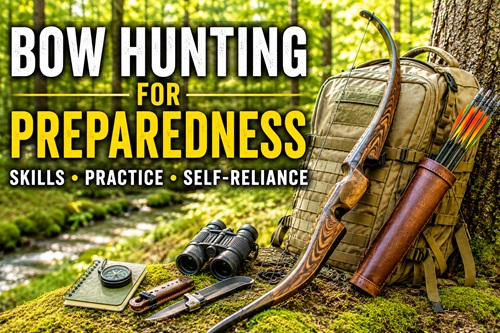
Why Every Prepper Should Learn This Skill
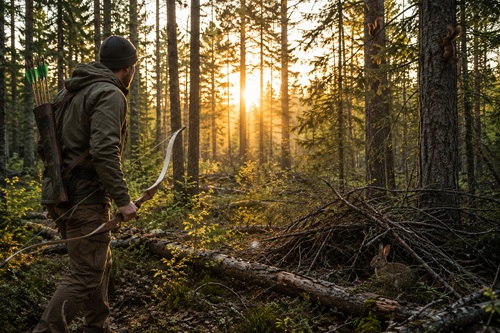
Preparedness is often associated with stocked shelves, emergency supplies, and carefully planned contingency plans. Those are all important, but they represent only one side of self-reliance. Every stored meal is eventually eaten, every battery is eventually depleted, and every piece of equipment will one day wear out. Long-term preparedness depends not only on what you have stored, but also on what you know how to do. The ability to produce or obtain food after your stored supplies begin to diminish is one of the most valuable skills you can develop.
There are many ways to obtain food from the land. Gardening produces dependable harvests but requires time, favorable weather, and suitable growing conditions. Fishing can provide an excellent source of protein where water is available, while foraging expands the variety of foods that nature provides throughout the seasons. Hunting becomes another valuable layer within this system, adding flexibility when opportunities arise. None of these methods should stand alone. Together they create a resilient food procurement strategy that is far stronger than relying on any single approach.
Bow hunting deserves special consideration because it develops much more than marksmanship. It teaches observation, patience, planning, and self-discipline. A successful hunter learns to understand wildlife, read the landscape, recognize subtle patterns, and make thoughtful decisions long before releasing an arrow. Those same abilities strengthen countless other preparedness skills, including navigation, tracking, wilderness travel, and situational awareness. In many ways, the bow simply becomes the final tool used after all of the real work has already been accomplished.
This lesson is not about replacing firearms or suggesting that hunting should become your primary food source. In most emergencies, stored food remains the safest and most dependable option. Hunting requires time, energy, practice, and favorable conditions, and even experienced hunters return home empty-handed on occasion. The prepared individual understands that hunting supplements stored food rather than replacing it. Every successful harvest extends existing supplies and increases long-term resilience without depending entirely on one method of obtaining food.
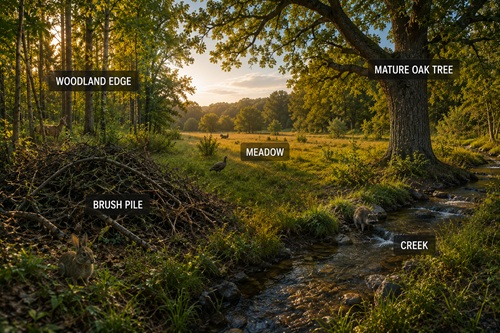
One of the greatest benefits of learning to hunt is that it changes the way you experience the outdoors. Instead of seeing only trees, fields, and trails, you begin recognizing wildlife habitat, feeding areas, travel routes, and natural sources of water. A patch of tall grass is no longer just vegetation. It may provide feeding cover for rabbits. A mature oak becomes more than a tree because it supports squirrels and countless other animals. A narrow opening through dense brush becomes a travel corridor that wildlife has likely used for generations. This growing awareness develops gradually, but once acquired it becomes a permanent skill that improves every outdoor experience.
Perhaps the most important idea to remember is that successful hunting rarely depends on a single moment. The shot itself lasts only a fraction of a second, but the opportunity is created by everything that happened beforehand. Careful scouting, understanding animal behavior, moving quietly, selecting a good position, and exercising patience all contribute far more to success than the equipment you carry. Hunters who consistently succeed are rarely the luckiest people in the woods. They are usually the ones who prepared the most thoroughly before the opportunity appeared.
Thinking Like a Hunter
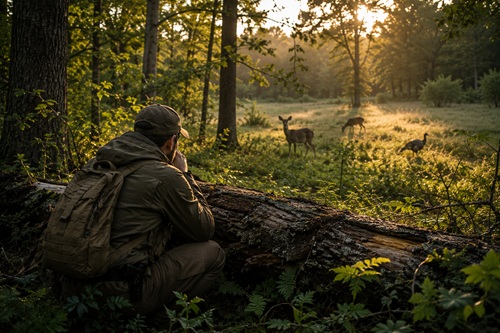
Learning to shoot accurately is important, but learning to think like a hunter is far more valuable. Small game survives because it constantly evaluates its surroundings for danger. Every rabbit, squirrel, and game bird lives under continuous pressure from predators searching for an easy meal. Their ability to notice movement, recognize unfamiliar sounds, and react quickly has been refined over countless generations. To become successful, you must begin viewing the landscape from their perspective instead of your own.
Rather than asking where animals might be hiding, ask yourself where they would feel comfortable feeding. Every decision wildlife makes revolves around balancing food with safety. Rabbits rarely wander far from protective cover because their greatest defense is reaching shelter within seconds. Squirrels spend much of their time wherever dependable food-producing trees are available, but they constantly stop to scan for danger before continuing to feed. Game birds often select areas where they can forage while remaining close to dense vegetation or nearby trees that provide immediate escape. Understanding these priorities transforms hunting from random searching into thoughtful observation.
Patience quickly becomes one of your greatest advantages. Modern life encourages speed. We drive quickly, communicate instantly, and expect rapid results. Nature follows a very different rhythm. Wildlife rarely rewards hurried movement or constant activity. Instead, animals often resume their normal routines only after the environment becomes quiet again. Hunters who move slowly and pause frequently usually observe far more than those who spend the day covering as much ground as possible. The forest often reveals its secrets only after you stop demanding immediate results.
Observation is another skill that improves with practice. During your next walk through a natural area, challenge yourself to notice details you might normally overlook. Watch how the wind moves grass in different directions. Listen for birds calling from the canopy. Notice where sunlight reaches the forest floor and where thick vegetation provides shade. These small observations may seem unrelated to hunting, but together they create a much deeper understanding of how wildlife uses the landscape. Every outing becomes an opportunity to strengthen your awareness, even if you never carry a bow.
This mindset extends well beyond hunting. The ability to remain calm, observe carefully, and make thoughtful decisions under changing conditions is valuable in every emergency. Whether you are navigating unfamiliar terrain, evaluating a campsite, or searching for water, the habits developed through hunting continue supporting your preparedness long after the bow has been put away.
Understanding Small Game Behavior
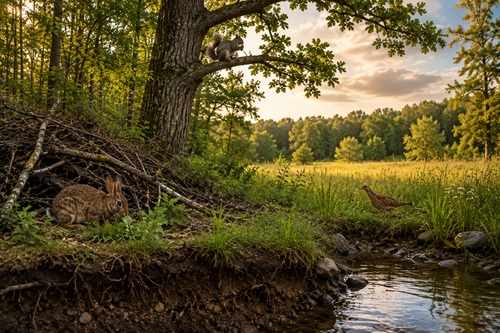
One of the greatest mistakes a new hunter can make is believing that finding game is largely a matter of luck. While chance occasionally plays a role, most successful hunts are the result of understanding how animals live from one day to the next. Wildlife is remarkably predictable once you understand what it needs to survive. Every rabbit, squirrel, and game bird spends its day solving the same problems: finding food, locating water, avoiding predators, and conserving energy. Those priorities shape nearly every movement they make, and learning to recognize those patterns gives you a tremendous advantage before you ever begin hunting.
Animals do not wander aimlessly across the landscape. They establish routines that balance food with safety. A rabbit feeding in an open meadow rarely strays far from dense brush because it depends on reaching cover within seconds if danger appears. Squirrels repeatedly visit productive nut trees while constantly scanning for hawks and other predators. Ground-feeding birds move cautiously between open feeding areas and nearby shelter, using vegetation as protection whenever they feel threatened. These habits are not random. They are survival strategies that have allowed each species to thrive despite constant danger.
This understanding changes the way you scout for game. Instead of looking for animals, begin looking for habitat that meets their daily needs. Ask yourself where food is abundant, where water is available, and where protective cover is close enough to provide security. Once you locate places that satisfy all three requirements, you have dramatically improved your chances of finding wildlife. Experienced hunters often spend more time evaluating habitat than they do actively hunting because choosing the right location is one of the most important decisions they make.
Weather also influences animal behavior in predictable ways. During hot weather, many animals become most active during the cooler hours of early morning and late evening, spending much of the afternoon resting in shaded areas. Wind affects their ability to hear approaching danger and detect scents carried through the air, often changing how confidently they move through open areas. Light rain may encourage feeding by reducing human activity, while prolonged storms often keep animals sheltered until conditions improve. Learning to consider weather before entering the field helps explain why wildlife may behave very differently from one day to the next.
Seasonal changes are equally important. Spring provides tender new vegetation for rabbits and an abundance of insects for many birds. Summer brings berries, seeds, and growing young that require constant feeding. Autumn becomes a season of preparation as squirrels gather nuts and many animals increase feeding before winter. During colder months, dependable food sources become even more valuable because calories are harder to replace. Recognizing these seasonal patterns helps you anticipate where wildlife is likely to concentrate throughout the year rather than relying on guesswork.
One of the most rewarding aspects of spending time outdoors is discovering that the landscape begins to tell a story. Areas that once appeared ordinary gradually reveal their purpose. A patch of clover becomes a feeding area. A fallen log becomes both shelter and a travel route. A line of mature oak trees becomes a dependable food source every autumn. As your understanding grows, you stop seeing random scenery and begin seeing a living system where every feature supports the wildlife around it.
Reading Animal Signs
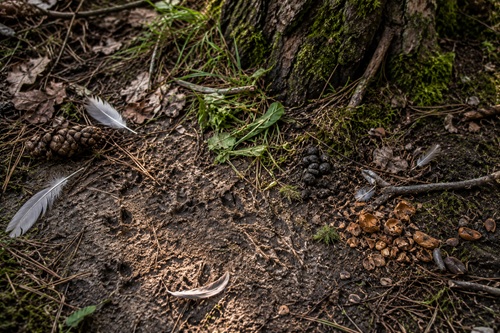
Animals constantly leave evidence of their presence, even when they remain hidden. Learning to recognize that evidence allows you to understand what has happened in an area without ever seeing the animal itself. Tracks, feeding sign, feathers, droppings, disturbed vegetation, and well-used travel routes all provide valuable information for the observant hunter. These signs often reveal far more than a brief glimpse of wildlife because they tell the story of how the area is being used over time.
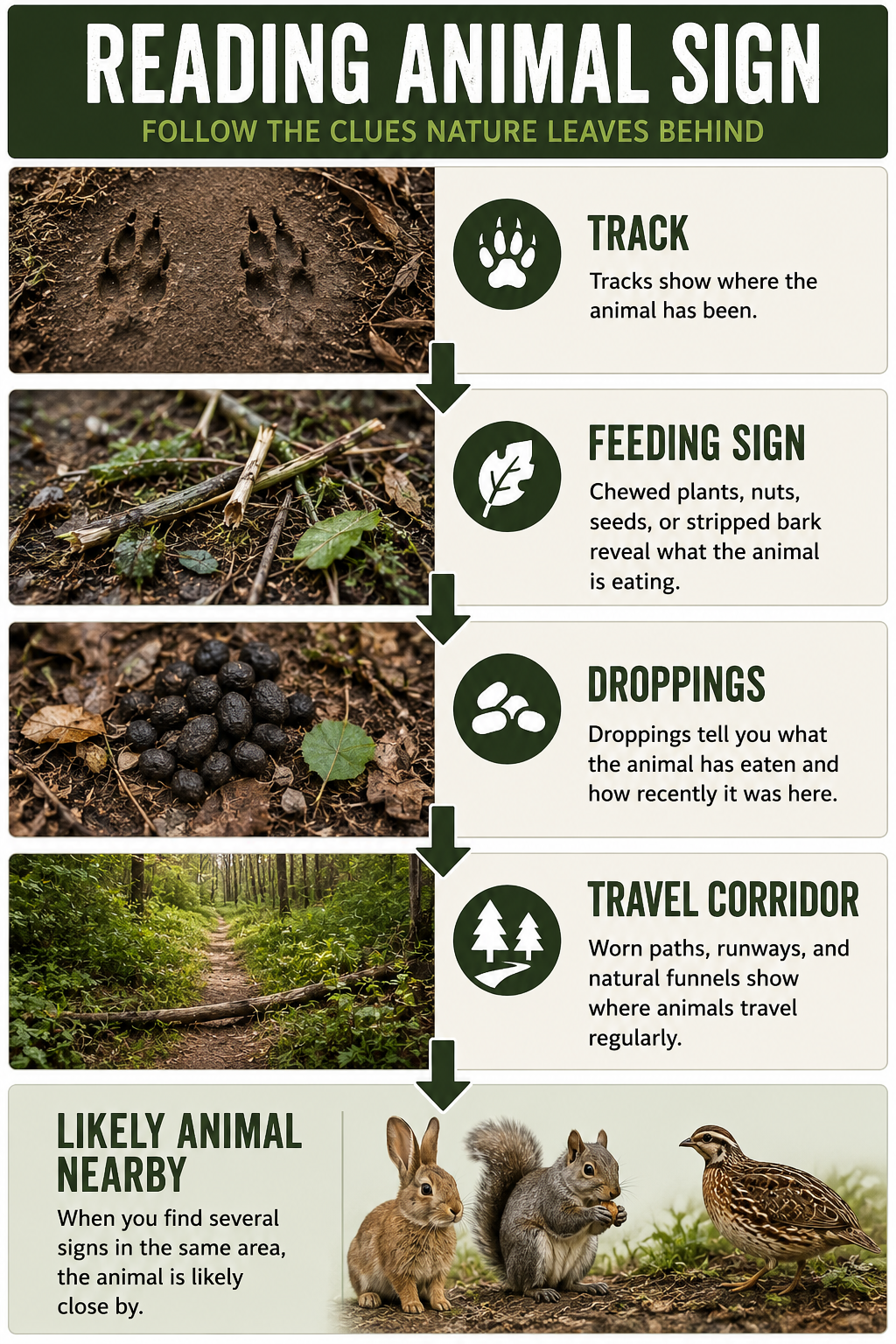
Tracks are among the easiest signs to recognize, particularly after rain or in soft soil. Fresh tracks indicate recent activity, while weathered tracks suggest movement that occurred much earlier. The direction of travel may reveal where an animal was feeding or where it sought shelter. Widely spaced tracks often indicate an animal moving quickly, while closely spaced tracks suggest slower movement associated with feeding or exploration. Instead of trying to memorize every possible footprint immediately, focus first on understanding what the tracks reveal about the animal’s behavior.
Feeding sign is another reliable indicator of productive habitat. Rabbits neatly clip grasses and young plants close to the ground, often creating feeding areas that become obvious once you know what to look for. Squirrels scatter cracked nutshells beneath productive trees, leaving evidence of repeated visits throughout the season. Ground-feeding birds scratch through leaves and loose soil while searching for insects and seeds, creating small disturbed patches that are surprisingly easy to recognize after a little practice. These feeding areas often remain active for extended periods because animals return whenever food continues to be available.
Droppings provide additional clues about recent activity. Although they should never be handled because they may carry disease, observing them from a distance helps confirm whether an area is being used regularly. Fresh droppings combined with recent tracks and feeding sign strongly suggest that wildlife remains active nearby. Older, weathered droppings may simply indicate that animals used the location sometime in the past. Looking for several different signs together creates a much clearer picture than relying on any single clue alone.
Travel corridors are among the most overlooked signs in the outdoors. Wildlife naturally follows routes that provide efficient movement while reducing exposure to predators. Narrow paths through tall grass, openings beneath fences, gaps in thick brush, and fallen logs crossing streams often become highways used repeatedly by many different species. These routes allow animals to move confidently between feeding areas, water, and shelter. Once you begin recognizing these corridors, you can predict where wildlife is likely to appear instead of simply hoping to encounter it.
Developing these observation skills takes time, but every outing becomes another lesson. Carry a small notebook and record your observations. Sketch unfamiliar tracks, note where feeding sign is found, and record weather conditions, season, and time of day. Over the months, patterns begin to emerge that are unique to your local area. This personal knowledge becomes one of your greatest preparedness resources because it is based on firsthand experience rather than information borrowed from someone else.
Choosing Practical Equipment
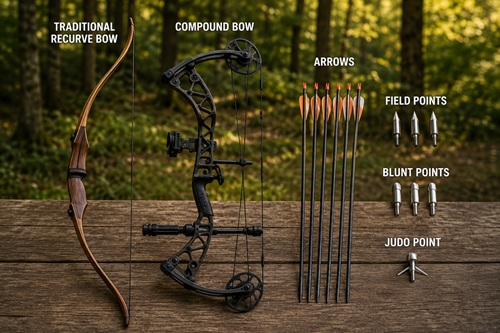
Modern archery equipment is remarkably capable, but preparedness has never been about owning the most expensive tools. It has always been about understanding your equipment, maintaining it properly, and using it confidently. The best bow is not necessarily the fastest or the newest. It is the one you know well enough to shoot accurately under real hunting conditions.
For many people, a traditional recurve or longbow offers an excellent balance between simplicity and reliability. These bows contain very few moving parts, require relatively little maintenance, and encourage good shooting habits through consistent practice. A takedown recurve provides the additional advantage of easy transport and compact storage without sacrificing performance. Compound bows are equally capable hunting tools and often make holding a full draw easier because of their cam systems, but they involve more complex components that may require specialized maintenance if damaged. Both designs are effective. The right choice depends less on technology and more on which bow you are willing to practice with consistently.
Selecting an appropriate draw weight is far more important than many beginners realize. Choosing a bow that is too powerful often results in poor shooting form, unnecessary fatigue, and inconsistent accuracy. A slightly lighter bow that can be drawn smoothly and repeatedly allows longer practice sessions and encourages proper technique. As strength and experience improve, increasing draw weight becomes much easier because solid fundamentals have already been established.
Arrows deserve the same careful attention as the bow itself. They should be matched to your equipment so they fly consistently and safely. Practice arrows fitted with field points are ideal for target shooting because they are durable and easy to retrieve. When hunting small game, many archers prefer blunt or judo-style points that reduce the chance of arrows disappearing beneath leaves or becoming buried deeply in soft ground after a missed shot. Choosing equipment that matches its intended purpose improves both safety and efficiency.
Good equipment remains dependable only when it is cared for properly. Before every practice session or hunt, inspect your bowstring for signs of wear, examine arrows for cracks or damaged fletching, and ensure everything functions exactly as expected. These simple inspections require only a few minutes but help prevent problems that are much more difficult to solve once you are deep in the field. Like every other preparedness tool, a bow should be maintained long before you need to rely on it.
Practicing Before You Hunt
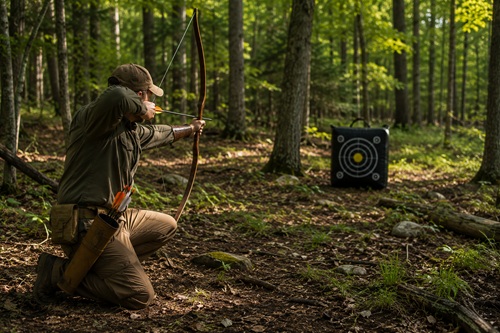
Many people believe hunting begins the day they carry a bow into the woods. In reality, successful hunting begins weeks or even months earlier through deliberate practice. Confidence in the field comes from repetition, not luck, and the time spent preparing before the season opens often determines how successful your first hunt will be. Fortunately, many of the most important hunting skills can be developed long before you ever pursue live game.
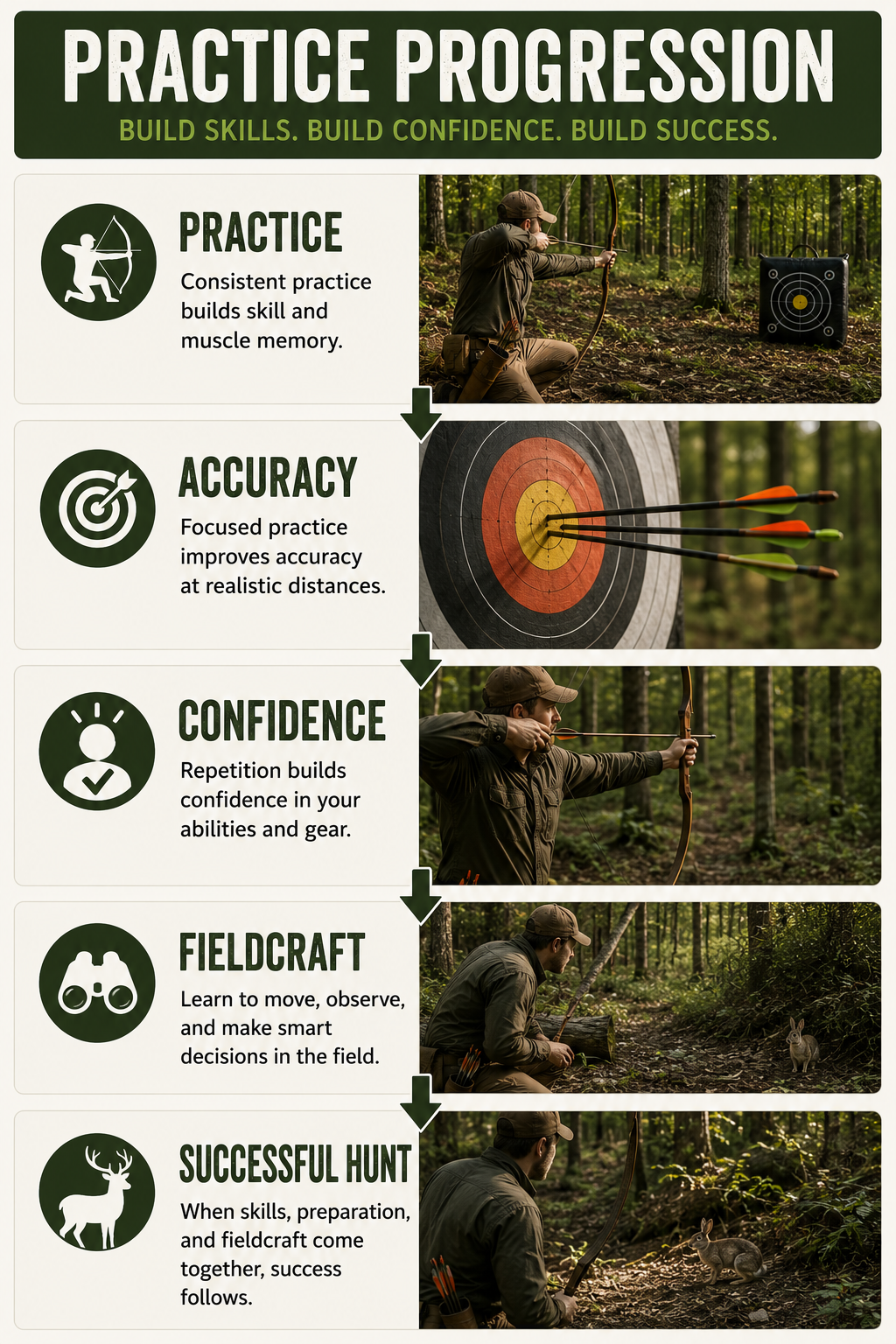
Archery practice should always begin with consistency rather than distance. Focus on building the same shooting routine every time you draw the bow. Stand comfortably, grip the bow the same way, establish a consistent anchor point, aim carefully, and release the string smoothly without rushing. These simple habits gradually become automatic through repetition. Once they no longer require conscious thought, your attention can shift toward judging distance, reading the wind, and observing the animal instead of worrying about your shooting form.
As your confidence grows, make your practice sessions more realistic. Real hunting rarely happens while standing comfortably on perfectly level ground with unlimited time to prepare a shot. Practice from kneeling positions, while sitting on the ground, or from behind natural obstacles. Learn how your body position changes your shooting and how to compensate for uneven terrain. These exercises prepare you for conditions that closely resemble those you will eventually encounter outdoors.
Distance estimation is another valuable skill that deserves regular practice. A rifle hunter may rely on optics or rangefinders, but a bow hunter benefits greatly from learning to judge distance naturally. During hikes or walks, choose a tree, rock, or stump and estimate how far away it is before pacing the distance yourself. This simple habit gradually improves your ability to judge range without relying on electronic devices. Accurate distance estimation becomes particularly valuable because even small errors can influence arrow placement at longer ranges.
Physical conditioning should not be overlooked. Hunting often involves walking across uneven ground, climbing hills, crossing fallen logs, and remaining motionless for extended periods. Good balance, flexibility, and endurance make these tasks easier while reducing fatigue that can interfere with good decision-making. You do not need to become an athlete, but maintaining reasonable fitness allows you to enjoy longer outings while remaining focused on hunting rather than becoming distracted by exhaustion.
Perhaps the most valuable practice requires no shooting at all. Spend time simply observing wildlife. Visit local parks, conservation areas, or quiet woodland trails and watch animals from a distance. Notice where they feed, how often they pause to look around, how they react to changing weather, and what causes them to become alert. These observations develop the field awareness that separates experienced hunters from beginners. The more time you spend understanding wildlife without the pressure of harvesting it, the more confident you will become when opportunities eventually arise.
Hunting Rabbits
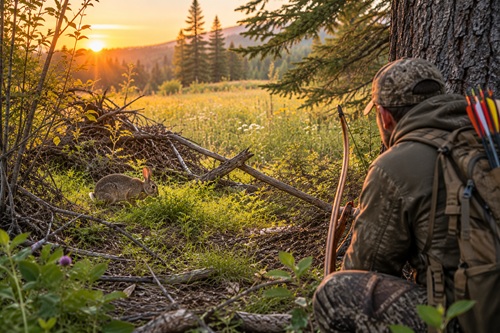
Rabbits are often considered one of the best animals for developing small game hunting skills because they are common throughout much of North America and occupy habitats that are relatively easy to identify. More importantly, they demonstrate how understanding behavior often matters more than moving quickly through the woods. A patient hunter who understands rabbit habitat will usually enjoy more opportunities than someone who spends the day covering as much ground as possible.
Healthy rabbit habitat almost always combines three essential elements: food, protective cover, and nearby escape routes. Brush piles, abandoned fence rows, woodland edges, overgrown fields, and young forest growth all provide rabbits with places to feed while remaining only a few hops from safety. These transition zones deserve careful attention because they naturally attract wildlife. Rather than walking directly into thick cover, begin by quietly observing the edges where open feeding areas meet dense vegetation. Many rabbits will reveal themselves if given enough time.
Move through rabbit habitat slowly and deliberately. Take several quiet steps, then stop completely. During each pause, study the ground ahead and allow your eyes to search naturally rather than trying to force yourself to find something. Rabbits frequently depend on camouflage instead of immediately running. What first appears to be nothing more than a clump of grass may gradually become recognizable as the outline of a rabbit once your eyes have adjusted. This is one reason experienced hunters spend so much time standing still. Wildlife often becomes visible only after the observer stops moving.
Fresh feeding sign confirms that you are investing your time wisely. Neatly clipped grass, grazed clover, young shoots cut close to the ground, and small round droppings all indicate that rabbits regularly use the area. These signs should encourage you to slow down even further because they suggest the habitat continues to provide everything the animals need. Instead of asking whether rabbits are present, ask yourself where they are most likely resting between feeding periods.
When a rabbit finally appears, avoid rushing the shot. Continue observing its behavior. Rabbits typically alternate between feeding and pausing to listen for danger. Those brief moments of stillness usually provide much better opportunities than attempting to shoot while the animal is moving. If the rabbit suddenly becomes alert or begins looking toward your position, remain completely still. Quite often it will relax if no additional movement occurs. Patience frequently creates opportunities that hurried movement immediately destroys.
If a rabbit does flee, resist the temptation to chase it. Besides wasting energy, pursuit often pushes the animal into thicker cover where another opportunity becomes unlikely. Instead, remember the direction it traveled and study the surrounding habitat. Rabbits often use familiar escape routes repeatedly because those routes have proven effective. The information gained from one encounter may lead to greater success later in the day or during a future outing.
Hunting Squirrels
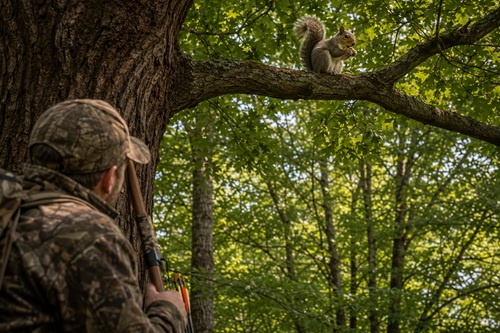
Squirrel hunting introduces a completely different set of challenges because much of the activity takes place above the ground. Beginners naturally spend most of their time looking forward while squirrels move confidently through the treetops unnoticed. Developing the habit of scanning both the ground and the canopy greatly improves your ability to locate them before they detect you.
Unlike many animals, squirrels often announce their presence before they become visible. Listen for nutshells falling through leaves, claws scratching against bark, or the steady chewing of a squirrel feeding high in the branches. Calm mornings make these sounds especially noticeable and often allow you to identify active feeding areas from surprising distances. Learning to trust your hearing as much as your eyesight becomes an important advantage in wooded environments.
Food-producing trees deserve careful attention throughout the year. Mature oaks, walnuts, beeches, hazelnuts, and other species that provide dependable food naturally attract squirrel activity. Beneath these trees you may find cracked shells, partially eaten cones, or other feeding debris scattered across the forest floor. Rather than immediately searching for squirrels, begin by studying the tree itself. Observe how the branches connect to neighboring trees because squirrels frequently travel through the canopy instead of descending to the ground.
When a squirrel notices movement, it commonly circles to the opposite side of the tree trunk while continuing to watch the perceived threat. Many inexperienced hunters instinctively move around the tree as well, creating an endless game of hide-and-seek. A much more effective approach is to remain still. Curiosity often encourages the squirrel to peek around the trunk after a short period, providing a far better opportunity than trying to outmaneuver an animal that spends its entire life climbing through trees.
Squirrel hunting also reinforces an important preparedness lesson about conserving energy. Chasing one animal from tree to tree rarely produces consistent success and quickly becomes exhausting. Identifying productive feeding areas and patiently waiting for normal wildlife activity to resume usually requires less effort while producing better results. Preparedness has always been about working smarter rather than harder, and squirrel hunting demonstrates that principle exceptionally well.
Hunting Game Birds
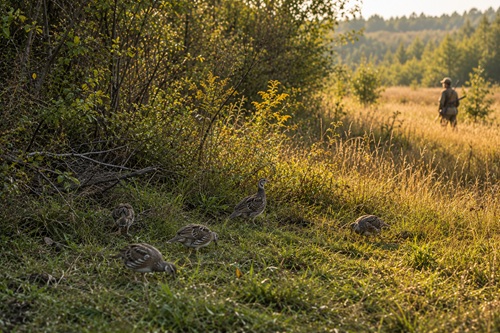
Game birds require a different approach than rabbits or squirrels because they rely heavily on keen eyesight and rapid flight for protection. Many species remain perfectly still when they first detect danger, trusting their camouflage to keep them hidden. Only when they believe a threat is too close do they suddenly burst into the air and disappear into the surrounding landscape. For an unprepared hunter, this can be startling. For someone who understands their behavior, it becomes another predictable part of the hunt.
Like all wildlife, game birds spend most of their lives balancing food with safety. Fields containing seeds and insects, grassy meadows, brushy fence lines, woodland edges, and creek bottoms often provide excellent habitat because they combine feeding opportunities with nearby escape cover. Water also plays an important role, particularly during warmer months. Rather than wandering through large areas hoping to surprise birds, concentrate on places where food, water, and protective cover naturally come together.
Early morning and late afternoon usually provide the greatest opportunities because birds become more active while feeding during the cooler parts of the day. Midday often sees them retreat into heavier cover where they are more difficult to locate. Understanding this daily rhythm helps you spend your time more effectively instead of searching unproductive habitat when birds are least active.
As you move through likely habitat, reduce your pace even further. Study the ground several meters ahead instead of focusing only on the distance. Watch for subtle movement rather than obvious shapes. A game bird may blend so perfectly into the surrounding vegetation that you notice only the slight turn of its head or the movement of a single feather. Learning to recognize these small details is one of the skills that develops only through time spent outdoors.
Birds also leave evidence of their presence. Feathers caught on shrubs, scratch marks where they have searched for insects, droppings beneath roosting areas, and narrow openings through tall grass all suggest regular activity. One sign by itself may not mean much, but several together often identify habitat worth exploring more carefully. The same observation skills you developed while looking for rabbits and squirrels apply equally well here because every animal leaves clues for those willing to notice them.
Whether you pursue rabbits, squirrels, or game birds, the objective remains the same. Do not rush to harvest the first animal you see. Allow yourself to become a student of wildlife first. Every successful hunt begins with understanding the animal long before it begins with drawing the bow.
Making Ethical Hunting Decisions
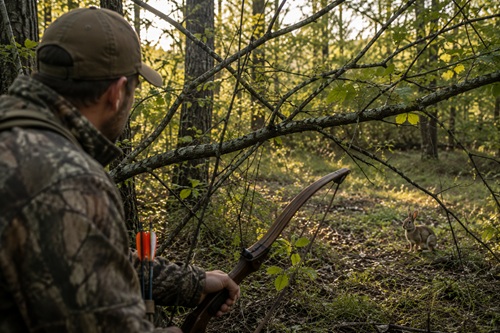
One of the greatest strengths a hunter can develop is the discipline to lower the bow instead of releasing an arrow. Although this may seem like an unusual lesson in a chapter about hunting, it is one of the most important. Responsible hunting is built on judgment rather than opportunity. Not every opportunity deserves to become a shot.
Before drawing your bow, evaluate the entire situation. Is the animal standing still? Do you have a clear view without branches, tall grass, or other obstacles interfering with the arrow’s path? Is the distance well within the range you have practiced consistently? Are you standing securely with good footing? If any part of the situation creates doubt, waiting is often the wisest decision. Another opportunity will almost always come, but a poor decision cannot be undone once the arrow has been released.
This discipline becomes even more important during an emergency. Hunger can encourage people to take unnecessary risks, convincing them that any opportunity is better than none at all. In reality, poor decisions often waste valuable energy, damage equipment, or result in losing both the animal and the arrow. Good preparedness has always been about thoughtful decision-making under pressure, and hunting should reflect that same philosophy.
Ethical hunting also means respecting the wildlife that supports your preparedness. Harvest only what you genuinely need, follow all applicable laws and regulations, and make every reasonable effort to recover harvested game. Respect for wildlife ensures healthy populations for future generations while reinforcing the responsibility that comes with obtaining food directly from nature.
Recovering Your Harvest
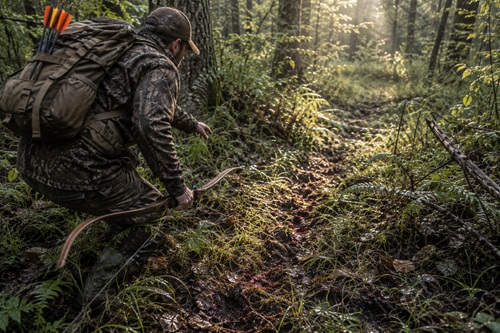
The hunt does not end when the arrow leaves the bow. In many ways, one of the most important stages begins immediately afterward. Recovering game successfully requires patience, careful observation, and attention to detail. Rushing this stage often creates unnecessary confusion that could have been avoided by remaining calm for just a few moments longer.
After taking a shot, continue watching the animal for as long as possible. Observe exactly where it was standing, the direction it traveled, and any distinctive landmarks nearby. A fallen log, an unusually shaped tree, or a large rock may become valuable reference points once you begin walking toward the area. Many hunters lose valuable time simply because they remember seeing the animal but fail to remember where it disappeared.
Approach the location carefully while continuing to observe the ground ahead. Disturbed vegetation, fresh tracks, broken stems, or other subtle signs may help confirm the animal’s path if additional tracking becomes necessary. Avoid walking directly over these signs whenever possible because they provide valuable information that may be needed if the recovery becomes more difficult than expected.
Making every reasonable effort to recover harvested game reflects good stewardship as well as good preparedness. Every animal represents valuable food obtained through time, effort, and practice. Allowing that resource to go to waste benefits no one and undermines the responsibility that comes with hunting. Respect for both the animal and the food it provides should guide every decision after the shot has been taken.
Field Dressing and Food Safety
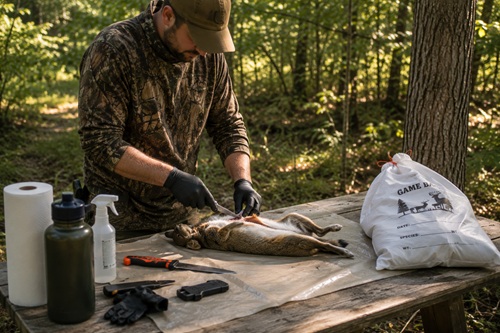
Harvesting an animal is only the beginning of obtaining safe food. Proper care afterward is equally important because fresh meat begins changing immediately, particularly during warm weather. Learning to process game correctly helps preserve quality while reducing the risk of spoilage or contamination.
Carry a sharp knife that is kept clean and reserved for field use whenever possible. Work carefully and avoid contaminating the meat during processing. Once field dressing has been completed, cool the carcass as quickly as practical. Heat encourages bacterial growth, making prompt cooling one of the simplest and most effective ways to preserve food quality.
Take a few moments to examine every harvested animal before preparing it for consumption. Healthy wildlife generally appears well nourished and free of obvious disease. Animals showing unusual behavior before harvest, severe parasite infestations, abnormal growths, or signs of illness deserve careful consideration. During an emergency it may be tempting to ignore these warning signs, but protecting your health remains just as important as obtaining food. An illness caused by contaminated meat can quickly become a much greater problem than missing a single meal.
If you have never processed small game before, seek instruction long before an emergency occurs. Hunter education courses, experienced mentors, and wildlife agencies often provide valuable guidance that cannot be learned from reading alone. Practical experience builds confidence while helping you develop safe habits that remain with you throughout your life as a hunter.
Common Mistakes New Hunters Make
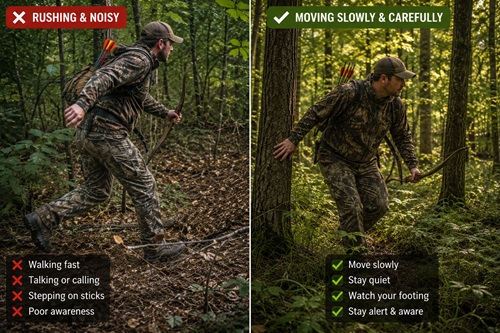
Every experienced hunter has stories about missed opportunities, poor decisions, and days when nothing seemed to go as planned. Those experiences are not signs of failure. They are part of the learning process. The difference between a beginner and an experienced hunter is not that one makes mistakes while the other does not. The difference is that experienced hunters recognize those mistakes, learn from them, and avoid repeating them. Understanding the most common errors before you enter the field can shorten the learning curve considerably.
One of the most frequent mistakes is moving too quickly. Excitement often convinces new hunters that covering more ground increases the chance of finding game. In reality, hurried movement usually has the opposite effect. Wildlife notices continuous movement long before it recognizes shape or color, and animals that sense danger simply move deeper into cover without ever revealing themselves. Slowing your pace allows the forest to return to its normal rhythm and gives your eyes time to notice the subtle movements that often reveal hidden wildlife.
Another common mistake is concentrating so intensely on finding animals that the hunter ignores everything else. Wildlife leaves evidence throughout the landscape. Tracks, feeding sign, feathers, droppings, broken vegetation, and well-used travel corridors all tell a story about what has happened in an area. Hunters who focus only on spotting animals often overlook the clues that would have guided them directly to productive habitat. Learning to read the landscape first usually produces better results than searching blindly for game.
Many beginners also expect equipment to compensate for limited experience. Purchasing a more expensive bow or additional accessories may improve comfort or convenience, but no piece of equipment can replace fieldcraft. Understanding wind direction, choosing a quiet approach, recognizing productive habitat, and exercising patience contribute far more to success than the latest technology. Equipment should support skill, not replace it.
Overestimating shooting ability creates another predictable problem. Consistently hitting a practice target does not automatically prepare someone for hunting. Uneven ground, changing light, awkward shooting positions, and the excitement of seeing live game all make accurate shooting more difficult. Honest self-evaluation is one of the most valuable traits a hunter can develop. Knowing your effective range and respecting your limitations leads to better decisions and more ethical hunting.
Finally, many people become discouraged if early hunts are unsuccessful. This is perhaps the easiest mistake to avoid because every outing provides valuable experience whether or not an animal is harvested. A day spent learning to recognize tracks, studying rabbit habitat, or observing squirrel behavior is never wasted. Those experiences become the foundation upon which future success is built. Every skilled hunter reached that level one lesson at a time.
Integrating Bow Hunting Into Your Preparedness Plan
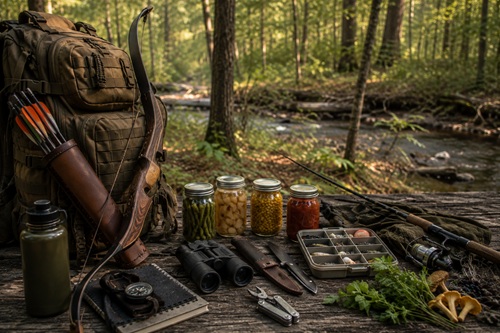
Bow hunting should never be viewed as an isolated survival skill. Like every aspect of preparedness, it becomes far more valuable when combined with other capabilities. A resilient preparedness plan resembles a network rather than a single solution. Each skill strengthens the others, creating flexibility that no individual skill can provide by itself.
Consider a prolonged emergency that extends well beyond your stored food supply. A productive garden begins providing vegetables throughout the growing season. Fishing supplies additional protein when conditions allow. Seasonal foraging increases food variety while teaching you more about local plant life. Food preservation ensures that temporary abundance can be stored for future use. Bow hunting becomes another dependable option within this larger system, allowing you to supplement existing food rather than relying exclusively on any one source. If one method becomes less productive because of weather, seasonal changes, or local conditions, other options remain available.
The benefits extend beyond food procurement. Tracking wildlife improves observation skills that also strengthen navigation. Learning to read wind direction helps with camp selection and fire management. Time spent quietly observing animals develops patience and situational awareness that prove useful in countless outdoor situations. Even physical conditioning improves because hunting requires balance, endurance, and steady movement over uneven terrain. Every skill supports another, gradually creating a well-rounded level of self-reliance.
Perhaps the greatest lesson hunting teaches is that success depends far more on preparation than reaction. Long before an opportunity presents itself, successful hunters have already studied the area, understood the habitat, planned their approach, and prepared their equipment. The same principle applies throughout preparedness. Emergencies reward those who prepare before problems appear rather than those who react after circumstances become difficult.
Field Exercise
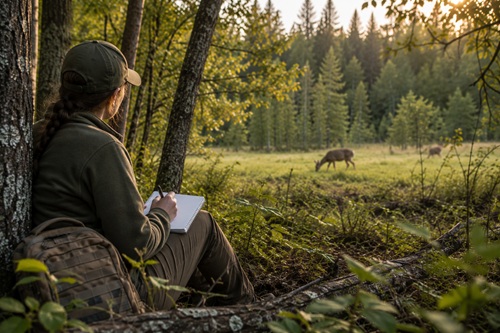
Knowledge becomes valuable only after it has been practiced. Reading about hunting develops understanding, but experience develops confidence. Before carrying a bow into the field, dedicate several outings to observation alone. Visit a nearby forest, meadow, conservation area, or other location where wildlife is commonly found and leave your hunting equipment at home.
Walk slowly through the area while paying close attention to the landscape. Look for evidence of food, water, and protective cover. Identify rabbit feeding areas, squirrel food sources, and likely bird habitat. Search for tracks, droppings, feathers, feeding sign, and travel corridors. Stop frequently and remain completely still for several minutes at a time. Listen carefully and watch how the environment changes once your movement stops.
Record your observations in a notebook. Include the date, weather conditions, wind direction, season, and time of day along with any wildlife or animal sign you discovered. Return to the same locations throughout the year and compare your notes. You will gradually begin recognizing seasonal patterns that are unique to your area. This personal knowledge becomes one of the most valuable resources you possess because it is built through firsthand experience rather than secondhand information.
Once you become comfortable locating wildlife consistently without carrying a bow, begin introducing archery into your practice. The objective is not to rush toward harvesting game. The objective is to combine sound fieldcraft with confident shooting so that each skill supports the other naturally.
Preparedness Action Plan
Learning to bow hunt is a long-term investment rather than a weekend project. Begin by becoming familiar with the wildlife species found in your region and understanding the hunting regulations that apply to each. Select dependable equipment that matches your experience and commit to practicing regularly until accurate shooting becomes second nature. Spend just as much time observing wildlife as you do practicing with your bow, because understanding animal behavior will contribute more to your success than equipment alone.
Continue expanding your overall preparedness by developing complementary food procurement skills. A productive garden, fishing knowledge, seasonal foraging, food preservation, and hunting all strengthen one another. Together they create a resilient food strategy that reduces dependence on stored supplies while increasing your ability to adapt to changing conditions.
Most importantly, practice consistently before you ever need the skill. Confidence grows through repetition, and preparedness is built long before emergencies occur. Every hour invested today becomes experience you can rely upon tomorrow.
Skills Learned
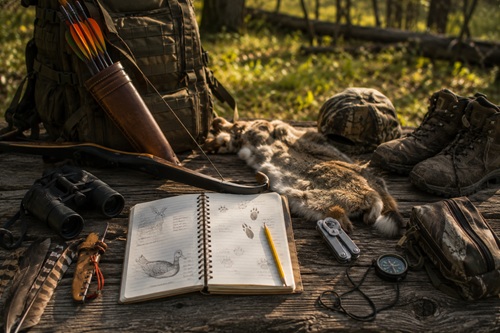
After completing this lesson, you should understand how bow hunting fits into a comprehensive preparedness plan, why understanding animal behavior is more important than simply locating game, how to recognize productive habitat through tracks and other animal sign, how to select reliable equipment, how to practice effectively before hunting, how to pursue rabbits, squirrels, and game birds responsibly, how to make ethical decisions in the field, how to recover and process harvested game safely, and how hunting complements the many other skills that contribute to long-term self-reliance.
More importantly, you should recognize that successful hunting is built upon observation, judgment, patience, and continual practice. Those qualities strengthen far more than your ability to harvest food. They improve every outdoor skill by teaching you to notice details, think carefully before acting, and understand the natural world on a deeper level.
Final Thoughts
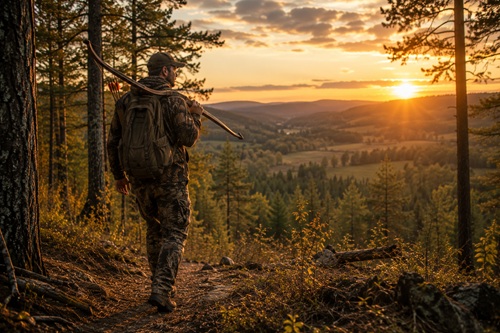
Learning to bow hunt is not simply about becoming proficient with a traditional weapon. It is about developing a deeper understanding of the outdoors and your place within it. Long before an arrow is released, a successful hunter has already observed the wind, identified feeding sign, recognized travel corridors, evaluated the terrain, and decided whether the opportunity is worth pursuing. The bow is only the final tool used to complete a process that began with careful observation and thoughtful planning.
Those same habits benefit every aspect of preparedness. They teach you to slow down instead of rushing, to observe instead of assuming, and to make informed decisions rather than reacting impulsively. Whether you are building a fire, navigating unfamiliar country, selecting a campsite, or searching for food, the ability to notice what others overlook often becomes your greatest advantage.
Even if you never rely on bow hunting to put food on the table, the skills you develop while learning it will continue serving you throughout your life. Every morning spent quietly observing wildlife, every trail explored, and every lesson learned outdoors builds confidence that cannot be purchased or stored on a shelf. It is earned through experience, strengthened through practice, and carried with you wherever your preparedness journey leads.
Preparedness is built one skill at a time. Bow hunting is one of those skills. Learn it responsibly, practice it regularly, and allow it to deepen your understanding of the natural world. In doing so, you will gain far more than the ability to harvest small game – you will become a more capable, more observant, and more self-reliant outdoorsman.
© Prepping Communities. This content is for informational purposes only and not professional advice. Use at your own risk.
Terms | Privacy | Guidelines