
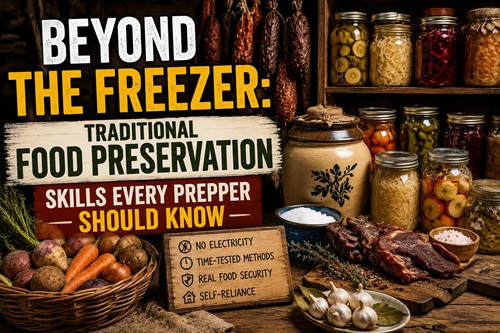
Most people don’t think much about food preservation until something stops working.
Maybe the power goes out during a winter storm.
Maybe a freezer fails while you’re away for the weekend.
Maybe a wildfire, hurricane, ice storm, or other emergency disrupts electricity for days longer than expected.
Suddenly, food that seemed secure yesterday is at risk of being lost.
For many families, a freezer contains hundreds or even thousands of dollars worth of meat, vegetables, prepared meals, and other supplies. During a prolonged outage, that investment can disappear surprisingly quickly.
For most of human history, people faced this challenge every year.
There were no refrigerators.
No freezers.
No backup generators.
No freeze dryers.
Yet families successfully preserved food through long winters, poor harvests, wars, droughts, and other hardships.
They relied on knowledge, experience, and techniques that worked without electricity.
Many of those methods remain useful today.
Preparedness is not about rejecting modern technology. Refrigerators and freezers are valuable tools. The goal is simply to avoid depending entirely on a single system.
The more ways you can preserve food, the more resilient your household becomes.
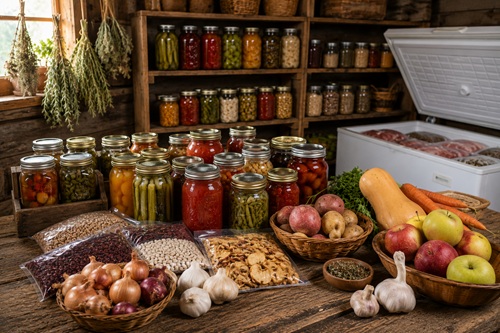 Why Food Preservation Matters
Food storage and food preservation are often discussed as if they are the same thing.
They are not.
Food storage focuses on keeping food available.
Food preservation focuses on extending how long food remains usable.
A well-stocked pantry is important.
A freezer full of food is valuable.
But if you understand how to preserve food using multiple methods, you gain flexibility that can be difficult to achieve through storage alone.
Every additional preservation skill becomes another layer of preparedness.
Salt: One of Humanity’s Oldest Preservatives
Long before refrigeration, salt was one of the most important resources a household could possess.
Salt works by drawing moisture from food and creating conditions that slow bacterial growth.
Throughout history, people preserved:
- Fish
- Pork
- Beef
- Wild game
- Various cured meats
Many traditional cultures depended on salted foods to survive long winters and extended travel.
Even today, understanding the basics of salt curing provides another option for preserving protein when refrigeration is unavailable.
Drying and Dehydration
Removing moisture is one of the simplest and most effective preservation methods.
Without moisture, many microorganisms struggle to survive.
People have been drying food for thousands of years using sunlight, wind, low heat, and natural airflow.
Foods commonly preserved through drying include:
- Fruits
- Vegetables
- Herbs
- Mushrooms
- Meat
Properly dried food is lightweight, compact, and often stores exceptionally well.
Modern dehydrators make the process easier, but the underlying principle remains unchanged.
Smoking Food
Smoking combines preservation with flavor.
The drying effect of smoke and the compounds produced during the smoking process help slow spoilage and extend storage life.
Historically, smoking was widely used for:
- Fish
- Ham
- Bacon
- Sausage
- Wild game
While smoking alone is not a complete preservation solution in every situation, it remains an important skill for anyone interested in traditional food preservation.
 Fermentation
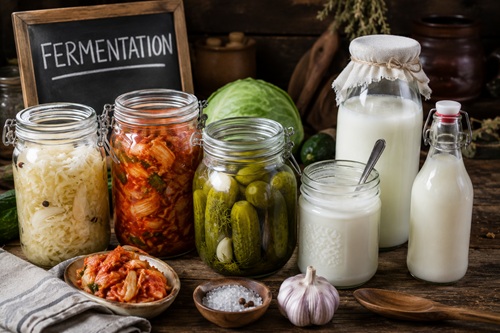
Fermentation may be one of the most overlooked preservation methods available today.
Beneficial bacteria create conditions that discourage spoilage while transforming food into something that can often last much longer than its fresh counterpart.
Examples include:
- Sauerkraut
- Kimchi
- Pickles
- Yogurt
- Kefir
Fermentation requires relatively little equipment and can often be practiced using common household items.
For preppers and homesteaders, it is one of the easiest traditional preservation skills to begin learning.
Root Cellaring
For generations, root cellars served as natural refrigerators.
By taking advantage of stable underground temperatures, families could preserve large quantities of produce without electricity.
Common root cellar foods include:
- Potatoes
- Carrots
- Beets
- Turnips
- Apples
- Onions
Even households without a traditional root cellar may be able to create cool storage areas in basements, crawl spaces, or specially designed storage structures.
Preserving Food with Fat
Before refrigeration became common, cooked meats were often protected beneath layers of rendered animal fat.
The hardened fat helped reduce exposure to air and moisture.
This technique was used for various meats and was particularly useful when dealing with larger harvests of game or livestock.
In many traditional households, nothing was wasted.
The preserved meat provided future meals while the rendered fat remained useful for cooking and other household tasks.
 Evaporative Cooling
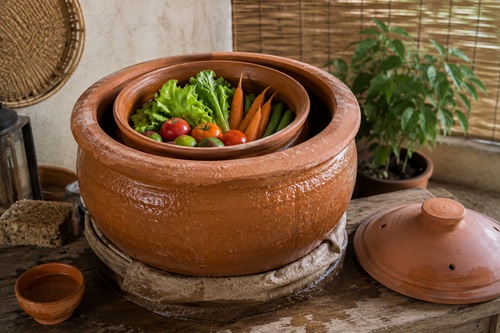
One of the most fascinating non-electric preservation methods relies on a simple principle: evaporation removes heat.
Clay pot cooling systems have been used in hot climates for centuries.
When water evaporates from the outer surface of a porous container, temperatures inside the container can drop significantly.
While evaporative cooling cannot replace refrigeration, it can help extend the life of fruits, vegetables, and other perishables in suitable environments.
Sometimes the simplest solutions are remarkably effective.
Building Redundancy Into Your Food Storage Plan
One of the most important preparedness lessons is avoiding single points of failure.
A freezer is excellent.
A refrigerator is excellent.
A freeze dryer is excellent.
But what happens if any of those systems stop working?
The most resilient households combine multiple preservation methods.
They may freeze food.
They may can food.
They may dehydrate produce.
They may ferment vegetables.
They may maintain root cellar storage.
Each method strengthens the overall system.
If one method becomes unavailable, others remain.
Start Small
You do not need to master every preservation technique immediately.
In fact, trying to learn everything at once can become overwhelming.
Start with a single skill.
Try drying herbs from your garden.
Learn how to ferment vegetables.
Experiment with root cellar storage.
Practice canning.
Gain confidence through experience.
Over time, those small skills accumulate into something much larger.
Preparedness is rarely built through one large purchase.
More often, it is built through years of learning, practicing, and improving.
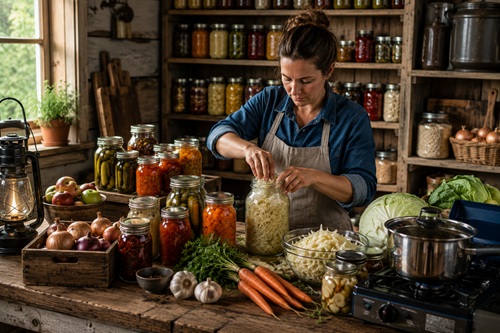 More Than Food Preservation
Traditional preservation methods teach more than food storage.
They teach resourcefulness.
They teach patience.
They teach self-reliance.
Most importantly, they remind us that people successfully preserved food long before modern conveniences existed.
Modern equipment remains valuable and should absolutely be used when available.
But knowledge provides a different kind of security.
Equipment can break.
Power can fail.
Supplies can become difficult to obtain.
Skills stay with you.
The families who successfully navigate disruptions are rarely the ones with the largest stockpiles alone.
They are often the ones who understand how to adapt when conditions change.
Food preservation is ultimately about creating options.
And in preparedness, having options is one of the most valuable resources you can possess.
© Prepping Communities. This content is for informational purposes only and not professional advice. Use at your own risk.
Terms | Privacy | Guidelines