
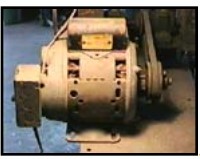
An Easy to Build and Operate Induction Generator is a practical guide that explains how ordinary squirrel-cage AC motors can be converted into electrical generators with minimal modification. The author demonstrates that many motors commonly found in washing machines, dryers, water pumps, and other household appliances can generate electricity when driven above their rated operating speed and connected to the proper capacitors. The guide focuses on simplicity, low cost, and the use of readily available surplus or salvaged equipment.
The publication explains the basic operating principle of an induction generator. By connecting run capacitors across the motor leads and spinning the motor slightly faster than its nameplate speed, residual magnetism in the rotor allows the motor to generate AC power. The author highlights several advantages, including the lack of brushes, low maintenance requirements, clean sine-wave output, minimal radio-frequency interference, and inherent overload protection. The guide also discusses limitations such as voltage regulation challenges and difficulty starting other motors from the generator output.
A detailed example is provided using a one-horsepower water-pump motor. The author describes capacitor sizing, wiring arrangements, operating speeds, load testing, and expected performance. In the documented test setup, the converted generator reportedly produced approximately 125 volts AC at no load and powered roughly 950–1050 watts of lighting load while maintaining acceptable voltage levels. Numerous photographs and diagrams illustrate the motor, capacitor bank, engine drive system, and wiring arrangement used in the project.
The later sections discuss practical considerations such as gasoline engine selection, fuel consumption, ignition noise suppression, generator maintenance, and long-duration field testing. The author reports successful use of the generator during amateur radio field-day operations where it powered equipment for extended periods. Overall, the guide serves as an introduction to small-scale induction generators for hobbyists, experimenters, off-grid enthusiasts, and individuals interested in alternative electrical generation methods.
© Prepping Communities. This content is for informational purposes only and not professional advice. Use at your own risk.
Terms | Privacy | Guidelines