
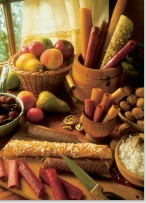
American Harvest Dehydrated Food Cookbook is a comprehensive guide to food dehydration that teaches readers how to preserve fruits, vegetables, meats, herbs, and prepared foods using a food dehydrator. Designed as both an instructional manual and recipe book, the guide explains the fundamentals of dehydration including food preparation, drying temperatures, drying times, packaging, storage, and rehydration methods. The cookbook emphasizes that dehydration is one of the oldest and most efficient methods of food preservation, allowing users to create lightweight, shelf-stable foods while maintaining much of the original flavor and nutrition. It repeatedly stresses the importance of proper drying techniques, moisture control, and airtight storage to maximize shelf life and food quality.
Large sections of the book focus on drying fruits and vegetables, including detailed preparation instructions, blanching methods, drying temperatures, and storage recommendations. The guide explains how fruits naturally dehydrate well due to their high sugar and acid content, while vegetables require additional care because of their lower acidity and shorter shelf life. Numerous charts provide recommended preparation methods, drying times, and suggested uses for foods such as apples, bananas, grapes, tomatoes, carrots, onions, potatoes, peppers, peas, and mushrooms. The cookbook also covers advanced techniques such as fruit leather preparation, pre-treatment methods to reduce browning, syrup blanching, and making tomato powders and sauces from dehydrated produce.
Another major section covers drying jerky, fish, herbs, and spices. The cookbook explains how lean meats are best for jerky due to reduced fat content and provides safety recommendations for drying beef, venison, poultry, and fish. Recipes for marinades and seasoning mixes are included alongside instructions for cutting meat properly, maintaining safe drying temperatures, and preventing spoilage during storage. The herb section explains harvesting methods, ideal drying temperatures for preserving aromatic oils, and how to properly package and store herbs for maximum flavor retention. Detailed advice is provided for preserving flavor, avoiding moisture buildup, and extending storage life through cool, dark storage conditions.
In addition to preservation techniques, the cookbook contains a wide variety of recipes and practical applications for dehydrated foods, including soups, sauces, salads, desserts, fruit leathers, snacks, condiments, granola, trail foods, and emergency food storage ideas. The guide repeatedly highlights the usefulness of dehydrated foods for camping, backpacking, preparedness, homesteading, and year-round food storage. Overall, the book serves as both a beginner-friendly introduction to food dehydration and a practical long-term food preservation handbook for gardeners, homesteaders, survivalists, and home cooks.
© Prepping Communities. This content is for informational purposes only and not professional advice. Use at your own risk.
Terms | Privacy | Guidelines