
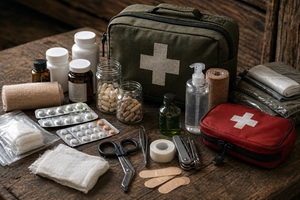
A field-ready, systems-level manual for austere care and extended emergencies
1) Purpose & Scope
This guide is built for advanced preppers who want to bridge the gap between basic first aid and prolonged, low-resource care. It focuses on:
- Preventing infection (the #1 lifesaver)
- Recognizing when antibiotics are actually needed
- Using antibiotics safely and effectively
- Managing wounds and illness when professional care is delayed
Important: This is educational. Misuse of antibiotics can cause harm and resistance. Follow local laws and seek professional care whenever possible.
2) The Prepper Medical Mindset
In a crisis, survival medicine follows a hierarchy:
- Prevention (sanitation, hygiene, clean water)
- Mechanical care (cleaning, closing, draining)
- Supportive care (hydration, nutrition, rest)
- Medications (used correctly, not reflexively)
Most infections are stopped at steps 1–2. Antibiotics are a tool—not a substitute for proper wound care.
3) Infection Basics (Why This Matters)
Common pathogens:
- Bacteria: Staph, Strep, E. coli (antibiotics can help)
- Viruses: Flu, colds (antibiotics do NOT work)
- Fungi: Yeast, mold (need antifungals)
Key signs of bacterial infection:
- Increasing redness, warmth, swelling
- Pus or foul drainage
- Fever, chills
- Red streaking (lymphangitis)
- Worsening pain after initial improvement
4) Antibiotic Fundamentals
- Antibiotics target specific bacteria, not all infections
- Incorrect use → resistance, treatment failure, worse outcomes
- Always aim for:
- Right drug
- Right dose
- Right duration
5) Common Antibiotics (High-Level Field Overview)
Broad categories (examples)
- Penicillins (e.g., Amoxicillin)
Skin, respiratory, some dental infections - Cephalosporins (e.g., Cephalexin)
Skin infections, urinary infections - Macrolides (e.g., Azithromycin)
Respiratory infections, some atypical bacteria - Tetracyclines (e.g., Doxycycline)
Tick-borne illness, some skin infections - Fluoroquinolones (e.g., Ciprofloxacin)
Urinary, some GI infections (use cautiously)
Advanced takeaway: No single antibiotic covers everything. Know what you’re treating before choosing.
6) When Antibiotics ARE Appropriate
Use when there is clear evidence of bacterial infection, such as:
- Infected wounds with pus and spreading redness
- Pneumonia (bacterial suspected)
- Severe urinary tract infection
- Dental abscess
- Certain gastrointestinal infections
7) When NOT to Use Antibiotics
Avoid for:
- Viral illnesses (cold, flu)
- Minor clean wounds without infection
- Non-infected burns
- “Just in case” use
8) Core First Aid Principles (Advanced)
A. Scene Safety & Assessment
- Ensure safety (no secondary injury)
- Primary survey: Airway, Breathing, Circulation
- Control bleeding immediately
B. Wound Cleaning (Critical Step)
Example protocol:
- Wash hands / gloves if available
- Irrigate wound with clean water or saline (high volume)
- Remove debris (sterile tools if possible)
- Apply antiseptic (iodine/chlorhexidine)
Most infections are prevented here—not with antibiotics.
9) Wound Management (Advanced)
Clean vs Dirty Wounds
- Clean: Close early (sutures, strips)
- Dirty: Leave open, allow drainage
Closure Methods
- Steri-strips
- Sutures (advanced skill)
- Staples (if trained)
Rule: If unsure → do not close (traps infection)
10) Example: Deep Laceration
Scenario: Knife cut in field
Steps:
- Stop bleeding (pressure)
- Irrigate thoroughly
- Assess depth and contamination
- Leave open if dirty
- Dress and monitor daily
- Only consider antibiotics if infection develops
11) Burns Management
Types:
- 1st degree: red, no blister
- 2nd degree: blisters
- 3rd degree: full thickness (medical emergency)
Treatment:
- Cool with clean water (not ice)
- Cover with sterile dressing
- Avoid breaking blisters
- Watch for infection
Antibiotics: Not routine unless infection appears
12) Infection Progression (Know the Danger)
- Local infection → cellulitis
- Cellulitis → lymphangitis (red streaks)
- Systemic → sepsis (life-threatening)
Sepsis warning signs:
- High fever or very low temp
- Confusion
- Rapid heart rate
- Low blood pressure
13) Example: Infected Wound Progression
Day 1: Clean cut
Day 3: Redness + warmth
Day 5: Pus + swelling
Action:
- Open wound if sealed
- Drain pus
- Clean aggressively
- Consider antibiotics
14) Dental Infections (Common in Collapse)
Signs:
- Severe tooth pain
- Swelling in jaw
- Fever
Management:
- Drain abscess if possible
- Saltwater rinses
- Pain control
- Antibiotics often required
15) Respiratory Infections
Viral (most common):
- Rest, fluids, support
Bacterial:
- Persistent fever
- Productive cough (yellow/green)
- Chest pain
Antibiotics may be appropriate in bacterial cases
16) Gastrointestinal Infections
- Hydration is priority
- Electrolytes critical
- Antibiotics only in severe bacterial cases
17) Urinary Tract Infections
Signs:
- Burning urination
- Frequency
- Back pain (serious)
Antibiotics often required if confirmed
18) Antibiotic Storage (Prepper Critical)
- Cool, dry, dark location
- Rotate stock
- Watch expiration (some degrade faster)
19) Building a Medical Kit (Advanced)
Core:
- Sterile gauze, bandages
- Irrigation syringe
- Antiseptics
- Gloves, masks
- Sutures (if trained)
Medications:
- Pain control (acetaminophen, ibuprofen)
- Antihistamines
- Electrolytes
Optional (advanced planning):
- Antibiotics (where legal and prescribed)
20) Water & Sanitation (Most Important Layer)
- Boil or filter water
- Hand hygiene
- Waste management
Dirty environment = infection risk skyrockets
21) Herbal & Traditional Adjuncts (Support Only)
- Honey (wound dressing)
- Garlic (mild antimicrobial)
- Willow bark (pain relief)
These support—not replace—proper care
22) Field Hygiene Protocol
- Clean hands before/after care
- Separate clean vs dirty tools
- Disinfect surfaces
23) Training Matters
Advanced preppers should consider:
- Wilderness First Responder (WFR)
- Tactical Combat Casualty Care (TCCC)
- Basic suturing training
24) Documentation (Often Overlooked)
Track:
- Injury date
- Symptoms
- Treatments
- Medication timing
Helps avoid mistakes and track progression
25) Risk Management
- Don’t over-treat
- Don’t under-treat
- Monitor closely
26) Ethical Considerations
- Treat responsibly
- Don’t distribute meds improperly
- Avoid causing harm through misuse
27) Red Flags (Seek Help ASAP)
- Rapid swelling
- High fever
- Confusion
- Uncontrolled bleeding
- Signs of sepsis
28) Long-Term Survival Strategy
- Focus on prevention systems:
- Clean water
- Food safety
- Shelter hygiene
29) Real Prepper Insight
Most people think:
“I need antibiotics to survive.”
Reality:
You need sanitation, clean wounds, and good decisions.
Antibiotics are the backup—not the plan.
30) Final Takeaway
If you remember nothing else:
- Clean wounds aggressively
- Don’t close dirty wounds
- Watch for infection early
- Use antibiotics only when clearly needed
- Prevention beats treatment every time
© Prepping Communities. This content is for informational purposes only and not professional advice. Use at your own risk.
Terms | Privacy | Guidelines