
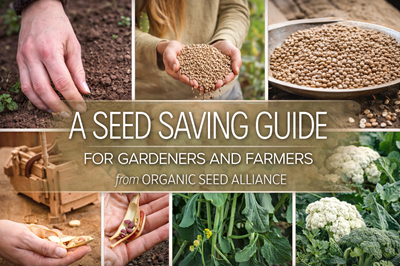
This PDF, A Seed Saving Guide for Gardeners and Farmers (Organic Seed Alliance), is a comprehensive instructional manual designed to teach the principles and practices of producing, selecting, harvesting, and storing high-quality seed for long-term agricultural use. It is aimed at gardeners, homesteaders, and small-scale farmers who want to maintain crop genetics, improve resilience, and reduce dependence on commercial seed systems.
The guide begins by explaining the foundational differences between open-pollinated and hybrid varieties, emphasizing why open-pollinated crops are essential for seed saving because they produce offspring that closely resemble their parent plants. It also introduces key botanical concepts such as flower structure, pollination, fertilization, and plant mating systems, helping readers understand how seeds are formed and how genetic traits are passed between generations.
A major section of the document focuses on plant reproduction and genetic diversity, explaining how crops range from strong inbreeders (like tomatoes and peas) to strong outbreeders (like corn and spinach). It highlights how environmental conditions, pollination methods, and crop biology influence seed purity and genetic stability. The guide stresses the importance of maintaining adequate population sizes and using techniques like isolation, timing, and physical barriers to prevent unwanted cross-pollination.
The PDF also provides detailed, practical instruction on field management techniques, including soil preparation, spacing, staking, disease control, weed management, and roguing (removing off-type plants). It further explains the differences between dry-seeded and wet-seeded crops, outlining step-by-step methods for harvesting, threshing, fermenting, cleaning, and drying seeds. These processes are presented with both small-scale and commercial applications in mind, making the guide useful for a wide range of seed producers.
Finally, the guide emphasizes seed storage and long-term viability, explaining how temperature, humidity, and proper drying conditions affect seed longevity. It reinforces the idea that seed saving is both a practical agricultural skill and a method of preserving biodiversity, local adaptation, and food security. Overall, the document functions as a complete educational framework for building independent, resilient seed systems.
The research and education staff at Organic Seed Alliance
© Prepping Communities. This content is for informational purposes only and not professional advice. Use at your own risk.
Terms | Privacy | Guidelines