
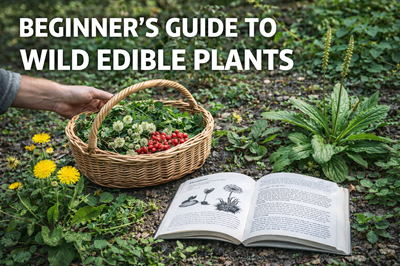
This publication, titled “A Beginner’s Guide to Wild Edible Plants in the Grinnell Area”, is a practical introduction to foraging and identifying edible plants in the wild, designed specifically for beginners. Created by the Center for Prairie Studies at Grinnell College, the guide aims to help people recognize common edible species found in everyday environments like parks, fields, forests, and even backyards. As explained in the introduction (page 4), it encourages learners to start small—focusing on a few easily identifiable plants—rather than trying to master everything at once.
A major strength of the guide is its emphasis on safe plant identification and responsible foraging. It clearly explains that while wild plants can be a valuable food source, proper identification is critical to avoid poisonous lookalikes (page 4). The manual also includes important safety warnings about contaminated areas, such as roadsides or farmland treated with chemicals (pages 6–7), reinforcing that where you forage is just as important as what you forage. This makes it especially relevant for preppers, where safety and risk management are key.
The guide is organized seasonally, helping users understand when different plants are available throughout the year. The chart on page 13 shows harvesting windows for a wide range of species, from early spring greens like dandelion to summer berries and autumn nuts. This seasonal approach teaches an important prepper mindset: food availability changes constantly, and successful foraging depends on timing and observation, not just knowledge.
Each plant section provides detailed descriptions, identification tips, and uses, often including multiple edible parts such as leaves, roots, flowers, or seeds. For example, the dandelion section (pages 14–15) explains how nearly every part of the plant can be used, from greens to roots, while also noting how taste and usability change with the seasons. The guide also includes practical preparation tips, nutritional benefits, and even simple recipes, making it more than just an identification manual—it’s a field-to-table resource.
Another key theme is self-reliance and reconnecting with natural food sources. As highlighted in the early chapters (page 5), foraging offers a way to access fresh, nutrient-rich food without relying on modern supply chains. It also builds awareness of the local environment and revives traditional skills that have largely been lost in modern society. For preppers and homesteaders, this aligns perfectly with the goal of becoming less dependent on external systems.
Overall, this PDF is a foundational foraging guide, combining safety, identification, seasonal awareness, and practical use into one accessible resource. It equips readers with the knowledge to find, identify, and use wild edible plants confidently, making it an essential addition to any prepper’s food acquisition and self-sufficiency toolkit.
Center for Prairie Studies Staff:
Professor Jonathan Andelson, Director(
Larissa Mottl, Biological Field Station Manager
Laureen Van Wyk, Program Associate
Jan Graham, Program Associate
cGrinnell College 2011
© Prepping Communities. This content is for informational purposes only and not professional advice. Use at your own risk.
Terms | Privacy | Guidelines