
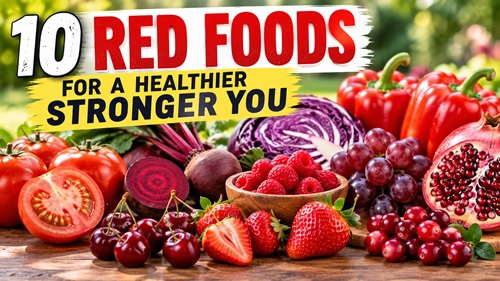
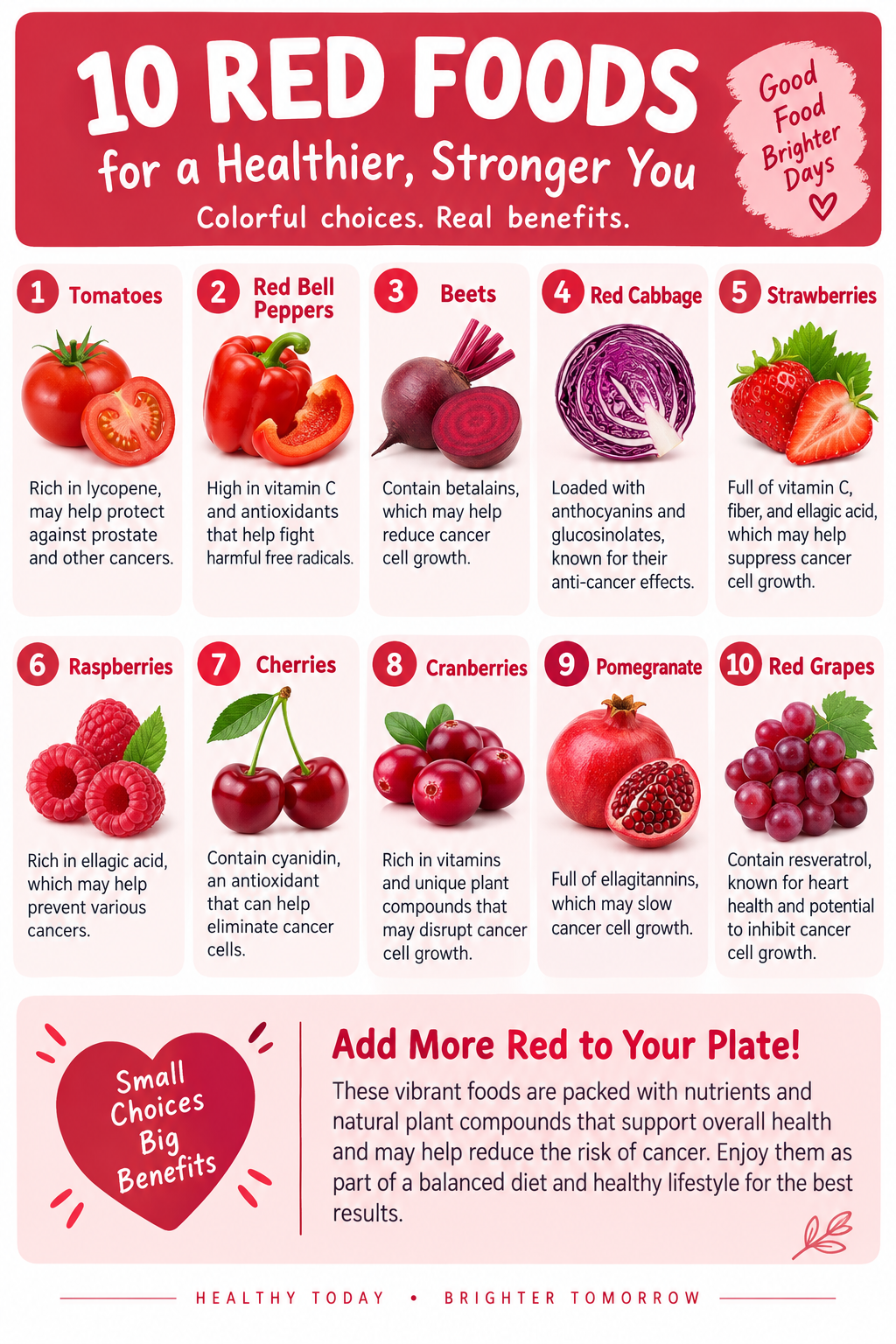
Adding more naturally red foods to your meals is an easy way to bring a wider variety of nutrients and protective plant compounds into your diet. Tomatoes, red peppers, strawberries, raspberries, cherries, cranberries, pomegranates, red grapes, beets, and red cabbage contain different combinations of vitamins, minerals, fiber, carotenoids, anthocyanins, and other antioxidants. The red, purple, and deep pink colors in many of these foods come from plant compounds that researchers continue to study for their role in protecting cells from oxidative stress and supporting long-term health.
One of the biggest benefits comes from variety. Tomatoes provide lycopene, berries contain anthocyanins and other polyphenols, red cabbage supplies glucosinolates, and red grapes contain resveratrol. These compounds don’t work like cancer treatments, and no individual food can prevent or cure cancer. However, regularly eating fruits and vegetables as part of an overall healthy diet is associated with better health and can help reduce the risk of certain chronic diseases, including some cancers. Eating the whole food also provides fiber and nutrients that supplements may not provide in the same way.
For preparedness, these foods are also worth thinking about beyond the grocery store. Tomatoes, peppers, cabbage, beets, strawberries, raspberries, cherries, grapes, and other produce can be grown at home in suitable conditions, while many can also be frozen, dehydrated, fermented, or otherwise safely preserved for later use. Building food storage around nutritious foods that a household already eats creates a much more useful pantry than simply accumulating calories. A good preparedness food plan should provide energy, but it should also help maintain nutrition, variety, and familiar meals when access to fresh groceries becomes limited.
© Prepping Communities. This content is for informational purposes only and not professional advice. Use at your own risk.
Terms | Privacy | Guidelines