
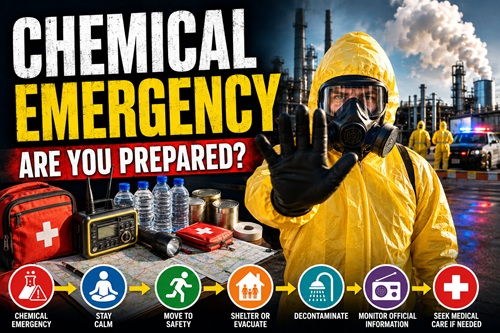
How to Recognize Chemical Hazards and Protect Yourself and Your Family
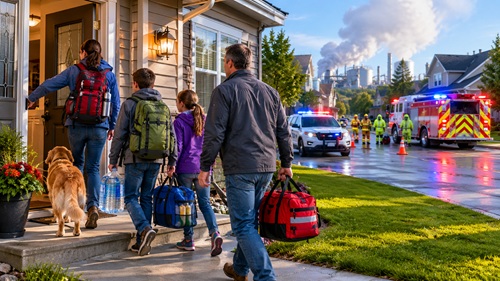
Why Chemical Emergencies Matter
When most people hear the words chemical attack, they immediately think of military conflicts or terrorism. While those events are possible, they are extremely rare for most people. Far more common are accidental chemical emergencies caused by industrial accidents, transportation incidents, warehouse fires, pipeline leaks, agricultural chemicals, or hazardous material spills.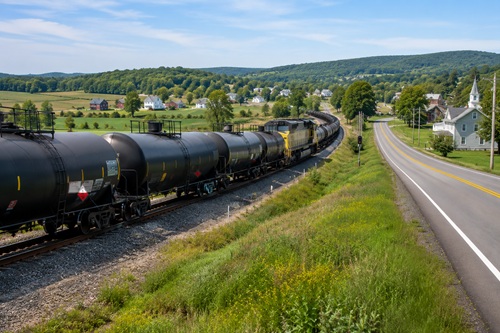
Every day, trains, trucks, ships, and pipelines move enormous quantities of chemicals through cities and rural communities. Manufacturing plants, water treatment facilities, refineries, and agricultural operations also store chemicals that could be released if equipment fails, natural disasters occur, or accidents happen.
Fortunately, most chemical emergencies remain localized, and emergency responders are well trained to manage them. However, the first few minutes often require individuals to make important decisions before detailed information becomes available.
Knowing how to recognize a hazardous chemical release, avoid unnecessary exposure, and respond calmly can significantly improve your safety.
This guide focuses on practical preparedness skills that can help you respond effectively to a chemical emergency, whether it results from an industrial accident, transportation spill, or another hazardous material incident.
Understanding Chemical Hazards
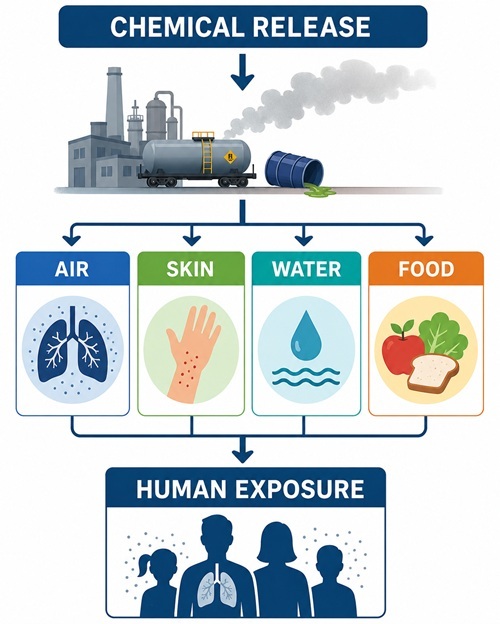
Chemical emergencies involve the accidental or intentional release of substances that may pose a risk to people, animals, or the environment. These substances can exist as gases, vapors, liquids, powders, or solids, and each behaves differently once released.
Some chemicals remain close to the ground, while others disperse quickly into the air. Some are immediately irritating, while others may have little or no noticeable odor. Exposure may occur through breathing contaminated air, direct skin or eye contact, or by consuming contaminated food or water.
The important point isn’t learning every hazardous chemical.
It’s understanding that chemical incidents can vary widely, and the safest response depends on the situation rather than the specific chemical involved.
Fortunately, the first protective actions are often the same regardless of the exact substance involved.
Preparedness Perspective
You don’t need to identify the chemical to make good initial decisions.
Your first priority is recognizing that something unusual is happening and taking steps to reduce your exposure while awaiting guidance from emergency officials.
Before You Continue
The next section explains the warning signs that may indicate a hazardous chemical release. Learning to recognize these early clues can help you respond quickly while avoiding unnecessary panic.
Recognizing the Warning Signs
Most chemical emergencies occur without warning.
Unlike severe weather, there is often little advance notice before a hazardous material is released. The first indication may simply be that something feels unusual or that several strange events begin happening at the same time.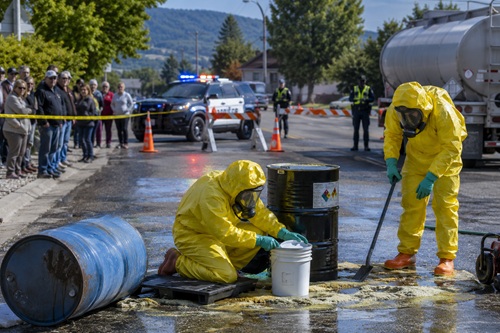
The key is not to jump to conclusions.
Instead, learn to recognize combinations of warning signs that may indicate a hazardous chemical release and then take sensible precautions while waiting for more information.
Being observant is far more valuable than trying to identify the exact chemical involved.
Unusual Odors
One of the first things people notice during some chemical releases is an unusual smell.
Depending on the substance, the odor may resemble:
- Bleach
- Ammonia
- Chlorine
- Rotten eggs
- Solvents
- Burning plastic
- Bitter almonds (certain chemicals)
- Strong petroleum products
However, odor alone is not a reliable warning system.
Many hazardous chemicals have little or no detectable smell, while some harmless odors may seem alarming.
Treat unusual odors as one piece of information—not proof that a chemical emergency exists.
Visible Vapor Clouds
Some chemicals form visible clouds or mists after being released.
You may notice: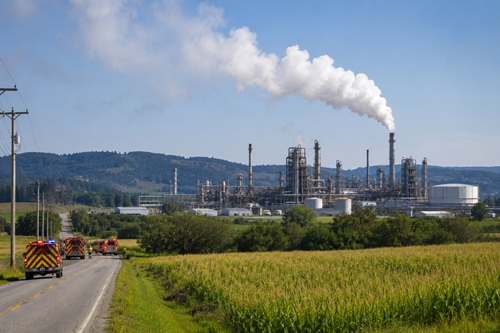
- A low-lying fog that doesn’t behave like normal mist.
- A colored cloud.
- Vapors escaping from damaged equipment.
- A plume drifting from a transportation accident or industrial facility.
Never approach an unknown cloud to investigate.
Many hazardous gases are invisible, while some visible clouds may contain dangerous concentrations of chemicals.
If you observe an unusual vapor cloud, increase your distance immediately and avoid moving toward it.
People Suddenly Becoming Ill
One of the strongest warning signs is when multiple people in the same area begin experiencing similar symptoms at approximately the same time.
These symptoms may include:
- Difficulty breathing.
- Persistent coughing.
- Burning eyes.
- Excessive tearing.
- Skin irritation.
- Dizziness.
- Nausea.
- Confusion.
While many illnesses can cause similar symptoms, several people becoming sick simultaneously in the same location may indicate an environmental hazard rather than an individual medical condition.
Animals Acting Unusually
Animals are often affected by environmental hazards before people fully recognize them.
Possible warning signs include:
- Birds suddenly falling from the sky.
- Fish dying unexpectedly.
- Livestock showing signs of distress.
- Pets refusing to enter an area.
- Wildlife behaving erratically.
These observations do not automatically mean a chemical release has occurred.
However, unusual animal behavior combined with other warning signs should encourage caution until more information becomes available.
Emergency Response Activity
Sometimes the first indication isn’t the chemical itself.
Instead, you may notice an unusually large emergency response.
Watch for:
- Multiple fire trucks.
- Hazardous materials (HazMat) teams.
- Police roadblocks.
- Emergency evacuations.
- Public warning sirens.
- Emergency alerts on your phone or radio.
If authorities begin restricting access to an area, assume they have information that you do not.
Avoid trying to drive closer simply to see what’s happening.
Environmental Clues
Chemical releases may also affect the surrounding environment.
You might observe:
- Dead vegetation.
- Oily residues.
- Discolored water.
- Unusual foam.
- Chemical spills.
- Strong chemical odors near storm drains or waterways.
Never touch unknown substances.
Avoid walking through puddles or residues that may contain hazardous materials.
Don’t Try to Identify the Chemical
One of the biggest mistakes people make is trying to determine exactly which chemical has been released.
This wastes valuable time.
Unless you’re a trained hazardous materials professional with proper equipment, identifying a chemical is nearly impossible and often unnecessary.
Your immediate priorities are much simpler:
- Recognize that something unusual is occurring.
- Reduce your exposure.
- Move away from the hazard if safe to do so.
- Follow instructions from emergency officials.
Protecting yourself is far more important than satisfying your curiosity.
Preparedness Tip
Trust your observations, but verify them when possible. If something seems unusual, check official emergency alerts, local radio stations, or trusted government notification systems before acting on rumors circulating through social media.
Common Mistakes
One of the biggest mistakes is assuming that every strange smell indicates a chemical emergency. Many harmless situations can produce unusual odors.
Another common mistake is ignoring several warning signs because each one seems minor on its own. It’s often the combination of unusual odors, visible vapors, emergency response activity, and people becoming ill that suggests a hazardous situation.
Finally, avoid approaching an incident out of curiosity. Many people place themselves at unnecessary risk simply by trying to get a closer look.
Before You Continue
Recognizing that a chemical emergency may be unfolding is only the first step.
The next few minutes are often the most important.
In the next section, you’ll learn the immediate actions that can help reduce your exposure while emergency responders work to assess the situation. These simple decisions—remaining calm, moving to a safer location, and avoiding unnecessary exposure—can make a significant difference during almost any hazardous chemical incident.
Immediate Actions to Protect Yourself
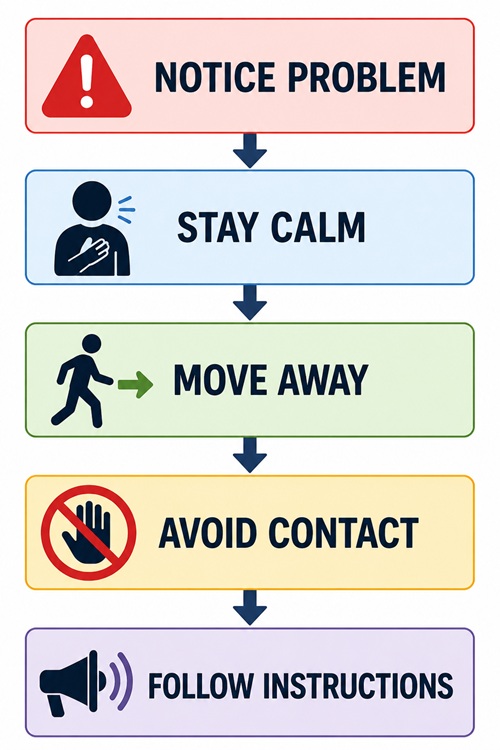
The first few minutes of a chemical emergency can be confusing.
Information may be limited, rumors may spread quickly, and emergency responders may still be determining exactly what has happened.
During this period, your goal isn’t to identify the chemical.
Your goal is to reduce your exposure while making calm, informed decisions.
Simple actions taken early can significantly reduce your risk and improve your ability to protect yourself and those around you.
Stay Calm and Think Clearly
Fear is a natural reaction during any emergency, but panic often leads to poor decisions.
People who panic are more likely to run toward danger, become separated from family members, ignore official instructions, or make unnecessary risks.
Take a slow breath.
Look around.
Assess your surroundings before acting.
A calm mind notices details that panic overlooks.
Preparedness begins with clear thinking.
Move Away from the Hazard
If you believe a hazardous chemical release has occurred nearby, increasing your distance from the suspected source is often one of the most effective protective actions.
Avoid moving toward visible vapor clouds, leaking containers, overturned tanker trucks, or damaged industrial facilities.
Instead, move away from the suspected release while watching for changing conditions.
Remember that wind can carry airborne chemicals over considerable distances.
Creating distance reduces the likelihood of exposure.
Consider Wind Direction
Airborne chemicals generally move with the wind.
If it’s safe to do so and you can reasonably determine the wind direction, avoid traveling downwind of the suspected release.
Moving across the wind or away from the affected area may reduce your exposure.
However, don’t spend valuable time trying to calculate the perfect escape route.
Your priority is to leave the immediate area safely while avoiding obvious hazards.
If emergency officials provide evacuation directions, follow those instructions even if they differ from your initial assumptions.
Avoid Contact with Unknown Substances
Do not touch unknown powders, liquids, residues, or leaking materials.
Even small amounts of certain chemicals may cause skin irritation or contaminate clothing.
Avoid walking through puddles or spills whenever possible.
If contamination is suspected, minimize further contact until you can safely remove contaminated clothing and wash exposed skin.
Protecting yourself also helps protect others from accidental secondary contamination.
Follow Official Instructions
Emergency responders often have access to information that the public does not.
If local authorities issue evacuation orders, shelter-in-place instructions, road closures, or other protective measures, follow them promptly.
Avoid relying solely on social media posts or unverified reports.
Official emergency alerts, local radio stations, and emergency management agencies are generally the most reliable sources of information during an evolving incident.
Help Others Safely
If family members, neighbors, or coworkers are nearby, notify them of the situation without creating unnecessary panic.
Encourage them to move to safety or follow official instructions.
However, avoid placing yourself at additional risk by entering contaminated areas to assist others unless you have appropriate training and equipment.
You cannot help effectively if you also become a victim.
Protect Children and Pets
Children and pets may not recognize danger or understand emergency instructions.
If they’re with you, keep them close and move together.
Prevent pets from investigating unusual odors, puddles, or spilled materials.
Animals can unknowingly carry contaminants on their fur or paws into vehicles or buildings.
Keeping everyone together simplifies decision-making and reduces confusion.
Avoid Unnecessary Travel
Unless you’re evacuating under official instructions or moving away from an immediate hazard, avoid driving around to investigate the incident.
Roads may become congested as emergency vehicles respond.
Entering the affected area accidentally can place both you and emergency responders at greater risk.
Sometimes the safest decision is simply to stay where you are until more information becomes available.
Preparedness Tip
Keep a battery-powered or hand-crank emergency radio in your emergency kit. If power or cellular networks become unreliable, local emergency broadcasts may provide evacuation routes, shelter instructions, and other critical updates.
Common Mistakes
One of the most common mistakes is rushing toward an incident to see what happened. Curiosity can place people directly in the path of hazardous chemicals or interfere with emergency responders.
Another mistake is assuming that if you can’t smell anything, there is no danger. Many hazardous substances are colorless and odorless.
Finally, don’t delay taking protective action while waiting for complete information. You can always adjust your response as more reliable information becomes available.
Before You Continue
Sometimes leaving the area is the safest option.
Other times, remaining indoors provides better protection.
Knowing the difference is one of the most important decisions you’ll make during a chemical emergency.
The next section explains when to shelter in place, when evacuation may be appropriate, and how to prepare for both situations safely.
Shelter in Place or Evacuate?
One of the first decisions you’ll face during a chemical emergency is whether to leave the area or remain where you are.
The answer isn’t always obvious.
Depending on the type of incident, weather conditions, and your location, either option could provide better protection.
Fortunately, emergency management agencies spend considerable time planning for these situations. If local authorities issue shelter-in-place or evacuation instructions, those recommendations should generally be followed unless your immediate surroundings present a greater danger.
Until official information becomes available, understanding the advantages of both options can help you make better decisions.
When Sheltering in Place May Be Safer
If a hazardous chemical has been released outdoors and moving through the area would expose you to greater danger, remaining inside a sturdy building may provide valuable protection.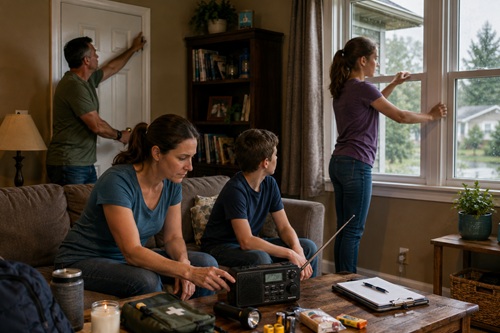
Many buildings reduce exposure by slowing the movement of contaminated air indoors.
If authorities recommend sheltering in place, or if leaving would require passing through the affected area, move indoors as quickly as possible.
Once inside:
- Close all windows and exterior doors.
- Turn off heating, air conditioning, and ventilation systems if instructed.
- Close fireplace dampers if applicable.
- Move to an interior room with as few windows as possible.
- Continue monitoring official emergency information.
The goal is to reduce the amount of outside air entering the building until the hazard has passed or new instructions are issued.
When Evacuation May Be Appropriate
In other situations, leaving the area may be the safest option.
Emergency officials may order an evacuation if: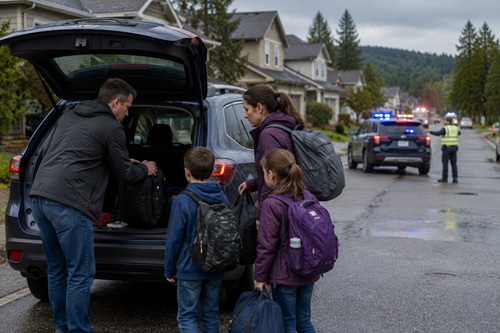
- The affected area is expected to remain hazardous.
- Fire or explosions threaten nearby neighborhoods.
- The chemical release is continuing.
- The building itself has become unsafe.
If an evacuation is ordered, leave promptly using the recommended routes whenever possible.
Take only essential items that are already prepared, such as your emergency kit, medications, identification, and communication devices.
Delaying to gather unnecessary belongings may reduce the time available to leave safely.
Be Ready for Either Situation
Preparedness means recognizing that emergencies rarely unfold exactly as expected.
Sometimes you’ll be asked to remain indoors for several hours.
Other situations may require leaving your home with very little notice.
Preparing for both possibilities increases your flexibility and reduces stress when decisions must be made quickly.
Every household should have:
- A basic emergency kit.
- Drinking water.
- Battery-powered lighting.
- Backup communications.
- Prescription medications.
- Important documents.
- Supplies for pets.
These items are valuable whether you shelter in place or evacuate.
Keep Your Family Together
Chemical emergencies can create confusion, especially if family members are at work, school, or different locations.
If communication is possible, let family members know your situation and encourage them to follow instructions from local emergency officials where they are.
Avoid trying to drive across a potentially affected area simply to reunite immediately.
Sometimes the safest decision is for everyone to remain where they are until emergency conditions improve.
Planning meeting locations and communication methods before an emergency greatly reduces confusion.
Continue Monitoring Official Information
Chemical emergencies can change rapidly.
Wind direction may shift.
Roads may close.
Evacuation zones may expand or shrink.
Continue monitoring official emergency alerts through local radio, emergency notifications, or other trusted sources.
Avoid making decisions based solely on rumors or social media speculation.
Reliable information helps you respond confidently as conditions evolve.
Preparedness Tip
Practice both shelter-in-place and evacuation plans with your family before an emergency occurs. Knowing where to go, what supplies to gather, and how to communicate removes uncertainty and helps everyone respond more calmly under pressure.
Common Mistakes
One common mistake is assuming evacuation is always the safest option. In some situations, traveling through contaminated air may increase your exposure compared to remaining inside a protected building.
Another mistake is delaying after an evacuation order has been issued. Waiting until everyone else leaves may place you in heavy traffic or reduce your ability to reach a safe location.
Finally, avoid opening doors or windows repeatedly “to check outside.” Each time the building is opened, contaminated air may enter if the hazard is still present.
Before You Continue
Even with the best planning, accidental exposure can sometimes occur.
The next section explains the basic principles of decontamination—how removing contaminated clothing and washing exposed skin can significantly reduce continued exposure while waiting for medical evaluation or further instructions.
Basic Decontamination After Exposure
Even if you’ve taken quick action to avoid a chemical release, accidental exposure can still occur.
You may have walked through contaminated air, been splashed by a liquid, or had particles settle on your clothing.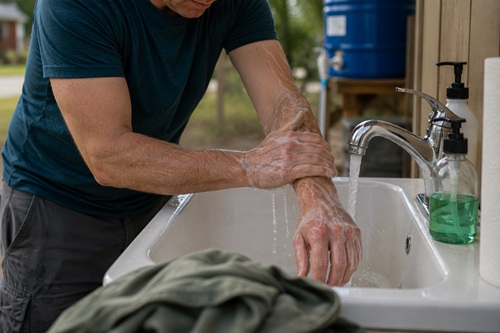
The good news is that simple decontamination steps can often reduce continued exposure while you seek further assistance or wait for instructions from emergency responders.
The objective is straightforward:
Remove the contamination.
Prevent it from spreading.
Protect yourself and others.
Leave the Hazard Area First
Before attempting any decontamination, move away from the contaminated area if it is safe to do so.
There’s little benefit in washing off chemicals if you remain where continued exposure is occurring.
Once you’ve reached a safer location, begin addressing any contamination as soon as practical.
Remove Contaminated Clothing
Clothing can trap chemical residues against your skin.
If you believe your clothing has been contaminated:
- Remove it carefully as soon as possible.
- Avoid pulling contaminated clothing over your face if practical.
- Handle clothing as little as necessary.
- Place contaminated items into a plastic bag or other suitable container if instructed by emergency responders.
- Wash your hands afterward if possible.
Removing contaminated clothing promptly may significantly reduce further exposure.
Wash Exposed Skin
If your skin has been exposed to an unknown chemical, flushing the affected area with plenty of clean, lukewarm water is often one of the first steps recommended while awaiting professional medical advice.
Wash gently.
Avoid scrubbing aggressively, which may further irritate damaged skin or increase absorption for certain substances.
If soap is available and appropriate, use a mild soap while continuing to rinse thoroughly.
The goal is to remove the substance—not to scrub the skin raw.
Protect Your Eyes
If a chemical has entered your eyes, begin flushing them with clean water as soon as possible.
Continue flushing while seeking emergency medical care or following instructions from medical professionals.
Avoid rubbing your eyes, as this may increase irritation or cause additional injury.
Eye exposures should always be taken seriously.
Avoid Cross-Contamination
One of the easiest ways to spread contamination is by touching clean surfaces after exposure.
Until you’ve been properly cleaned:
- Avoid touching your face.
- Avoid handling phones unnecessarily.
- Minimize contact with other people.
- Keep contaminated items separated from clean belongings.
Simple precautions reduce the chance of exposing others.
Seek Medical Evaluation
Even if you begin feeling better after leaving the area, some chemical exposures may produce delayed symptoms.
If you’ve been exposed to a hazardous chemical—or believe you may have been—follow the advice of emergency responders and healthcare professionals.
Be prepared to explain:
- Where you were.
- What you observed.
- Approximately when the exposure occurred.
- Any symptoms you’re experiencing.
This information helps medical personnel provide appropriate care.
Don’t Self-Diagnose
Different chemicals affect the body in different ways.
Trying to determine exactly which chemical caused an exposure based solely on symptoms is extremely difficult and may delay appropriate care.
Instead, focus on:
- Leaving the hazard.
- Removing contamination.
- Monitoring symptoms.
- Seeking professional evaluation when needed.
Those actions are useful regardless of the specific chemical involved.
Preparedness Tip
Include basic decontamination supplies in your home emergency kit, such as disposable gloves, mild soap, plastic bags for contaminated clothing, clean towels, bottled water, and a change of clothing. While these supplies aren’t a substitute for emergency medical care, they can help reduce continued exposure while awaiting further assistance.
Common Mistakes
One of the most common mistakes is delaying decontamination because the exposure doesn’t seem serious. Acting promptly is often more effective than waiting for symptoms to appear.
Another mistake is continuing to wear clothing that may have been contaminated. Removing contaminated clothing can greatly reduce ongoing skin contact.
Finally, avoid assuming that the absence of immediate symptoms means there was no exposure. Some chemicals may cause delayed effects, which is why monitoring your condition and following medical advice remain important.
Before You Continue
Responding effectively to a chemical emergency doesn’t end with protecting yourself. Good preparedness also means planning ahead so your entire household knows what to do.
In the next section, you’ll learn how to prepare your family before an emergency occurs, including communication plans, emergency supplies, pet considerations, and simple steps that can make a stressful situation far easier to manage.
Preparing Your Family Before a Chemical Emergency
No one expects a chemical emergency to happen in their community.
That’s exactly why preparing in advance is so important.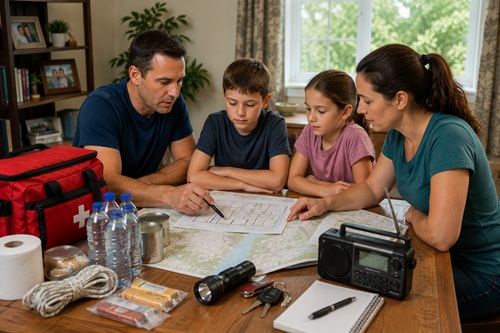
When an emergency occurs, there may be little time to gather supplies, discuss plans, or decide what everyone should do. Having a simple family preparedness plan allows everyone to respond more calmly and confidently when every minute counts.
Fortunately, preparing for a chemical emergency doesn’t require expensive equipment or extensive training.
Most of the same preparations that help during severe weather, power outages, or wildfires are equally valuable during a hazardous materials incident.
Build a Family Communication Plan
One of the biggest challenges during any emergency is simply knowing where everyone is.
Family members may be at work, school, shopping, or traveling when an incident occurs.
Discuss these questions before an emergency happens:
- How will we contact each other?
- Who should everyone call first?
- What happens if cellular service becomes unreliable?
- Where will we meet if we cannot return home?
- Who will pick up children if schools close unexpectedly?
Writing these plans down and sharing them with every family member removes much of the uncertainty during an emergency.
Maintain a Basic Emergency Kit
Every household should have an emergency kit that can support the family for at least several days.
Your kit doesn’t need to be elaborate.
Consider including:
- Drinking water.
- Non-perishable food.
- Flashlights.
- Extra batteries.
- Battery-powered or hand-crank radio.
- First aid supplies.
- Prescription medications.
- Personal hygiene items.
- Phone charging equipment.
- Copies of important documents.
- Basic cash.
These supplies are useful during almost every type of emergency—not just chemical incidents.
Think About Your Pets
Pets depend entirely on their owners during emergencies.
Include them in your planning.
Maintain an emergency supply of:
- Pet food.
- Water.
- Medications.
- Leashes.
- Carriers.
- Vaccination records.
If evacuation becomes necessary, know in advance which shelters or hotels accept animals.
Planning ahead prevents difficult decisions later.
Know Your Community
Preparedness begins with understanding your surroundings.
Take time to learn: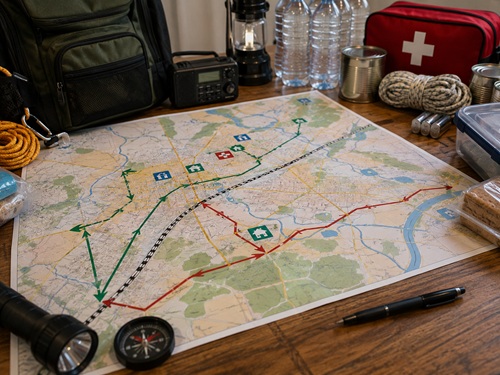
- Where major highways and rail lines are located.
- Whether hazardous materials are routinely transported through your community.
- The location of nearby industrial facilities.
- Local emergency alert systems.
- Community evacuation routes.
- Designated emergency shelters.
This information provides valuable context if an emergency ever occurs nearby.
Practice Your Plan
Emergency plans only become useful when people understand them.
Occasionally review your family’s emergency procedures.
Practice:
- Sheltering in place.
- Locating emergency supplies.
- Contacting family members.
- Evacuating using different routes.
- Meeting at predetermined locations.
These simple exercises help identify weaknesses before a real emergency exposes them.
Stay Informed
Information changes quickly during emergencies.
Consider signing up for:
- Local emergency notifications.
- Weather alerts.
- Community emergency management updates.
- Public safety notifications.
Reliable information often reduces unnecessary panic and helps people make better decisions.
Preparedness Builds Confidence
Chemical emergencies are uncommon.
However, preparing for them also improves your readiness for many other emergencies.
The same planning that helps during a hazardous materials incident also strengthens your response to:
- Severe storms.
- Wildfires.
- Floods.
- Power outages.
- Industrial accidents.
- Transportation emergencies.
Preparedness isn’t about expecting the worst.
It’s about being ready for the unexpected.
Key Takeaways
Chemical emergencies are rare, but they can develop quickly and often require immediate decisions before complete information becomes available.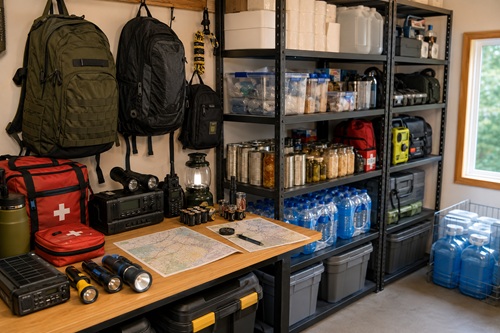
Throughout this guide, you’ve learned that the safest response begins with recognizing unusual warning signs, staying calm, increasing your distance from the hazard when appropriate, and following instructions from emergency officials.
You’ve also learned that sheltering in place may sometimes provide better protection than evacuating, that simple decontamination measures can reduce continued exposure, and that preparing your household in advance greatly improves your ability to respond effectively.
Perhaps the most important lesson is this:
You don’t need to know exactly which chemical has been released.
You simply need to recognize that something unusual is happening and take practical steps to reduce your exposure while awaiting reliable information.
Preparedness isn’t about predicting every emergency.
It’s about developing the knowledge and confidence to respond wisely when unexpected situations occur.
Final Thoughts
Most people will never experience a major chemical emergency.
That’s good news.
But if one ever does occur, the actions taken during the first few minutes can have a significant impact on your safety and the safety of those around you.
By understanding how to recognize warning signs, protect yourself from unnecessary exposure, communicate with your family, and follow reliable emergency information, you’ve already improved your preparedness.
Preparedness isn’t driven by fear.
It’s built through knowledge, planning, and practice.
The more familiar you become with your emergency plans before they’re needed, the more confidently you’ll respond if the unexpected ever happens.
Quick Emergency Checklist
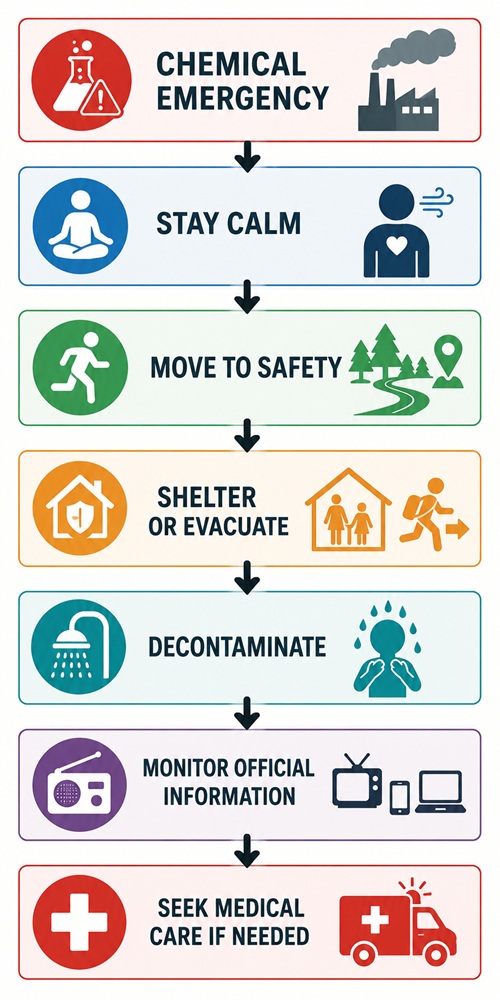
If you suspect a hazardous chemical release:
✓ Stay calm.
✓ Move away from the suspected hazard if safe to do so.
✓ Avoid touching unknown substances.
✓ Follow official emergency instructions.
✓ Shelter in place or evacuate as directed.
✓ Remove contaminated clothing if exposed.
✓ Wash exposed skin with clean water.
✓ Monitor trusted emergency information.
✓ Seek medical evaluation if exposure is suspected.
✓ Notify family members when it is safe to do so.
© Prepping Communities. This content is for informational purposes only and not professional advice. Use at your own risk.
Terms | Privacy | Guidelines