
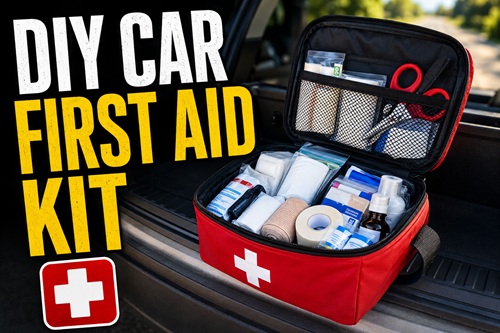
A well-stocked car first aid kit is one of the most practical emergency items you can own. Whether you’re commuting to work, taking a weekend camping trip, traveling across the country, or simply driving your children to school, medical emergencies can happen when professional help is minutes—or even hours—away. Having the right supplies close at hand allows you to treat minor injuries quickly, reduce the risk of infection, and often prevent a small problem from becoming a much larger one.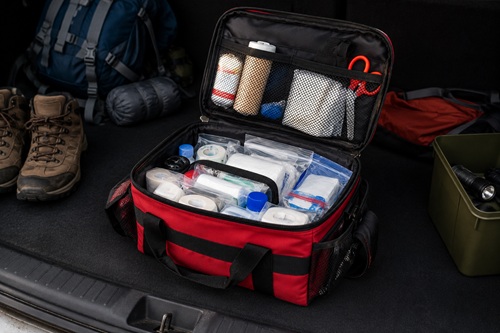
Unlike a home first aid kit, a car first aid kit needs to be compact, durable, and designed to handle a wide variety of situations. Small cuts, blisters, burns, insect bites, dehydration, headaches, allergic reactions, sprains, and stomach problems are among the most common medical issues people encounter while traveling. Being prepared for these everyday situations can make a road trip far more comfortable and may even prevent a trip to an urgent care clinic or emergency room.
The best part is that building a quality first aid kit doesn’t have to be expensive. Many people begin with an inexpensive commercial first aid kit and gradually customize it over time. As you discover items you wish you had during camping trips, hiking adventures, long drives, or family vacations, you simply add them to your kit. Over time your first aid kit becomes tailored specifically to your family’s needs rather than relying on a generic collection of supplies chosen by a manufacturer.
Start With a Basic First Aid Kit
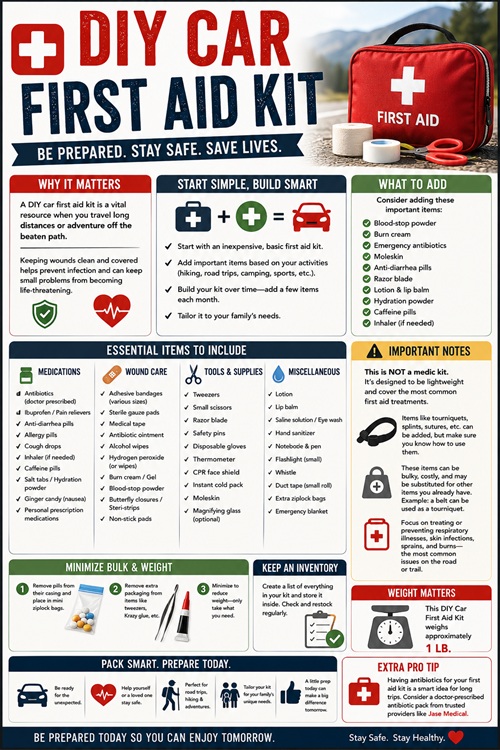
Beginning with a commercially available first aid kit provides a solid foundation. Most inexpensive kits already include adhesive bandages, sterile gauze, antiseptic wipes, adhesive tape, scissors, and a few other basic supplies. These kits are affordable, lightweight, and organized, making them an excellent starting point.
Once you have the basics covered, begin thinking about the types of activities you enjoy. Someone who spends weekends hiking in the mountains may want blister treatment, tweezers, and tick removal tools. Families with young children may need children’s medications, digital thermometers, and extra adhesive bandages. People who frequently travel long distances might add hydration powders, anti-diarrheal medication, electrolyte packets, lip balm, and lotion to help deal with dry climates or extended time on the road.
Your first aid kit should evolve as your needs change. New medications, prescription inhalers, allergy treatments, or other personal medical supplies should always take priority because they address your family’s unique health requirements.
Essential Supplies Worth Adding
Many experienced travelers eventually expand beyond the standard commercial kit by including additional supplies that are commonly needed but often overlooked.
Examples include:
- Burn cream or burn gel
- Blood-clotting dressing or hemostatic gauze (when properly trained to use it)
- Blister treatment (such as moleskin)
- Anti-diarrheal medication
- Pain relievers
- Allergy medication
- Cough drops
- Saline eye wash
- Lip balm
- Hand lotion
- Hydration or electrolyte powder
- Disposable gloves
- Good-quality tweezers
- Safety pins
- Instant cold pack
- Small flashlight
- Emergency blanket
- Notebook and pen
- CPR face shield
- Personal prescription medications
The goal isn’t to build a hospital in your trunk. Instead, focus on carrying practical items that are likely to be useful during everyday travel emergencies.
Keep It Organized and Lightweight
One mistake many people make is overpacking. It’s tempting to fill a first aid kit with every medical gadget available, but a bulky kit often becomes difficult to store and maintain.
Instead, remove unnecessary packaging whenever possible. Many medications can be stored in clearly labeled travel containers or small resealable bags, provided they remain identifiable and are stored safely. Bulky plastic packaging around tools such as tweezers or small scissors can usually be discarded, reducing both size and weight.
Organization is equally important. Store similar items together so you can quickly find what you need during an emergency. Bandages, medications, wound care supplies, tools, and personal medications should each have their own section. When every second counts, knowing exactly where supplies are located can make a significant difference.
Inspect Your Kit Regularly
A first aid kit should never be packed once and forgotten. Medical supplies eventually expire, medications lose effectiveness, adhesive products dry out, batteries weaken, and supplies become depleted after use.
At least twice each year, inspect your kit and replace expired medications, damaged supplies, and anything you’ve used. Many people find it helpful to perform this inspection when changing clocks for daylight saving time or during seasonal vehicle maintenance.
Creating a simple inventory sheet and storing it inside the kit makes inspections much easier. Each time you use an item, simply mark it for replacement so your kit is always ready for the next trip.
Tailor Your Kit to Your Family
No two first aid kits should be exactly alike. A young family, retired couple, avid hiker, commercial traveler, or someone living in a rural area will all have different medical priorities.
Think about questions like:
- Does anyone require prescription medications?
- Does anyone have severe allergies?
- Do you frequently camp or hike?
- Do you travel in remote areas?
- Are children usually with you?
- Do you have pets that travel with you?
Answering these questions helps determine what additional supplies belong in your kit.
Preparedness Is About Prevention
A car first aid kit is designed to handle the most common injuries and illnesses you’ll encounter while traveling—not to replace professional medical care. The objective is to clean wounds, stop minor bleeding, reduce discomfort, help prevent infection, and stabilize a situation until additional care becomes available if needed.
Perhaps the greatest benefit of carrying a well-stocked first aid kit is peace of mind. Knowing that you have the supplies needed to respond to everyday emergencies allows you to travel with greater confidence, whether you’re driving across town or exploring remote backroads. With a small investment of time and a few carefully selected supplies, your DIY car first aid kit can become one of the most valuable emergency resources you keep in your vehicle.
© Prepping Communities. This content is for informational purposes only and not professional advice. Use at your own risk.
Terms | Privacy | Guidelines