
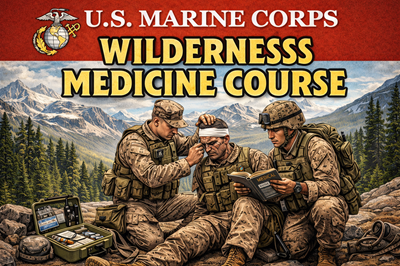
This PDF is a U.S. Marine Corps Wilderness Medicine Course student handbook produced by the Mountain Warfare Training Center in Bridgeport, California. It is a structured training manual designed to teach Marines how to operate, assess casualties, and deliver medical care in remote mountainous and wilderness environments where evacuation and advanced medical support may be delayed or unavailable. The document blends tactical field considerations with clinical medical procedures, emphasizing survival-based medicine under extreme environmental stress.
A major section of the handbook focuses on mountain safety and operational planning, including the “BE SAFE MARINE” framework. This doctrine teaches leaders how to manage risk in mountainous terrain through constant evaluation of weather and terrain, maintaining group cohesion, planning for time and distance, ensuring proper nutrition and hydration, and preparing for emergencies. It also covers survival priorities such as shelter, insulation, and maintaining energy balance in cold environments where hypothermia and exposure can quickly become life-threatening.
The manual also provides a detailed system for wilderness patient assessment and trauma care, adapted from advanced trauma life support (ATLS) principles. It outlines scene safety, triage decision-making, airway and breathing management, circulation control, and full head-to-toe examinations in field conditions. Special emphasis is placed on environmental factors such as cold, altitude, and terrain, and how they influence treatment decisions, evacuation priorities, and patient stabilization strategies in remote operations.
A significant portion of the document is dedicated to high-altitude illnesses and environmental medicine, including acute mountain sickness (AMS), high-altitude cerebral edema (HACE), and high-altitude pulmonary edema (HAPE). It explains the physiological mechanisms behind hypoxia, fluid shifts, and pulmonary and cerebral responses to altitude, as well as prevention strategies such as gradual ascent, hydration, acclimatization, and pharmacological interventions like acetazolamide and dexamethasone. The handbook emphasizes early recognition and rapid descent as the most critical life-saving interventions.
© Prepping Communities. This content is for informational purposes only and not professional advice. Use at your own risk.
Terms | Privacy | Guidelines