
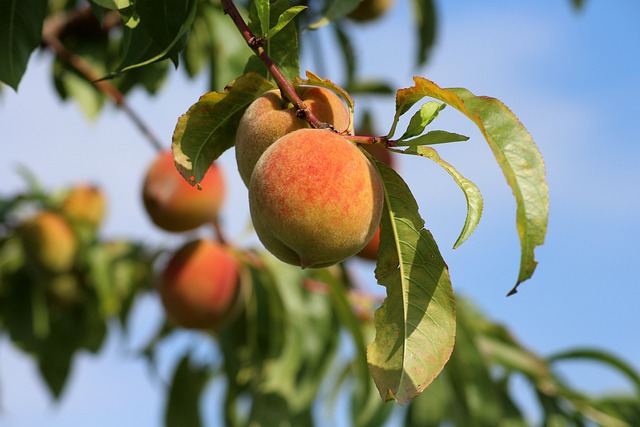
Training and Pruning Fruit Trees is a practical horticultural guide published by the University of California Cooperative Extension that explains how homeowners can train, prune, maintain, and rejuvenate fruit trees for improved productivity, easier harvesting, and better tree health. The publication focuses on managing tree size, developing strong branch structure, increasing sunlight penetration, and maximizing fruit production while keeping trees accessible.
The guide begins by discussing the difference between summer pruning and dormant pruning. Summer pruning is recommended for shaping young trees, controlling excessive growth, directing branch development, and reducing the amount of winter pruning required later. Dormant pruning is used to refine structure and remove branches that were missed during the growing season. Special recommendations are provided for stone fruits such as peaches, apricots, plums, and cherries, which should generally be pruned later in the dormant season to reduce disease risks.
Several tree-training systems are described. The Open Center (Vase) System is recommended for peaches, nectarines, plums, apricots, almonds, cherries, figs, pomegranates, and several other fruit species. This method keeps the center of the tree open to sunlight and encourages fruit production throughout the canopy. The illustrated diagram on page 4 shows how a young tree is headed after planting and gradually developed into an open-center framework through scaffold branch selection and pruning.
The publication also explains the Central Leader System, commonly used for apples and pears. This method maintains a dominant central trunk with layered branch whorls resembling a Christmas tree shape. The structure allows sunlight to reach lower fruiting wood from the sides while maintaining strong branch organization and good fruit production.
One of the most useful sections for backyard growers is the discussion of Fruit Bushes, where full-sized fruit trees are maintained at only six to seven feet tall through repeated summer pruning. The diagrams on page 4 illustrate how repeated trimming of vigorous growth can create compact, highly productive fruit trees that are easier to harvest, spray, thin, and maintain.
The final section addresses the challenge of overgrown fruit trees. Three approaches are discussed:
- Maintain current height through thinning cuts.
- Gradually reduce height over several years.
- Perform drastic renovation pruning to rebuild the tree.
The guide explains the advantages, risks, and proper techniques for each approach, including branch-cutting methods and sunburn protection for exposed limbs.
© Prepping Communities. This content is for informational purposes only and not professional advice. Use at your own risk.
Terms | Privacy | Guidelines