
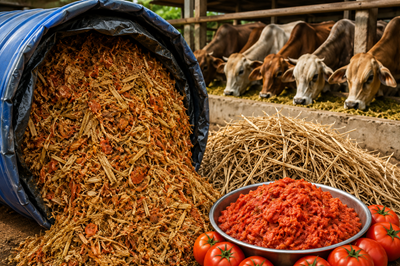
Tomato Pomace–Rice Straw Silage as Feed for Growing Cattle is a short agricultural research paper by Rogelio R. Caluya of Mariano Marcos State University in the Philippines. The study investigates the use of tomato pomace, a by-product of tomato paste manufacturing, combined with rice straw to create silage for feeding growing cattle during periods of feed scarcity. The research addresses a common problem faced by small farmers: limited livestock feed resources during dry seasons.
The paper explains that rice straw is abundant after harvest but has poor nutritional value and low palatability, while tomato pomace is nutritious but highly perishable, often spoiling within two days. To overcome these limitations, the researchers chopped rice straw, mixed it with fresh tomato pomace to achieve a 35% dry matter content, and ensiled the mixture in lined drums. Feeding trials began after 14 days of fermentation.
Results showed that the silage remained highly acceptable to cattle for several months, although quality gradually declined as storage time increased. The table on page 3 shows that pH increased from 3.98 after 14 days to 4.66 after five months, while mold development appeared only after several months of storage. The silage remained well accepted by animals during the earlier storage periods.
The feeding trial found that cattle receiving a ration containing 50% tomato pomace-rice straw silage achieved the best overall performance. According to Table 2 on page 3, these animals gained the most weight (54 kg over 90 days), had the highest average daily gain (0.60 kg/day), achieved the best feed efficiency, and incurred the lowest feed cost per kilogram of weight gain. The authors concluded that ensiling crop residues with agro-industrial by-products may provide a valuable feed resource for cattle, buffalo, sheep, and goats, especially during seasonal feed shortages.
© Prepping Communities. This content is for informational purposes only and not professional advice. Use at your own risk.
Terms | Privacy | Guidelines