
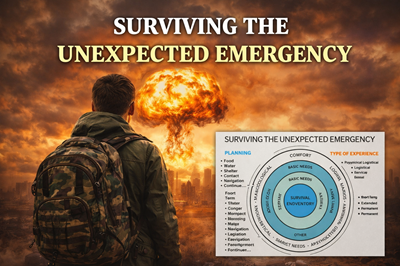
This PDF, Surviving the Unexpected Emergency, is a conceptual preparedness and survival framework that explores how individuals think about, categorize, and prepare for emergencies ranging from everyday disruptions to large-scale disasters. The document emphasizes that preparedness is not optional but rather a spectrum of choices that every person already participates in, whether consciously or not. It introduces a structured model for understanding survival planning through decision-making, resource allocation, and personal readiness.
A major theme in the document is the idea that “everyone is a prepper,” even if they do not identify as one. The author explains that most people already maintain enough food and supplies to survive short disruptions such as snowstorms, but that more serious events like hurricanes or infrastructure breakdowns require significantly greater preparation. The text uses this comparison to help readers evaluate their own level of preparedness and recognize where gaps exist in their planning approach.
The PDF also introduces a set of prepper stereotypes, including “sheeple,” “rainy day preppers,” “survivalists,” “homesteaders,” and “primitive technologists.” These archetypes are used as a way for readers to self-identify their mindset and preparedness philosophy. Each category represents a different approach to survival strategy, ranging from minimal planning to highly self-sufficient, skills-based lifestyles.
Central to the document is the “Surviving the Unexpected Emergency Model,” which organizes preparedness around three key variables: type of experience (natural or man-made disasters), magnitude (local to global impact), and duration (short-term to long-term disruption). The model also integrates planning components such as food, water, shelter, communication, navigation, and psychological readiness. It emphasizes that survival is not only physical but also deeply tied to mindset, comfort, and adaptability under stress.
The PDF further reinforces that preparedness is fundamentally about choices, priorities, and mindset, rather than simply accumulating supplies. It connects everyday preparedness to broader disaster scenarios and encourages readers to define their own “mission” for readiness based on likely risks in their environment. Overall, it serves as both a philosophical and practical introduction to structured emergency preparedness thinking.
Chapter 1.0 – Surviving the Unexpected Emergency
Copyright © 2016 Robert B. Kauffman
© Prepping Communities. This content is for informational purposes only and not professional advice. Use at your own risk.
Terms | Privacy | Guidelines