
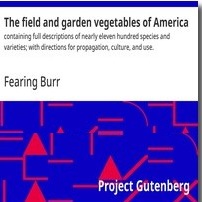
The Field and Garden Vegetables of America is a detailed 19th-century agricultural and horticultural reference written by Fearing Burr Jr. in 1863. The book was created as a practical guide for gardeners, farmers, and seedsmen to help them understand and compare nearly 1,100 varieties of vegetables commonly cultivated in America at the time. Rather than focusing heavily on basic gardening techniques, Burr emphasizes the differences between varieties — including their size, shape, color, flavor, hardiness, productivity, and suitability for different climates and uses.
The book begins with a lengthy preface explaining Burr’s goal of organizing scattered horticultural knowledge into one comprehensive manual. He describes the extensive effort involved in importing seeds from Europe, growing plants through full seasons, and carefully documenting their characteristics in order to improve the accuracy of vegetable naming and classification. Burr repeatedly stresses the importance of practical observation and notes how soil, climate, and local conditions can significantly influence the quality and appearance of crops.
A major strength of the work is its extremely detailed crop-by-crop breakdowns. Each vegetable section typically includes botanical descriptions, soil requirements, fertilization methods, planting schedules, cultivation techniques, harvesting guidance, seed-saving instructions, storage recommendations, culinary uses, livestock uses, and descriptions of individual varieties. For example, the beet section alone compares dozens of varieties, discussing differences in sweetness, storage life, productivity, coloration, and suitability for table use versus livestock feed or sugar production. Similar detail is provided for carrots, potatoes, cabbages, beans, onions, melons, herbs, medicinal plants, mushrooms, and many other crops.
The book also provides valuable historical insight into 19th-century agriculture and food systems. Many vegetables described were cultivated not only for human consumption but also for livestock feed, sugar production, and even distillation. Burr frequently discusses yields per acre, storage practices for winter survival, and methods for preserving food quality over long periods — topics that remain highly relevant to homesteading, self-sufficiency, and preparedness today. The text reflects a period when gardening knowledge was deeply tied to practical survival, seasonal planning, and local food production.
Overall, the book serves as both a historical agricultural encyclopedia and a highly practical gardening reference. Even though it was written more than 160 years ago, much of the cultivation advice, seed-saving guidance, and emphasis on soil quality, crop selection, and resilience remains surprisingly useful for modern gardeners, homesteaders, and preparedness-minded readers.
© Prepping Communities. This content is for informational purposes only and not professional advice. Use at your own risk.
Terms | Privacy | Guidelines