
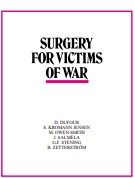
Surgery for Victims of War is a comprehensive medical reference manual published by the International Committee of the Red Cross for surgeons, nurses, anesthetists, and medical personnel working in war zones or mass-casualty environments. The book focuses on the practical realities of treating combat-related injuries in difficult conditions where medical infrastructure, equipment, staff, electricity, water, and supplies may be limited or unreliable. Rather than emphasizing advanced hospital technology, the manual teaches adaptable, field-proven methods designed for survival-focused emergency surgery under extreme circumstances.
The manual explains that war surgery differs significantly from normal civilian trauma care because combat wounds are usually heavily contaminated and often involve massive tissue destruction caused by bullets, fragments, explosives, mines, burns, and blast injuries. The book repeatedly emphasizes several core principles: rapid first aid, effective triage, aggressive wound excision, infection prevention, delayed primary closure, stabilization of fractures, rehabilitation, and adaptability under pressure. The authors stress that good outcomes are still possible even with limited resources if medical teams understand the basic principles and remain organized and disciplined.
A major portion of the book focuses on battlefield emergency care and triage. Early chapters explain how to manage airway, breathing, circulation, chest injuries, bleeding, fractures, evacuation, and mass casualty situations where medical staff must prioritize patients based on survivability and available resources. The manual explains that in war environments, difficult decisions sometimes must be made so the greatest number of casualties can survive. It provides detailed systems for casualty sorting, emergency planning, resource allocation, and hospital organization during large-scale emergencies.
The book then moves into specialized surgical treatment covering virtually every major category of combat injury. Topics include wound classification, infection control, burns, amputations, vascular injuries, abdominal wounds, chest trauma, head injuries, spinal injuries, reconstructive surgery, orthopedic care, anesthesia, skin grafting, and rehabilitation. It also discusses common wartime complications such as tetanus, gas gangrene, neglected wounds, malnutrition, blood shortages, and infectious disease management. The manual combines surgical instruction with operational guidance, emphasizing teamwork, logistics, cultural awareness, improvisation, and maintaining care standards in unstable environments.
Although intended primarily for medical professionals, the book also serves as a historical and operational reference on how humanitarian and military medical systems function during armed conflict. It reflects decades of real-world experience from conflict zones around the world and demonstrates how preparation, organization, rapid intervention, and practical decision-making can dramatically improve survival rates in extreme conditions.
© Prepping Communities. This content is for informational purposes only and not professional advice. Use at your own risk.
Terms | Privacy | Guidelines