
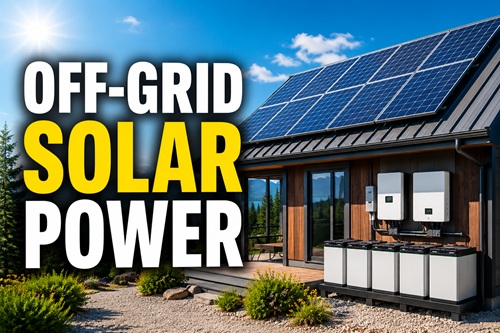
Building Reliable Energy Independence for Emergency Preparedness
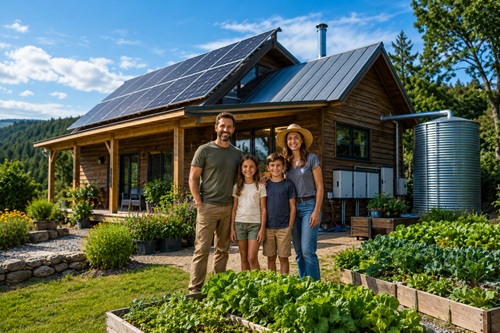
Introduction
Electricity has become one of the most important resources in modern life. We rely on it for refrigeration, heating, cooling, communications, lighting, water pumps, medical equipment, cooking, security systems, and countless other everyday tasks. Because it works so reliably most of the time, it’s easy to overlook how quickly life changes when the power suddenly disappears. A few hours without electricity may be little more than an inconvenience, but several days—or even weeks—can create significant challenges for any household.
Over the past several years, prolonged power outages have become increasingly common. Severe storms, wildfires, hurricanes, ice storms, aging infrastructure, cyber incidents, and unexpected equipment failures have all demonstrated how vulnerable centralized electrical systems can be. Communities across North America have experienced outages lasting days or even weeks, leaving families scrambling for fuel, food, water, and reliable communication. While utility companies work hard to restore service, their ability to do so often depends on weather conditions, available crews, damaged infrastructure, and access to replacement equipment.
For many preparedness-minded families, solar power represents far more than an alternative source of electricity. It offers the opportunity to build greater independence from systems that may not always be available when needed most. Unlike gasoline generators, which depend on stored fuel and regular deliveries, solar panels quietly produce electricity whenever sufficient sunlight is available. Combined with battery storage, an off-grid solar system allows households to continue operating essential equipment long after the surrounding electrical grid has gone dark.
This guide is designed to help you understand the fundamentals of off-grid solar power without unnecessary technical complexity. Rather than focusing on expensive equipment or oversized systems, it explains how solar energy works, how the major components fit together, and how to build a practical system that supports your family’s preparedness goals. Whether your objective is powering a few essential devices during emergencies or eventually operating an entire off-grid homestead, understanding the principles behind solar power allows you to make informed decisions while avoiding costly mistakes.
One of the greatest advantages of learning about solar energy is that the knowledge applies to far more than emergency preparedness. An off-grid solar system can reduce dependence on rising utility costs, provide reliable power to remote cabins or workshops, support recreational activities such as camping and overlanding, and increase resilience during natural disasters. Regardless of how you choose to use it, investing time in understanding renewable energy is an investment in long-term self-reliance.
Why Energy Independence Matters
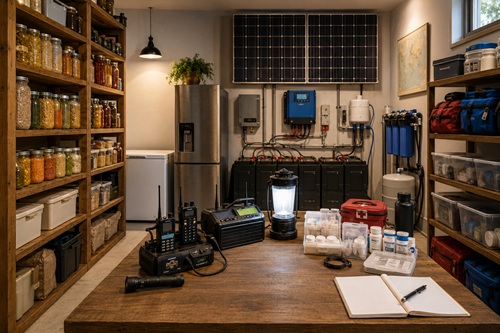
Preparedness is often associated with storing food, water, medical supplies, and emergency equipment, but reliable power ties all of these resources together. Food storage loses much of its value if refrigeration fails unexpectedly. Water stored in wells may become inaccessible without electric pumps. Communication equipment cannot function indefinitely without a means of recharging batteries. Even basic lighting becomes a challenge after sunset when the electrical grid is unavailable. Energy independence allows many other preparedness systems to continue functioning together.
Modern homes depend on electricity in ways that are not always obvious. Furnaces frequently require electric blowers even when they burn natural gas or propane. Water heaters use electronic ignition systems and digital controls. Garage doors, internet routers, security cameras, smoke detectors, medical equipment, and countless small electronic devices quietly consume electricity every day. During normal conditions these systems work seamlessly together, but prolonged outages reveal just how interconnected modern households have become.
An off-grid solar system provides flexibility rather than complete isolation. Some families use solar as their primary electrical source, while others install smaller systems dedicated to emergency use. A modest system capable of powering refrigeration, communications, lighting, and water purification may provide tremendous value during emergencies without requiring the investment associated with a fully independent household. Understanding your actual needs before purchasing equipment helps ensure your investment matches your preparedness goals.
Another advantage of renewable energy is predictability. Sunlight is available every day, even though weather conditions affect production. Unlike gasoline or diesel fuel, which must be purchased, transported, and safely stored, sunlight arrives without supply chains or fuel deliveries. As long as equipment is properly maintained, solar panels continue producing electricity year after year with remarkably little ongoing attention.
Energy independence also provides peace of mind. Knowing that essential household systems can continue operating during unexpected outages reduces stress and allows families to focus on solving problems rather than reacting to them. Preparedness is ultimately about increasing options, and reliable electrical power significantly expands those options during emergencies.
Understanding How Solar Power Works
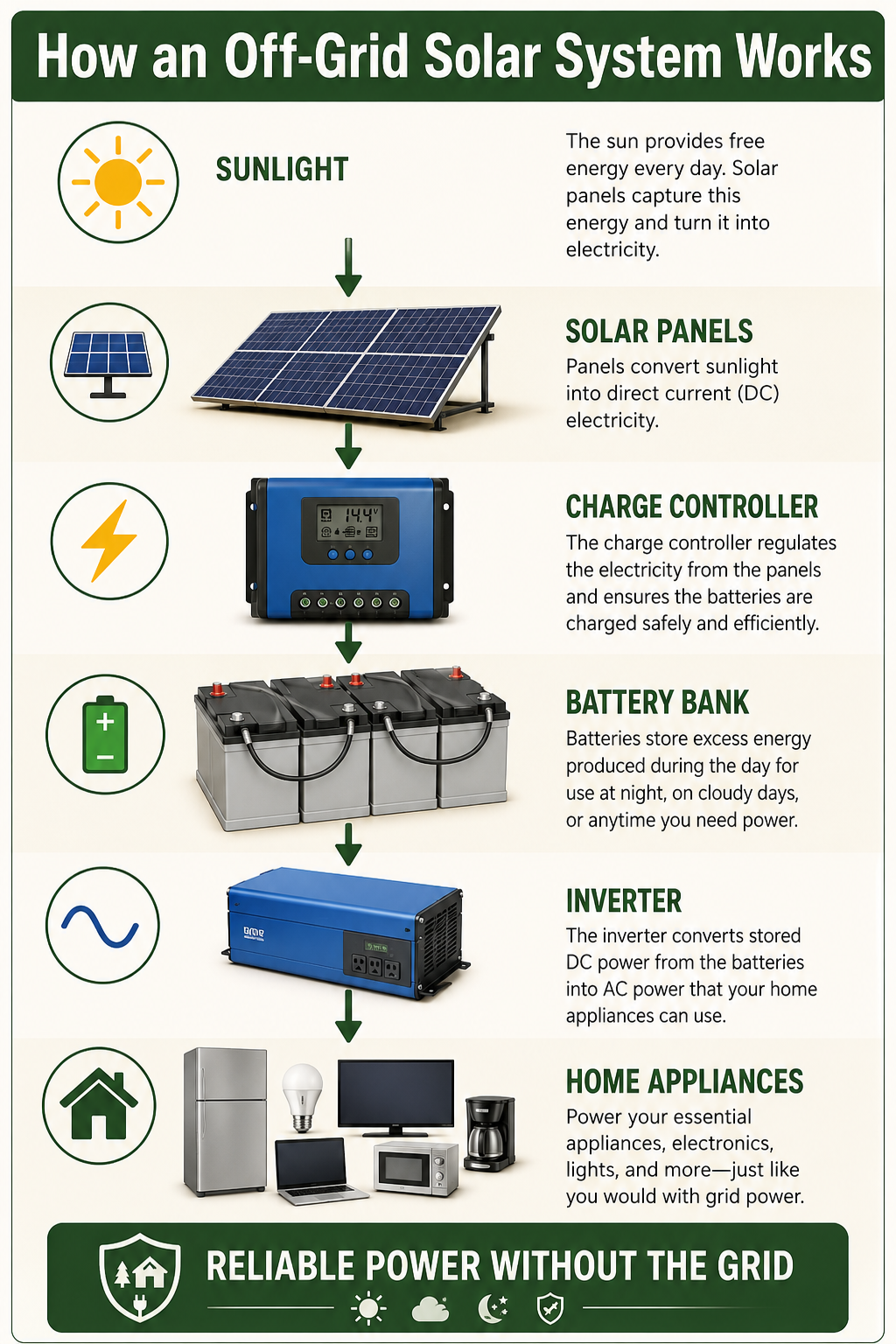
Although solar energy may appear complex at first, the basic process is surprisingly straightforward. Solar panels capture energy from sunlight and convert it into direct current, commonly referred to as DC electricity. This electricity can be used immediately, stored in batteries for later use, or converted into household alternating current through an inverter. Each component performs a specific role, allowing the entire system to operate together as a reliable source of electrical power.
The amount of electricity produced depends on several factors, including the size of the solar array, the intensity of available sunlight, seasonal weather conditions, geographic location, panel orientation, and shading from nearby trees or buildings. Even high-quality panels produce less electricity during cloudy days or winter months when daylight hours are shorter. For this reason, successful off-grid systems are designed around average production rather than ideal laboratory conditions.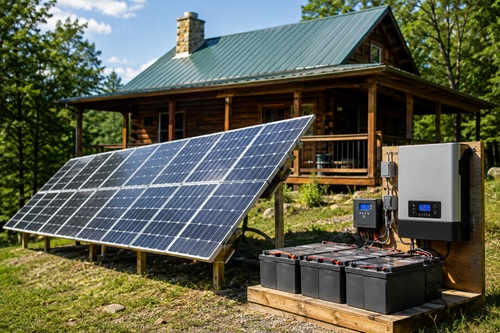
Battery storage transforms solar panels from daytime energy producers into around-the-clock power systems. During sunny periods, excess electricity charges the batteries. After sunset or during periods of poor weather, stored energy continues supplying electricity to essential household equipment. This ability to capture energy during favorable conditions and use it later is what makes off-grid solar practical for long-term preparedness.
An inverter completes the process by converting battery power into the same type of electricity used by most household appliances. Refrigerators, lights, televisions, computers, kitchen appliances, and power tools all rely on alternating current. Without an inverter, most common household equipment could not operate from battery storage alone. Together, solar panels, batteries, charge controllers, and inverters create a complete energy system capable of supporting everyday life even when utility power is unavailable.
Understanding these basic principles makes it much easier to evaluate equipment, compare different system designs, and avoid marketing claims that often promise more than they realistically deliver. Solar technology continues improving every year, but the fundamental concepts remain remarkably consistent regardless of the manufacturer or specific equipment chosen.
The Five Essential Components of an Off-Grid Solar System
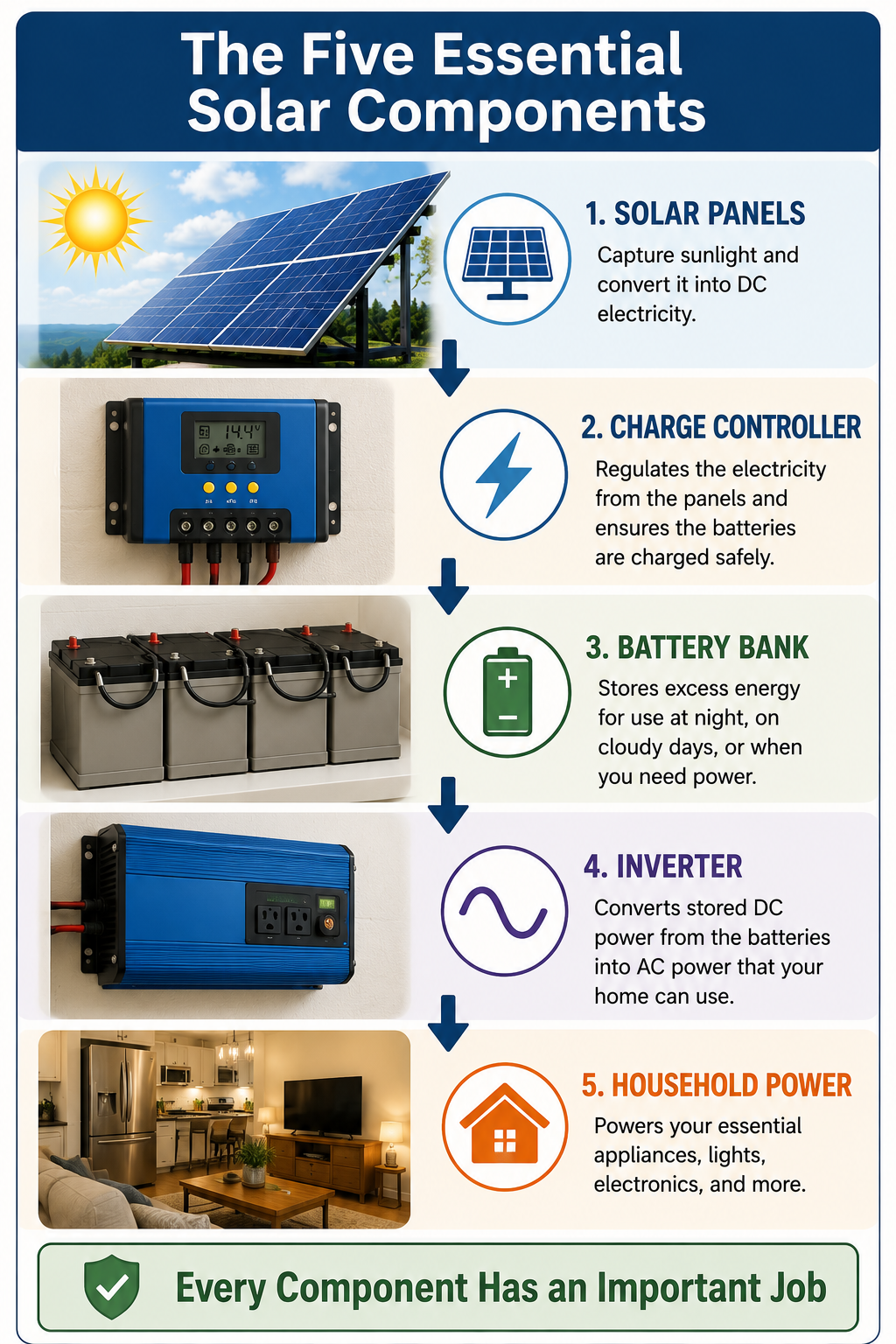
Every off-grid solar system, regardless of its size or cost, is built around a handful of core components that work together to generate, store, and deliver electricity. While manufacturers offer countless products with different features and specifications, the basic principles remain the same. Understanding the purpose of each component is far more valuable than memorizing brand names because it allows you to evaluate equipment based on your actual needs rather than marketing claims.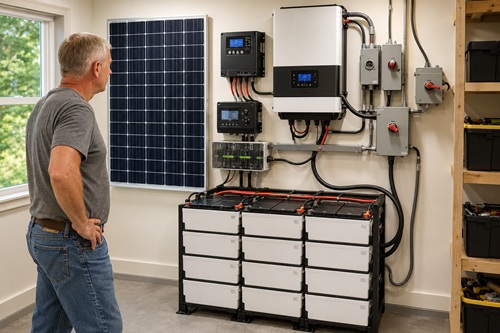
Solar panels are the starting point of every system. Their purpose is to capture sunlight and convert it into electricity. Modern photovoltaic panels are remarkably reliable, often producing useful amounts of electricity for twenty-five years or more with very little maintenance. Because they contain no moving parts, they are generally one of the most dependable pieces of equipment in the entire system. Their primary limitation is that they only generate power when sunlight is available, making battery storage essential for nighttime operation and periods of poor weather.
Once electricity leaves the solar panels, it passes through a charge controller before reaching the batteries. This component acts as the system’s traffic manager, regulating the flow of electricity to ensure the batteries are charged safely and efficiently. Without a properly sized charge controller, batteries could become overcharged, reducing their lifespan or causing permanent damage. Although the charge controller receives far less attention than solar panels or batteries, it plays a critical role in protecting one of the most expensive parts of the system.
The battery bank stores excess energy produced during the day so it can be used later. In many ways, the batteries determine how practical an off-grid system becomes because they provide electricity whenever sunlight is unavailable. Battery capacity influences how long essential appliances can continue operating overnight or during extended cloudy periods. Choosing the right battery technology is one of the most important decisions when designing a solar system because it directly affects performance, maintenance requirements, expected lifespan, and overall cost.
An inverter completes the process by converting the stored battery power into the type of electricity used by most household appliances. Nearly everything inside a modern home—from refrigerators and freezers to televisions, computers, coffee makers, and microwave ovens—expects alternating current rather than the direct current produced by solar panels and batteries. A quality inverter allows these familiar appliances to operate almost exactly as they would when connected to the electrical grid.
Many modern systems also include monitoring equipment that provides real-time information about solar production, battery status, electrical consumption, and overall system health. While monitoring equipment is not strictly required for a basic system, it gives homeowners valuable insight into how efficiently their system is operating and helps identify potential problems before they become serious. Being able to see how much electricity is being generated, stored, and consumed often leads to better energy management and improved long-term reliability.
Determining Your Household Power Needs
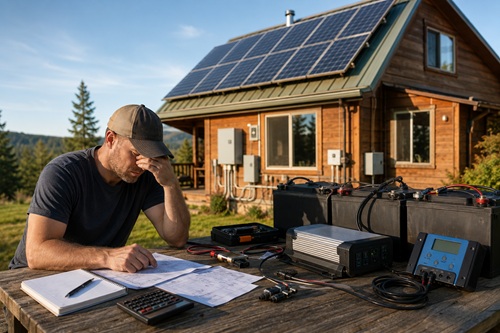
One of the most common mistakes people make when planning an off-grid solar system is purchasing equipment before understanding how much electricity they actually use. Bigger is not always better, and oversized systems can become unnecessarily expensive. Likewise, systems that are too small often leave families disappointed because they cannot provide enough electricity to meet everyday needs. Taking the time to understand your energy consumption is one of the most valuable planning steps you can make.
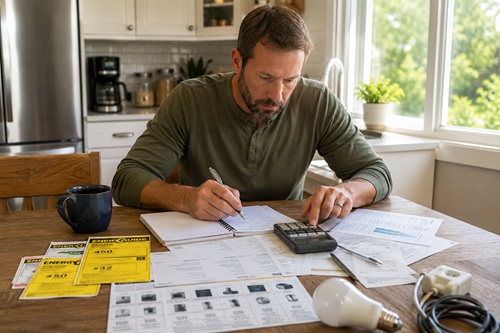
The easiest approach is to begin by identifying the appliances and devices that truly matter during an emergency. Refrigerators, freezers, lighting, communication equipment, medical devices, water pumps, and charging stations for phones or radios usually rank near the top of the list. Other appliances such as electric clothes dryers, electric water heaters, central air conditioning, or large electric ovens require significantly more power and may not be practical for smaller off-grid systems. Focusing first on essential equipment allows you to design a system that provides meaningful benefits without dramatically increasing costs.
It is also helpful to distinguish between continuous electrical use and occasional use. A refrigerator cycles on and off throughout the day, while a microwave may operate for only a few minutes at a time. LED lighting typically consumes relatively little electricity, whereas space heaters and electric kettles can draw large amounts of power while they are operating. Understanding these differences helps you estimate realistic energy requirements rather than simply adding together the maximum power ratings of every appliance.
Many homeowners are surprised to discover that simple conservation measures can significantly reduce the size and cost of an off-grid solar system. Replacing older incandescent bulbs with LED lighting, choosing energy-efficient appliances, improving insulation, and reducing unnecessary electrical consumption all decrease the amount of electricity your solar system must produce. Every watt you save is a watt you do not need to generate, store, or convert, often resulting in substantial savings during system design.
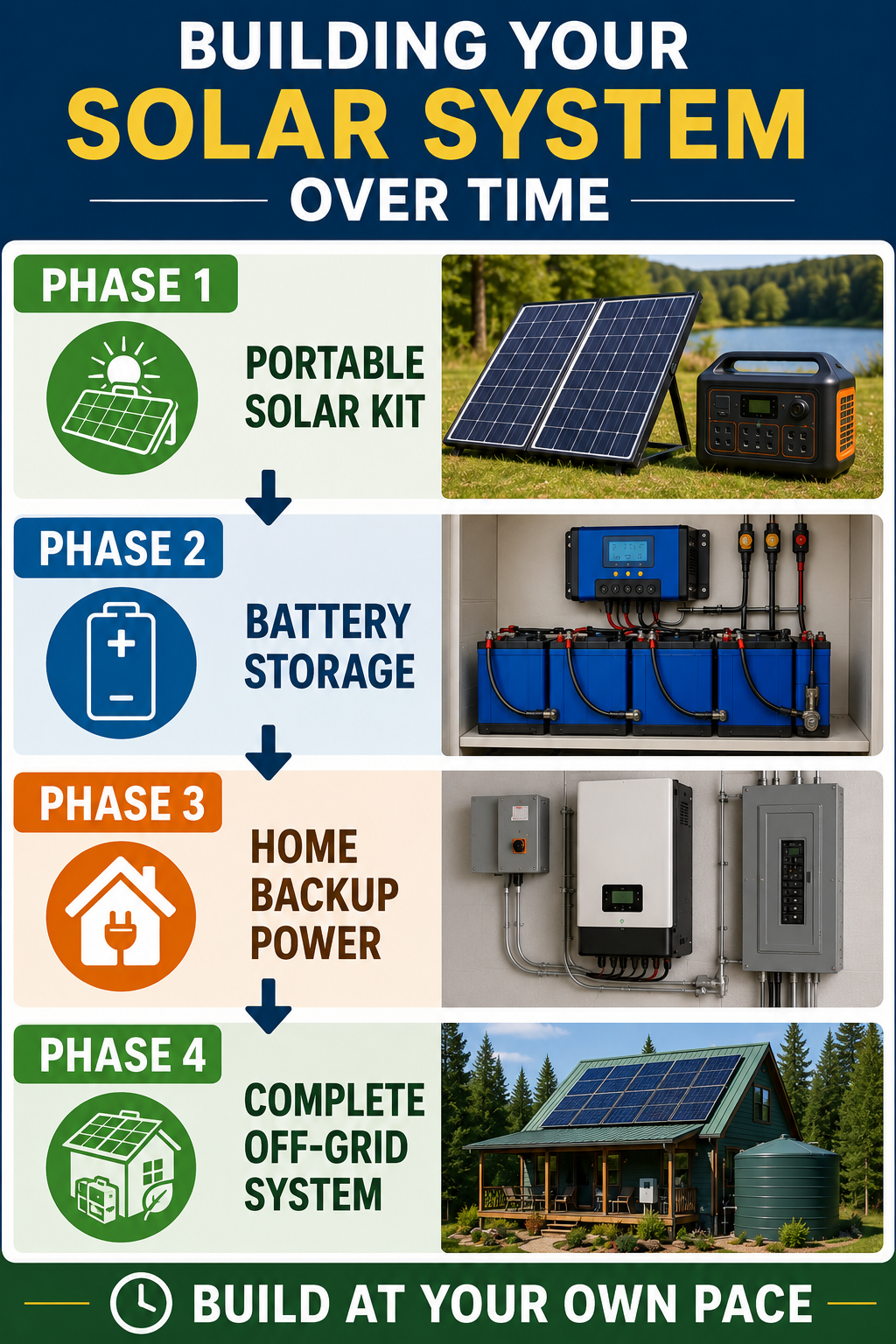
Planning for future growth is equally important. Your energy needs may change over time as your family grows, additional appliances are added, or your preparedness goals evolve. Designing a system that allows additional solar panels or battery capacity to be added later provides flexibility while avoiding the expense of replacing major components prematurely. Many experienced off-grid homeowners recommend building a system that can expand gradually rather than attempting to install everything at once.
Choosing the Right Solar Panels
Solar panels are often the most recognizable part of any renewable energy system, but selecting the right panels involves more than simply purchasing the highest wattage available. Durability, efficiency, available installation space, expected weather conditions, and long-term reliability all influence which panels are best suited for a particular property. Understanding these factors allows you to make better decisions while avoiding unnecessary expense.
Most residential systems today use monocrystalline photovoltaic panels because they produce more electricity from a given amount of roof or ground space than many older panel designs. Their higher efficiency makes them especially attractive where installation space is limited. Polycrystalline panels remain available and continue providing reliable performance, but advances in manufacturing have made monocrystalline technology the preferred choice for many homeowners planning new installations.
Panel placement has a significant impact on energy production. Even high-quality solar panels perform poorly if they spend much of the day in shade. Trees, chimneys, nearby buildings, utility poles, and seasonal changes in the sun’s position should all be considered before installation. In many cases, carefully selecting the installation location produces greater improvements in energy output than purchasing more expensive equipment.
Keeping panels clean also contributes to long-term performance. Dust, pollen, leaves, bird droppings, and accumulated debris gradually reduce the amount of sunlight reaching the solar cells. Fortunately, maintenance requirements are relatively simple. Occasional cleaning with water and a soft brush or cloth is often sufficient to restore peak performance. Regular visual inspections also help identify loose wiring, storm damage, or other issues before they affect system reliability.
Although manufacturers frequently advertise maximum power ratings, real-world performance naturally varies throughout the day. Cloud cover, high temperatures, snow accumulation, seasonal daylight changes, and the angle of the sun all influence electrical production. Designing your system around realistic average conditions rather than ideal laboratory specifications helps ensure dependable performance throughout the year.
Understanding Battery Storage
If solar panels collect energy, batteries preserve it for the moments when sunlight is no longer available. Without battery storage, an off-grid solar system could only provide electricity during daylight hours, making it impractical for most homes. Batteries transform solar power into a reliable, around-the-clock energy source capable of supporting essential household equipment regardless of the time of day.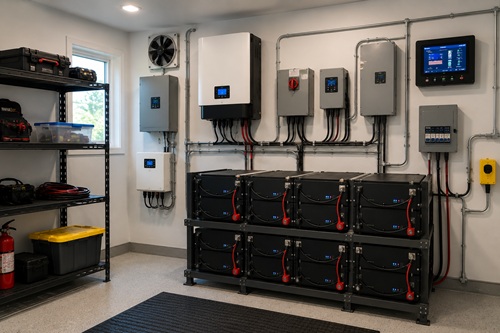
Battery technology has advanced dramatically over the past decade. While traditional lead-acid batteries remain available and continue serving many applications, newer lithium-based batteries have become increasingly popular because they generally require less maintenance, occupy less space, recharge more efficiently, and provide longer service life. Although the initial investment is often higher, many homeowners find that improved performance and longevity offset much of the additional cost over time.
Determining how much battery storage you need depends largely on your preparedness goals. A system intended to provide emergency lighting, communications, and refrigeration for a day or two requires much less storage than one designed to operate an entire household through several cloudy days. Thinking carefully about which appliances truly matter during an emergency helps establish realistic battery requirements while keeping costs manageable.
Battery care also influences long-term performance. Most modern systems include electronic management systems that help prevent overcharging, excessive discharge, and unsafe operating conditions. Even so, storing batteries within recommended temperature ranges, following manufacturer guidelines, and inspecting connections periodically all contribute to maximizing system lifespan. Like every other component of an off-grid solar system, batteries perform best when they are understood, maintained, and used within their intended design limits.
Understanding Charge Controllers
Although solar panels often receive most of the attention, the charge controller quietly performs one of the most important jobs in the entire solar system. Its purpose is to regulate the electricity flowing from the solar panels to the battery bank, ensuring that batteries receive the proper charging voltage while protecting them from overcharging or excessive discharge. Without a charge controller, even an expensive battery bank can suffer permanent damage long before reaching its expected lifespan.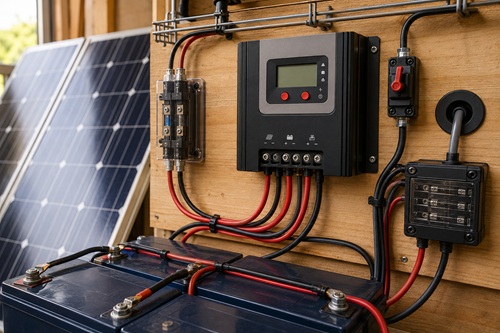
Modern charge controllers do much more than simply regulate charging. Many continuously monitor battery voltage, charging rates, system temperatures, and electrical loads while automatically adjusting charging patterns throughout the day. As sunlight intensity changes because of clouds, seasonal weather, or the position of the sun, the controller adapts to maximize charging efficiency while protecting the batteries from harmful conditions.
When selecting a charge controller, it is wise to think beyond your immediate needs. Purchasing equipment that allows modest future expansion often proves more economical than replacing undersized components later. As families add additional solar panels or increase battery capacity over time, having a controller capable of handling future growth simplifies upgrades while reducing long-term costs.
Like every component of an off-grid system, the charge controller should be installed in a clean, dry location with adequate ventilation. Protecting electronic equipment from moisture, dust, excessive heat, and accidental damage contributes significantly to long-term reliability and reduces the likelihood of unexpected failures during emergencies.
Understanding Inverters and Household Power
Most of the electrical devices found inside modern homes operate using alternating current, commonly referred to as AC power. Solar panels and batteries, however, produce and store direct current, or DC power. The inverter bridges this gap by converting stored battery energy into the electricity required by everyday household appliances.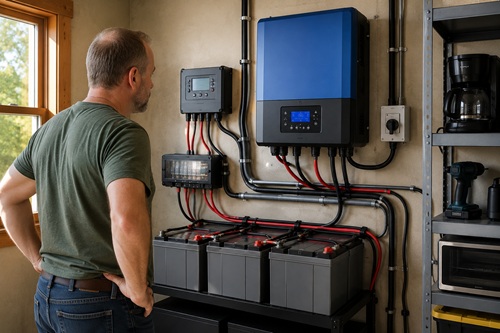
The quality of the inverter has a direct impact on how well appliances operate. Sensitive electronics, refrigerators, freezers, medical equipment, computers, televisions, and communication devices all perform best when supplied with clean, stable electrical power. Investing in a high-quality inverter helps ensure these devices operate safely while minimizing the risk of equipment damage caused by poor-quality electrical output.
Another important consideration is the amount of electricity the inverter can provide at any one time. Every appliance requires a certain amount of power to operate, and some devices—particularly those containing electric motors or compressors—briefly require much higher starting power when first turned on. Refrigerators, freezers, well pumps, air compressors, and some power tools all place temporary demands on the inverter that exceed their normal operating consumption. Planning for these short-term power surges helps prevent unnecessary system shutdowns.
Many homeowners eventually discover that managing electricity becomes second nature when living with an off-grid system. Rather than operating every appliance simultaneously, they naturally spread electrical demand throughout the day, reducing unnecessary strain on batteries while making the most efficient use of available solar energy.
Planning for Seasonal Changes
One of the most important realities of solar energy is that electrical production changes throughout the year. Summer days provide longer periods of sunlight and generally higher energy production, while winter months often bring shorter days, lower sun angles, cloud cover, snow, and reduced output. Designing an off-grid system without considering seasonal variation frequently leads to disappointment during the months when reliable electricity becomes most important.
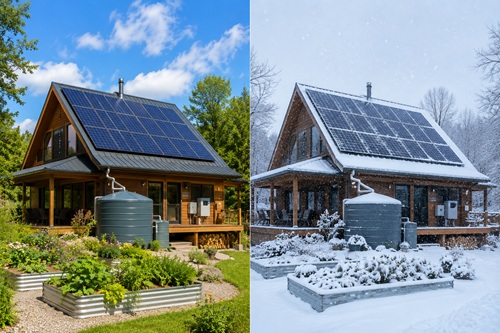
Winter presents unique challenges in many parts of North America. Snow accumulation may temporarily cover solar panels, reducing or completely preventing energy production until the panels are cleared. Cold temperatures generally improve the efficiency of photovoltaic cells, but shorter daylight hours often outweigh this advantage. Understanding how seasonal weather affects your local area allows you to size your system more accurately and develop realistic expectations.
Summer introduces different considerations. Higher temperatures may slightly reduce panel efficiency, but the increased number of daylight hours usually results in significantly greater daily energy production. This additional electricity can often be used to operate fans, refrigeration, water pumps, freezers, or recharge backup battery systems without placing excessive demands on stored energy.
Many experienced off-grid homeowners adapt their energy usage to match seasonal production. During periods of abundant sunshine, they schedule energy-intensive activities such as laundry, vacuuming, battery charging, or workshop projects while the solar panels are actively producing electricity. During extended cloudy periods, they naturally reduce unnecessary consumption to preserve battery reserves. These simple habits improve overall system performance without requiring additional equipment.
Backup Power Provides Additional Security
Although solar energy is remarkably reliable over the long term, no single power source should be considered completely sufficient under every circumstance. Extended periods of severe weather, heavy snow accumulation, wildfire smoke, or consecutive cloudy days may temporarily reduce electrical production below normal levels. Incorporating backup power into your preparedness plan adds another layer of resilience while reducing dependence on any one system.
Portable generators remain one of the most common backup options. They provide immediate electricity regardless of weather conditions and can recharge battery banks or power essential household equipment when solar production is temporarily limited. However, generators require fuel, regular maintenance, and periodic testing to remain dependable. Fuel storage, noise, exhaust, and operating costs should all be considered before relying solely on generator power.
Some households choose to combine multiple renewable energy sources. Small wind turbines may supplement solar production in areas with consistent wind, particularly during winter storms when sunlight is limited but wind speeds increase. Micro-hydroelectric systems may also provide dependable year-round electricity where suitable streams or rivers are available. These hybrid systems improve resilience by reducing dependence on any single weather condition.
Regardless of the backup method selected, redundancy remains one of the most valuable preparedness principles. Solar panels, batteries, generators, portable power stations, and even simple battery-powered flashlights each contribute to a layered energy strategy capable of adapting to changing circumstances. The objective is not perfection but flexibility.
Protecting Your Solar Investment
An off-grid solar system represents a significant investment in your family’s long-term resilience. Protecting that investment begins with proper installation but continues through regular inspection, routine maintenance, and thoughtful system management. Small issues identified early are usually inexpensive to correct, while neglected problems can eventually damage costly equipment.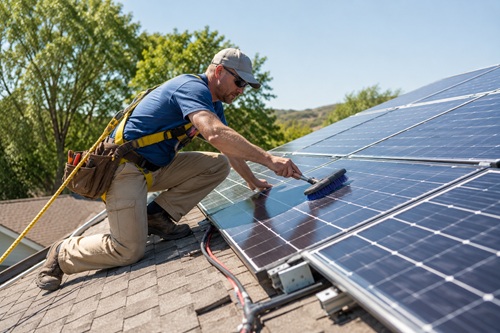
Regular inspections should include checking electrical connections for corrosion or looseness, ensuring mounting hardware remains secure, cleaning accumulated debris from solar panels, and verifying that ventilation around electronic equipment remains unobstructed. Batteries should also be inspected according to the manufacturer’s recommendations, and monitoring systems reviewed periodically to identify unusual charging or discharge patterns.
Security deserves consideration as well. Solar panels, batteries, and inverters represent valuable equipment that could attract unwanted attention during prolonged emergencies. Installing components in secure locations, limiting unnecessary visibility, and maintaining appropriate physical security measures help reduce theft or vandalism while protecting your preparedness investment.
Documentation is equally important. Keeping equipment manuals, wiring diagrams, warranty information, maintenance records, and replacement part numbers organized in both printed and digital formats simplifies future repairs and upgrades. During emergencies, having immediate access to this information often saves valuable time while reducing unnecessary troubleshooting.
Perhaps the most important form of protection is familiarity. Spend time using your system during normal conditions. Learn how to monitor battery levels, recognize warning indicators, perform routine maintenance, and operate backup equipment safely. Confidence gained through regular use cannot be purchased, yet it often becomes one of the most valuable preparedness assets you possess.
 ers a practical way to reduce that dependence while providing dependable power for essential household needs during emergencies.
© Prepping Communities. This content is for informational purposes only and not professional advice. Use at your own risk.
Terms | Privacy | Guidelines