
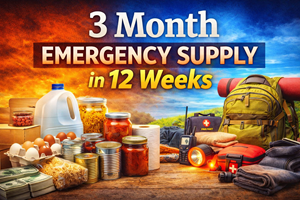
This guide outlines a structured, week-by-week plan to build a 3-month emergency supply over 12 weeks, making preparedness manageable and affordable. Instead of buying everything at once, it encourages gradually adding extra food and essentials each week, helping avoid financial strain while steadily building resilience. The approach is based on storing foods you already eat, rotating them regularly, and planning meals that can be repeated and scaled for long-term use.
The document provides a detailed meal-based purchasing strategy, where each week focuses on a specific meal (like spaghetti, casseroles, chili, or rice dishes) along with the exact quantities needed to scale that meal into a 3-month supply. It emphasizes simple, shelf-stable ingredients such as canned goods, dry staples, and basic cooking items. The guide also encourages flexibility—users can substitute their own preferred meals, as long as they calculate quantities correctly to maintain a full supply.
Beyond food, the plan highlights the importance of water storage and essential household items, including hygiene products, cleaning supplies, and medical needs. It recommends storing at least one gallon of water per person per day and gradually building supplies of items like soap, toothpaste, first aid materials, and prescription medications. This ensures preparedness not just for food shortages, but for maintaining health and sanitation during emergencies.
Finally, the guide expands into broader preparedness by including a 72-hour emergency kit checklist, covering shelter, tools, clothing, communication, and important documents. It reinforces the idea that true preparedness goes beyond food storage—it involves planning for mobility, safety, and morale during a crisis. Overall, the document promotes a balanced, realistic approach to preparedness: build slowly, stay practical, and focus on sustainability over time.
Obtain a 3 Month Supply in 12 Weeks
By Kammie Roylance
© Prepping Communities. This content is for informational purposes only and not professional advice. Use at your own risk.
Terms | Privacy | Guidelines