
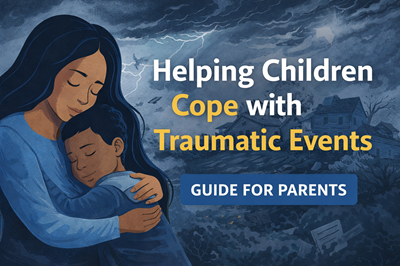
This publication, titled “Helping Children and Adolescents Cope With Traumatic Events”, is a practical mental health guide designed to help caregivers support children during and after disasters or high-stress events. It recognizes that emergencies—whether natural disasters, accidents, or violence—can have a significant emotional impact on young people, and that family and trusted adults play a critical role in helping them process and recover (page 1).
The guide begins by outlining how children and adolescents typically respond to trauma, noting that reactions can vary by age but often include physical symptoms (like headaches or stomachaches), sleep problems, difficulty concentrating, and emotional responses such as fear, guilt, or anger (page 1). Younger children may become clingy, regress to earlier behaviors like bed-wetting, or show increased fear, while older children and teens may withdraw, struggle in school, or engage in risky behaviors. The document emphasizes that these reactions are normal in the short term, but should be monitored if they persist.
A key focus of the guide is helping adults understand what supportive behavior looks like in a crisis situation. On page 2, it stresses the importance of creating a safe, calm, and stable environment, maintaining routines, and reassuring children that they are cared for and protected. It encourages allowing children to express their feelings through talking, writing, or drawing, while also limiting exposure to repeated distressing news coverage. These actions help reduce anxiety and give children a sense of control during uncertain times.
The guide also provides clear “Do” and “Don’t” recommendations for caregivers. Positive actions include ensuring basic needs are met, staying calm, and paying attention to behavioral changes, while avoiding forcing children to talk, expecting them to be “tough,” or reacting negatively to emotional outbursts (page 2). It highlights that adult behavior directly influences how children cope—if adults remain steady and supportive, children are more likely to recover effectively.
Finally, the publication outlines when to seek professional help, listing warning signs such as persistent flashbacks, emotional numbness, severe anxiety, or depression lasting more than a few weeks (page 2). It also provides resources like crisis hotlines and mental health service locators, reinforcing that support is available when needed.
NIH Publication No. 22-MH-8066
© Prepping Communities. This content is for informational purposes only and not professional advice. Use at your own risk.
Terms | Privacy | Guidelines