
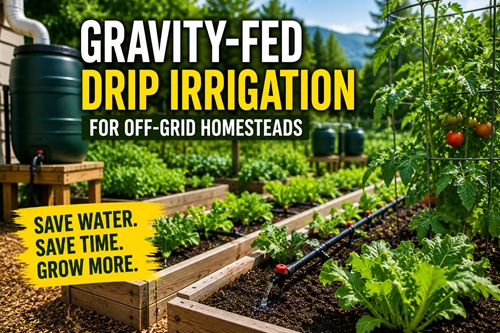
Healthy gardens depend on three essential ingredients: fertile soil, adequate sunlight, and consistent watering. While gardeners have little control over the weather, they can control how efficiently water is delivered to their plants. Finding a reliable watering solution not only improves plant health but also saves time, conserves water, and reduces the daily effort required to maintain a productive garden.
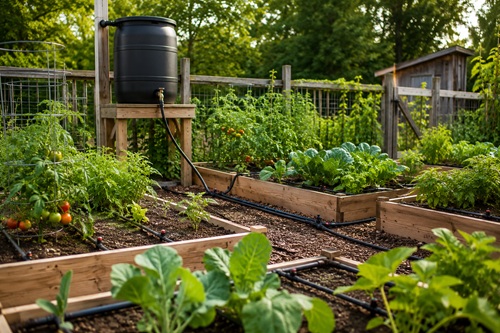
For many people, watering starts with a hose or watering can. This works well when tending a few pots on a patio, but as gardens expand to include raised beds, vegetables, herbs, and fruit, daily watering can quickly become one of the most time-consuming gardening tasks. Missing even a day or two during periods of hot weather can stress plants, reduce harvests, and leave gardeners scrambling to catch up.
A gravity-fed drip irrigation system offers a practical and surprisingly simple solution. Rather than relying on household water pressure or electric pumps, these systems use gravity to slowly move water from an elevated reservoir through low-pressure tubing and directly to the base of each plant. Water is delivered exactly where it is needed—at the root zone—reducing waste while helping maintain consistent soil moisture throughout the growing season.
The beauty of this type of irrigation system lies in its simplicity. It requires very little maintenance, uses inexpensive and readily available materials, and can be adapted to gardens of almost any size. Whether you’re growing herbs in containers, vegetables in raised beds, or managing a larger homestead garden, gravity-fed irrigation can make watering more efficient while significantly reducing the amount of daily work required.
For those interested in preparedness, self-sufficiency, or off-grid living, gravity-fed irrigation offers another important advantage. Because it can operate using stored water or rainwater without depending on municipal water pressure or electricity, it continues working under conditions where conventional irrigation systems may not.
In this guide, you’ll learn how gravity-fed irrigation works, how to plan and build an effective system, ways to improve water efficiency, and why this simple project can become one of the most valuable upgrades you make to your garden.
Understanding How Gravity-Fed Irrigation Works
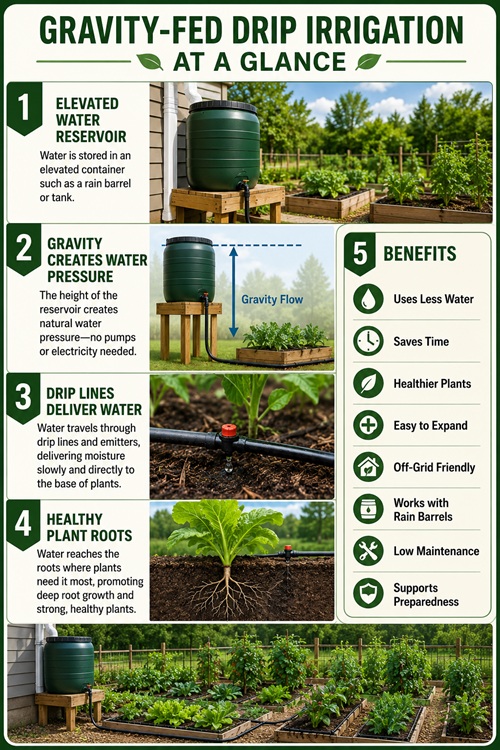
The idea behind gravity-fed irrigation is remarkably straightforward. Water naturally flows downhill, and by placing a reservoir above the garden, gravity creates enough pressure to move water through low-pressure irrigation tubing without requiring pumps or household water pressure.
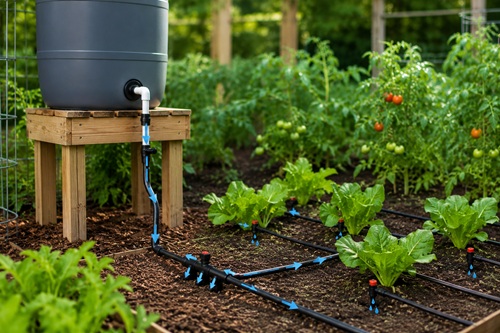
The idea behind gravity-fed irrigation is remarkably straightforward. Water naturally flows downhill, and by placing a reservoir above the garden, gravity creates enough pressure to move water through low-pressure irrigation tubing without requiring pumps or household water pressure.
Instead of spraying water across an entire garden like a sprinkler, drip irrigation delivers water slowly at the base of each plant. This allows moisture to soak directly into the surrounding soil where it can be absorbed by the roots. Because water is released gradually, very little is lost through evaporation or runoff, making drip irrigation one of the most efficient watering methods available.
Although the pressure produced by gravity is relatively low, it is more than adequate for properly designed drip irrigation systems. Even raising a water reservoir one to three feet above the garden often provides sufficient pressure for container gardens, raised beds, and many backyard vegetable gardens.
The slow, steady delivery of water offers another important benefit. Plants receive a more consistent moisture supply, encouraging roots to grow deeper into the soil rather than remaining near the surface. Deeper root systems often make plants more resilient during periods of heat and temporary drought while contributing to healthier overall growth.
Unlike many gardening projects that require specialized equipment, gravity-fed irrigation relies on basic physics rather than complicated technology. Once installed, the system quietly performs its job with very little attention from the gardener.
Planning Your System
Before purchasing materials, it’s worth spending a little time planning the layout of your irrigation system. A thoughtful design not only simplifies installation but also improves water flow, reduces maintenance, and makes future expansion much easier.
Begin by deciding where the water reservoir will be located. Ideally, it should be close enough to the garden to minimize long tubing runs while remaining high enough to provide adequate water pressure. The stand supporting the reservoir should be stable, level, and capable of safely supporting the full weight of the container when filled with water.
Next, consider how water will reach each section of the garden. Keeping the main supply line as direct as possible generally improves water distribution and reduces pressure losses. If your garden contains several raised beds or planting areas, think about dividing the system into separate watering zones that can be expanded over time.
Grouping plants with similar watering requirements together is another simple way to improve efficiency. Vegetables such as tomatoes, peppers, cucumbers, and squash typically require more frequent watering than many herbs or drought-tolerant plants. Organizing these plants into separate zones makes it easier to adjust watering schedules while avoiding unnecessary water use.
It is also helpful to think ahead. Many gardeners discover that their gardens gradually expand each year. Leaving room for additional tubing, manifolds, or a larger reservoir now can save both time and money when the system eventually grows.
A little planning at the beginning often prevents frustration later and creates an irrigation system that is easier to maintain for many growing seasons.
The Main Components of the System
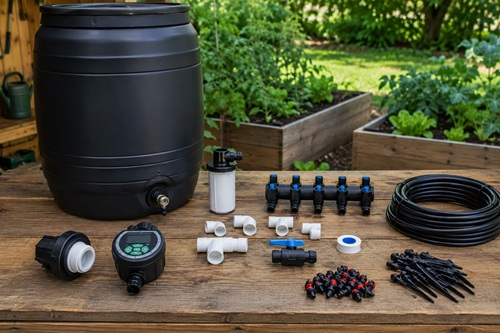
Although gravity-fed irrigation systems may appear complicated, they are built from only a handful of components working together.
Everything begins with the water reservoir. Food-grade plastic barrels, rain barrels, storage totes, and other durable containers all work well. The size of the reservoir depends on the number of plants being watered and how long you want the system to operate between refills.
Near the bottom of the reservoir, a bulkhead fitting provides a watertight outlet that connects the water supply to the irrigation lines. From there, water passes through either a simple shut-off valve or a specialized zero-pressure irrigation timer.
Unlike conventional irrigation timers that require municipal water pressure, zero-pressure timers are specifically designed for gravity-fed systems. Once programmed, they automatically open and close according to the selected watering schedule, allowing the garden to water itself with little or no daily attention.
The main irrigation line then carries water to a distribution manifold, where the flow is divided into multiple smaller drip lines. Each line serves a container, raised bed, or section of the garden. At the end of each drip line, adjustable emitters slowly release water directly into the surrounding soil.
Although each component performs a relatively simple task, together they create a reliable irrigation system capable of delivering water efficiently throughout the growing season.
Why Drip Irrigation Uses Water More Efficiently
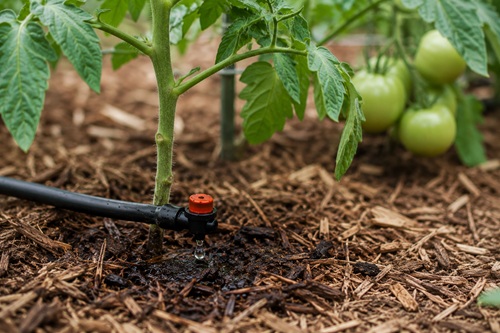
One of the primary reasons gardeners switch to drip irrigation is its remarkable water efficiency. Traditional sprinklers often waste significant amounts of water through evaporation, wind drift, and runoff before moisture ever reaches the root zone.
Drip irrigation works differently by delivering water slowly and precisely where plants need it most. Because water is absorbed gradually by the surrounding soil, very little is lost to evaporation, and runoff is greatly reduced. Plant leaves remain relatively dry, lowering the risk of several common fungal diseases that thrive on wet foliage.
Targeted watering also discourages weed growth. Since only the cultivated plants receive regular irrigation, the surrounding soil stays drier, reducing the number of weed seeds that successfully germinate.
Many gardeners notice healthier plants while using considerably less water after switching to drip irrigation. The combination of improved efficiency, healthier root systems, and reduced maintenance makes gravity-fed drip irrigation an attractive solution for both new and experienced gardeners.
Saving Water Throughout the Season
Although drip irrigation already conserves water, a few additional practices can improve efficiency even further. Applying organic mulch around vegetables and herbs helps retain soil moisture, slows evaporation, moderates soil temperature, and suppresses weed growth.
Watering during the early morning allows plants to absorb moisture before the hottest part of the day while minimizing evaporation losses. Adjusting watering schedules as temperatures change throughout the season also helps prevent both overwatering and underwatering.
Taking a few minutes every couple of weeks to inspect tubing, fittings, and emitters for leaks can prevent unnecessary water loss. Small adjustments made throughout the growing season often add up to significant savings while keeping plants healthier and more productive.
Choosing the Right Water Reservoir
The water reservoir is the heart of a gravity-fed irrigation system, making it one of the most important decisions during the planning process. Choosing the right size depends on several factors, including the size of your garden, the types of plants you’re growing, your local climate, and how often you’re willing or able to refill the reservoir.
For a small patio garden or a handful of containers, a reservoir holding twenty to thirty gallons of water may provide several days of irrigation before needing to be replenished. Larger vegetable gardens or multiple raised beds often benefit from reservoirs capable of holding fifty gallons or more. The goal is to provide enough stored water that the system can operate consistently without requiring constant attention.
Food-grade plastic barrels are among the most popular choices because they are durable, affordable, and widely available. Rain barrels are another excellent option, particularly when connected to roof downspouts that automatically refill the reservoir after rainfall. Larger storage totes and livestock watering tanks can also be adapted successfully for gardens with greater irrigation demands.
Regardless of the container you choose, the reservoir should be installed on a sturdy, level platform capable of safely supporting its full weight. Water weighs approximately 8.3 pounds per gallon, meaning a thirty-gallon barrel weighs nearly 250 pounds before accounting for the weight of the container itself. Building a strong support structure is just as important as selecting the right reservoir.
Thinking ahead is also worthwhile. Many gardeners find that their gardens naturally expand over time. Choosing a slightly larger reservoir than you currently need can provide additional flexibility and eliminate the need to replace it as your irrigation system grows.
Pro Tip: Size Your Reservoir for Future Growth
When selecting a reservoir, don’t size it only for the garden you have today. Many gardeners gradually add raised beds, containers, berry bushes, or fruit trees over the years. Choosing a slightly larger reservoir now provides extra watering capacity while making future expansion much easier. If you occasionally travel or spend several days away from home, the additional storage can also extend the amount of time your irrigation system operates before requiring a refill.
Pro Tip: Build Your System in Sections
If this is your first drip irrigation system, resist the temptation to build everything at once. Start with a single raised bed or a few containers and observe how the system performs over several watering cycles. Once you’re comfortable with the flow rates and watering schedule, expanding the system is usually as simple as adding more tubing, emitters, or another distribution manifold. Building in stages not only spreads out the cost but also allows you to fine-tune the system before committing to a larger installation.
Using Rainwater for Greater Efficiency
One of the greatest advantages of gravity-fed irrigation is how naturally it complements rainwater harvesting. Rather than relying entirely on municipal water, rain collected from rooftops can be stored in barrels or larger storage tanks and gradually used to irrigate the garden throughout the growing season.
Every rainfall becomes an opportunity to replenish your water supply without increasing your water bill. Many gardeners also appreciate that rainwater closely resembles the natural moisture plants receive in the wild. While municipal water is perfectly suitable for gardening, using collected rainwater allows you to make better use of a free resource while reducing demand on treated drinking water supplies.
Even a single rain barrel can provide enough water to support a small vegetable garden for several days, while multiple connected barrels or larger storage tanks can significantly extend watering intervals. Combined with gravity-fed irrigation, rainwater harvesting creates a practical and sustainable system that helps gardens remain productive during dry weather or temporary watering restrictions.
Automating Your Watering Schedule
One of the reasons gravity-fed irrigation has become so popular is that it can operate almost entirely on its own. While a simple shut-off valve works well for manual watering, installing a zero-pressure irrigation timer allows the system to water automatically without household water pressure.
These specialized timers are designed specifically for gravity-fed systems and can be programmed to water at specific times of the day for predetermined lengths of time. Once configured, the system quietly performs its work with little or no daily attention.
Consistent watering is generally healthier for plants than occasional heavy watering. Maintaining relatively stable soil moisture reduces plant stress, encourages stronger root systems, and often leads to improved growth and larger harvests. Automation also provides peace of mind when traveling or spending several days away from home, knowing the garden will continue receiving water according to schedule.
Fertilizing Through the Irrigation System
Another advantage of gravity-fed irrigation is the ability to distribute nutrients while watering. Liquid fertilizers diluted according to the manufacturer’s recommendations can often be added directly to the reservoir, allowing nutrients to travel through the irrigation lines and reach each plant evenly.
This technique, commonly referred to as fertigation, reduces the need for separate fertilizer applications while ensuring nutrients are delivered directly to the root zone. Because the fertilizer is applied only where it is needed, waste is often reduced compared to broadcasting dry fertilizer across an entire garden.
Moderation remains important. Overly concentrated fertilizer mixtures may damage plants or contribute to clogged emitters. Many gardeners prefer alternating between plain water and diluted fertilizer throughout the growing season to provide steady nutrition without excessive buildup.
Routine Maintenance
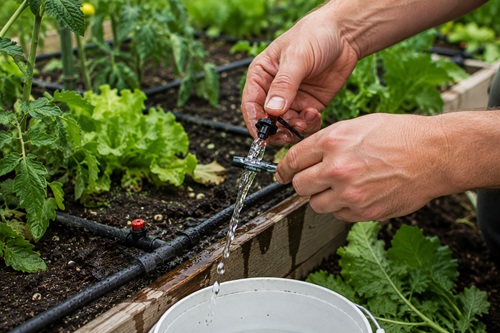
Gravity-fed irrigation systems require surprisingly little maintenance, but regular inspections help keep everything operating efficiently. Checking the system every week or two can prevent small problems from becoming larger ones later in the season.
Drip emitters should be inspected occasionally to ensure water is flowing evenly to each plant. If an emitter becomes partially clogged by sediment, algae, or mineral deposits, cleaning or replacing it usually restores proper operation. Flushing the irrigation lines periodically also helps remove accumulated debris before it restricts water flow.
If your system includes an inline filter, cleaning it regularly will significantly reduce the likelihood of clogged emitters. Reservoirs should also be inspected periodically for sediment buildup or algae growth, especially if they receive direct sunlight.
Before freezing temperatures arrive, drain the entire irrigation system to prevent cracked tubing, damaged fittings, and split reservoirs caused by expanding ice.
Pro Tip: Test Before Leaving It Unattended
Before relying on your irrigation system for several days, allow it to complete several full watering cycles while you’re home. Watch each emitter to confirm that every plant receives water evenly and inspect all fittings for leaks. Spending a few extra minutes making small adjustments now can prevent dry plants, wasted water, and unnecessary frustration later.
Pro Tip: Prevent Clogged Drip Emitters
Sediment, algae, and mineral deposits are the most common causes of clogged drip emitters. Installing a simple inline filter between the reservoir and the irrigation tubing can dramatically reduce maintenance while improving long-term reliability. If you’re using collected rainwater, periodically flushing the irrigation lines and cleaning the filter several times during the growing season will help maintain even water flow throughout the system.
Expanding Your System
One of the greatest strengths of a gravity-fed drip irrigation system is its flexibility. Many gardeners begin with a handful of containers or a single raised bed before gradually expanding the system to support larger vegetable gardens, berry patches, greenhouses, fruit trees, or small orchards. Because the system is modular, it can grow alongside your garden without requiring a complete redesign.
Adding additional drip lines, manifolds, or watering zones is usually straightforward. As your irrigation needs increase, you may decide to install a larger reservoir or connect multiple reservoirs together to increase water storage capacity. Larger gardens can also benefit from dividing the irrigation system into separate zones, allowing plants with different watering requirements to be irrigated independently.
Planning for future expansion during the initial installation often saves both time and money. Installing slightly larger supply lines or leaving extra room on the distribution manifold makes adding new sections much easier later. A well-designed gravity-fed system can continue evolving for many years as your garden changes.
Common Challenges
Like any irrigation system, gravity-fed drip irrigation occasionally experiences problems. Fortunately, most are relatively minor and can be corrected quickly with routine maintenance.
Reduced water flow is one of the most common issues. This is often caused by insufficient reservoir height, clogged emitters, sediment inside the irrigation lines, or partially blocked filters. Raising the reservoir or cleaning the affected components usually restores normal performance.
Algae growth may also develop inside translucent reservoirs exposed to direct sunlight. Using opaque containers or covering the reservoir helps limit sunlight and significantly reduces algae formation. Small leaks occasionally develop where tubing connects to fittings or emitters, but these are typically inexpensive and easy to repair when discovered during routine inspections.
Another common issue involves uneven watering. Plants located farther from the reservoir may receive less water if the system becomes too large or if the tubing layout is poorly designed. Dividing larger gardens into multiple watering zones often solves this problem while improving overall efficiency.
Fortunately, these systems remain remarkably dependable because they contain very few moving parts. Regular inspections throughout the growing season usually prevent small issues from becoming larger repairs.
Pro Tip: Combine Gravity-Fed Irrigation with Rainwater Harvesting
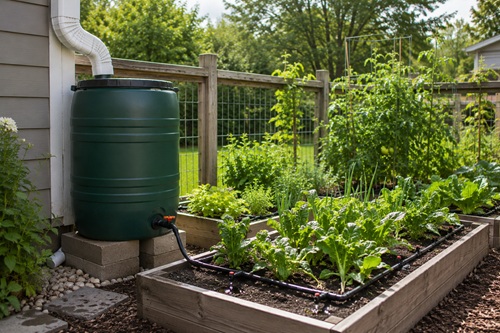
Gravity-fed irrigation becomes even more valuable when paired with rainwater harvesting. Every rainfall helps replenish your stored water supply, reducing dependence on municipal water while creating a sustainable source of irrigation throughout the growing season. For gardeners, homesteaders, and preparedness-minded families, combining rainwater collection with gravity-fed irrigation creates an efficient system that continues operating even during temporary water restrictions or interruptions to normal water service.
Preparedness Benefits
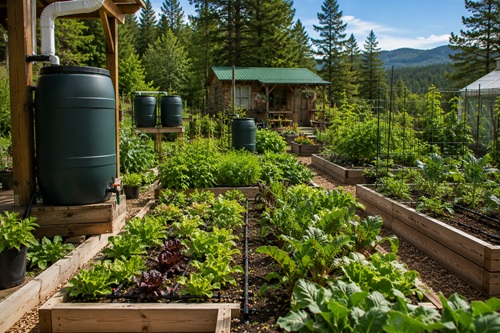
While many people install gravity-fed irrigation simply to make gardening easier, these systems also provide meaningful preparedness benefits. They require little or no electricity, operate independently of household water pressure, and can be supplied by stored rainwater or other collected water sources. This makes them particularly valuable during power outages, municipal water restrictions, or other disruptions that affect conventional irrigation systems.
For homesteaders and preparedness-minded families, maintaining a productive garden is about more than convenience. Fresh vegetables, herbs, and fruits become an important source of food security, especially during periods when grocery prices rise or supply chains experience disruptions. A reliable irrigation system helps ensure that months of gardening effort are not lost simply because consistent watering becomes difficult.
Gravity-fed systems also encourage thoughtful water management. Because every gallon stored in the reservoir has value, gardeners naturally become more conscious of water conservation, proper irrigation schedules, and efficient growing practices. These habits not only reduce water consumption but also contribute to healthier plants and more productive gardens.
Perhaps the greatest advantage is reliability. Gravity-fed irrigation depends on simple mechanical principles rather than complex electronics or high-pressure plumbing. Fewer moving parts generally mean fewer things that can fail, making these systems well suited for long-term use in a variety of environments.
Whether your goal is lowering water bills, simplifying garden maintenance, becoming more self-sufficient, or preparing for unexpected disruptions, gravity-fed irrigation offers an effective solution that combines simplicity with long-term dependability.
Key Takeaways
Gravity-fed drip irrigation demonstrates that one of the most effective gardening improvements is also one of the simplest. By using gravity to move water from an elevated reservoir directly to the root zone, these systems provide plants with consistent moisture while reducing evaporation, runoff, and unnecessary water consumption.
With only a few basic components, a gravity-fed system can be adapted to gardens of almost any size. It can be expanded gradually as your garden grows, automated using zero-pressure timers, and paired with rainwater harvesting to create an efficient, sustainable watering solution. Routine maintenance is minimal, and the system’s straightforward design makes it both reliable and easy to troubleshoot.
Beyond convenience, gravity-fed irrigation supports healthier plants, stronger root systems, and more efficient use of one of our most valuable resources—water. For gardeners, homesteaders, and anyone interested in greater self-sufficiency, it represents a practical investment that continues to provide benefits season after season.
Whether you’re growing a few herbs on the patio, maintaining several raised beds, or working toward a more resilient homestead, a gravity-fed drip irrigation system is a project well worth considering. It is inexpensive to build, easy to customize, and capable of transforming the way you care for your garden while helping ensure healthy, productive harvests for years to come.
Frequently Asked Questions
How high should a gravity-fed water reservoir be?
Most small garden systems work well with the reservoir elevated between one and three feet above the garden. Increasing the height generally improves water pressure, but the ideal elevation depends on the size of the system, the length of the irrigation lines, and the type of drip emitters being used.
Can I use rainwater in a gravity-fed drip irrigation system?
Yes. Rainwater is one of the best water sources for gravity-fed irrigation. When paired with rain barrels or storage tanks, the system becomes even more efficient and reduces dependence on municipal water supplies. Installing a simple filter helps prevent sediment from clogging the drip emitters.
Will gravity-fed irrigation work for raised beds?
Absolutely. Raised beds are often one of the best applications for gravity-fed drip irrigation because they typically require consistent watering throughout the growing season. Drip lines can easily be routed around vegetables, herbs, flowers, or berry plants.
How often should I water my garden?
There is no single schedule that works for every garden. Watering frequency depends on the weather, soil type, plant variety, and stage of growth. During hot summer weather, vegetables may require watering daily, while cooler temperatures or mulched gardens often require less frequent irrigation.
Do I need electricity to operate a gravity-fed irrigation system?
No. One of the biggest advantages of gravity-fed irrigation is that it operates without electric pumps. If you choose to automate the system, a battery-powered zero-pressure timer is typically all that is required.
© Prepping Communities. This content is for informational purposes only and not professional advice. Use at your own risk.
Terms | Privacy | Guidelines