
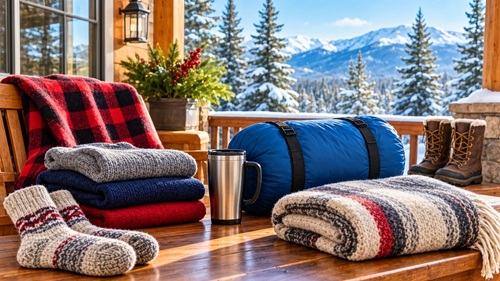
Could Your Household Stay Warm During an Extended Winter Power Outage?
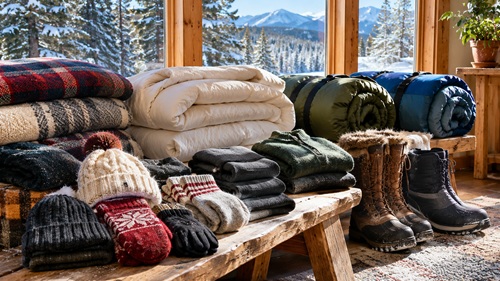
Introduction
Imagine waking up on a cold winter morning to discover that the electricity has gone out. The furnace is no longer operating, the house is gradually cooling, and the weather forecast indicates that freezing temperatures will continue for several days.
At first, the situation may not seem particularly concerning. Everyone puts on a sweater, finds an extra blanket and waits for the electricity to return. But what happens when those first few hours turn into several days? What happens when alternative heating fuel begins running low, clothing becomes damp and bedrooms become increasingly cold?
Many households spend considerable time preparing emergency food supplies, storing water, purchasing generators and researching alternative heating systems. Yet one of the most fundamental aspects of winter preparedness is frequently overlooked: the ability to retain body heat when conventional heating is no longer available.
Having a cupboard full of blankets and a closet full of winter clothing does not necessarily mean your household is adequately prepared. A sleeping bag purchased for summer camping may provide very little protection during severe winter conditions. Children’s winter boots may no longer fit, blankets may have deteriorated during storage, and clothing that becomes wet may be difficult to dry without electricity.
These are the kinds of problems that are much easier to address before an emergency occurs.
This preparedness lesson will help you understand how the human body loses heat, select appropriate winter clothing and bedding, evaluate your existing supplies, identify preparedness gaps and develop a practical strategy for keeping every member of your household warm, dry and safe.
To help you put what you learn into practice, Prepping Communities has also developed a FREE 29-page Emergency Bedding and Clothing Inventory & Readiness Assessment that you can download, print and complete as part of your household emergency preparedness planning.
Understanding the Threat of an Extended Winter Power Outage
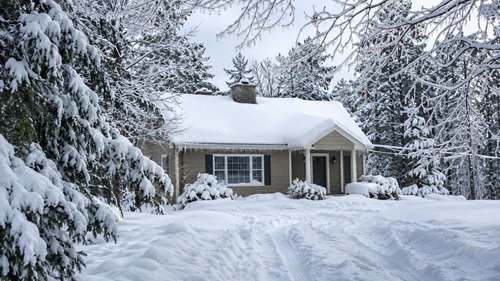
Winter power outages can occur for many reasons, including ice storms, heavy snowfall, freezing rain, severe winds, equipment failures and disruptions to critical infrastructure. While many outages are resolved within a few hours, severe weather can damage electrical distribution networks across entire regions, leaving households without electricity for several days or longer.
One common misconception is that homes equipped with natural gas or oil heating will automatically remain warm during an electrical outage. Many conventional heating systems rely on electricity to operate circulation pumps, fans, ignition systems, thermostats and electronic controls. Even when fuel remains available, the heating system itself may no longer function.
How quickly a home loses heat depends on its insulation, construction, exposure to wind, outdoor temperatures, air leakage and available sources of heat. A modern, well-insulated home may retain warmth considerably longer than an older building with poorly insulated walls and windows. However, without sufficient replacement heat, both will eventually become colder.
The following table illustrates some of the challenges households may encounter as a winter power outage continues.
| Outage duration | Potential household challenges |
|---|---|
| First 6 hours | Loss of conventional heating and gradual indoor cooling |
| 6–24 hours | Increasing dependence on warm clothing and blankets |
| 24–48 hours | Colder sleeping conditions and greater difficulty maintaining comfort |
| 2–3 days | Increased cold exposure, moisture accumulation and clothing rotation requirements |
| 4–7 days | Greater dependence on alternative heating, insulated sleeping arrangements and dry supplies |
| 8–14 days | Potential depletion of heating fuel and increasing challenges with laundry, hygiene and equipment maintenance |
| Beyond 14 days | Long-term habitability, resupply and relocation considerations |
These timeframes are intended to help with planning rather than predict how quickly a particular home will cool. Some buildings may become dangerously cold within hours, while others may retain heat for considerably longer.
Emergency clothing and bedding provide an additional layer of protection, but they should never be considered a permanent substitute for safe heating or access to heated accommodation.
Understanding How Your Body Loses Heat
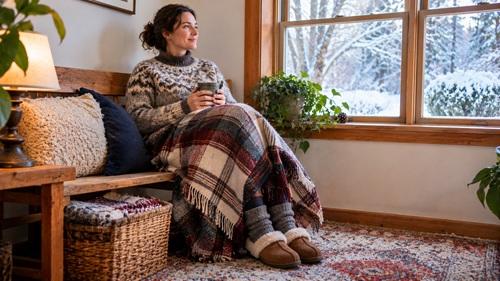
Before evaluating your household’s winter clothing and bedding, it helps to understand why certain materials and equipment are more effective than others.
Clothing and blankets do not normally generate heat. Their primary purpose is to retain the heat naturally produced by the human body. The better you understand how that heat escapes, the easier it becomes to recognize weaknesses in your existing preparedness arrangements.
Heat can be lost through four principal mechanisms: conduction, convection, radiation and evaporation.
Conduction occurs when heat transfers directly from your body into a colder surface. Anyone who has sat on a cold concrete floor or slept on an uninsulated camping mattress has probably experienced this. Even with several blankets covering your body, considerable heat can be lost into the surface beneath you.
Convection occurs when moving air carries heat away from the body. Cold drafts entering through windows and doors can make an otherwise reasonably insulated room feel much colder. Wind-resistant clothing and appropriate household draft reduction help address this type of heat loss.
Radiation is the transfer of thermal energy from the body into its surroundings. Insulated clothing, blankets and sleeping bags help reduce overall heat loss by trapping air and creating a warmer environment around the body.
Evaporation occurs when moisture evaporates from the skin or clothing, removing heat in the process. Someone who spends an hour clearing snow while wearing too many layers may perspire heavily. Once the physical activity stops, that damp clothing can contribute to rapid cooling.
| Heat loss mechanism | How heat is lost | Preparedness solution |
|---|---|---|
| Conduction | Direct contact with cold surfaces | Insulated sleeping mats, mattresses and footwear |
| Convection | Moving air carries heat away | Wind-resistant clothing and draft reduction |
| Radiation | Heat transfers into surrounding environments | Insulated clothing, blankets and sleeping bags |
| Evaporation | Moisture evaporating from the skin removes heat | Moisture-managing clothing and dry replacements |
Understanding these four mechanisms explains why simply purchasing more blankets may not always be the most effective preparedness investment. In some households, improving insulation beneath sleeping areas or maintaining a better supply of dry clothing may provide considerably greater benefits.
Choosing the Right Materials for Emergency Clothing and Bedding
Walk through the bedding department of almost any store and you will find blankets that look remarkably similar. Some are made from wool, others from polyester fleece or cotton, and some contain down or synthetic insulation.
Although these products may appear interchangeable, their performance during a prolonged winter emergency can differ considerably.
Merino wool is particularly useful for thermal underwear, socks and clothing worn close to the skin. It provides insulation, helps manage moisture and tends to resist odors better than many synthetic materials. This can be especially valuable when regular laundry facilities are unavailable. However, merino wool can be expensive, and there is no need to replace every garment in your household with it.
Traditional wool blankets have been used for generations because of their durability and insulating properties. Wool retains some insulating ability when damp, although wet wool becomes heavier and can take considerable time to dry. A good wool blanket that has been properly maintained may remain useful for decades.
Polyester fleece offers an affordable alternative for many households. It is relatively lightweight, dries quickly and provides useful insulation. Fleece jackets and blankets are particularly practical during prolonged emergencies when clothing must be washed and dried without electricity. Fleece does not generally provide substantial wind protection, so outdoor garments may require a protective outer layer.
Down insulation provides excellent warmth relative to its weight, making it popular in high-quality winter jackets and sleeping bags. Its main disadvantage is sensitivity to moisture. When down becomes wet and loses its loft, its insulating performance can decline substantially.
Synthetic insulation is generally more tolerant of damp conditions than untreated down. Although synthetic sleeping bags and jackets may be heavier and bulkier, this may not be a significant disadvantage for households primarily preparing to shelter at home.
Cotton is comfortable, affordable and widely available. It can be perfectly suitable for everyday indoor clothing when conditions remain warm and dry. The difficulty arises when cotton becomes wet. It absorbs moisture, dries slowly and provides less effective insulation when saturated.
Reflective emergency blankets are lightweight, compact and inexpensive. They can help reduce radiant heat loss and provide supplementary protection from wind and moisture. However, they offer little insulation against direct contact with cold surfaces and may trap condensation. They should never be treated as a replacement for substantial insulated bedding.
Closed-cell foam is particularly useful beneath sleeping arrangements because it resists conductive heat loss, absorbs very little water and does not depend on inflation to maintain its basic structure.
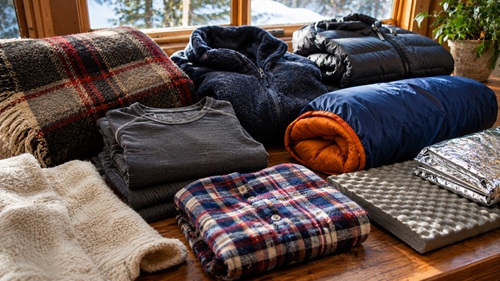
Winter Clothing and Bedding Material Comparison
| Material | Insulation characteristics | Moisture performance | Drying speed | Best preparedness application |
|---|---|---|---|---|
| Merino wool | Good | Retains some insulation when damp | Moderate | Base layers and socks |
| Traditional wool | Good | Retains some insulation when damp | Slow | Blankets and sweaters |
| Polyester fleece | Good | Absorbs relatively little water | Fast | Mid-layers and blankets |
| Down | Excellent warmth-to-weight ratio | Poor when saturated | Slow | Protected sleeping bags and jackets |
| Synthetic insulation | Good to excellent | Generally better damp tolerance than down | Moderate | Sleeping bags and winter jackets |
| Cotton | Variable when dry | Poor when wet | Slow | Dry indoor clothing |
| Reflective film | Limited standalone insulation | May trap condensation | Surface dries quickly | Supplementary emergency protection |
| Closed-cell foam | Resists conductive heat loss | Very low water absorption | Fast | Sleeping mats and floor insulation |
| Waterproof shell fabrics | Minimal without insulation | Protect underlying layers | Variable | Outer clothing layers |
| Flannel | Depends on thickness and fiber | Depends on fiber composition | Variable | Dry indoor bedding |
The material itself is only part of the equation. Thickness, construction, condition, fit and the amount of air trapped within the insulation all influence how effectively a particular garment or blanket performs.
Material Suitability Assessment
| Assessment question | Yes | No | Improvement required |
|---|---|---|---|
| Does everyone have suitable moisture-managing base layers? | |||
| Are insulating garments appropriate for local winter conditions? | |||
| Are bedding materials suitable for anticipated cold exposure? | |||
| Can essential clothing be dried without electricity? | |||
| Is moisture-sensitive insulation protected during storage? | |||
| Are reflective blankets used as supplementary protection? | |||
| Is adequate insulation available beneath every sleeper? | |||
| Are clothing materials suitable for anticipated outdoor activities? |
Establishing Your Household’s Winter Preparedness Requirements
Before purchasing additional winter equipment, take some time to determine who may depend on your household during an emergency.
This may include more than the people who normally live in your home. Elderly parents, relatives, friends or neighbors may need temporary accommodation if their own heating systems fail. Household pets may also require additional protection.
Every person has different requirements. A healthy adult who regularly participates in outdoor winter activities may tolerate cold conditions differently from an older adult with circulation problems or someone with limited mobility. Infants and young children require particular consideration because their sleeping and clothing arrangements must remain appropriate for their age and development.
Your geographical location also matters. A household preparing for severe winters in a mountainous region will have different requirements from a household living in a relatively mild coastal climate. However, even regions that rarely experience freezing temperatures can encounter unusual cold events, and homes in those regions may be less equipped to handle them.
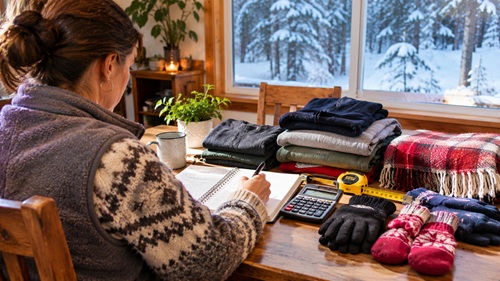
Household Winter Preparedness Profile
| Assessment item | Household information |
|---|---|
| Number of adults | |
| Number of children | |
| Number of infants | |
| Number of older adults | |
| Individuals requiring additional assistance | |
| Potential additional household occupants | |
| Number and type of pets | |
| Lowest anticipated outdoor temperature | |
| Typical winter weather conditions | |
| Available independent heating systems | |
| Expected heating fuel duration | |
| Target emergency preparedness duration | |
| Primary emergency sleeping location | |
| Alternative heated accommodation | |
| Available emergency transportation | |
| Date assessment completed | |
| Next scheduled review |
Begin by evaluating your ability to manage a 72-hour winter emergency. Once those requirements have been addressed, consider what additional capabilities would be necessary for seven days, fourteen days or longer.
Remember that having fourteen days of emergency clothing and bedding does not necessarily mean your home will remain safe to occupy for fourteen days without conventional heating.
Creating an Effective Winter Clothing Layering System
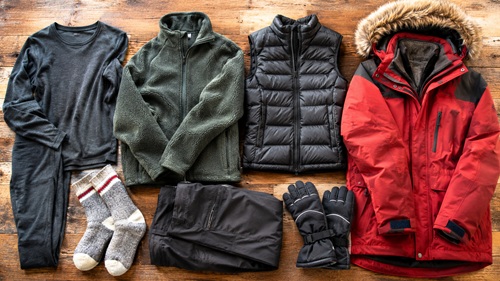
One of the simplest and most effective ways to retain body heat is to wear several compatible layers of clothing rather than depending entirely on one heavy garment.
A layering system allows you to adjust your insulation according to temperature, physical activity and moisture levels. This flexibility becomes particularly useful during emergencies when you may alternate between resting indoors, preparing meals, collecting supplies and performing physically demanding outdoor tasks.
The base layer is worn directly against the skin. Its primary purpose is to help manage perspiration while providing an initial level of insulation. Merino wool and suitable synthetic thermal garments are common choices because they help manage moisture more effectively than ordinary cotton clothing during cold-weather activities.
The middle layer provides much of the insulation required to retain body heat. Fleece jackets, wool sweaters and insulated vests trap air within their fibers or insulation. Wearing several compatible middle layers allows you to remove or add insulation as conditions change.
The outer layer protects the underlying garments from wind, rain, freezing rain and snow. A suitable winter parka or waterproof shell becomes particularly important when you need to spend time outdoors.
Avoid wearing so many layers that your clothing becomes excessively tight. Compressing insulation reduces its ability to trap air, while restrictive garments and footwear can interfere with circulation.
Emergency Base Layer Clothing Inventory
The following quantities provide a suggested starting point per person. Adjust them according to local climate, individual needs, available laundry facilities and anticipated emergency duration.
| Equipment | Suggested per person | Required | Available | Shortfall |
|---|---|---|---|---|
| Thermal long-sleeved shirts | 3 | |||
| Thermal leggings | 3 | |||
| Moisture-wicking shirts | 3 | |||
| Underwear | 5–7 | |||
| Wool or thermal socks | 5–7 pairs | |||
| Sock liners | 2–3 pairs | |||
| Dedicated dry sleeping base layers | 2 sets | |||
| Replacement base layers | 1–2 sets |
Emergency Insulating Clothing Inventory
| Equipment | Suggested per person | Required | Available | Shortfall |
|---|---|---|---|---|
| Fleece jackets | 2 | |||
| Wool sweaters | 1–2 | |||
| Insulated vests | 1 | |||
| Heavyweight indoor trousers | 2 | |||
| Fleece trousers | 1–2 | |||
| Insulated outdoor trousers | 1 | |||
| Insulated winter jacket | 1 | |||
| Spare insulating garment | 1 |
Emergency Outer Layer Clothing Inventory
| Equipment | Suggested per person | Required | Available | Shortfall |
|---|---|---|---|---|
| Wind-resistant jacket | 1 | |||
| Waterproof outer jacket | 1 | |||
| Waterproof trousers | 1 | |||
| Winter parka appropriate to local climate | 1 | |||
| Snow trousers or bibs | 1 | |||
| Rain poncho or emergency rainwear | 1 | |||
| Outdoor gaiters | 1 pair |
There is no need to purchase separate garments for every function if existing clothing already satisfies several requirements. A good winter parka, for example, may provide insulation, wind resistance and weather protection.
The purpose of completing these inventories is to identify missing capabilities, not encourage unnecessary purchases.
Protecting Your Head, Hands, Feet and Neck
Anyone who has spent time outdoors during winter knows how uncomfortable cold hands and feet can become, even when the rest of the body remains reasonably warm.
During an emergency, cold hands can also interfere with your ability to perform essential tasks such as operating equipment, preparing meals, administering first aid or using communication devices.
Mittens generally retain heat better than gloves of comparable construction because the fingers share a common insulated space. Gloves, however, provide greater dexterity. Having both available allows you to choose the most appropriate protection for the task being performed.
Feet deserve particular attention. Damp socks, poorly insulated footwear and boots that are too tight can all contribute to cold-related problems. Wearing several pairs of socks inside boots that no longer provide adequate room may actually make the situation worse.
A warm hat, neck gaiter and suitable face protection can also make a considerable difference during outdoor activities, particularly when wind increases heat loss from exposed skin.
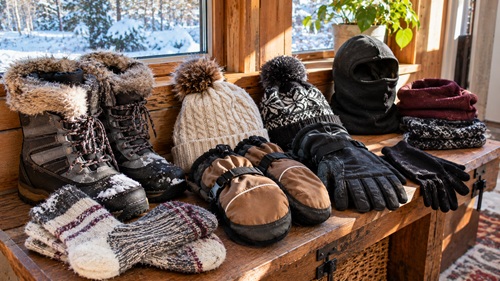
Winter Clothing Accessories Inventory
| Equipment | Suggested per person | Required | Available | Shortfall |
|---|---|---|---|---|
| Insulated winter hats | 2 | |||
| Balaclavas | 1–2 | |||
| Neck gaiters | 2 | |||
| Scarves | 1–2 | |||
| Insulated winter gloves | 2 pairs | |||
| Insulated mittens | 1–2 pairs | |||
| Waterproof glove shells | 1 pair | |||
| Glove liners | 2 pairs | |||
| Insulated winter boots | 1 pair | |||
| Spare boot liners, where applicable | 1 pair | |||
| Insulated indoor slippers | 1 pair | |||
| Spare footwear | 1 suitable pair | |||
| Removable ice traction aids | 1 pair |
Children’s clothing and footwear should be checked before every winter season. Discovering that a child’s winter boots no longer fit is a relatively minor inconvenience before an emergency, but it could become a significant problem during a prolonged winter outage.
Establishing an Emergency Bedding System
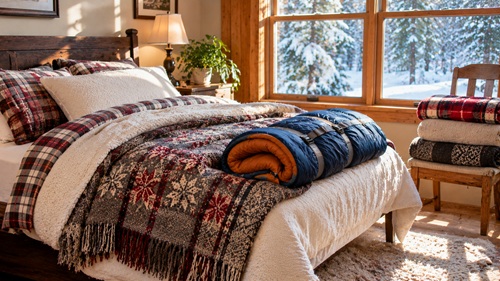
Most households have bedding that provides adequate comfort when bedrooms are maintained at normal indoor temperatures. The question is whether those same sleeping arrangements will remain suitable if the temperature inside the home declines considerably.
People are generally less physically active while sleeping and may not immediately recognize increasing cold exposure. This makes dependable overnight protection an important part of winter preparedness.
An effective emergency bedding system provides insulation above and below the body, protects against moisture and allows the amount of insulation to be adjusted as conditions change.
Existing household mattresses, heavy comforters, wool blankets and fleece bedding may already provide a substantial portion of this capability. There is no reason to replace perfectly suitable bedding simply because it was not marketed as emergency survival equipment.
However, every household member should have an appropriate sleeping arrangement assigned to them. Counting the total number of blankets in your home is less useful than determining whether each person has sufficient protection.
Emergency Household Bedding Inventory
| Equipment | Suggested planning quantity | Required | Available | Shortfall |
|---|---|---|---|---|
| Heavy wool blankets | 1–2 per person | |||
| Fleece blankets | 1–2 per person | |||
| Insulated comforters or duvets | 1 per person | |||
| Flannel or thermal sheet sets | 1–2 per bed | |||
| Sleeping bag liners | 1 per sleeping bag | |||
| Emergency sleeping bags | 1 per eligible person | |||
| Insulated sleeping mats | 1 per person, where needed | |||
| Spare blankets | 1–2 per household, minimum | |||
| Emergency bivy sacks | As appropriate | |||
| Reflective emergency blankets | 1–2 per eligible person | |||
| Spare dry bedding | At least 1 suitable set | |||
| Waterproof bedding storage | As required |
These are suggested inventory quantities rather than guarantees of sufficient insulation. The effectiveness of each item depends on its construction, condition and intended operating environment.
Infants require separate, age-appropriate safe-sleep arrangements. Adult sleeping bags, loose blankets, pillows and improvised enclosed sleeping spaces should not be used as substitutes for approved infant sleeping equipment.
Selecting Appropriate Emergency Sleeping Bags
A sleeping bag can be an extremely useful addition to your household emergency supplies, particularly if sleeping arrangements must be moved into a warmer room or transported to alternative accommodation.
Unfortunately, sleeping bag temperature ratings are not always well understood.
A sleeping bag advertised as suitable for very low temperatures may appear to offer excellent winter protection. However, the advertised temperature may represent an emergency survival threshold rather than a temperature at which someone can reasonably expect to sleep comfortably.
Where available, look for sleeping bags tested under recognized standards such as ISO 23537.
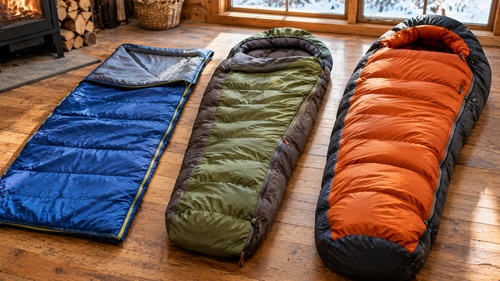
Understanding Sleeping Bag Temperature Ratings
| Rating | What it generally represents |
|---|---|
| Comfort rating | Temperature at which a standardized cold-sensitive sleeper is expected to remain comfortable under test conditions |
| Limit rating | Lower temperature at which a standardized warmer sleeper may maintain thermal balance under specified conditions |
| Extreme rating | Emergency survival threshold associated with serious cold-injury risk; not a safe sleeping target |
| Unrated sleeping bag | Thermal performance has not been established through a comparable standardized rating |
For household preparedness, the comfort rating is generally a more useful starting point than the limit or extreme rating.
Even a properly rated sleeping bag cannot guarantee warmth under every circumstance. Clothing, moisture, sleeping mat insulation, individual metabolism, health and environmental conditions all influence actual performance.
Comparing Sleeping Bag Designs
| Sleeping bag design | Advantages | Limitations |
|---|---|---|
| Rectangular | Spacious and comfortable | May be less thermally efficient |
| Mummy | Reduces excess interior space and generally improves heat retention | Can feel restrictive |
| Semi-rectangular | Balances comfort and thermal efficiency | Performance varies by construction |
| Down insulated | Excellent warmth-to-weight potential | Requires careful moisture protection |
| Synthetic insulated | Generally better damp-condition tolerance | Often heavier and bulkier |
| Modular sleeping system | Allows insulation to be adjusted | May be more expensive and complex |
Sleeping Bag Inventory and Suitability Assessment
| Assigned person | Bag type | Comfort rating | Condition | Suitable? |
|---|---|---|---|---|
| Person 1 | ||||
| Person 2 | ||||
| Person 3 | ||||
| Person 4 | ||||
| Person 5 | ||||
| Person 6 | ||||
| Additional person | ||||
| Spare |
Inspect sleeping bags for damaged zippers, torn fabric, compressed insulation and moisture damage.
Many insulated sleeping bags should be stored loosely rather than permanently compressed inside small transportation sacks. Follow the manufacturer’s storage recommendations to help preserve their insulating properties.
Why Insulation Beneath Your Sleeping Area Matters
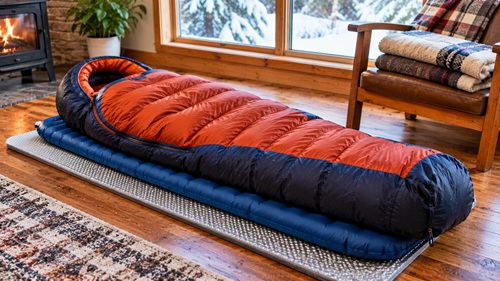
One of the most frequently overlooked aspects of winter emergency preparedness is the surface underneath a sleeping person.
Imagine placing a winter sleeping bag directly onto a cold concrete floor. Although the upper portion of the sleeping bag may contain substantial insulation, the insulation underneath the body becomes compressed by the sleeper’s weight. This reduces its ability to trap air and allows more heat to transfer into the cold surface below.
Adding another blanket on top may improve comfort, but it does not fully address the underlying problem.
Insulated camping mats are designed to reduce this type of conductive heat loss. Many carry an R-value indicating their resistance to heat transfer. When products have been tested using comparable methods, a higher R-value generally indicates greater insulation.
An ordinary inflatable air mattress should not automatically be considered suitable for winter use. Unless it contains appropriate insulation, it may allow substantial heat transfer despite appearing thick and comfortable.
Sleeping Surface Comparison
| Sleeping surface | Preparedness consideration |
|---|---|
| Existing household mattress | Often provides useful insulation and comfort |
| Closed-cell foam mat | Dependable, moisture-resistant insulation |
| Insulated inflatable sleeping pad | Can provide substantial insulation with compact storage |
| Uninsulated air mattress | May allow considerable heat transfer |
| Folding cot | Keeps the sleeper off the floor but still requires insulation underneath |
| Thick rugs or floor coverings | Provide supplementary insulation |
| Bare concrete or tile floor | Poor sleeping surface without substantial insulation |
Sleeping Area Insulation Inventory
| Equipment | Required | Available | Condition | Shortfall |
|---|---|---|---|---|
| Insulated sleeping mats | ||||
| Closed-cell foam mats | ||||
| Insulated inflatable sleeping pads | ||||
| Suitable mattresses | ||||
| Folding cots with adequate insulation | ||||
| Thick rugs or floor coverings | ||||
| Spare sleeping pad repair kits | ||||
| Manual inflation pumps | ||||
| Ground moisture barriers |
Where possible, continue using suitable existing beds and mattresses rather than unnecessarily moving household members onto cold floors.
Creating a Designated Emergency Warm Room
Heating an entire home during an extended winter power outage can consume considerable amounts of fuel. Depending on the building and available heating equipment, concentrating household activities within a smaller, appropriately heated living area may be a more practical arrangement.
A designated emergency warm room provides a central location where household members can rest, monitor conditions, organize clothing and establish temporary sleeping arrangements if necessary.
Ideally, the room should have adequate ventilation, accessible emergency exits, limited exposure to outside walls and sufficient space for everyone to remain comfortable. Existing sofas, mattresses, rugs and blankets may all contribute to the arrangement.
Heavy curtains can help reduce heat loss through windows, while removable draft barriers may reduce unwanted air movement. However, ventilation openings, combustion-air supplies and emergency exits must never be obstructed.
An independent indoor thermometer is particularly valuable. Rather than relying on how warm or cold someone feels, household members can monitor actual temperatures and recognize when conditions are deteriorating.
The World Health Organization identifies 18°C (64.4°F) as a generally safe minimum indoor temperature during cold seasons in temperate and colder climates, with higher temperatures potentially necessary for vulnerable individuals. This is a health-oriented planning reference, not a universal emergency survival threshold.
Emergency Warm Room Inventory
| Equipment | Suggested quantity | Required | Available | Shortfall |
|---|---|---|---|---|
| Battery-operated indoor thermometers | 2 | |||
| Spare thermometer batteries | 2 sets | |||
| Thermal window curtains | Per window | |||
| Removable draft barriers | As required | |||
| Insulated floor coverings | As required | |||
| Emergency mattresses | Per person, where needed | |||
| Insulated sleeping mats | Per person, where needed | |||
| Spare blankets | 2–4 | |||
| Battery-operated carbon monoxide alarms | Per local requirements | |||
| Working smoke alarms | Per local requirements | |||
| Battery-operated lanterns | 2 | |||
| Emergency lighting batteries | As required | |||
| Approved indoor heating equipment | As appropriate |
Never operate outdoor propane heaters, charcoal grills, camping stoves or portable generators inside a home, garage or enclosed sleeping area. Portable generators must be operated outdoors, well away from buildings and openings. Cooking ovens should never be used to heat a home.
A designated warm room is only useful while safe conditions can be maintained. Clothing and bedding cannot make an indefinitely cold or otherwise unsafe building habitable.
Keeping Clothing and Bedding Dry Without Electricity
During an ordinary winter, wet gloves, socks and clothing can be placed in an electric dryer or heated utility room. During an extended power outage, something as simple as drying a pair of socks may become considerably more challenging.
Perspiration, melting snow, condensation and routine household activities can gradually introduce moisture into clothing and bedding. As dampness accumulates, the effectiveness of insulation may decline, and maintaining comfortable sleeping arrangements becomes increasingly difficult.
One of the simplest ways to address this problem is to avoid becoming excessively warm during physical activity. Removing or opening an insulating layer before clearing snow or carrying firewood can help reduce perspiration and preserve dry clothing.
It is also worth maintaining separate clothing for outdoor activities, indoor activities and sleeping. Clothing reserved for sleeping should remain dry and protected, even when other garments are being washed or dried.
A folding drying rack, manual laundry basin and adequate supply of replacement clothing may not seem like particularly exciting preparedness purchases, but their value becomes much more apparent after several days without electricity.
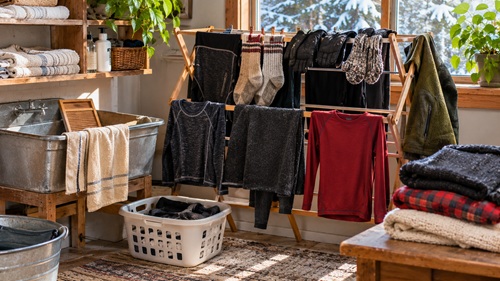
Moisture Management and Laundry Inventory
| Equipment | Suggested quantity | Required | Available | Shortfall |
|---|---|---|---|---|
| Folding clothes drying racks | 1–2 | |||
| Indoor clotheslines | 1–2 | |||
| Clothes pegs | 30–50 | |||
| Manual laundry basin | 1–2 | |||
| Manual washing equipment | 1 | |||
| Laundry detergent | 14–30-day supply | |||
| Waterproof laundry bags | 2 | |||
| Separate wet clothing containers | 2 | |||
| Absorbent towels | 2 per person | |||
| Boot drying racks | As required | |||
| Spare dry bedding | At least 1 set | |||
| Battery-operated humidity monitor | 1 | |||
| Spare dry sleeping clothing | 2 sets per person |
Manual laundry also requires water. Include these additional water requirements when evaluating your household’s broader emergency water supplies.
Drying areas should be adequately ventilated, and wet garments should never be placed directly against wood stoves, heaters or open flames. Always maintain the clearances specified by the heating equipment manufacturer.
Preparing for Infants, Children, Seniors and Vulnerable Household Members
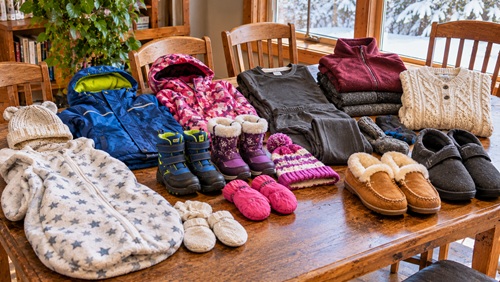
A winter preparedness strategy that works well for a healthy adult may not provide adequate protection for everyone else in the household.
Infants and young children may have difficulty communicating that they are becoming dangerously cold. Older adults may have reduced temperature sensitivity, circulation problems or medical conditions that affect their ability to regulate body temperature. Individuals with limited mobility may also require assistance when changing clothing, adjusting bedding or relocating.
These differences need to be considered when allocating emergency clothing and bedding.
For children, one of the most common preparedness problems is equipment that no longer fits. Winter jackets, thermal clothing and boots purchased the previous year may have become too small. Checking these items before winter arrives can prevent an easily avoidable emergency supply shortage.
Infants require particular consideration. They should sleep on their backs on a firm, flat, approved sleeping surface without loose blankets, pillows, adult sleeping bags or weighted bedding. Appropriately fitted, non-weighted infant sleep clothing or sleep sacks should be used in accordance with recognized safe-sleep guidance. Avoid overheating and head coverings during infant sleep.
If safe sleeping temperatures cannot be maintained, arrange relocation to heated accommodation rather than attempting to compensate with unsafe bedding.
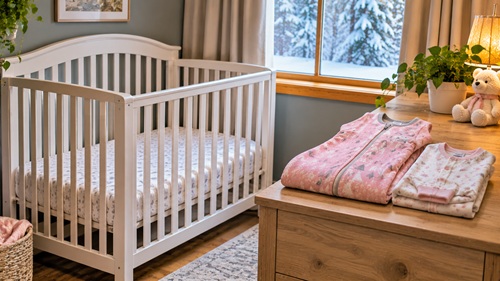
Infant and Child Winter Preparedness Inventory
| Equipment | Required | Available | Correct size? | Shortfall |
|---|---|---|---|---|
| Thermal clothing | ||||
| Warm daytime clothing | ||||
| Appropriate infant sleep sacks | ||||
| Warm fitted pajamas | ||||
| Winter jackets | ||||
| Insulated snow trousers | ||||
| Winter hats for awake use | ||||
| Insulated mittens | ||||
| Thermal socks | ||||
| Insulated winter footwear | ||||
| Age-appropriate sleeping equipment | ||||
| Spare clothing sets |
Older adults and individuals with mobility limitations may benefit from clothing that is easier to put on and remove, footwear that provides warmth without restricting circulation, and bedding that can be adjusted without assistance.
Senior and Special Needs Winter Preparedness Inventory
| Equipment | Required | Available | Suitable? | Shortfall |
|---|---|---|---|---|
| Easy-fastening thermal clothing | ||||
| Insulated indoor footwear | ||||
| Non-restrictive thermal socks | ||||
| Warm dressing gowns | ||||
| Accessible blankets | ||||
| Suitable insulated bedding | ||||
| Adaptive clothing | ||||
| Accessible indoor thermometer | ||||
| Mobility-compatible outdoor clothing | ||||
| Backup clothing and bedding |
Households with medically vulnerable individuals should establish alternative heated accommodation before an emergency occurs. Decisions about remaining at home should reflect the needs of the most vulnerable household member, not the cold tolerance of the healthiest adult.
Don’t Forget Your Household Pets
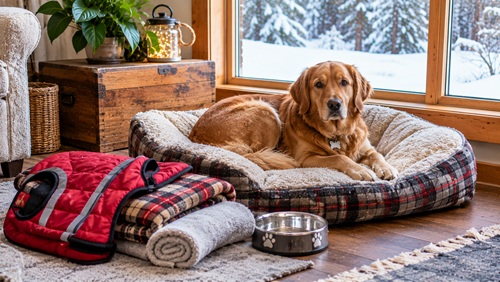
Pets are sometimes overlooked when households develop winter emergency plans. Although many animals have natural insulation, their ability to tolerate cold varies considerably according to species, breed, age, health and size.
A large, healthy dog with a thick winter coat may have very different requirements from a small, short-haired dog or an elderly cat. Animals that normally live inside a heated home may also be poorly acclimatized to prolonged cold conditions.
Pet bedding should remain dry, provide suitable insulation and be positioned away from cold floors and drafts. Animals should be able to move away from supplemental warmth if they become uncomfortable.
Some animals, including certain reptiles and other temperature-sensitive species, require specialized environmental controls that ordinary blankets cannot provide. Owners should establish appropriate backup heating and relocation arrangements with veterinary guidance.
Emergency Pet Bedding and Clothing Inventory
| Equipment | Required | Available | Condition | Shortfall |
|---|---|---|---|---|
| Insulated pet beds | ||||
| Washable pet blankets | ||||
| Spare dry bedding | ||||
| Insulated pet sleeping mats | ||||
| Winter pet coats, where appropriate | ||||
| Protective pet footwear, where appropriate | ||||
| Insulated travel carriers with adequate ventilation | ||||
| Pet drying towels | ||||
| Suitable emergency shelter equipment | ||||
| Species-specific backup heating arrangements |
Include pets when arranging alternative heated accommodation. Discovering that an emergency shelter or temporary accommodation cannot accept animals may complicate an otherwise well-prepared evacuation plan.
Organizing and Storing Emergency Clothing and Bedding
Emergency supplies are only valuable when they remain usable and can be located when needed.
A sleeping bag stored for several years in a damp basement may have developed moisture damage. Blankets placed inside an inadequately protected container may have been exposed to pests. Clothing that once fitted perfectly may no longer be suitable.
Rather than storing all emergency clothing and bedding together without any organization, consider assigning individual containers or storage areas to household members.
Dedicated sleeping clothing can be stored separately from outdoor garments. Emergency bedding can be kept in a dry, accessible location, while selected evacuation supplies can be organized for transportation.
Waterproof containers are particularly useful for protecting equipment from moisture, but clothing and bedding must be completely dry before being sealed inside them. Otherwise, the container may trap moisture rather than protect against it.
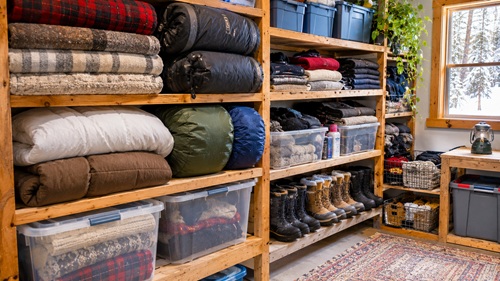
Emergency Storage Equipment Inventory
| Equipment | Required | Available | Condition | Shortfall |
|---|---|---|---|---|
| Waterproof storage containers | ||||
| Large breathable bedding bags | ||||
| Waterproof dry bags | ||||
| Individual clothing organizers | ||||
| Clothing identification labels | ||||
| Moisture indicators | ||||
| Appropriate pest protection | ||||
| Storage shelving | ||||
| Emergency storage inventory records | ||||
| Portable evacuation clothing bags |
Avoid storing every essential winter supply in one location that could become inaccessible during flooding, structural damage or another emergency.
Maintaining and Repairing Your Emergency Equipment
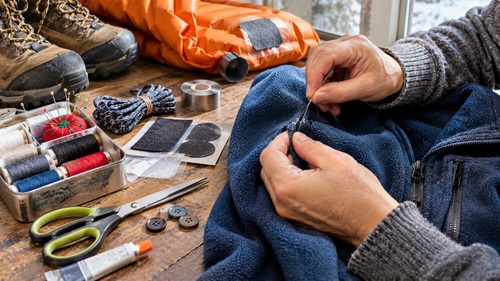
During normal circumstances, replacing a damaged jacket or leaking sleeping mat may be as simple as visiting a local store. During a widespread infrastructure disruption, replacement equipment may not be readily available.
Learning a few basic repair skills can significantly extend the usefulness of clothing and bedding.
A torn seam in a fleece jacket, a missing button, a damaged zipper pull or a small puncture in an inflatable sleeping mat may all be repairable with inexpensive supplies.
A basic sewing kit and suitable equipment repair materials take up very little storage space. Compared with the replacement cost of quality winter clothing and sleeping equipment, they can represent a particularly worthwhile preparedness investment.
Emergency Clothing and Bedding Repair Inventory
| Equipment | Required | Available | Condition | Shortfall |
|---|---|---|---|---|
| Hand sewing needles | ||||
| Heavy-duty sewing needles | ||||
| Assorted sewing thread | ||||
| Heavy-duty thread | ||||
| Fabric scissors | ||||
| Safety pins | ||||
| Replacement buttons | ||||
| Fabric repair patches | ||||
| Outdoor fabric repair tape | ||||
| Sleeping pad repair kits | ||||
| Replacement boot laces | ||||
| Spare zipper pulls | ||||
| Waterproof fabric treatment | ||||
| Footwear repair adhesive | ||||
| Manufacturer maintenance instructions |
Repairs should follow manufacturer recommendations wherever possible. Some adhesives and waterproofing treatments require adequate ventilation and suitable temperatures to cure safely.
Equipment that can no longer provide dependable protection should be replaced rather than repeatedly repaired beyond its useful service life.
Using Supplemental Personal Warming Equipment
Hand warmers, hot water bottles, reusable heat packs and battery-heated clothing can provide additional comfort during cold conditions. They may be particularly useful when household members are resting or performing tasks that require exposed hands.
However, these products introduce additional dependencies that need to be understood.
Rechargeable hand warmers require electricity. Disposable chemical warmers have limited operating durations. Battery-heated clothing requires compatible batteries and charging arrangements. Hot water bottles require a dependable source of heated water.
If the supporting resource becomes unavailable, the warming device may no longer provide its intended benefit.
For this reason, personal warming equipment should supplement a dependable clothing and bedding system rather than compensate for inadequate insulation.
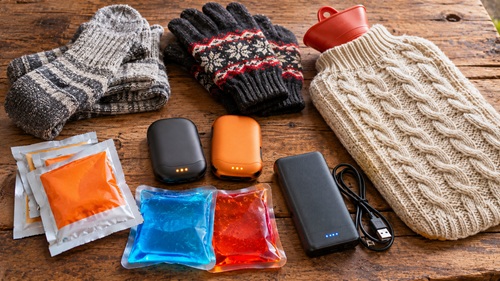
Supplemental Warming Equipment Comparison
| Equipment | Advantages | Limitations |
|---|---|---|
| Disposable hand warmers | Portable and independent of electricity | Single-use and limited operating duration |
| Rechargeable hand warmers | Reusable and convenient | Require charging |
| Reusable heat packs | Provide localized warmth | Require an appropriate reactivation method |
| Hot water bottles | Provide warmth without continuous electricity | Require heated water and careful handling |
| Battery-heated clothing | Adjustable personal heating | Depends on batteries and charging |
| Electric blankets | Comfortable when power is available | Require a compatible power source |
Supplemental Warming Equipment Inventory
| Equipment | Required | Available | Operating duration | Shortfall |
|---|---|---|---|---|
| Disposable hand warmers | ||||
| Disposable foot warmers | ||||
| Reusable heat packs | ||||
| Rechargeable hand warmers | ||||
| Compatible power banks | ||||
| Hot water bottles | ||||
| Protective hot water bottle covers | ||||
| Battery-heated clothing | ||||
| Compatible replacement batteries | ||||
| Emergency charging equipment |
Never place chemical warmers directly against bare skin unless specifically designed for that use. Hot water bottles should be inspected for deterioration, used with appropriate protective covers and filled according to manufacturer instructions rather than with boiling water.
Individuals with reduced sensation, circulation problems or limited mobility may be particularly vulnerable to burns. Avoid using warming devices during sleep unless the manufacturer explicitly permits it.
Recognizing Hypothermia and Cold-Related Injuries
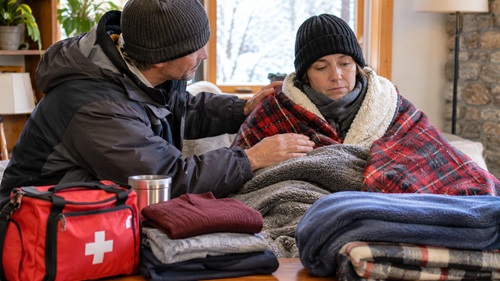
One of the most important winter preparedness skills is recognizing when someone is becoming dangerously cold.
Hypothermia occurs when the body loses heat faster than it can produce it, causing core body temperature to fall below 35°C (95°F). Although often associated with outdoor winter emergencies, hypothermia can also develop inside inadequately heated buildings.
Freezing temperatures are not necessary for prolonged cold exposure to become dangerous. Wet clothing, exhaustion, age, medical conditions and limited mobility can all increase vulnerability.
Someone experiencing hypothermia may initially shiver and complain of feeling cold. As the condition progresses, confusion, clumsiness, unusual drowsiness and difficulty speaking may develop. A person experiencing severe hypothermia may stop shivering altogether.
Recognizing these changes early is considerably more important than waiting for a particular thermometer reading.
Recognizing Cold-Related Warning Signs
| Condition | Possible warning signs | Appropriate response |
|---|---|---|
| Cold stress | Feeling unusually cold, discomfort and shivering | Move to warmth, add dry insulation and monitor |
| Suspected hypothermia | Persistent shivering, confusion, clumsiness or exhaustion | Seek emergency medical assistance and begin gentle warming |
| Severe hypothermia | Reduced responsiveness, slurred speech, unusual drowsiness or shivering that stops | Obtain immediate emergency medical assistance |
| Frostnip | Tingling, numbness or pale exposed skin | Move to warmth and protect the affected area |
| Suspected frostbite | Numb, waxy, unusually firm or discolored skin | Seek medical assistance and protect from further injury |
When hypothermia is suspected, move the person to a warm, sheltered location, remove wet clothing and provide dry insulation. Handle the person gently and prioritize warming the torso.
Do not rub cold extremities, administer alcohol or apply intense direct heat. Food or beverages should not be given to someone who is confused, unconscious or unable to swallow safely.
If someone is unresponsive or not breathing normally, contact emergency services and follow the emergency dispatcher’s resuscitation instructions.
Frostbite should also be treated seriously. Avoid rubbing affected tissue or thawing frozen tissue when there is a risk it may freeze again.
Suspected hypothermia is a medical emergency. Do not wait until symptoms become severe before seeking assistance.
Common Winter Preparedness Mistakes
Some of the most significant winter preparedness problems arise not because households lack equipment, but because they misunderstand the capabilities of the equipment they already own.
For example, someone may have purchased several inexpensive sleeping bags for family camping trips and assumed that those same sleeping bags would provide adequate protection during a winter emergency. Another household may have accumulated numerous heavy blankets without considering the importance of insulation beneath sleeping areas.
Depending entirely on electric blankets is another common mistake. While they provide considerable comfort under normal conditions, their usefulness becomes limited when electricity is unavailable.
Clothing management can create unexpected problems as well. Wearing too many layers during physical activity may cause perspiration, while using damp daytime clothing for sleeping introduces moisture into the bedding that should be kept dry.
Perhaps the most serious mistake is waiting too long to relocate. Having invested in emergency equipment, some households may feel compelled to remain at home even when safe conditions can no longer be maintained.
Successful preparedness is not measured by how much discomfort someone can endure. It is measured by the ability to recognize developing problems and respond appropriately before they become dangerous.
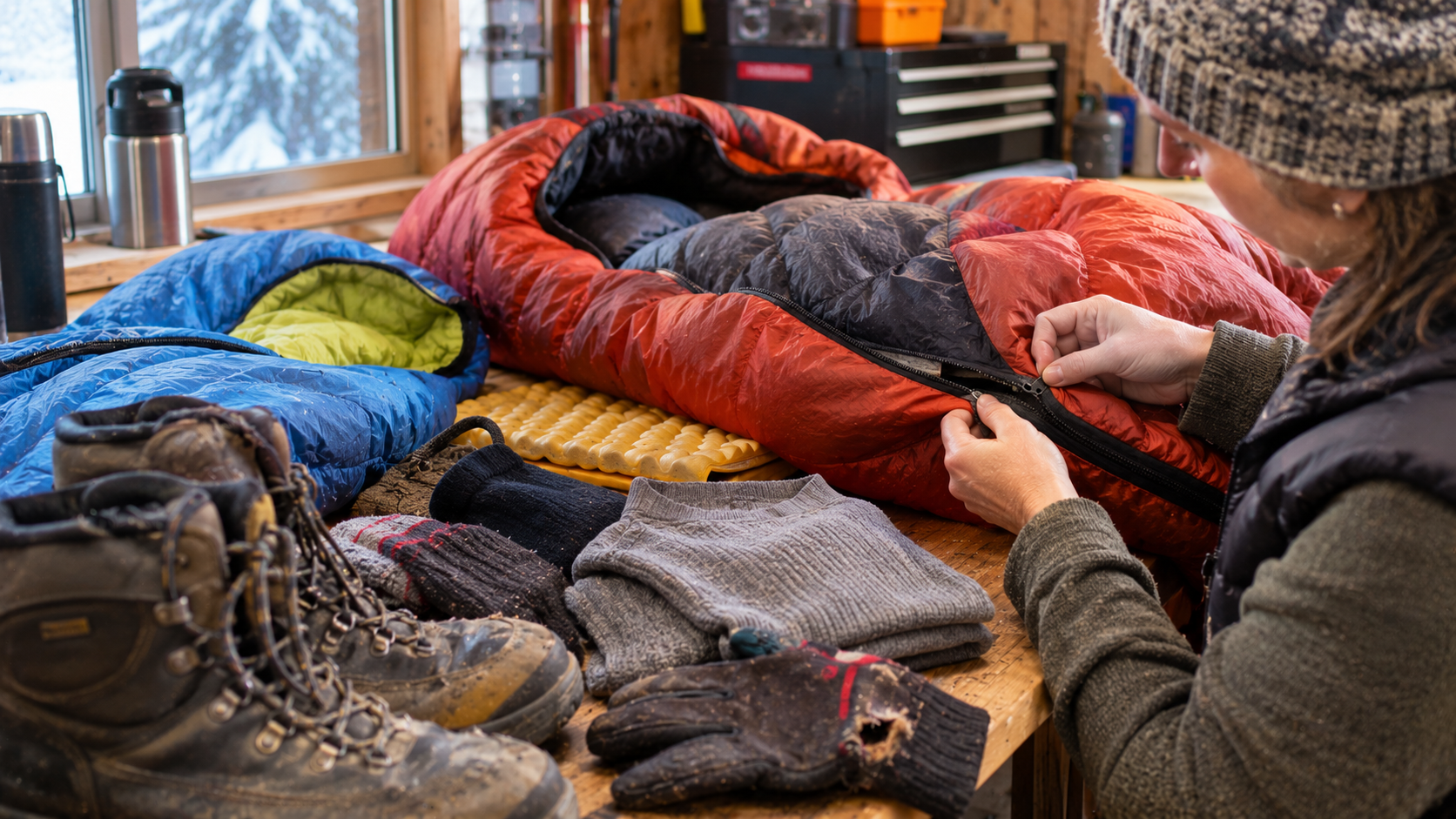
Common Winter Preparedness Mistakes Assessment
| Preparedness mistake | Risk | Corrective action | Reviewed |
|---|---|---|---|
| Relying on summer sleeping bags | High | Verify temperature suitability | |
| Forgetting insulation beneath sleepers | High | Provide suitable mats or mattresses | |
| Wearing moisture-saturated clothing | High | Establish clothing rotation | |
| Depending entirely on electric blankets | High | Maintain non-electric bedding | |
| Using damp clothing for sleeping | High | Reserve dedicated dry sleeping sets | |
| Wearing excessively tight footwear | Moderate–High | Verify fit and circulation | |
| Ignoring children’s changing clothing sizes | High | Inspect clothing annually | |
| Storing sleeping bags permanently compressed | Moderate | Follow manufacturer storage instructions | |
| Relying exclusively on reflective blankets | High | Obtain substantial insulated bedding | |
| Drying clothing against heating appliances | High | Establish safe drying arrangements | |
| Failing to monitor indoor temperatures | High | Obtain independent thermometers | |
| Overlooking vulnerable household members | Critical | Establish individualized protection plans | |
| Using unsafe indoor heating equipment | Critical | Use approved heating alternatives | |
| Delaying necessary relocation | Critical | Establish early relocation criteria |
Developing a Practical Clothing Rotation Strategy
Having one excellent set of winter clothing may be sufficient for a short outdoor activity, but it may not be enough during a prolonged emergency.
Consider someone who spends the morning clearing snow. Their socks become damp, their gloves absorb moisture and their thermal shirt becomes wet with perspiration. Under ordinary circumstances, these items can be washed and dried before they are needed again.
Without electricity, the process may take considerably longer.
Maintaining separate clothing for different activities helps ensure that dry garments remain available when they are needed most. Dedicated sleeping clothing is particularly important because it helps prevent moisture from being transferred into sleeping bags and bedding.
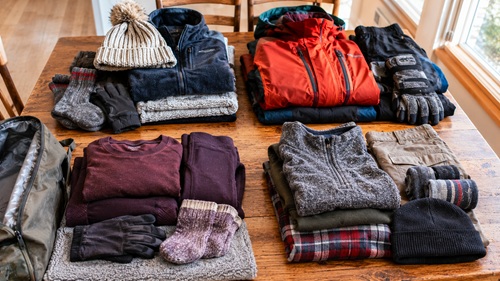
Recommended Clothing Rotation System
| Clothing allocation | Purpose |
|---|---|
| Active clothing set | Routine daytime activities |
| Outdoor clothing set | Snow removal, supply collection and outdoor work |
| Dedicated sleeping set | Clean, dry clothing reserved for sleeping |
| Replacement set | Immediate replacement for wet or damaged garments |
| Reserve set | Protected emergency backup |
| Laundry rotation set | Clothing undergoing cleaning or drying |
A four-person household maintaining two dedicated sleeping clothing sets per person would require eight complete sets. Similarly, maintaining five to seven pairs of thermal socks per person would require approximately 20–28 pairs for the household.
These quantities should reflect realistic laundry capabilities, anticipated activities and individual requirements.
Individual Clothing Allocation Record
| Household member | Daytime clothing | Outdoor clothing | Sleeping clothing | Dry reserve | Complete? |
|---|---|---|---|---|---|
| Person 1 | |||||
| Person 2 | |||||
| Person 3 | |||||
| Person 4 | |||||
| Person 5 | |||||
| Person 6 |
One practical approach is to store each person’s emergency sleeping clothing in a separate waterproof bag. This helps prevent those garments from being accidentally used for routine activities.
Calculating How Much Emergency Clothing and Bedding Your Household Actually Needs
It is easy to underestimate household equipment requirements when supplies are stored throughout different rooms, closets and storage containers.
A family may own several winter jackets, numerous blankets and a substantial collection of camping equipment. Until those resources are assigned to individual household members, however, it can be difficult to determine whether everyone has adequate protection.
The following example illustrates how a household of four might calculate its emergency clothing and bedding requirements. It assumes that all four individuals are old enough to use conventional winter sleeping equipment safely.
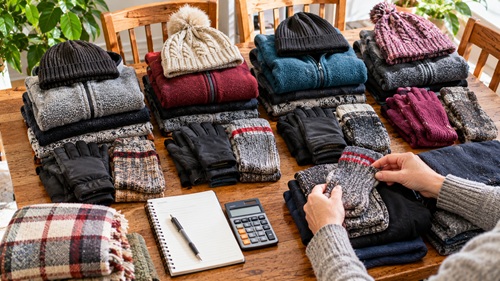
Example Household Inventory Calculation
| Equipment | Per person | Household requirement | Available | Shortfall |
|---|---|---|---|---|
| Thermal shirts | 3 | 12 | 8 | 4 |
| Thermal leggings | 3 | 12 | 6 | 6 |
| Thermal socks | 7 pairs | 28 pairs | 20 pairs | 8 pairs |
| Fleece jackets | 2 | 8 | 6 | 2 |
| Winter parkas | 1 | 4 | 4 | 0 |
| Insulated gloves | 2 pairs | 8 pairs | 5 pairs | 3 pairs |
| Winter hats | 2 | 8 | 8 | 0 |
| Insulated winter boots | 1 pair | 4 pairs | 4 pairs | 0 |
| Dedicated sleeping clothing | 2 sets | 8 sets | 4 sets | 4 sets |
| Suitable sleeping bags | 1 | 4 | 2 | 2 |
| Insulated sleeping mats | 1 | 4 | 1 | 3 |
| Heavy blankets | 2 | 8 | 5 | 3 |
Although this household owns enough winter parkas and boots, it has significant deficiencies in sleeping equipment, dry replacement clothing and insulation beneath sleeping surfaces.
Without completing the inventory, these deficiencies might not become apparent until an emergency occurs.
The calculation itself is straightforward:
Household requirement = Quantity per person × Number of people requiring the equipment
Equipment shortfall = Household requirement − Suitable equipment currently available
Only count equipment that is usable, appropriately sized and suitable for its intended purpose. Owning four sleeping bags does not satisfy a requirement for four winter sleeping bags if two are unsuitable summer models.
Where existing supplies exceed the calculated requirement, record the surplus as a reserve.
Could Your Household Manage a 72-Hour, Seven-Day or Fourteen-Day Winter Emergency?
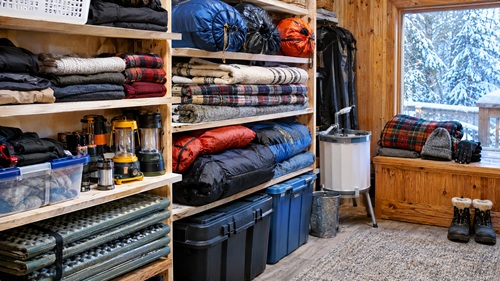
Preparing for three days without electricity is a useful starting point, but the challenges associated with a winter emergency can change considerably as the disruption continues.
During the first 72 hours, many households may rely primarily on existing clothing, bedding and stored heating fuel. Equipment accessibility, immediate warmth and temperature monitoring are particularly important during this period.
After seven days, clothing rotation, moisture management, laundry and equipment maintenance may become increasingly significant. Supplies that were initially clean and dry may now require washing, while heating fuel may be consumed more quickly than anticipated.
A fourteen-day emergency introduces broader questions about sustainability. Water for laundry, sanitation, medical requirements, food supplies, heating fuel and transportation may all influence whether remaining at home continues to be practical.
Extended Winter Emergency Capability Assessment
| Preparedness capability | 72 hours | 7 days | 14 days |
|---|---|---|---|
| Adequate thermal clothing | |||
| Dry replacement clothing | |||
| Appropriate insulated bedding | |||
| Insulation beneath sleepers | |||
| Safe indoor temperatures | |||
| Independent heating or heated relocation | |||
| Clothing drying capability | |||
| Manual laundry capability | |||
| Bedding moisture management | |||
| Vulnerable household member protection | |||
| Pet warmth and shelter | |||
| Equipment repair capability | |||
| Temperature monitoring | |||
| Safe evacuation capability |
Mark each capability as Verified, Partial, Missing or Unknown.
A capability should only be marked as verified when suitable equipment is available, household members understand how to use it and the supporting resources are realistically available.
The objective is not to determine how long your household can tolerate unsafe temperatures. It is to determine how long you can maintain safe conditions or successfully transition to alternative arrangements.
What a Seven-Day Winter Power Outage Might Actually Look Like
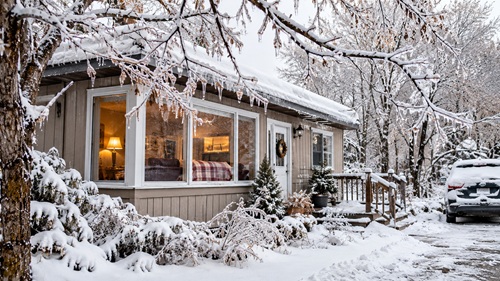
Consider a hypothetical household of four living in a moderately insulated detached home. A major ice storm damages electrical infrastructure throughout the surrounding region, leaving the household without conventional heating. Outdoor temperatures remain below freezing, and electrical restoration is expected to take several days.
During the first day, the house remains reasonably comfortable because the building retains heat from before the outage. Rather than waiting until everyone becomes cold, the family locates its winter clothing, sleeping bags, blankets and emergency equipment. Indoor temperatures are monitored, and relatives with dependable heating are contacted in case alternative accommodation becomes necessary.
By the second day, the temperature inside the house has declined. Household members begin wearing thermal clothing and insulating layers throughout the day. They concentrate their activities within a designated living area and use a properly installed, approved independent heating system. Dry sleeping clothing is separated from clothing used for routine activities.
On the third day, several family members spend time outdoors clearing snow. Their gloves, socks and outer garments become damp. Because the household prepared replacement clothing and manual drying arrangements before winter, everyone can change into dry garments while the wet clothing dries safely.
By the fourth day, the family discovers that its heating fuel is being consumed more quickly than expected. Instead of assuming that additional blankets will compensate indefinitely, they review the weather forecast, confirm alternative accommodation and prepare their emergency supplies for transportation.
On the fifth day, with further severe weather expected and uncertainty about maintaining safe indoor conditions, the household relocates to a relative’s heated home. Clothing, bedding, medications, emergency supplies and pet equipment are transported with them.
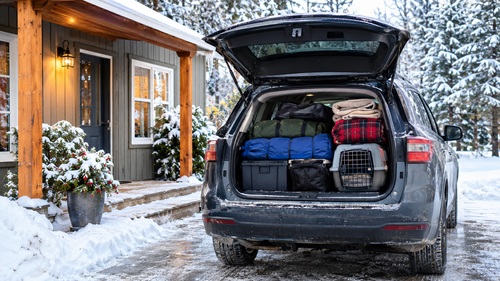
The sixth day is spent maintaining supplies, washing and drying clothing, inspecting equipment and ensuring that everything remains organized in case further relocation becomes necessary.
Electrical service is restored on the seventh day. Before returning home, the household confirms that the property is safe to occupy and considers possible damage to plumbing and heating equipment. Once home, emergency supplies are cleaned, dried, inspected and returned to storage.
Seven-Day Winter Emergency Scenario Summary
| Day | Primary challenge | Preparedness capability used |
|---|---|---|
| Day 1 | Loss of conventional heating | Equipment accessibility and early planning |
| Day 2 | Declining indoor temperatures | Clothing layers and insulated bedding |
| Day 3 | Damp clothing | Moisture management and clothing rotation |
| Day 4 | Declining heating fuel reserves | Temperature monitoring and contingency planning |
| Day 5 | Potential loss of safe living conditions | Planned relocation |
| Day 6 | Temporary alternative accommodation | Portable supplies and household independence |
| Day 7 | Recovery and equipment restoration | Maintenance and lessons learned |
This hypothetical household did not remain inside an unheated building for seven days simply to demonstrate its preparedness.
Instead, its preparedness was demonstrated through the ability to anticipate changing conditions, maintain usable equipment, protect household members and relocate before the situation became dangerous.
Monitoring Indoor Temperatures During a Winter Emergency
When a conventional heating system stops operating, it is important to understand how conditions inside the home are changing.
Temperatures may vary considerably between rooms. Bedrooms with exterior walls, basement rooms and areas near windows may become colder than centrally located living areas.
A battery-operated thermometer provides a simple way to monitor these changes independently of household electricity and internet connectivity.
Recording temperatures also helps identify trends. A room that remains reasonably comfortable during the afternoon may become considerably colder overnight. Recognizing that pattern allows the household to adjust its heating and sleeping arrangements before conditions deteriorate further.
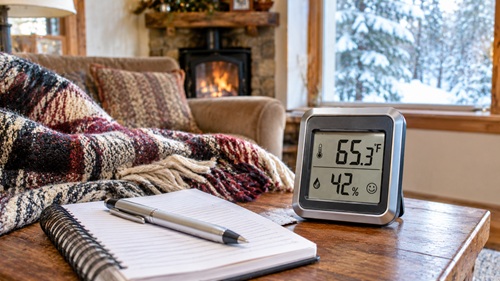
Suggested Temperature Monitoring Schedule
| Monitoring period | Recommended activity |
|---|---|
| Immediately following an outage | Establish baseline indoor temperatures |
| During the first day | Monitor temperatures periodically |
| Morning | Record overnight temperature changes |
| Afternoon | Assess daytime heating effectiveness |
| Before bedtime | Confirm safe sleeping conditions |
| During deteriorating conditions | Increase monitoring frequency and reassess relocation plans |
| Following heating equipment failure | Immediately evaluate occupant safety |
Emergency Indoor Temperature Monitoring Record
| Date and time | Room | Indoor temperature | Occupant condition | Action taken |
|---|---|---|---|---|
Measurements should be taken near occupied living and sleeping areas rather than immediately beside heating equipment.
Knowing When It Is No Longer Safe to Remain at Home
Most people naturally prefer to remain in familiar surroundings during an emergency. This is particularly understandable when considerable time and money have been invested in household preparedness.
However, recognizing when an emergency exceeds your household’s capabilities is itself an important preparedness skill.
Clothing and bedding can help retain body heat, but they cannot guarantee safe conditions inside a continuously cooling building. The decision to relocate should consider indoor temperatures, available heating resources, the health of household members, weather forecasts and transportation options.
The World Health Organization’s general indoor temperature recommendation of 18°C (64.4°F) during cold seasons provides a useful health-oriented planning reference. Some individuals may require higher temperatures, and the recommendation should not be interpreted as a universal emergency evacuation threshold.
Waiting until someone develops symptoms of hypothermia is not an appropriate relocation strategy. By that point, the situation may already require emergency medical assistance.
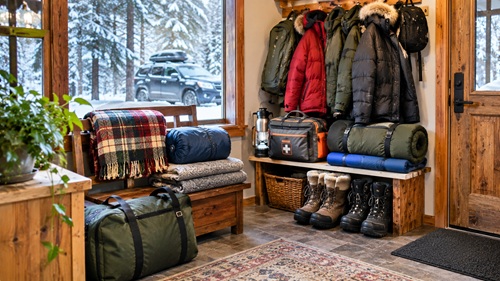
Household Winter Emergency Decision Matrix
| Condition | Recommended response |
|---|---|
| Safe indoor temperatures are being maintained | Continue monitoring and conserving resources |
| Indoor temperatures are steadily declining | Review heating capacity and prepare relocation arrangements |
| Temperatures approach levels unsuitable for vulnerable occupants | Arrange prompt relocation to heated accommodation |
| Remaining heating fuel may be insufficient | Relocate before safe conditions can no longer be maintained |
| Essential clothing and bedding cannot be kept dry | Obtain dry replacements or relocate |
| Household members cannot remain comfortably warm | Seek alternative heated accommodation |
| Symptoms of hypothermia develop | Obtain emergency medical assistance immediately |
| Carbon monoxide alarm activates | Evacuate immediately to fresh air and contact emergency services |
| Suspected fire or unsafe heating conditions | Leave the building and contact emergency services |
| Severe weather threatens transportation options | Arrange safe relocation early, following official travel guidance |
Critical Safety Readiness Assessment
| Critical safety capability | Verified | Missing or inadequate | Not applicable |
|---|---|---|---|
| Safe heating or confirmed heated accommodation | |||
| Functional carbon monoxide alarms where required | |||
| Functional smoke alarms | |||
| Unobstructed emergency exits | |||
| Suitable protection for vulnerable occupants | |||
| Appropriate infant sleeping arrangements | |||
| Reliable indoor temperature monitoring | |||
| Plan for contacting emergency medical assistance | |||
| Safe emergency transportation arrangements | |||
| Ability to recognize dangerous cold exposure |
Any missing, inadequate or unverified critical safety capability should receive immediate attention, regardless of how well prepared the household may appear in other areas.
Only mark a capability as not applicable when it genuinely does not apply to your household.
Preparing Your Clothing and Bedding for an Emergency Evacuation
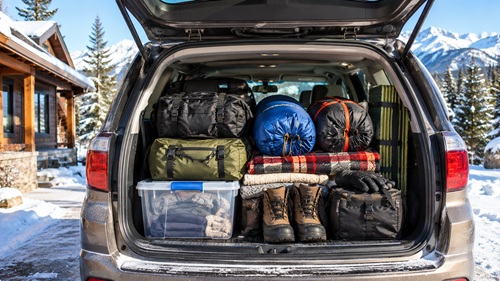
Even a well-prepared household may eventually need to evacuate during a winter emergency.
Heating equipment failures, depleted fuel supplies, structural damage, frozen plumbing, carbon monoxide hazards or medical emergencies may make remaining at home unsafe.
Organizing selected clothing and bedding supplies for transportation before an emergency occurs can significantly reduce the time required to relocate.
A winter evacuation bag should provide more than ordinary travel clothing. Household members may need to spend time outdoors, wait for transportation or remain temporarily in unfamiliar accommodation. Equipment should therefore be portable, appropriately sized and protected from snow and moisture.
Emergency Winter Evacuation Clothing and Bedding Inventory
| Equipment | Required | Packed | Condition | Shortfall |
|---|---|---|---|---|
| Complete thermal clothing set | ||||
| Spare underwear | ||||
| Spare thermal socks | ||||
| Insulated winter jacket | ||||
| Waterproof outerwear | ||||
| Insulated winter boots | ||||
| Winter hat | ||||
| Insulated gloves or mittens | ||||
| Suitable sleeping bag | ||||
| Insulated sleeping mat | ||||
| Emergency blanket | ||||
| Waterproof clothing bag | ||||
| Dedicated sleeping clothing | ||||
| Appropriate infant and child supplies | ||||
| Essential pet bedding |
Alternative Heated Accommodation Planning Record
| Planning requirement | Primary arrangement | Backup arrangement |
|---|---|---|
| Heated destination | ||
| Contact person | ||
| Contact information | ||
| Transportation | ||
| Alternative transportation | ||
| Pet accommodation | ||
| Accessibility requirements | ||
| Medical support requirements | ||
| Expected travel route | ||
| Emergency communications |
Confirm that the intended destination can accommodate the entire household, including individuals with additional medical or accessibility requirements and pets where applicable.
Travel during severe winter weather can introduce additional risks. Monitor official weather warnings, road conditions and emergency instructions before departing.
Testing Your Emergency Bedding and Clothing System Before You Need It
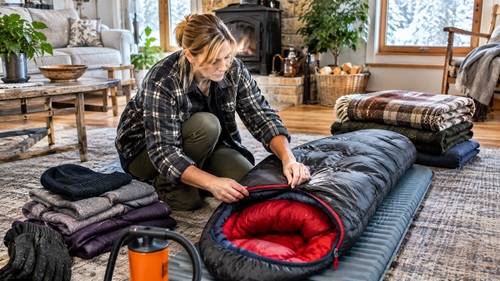
Purchasing emergency equipment is only the beginning of preparedness. The next step is confirming that the equipment remains usable and that household members understand how to use it.
A practical household preparedness exercise can be conducted under normal, safe indoor conditions. There is no need to deliberately expose anyone to dangerous temperatures.
Ask household members to locate their assigned emergency clothing, assemble their sleeping arrangements, inspect sleeping bag zippers and inflate sleeping pads where applicable.
This simple exercise may reveal unexpected problems. A sleeping mat may have a slow leak, a child’s winter boots may no longer fit, or essential bedding may be stored somewhere that is difficult to access.
Children, seniors and medically vulnerable individuals should never be subjected to deliberate cold-exposure testing.
Equipment Verification Checklist
| Verification task | Passed | Needs improvement |
|---|---|---|
| All thermal clothing fits correctly | ||
| Clothing layers can be worn together comfortably | ||
| Winter boots fit with thermal socks | ||
| Gloves allow essential tasks to be performed | ||
| Sleeping bag comfort ratings have been checked | ||
| Sleeping bag zippers function correctly | ||
| Sleeping mats hold air where applicable | ||
| Insulation is available beneath every sleeper | ||
| All emergency bedding is clean and dry | ||
| Spare clothing is readily accessible | ||
| Manual laundry equipment is functional | ||
| Clothing drying arrangements are available | ||
| Indoor thermometers operate correctly | ||
| Smoke and carbon monoxide alarms have been tested | ||
| Emergency relocation arrangements are confirmed |
Seasonal Equipment Inspection Record
| Inspection activity | Date completed | Problems identified | Corrective action |
|---|---|---|---|
| Winter clothing inspection | |||
| Footwear inspection | |||
| Bedding inspection | |||
| Sleeping bag inspection | |||
| Sleeping mat inspection | |||
| Emergency storage inspection | |||
| Heating safety equipment inspection | |||
| Household preparedness exercise | |||
| Relocation plan review |
Any equipment that cannot be located, does not fit, is damaged or has not been adequately assessed should be recorded as a preparedness gap.
Repeat these inspections before every winter season and after any emergency in which equipment has been used.
How Prepared Is Your Household? Emergency Bedding and Clothing Readiness Assessment
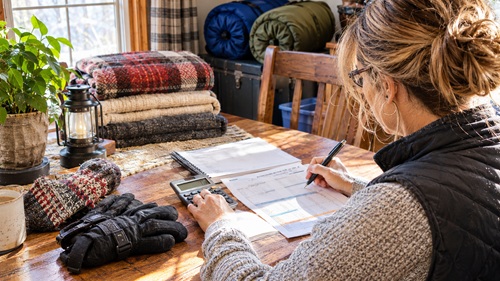
Completing an inventory helps establish what your household owns. A readiness assessment goes a step further by evaluating whether those resources provide the capabilities you actually require.
Use the following scoring system to evaluate your household’s current emergency bedding and clothing preparedness.
| Score | Readiness level | Description |
|---|---|---|
| 0 | Not prepared | Equipment is missing, unsuitable, unsafe or its capability is unknown |
| 1 | Partially prepared | Some equipment is available, but deficiencies remain |
| 2 | Prepared | Suitable equipment is available and its capability has been verified |
Household Readiness Scoring Table
| Preparedness capability | Maximum score | Your score |
|---|---|---|
| Suitable dry base layers for every person | 2 | |
| Adequate insulating clothing layers | 2 | |
| Weather-resistant clothing and suitable footwear | 2 | |
| Head and hand protection | 2 | |
| Dedicated dry sleeping clothing and replacements | 2 | |
| Suitable bedding assigned to every person | 2 | |
| Sleeping bag suitability or equivalent sleeping protection verified | 2 | |
| Insulation beneath every sleeper | 2 | |
| Moisture management and storage | 2 | |
| Vulnerable individuals and pets accommodated, where applicable | 2 | |
| Safe warm room or alternative shelter, alarms and exits | 2 | |
| Temperature monitoring and cold injury awareness | 2 | |
| Independent safe heating or confirmed heated relocation | 2 | |
| Equipment verified and emergency plan rehearsed | 2 | |
| Total household readiness score | 28 |
For categories involving vulnerable individuals or pets, award full credit when all applicable needs have been verified, including confirming that no additional requirements exist.
Understanding Your Household Readiness Score
| Score | Readiness classification | Recommended action |
|---|---|---|
| 0–10 | Critical preparedness gaps | Significant deficiencies require immediate attention |
| 11–17 | Developing preparedness | Address important equipment and capability weaknesses |
| 18–23 | Substantially prepared | Improve remaining deficiencies and verify existing arrangements |
| 24–28 | Strong inventory readiness | Maintain equipment, review critical safety capabilities and conduct periodic assessments |
Critical Safety Readiness Override
A numerical score does not always reveal the seriousness of an individual preparedness deficiency.
A household might score 26 out of 28 because it owns excellent winter clothing, sleeping bags, insulated mats and substantial bedding. However, if that household has no safe heating capability and no confirmed alternative heated accommodation, it may still be inadequately prepared for an extended winter emergency.
For this reason, the Critical Safety Readiness Assessment provided earlier in this lesson must be completed alongside the numerical assessment.
| Critical safety assessment result | Final readiness classification |
|---|---|
| All applicable critical safety capabilities verified | Use the numerical readiness classification |
| One or more critical capabilities partially established | Critical safety improvements required |
| One or more critical capabilities missing, unsafe or unknown | Not ready for the intended winter emergency scenario |
The critical safety assessment takes precedence over the numerical score. These scoring categories are practical planning tools, not scientifically validated predictions of survival.
Household Preparedness Improvement Record
| Identified weakness | Current score | Target score | Corrective action | Target date |
|---|---|---|---|---|
Repeat the assessment after completing corrective actions. This provides a measurable way to track your household’s preparedness improvements over time.
Improving Your Winter Preparedness Without Spending a Fortune
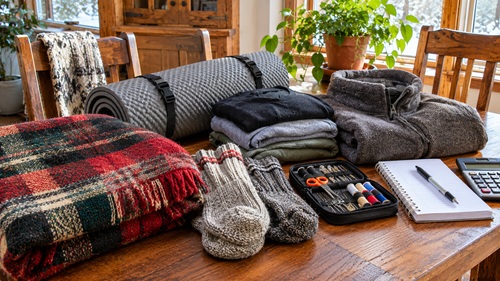
One of the challenges many households face is deciding where to spend limited preparedness funds.
A comprehensive emergency inventory can initially seem overwhelming, particularly when numerous equipment deficiencies are identified. Fortunately, meaningful improvements can often be achieved by organizing existing supplies and addressing the most important gaps first.
Take some time to look through your closets, spare bedrooms and camping equipment before purchasing anything new. Unused wool blankets, older fleece jackets, suitable mattresses and spare winter clothing may already provide much of the protection you require.
If your household owns several heavy blankets but lacks suitable insulation beneath sleeping areas, insulated sleeping mats may be a more worthwhile investment than additional blankets. Similarly, someone who already owns a quality winter jacket may benefit more from purchasing additional thermal socks and dry sleeping clothing than from purchasing another expensive jacket.
Secondhand clothing and bedding can also provide affordable alternatives. Inspect used equipment carefully for damage, contamination, moisture, compressed insulation and missing components.
Purchasing winter equipment gradually throughout the year, including during seasonal clearance sales, can help distribute costs and make preparedness more affordable.
Winter Preparedness Purchasing Priority Table
| Equipment or capability | Priority | Reason |
|---|---|---|
| Safe heating or alternative heated accommodation | Critical | Prevents prolonged unsafe cold exposure |
| Appropriate infant sleeping arrangements | Critical, where applicable | Protects particularly vulnerable household members |
| Smoke and carbon monoxide alarms | Critical, as applicable | Protects against heating-related hazards |
| Independent indoor thermometers | Critical for monitoring | Supports informed safety decisions |
| Thermal base layers | Essential | Supports moisture management and warmth |
| Dry thermal socks | Essential | Protects feet and supports clothing rotation |
| Warm household bedding | Essential | Provides overnight insulation |
| Suitable winter outerwear | Essential | Protects during outdoor activities and relocation |
| Insulated boots | Essential | Supports safe winter mobility |
| Winter hats and mittens | Essential | Protects exposed extremities |
| Appropriate sleeping bags | High, where needed | Provides flexible individual sleeping protection |
| Insulated sleeping mats | High, where needed | Reduces conductive heat loss |
| Dry sleeping clothing | High | Protects sleeping equipment from moisture |
| Spare blankets | Important | Provides additional insulation and redundancy |
| Clothes drying racks | Important | Supports prolonged clothing rotation |
| Waterproof storage | Important | Protects equipment from moisture |
| Clothing repair equipment | Important | Extends equipment service life |
| Personal warming devices | Supplemental | Provides additional localized warmth |
| Battery-heated clothing | Supplemental | Adds warmth where power is available |
| Specialized expedition equipment | Advanced | Supports specific severe-cold requirements |
Household Procurement and Budget Planning Record
| Identified deficiency | Priority | Quantity needed | Estimated cost | Target date | Completed |
|---|---|---|---|---|---|
The goal is not to own the most expensive winter equipment. It is to establish dependable capabilities that meet the actual needs of your household.

Download Your FREE Emergency Bedding and Clothing Inventory & Readiness Assessment
To help you put the information covered in this preparedness lesson into practice, Prepping Communities has developed a comprehensive, free, 29-page printable Emergency Bedding and Clothing Inventory & Readiness Assessment.
The downloadable resource allows you to document existing supplies, calculate household requirements, evaluate equipment suitability, identify deficiencies and establish a practical improvement plan.
What’s Included in Your Free Preparedness Assessment?
| Assessment component | Purpose |
|---|---|
| Household winter preparedness profile | Establishes individual and household requirements |
| Individual clothing requirements | Helps allocate equipment to household members |
| Thermal base layer inventories | Identifies clothing and moisture management deficiencies |
| Insulating clothing inventories | Evaluates available thermal protection |
| Weather-resistant clothing inventories | Assesses outdoor weather protection |
| Winter accessories and footwear assessments | Evaluates extremity protection |
| Emergency bedding inventories | Records available sleeping insulation |
| Sleeping bag suitability assessments | Evaluates temperature ratings and condition |
| Sleeping surface insulation inventories | Identifies conductive heat loss protection |
| Moisture management and storage assessments | Helps maintain dry and usable equipment |
| Vulnerable household member requirements | Supports individualized preparedness |
| Emergency warm room safety assessments | Evaluates household shelter arrangements |
| Individual equipment allocation records | Helps ensure equipment is available to everyone |
| Practical equipment verification checklists | Confirms equipment condition and functionality |
| Fourteen-day emergency monitoring logs | Supports monitoring during prolonged outages |
| Household readiness scoring | Provides a structured preparedness assessment |
| Critical safety and relocation planning | Identifies essential safety requirements |
| Preparedness action plans | Establishes corrective actions |
| Budget and procurement records | Supports prioritized purchasing |
| Material suitability assessment | Evaluates clothing and bedding materials |
| Common preparedness mistakes assessment | Identifies frequently overlooked weaknesses |
| Seven-day scenario exercise | Develops practical emergency decision-making |
| Purchasing priority worksheet | Helps allocate limited preparedness funds |
| Skills verification worksheet | Evaluates practical preparedness knowledge |
Download your FREE Emergency Bedding and Clothing Inventory & Readiness Assessment today.
Print the assessment, complete it with your household and store a copy with your other emergency preparedness records.
Review it before each winter season and whenever household circumstances change. The completed assessment can also help you coordinate preparedness requirements with relatives, neighbors and trusted members of your local preparedness community.
Preparedness Action Plan

Improving your household’s winter preparedness does not need to happen all at once. Begin with the resources you already have and gradually address the deficiencies that could have the greatest effect on household safety.
Start today by completing your emergency clothing and bedding inventory. Determine how many people may depend on your household and identify anyone requiring additional protection. Confirm that alternative heated accommodation is available should remaining at home become unsafe.
Over the next few days, inspect your existing winter clothing, footwear, sleeping bags and bedding. Check that garments fit correctly, sleeping bag zippers function properly and insulated sleeping mats remain usable. Allocate dedicated dry sleeping clothing to each household member.
During the following week, address deficiencies involving sleeping surface insulation, equipment storage and emergency warm room arrangements. Establish a practical system for keeping wet clothing separate from dry supplies.
As your preparedness develops, consider how essential clothing could be washed, dried and repaired without electricity. Conduct a safe household preparedness exercise and review your readiness assessment to determine whether any important deficiencies remain.
Your Household Preparedness Action Plan
| Timeframe | Preparedness action | Objective |
|---|---|---|
| Today | Complete the household clothing and bedding inventory | Establish current preparedness |
| Today | Identify vulnerable household members | Understand individual requirements |
| Today | Confirm alternative heated accommodation | Establish a safe relocation option |
| Within 24 hours | Identify missing or unsuitable sleeping equipment | Address essential overnight protection |
| Within 48 hours | Inspect winter clothing and footwear | Verify fit and condition |
| Within 72 hours | Allocate dry sleeping clothing to each person | Establish dependable sleeping clothing |
| Within 7 days | Improve insulation beneath sleeping areas | Reduce conductive heat loss |
| Within 7 days | Organize emergency clothing and bedding storage | Improve accessibility |
| Within 14 days | Establish laundry and drying capabilities | Improve extended emergency sustainability |
| Within 30 days | Address remaining inventory deficiencies | Strengthen overall readiness |
| Within 30 days | Conduct a safe household preparedness exercise | Verify equipment and procedures |
| Before every winter | Repeat the readiness assessment | Maintain seasonal preparedness |
| Following every emergency | Review equipment performance | Identify practical improvements |
Critical safety deficiencies should be addressed immediately rather than postponed to meet the suggested planning schedule.
Even relatively small improvements can make a meaningful difference. Purchasing additional dry socks, repairing a damaged sleeping bag, organizing emergency bedding or obtaining an independent indoor thermometer may address a weakness that would otherwise become apparent during an emergency.
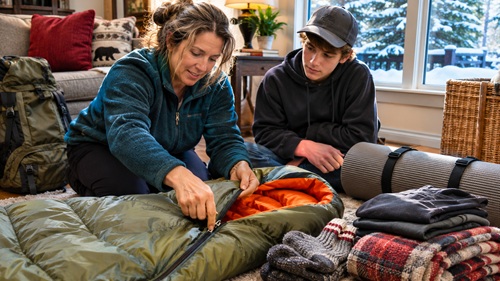
Skills Learned
After completing this preparedness lesson, you should have a much better understanding of how clothing and bedding contribute to household winter resilience.
You should be able to recognize the four principal mechanisms of heat loss and understand why insulation above and below the body is important. You should also understand the advantages and limitations of common clothing materials, how to establish an effective layering system and how to interpret sleeping bag temperature ratings.
Completing the inventory tables should help you calculate household equipment requirements, identify deficiencies and allocate suitable clothing and bedding to individual household members.
You should also have a better understanding of how moisture affects insulation, why dedicated sleeping clothing is valuable and how manual laundry, clothing rotation and equipment maintenance can contribute to prolonged emergency preparedness.
Perhaps most importantly, you should be better equipped to recognize dangerous cold exposure, evaluate the needs of vulnerable household members, monitor deteriorating indoor conditions and determine when relocation becomes necessary.
Practical Skills Verification Record
| Skill | Understood | Practiced or verified | Further improvement needed |
|---|---|---|---|
| Identify the four mechanisms of heat loss | |||
| Assemble an effective clothing layering system | |||
| Select appropriate clothing materials | |||
| Interpret sleeping bag temperature ratings | |||
| Establish an insulated sleeping arrangement | |||
| Calculate household clothing requirements | |||
| Establish clothing rotation procedures | |||
| Manage laundry and moisture without electricity | |||
| Inspect and maintain winter equipment | |||
| Identify hypothermia warning signs | |||
| Identify frostbite warning signs | |||
| Monitor indoor temperatures | |||
| Evaluate vulnerable occupant requirements | |||
| Prioritize preparedness purchases | |||
| Develop an emergency relocation plan |
Preparedness knowledge becomes considerably more valuable when it is translated into practical skills. Completing an inventory establishes what your household owns. Practicing these skills helps establish what your household can actually do.

Key Takeaways
Winter preparedness is about much more than accumulating blankets, sleeping bags and warm clothing. It involves understanding how the body loses heat, selecting appropriate equipment and ensuring that every household member has dependable protection when conventional heating becomes unavailable.
Insulation beneath sleeping surfaces deserves just as much consideration as the bedding placed above the body. Maintaining dry replacement clothing, establishing practical clothing rotation procedures and protecting equipment from moisture become increasingly important as an emergency continues.
Infants, children, older adults, medically vulnerable individuals and household pets may have different requirements. Taking the time to understand those requirements before winter arrives can prevent significant problems during an emergency.
You do not need to purchase every item immediately. Begin by evaluating existing resources, addressing critical safety deficiencies and prioritizing improvements according to the needs of your household.
Regular equipment inspections, practical preparedness exercises and seasonal readiness assessments help ensure that emergency resources remain dependable when they are needed.
Most importantly, recognize the limitations of your preparedness arrangements. Clothing and bedding can help retain body heat, but they cannot guarantee safe conditions inside a continuously cooling building.
Knowing when to relocate to heated accommodation is just as important as knowing how to remain warm at home.
The most prepared household is not necessarily the household with the most winter survival equipment. It is the household that understands its equipment, recognizes its limitations, anticipates changing conditions and takes appropriate action before those conditions become dangerous.
Take some time today to evaluate your household’s emergency clothing and bedding. The improvements you make before winter arrives could make a considerable difference when the next extended power outage occurs.
This preparedness lesson is intended for educational and household planning purposes. It does not replace professional medical advice, manufacturer safety instructions or official emergency management guidance.
© Prepping Communities. This content is for informational purposes only and not professional advice. Use at your own risk.
Terms | Privacy | Guidelines