
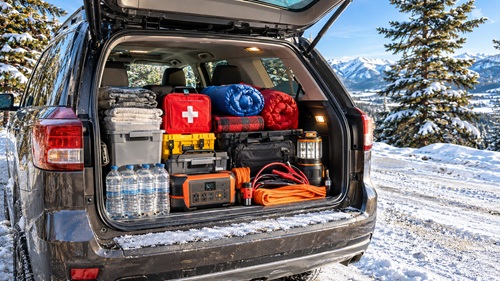
Could You Survive 72 Hours Stranded in Your Vehicle?
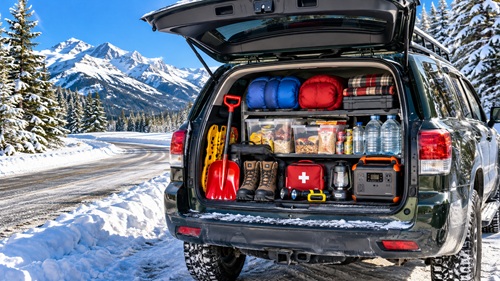
A routine winter journey can become an emergency surprisingly quickly. A trip to visit family, a drive home from work, or a journey through a rural area may begin under reasonably good conditions. Within a few hours, however, falling temperatures, heavy snowfall, freezing rain, poor visibility, or a highway accident can bring traffic to a complete stop. At first, most people assume the delay will last only an hour or two, but as darkness approaches and temperatures continue to fall, fuel levels become more important, cellphones lose battery power, passengers become hungry, and the vehicle gradually becomes colder whenever the engine is switched off.
Now imagine that the highway remains closed overnight. Snow continues to accumulate, emergency responders are dealing with multiple incidents, and nobody seems to know when traffic will begin moving again. What started as an inconvenience has become a situation requiring warmth, drinking water, food, communication, sanitation, and careful management of limited resources. Many motorists carry a basic emergency kit containing jumper cables, a flashlight, and perhaps a blanket, but equipment that is adequate for a short mechanical breakdown may be insufficient for several people spending an entire night in freezing temperatures.
Preparing for a potential 72-hour winter vehicle emergency requires understanding what the vehicle can provide, what passengers need, and how those requirements change as conditions deteriorate. It also means recognizing when remaining with the vehicle is safer than attempting to reach assistance on foot, and when circumstances require immediate emergency assistance.
This posting is part of the Prepping Communities — Complete Emergency Preparedness Checklist Series and is designed to help motorists evaluate their existing winter vehicle emergency equipment, identify preparedness gaps, calculate resource requirements, and develop a practical plan for dealing with an extended winter travel emergency. The 72-hour planning period is not a guarantee of survival. Severe cold, injuries, medical conditions, inadequate shelter, and other circumstances may require assistance much sooner. Avoiding unnecessary travel during dangerous weather remains one of the most effective winter preparedness measures.
Understanding How Winter Vehicle Emergencies Develop
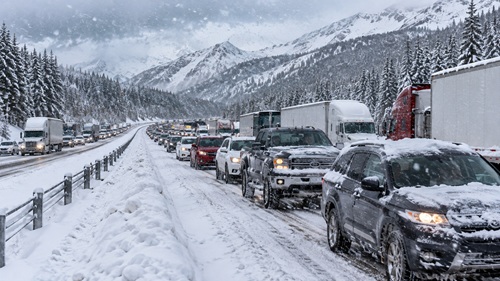
Winter vehicle emergencies do not always begin with a dramatic accident. In many cases, several relatively ordinary problems occur together until motorists find themselves unable to continue their journey. A vehicle may encounter increasingly heavy snowfall while travelling through a rural area. Traffic begins moving more slowly, visibility deteriorates, and an accident farther ahead eventually closes the highway. Vehicles behind the incident may have no safe opportunity to turn around, particularly when snow accumulation or congestion prevents movement.
Mechanical problems can create similar circumstances. A weakened battery, damaged tire, frozen component, or engine problem that might be manageable during summer can become considerably more serious when outside temperatures are well below freezing. Communication difficulties can complicate the situation further, especially along rural highways and through mountainous regions where cellular coverage may already be limited. Even when communication remains available, emergency responders may be unable to reach stranded motorists immediately.
One of the greatest challenges is simply not knowing how long the situation will last. Motorists who expect to be moving again within an hour may consume fuel, food, water, and battery power differently than someone preparing for an overnight delay. By the time they realize the seriousness of the situation, some of those resources may already be depleted. A winter vehicle preparedness plan needs to account for the possibility that a short interruption could develop into a prolonged emergency, with enough flexibility to support occupants as conditions change.
Why Every Vehicle Needs a Winter Emergency Equipment Inventory
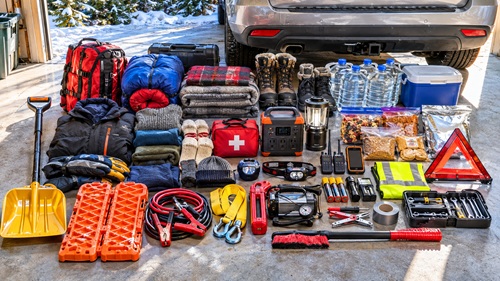
A winter emergency kit is only useful when its contents are appropriate for the people travelling in the vehicle and the conditions they may encounter. Consider a household that keeps a blanket, flashlight, snow shovel, and jumper cables in the trunk. The equipment may have remained there for several years without being inspected. When the vehicle becomes stranded, the family discovers that the flashlight batteries are depleted, the blanket is too small for several passengers, and the drinking water stored in the vehicle has frozen solid. The problem is not necessarily that the household failed to purchase emergency equipment. It is that the equipment was never evaluated as a complete system.
A proper inventory identifies what is available, how much is available, where each item is stored, whether it remains functional, and which passenger requirements it supports. It also reveals whether several pieces of equipment depend on the same limited resource. Rechargeable flashlights, a cellphone, and a portable radio, for example, may all depend on a single power bank. If that power bank becomes depleted or fails, several emergency capabilities could be lost at the same time.
Accessibility is another consideration that is easily overlooked. Equipment stored beneath luggage or secured in a roof-mounted cargo box may be difficult to retrieve during heavy snowfall, darkness, or a roadside emergency. Something as simple as keeping winter gloves inside the passenger compartment rather than underneath several suitcases can make a considerable difference. The goal is not to fill every available storage compartment with survival equipment, but to carry a practical collection of supplies that can support the occupants when normal travel arrangements are disrupted.
Assessing Your Winter Travel Risks

The equipment required for winter travel depends heavily on where the vehicle is operated, how far it travels, and the environmental conditions it may encounter. Someone who primarily drives within a city may have relatively quick access to heated buildings, public transportation, emergency services, and other motorists. A person travelling through remote mountain passes or sparsely populated rural areas may have considerably fewer alternatives. Distance alone does not determine the level of risk, and a relatively short journey through an exposed mountain pass during a snowstorm may present greater challenges than a much longer journey along a well-maintained urban highway.
Before travelling, consider the weather forecast, road conditions, expected temperatures, daylight hours, fuel availability, cellular coverage, and the availability of safe places to stop. Road closures, avalanche warnings, freezing rain, and official travel advisories should be taken seriously. The people travelling in the vehicle also influence preparedness requirements, particularly when passengers include young children, older adults, pregnant individuals, people with disabilities, or anyone with a medical condition that could make prolonged exposure to cold more dangerous.
A practical travel assessment considers the most difficult reasonably foreseeable conditions rather than relying entirely on the expected journey time. A two-hour drive may require substantially more preparation when it crosses remote areas during winter. When authorities advise against travel, additional emergency equipment should never be treated as a substitute for postponing the journey.
Preparing Your Vehicle Before Winter
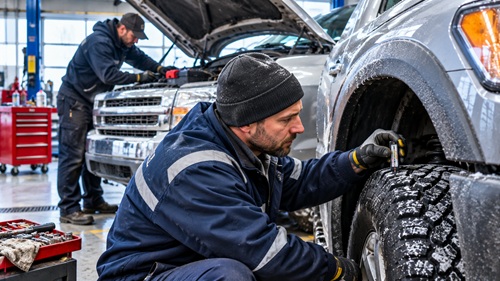
The most effective winter vehicle emergency plan begins with reducing the likelihood of a breakdown or loss of control. Cold temperatures place additional demands on vehicle batteries, tires, fluids, and mechanical systems. A battery that starts the vehicle without difficulty during warmer weather may struggle when temperatures fall significantly below freezing. Winter tires should be appropriate for the expected conditions and applicable local regulations, with tread depth, inflation pressure, and overall condition inspected regularly. Cold temperatures can reduce tire pressure, while inadequate tread can affect braking and traction on snow-covered roads.
The vehicle’s cooling system, antifreeze protection, windshield washer fluid, wiper blades, brakes, exterior lights, and heating and defrosting systems also deserve attention before winter arrives. A functioning heater is particularly important because it helps maintain occupant comfort and supports windshield visibility. Confirm that the spare tire, jack, and wheel-changing tools are present and suitable for the vehicle. Some newer vehicles are supplied with tire repair kits rather than conventional spare tires, making it important to understand the limitations of the equipment provided.
Fuel-powered vehicles should have their exhaust systems inspected as part of routine maintenance, particularly if there are signs of damage, unusual noise, or exhaust entering the passenger compartment. Electric vehicles require additional consideration of battery condition, charging availability, and the effect of cold weather on driving range. Keeping the vehicle mechanically sound does not eliminate every winter travel risk, but it reduces the likelihood that a preventable equipment failure will develop into a serious emergency.
Establishing a Pre-Departure Winter Travel Routine
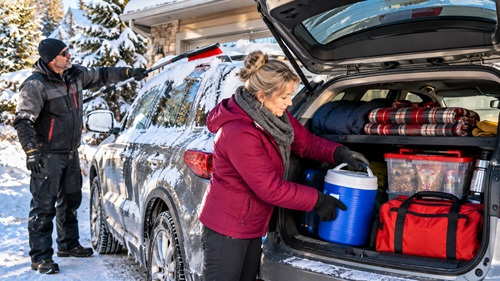
A considerable amount of winter vehicle preparedness takes place during the final few minutes before leaving home. Equipment may already be packed, but changing weather, passenger requirements, and vehicle conditions can affect whether the household is actually ready to travel. A route that was clear the previous evening may have become hazardous overnight, particularly through mountain passes, exposed highways, and rural areas. Checking current weather forecasts and official road condition reports should therefore become a regular part of the departure routine.
Check the vehicle’s fuel level or available battery range and consider whether refuelling or charging opportunities will be available along the intended route. Clear snow and ice from the windows, mirrors, exterior lights, roof, and other surfaces where accumulated snow could interfere with safe operation. Bring drinking water into the vehicle before departure rather than relying entirely on bottles that may have been sitting in freezing temperatures overnight. Confirm that cellphones, power banks, and emergency communication equipment are charged and that compatible cables are available.
Medications, temperature-sensitive medical supplies, and passenger-specific equipment may also need to be packed immediately before leaving rather than stored permanently in the vehicle. For longer or more remote journeys, share the intended route, destination, expected arrival time, and contact arrangements with a trusted person. Establish what that person should do if the travellers fail to arrive or make contact within an agreed period.
Developing a consistent pre-departure routine takes relatively little time, but it helps identify problems while the household still has access to warm shelter, replacement supplies, and the option of postponing the journey. Discovering a depleted power bank or frozen drinking water in the driveway is considerably easier to manage than discovering the same problem several hours into a winter emergency.
Managing Fuel and Vehicle Energy Reserves
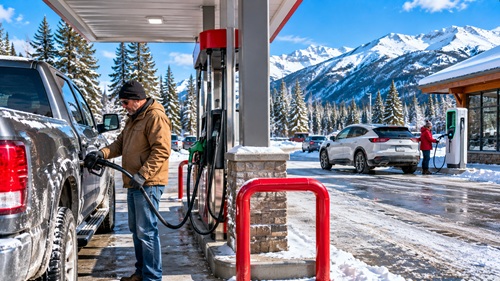
Fuel availability becomes particularly important when a vehicle is stranded during winter. A conventional vehicle may need fuel for heating, battery charging, and eventually continuing the journey once the road becomes passable. Keeping the tank at least half full during winter, and filling it before travelling through remote areas, provides greater flexibility if unexpected delays or diversions occur. However, the amount of fuel consumed while idling varies considerably depending on engine size, vehicle design, temperature, electrical loads, and operating conditions.
Consider an illustrative vehicle that consumes approximately one litre of fuel per hour while idling. If the engine operates for a total of four hours during a 24-hour period, it would consume approximately four litres. Over 72 hours, the same operating pattern would require approximately 12 litres of fuel. A larger vehicle consuming two litres per hour under similar conditions would require approximately 24 litres over the same period. These calculations are resource-planning examples, not recommended engine operating schedules. Safe engine operation depends on exhaust clearance, ventilation, vehicle condition, weather, and the circumstances of the emergency.
Electric vehicle owners face a different energy-management challenge because cabin heating, battery temperature management, lighting, and other electrical systems consume stored battery energy even when the vehicle is stationary. An electric vehicle averaging 1.5 kilowatts of stationary heating and supporting electrical loads for six hours would consume approximately nine kilowatt-hours. Actual consumption could be substantially higher or lower depending on the vehicle and outside temperature.
Electric vehicle owners should understand how their particular vehicle manages stationary heating, battery protection, and energy conservation. Hybrid vehicle owners also need to understand when the combustion engine may start automatically while the vehicle is stationary. Regardless of vehicle type, maintaining adequate energy reserves provides additional options when unexpected delays occur, but independent clothing and sleeping equipment remain essential because the vehicle’s heating system may eventually become unavailable.
Emergency Clothing and Personal Protection
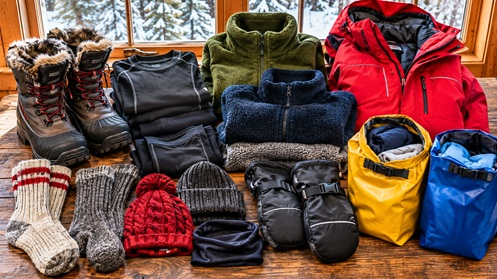
One of the most common winter travel mistakes is dressing for the destination rather than the conditions that might be encountered along the way. Someone travelling between heated buildings in a comfortable vehicle may wear ordinary shoes, lightweight clothing, and a jacket that is adequate for a short walk through a parking lot. If the vehicle becomes stranded, that clothing may provide insufficient protection during prolonged exposure to cold.
An effective winter clothing inventory includes insulating layers, weather-resistant outerwear, warm socks, insulated footwear, gloves or mittens, and suitable head protection. Spare dry clothing is particularly important because moisture can reduce insulation and accelerate heat loss. Layering allows passengers to adjust clothing as conditions change. A moisture-managing base layer helps reduce the accumulation of perspiration against the skin, insulating layers help retain body heat, and an outer layer provides protection against wind and precipitation.
Excessive physical activity can create another problem. Someone shovelling snow or attempting to free a vehicle may become overheated and begin sweating. When the activity stops, damp clothing can make it more difficult to remain warm. Adjusting layers before beginning strenuous activity and avoiding unnecessary exertion can help reduce this problem.
Winter clothing should be sized appropriately for each passenger. A single oversized jacket or spare pair of gloves may not adequately protect a young child or another person with different clothing requirements. Footwear deserves particular attention because ordinary shoes may provide limited insulation and poor traction on snow or ice. Carrying suitable winter boots can make a substantial difference if occupants need to leave the vehicle briefly. Keep essential clothing where it can be retrieved easily without unpacking the entire vehicle or spending unnecessary time outside.
Emergency Warmth and Sleeping Equipment
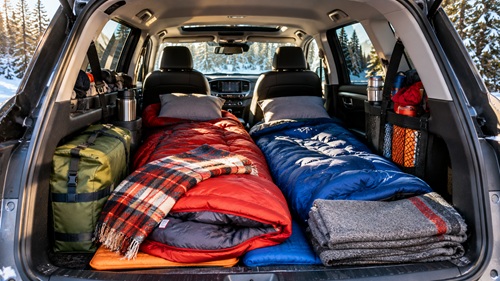
A vehicle provides some protection from wind, snow, and precipitation, but it is not necessarily an effective long-term shelter against severe cold. When the engine and heating system are switched off, the temperature inside the passenger compartment gradually approaches the outside temperature. The rate of cooling depends on vehicle construction, weather, wind exposure, sunlight, and the number of occupants.
Sleeping bags, insulated blankets, wool blankets, emergency bivvies, and insulating pads can help reduce heat loss when the vehicle cannot provide dependable heating. Sleeping bags should be selected according to realistic winter conditions, and manufacturer temperature ratings need to be interpreted carefully. A survival or extreme-temperature rating does not necessarily indicate that a person will remain comfortable or safe during prolonged exposure. Where available, comfort ratings provide a more useful starting point for selecting sleeping equipment, although individual warmth requirements still vary.
Insulation beneath the body is just as important as the insulation placed over it. Vehicle seats and floors can draw heat away from occupants, especially when people are sitting or lying in one position for extended periods. Suitable insulating pads or additional blankets can help reduce this heat loss. Reflective emergency blankets can provide a useful supplementary barrier against wind and radiant heat loss, but they provide little insulation by themselves and should not replace suitable winter clothing and sleeping equipment.
For a family of four, carrying one blanket is unlikely to provide the same protection as having an appropriate sleeping arrangement for every passenger. Evaluate how the available equipment will actually be distributed, whether everyone can remain adequately insulated, and whether sleeping arrangements can be established without restricting breathing, blocking exits, or creating other safety problems.
Maintaining Warmth Without Vehicle Heating
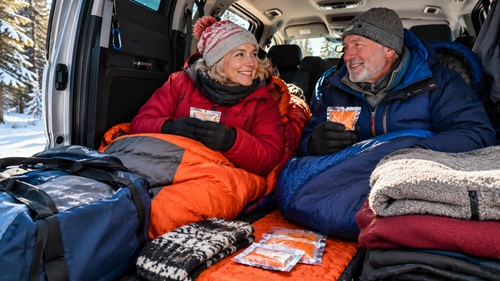
Imagine discovering that the vehicle will no longer start after several hours of waiting. The outside temperature is falling, darkness has arrived, and the occupants can no longer rely on warm air from the dashboard vents. This is where independent warmth equipment becomes particularly important. Rather than waiting until passengers are already excessively cold, begin by reducing heat loss. Put on additional dry layers, protect the head and neck, and use suitable gloves, socks, and insulated footwear. Clothing should provide adequate insulation without being so restrictive that it interferes with circulation.
Arrange sleeping bags and blankets so that insulation surrounds the body, including underneath it. Avoid compressing insulating materials unnecessarily, since trapped air contributes to their effectiveness. Household members may benefit from remaining reasonably close together, provided everyone has adequate space, ventilation, and unrestricted breathing. Children and vulnerable adults should be monitored regularly for signs of cold exposure.
Commercial chemical hand and foot warmers may provide supplementary warmth when used according to manufacturer instructions. They should not be placed directly against sensitive skin or used in circumstances prohibited by the manufacturer. People with reduced sensation or impaired circulation require particular caution because they may not recognize excessive heat. Hand warmers are supplementary equipment and should never be relied upon as the primary means of maintaining body temperature.
Opening vehicle doors repeatedly allows warmer interior air to escape and exposes occupants to wind and precipitation. Organizing essential supplies within reach can reduce unnecessary trips outside, although ventilation and safe access must still be maintained. These measures help conserve body heat, but they cannot make every vehicle safe in extreme cold. If passengers cannot maintain adequate warmth, emergency assistance becomes urgent regardless of how much equipment remains available.
Managing Condensation and Moisture Inside a Cold Vehicle
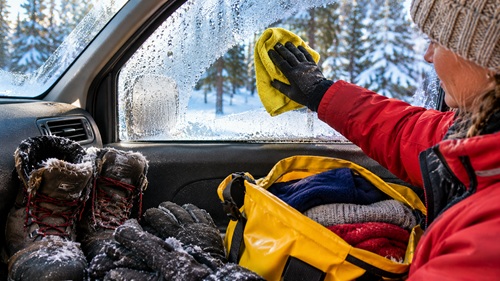
One of the less obvious challenges of spending several hours inside a cold vehicle is the amount of moisture produced by the occupants themselves. Every person releases moisture through breathing and perspiration, while wet boots, snow-covered jackets, damp gloves, and melting snow introduce additional moisture into the passenger compartment. With several people inside a vehicle, condensation can gradually accumulate on windows and other cold surfaces.
As temperatures fall, condensation may freeze on the interior glass. Sleeping bags and clothing can also become damp when they remain in contact with cold, wet surfaces. This matters because moisture can reduce the effectiveness of insulation. A sleeping bag that performs well when dry may provide considerably less protection when damp, depending on its insulating material.
Some controlled ventilation may help reduce moisture accumulation, although ventilation also allows heat to escape. Occupants need to balance moisture management with warmth and weather conditions, keeping air openings free of snow and avoiding any attempt to seal the passenger compartment completely. Wet outerwear and footwear should be kept separate from dry sleeping equipment whenever practical. Spare clothing can be stored in waterproof bags, and a small absorbent cloth can help remove condensation from accessible surfaces.
Avoid unnecessary physical exertion that causes excessive perspiration. Someone who becomes sweaty while shovelling snow may subsequently have difficulty remaining warm when sitting inside the vehicle. Keeping insulation dry is not simply a matter of comfort; during a prolonged winter emergency, moisture management can influence how effectively passengers retain body heat throughout the night.
Understanding Carbon Monoxide and Vehicle Heating Safety
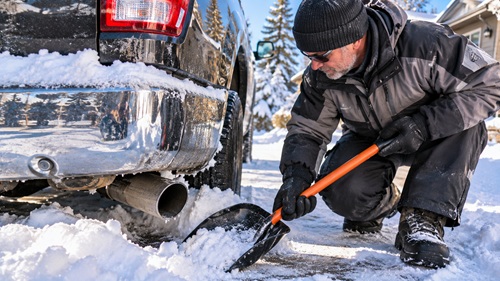
Running a vehicle’s engine to maintain cabin warmth introduces a potentially serious hazard during a winter emergency. Carbon monoxide is a poisonous gas produced by combustion that cannot be reliably detected by smell, taste, or appearance. Exposure can cause headaches, dizziness, nausea, weakness, confusion, loss of consciousness, and death. Snow accumulation around a vehicle can obstruct the exhaust outlet, allowing exhaust gases to accumulate around the vehicle or enter the passenger compartment, particularly if the exhaust system is damaged or leaking.
If it is safe to do so, ensure that the exhaust outlet and surrounding area remain clear of snow and ice before operating the engine. Exhaust clearance may need to be checked again as snowfall or drifting continues. General winter storm emergency guidance commonly recommends running the engine and heater for approximately ten minutes per hour when conditions permit, while keeping the exhaust clear and opening a window slightly for ventilation.
This is general emergency guidance, not a guaranteed safe operating schedule. Opening a window does not make a blocked or damaged exhaust system safe. If exhaust clearance cannot be maintained, or there is reason to believe exhaust gases may be entering the vehicle, the engine should not be operated. Occupants should not sleep with a conventional combustion engine running, and hybrid vehicles require similar caution because their engines may start automatically when the vehicle is operating in certain stationary modes.
A suitable battery-powered carbon monoxide alarm rated for the expected operating temperatures and intended environment may provide an additional warning, but it does not replace safe engine operation or proper exhaust clearance. Portable camping stoves, charcoal grills, fuel-burning lanterns, and unapproved combustion heaters must never be operated inside the passenger compartment. Opening a window does not eliminate the risks associated with using such equipment in an enclosed vehicle.
If carbon monoxide exposure is suspected, occupants need fresh air and urgent emergency medical assistance. Move to fresh air as safely as possible, call emergency services, and do not resume operating the suspected source. The safest winter vehicle preparedness arrangement combines suitable clothing, independent insulation, adequate energy reserves, and an understanding of carbon monoxide hazards rather than depending entirely on the vehicle’s heating system.
Planning Emergency Drinking Water
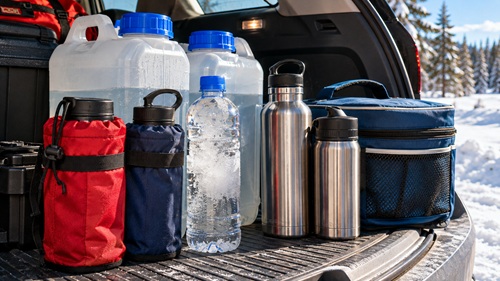
Drinking water is essential during a prolonged vehicle emergency, even when outside temperatures are extremely cold. People sometimes associate dehydration primarily with hot weather, but the body continues losing water through breathing, perspiration, and normal bodily functions during winter. Cold conditions may also reduce the sensation of thirst, making it easier to overlook hydration.
A useful illustrative planning baseline for drinking water is approximately two litres per person per day, although actual needs vary with age, health, activity, diet, and environmental conditions. Using this baseline, one adult would require approximately six litres of drinking water over 72 hours. A household of four would require approximately four people × two litres × three days = 24 litres of drinking water. This quantity does not include additional water that may be needed for food preparation, sanitation, pets, or medical requirements. Carry additional water where practical, particularly when the journey involves remote locations or increased physical activity.
The primary challenge with vehicle water storage during winter is freezing. Water expands as it freezes and may damage unsuitable containers. Even when the container remains intact, frozen water is not immediately available for drinking. Insulated containers can slow freezing, but they cannot prevent it indefinitely when exposed to sustained subzero temperatures. Water carried into a warm vehicle immediately before departure may remain accessible longer than water left in the vehicle overnight.
Smaller containers may be easier to handle and thaw than a single large container. Water should be stored securely, with suitable allowance for expansion where freezing is possible. Eating snow directly is not an effective primary hydration strategy because it provides relatively little water for its volume, requires the body to warm and melt it, and may expose occupants to contaminants.
If snow must be used as an emergency water source, it should be collected from the cleanest available location, melted safely, and treated as appropriate before consumption. Never operate a camping stove inside a vehicle to melt snow. A practical winter water inventory identifies not only how much water is carried, but how much will remain accessible under the expected temperatures.
Planning Emergency Food Supplies
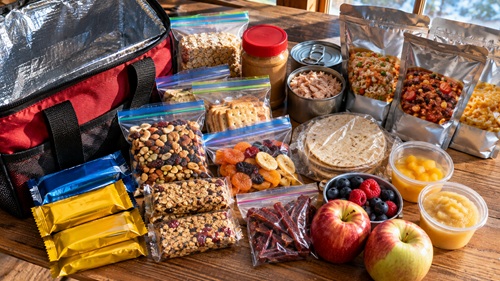
Food carried in a winter vehicle emergency kit should be selected according to practicality, storage conditions, passenger needs, and preparation requirements. During an extended delay, motorists may have no safe way to cook meals, making foods that require boiling water, sustained heating, refrigeration, or extensive preparation considerably less useful than ready-to-eat alternatives. Energy bars, crackers, dried fruit, nuts, shelf-stable meat products, and suitable ready-to-eat packaged meals can provide useful options without introducing additional cooking requirements.
Food should also be evaluated for its performance in freezing temperatures. Some products become extremely hard when frozen, while canned or liquid-containing foods may be damaged by repeated freezing and thawing. Damaged, leaking, or otherwise compromised food containers should not be relied upon. Vehicle temperatures can also become extremely high during warmer months, making year-round food storage and rotation important.
For illustrative planning purposes, an adult consuming 2,000 calories per day would require approximately 6,000 calories over 72 hours. Four adults using the same planning assumption would require approximately 24,000 calories over three days. Actual calorie requirements vary considerably. Children may have different needs, while adults performing strenuous physical activity in cold conditions may require more energy. Medical conditions, dietary restrictions, and food allergies must also be considered.
The purpose of carrying emergency food is not necessarily to reproduce normal household meals. It is to provide accessible energy and nutrition without creating additional dependencies on cooking equipment, fuel, or large quantities of water. Familiar foods that passengers can eat comfortably under difficult conditions are often more useful than specialized emergency products that have never been tested.
Emergency Lighting Equipment for Winter Vehicles
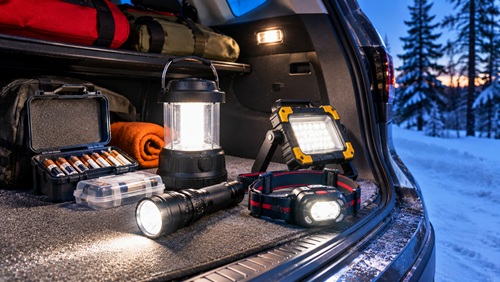
Emergency lighting becomes particularly important when motorists are stranded after sunset or need to inspect equipment during poor visibility. A handheld flashlight can help locate supplies, inspect the vehicle, or identify obstacles outside, while a headlamp offers the additional advantage of keeping both hands available when handling equipment or adjusting clothing. A small battery-powered LED lantern may provide more comfortable general illumination inside the vehicle than a concentrated flashlight beam.
Lighting equipment should be suitable for the expected temperatures and protected from moisture. Spare batteries should be compatible with the devices and stored in protective cases to prevent short circuits. Rechargeable lights can be useful when reliable charging arrangements are available, but relying exclusively on rechargeable equipment creates a dependency on the vehicle’s electrical system or portable charging supplies.
A combination of rechargeable and replaceable-battery lighting can provide greater flexibility if one power source becomes unavailable. Test the lights before winter travel and position them where occupants can reach them without searching through luggage in darkness. Battery-powered lighting is generally preferable to candles or fuel-burning lanterns because open flames and combustion introduce additional hazards inside a vehicle.
Emergency Communication Equipment
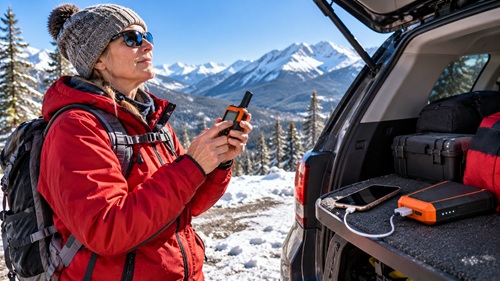
Communication may be one of the most valuable capabilities available to stranded motorists. A cellphone can provide access to emergency services, weather information, road closure updates, navigation, roadside assistance, and family members. Its usefulness, however, depends on battery capacity, network coverage, and the availability of charging equipment. Cold temperatures can reduce battery performance, and a phone that continually searches for a weak cellular signal may consume additional electricity.
Carry compatible charging cables and a dependable vehicle charging adapter, along with a separate portable power bank that provides an additional charging option if the vehicle’s electrical system becomes unavailable. In areas with unreliable cellular coverage, satellite messaging devices or phones with compatible satellite emergency communication features may provide additional options. These systems have their own limitations, including subscription requirements, battery capacity, service availability, and the need for a suitable view of the sky.
Satellite communication equipment should be configured and tested before travelling using its approved test functions. Discovering that an account is inactive or that the equipment has never been properly set up during an emergency can significantly reduce its usefulness. A battery-powered radio may also provide access to weather warnings and public information when cellular services are disrupted, depending on local broadcasting coverage.
During an emergency, communication should include the vehicle’s location, the number of occupants, medical concerns, available supplies, weather conditions, and any immediate hazards. Preserve enough battery power to receive updates and communicate with emergency responders. Entertainment, unnecessary internet browsing, and other nonessential activities can consume electricity that may become valuable later.
Calculating Backup Electricity for Communication and Lighting
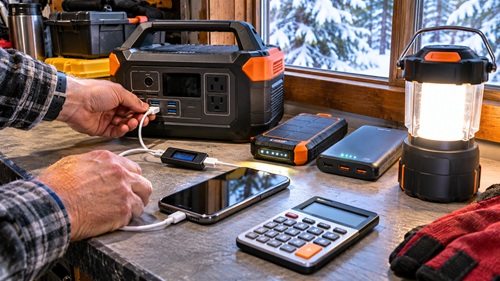
Portable battery capacity should be evaluated according to the equipment it must support rather than simply relying on the advertised capacity of a power bank. Consider a portable power bank rated at 20,000 milliamp-hours with a nominal internal battery voltage of 3.7 volts. Its nominal stored energy would be approximately 20 amp-hours × 3.7 volts = 74 watt-hours.
Not all of this energy will reach the connected equipment because charging and voltage conversion introduce losses. If approximately 80 percent were delivered under the conditions of use, the available energy would be around 59 watt-hours. A smartphone with a battery capacity of approximately 15 watt-hours might therefore receive roughly three to four equivalent full charges under favorable conditions, although actual performance depends on the phone, power bank, charging method, battery condition, and temperature.
Now consider a small emergency lantern consuming two watts for four hours each evening. Its daily energy consumption would be eight watt-hours, representing 24 watt-hours over three days. If the same power bank must support both the lantern and the cellphone, their combined energy requirements need to be considered. A power bank that initially appeared sufficient for communication may provide considerably less flexibility when several other devices depend on it.
Motorists should also follow manufacturer temperature limits when charging rechargeable batteries. Certain lithium-ion batteries can be damaged when charged below freezing unless the equipment is specifically designed to manage those conditions. Protecting electronic equipment from extreme cold and maintaining an independent backup charging arrangement can improve communication reliability during a prolonged emergency.
Vehicle Recovery Equipment
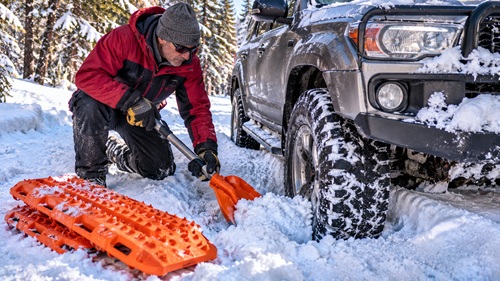
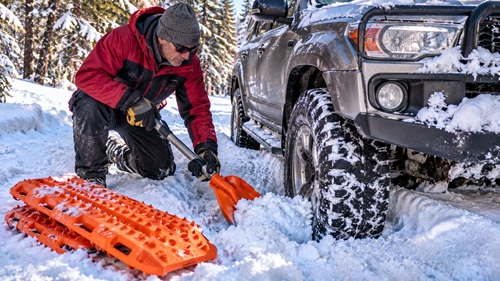
Snow accumulation, icy surfaces, and poor traction can leave a mechanically sound vehicle unable to move. A practical winter recovery inventory may include a suitable snow shovel, traction boards, approved tire chains or other permitted traction devices, and appropriate materials for improving traction beneath the tires. A compact shovel should be strong enough to move packed snow rather than simply being small enough to fit inside the vehicle. It should also remain accessible without requiring occupants to unload the entire cargo area.
Traction boards may help when tires cannot obtain sufficient grip, but their effectiveness depends on snow conditions, vehicle weight, and correct use. Tire chains and other traction devices must be compatible with the vehicle, tire size, manufacturer requirements, and local regulations. Some vehicles have limited clearance around their wheels and cannot safely accommodate certain types of chains, which makes checking compatibility before winter particularly important.
Recovery straps and towing equipment require additional caution because vehicle recovery can involve substantial forces, and unsuitable attachment points or equipment failures can cause serious injuries. Never attach recovery equipment to an ordinary tow ball, bumper, suspension component, or another point that has not been approved for the intended recovery method. Bystanders should remain well clear of recovery operations.
Motorists who are unfamiliar with vehicle recovery techniques should seek qualified assistance rather than improvising in dangerous conditions. The purpose of carrying recovery equipment is to provide appropriate options when circumstances allow safe use, not to encourage motorists to attempt recoveries beyond their knowledge or capabilities.
Emergency Tools and Vehicle Repair Supplies
Some winter vehicle problems can be addressed using basic equipment, while others require professional mechanical assistance. A portable tire inflator, suitable tire-pressure gauge, battery jump starter, compatible jumper cables, basic hand tools, ice scraper, snow brush, and manufacturer-approved tire-changing equipment may provide useful capabilities during a roadside emergency.
Portable jump starters should be compatible with the vehicle and maintained according to manufacturer instructions. Cold storage can reduce battery performance, making periodic inspection and charging important. Understand the correct jump-starting procedures for the particular vehicle, since incorrect connections can damage electrical systems or create safety hazards. Frozen, leaking, or visibly damaged vehicle batteries should not be jump-started.
Hybrid and electric vehicles may have specific procedures for dealing with their low-voltage electrical systems, while high-voltage components should never be handled or repaired by unqualified individuals. Changing a tire on a busy highway, icy shoulder, or unstable surface may be more dangerous than remaining in a protected location and requesting assistance. A vehicle should never be supported solely by a jack while someone works underneath it.
The inventory should distinguish between tools the occupants know how to use and equipment that would require specialized knowledge. Owning a tool does not automatically provide the capability to perform a repair safely, particularly when freezing temperatures, darkness, moving traffic, and poor visibility complicate the task.
Emergency First Aid and Medical Supplies
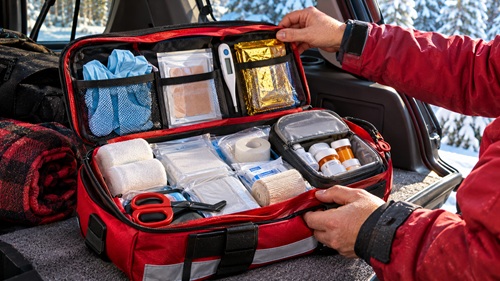
Winter vehicle emergencies may involve injuries, cold exposure, dehydration, or interruptions to normal medical routines. A suitable vehicle first aid kit should contain supplies appropriate for the occupants and the types of injuries that could reasonably occur. Dressings, adhesive bandages, gauze, medical tape, disposable gloves, and other basic first aid materials can help address minor injuries while assistance is arranged. However, equipment alone is not a substitute for first aid knowledge, and recognized first aid training can help motorists identify serious conditions, provide appropriate immediate care, and understand when emergency medical assistance is required.
Passengers who rely on prescription medications should carry an appropriate travel supply in accordance with medical and pharmacy guidance. Medication storage requirements must also be considered because some products can be damaged by freezing or excessive heat. Individuals who depend on medical equipment need a separate plan addressing power requirements, battery capacity, operating temperatures, and access to assistance.
Medical information, emergency contact details, allergies, and relevant care instructions may be useful if an occupant becomes unable to communicate effectively. A winter vehicle first aid inventory therefore needs to consider both general emergency supplies and the specific medical requirements of the people travelling. A standard first aid kit may provide useful basic supplies, but it cannot address every passenger’s individual medical needs.
Recognizing Hypothermia and Frostbite
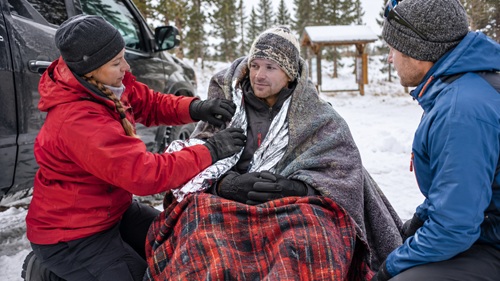
Cold-related injuries can develop gradually, and occupants may not immediately recognize that someone is becoming dangerously cold. Hypothermia occurs when the body loses heat faster than it can produce it, causing core body temperature to fall. Warning signs may include persistent shivering, unusual fatigue, poor coordination, slurred speech, confusion, and increasing drowsiness. In more severe cases, shivering may decrease or stop even though the person remains dangerously cold. This should not be interpreted as improvement.
Suspected hypothermia requires prompt attention. Protect the person from further cold exposure, replace wet clothing when practical, provide dry insulation, and seek emergency medical assistance. Handle someone with suspected severe hypothermia gently and follow emergency dispatcher instructions. Warm, nonalcoholic drinks may be appropriate for a fully alert person who can swallow safely, but fluids should not be given to someone who is confused, unconscious, or unable to swallow normally.
Frostbite occurs when body tissues freeze, with fingers, toes, ears, cheeks, and the nose being particularly vulnerable. Warning signs may include numbness, pale or waxy skin, and changes in skin texture. Frostbitten areas should be protected from further injury. Do not rub or massage affected tissue, apply direct heat, or attempt thawing if there is a significant possibility that the tissue will freeze again. Obtain medical assistance as soon as possible.
Alcohol should not be used as a warming strategy because, although it may create a temporary sensation of warmth, it can increase heat loss and impair judgment. Recognizing cold-related injuries early is an important part of winter vehicle preparedness. A 72-hour supply of equipment does not mean occupants should delay seeking assistance when signs of serious cold exposure develop.
Emergency Sanitation and Personal Hygiene
Sanitation is often overlooked when preparing a winter vehicle emergency kit, particularly when motorists expect delays to last only a few hours. During an extended emergency, passengers may need to manage toileting, personal hygiene, menstrual care, waste storage, and basic hand cleaning without access to normal facilities. A practical sanitation inventory may include toilet paper, tissues, suitable waste bags, absorbent materials, hand sanitizer, disposable gloves, personal hygiene supplies, and an appropriate portable toilet arrangement where space permits.
Hand sanitizer and cleaning products should be stored according to manufacturer instructions, as freezing temperatures may affect some formulations or containers. Waste should be contained securely, kept separate from drinking water, food, and sleeping equipment, and disposed of appropriately once suitable facilities become available. Maintaining basic hygiene becomes increasingly important when several people are sharing a confined space for an extended period.
Leaving the vehicle to use the bathroom may introduce additional risks during severe weather, darkness, or roadside traffic. Occupants need to consider privacy, environmental conditions, and whether it is safe to leave the vehicle. Children, older adults, and people with certain medical conditions may require additional sanitation supplies. Planning for these needs before departure can reduce discomfort and avoid unnecessary exposure to cold.
Emergency Signaling and Vehicle Visibility
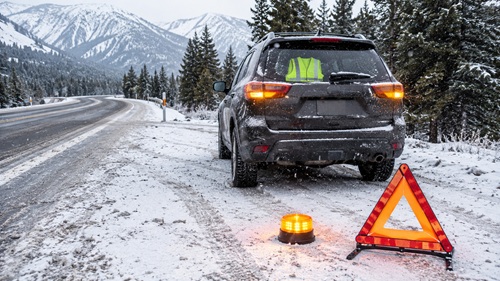
A stranded vehicle may be difficult for approaching motorists or emergency responders to see during heavy snowfall, darkness, or poor visibility. Hazard lights can help identify a disabled vehicle, although prolonged use consumes electrical energy. Reflective warning triangles, high-visibility clothing, reflective markers, and suitable battery-powered warning lights may provide additional visibility without relying entirely on the vehicle’s electrical system.
Warning equipment should be deployed only when it can be done safely and in accordance with local road safety requirements. Walking along a highway or standing behind a stranded vehicle during poor visibility may expose occupants to moving traffic. Where appropriate, a brightly colored cloth or other visible marker may help responders identify the vehicle, provided it does not obstruct the driver’s view or interfere with safe vehicle operation.
Snow accumulation can gradually cover exterior lights and other visible surfaces. If conditions permit safe access, maintaining vehicle visibility may help responders and approaching motorists locate it. Open-flame road flares introduce additional fire hazards and may be unsuitable near spilled fuel or combustible materials, making battery-powered warning devices a useful alternative in some circumstances. Visibility equipment should be selected and positioned according to the conditions rather than deployed automatically without considering traffic and weather hazards.
Emergency Navigation and Location Awareness
Navigation becomes particularly important when normal routes are disrupted or motorists need to communicate their location to emergency responders. Many drivers rely almost entirely on online navigation applications, but these services can become less useful when cellular coverage is unavailable, devices lose power, or road closure information is incomplete. Downloading offline maps before departure can provide access to basic navigation information without an active data connection, while printed road maps offer an additional independent reference if electronic equipment becomes unavailable.
Motorists should understand how to identify their approximate location using highway numbers, kilometer or mile markers, nearby communities, intersections, landmarks, or geographic coordinates. Maintaining an awareness of location throughout the journey makes it easier to provide useful information if emergency assistance becomes necessary.
Navigation applications should not be followed blindly during severe winter weather. An alternative route suggested by an application may involve unmaintained roads, seasonal closures, steep terrain, or areas without emergency services. Official road closure information and travel advisories should take priority over automated route suggestions. Never bypass a road closure simply because a navigation application indicates that the road is passable.
Preparing for Children, Older Adults, and Pets
Winter vehicle emergency inventories should reflect the needs of everyone travelling rather than assuming that a standard adult emergency kit will be sufficient. Children may require additional clothing, age-appropriate food, drinking water, comfort items, medications, and sanitation supplies. Young children may also have difficulty communicating that they are becoming too cold, making regular observation and appropriate clothing particularly important.
Infants require additional planning around feeding, diapers, safe warmth, and appropriate sleeping arrangements. Caregivers should seek assistance promptly when an infant’s needs cannot be maintained safely. Bulky winter clothing should not interfere with the correct fit of child restraint harnesses, so follow the car seat manufacturer’s instructions and recognized child passenger safety guidance.
Older adults may be more vulnerable to cold exposure, dehydration, medication interruptions, and difficulties moving through snow or ice. Their emergency supplies should account for mobility aids, suitable clothing, medical needs, and assistance requirements. Pets also require drinking water, food, suitable insulation, waste supplies, and secure restraints, although their tolerance of cold varies according to species, breed, size, age, and health.
A vehicle should never be assumed to remain at a safe temperature for a child, vulnerable adult, or pet simply because it provides shelter from the weather. Identify individual requirements before departure so that limited resources can be managed appropriately if the journey is interrupted.
A Realistic Winter Vehicle Emergency Scenario
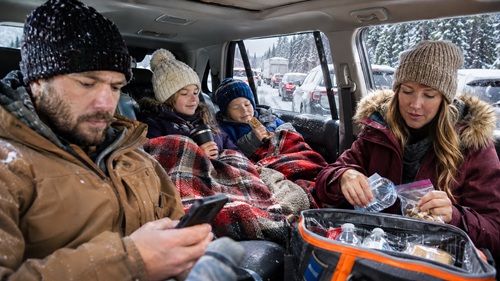
Consider a family of four travelling through a rural region during winter. The journey is expected to take approximately three hours, and the outside temperature is minus 15 degrees Celsius, or approximately 5 degrees Fahrenheit. Heavy snowfall develops during the trip, and a collision farther ahead eventually closes the highway. Traffic stops completely, cellular reception becomes unreliable, and emergency responders advise motorists that reopening the road may take several hours.
The family initially relies on the vehicle’s heating system. As the delay continues, however, the driver begins considering how much fuel remains and whether the vehicle will have enough to continue the journey once the highway reopens. The family has packed insulated clothing, winter boots, four suitable sleeping bags, drinking water, ready-to-eat food, flashlights, headlamps, a portable power bank, and a basic first aid kit. Unfortunately, some of the drinking water was left in the vehicle overnight before departure and has partially frozen. The family discovers that its available liquid water is considerably less than the quantity originally packed.
As darkness approaches, the occupants organize their sleeping equipment and distribute personal lights. They reduce unnecessary cellphone use while maintaining communication with emergency services whenever possible. Snow begins accumulating around the vehicle, and before operating the engine, the driver checks whether the exhaust remains clear, provided it is safe to leave the vehicle. The family relies on clothing and insulation between periods of safe engine operation.
Several hours later, condensation begins accumulating on the windows. Damp boots and gloves are placed away from sleeping bags, and the occupants take steps to keep their dry clothing and insulation protected. By the following morning, the highway remains closed. The family still has food, some accessible drinking water, and independent insulation, but its portable power bank is becoming depleted because several devices have been charged from it.
The situation illustrates how an apparently well-equipped household can still encounter unexpected resource limitations. Water may be present but frozen, fuel may be available but unsafe to use under certain conditions, and several electronic devices may compete for the same limited charging capacity. A practical emergency inventory must evaluate whether resources remain usable under actual winter conditions, not simply whether they are present in the vehicle.
Calculating 72-Hour Emergency Resource Requirements
A useful winter vehicle assessment connects the number of occupants with the resources they may require throughout an extended delay. Consider four adult passengers using illustrative planning assumptions of two litres of drinking water and 2,000 calories per person per day. Their estimated drinking water requirement would be 4 × 2 litres × 3 days = 24 litres, while their estimated food requirement would be 4 × 2,000 calories × 3 days = 24,000 calories.
These quantities provide a starting point for planning rather than fixed requirements for every passenger. Additional water and food may be necessary depending on activity, medical conditions, dietary requirements, and environmental circumstances. The same approach can be used to evaluate backup electricity requirements, although electrical calculations need to account for both device consumption and energy losses.
Suppose the occupants use two LED lanterns consuming three watts each for four hours per evening. The combined daily lighting requirement would be 2 × 3 watts × 4 hours = 24 watt-hours. Over three days, the lanterns would consume approximately 72 watt-hours. If four smartphones each require one equivalent 15-watt-hour recharge during the emergency, their combined charging requirement would be approximately 60 watt-hours.
The combined lighting and smartphone requirement would therefore be approximately 132 watt-hours, before charging losses. Assuming an illustrative overall energy delivery efficiency of 80 percent, the required stored electrical energy would be approximately 132 ÷ 0.8 = 165 watt-hours. These calculations do not include vehicle heating, medical equipment, radios, or other electrical loads. Additional reserve capacity may also be needed to account for cold temperatures, battery deterioration, and unexpected delays.
Consider what happens if the primary energy source fails. Independent battery-powered flashlights, spare batteries, and separate charging arrangements can help prevent the loss of several capabilities at once. Warmth requirements, however, cannot be evaluated using a simple universal calculation. They depend on outside temperature, clothing, insulation, vehicle conditions, passenger health, and exposure duration. Each occupant needs suitable independent protection rather than relying exclusively on the vehicle’s heating system.
How Survival Priorities Change Over 72 Hours
The priorities of a winter vehicle emergency change as time passes. During the first few hours, motorists may focus on obtaining information and waiting for traffic to resume. As the delay continues, warmth, hydration, communication, and resource conservation become increasingly important. The following time periods provide a planning framework, but immediate hazards and medical emergencies always take priority regardless of how long the occupants have been stranded.
The First Few Hours: Establishing Immediate Safety
The initial priority is determining whether the vehicle and its occupants are in a safe location. If the vehicle is exposed to moving traffic, fire, flooding, avalanche danger, or another immediate hazard, emergency guidance and safe relocation may take priority. Occupants should contact emergency services or roadside assistance as appropriate, establish their location, assess injuries, and determine what resources are available.
Warm clothing should be put on before passengers become excessively cold, while drinking water, personal lighting, and communication equipment should be made accessible while conditions remain manageable. Organizing these supplies early can prevent unnecessary searching and exposure later, particularly if the emergency continues after sunset.
Hours 6–24: Preparing for an Overnight Emergency
As the delay continues, the possibility of remaining stranded overnight should be taken seriously. Sleeping bags, blankets, insulating pads, and other warmth equipment should be organized, while food and drinking water should be assessed to determine whether any supplies have frozen or become inaccessible. Vehicle energy reserves and communication equipment also need to be monitored. If safe engine operation is possible, fuel consumption should be considered alongside the need to maintain warmth and eventually continue the journey.
Occupants should regularly check one another for signs of cold exposure, dehydration, unusual fatigue, or medical difficulties. Condensation and damp clothing should also be managed before they begin affecting sleeping equipment. Preparing for the night while passengers are still warm and alert is generally easier than waiting until everyone is already cold and exhausted.
Hours 24–48: Maintaining Essential Resources
By the second day, the household may need to manage food, drinking water, batteries, and vehicle energy more deliberately. Nonessential electrical consumption should be reduced where practical, while preserving communication capabilities and adequate emergency lighting. Sleeping equipment and clothing should be kept as dry as possible, and changes in weather, snow accumulation, vehicle condition, and passenger health should be reassessed regularly.
Any deterioration in an occupant’s medical condition or ability to remain warm should be communicated to emergency responders promptly. Resource conservation should never mean withholding necessary drinking water, delaying essential medical care, or allowing passengers to become dangerously cold.
Hours 48–72: Reassessing the Safety of Remaining in Place
During the third day, resource shortages and prolonged exposure may become increasingly serious. Occupants should reassess available drinking water, food, insulation, communication equipment, and remaining vehicle energy. Emergency services should be updated about any worsening conditions whenever communication is possible.
The 72-hour planning target should never become a reason to delay requesting help or to remain in an unsafe environment. If essential warmth, hydration, medical care, or shelter can no longer be maintained, the situation requires urgent reassessment and assistance. The purpose of carrying three days of emergency supplies is to improve preparedness, not to establish a minimum period that occupants must endure without help.
When to Remain With Your Vehicle
One of the most important decisions during a winter vehicle emergency is whether to remain with the vehicle or attempt to reach another location. In many situations, remaining with the vehicle is safer because it provides protection from wind and precipitation, contains emergency supplies, and is generally easier for search teams to locate than a person travelling on foot. Leaving the vehicle during a snowstorm can expose occupants to poor visibility, freezing temperatures, difficult terrain, and disorientation. A building that appears relatively close may be much farther away than expected or inaccessible under current conditions.
However, remaining inside the vehicle is not appropriate in every circumstance. Fire, suspected carbon monoxide exposure, unstable terrain, floodwater, avalanche danger, or immediate collision hazards may require occupants to move to a safer location. If a clearly accessible safe shelter is nearby and reaching it does not create greater danger, relocation may be appropriate. Instructions from emergency responders should be followed whenever available.
When deciding whether to leave, occupants should consider weather conditions, visibility, distance, terrain, clothing, medical requirements, and the reliability of their navigation and communication equipment. No decision should be based solely on frustration with waiting or an assumption that assistance will never arrive. The circumstances surrounding the emergency, rather than the length of time spent waiting, should determine which option offers the greatest safety.
Organizing and Securing Emergency Equipment Inside the Vehicle
Emergency equipment should be stored in a way that makes it accessible without creating additional hazards. Heavy equipment, portable power stations, tools, water containers, and recovery supplies can become dangerous projectiles during a collision or sudden braking event. These items should be secured using suitable vehicle storage arrangements and approved cargo restraint points.
Frequently needed supplies, including personal lights, warm clothing, communication equipment, and essential medications, should be positioned where they can be reached safely. Equipment that may be needed outside the vehicle, such as a snow shovel or traction boards, should remain accessible even when the cargo area contains luggage. Emergency supplies must not obstruct seat belts, airbags, vehicle controls, visibility, or emergency exits.
Consider what happens if a particular door or the cargo area becomes inaccessible. Keeping every emergency resource in one compartment may create an unnecessary vulnerability. A well-organized vehicle emergency kit allows occupants to retrieve necessary supplies without spending excessive time searching or exposing themselves to dangerous conditions. Testing equipment accessibility with the vehicle fully loaded for a typical journey is a useful way to identify storage problems before they become emergency problems.
Common Winter Vehicle Preparedness Mistakes
Some of the most significant weaknesses in winter vehicle preparedness have little to do with the amount of equipment purchased. They develop because supplies are stored incorrectly, equipment is never tested, or assumptions are made about what will remain available during an emergency. Leaving drinking water permanently inside a freezing vehicle is a good example. Several litres of bottled water may look reassuring when completing an inventory, but those supplies provide little immediate benefit if they are frozen solid.
Another common mistake is assuming the vehicle will always provide heat. A full fuel tank does not help if the engine will not start, the heating system fails, or snow accumulation makes engine operation unsafe. Independent winter clothing and sleeping equipment need to be treated as essential supplies rather than optional extras. Communication equipment can create similar problems. Carrying a cellphone and a charging cable may seem sufficient until the vehicle’s electrical system fails or the journey passes through an area without cellular coverage.
Equipment accessibility is another issue that often becomes apparent only during an emergency. A snow shovel buried beneath luggage, gloves stored in a roof box, or a flashlight packed inside a suitcase may be difficult to retrieve when conditions deteriorate. Some households also purchase equipment without understanding how it operates. Tire chains that have never been fitted, satellite messaging devices that have never been configured, and jump starters that have not been charged may provide a false sense of preparedness.
Perhaps the most important mistake is assuming that carrying enough equipment makes it reasonable to travel during dangerous weather. Preparedness should increase the ability to make safer decisions, including deciding not to travel. It should never encourage unnecessary exposure to conditions that could otherwise be avoided.
Testing Your Winter Vehicle Emergency Equipment
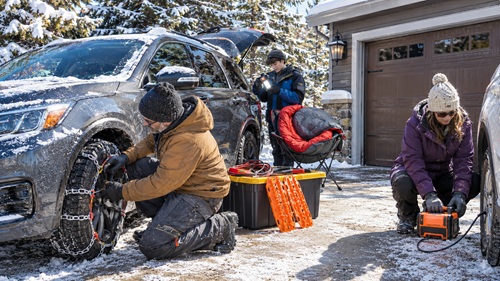
An emergency kit should be tested before the household depends on it. Begin by inspecting each piece of equipment individually, confirming that flashlights operate, batteries remain charged, sleeping bags are undamaged, clothing fits the intended occupants, and emergency food remains suitable for consumption. Vehicle recovery equipment should also be examined for damage and compatibility, and motorists should understand how to install approved traction devices and operate their tire inflator or jump starter according to manufacturer instructions.
Communication equipment deserves particular attention because several components may need to work together. Charging cables should be checked with the actual devices they are intended to support, offline maps should be opened without an internet connection, and satellite communication equipment should be configured and tested before travelling using approved test functions. Discovering a missing cable or incompatible charging adapter during a practice session is far less serious than discovering it when the vehicle is stranded.
A useful preparedness exercise is to organize the vehicle as though an unexpected overnight delay were about to occur. With normal assistance and a heated building readily available, occupants can evaluate how easily they can retrieve clothing, arrange sleeping equipment, access drinking water, and locate personal lighting. Try retrieving essential supplies with the vehicle fully loaded for a typical journey, since this may reveal accessibility problems that are not apparent when the cargo area is empty.
There is no need to deliberately expose household members to dangerous temperatures or spend a night in a freezing vehicle to prove preparedness. Equipment can be evaluated through controlled exercises without creating unnecessary risk. Testing may reveal that sleeping bags occupy more space than expected, certain supplies are inaccessible beneath luggage, charging cables are missing, or the available clothing is inadequate. These discoveries are valuable because they occur while replacement equipment, normal heating, and assistance remain available.
Building a Winter Vehicle Emergency Equipment Inventory
A winter vehicle emergency inventory should document each item carried, its quantity, condition, intended purpose, storage location, and any supporting resources required for operation. Warmth equipment should be recorded according to the passengers it supports, including winter clothing, insulated footwear, sleeping bags, blankets, and supplementary insulation. Recording the intended user of each item can help identify situations where equipment is available but unsuitable for a particular passenger.
Food and drinking water should be documented separately, including quantities, expiration dates where applicable, storage limitations, and whether the supplies remain usable in freezing conditions. Communication and lighting equipment should include information about battery types, charging requirements, available replacement batteries, and estimated operating duration. Vehicle recovery and repair equipment should be recorded together with compatibility requirements and any knowledge or training necessary for safe use.
Medical and sanitation supplies should reflect individual passenger requirements rather than relying exclusively on a generic vehicle emergency kit. The inventory should also document equipment deficiencies, replacement requirements, inspection dates, and corrective actions. Supplies that require charging, seasonal rotation, or periodic testing should have an established maintenance schedule.
A useful inventory is not a shopping list. It is a record of the vehicle’s actual emergency capabilities and the resources required to maintain those capabilities when normal travel arrangements fail. Completing the inventory should help identify which areas are already well prepared and which require further attention before the next winter journey.
A Practical 72-Hour Winter Vehicle Readiness Assessment
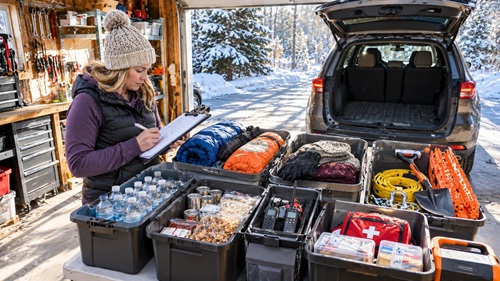
Before considering a vehicle adequately prepared for winter travel, evaluate whether its occupants could maintain essential safety during a prolonged emergency. Begin by identifying the maximum number of people who normally travel in the vehicle, considering their clothing requirements, medical needs, food preferences, mobility limitations, and any additional requirements associated with children or pets. Assess whether every occupant has access to suitable winter clothing and independent insulation, and consider what would happen if the vehicle’s heating system became unavailable during the first night.
Review the amount of drinking water carried and whether it would remain accessible in freezing conditions. Calculate food requirements and identify supplies that can be consumed without cooking or additional water. Sleeping arrangements should also be evaluated to determine whether equipment can be arranged safely, whether adequate insulation is available beneath each passenger, and whether dry clothing and sleeping equipment can be protected from moisture.
Evaluate communication and lighting equipment, including how long batteries are expected to last and whether backup charging arrangements are available. Assess the vehicle’s fuel or battery reserves and consider how energy would be managed during an extended delay, remembering that vehicle heating may be unavailable or unsafe to operate under certain circumstances. Review recovery equipment, first aid supplies, sanitation arrangements, navigation resources, and emergency signaling equipment, confirming that the occupants understand how to use them safely.
Finally, consider several equipment failure scenarios. What would happen if the vehicle would not start, the drinking water froze, the portable power bank failed, or cellular coverage disappeared? What if sleeping equipment became damp or one passenger became dangerously cold? A household that can identify realistic alternatives to these problems is better prepared than one that depends on every piece of equipment functioning exactly as expected.
This assessment provides a practical measure of winter vehicle readiness because it connects equipment ownership with actual passenger requirements, environmental conditions, resource availability, and the ability to respond when circumstances change. The results can then be used to prioritize improvements rather than purchasing additional equipment without understanding which preparedness gaps need to be addressed.
Download Your Free 72-Hour Winter Vehicle Emergency Equipment Inventory & Readiness Assessment
Having an emergency kit in your vehicle is a good start, but would its contents actually support everyone travelling with you during a prolonged winter emergency? To help you find out, Prepping Communities has created a free, printable 72-Hour Winter Vehicle Emergency Equipment Inventory & Readiness Assessment.
This 25-page Preparedness Planning Tool helps you evaluate your vehicle’s winter readiness, inventory emergency equipment, calculate food, water and energy requirements, assess passenger needs, and identify preparedness gaps. It also includes three days of emergency resource tracking, practical safety checks, readiness scoring, and corrective-action planning.
Print the assessment and complete it using your actual vehicle, equipment, supplies, and passenger requirements. Keep the completed copy with your emergency preparedness records and review it before winter, before extended journeys, and whenever your equipment or travel requirements change.
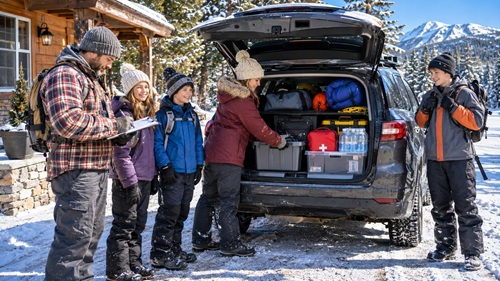
Preparedness Action Plan
Begin by reviewing the winter journeys your household regularly undertakes. Consider travel distances, rural and urban routes, mountain passes, expected temperatures, cellular coverage, and the availability of emergency assistance. Identify journeys that may require additional preparation or should be postponed when severe weather is forecast. Inspect the vehicle’s mechanical condition and confirm that its tires, battery, heating system, fluids, lights, windshield wipers, and emergency repair equipment are suitable for winter operation. Establish a routine for maintaining adequate fuel or battery reserves before travelling.
Gather the emergency clothing, sleeping bags, blankets, insulating equipment, food, drinking water, lighting, communication devices, first aid supplies, and sanitation equipment currently carried in the vehicle. Determine whether the available quantities are sufficient for the maximum number of passengers who may be travelling. Pay particular attention to independent warmth, evaluating whether each passenger has suitable clothing, insulation beneath the body, and appropriate sleeping equipment if vehicle heating becomes unavailable. Include spare dry clothing and arrangements for keeping sleeping equipment protected from moisture.
Calculate realistic food, drinking water, and backup electricity requirements for a potential 72-hour delay. Consider the effect of freezing temperatures on water containers, batteries, food, medications, and electronic equipment. Identify supplies that may need to be brought into the vehicle immediately before departure rather than stored permanently in extreme temperatures. Review carbon monoxide safety and ensure that every adult understands the risks associated with operating a vehicle’s engine when snow may obstruct the exhaust. Become familiar with the warning signs of carbon monoxide exposure, hypothermia, and frostbite, and recognize when emergency medical assistance is required.
Organize and secure the emergency equipment so that essential supplies remain accessible without creating collision hazards or obstructing vehicle exits. Make sure each passenger knows where personal clothing, lighting, drinking water, and communication equipment are stored. Conduct a controlled preparedness exercise to evaluate equipment accessibility, sleeping arrangements, lighting, charging compatibility, and resource availability. Record any deficiencies and correct them before undertaking winter journeys.
Finally, establish a seasonal inspection schedule and a consistent pre-departure routine. Review the inventory before winter, before extended journeys, after using emergency supplies, and whenever the vehicle or passenger requirements change. Check current weather and road conditions before departure, share travel plans when appropriate, and remember that postponing an unnecessary journey may be the safest preparedness decision available.
Key Takeaways
Winter vehicle emergencies can develop from ordinary travel disruptions, mechanical failures, highway closures, and deteriorating weather conditions. A journey expected to last only a few hours can become considerably more serious when passengers must remain in freezing temperatures overnight. A comprehensive winter vehicle emergency inventory therefore considers the needs of every passenger rather than simply documenting the equipment stored in the vehicle. Clothing, insulation, food, drinking water, lighting, communication, medical supplies, and sanitation arrangements must remain usable under realistic winter conditions.
Independent warmth equipment is particularly important because vehicle heating systems may become unavailable or unsafe to operate. Suitable winter clothing, sleeping bags, blankets, and insulation beneath the body can help reduce dependence on fuel or stored electrical energy. Moisture management is equally important, since condensation, perspiration, wet clothing, and melting snow can gradually reduce the effectiveness of insulation. Protecting dry clothing and sleeping equipment helps preserve the household’s ability to remain warm.
Carbon monoxide is a serious hazard when operating combustion-powered vehicles during heavy snowfall. Maintaining exhaust clearance, following safe operating guidance, and avoiding fuel-burning equipment inside the passenger compartment are essential precautions. Drinking water and battery supplies also require special attention because freezing temperatures can reduce their availability and performance. Carrying adequate quantities is only part of the solution; the resources must remain accessible and functional when needed.
Communication equipment, offline navigation, emergency signaling devices, and a shared travel plan can help emergency responders locate stranded motorists. Maintaining independent backup charging arrangements reduces the risk of losing communication when the vehicle’s electrical system becomes unavailable. Vehicle recovery and repair equipment must also be compatible with the vehicle and used only when conditions and the occupants’ knowledge allow safe operation. Attempting an unsafe roadside repair or recovery can create greater risks than the original breakdown.
Regular testing, seasonal inspections, realistic resource calculations, and consistent pre-departure routines help identify preparedness weaknesses before they become emergency problems. The purpose of a 72-hour readiness assessment is to improve the household’s ability to manage unexpected delays, not to guarantee survival under every possible condition. Preparedness includes recognizing when conditions are too dangerous to travel and when emergency assistance is required.
Winter vehicle preparedness is not simply about carrying an emergency kit. It is about ensuring that every passenger has the equipment, resources, knowledge, and practical alternatives needed to remain as safe as possible when an ordinary winter journey becomes an unexpected emergency.
© Prepping Communities. This content is for informational purposes only and not professional advice. Use at your own risk.
Terms | Privacy | Guidelines