
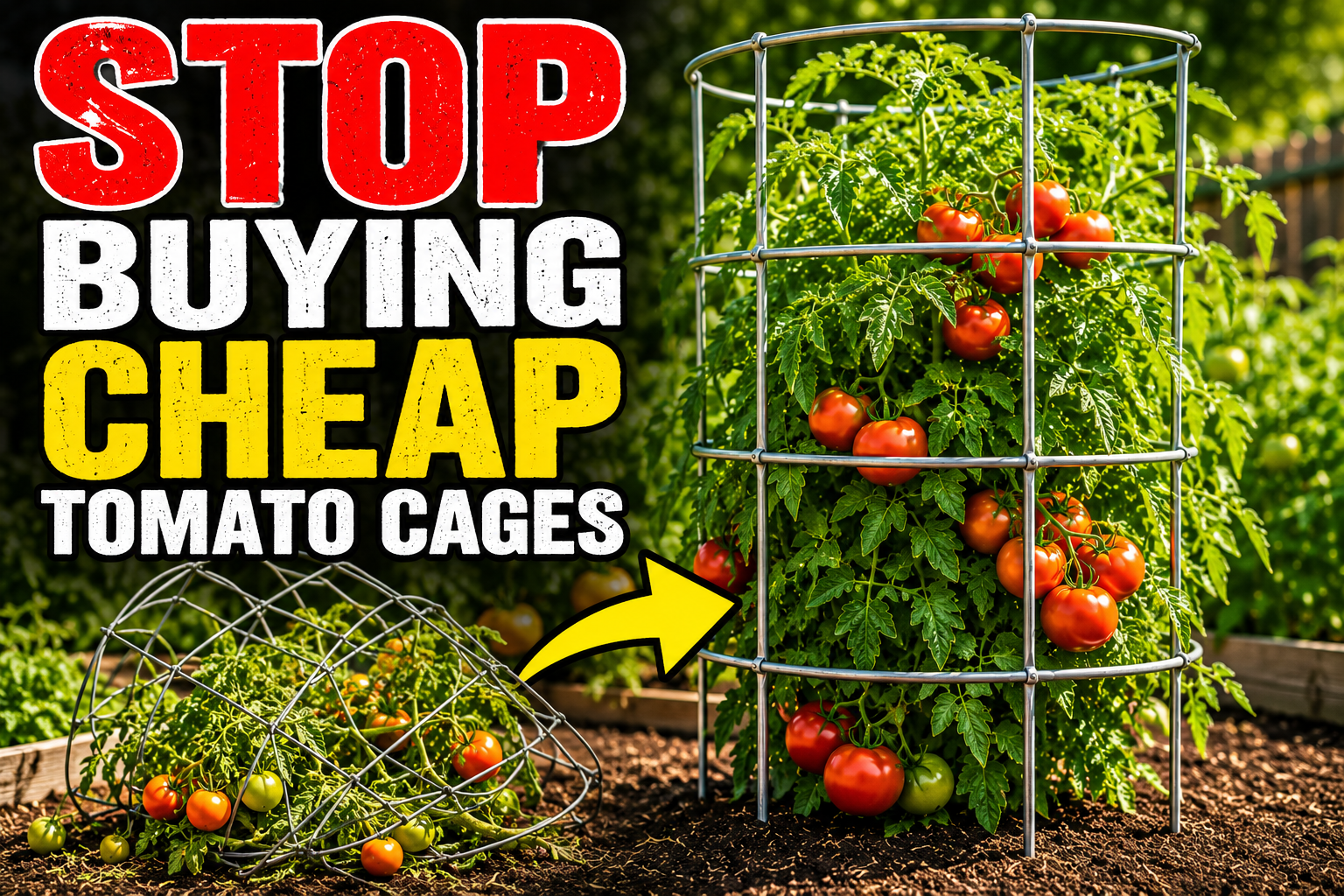
Choosing the Right Tomato Cage for Healthier Plants and Bigger Harvests
Tomatoes are among the most productive vegetables a home gardener can grow, but they are also one of the few common garden crops that cannot reliably support themselves. While a young seedling appears sturdy enough to stand upright, that quickly changes as the plant begins producing multiple stems, dense foliage, and clusters of developing fruit. Without adequate support, branches bend toward the ground, fruit becomes dirty or damaged, airflow decreases, and the risk of disease increases significantly. Choosing the right tomato cage is one of the simplest improvements you can make to produce healthier plants and larger harvests.
Many gardeners purchase inexpensive tomato cages each spring without giving them much thought. Unfortunately, these lightweight cages are often too short, too narrow, and too weak for vigorous tomato varieties. By midsummer, the plant has usually outgrown the cage, branches spill over the sides, and the support begins leaning under the weight of the crop. Instead of making gardening easier, the cage becomes another problem that requires constant attention.
Why Tomatoes Need Support
Unlike bush vegetables that naturally remain compact, most tomatoes grow as vigorous vines. Indeterminate varieties continue growing until frost, producing new stems, flowers, and fruit throughout the season. A mature plant can easily weigh several times more than it did when transplanted, especially after heavy rain when wet foliage adds even more weight.
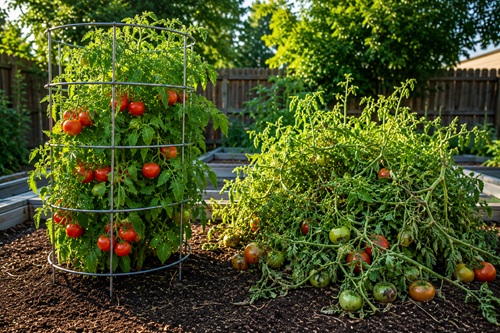
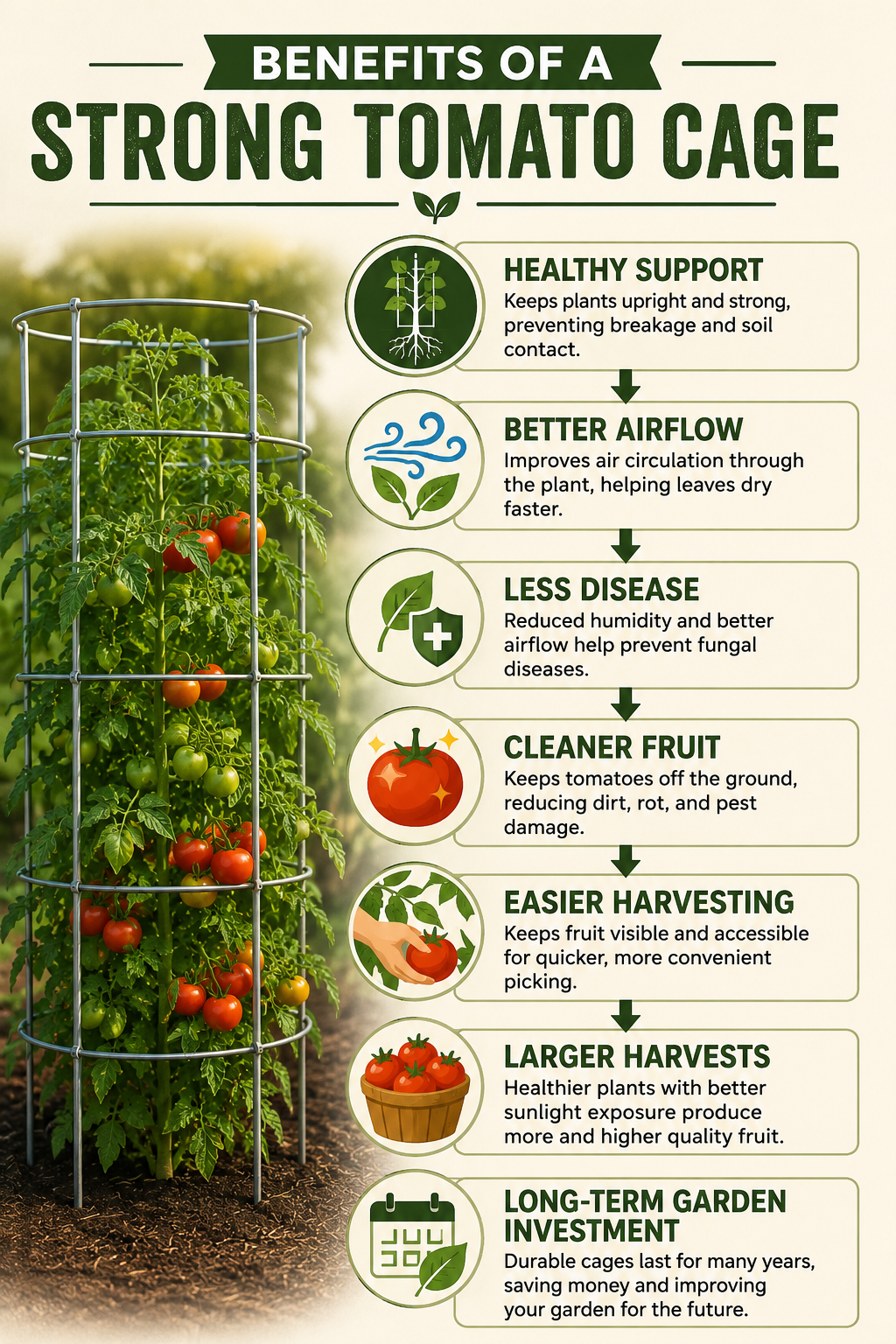
Proper support keeps the plant upright, allowing sunlight to reach more leaves while improving airflow throughout the canopy. Better airflow helps foliage dry more quickly after rain or watering, reducing the likelihood of fungal diseases such as early blight and Septoria leaf spot. Keeping fruit off the ground also minimizes rot, insect damage, and contamination from soil-borne pathogens.
Supporting tomatoes also makes routine maintenance much easier. Harvesting, pruning, watering, fertilizing, and inspecting plants for insects or disease all become simpler when the plant remains organized rather than sprawling across the garden.
Common Tomato Support Systems
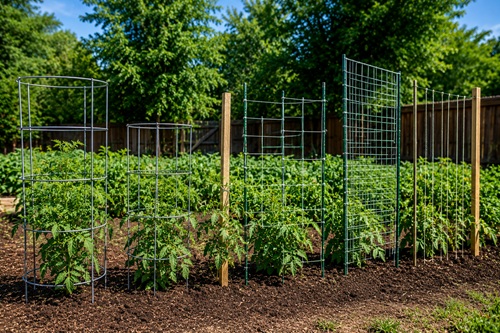
Several support methods are commonly used by home gardeners, each with its own advantages and disadvantages.
| Support Method | Best For | Advantages | Limitations |
|---|---|---|---|
| Heavy-duty tomato cage | Most home gardens | Excellent support, low maintenance | Higher initial cost if homemade |
| Commercial wire cage | Compact or determinate tomatoes | Inexpensive and easy to install | Often too small for vigorous plants |
| Single stake | Small gardens | Requires little space | Frequent tying and pruning required |
| Florida weave | Row plantings | Economical for large gardens | Regular maintenance needed |
| Livestock panel trellis | Large gardens | Extremely strong and long-lasting | More expensive and permanent |
| String trellis | Greenhouses | Excellent airflow | Requires continual training |
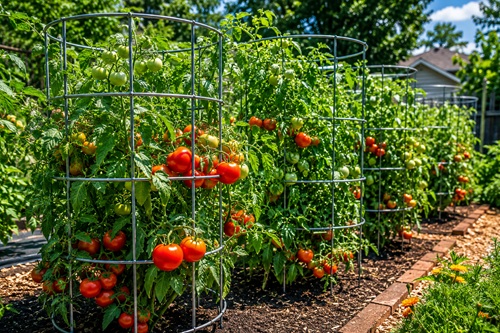
For most home gardeners, a heavy-duty cage built from galvanized wire or concrete reinforcing mesh provides the best balance of durability, ease of maintenance, and long-term value.
What Makes a Good Tomato Cage?
Not all tomato cages are created equal. A quality cage should be designed for the mature plant rather than the small transplant placed in the garden each spring.
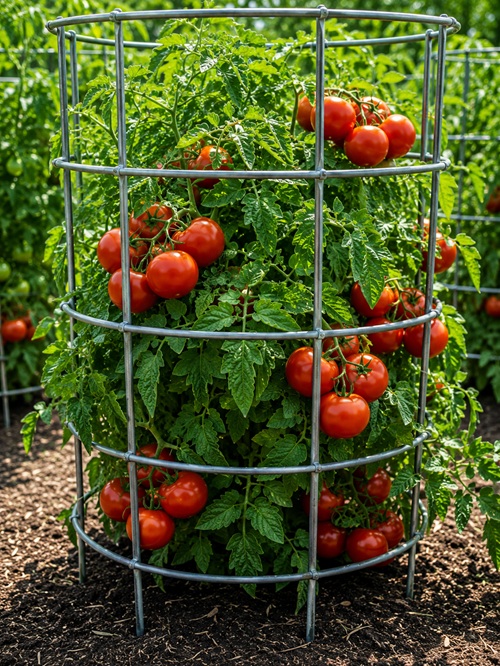
Height is one of the most important considerations. Many indeterminate tomato varieties easily exceed five feet in height, making short commercial cages ineffective by midseason. Diameter is equally important. A cage that is too narrow restricts airflow and makes harvesting difficult, while one that is too wide occupies unnecessary garden space.
Strength should never be overlooked. Mature tomato plants carrying dozens of ripening fruit become surprisingly heavy, particularly after rainfall. Heavy-gauge galvanized wire, livestock panels, or concrete reinforcing mesh provide excellent long-term durability while resisting rust and bending.
Finally, choose a cage with openings large enough to comfortably reach inside while harvesting. Easy access encourages frequent picking and simplifies pruning and plant inspection throughout the growing season.
Building vs. Buying
Gardeners often wonder whether they should build their own tomato cages or purchase commercial ones. Both approaches can be successful, but homemade cages generally provide greater durability and better long-term value.
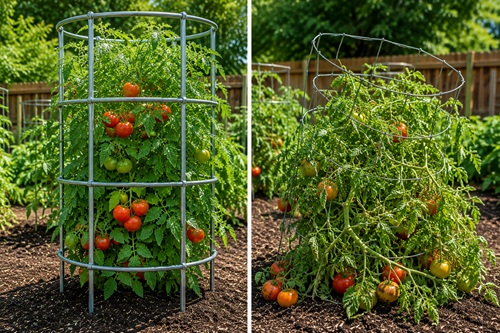
Commercial cages are convenient and inexpensive, making them suitable for small determinate varieties or gardeners growing only a few plants. However, many lightweight models require replacement after only a few seasons.
Homemade cages require more effort initially but often last twenty years or more when constructed from galvanized materials. They can be customized to the ideal height and diameter for the varieties you grow and usually provide far superior support during storms and heavy harvests.
Installing Tomato Cages Correctly
The best time to install a tomato cage is immediately after transplanting. Waiting until the plant becomes large increases the risk of damaging roots or breaking branches while attempting to position the support.
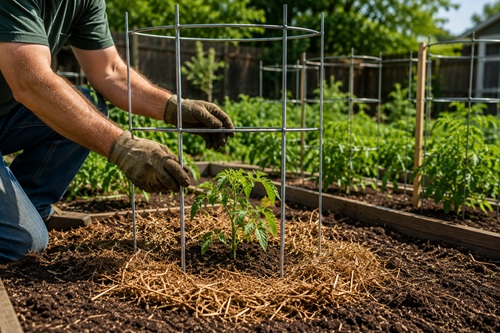
Center the seedling inside the cage and push the support firmly into the soil. In windy locations or loose soils, additional stakes or T-posts may provide extra stability. As the plant grows, gently guide new stems back inside the cage rather than forcing mature branches into place after they have become woody.
Inspect cages periodically throughout the season to ensure they remain stable after storms or periods of heavy fruit production.
Quick Installation Checklist
- ✓ Install cages immediately after planting.
- ✓ Center the plant inside the cage.
- ✓ Anchor the cage securely.
- ✓ Apply mulch after planting.
- ✓ Guide stems back inside the cage as they grow.
- ✓ Inspect supports after severe weather.
Preparedness Perspective
A durable tomato cage is more than a gardening accessory – it is part of your long-term food production system. Strong support systems reduce crop losses, improve plant health, and continue providing value for decades. Like raised beds, compost bins, irrigation systems, and quality garden tools, dependable tomato cages are investments that make every future growing season more productive.
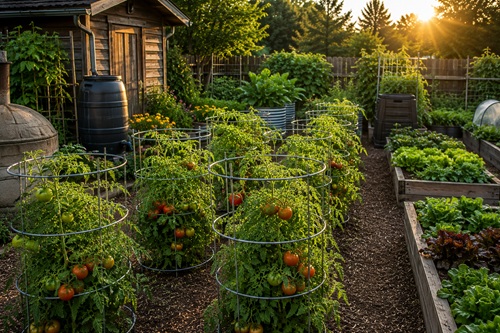
Preparedness is built through practical improvements that increase resilience over time. Producing healthy food year after year requires reliable infrastructure, and durable tomato cages are a small but valuable part of that foundation.
Final Thoughts
Supporting tomatoes properly is one of the simplest ways to improve both plant health and harvest size. A strong cage improves airflow, keeps fruit clean, reduces disease, simplifies maintenance, and protects plants during periods of heavy growth and severe weather. Although lightweight commercial cages may appear inexpensive, investing in a durable support system often saves both time and money over the long term.
Whether you purchase heavy-duty cages or build your own, choosing quality over convenience will continue paying dividends through healthier plants, larger harvests, and more enjoyable gardening for many seasons to come.
© Prepping Communities. This content is for informational purposes only and not professional advice. Use at your own risk.
Terms | Privacy | Guidelines