
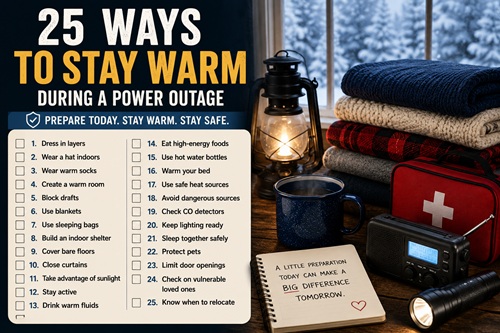
Power outages during winter can quickly turn uncomfortable and even dangerous. Staying warm is about more than just having a heat source—it’s about conserving body heat, reducing heat loss, and using available resources wisely.
1. Dress in Layers
☐ Wear a moisture-wicking base layer.
☐ Add insulating layers such as fleece or wool.
☐ Wear a wind-resistant outer layer if needed.
☐ Change out of wet clothing immediately.
2. Wear a Hat Indoors
☐ Keep your head covered.
☐ Use a toque, knit cap, or hood.
☐ Wear gloves if your hands become cold.
3. Wear Warm Socks
☐ Use wool socks if available.
☐ Layer socks if necessary.
☐ Keep feet dry at all times.
4. Create a Warm Room
☐ Choose one room for everyone to gather in.
☐ Close doors to unused rooms.
☐ Focus heat conservation in a smaller area.
5. Block Drafts
☐ Place towels under doors.
☐ Seal window drafts with blankets or plastic.
☐ Cover unused vents if appropriate.
6. Use Blankets Effectively
☐ Layer multiple blankets.
☐ Use wool blankets when possible.
☐ Keep extra blankets accessible.
7. Use Sleeping Bags
☐ Sleep inside rated cold-weather sleeping bags.
☐ Add blankets over sleeping bags for extra insulation.
☐ Wear a hat while sleeping.
8. Build an Indoor Shelter
☐ Create a blanket fort or enclosed sleeping area.
☐ Use chairs and blankets to trap body heat.
☐ Keep the space ventilated.
9. Cover Bare Floors
☐ Place rugs on tile or hardwood floors.
☐ Use blankets if rugs are unavailable.
☐ Reduce heat loss through flooring.
10. Close Curtains and Blinds
☐ Close them at night to retain heat.
☐ Open south-facing curtains during sunny days.
☐ Use heavy curtains when available.
11. Take Advantage of Sunlight
☐ Open curtains during daylight hours.
☐ Allow sunlight to warm rooms naturally.
☐ Close curtains before sunset.
12. Stay Active
☐ Walk around periodically.
☐ Perform light exercises.
☐ Avoid sitting still for long periods.
13. Drink Warm Fluids
☐ Drink tea, coffee, broth, or hot water.
☐ Stay hydrated.
☐ Avoid excessive alcohol consumption.
14. Eat High-Energy Foods
☐ Consume regular meals.
☐ Eat foods rich in fats and carbohydrates.
☐ Keep snacks available.
15. Use Hot Water Bottles
☐ Fill bottles with warm water.
☐ Place near feet or under blankets.
☐ Refill as needed.
16. Warm Your Bed Before Sleeping
☐ Use warm water bottles.
☐ Add extra blankets before bedtime.
☐ Layer bedding for insulation.
17. Use Safe Backup Heat Sources
☐ Follow manufacturer instructions.
☐ Ensure proper ventilation.
☐ Keep combustible materials away.
18. Never Use Dangerous Heat Sources
☐ Never use grills indoors.
☐ Never use generators inside buildings.
☐ Never use camp stoves in enclosed spaces.
19. Monitor Carbon Monoxide Detectors
☐ Test detectors regularly.
☐ Replace batteries when needed.
☐ Keep detectors operational throughout the outage.
20. Keep Emergency Lighting Ready
☐ Use flashlights and lanterns.
☐ Store extra batteries.
☐ Avoid open flames whenever possible.
21. Sleep Together Safely
☐ Share body heat with family members.
☐ Keep children warm and monitored.
☐ Ensure everyone has adequate bedding.
22. Protect Pets from Cold
☐ Bring pets indoors.
☐ Provide warm bedding.
☐ Keep water from freezing.
23. Limit Exterior Door Openings
☐ Open doors only when necessary.
☐ Minimize heat loss.
☐ Plan trips outside carefully.
24. Check on Vulnerable Family Members
☐ Monitor elderly family members.
☐ Watch infants and young children closely.
☐ Look for signs of hypothermia.
25. Know When to Relocate
☐ Monitor indoor temperatures.
☐ Identify local warming centers.
☐ Move to a safer location if conditions become dangerous.
Warning Signs of Hypothermia
☐ Uncontrollable shivering
☐ Confusion or unusual behavior
☐ Slurred speech
☐ Drowsiness or exhaustion
☐ Loss of coordination
If these symptoms appear, seek warmth immediately and obtain medical assistance as soon as possible.
Preparation today can make the difference between discomfort and danger when the power goes out.
© Prepping Communities. This content is for informational purposes only and not professional advice. Use at your own risk.
Terms | Privacy | Guidelines