
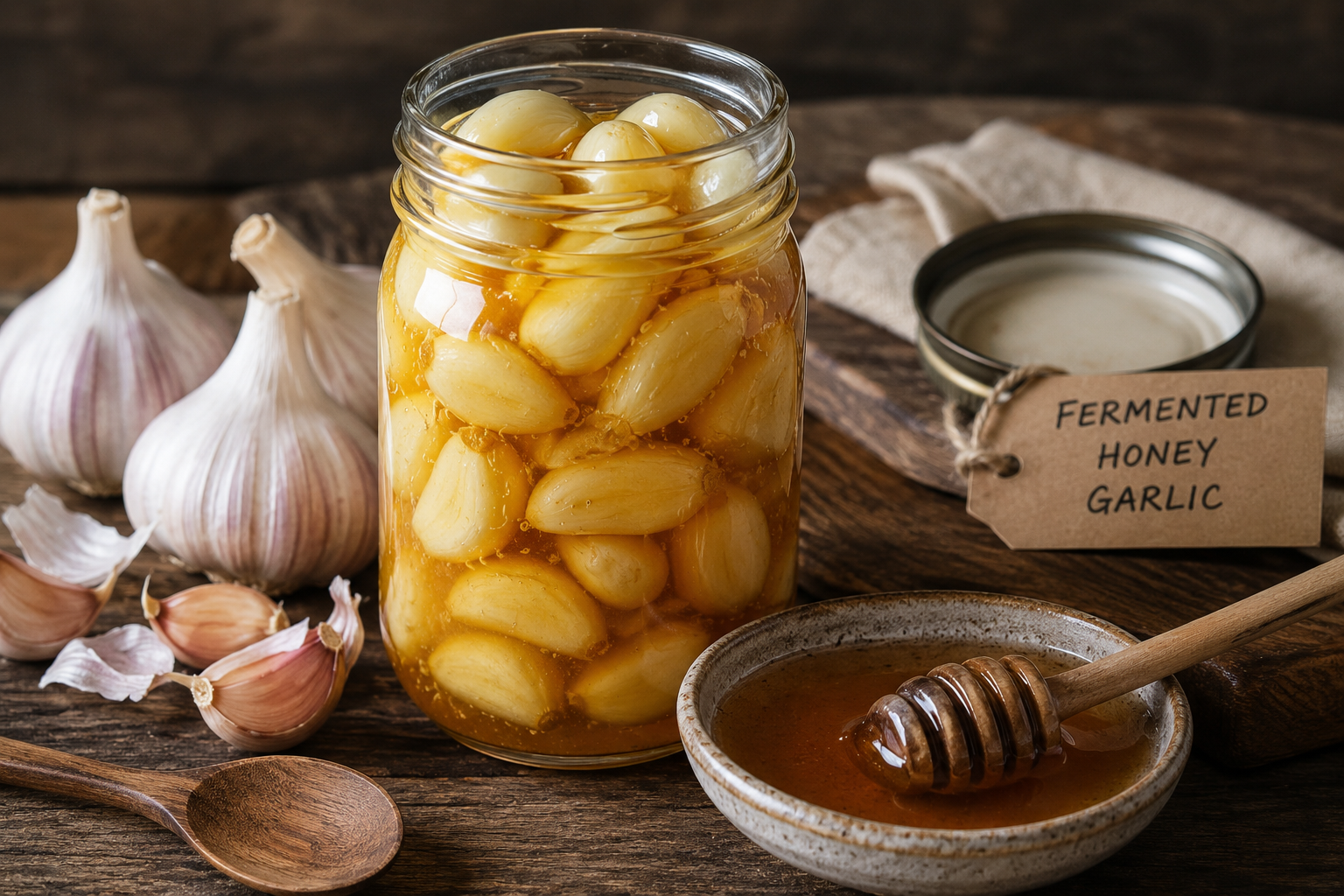
Fermented Honey Garlic: A Simple Pantry Staple for Long-Term Preparedness
Food preservation is often associated with canning, dehydrating, freeze-drying, and vacuum sealing. While those methods certainly have their place, some of the most useful preservation techniques require very little equipment and only a handful of ingredients.
Fermented honey garlic is one of those methods.
Using nothing more than fresh garlic and raw honey, you can create a shelf-stable pantry ingredient that develops remarkable flavor over time. The process is simple enough for beginners, requires no electricity, and can be completed using a standard glass jar.
For homesteaders, gardeners, and preparedness-minded households, fermented honey garlic offers an excellent way to preserve garlic while creating a versatile ingredient that can be used in everyday cooking.
Why Ferment Garlic in Honey?
Fresh garlic is a staple in many kitchens, but it does not store indefinitely. Over time, garlic can dry out, sprout, or lose quality. Fermenting garlic in honey provides an alternative preservation method that transforms both ingredients into something entirely different.
As the fermentation process progresses, moisture from the garlic slowly mixes with the honey. The honey gradually becomes thinner and develops rich savory notes, while the garlic cloves lose much of their sharp bite and become noticeably milder.
The result is a sweet and savory condiment that can be used in countless ways while also extending the usefulness of a garlic harvest.
Many people are surprised by how much the garlic changes. Fresh garlic can be intensely pungent, but after several weeks in honey, the cloves become mellow, soft, and pleasantly sweet while still retaining their distinctive garlic character.
Equipment Needed
One of the reasons fermented honey garlic has remained popular for generations is its simplicity.
You will need:
- A clean 16-ounce glass jar with lid
- Two heads of fresh garlic
- One cup of raw, unpasteurized honey
That is all.
No specialized fermentation vessels, airlocks, weights, or expensive equipment are required.
Preparing the Garlic
Begin by peeling the garlic cloves.
Once peeled, lightly crush each clove. The goal is not to completely mash the garlic but simply to crack the surface enough to release some of its natural juices.
This step is important because the moisture released from the garlic helps create the conditions needed for fermentation to begin.
Combining the Ingredients
Place the peeled and lightly crushed garlic cloves into the jar.
Pour the raw honey over the garlic until all cloves are fully submerged. Leave a couple of inches of headspace at the top of the jar. As fermentation becomes active, the honey may expand slightly and produce bubbles.
Secure the lid and place the jar in a cool location out of direct sunlight.
What to Expect During Fermentation
The first few days often cause concern for first-time fermenters because the garlic cloves typically float to the top.
This is completely normal.
As fermentation becomes active, small bubbles may appear throughout the honey. The honey itself will gradually become thinner than when it was first added to the jar.
Many people expect honey to remain thick, but one of the easiest signs that fermentation is progressing properly is the noticeable change in consistency.
Every day or two, loosen the lid briefly to release any built-up gas. Afterward, tighten the lid and gently rotate or invert the jar to coat the garlic cloves with honey.
Within a few weeks, the aroma will begin to change. The sharp scent of fresh garlic softens and blends with the sweetness of the honey.
When Is It Ready?
Technically, fermented honey garlic can be used at any point during the process.
However, most people find that the flavor becomes significantly better after approximately four weeks.
By this point, the garlic has usually softened considerably, and the honey has developed a balanced sweet-savory flavor that works well in a variety of dishes.
Many experienced fermenters allow jars to continue aging for several months.
Practical Uses
One of the reasons fermented honey garlic is so popular is because nothing goes to waste.
The honey can be:
- Drizzled over roasted vegetables
- Added to marinades
- Mixed into salad dressings
- Used as a glaze for poultry and pork
- Stirred into sauces
- Brushed onto fresh bread
- Added to pizza after baking
The garlic cloves can be:
- Chopped into soups and stews
- Added to pasta dishes
- Mixed into compound butter
- Included in marinades
- Blended into dressings
- Added to homemade bread and focaccia
Many people start making fermented honey garlic for the cloves and eventually discover they use the honey just as often.
Preparedness Benefits
For preparedness-minded households, fermented honey garlic offers several advantages.
It requires no refrigeration, no electricity, and very little storage space. The ingredients are widely available and inexpensive, making it easy to produce multiple jars when garlic is abundant.
It also provides an effective way to preserve part of a garden harvest while creating a flavorful ingredient that can help improve otherwise simple meals.
In long-term emergencies, morale and food variety matter. A pantry filled with staple foods becomes far more enjoyable when there are flavorful ingredients available to enhance everyday cooking.
Fermented honey garlic is one of those small additions that can make a noticeable difference.
Storage
Store the jar in a cool, dark location.
Unlike many fermented foods, fermented honey garlic is generally kept at room temperature rather than refrigerated. Refrigeration often causes honey to crystallize and become difficult to use.
Properly maintained jars can remain usable for many months, and many people keep a continuous rotation of jars aging in the pantry throughout the year.
Final Thoughts
Some preparedness projects require substantial investments of time, money, and equipment. Fermented honey garlic is not one of them.
It is simple, inexpensive, and accessible to nearly anyone. Yet despite its simplicity, it produces a remarkably useful pantry ingredient that combines food preservation, flavor enhancement, and traditional self-reliance into a single jar.
Whether you grow your own garlic, purchase it in bulk during harvest season, or simply enjoy learning traditional food preservation skills, fermented honey garlic deserves a place in the preparedness pantry.
Once you make your first batch and watch it transform over the following weeks, you may find yourself keeping a jar on the shelf year-round.
© Prepping Communities. This content is for informational purposes only and not professional advice. Use at your own risk.
Terms | Privacy | Guidelines