What Runs Out First During a National Emergency?

General Information

a83655b3-d550-4849-9f47-e46ae2d1b319

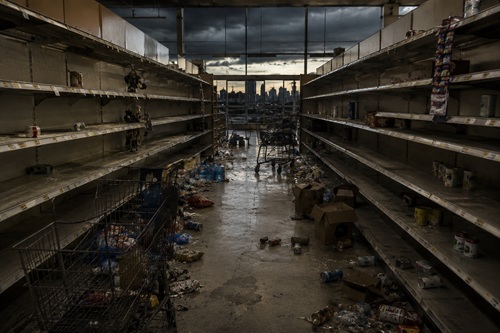
When a major emergency disrupts normal life, store shelves can empty far faster than most people expect. Panic buying, transportation delays, damaged infrastructure, labor shortages, and increased demand can cause everyday necessities to disappear within hours or days. While every emergency is different, history consistently shows that certain products become difficult to find long before others. Understanding these patterns allows you to prepare ahead of time instead of competing with everyone else once shortages begin.

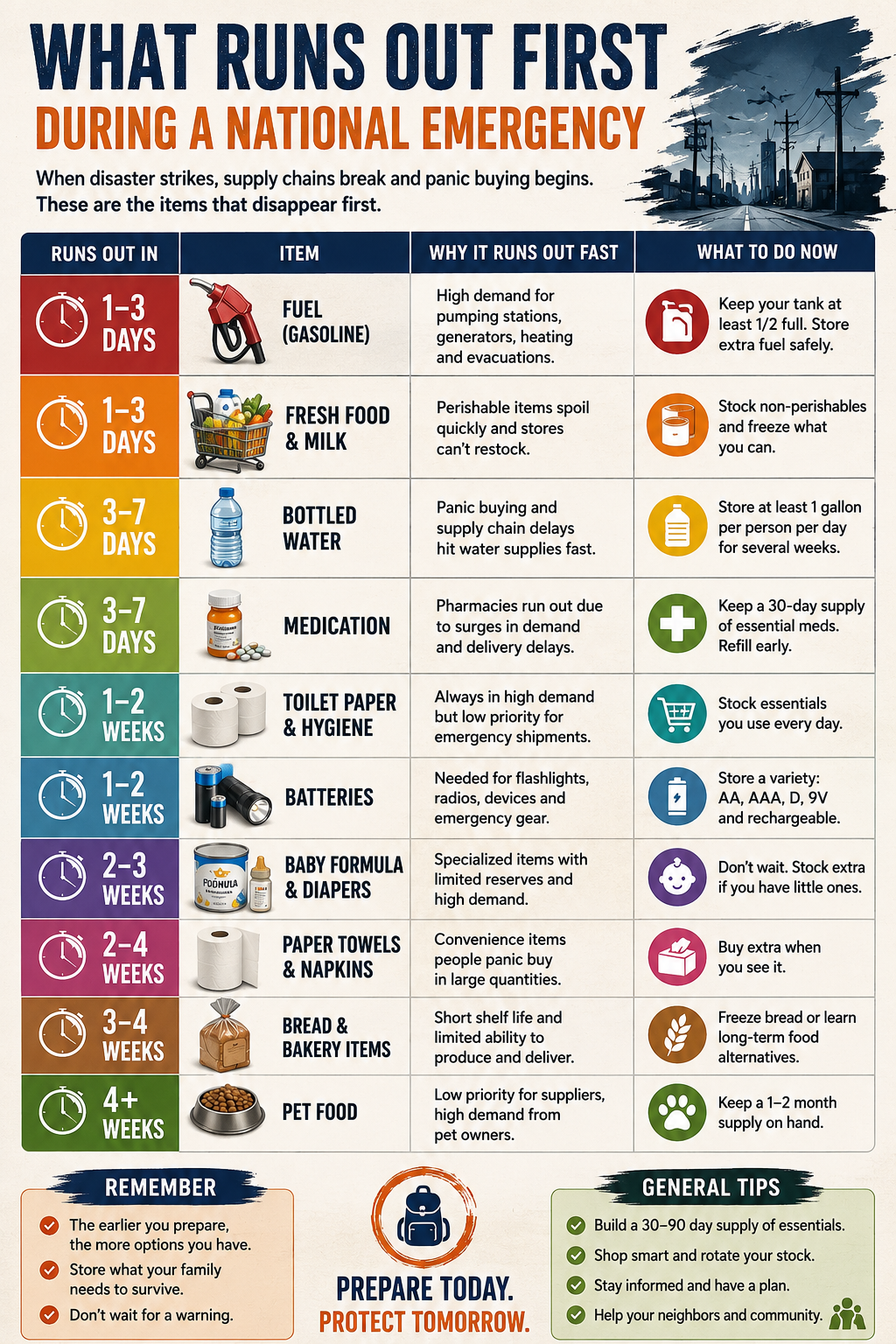
This infographic highlights many of the items that commonly become scarce during widespread emergencies and explains why they disappear so quickly. Rather than focusing only on the products themselves, it also helps illustrate the underlying reasons shortages occur, including fragile supply chains, just-in-time inventory systems, and sudden spikes in consumer demand. Recognizing these vulnerabilities helps you build a preparedness plan based on realistic expectations rather than guesswork.

Preparedness is not about buying everything at once or expecting every emergency to unfold the same way. It is about gradually building a reserve of the supplies your household already uses so that temporary disruptions become inconveniences instead of crises. Rotating food, maintaining emergency water, keeping medications stocked, and planning ahead for pets, infants, and other family needs all contribute to greater resilience when normal supply systems are interrupted.

The best time to prepare is long before an emergency appears on the news. Every item purchased before a crisis is one less item you need to search for when everyone else is rushing to the store. By understanding what typically runs out first and taking practical steps today, you can reduce stress, protect your family, and remain more self-reliant regardless of the emergency you may face.

c5f31ffb-666f-4295-b625-4653411f8cb7

© Prepping Communities. This content is for informational purposes only and not professional advice. Use at your own risk.
Terms | Privacy | Guidelines

Leave a Reply

top