
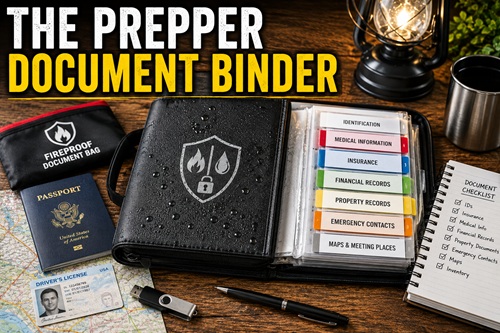
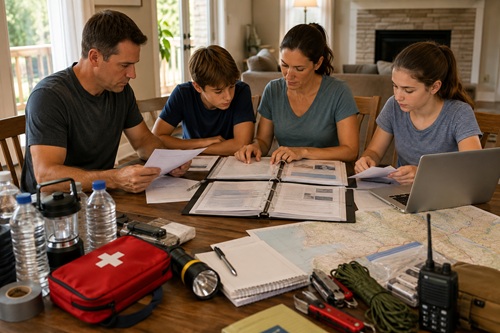
Most people think preparedness begins with food storage, water filtration, first aid kits, generators, and emergency radios. Those supplies are certainly important, but they are only part of the equation. There is another type of preparedness that rarely gets discussed until after a disaster has already occurred—the information you need to prove who you are, protect your family, and begin rebuilding your life.
Imagine evacuating your home because of a wildfire, flood, or major storm. You have your emergency supplies, but your home is destroyed before you can return. Your identification, insurance policies, financial records, and family documents disappear with it. Replacing those records during a widespread emergency can be slow and frustrating, especially if government offices, banks, or communication systems are operating with limited services.
An emergency document binder helps solve that problem. Think of it as an insurance policy for your information. It won’t prevent a disaster, but it can make recovery much faster and far less stressful.
What Is an Emergency Document Binder?
An emergency document binder is simply a well-organized collection of the information your family would need if normal life suddenly changed. Instead of searching through filing cabinets, desk drawers, computer folders, or cloud storage, everything important is gathered into one organized location that can be quickly accessed or taken with you if evacuation becomes necessary.
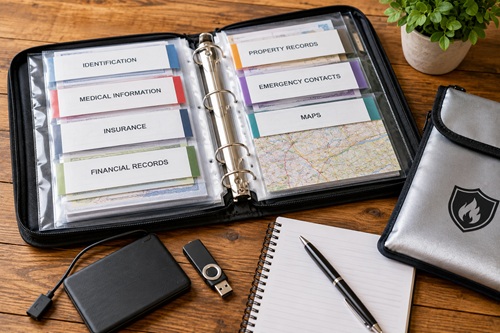
The binder doesn’t have to contain original documents. In many cases, high-quality copies are the safer choice, with originals remaining securely stored elsewhere. The goal is to ensure you always have access to the information needed to identify yourself, contact family members, manage finances, receive medical care, and recover after an emergency.
Start with Identification
The first section of your binder should focus on proving who everyone in your household is. Include copies of driver’s licences, passports, birth certificates, marriage certificates, citizenship documents, Social Insurance or Social Security information, and any other identification that may be needed. If someone in your household holds professional certifications, permits, or licences that could become important after an emergency, include copies of those as well.
It is also helpful to include a recent family photograph. If family members become separated during an evacuation, having an up-to-date photograph can assist authorities or emergency organizations with identification.
Record Important Medical Information
Medical information can become critical when regular healthcare services are disrupted. Every family member should have a simple medical profile that lists prescription medications, allergies, chronic health conditions, emergency contacts, physician information, vaccination records, and health insurance details where applicable.
If someone depends on medical devices or specialized care, include clear instructions explaining their condition and any equipment they require. Reviewing this information every few months helps ensure it stays accurate.
Protect Financial and Property Records
Recovering from a disaster often begins with paperwork. Insurance companies, banks, lenders, and government agencies may all require documentation before claims or assistance can be processed.
Keep copies of insurance policies, mortgage or rental agreements, property deeds, vehicle registrations, investment information, pension records, and recent tax returns. Photograph valuable possessions throughout your home and store those images with a written inventory. Recording model numbers and serial numbers for expensive equipment can make insurance claims much easier if property is damaged or stolen.
Build Your Family Emergency Section
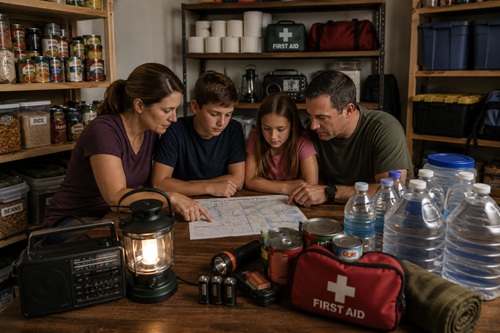
One of the simplest but most valuable additions to your binder is a family emergency information section. Include important phone numbers, addresses, emergency contacts, meeting locations, and written directions to homes, cabins, bug-out locations, or other safe destinations. Never assume everyone will have access to GPS or a fully charged smartphone during an emergency.
Paper maps remain valuable preparedness tools. Mark evacuation routes, alternate roads, fuel locations, hospitals, shelters, and rally points so they are available even if electronic navigation systems fail.
Document Your Preparedness Investments
Many preppers spend years building emergency supplies but never create a record of what they own. An organized inventory not only helps with insurance claims but also makes it easier for family members to locate supplies when they are needed.
Create simple inventories of food storage, water supplies, medical equipment, generators, tools, radios, batteries, fuel, camping gear, and other emergency equipment. Label storage shelves and containers clearly so anyone in the household can find essential supplies without wasting valuable time.
Protect Your Binder
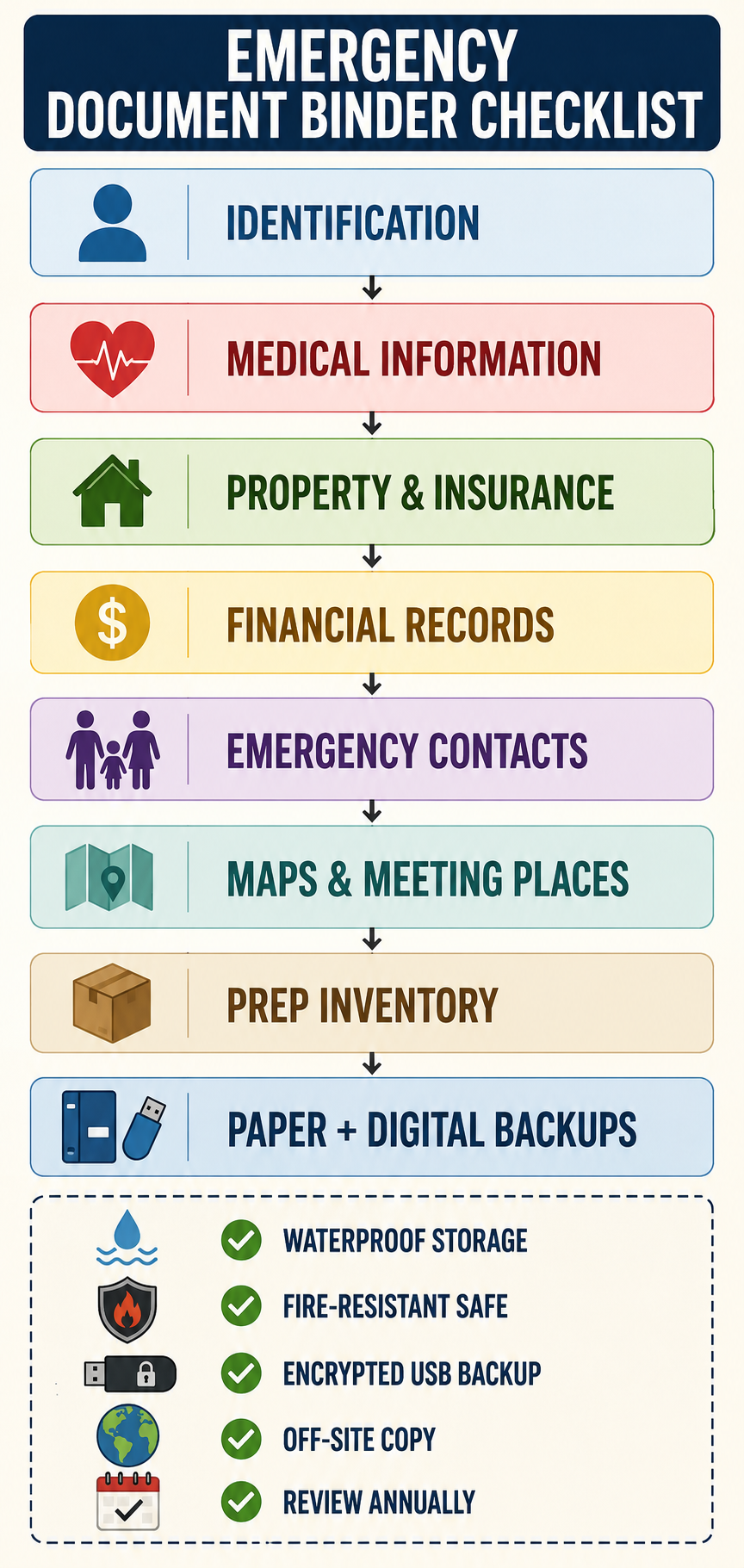
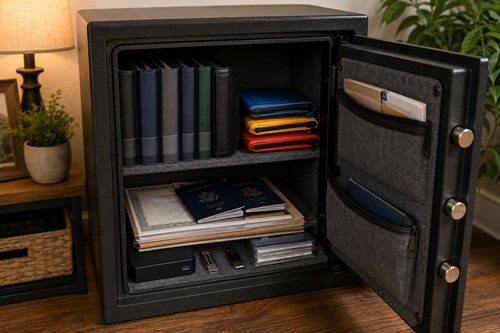
A document binder is only useful if it survives the emergency. Store paper copies inside waterproof sleeves within a sturdy binder and keep it in a fire-resistant safe or secure storage container. Create encrypted digital backups on a USB flash drive or external solid-state drive and update them whenever major changes occur. Consider maintaining another backup at a trusted family member’s home or another secure location away from your primary residence.
Like every other preparedness supply, important information should follow the principle of redundancy. Multiple protected copies provide far greater security than relying on a single location.
Review It Every Year
Preparedness is never a one-time project. Families grow, addresses change, insurance policies are updated, vehicles are replaced, and financial information evolves over time. Schedule a yearly review of your emergency binder to remove outdated information, add new documents, and confirm everything remains complete and easy to locate.
Even better, review it whenever you perform other annual preparedness tasks such as rotating food storage, replacing batteries, testing generators, or inspecting emergency supplies.
Final Thoughts
Preparedness is about more than having enough supplies to get through a crisis. It is also about making recovery as smooth as possible once the immediate danger has passed. An emergency document binder protects something that cannot easily be replaced – your family’s information.
While it may never be the most exciting preparedness project, it is one of the simplest to complete and one of the easiest to overlook. Spending a few hours organizing your important records today could save countless hours of frustration during one of the most stressful times your family may ever experience.
When people think about emergency preparedness, they usually picture shelves filled with food, water, and equipment. The families who recover the fastest, however, are often the ones who prepared not only their supplies—but also their information.
© Prepping Communities. This content is for informational purposes only and not professional advice. Use at your own risk.
Terms | Privacy | Guidelines