
How to Make Your Home a Harder Target
Introduction
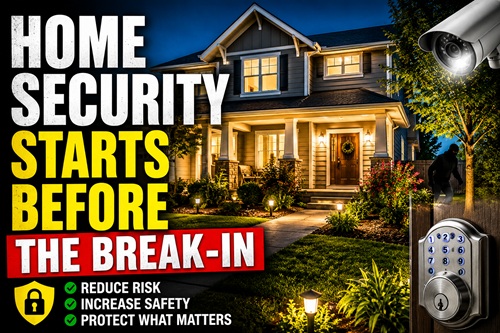
Home security is often viewed through the narrow lens of locks, alarm systems, cameras, and other security devices. While these tools certainly have value, they represent only one part of a much larger preparedness strategy. A truly secure home is not simply one that has expensive equipment installed; it is one that discourages criminal activity before an attempted break-in ever begins. Effective home security is built on understanding how criminals think, recognizing vulnerabilities before someone else does, and creating an environment where the risk of targeting your property outweighs any potential reward.
Preparedness begins with reducing avoidable risks, and home security is no exception. Every home contains strengths and weaknesses that influence how easily it can be approached, observed, entered, and exited. Many homeowners unknowingly create opportunities by overlooking simple vulnerabilities such as poor lighting, overgrown landscaping, visible valuables, predictable routines, or neglected maintenance. These issues rarely seem significant on their own, but together they can make one property appear far more attractive than another. Learning to recognize these weaknesses is the first step toward correcting them.
An effective security strategy also recognizes that protecting a home involves far more than defending possessions. A burglary can result in the loss of important documents, medications, emergency supplies, communication equipment, family heirlooms, and resources that may be difficult or impossible to replace during a prolonged emergency. Preparing a home to resist criminal activity therefore supports every other aspect of preparedness by protecting the tools, supplies, and information that contribute to long-term self-reliance.
Another important principle is understanding that security is not a single project completed once and forgotten. Neighborhoods change, families grow, landscaping matures, technology evolves, and criminal methods adapt over time. A home that was reasonably secure several years ago may now have vulnerabilities that were not previously present. Developing the habit of regularly evaluating and improving security ensures that protective measures remain effective as circumstances change.
This lesson explores home security from the perspective of preparedness rather than consumer products. Instead of focusing on purchasing the latest devices, it examines the principles that influence whether a home becomes an attractive target in the first place. By learning how criminals evaluate properties, how environmental design affects security, and how everyday habits either strengthen or weaken protection, readers can develop a practical security strategy that improves safety regardless of budget or location.
The ultimate objective is not to create an impenetrable fortress. Absolute security does not exist. The goal is to make a home appear more difficult, more time-consuming, and more risky to target than neighboring properties. Criminals generally seek opportunities that offer the greatest reward with the least amount of effort and exposure. Every improvement that increases uncertainty, delays entry, or raises the likelihood of detection shifts that calculation in favor of the homeowner. Over time, these layered improvements create a home that is significantly less appealing to anyone looking for an easy opportunity.
Understanding How Criminals Choose Targets
One of the most valuable ways to improve home security is to understand that most crimes against homes are not random acts. Whether committed by an opportunistic thief or a more experienced burglar, the decision to target a property usually involves evaluating risk, effort, reward, and the likelihood of being interrupted. Seeing a home through this lens allows homeowners to identify vulnerabilities that might otherwise go unnoticed.
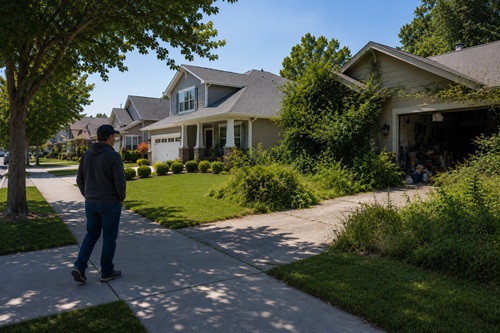
Many people assume criminals spend weeks planning every burglary, but in reality, many decisions are made quickly. While driving or walking through a neighborhood, a potential offender may notice homes with poor visibility, obvious signs that no one is home, unlocked gates, packages left unattended, open garage doors, or valuables visible through windows. These observations can occur within seconds. A property that appears easy to approach, easy to enter, and easy to leave may immediately stand out compared to surrounding homes that present greater uncertainty.
Risk is one of the strongest influences on criminal decision-making. Anything that increases the chance of being seen, heard, identified, or delayed makes a property less attractive. Bright lighting, well-maintained landscaping, active neighbors, visible signs of occupancy, and sturdy entry points all contribute to increasing perceived risk. Even when these features do not physically prevent entry, they introduce uncertainty that many offenders prefer to avoid.
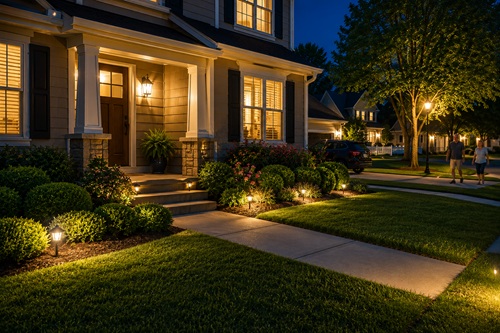
Time is another critical factor. Criminals generally want to complete their activity quickly. Doors that require additional force, windows protected by secondary locks, gates that slow movement, and security measures that create noise or require extra effort all increase the amount of time needed to succeed. Every additional minute spent at a property increases the likelihood that someone will notice unusual activity. From a preparedness perspective, delaying unauthorized entry can be just as valuable as preventing it entirely because time creates opportunities for detection, escape, or response.
The perceived reward also influences target selection. Homes that advertise expensive electronics, recreational equipment, firearms, collectibles, or other high-value items often receive more attention than homes that reveal little about their contents. Large televisions visible from the street, open garage doors displaying expensive tools, or social media posts showing recent purchases all unintentionally communicate that valuable property may be inside. Reducing these visible indicators lowers the perceived benefit of targeting the home.
Understanding these decision-making factors changes how security improvements are evaluated. Instead of asking whether a particular measure will physically stop every criminal, a more useful question becomes whether it increases uncertainty, effort, visibility, or time. Most security improvements achieve their greatest value by influencing these factors simultaneously. A home that consistently appears difficult to approach, difficult to enter, and difficult to escape from is often bypassed in favor of one presenting fewer obstacles.
The most effective security strategy therefore begins long before a criminal ever touches a door or window. It begins by shaping the impressions formed during those first few moments when someone decides whether your home is worth the risk. Every improvement discussed throughout the remainder of this lesson builds upon that simple but powerful principle.
Evaluating Your Home Through Different Eyes
Improving home security begins with learning how to observe a property objectively rather than through the familiarity of everyday life. Homeowners quickly become accustomed to their surroundings and often overlook conditions that would immediately stand out to someone visiting for the first time. Criminals do not see a home through the eyes of the people living there; they see it as a collection of opportunities and obstacles. Developing the habit of viewing a property from that perspective is one of the most valuable security skills a homeowner can acquire.
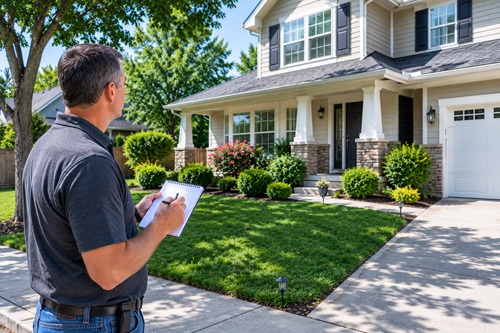
A practical way to begin this evaluation is to approach the home as though seeing it for the first time. Observe it from the street, from neighboring sidewalks, and from any publicly accessible areas. Notice what naturally draws attention. Are there obvious indications that expensive equipment, recreational vehicles, generators, or other valuable items are stored on the property? Can someone easily determine which rooms are occupied or where valuable possessions are kept simply by looking through windows? Small details that seem ordinary to the homeowner may unintentionally reveal useful information to someone looking for an opportunity.
Approach routes deserve careful consideration because they determine how easily someone can move around the property without attracting attention. Walkways, driveways, side yards, fences, and landscaping all influence how a person could approach the home. Narrow passages hidden by tall shrubs, poorly lit side entrances, unlocked gates, or secluded backyards may provide convenient access while reducing the chance of being observed. Recognizing these pathways allows homeowners to make adjustments that increase visibility and reduce opportunities for concealment.
Equally important are potential escape routes. A criminal rarely considers only how to enter a property; leaving quickly is just as important. Gates that open directly onto alleys, privacy fences that conceal movement, or multiple exits from the backyard can make a property more attractive because they simplify escape. While these features may be desirable for privacy or convenience, they should also be evaluated from a security perspective. The goal is not necessarily to eliminate them but to ensure they do not provide unintended advantages to an intruder.
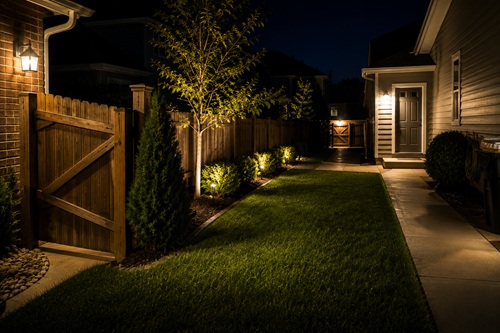
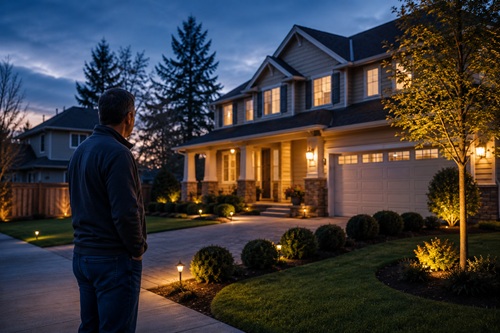
Lighting conditions often reveal weaknesses that are invisible during daylight hours. A home that appears secure during the day may have entrances, pathways, or storage areas that become completely hidden after dark. Walking around the property at night helps identify shadows, burned-out bulbs, poorly illuminated doors, and areas where someone could remain unseen. Effective lighting is not intended to illuminate every square foot of a property but to eliminate the deep shadows and concealed spaces that encourage unwanted activity.
Maintenance also communicates important information. A neglected property with overflowing mail, long grass, damaged fencing, broken lights, or unrepaired doors may suggest that the home is unoccupied or that the occupants pay little attention to security. In contrast, a well-maintained property projects the impression that it is actively cared for and regularly monitored. Criminals often look for signs that indicate whether someone is likely to notice unusual activity, and routine maintenance contributes more to that impression than many people realize.
Daily routines should also be examined because predictable patterns create opportunities. Vehicles leaving at exactly the same time every morning, lights remaining off for extended periods, garbage bins left at the curb long after collection, or obvious signs of extended travel can all indicate when a home is likely to be empty. Varying routines where practical, using timers for interior lighting, and arranging for trusted neighbors to collect deliveries or mail during absences help reduce these predictable patterns and make it more difficult for someone to determine when the home is unattended.
Preparedness also requires evaluating what would happen if an intrusion did occur despite preventative efforts. Consider where emergency supplies, important documents, backup communication equipment, medications, and other critical resources are stored. If everything of value is kept in one obvious location, a single successful burglary could significantly disrupt preparedness. Distributing essential items, using secure storage where appropriate, and protecting irreplaceable documents helps reduce the impact of theft while strengthening overall resilience.
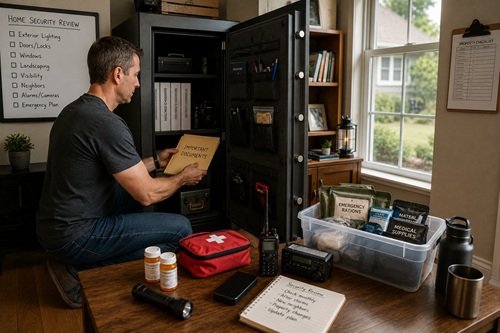
Perhaps the most valuable outcome of this evaluation is developing a habit of continual observation. Homes evolve over time. Trees grow, fences weather, lighting fails, neighbors move, and surrounding conditions change. A property that was well protected several years ago may gradually develop vulnerabilities simply because no one noticed these gradual changes. Periodically reassessing the home through the eyes of an outsider ensures that security remains an active part of preparedness rather than a one-time project completed and forgotten.
By learning to evaluate a property objectively, homeowners shift from reacting to security problems after they occur to identifying and correcting vulnerabilities before they can be exploited. This proactive mindset forms the foundation for every improvement that follows and transforms home security from a collection of devices into an ongoing process of observation, adaptation, and continuous improvement.
Improving Visibility and Eliminating Concealment
One of the most effective ways to strengthen home security requires no sophisticated technology and often very little expense. It involves making the property easier to observe while reducing the places where someone can approach, hide, or work without being seen. Criminals generally prefer privacy. The less likely they are to be observed by homeowners, neighbors, or passing traffic, the more comfortable they become spending time on a property. By improving visibility and removing opportunities for concealment, homeowners increase the perceived risk of detection before an attempted entry even begins.
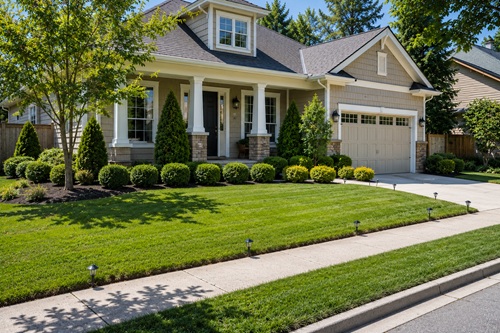
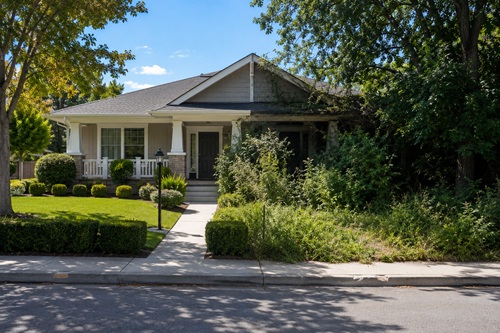
Landscaping plays a much larger role in security than many people realize. Trees, shrubs, decorative grasses, and climbing plants can all contribute to an attractive property, but they can also provide excellent hiding places when left unmanaged. Dense shrubs beneath windows, overgrown hedges along walkways, or vegetation that blocks sightlines from the street may unintentionally shield someone attempting to force entry. Regular pruning restores visibility without eliminating the beauty or privacy that landscaping provides. The objective is not to remove vegetation entirely but to prevent it from creating concealed working areas around vulnerable entry points.
Window placement should also be considered when evaluating natural surveillance. Windows that overlook driveways, walkways, gates, or entrances allow occupants to observe activity without stepping outside. If furniture, heavy curtains, or decorative features permanently block these views, valuable opportunities for observation may be lost. Maintaining clear lines of sight from frequently occupied rooms increases awareness of what is happening around the property and allows unusual activity to be noticed much sooner.
Exterior lighting serves a similar purpose. Darkness does not automatically create danger, but it reduces visibility and gives intruders greater confidence that their actions will go unnoticed. Effective lighting should illuminate entrances, pathways, driveways, gates, and other transition areas where someone would naturally move while approaching the home. The goal is to remove deep shadows rather than flood the entire property with bright light. Even modest improvements in lighting can significantly increase the likelihood that suspicious activity will be noticed by occupants or neighbors.
Lighting is most effective when it supports observation rather than creating glare. Fixtures aimed directly into windows or toward approaching pedestrians can reduce visibility instead of improving it. Properly positioned lights illuminate the ground, entrances, and surrounding areas while allowing homeowners to see beyond the light itself. This creates a safer environment for both security and everyday movement around the property after dark.
Fences and privacy features require careful balance. Many homeowners install tall fences to increase privacy, but complete visual isolation can sometimes work against security. A backyard that cannot be seen from any neighboring property may provide an intruder with additional time to work without interruption. Where privacy is important, combining fencing with well-placed lighting, lockable gates, and visible signs of occupancy helps offset this disadvantage. Security is strongest when privacy does not also create concealment.
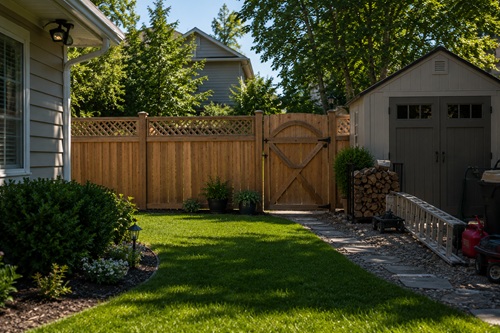
Storage areas deserve similar attention. Sheds, detached garages, wood piles, storage containers, and outdoor equipment can all create blind spots if positioned carelessly. They may also provide tools that could be used to gain entry into the home. Keeping ladders, pry bars, fuel containers, and power tools secured reduces both theft and the possibility that those items could be used against the property itself. Organizing storage areas also makes it easier to notice when something has been disturbed or moved unexpectedly.
Garages often become overlooked security weak points because they serve multiple purposes. An open garage door may advertise valuable equipment while simultaneously providing concealment from the street. Even when occupied, an open garage allows someone to observe tools, bicycles, generators, emergency supplies, or other desirable items without stepping onto the property. Closing the garage whenever practical and keeping valuable equipment out of direct view reduces the amount of information available to anyone casually passing by.
Visibility also extends beyond physical features to everyday signs of activity. A home that appears occupied is generally a less attractive target than one that seems abandoned. Vehicles moved regularly, lights used naturally during evening hours, maintained landscaping, and evidence of routine activity all communicate that the property receives attention. During vacations or extended absences, simple measures such as timed lighting, trusted neighbors collecting mail, and keeping walkways maintained help preserve this appearance without creating obvious patterns that suggest automation.
The underlying principle is straightforward: criminals are far more comfortable operating where they believe they cannot be seen. Every improvement that increases visibility removes a layer of protection that concealment provides. When a property is open to observation, well maintained, and free of unnecessary hiding places, it becomes more difficult for an intruder to approach unnoticed, evaluate the home, or spend time attempting entry. These environmental improvements complement physical security measures by discouraging criminal activity before locks or alarms are ever tested.
Strengthening Doors, Windows, and Other Entry Points
Most unauthorized entries occur through ordinary access points rather than dramatic forced breaches. Front doors, back doors, garage entrances, sliding patio doors, and ground-floor windows exist because they provide convenient access for the people who live there. Unfortunately, they also present opportunities for anyone attempting to enter without permission. Effective home security focuses on making these entry points more resistant to attack while recognizing that delaying entry is often just as valuable as preventing it outright.
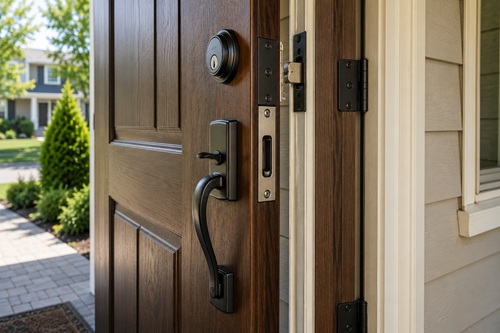
A common misconception is that the lock itself determines how secure a door will be. In reality, a door functions as a complete system consisting of the door slab, frame, hinges, strike plate, locking hardware, and the surrounding wall structure. The strongest deadbolt provides little protection if it is attached to a weak frame or secured with short screws that pull free under force. Evaluating the entire assembly helps identify weaknesses that may not be obvious during normal daily use. Reinforcing frames, installing properly secured strike plates, and ensuring hinges remain firmly attached often improves security far more than simply replacing a lock.
The condition of a door is equally important. Doors exposed to years of weather may develop warped frames, loose hardware, deteriorated wood, or gaps that reduce both security and weather resistance. These seemingly minor issues can make forced entry significantly easier. Routine inspection and maintenance ensure that doors continue to function as intended while preserving the strength of the surrounding structure.
Sliding glass doors deserve special attention because they are frequently viewed as vulnerable entry points. Their large glass panels, lightweight construction, and sliding mechanism create different security challenges than traditional hinged doors. Secondary locking devices, properly adjusted rollers, and physical barriers that prevent the door from being forced open along its track can greatly improve resistance. Regularly checking that these features remain functional is an important part of ongoing maintenance rather than a one-time improvement.
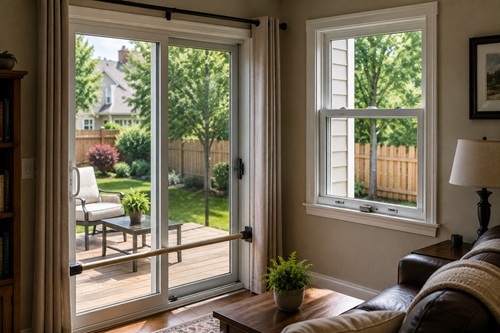
Windows require a similar balance between safety, ventilation, and security. Open windows provide fresh air during warm weather but also create opportunities if left unattended or unsecured. Even closed windows should be evaluated to ensure locks operate correctly and frames remain in good condition. Damaged latches, deteriorated frames, or windows that no longer close completely reduce both security and energy efficiency. Maintaining these components not only protects against intrusion but also preserves the overall condition of the home.
Basement windows, crawlspace access points, utility doors, and other secondary entrances are often overlooked because they receive less daily use. However, these locations may receive less attention from homeowners while also being less visible to neighbors. Including every potential access point during regular inspections ensures that security improvements are applied consistently across the entire property rather than concentrating only on the most frequently used entrances.
Garage security extends beyond the overhead door itself. Interior doors connecting attached garages to the home should receive the same attention as exterior entrances because a garage can provide shelter from observation once accessed. Likewise, emergency release mechanisms on garage doors should be inspected to ensure they function properly for safety while not being easily manipulated from outside. Understanding how each component works allows homeowners to balance convenience, emergency access, and security.
Pet doors, mail slots, utility penetrations, and other small openings can also influence overall security. While these features serve legitimate purposes, they should be evaluated to ensure they cannot be used to reach locks, manipulate door hardware, or gain unintended access. Small design details that seem insignificant during installation may become vulnerabilities when viewed from the perspective of someone attempting unauthorized entry.
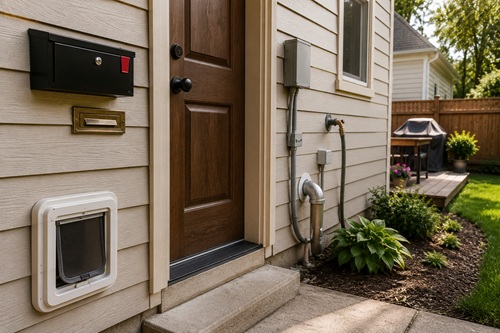
Preparedness also means considering how entry points perform during emergencies other than crime. A door that is heavily reinforced but difficult to open quickly during a fire presents a different type of risk. Security improvements should never compromise safe emergency evacuation. Every household member should know how to operate locks, exits, and emergency escape routes under both normal and stressful conditions. Practicing these procedures periodically helps ensure that protective measures do not unintentionally create new hazards.
No single lock, door, or window can guarantee complete protection. The objective is to create multiple layers of resistance that increase the time, effort, and uncertainty associated with unauthorized entry. Each improvement may appear modest on its own, but together they create a property that requires greater commitment and exposes an intruder to greater risk. From a preparedness perspective, that layered approach is far more valuable than relying on any single piece of security equipment to solve every problem.
Protecting Information as Well as Property
Home security extends beyond protecting the physical structure of a house. Every home also contains information that can reveal personal routines, financial details, emergency plans, and the location of valuable resources. In many cases, this information is just as valuable to a criminal as the property itself. A preparedness-minded security strategy therefore includes protecting both physical assets and the information that could make those assets easier to locate or exploit.

Many people unintentionally advertise valuable possessions through everyday habits. Shipping boxes left at the curb, open garage doors displaying expensive tools, recreational equipment visible from the street, or newly purchased electronics placed near windows all communicate that desirable items may be inside the home. Criminals often gather information long before an attempted burglary, and these small observations help them estimate the potential reward. Reducing unnecessary visibility limits the information available to anyone casually observing the property.
Social media has become another significant source of information. Posting vacation photos while away from home, sharing details about major purchases, displaying collections of firearms or emergency supplies, or discussing travel plans publicly can unintentionally reveal when a home is unoccupied and what resources may be available inside. While sharing personal experiences online has become common, preparedness requires recognizing that information intended for friends may also be viewed by people with very different intentions. Delaying travel posts until after returning home and limiting the amount of personal information shared publicly helps reduce this unnecessary exposure.
Preparedness supplies deserve particular attention because they often represent years of planning and investment. Food storage, backup power systems, water supplies, communication equipment, fuel reserves, and medical resources may become especially valuable during emergencies when replacement is difficult or impossible. Broadcasting the extent of these preparations through conversations, photographs, or visible outdoor storage increases the likelihood that others may remember their location during times of scarcity. Maintaining reasonable discretion protects both the supplies themselves and the family relying upon them.
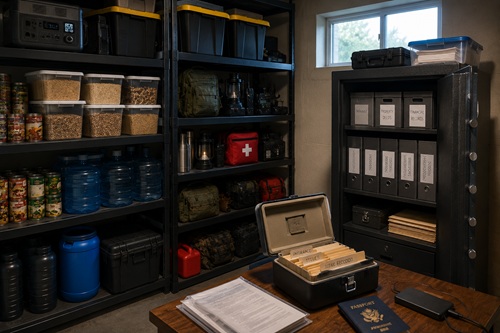
Important documents require their own layer of protection. Identification, passports, insurance records, property deeds, financial information, medical records, emergency contacts, and preparedness plans should be organized so they remain accessible to household members while being protected from theft, fire, and water damage. Maintaining secure physical storage together with properly protected digital backups reduces the risk of losing essential information during either a burglary or another emergency. Preparedness is strengthened when important records remain available even if one storage location is compromised.
Digital security has become inseparable from physical security. Many alarm systems, surveillance cameras, smart locks, lighting controls, and garage door openers now connect to home networks and mobile devices. Weak passwords, outdated software, or unsecured wireless networks may allow unauthorized access without anyone ever approaching the front door. Regular software updates, strong unique passwords, multi-factor authentication where available, and secure home network practices reduce the likelihood that digital vulnerabilities become physical ones.
Mail and package deliveries also deserve consideration. Uncollected mail, delivered packages left on porches, or discarded financial documents in household trash can reveal valuable information about occupancy, purchasing habits, financial institutions, and personal identities. Retrieving deliveries promptly, securely disposing of sensitive documents, and arranging temporary mail collection during extended absences all reduce opportunities for both theft and identity-related crimes.
Even conversations can influence security. Discussing travel plans with unfamiliar individuals, revealing the location of spare keys, describing security measures in detail, or casually mentioning the extent of emergency supplies may provide information that is later remembered by the wrong person. Good operational security does not require secrecy about every aspect of preparedness, but it does require thoughtful consideration of what information is truly necessary to share and with whom.
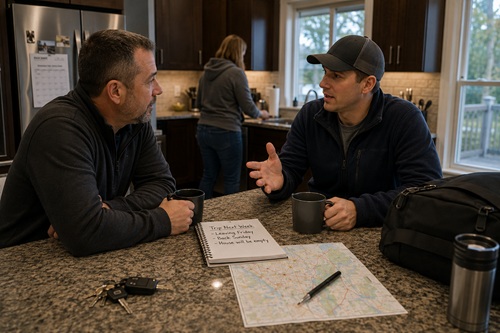
Protecting information ultimately supports every other aspect of home security. A criminal who knows when a family is away, where valuable supplies are stored, how security systems operate, or where spare keys are hidden begins with an advantage. By limiting unnecessary disclosures, safeguarding important records, and treating information as another valuable preparedness resource, homeowners reduce those advantages before they can be exploited. Security is strongest when both the home and the knowledge surrounding it are protected with equal care.
Developing a Security Mindset
The strongest lock or most advanced alarm system cannot compensate for poor awareness or complacency. Home security ultimately depends on the habits, decisions, and observations of the people living in the home. A preparedness mindset recognizes that security is not a collection of products but a way of thinking. It is the practice of remaining observant, recognizing when something is out of place, and taking small actions that reduce opportunities before they become problems.
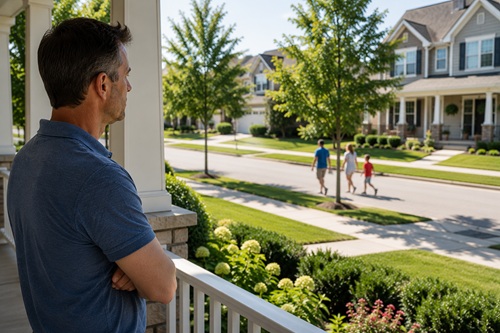
Situational awareness begins by paying attention to what is normal. Every neighborhood has familiar routines, regular traffic patterns, common sounds, and people who belong there. The more familiar someone becomes with these everyday patterns, the easier it becomes to notice unusual activity. An unfamiliar vehicle repeatedly driving through the neighborhood, someone lingering near homes without an obvious purpose, or unexpected activity around a neighbor’s property may not indicate criminal intent on its own, but recognizing these changes allows people to respond thoughtfully instead of overlooking them.
Preparedness also means trusting observations without immediately dismissing them. Many homeowners ignore unusual sounds, open gates, damaged fences, or signs that something has been moved because each incident seems too minor to matter. However, criminals often test properties before attempting entry. A gate left unlatched, a vehicle parked in a different location, or evidence that someone walked around the property may represent an attempt to learn more about the home rather than a random occurrence. Investigating these small irregularities and correcting them promptly helps prevent minor issues from developing into larger security problems.
Consistency is another important habit. Security measures are most effective when they are used every day rather than only when circumstances seem risky. Locking doors, securing windows, closing garage doors, setting alarm systems, and storing valuable equipment properly should become routine regardless of how safe a neighborhood feels. Many burglaries occur because someone assumed they would only be away for a few minutes or believed their community was too quiet for crime. Predictable security habits eliminate many of these unnecessary opportunities.
A security mindset also includes preparing every member of the household. Children should understand basic safety principles appropriate for their age, including not revealing that they are home alone, not opening doors to strangers, and knowing how to contact trusted adults during an emergency. Adults should have a shared understanding of household security routines, emergency contacts, and response procedures so that protective measures remain consistent regardless of who is home. Security is strengthened when everyone contributes rather than relying on one person to manage every detail.
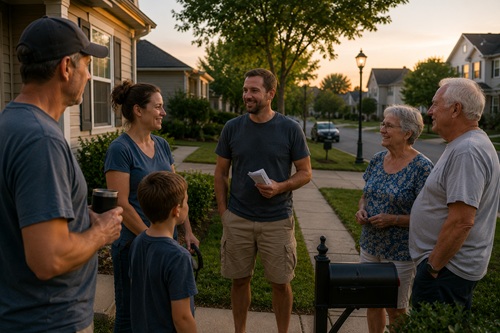
Neighbors can also become valuable partners in maintaining security. Strong communities naturally increase observation because more people notice unfamiliar activity and are willing to report concerns. Developing positive relationships with nearby residents creates opportunities to watch over one another’s properties during vacations, collect deliveries, report suspicious activity, or provide assistance during emergencies. Preparedness extends beyond individual households, and neighborhoods where people know one another often present a less attractive environment for criminal activity.
Preparedness also requires accepting that no security system provides absolute protection. Every defensive measure can eventually fail under the right circumstances. The objective is therefore not perfection but resilience. By combining observation, good habits, layered physical security, and community awareness, homeowners reduce both the likelihood of becoming a target and the consequences if an incident does occur. This realistic approach avoids overconfidence while encouraging continual improvement.
Perhaps the most important characteristic of a security mindset is curiosity. Instead of assuming everything is secure because nothing has happened recently, continually ask simple questions. Could someone approach this entrance without being seen? What information about this home is visible from the street? Has anything changed since the last inspection? Are emergency supplies protected as well as everyday valuables? These questions encourage ongoing evaluation rather than passive acceptance, allowing weaknesses to be identified before someone else discovers them.
Over time, these habits become second nature. Doors are checked without conscious effort, unusual activity is noticed more quickly, maintenance problems are corrected sooner, and preparedness decisions naturally incorporate security considerations. This shift from reacting to potential threats toward actively reducing vulnerabilities is one of the defining characteristics of a well-prepared household. A security mindset is not based on fear of crime but on the confidence that comes from understanding risks and taking practical, deliberate steps to manage them.
Maintaining Long-Term Home Security
Home security is not a project that is completed once and forgotten. Every property changes over time, and those changes can either strengthen or weaken its overall security. Trees grow, locks wear out, lighting fails, family routines evolve, technology becomes outdated, and neighborhoods develop in ways that may not have been anticipated. Maintaining long-term home security means recognizing that preparedness is an ongoing process of evaluation, maintenance, and adaptation rather than a one-time installation of protective measures.
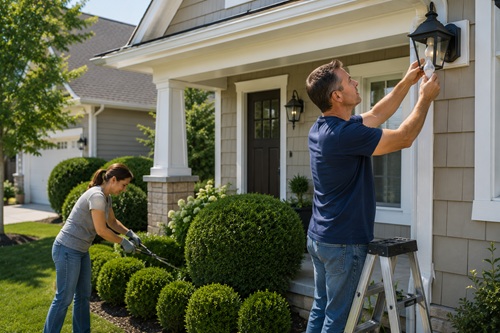
Regular inspections are one of the simplest ways to identify problems before they become vulnerabilities. Walking around the property every few months with a deliberate security mindset often reveals issues that develop gradually and are easy to overlook. Loose gate latches, burned-out exterior lights, damaged fencing, windows that no longer lock properly, or vegetation beginning to obscure entrances rarely become serious overnight. Addressing these small maintenance issues promptly prevents them from accumulating into larger security weaknesses.
Seasonal changes also affect security in ways that deserve attention. Summer landscaping may create hiding places that did not exist during the winter, while heavy snowfall can block sightlines, delay emergency access, or reveal patterns of occupancy through footprints and vehicle tracks. Autumn leaves may conceal pathways or make it more difficult to notice signs of trespassing, while spring growth can quickly reduce visibility around doors and windows. Evaluating the property as seasons change helps ensure that security measures remain effective throughout the year rather than only under ideal conditions.
Technology requires maintenance just as much as physical structures. Exterior lighting, surveillance systems, motion sensors, alarm systems, smoke detectors, carbon monoxide detectors, backup power supplies, and communication equipment should all be tested regularly. Batteries eventually fail, software becomes outdated, and electronic devices may develop faults that remain unnoticed until an emergency occurs. Preparedness depends on knowing that protective systems will function when needed rather than assuming they are working simply because they were installed.
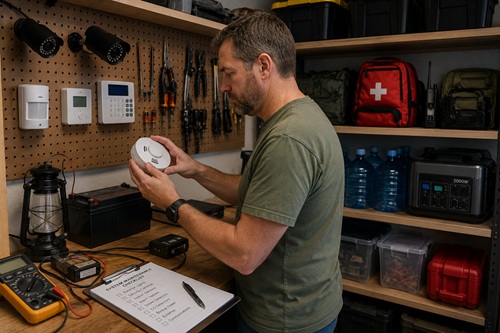
Preparedness supplies should also be included in routine security evaluations. Emergency food, water, medical supplies, communication equipment, fuel reserves, important documents, and backup power systems represent significant investments that support long-term resilience. Periodically confirming that these resources remain secure, organized, protected from environmental damage, and accessible to household members ensures they continue serving their intended purpose. Security is not only about preventing theft but also about preserving the readiness of essential resources.
Changes within the household should prompt a review of security practices. New family members, teenagers receiving house keys, elderly relatives moving into the home, renovations, or changes in work schedules can all alter how the property is used. These transitions may require adjustments to locking procedures, emergency plans, communication methods, or storage locations for important items. Reviewing security whenever household circumstances change helps ensure that protective measures continue matching the needs of everyone living there.
Neighborhood conditions also evolve over time. New construction, changing traffic patterns, vacant homes, increased commercial activity, or shifts in population can all influence local security. Staying informed about community developments and maintaining relationships with neighbors helps identify changing risks before they become significant concerns. Preparedness is strengthened when homeowners understand not only their own property but also the environment surrounding it.
One of the most valuable long-term habits is periodically repeating the complete security evaluation discussed earlier in this lesson. Viewing the property again through the eyes of a first-time visitor often reveals gradual changes that have become invisible through familiarity. A hedge that once sat below a window may now block it completely. A fence may have begun to lean, creating an easier climbing point. A new storage shed may create a blind spot that did not previously exist. These gradual changes are often overlooked precisely because they happen so slowly.
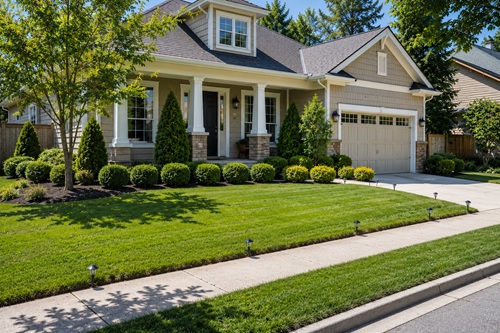
Maintaining home security also requires balancing preparedness with everyday life. A secure home should remain comfortable, functional, and welcoming for the people living in it. Security measures that are too complicated, inconvenient, or difficult to maintain are less likely to be used consistently. Practical improvements that naturally become part of everyday routines provide far greater long-term value than elaborate systems that are frequently ignored or bypassed.
Ultimately, long-term home security reflects the broader principles of preparedness itself. It emphasizes continual learning, regular evaluation, thoughtful maintenance, and steady improvement rather than relying on a single solution. Homes that remain secure over many years are rarely protected by one exceptional device. They are protected by homeowners who consistently observe, adapt, maintain, and improve their environment. That ongoing commitment transforms home security from a collection of individual measures into a resilient system capable of supporting preparedness through changing circumstances and future uncertainties.
Lesson Summary
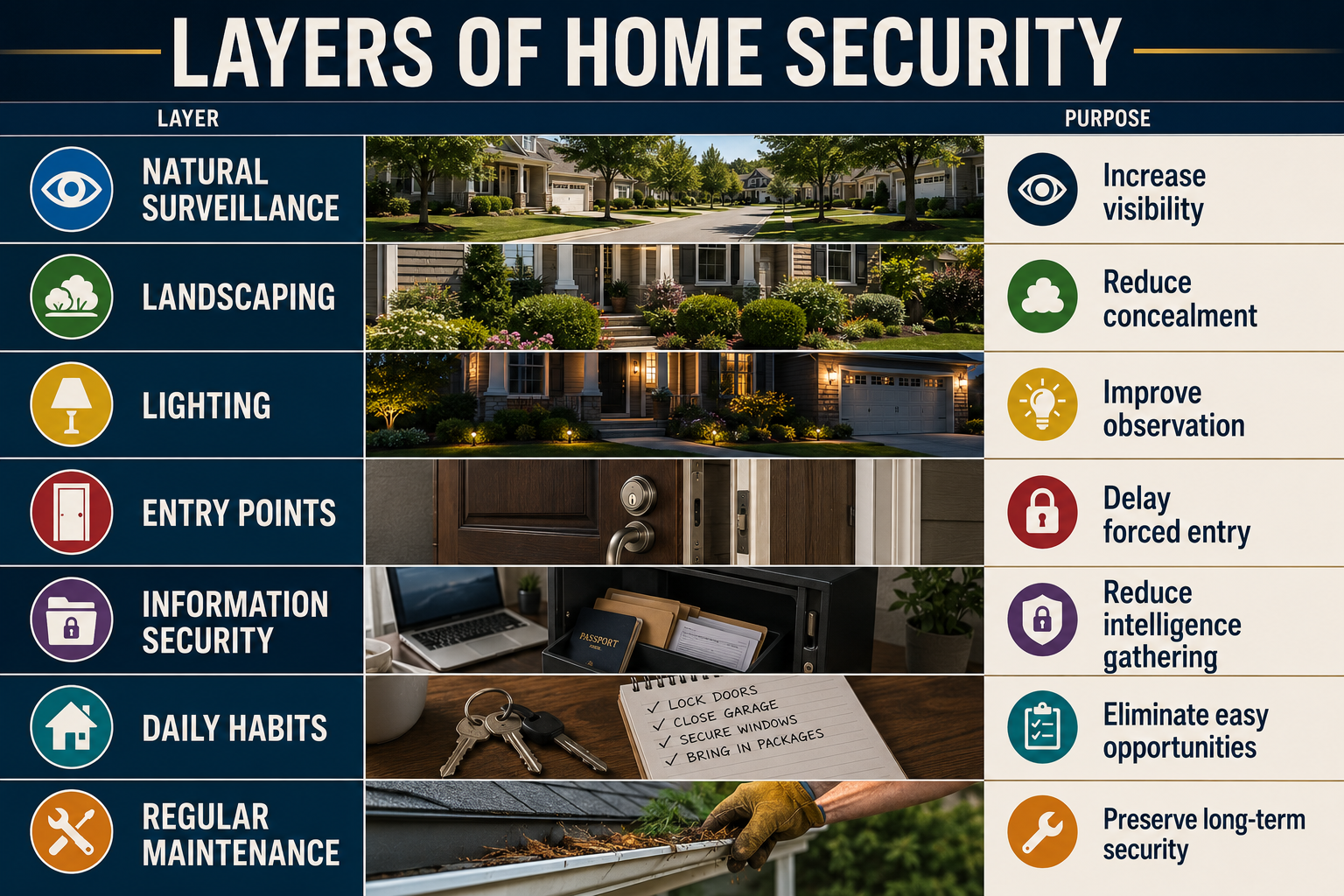
Effective home security begins long before someone attempts to open a door or force a window. It starts with understanding how criminals evaluate potential targets and recognizing that most seek opportunities offering the greatest reward with the least amount of risk. Every improvement that increases visibility, delays entry, reduces concealment, limits available information, or strengthens observation changes that risk calculation and makes a property less attractive.
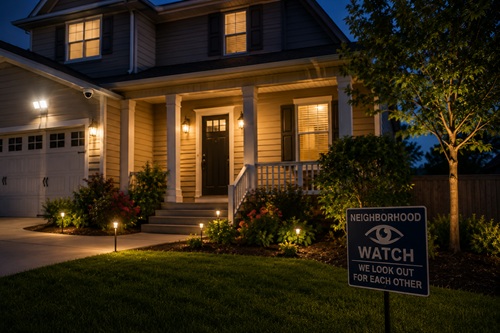
Throughout this lesson, the focus has remained on preparedness principles rather than specific products. A secure home is created through layers of protection that work together. Maintaining the property, improving natural surveillance, reinforcing entry points, protecting personal information, developing consistent security habits, and regularly re-evaluating vulnerabilities all contribute to a stronger overall security posture. While no home can ever be made completely immune to crime, thoughtful preparation significantly reduces both the likelihood of becoming a target and the potential consequences if an intrusion occurs.
Perhaps the most important lesson is that security is an ongoing practice rather than a completed project. Homes, neighborhoods, technology, and personal circumstances continually change, requiring homeowners to adapt along with them. Regular observation, routine maintenance, and a willingness to identify and correct new vulnerabilities are what transform home security into a lasting preparedness skill. By viewing security as a continuous process of improvement instead of a one-time purchase, homeowners build confidence, resilience, and a safer environment for both everyday life and future emergencies.
Preparedness Action Plan
Use the following action plan to evaluate your home’s current level of security and identify improvements that can be made over time. Complete the assessment during both daylight and after dark whenever possible, and revisit it periodically as your property and circumstances change.
| Task | Complete |
|---|---|
| Walk around the property from the street and evaluate it as a stranger would. | ☐ |
| Identify areas where someone could approach without being easily seen. | ☐ |
| Trim shrubs and landscaping that create hiding places near doors and windows. | ☐ |
| Verify that exterior lighting provides good visibility around entrances and walkways. | ☐ |
| Inspect every exterior door for solid construction, secure locks, reinforced frames, and functioning hardware. | ☐ |
| Check that all windows close properly and lock securely. | ☐ |
| Inspect garage doors, gates, sheds, and other secondary entry points for vulnerabilities. | ☐ |
| Secure ladders, tools, and equipment that could be used to gain entry. | ☐ |
| Remove valuables that are visible from windows or open garage doors. | ☐ |
| Organize important documents in a secure, fire-resistant location and maintain protected digital backups. | ☐ |
| Review what personal information is publicly shared through social media or everyday conversations. | ☐ |
| Confirm that all household members understand basic home security procedures and emergency contacts. | ☐ |
| Establish daily routines for locking doors, securing windows, closing garage doors, and protecting emergency supplies. | ☐ |
| Introduce yourself to nearby neighbors and consider establishing a neighborhood watch or mutual awareness arrangement. | ☐ |
| Schedule a complete home security inspection at least twice each year and after any major property changes. | ☐ |
Goal
By completing this action plan, you should be able to:
- Identify vulnerabilities before someone else does.
- Reduce opportunities for unauthorized entry.
- Improve visibility around your property.
- Strengthen physical and operational security.
- Develop consistent household security habits.
- Build a layered home security strategy that supports long-term preparedness.
- Back To Top
Skills Learned
After completing this lesson, you should be able to:
- Understand how criminals evaluate and select residential targets.
- Assess your home from the perspective of a potential intruder to identify security vulnerabilities.
- Improve visibility around your property while reducing areas that provide concealment.
- Evaluate the strength of doors, windows, garages, gates, and other common entry points.
- Protect sensitive personal information and preparedness resources from unnecessary exposure.
- Develop consistent household security habits that reduce opportunities for criminal activity.
- Recognize the importance of community awareness and neighborhood cooperation in improving security.
- Conduct regular security inspections that identify new vulnerabilities as conditions change.
- Apply layered security principles that increase risk, effort, and uncertainty for potential intruders.
- Integrate home security into a long-term preparedness strategy that protects both people and essential resources.
© Prepping Communities. This content is for informational purposes only and not professional advice. Use at your own risk.
Terms | Privacy | Guidelines