
Agroforestry: Sustaining Native Bee Habitat for Crop Pollination is a concise guide published by the USDA National Agroforestry Center that explains how agroforestry practices can support native bee populations and improve crop pollination. The publication begins by noting that more than one hundred North American crop species depend on insect pollinators for optimal production. While commercial agriculture often relies on European honey bees, research shows that native bees can provide significant pollination services when adequate habitat is available. Crops such as apples, blueberries, cherries, cucumbers, pumpkins, squash, tomatoes, watermelons, and many others benefit from native bee pollination.
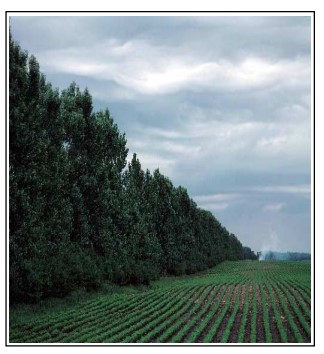
The guide explains how agroforestry systems naturally create pollinator habitat by increasing plant diversity and providing nesting opportunities. Practices such as windbreaks, shelterbelts, riparian buffers, hedgerows, forest farming, and silvopasture can supply pollen and nectar throughout the growing season while also providing nesting sites in soil, dead wood, plant stems, and natural cavities. Trees such as black locust, maple, basswood, black cherry, tulip poplar, and persimmon are highlighted as particularly valuable because they provide abundant nectar and pollen while also producing useful timber or other products.
A major section of the publication focuses on the habitat requirements of native bees. Native bees need three basic things: a continuous supply of flowers from spring through fall, suitable nesting sites, and protection from pesticides. The guide explains that many native bees nest underground, while others use tunnels in dead wood or hollow plant stems. Bumble bees require protected cavities and undisturbed areas for overwintering queens. The publication also emphasizes that many native bee species are highly efficient pollinators, with some capable of “buzz pollination,” a behavior that improves pollination of crops such as tomatoes, blueberries, and cranberries.
The authors conclude by presenting a simple three-step strategy: Know what exists, Protect it, and Enhance it. Landowners are encouraged to identify existing pollinator habitat, avoid unnecessary disturbance, minimize pesticide exposure, preserve nesting sites, and increase the abundance of flowering plants. By incorporating pollinator-friendly species into agroforestry projects, farmers can improve crop pollination, support biodiversity, enhance wildlife habitat, and increase the long-term sustainability of their agricultural systems.
© Prepping Communities. This content is for informational purposes only and not professional advice. Use at your own risk.
Terms | Privacy | Guidelines