
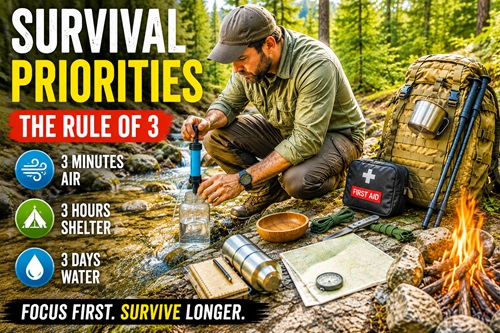

Survival experts often refer to the “Rule of Three” because it provides a simple way to prioritize decisions when every action matters. While the exact time limits vary depending on age, health, weather, and activity level, the principle remains valuable because it reminds people that not every problem deserves equal attention. In a true emergency, focusing on the wrong task can waste precious time and energy. Understanding which needs become life-threatening first allows you to make calmer, more effective decisions instead of reacting out of fear or habit.
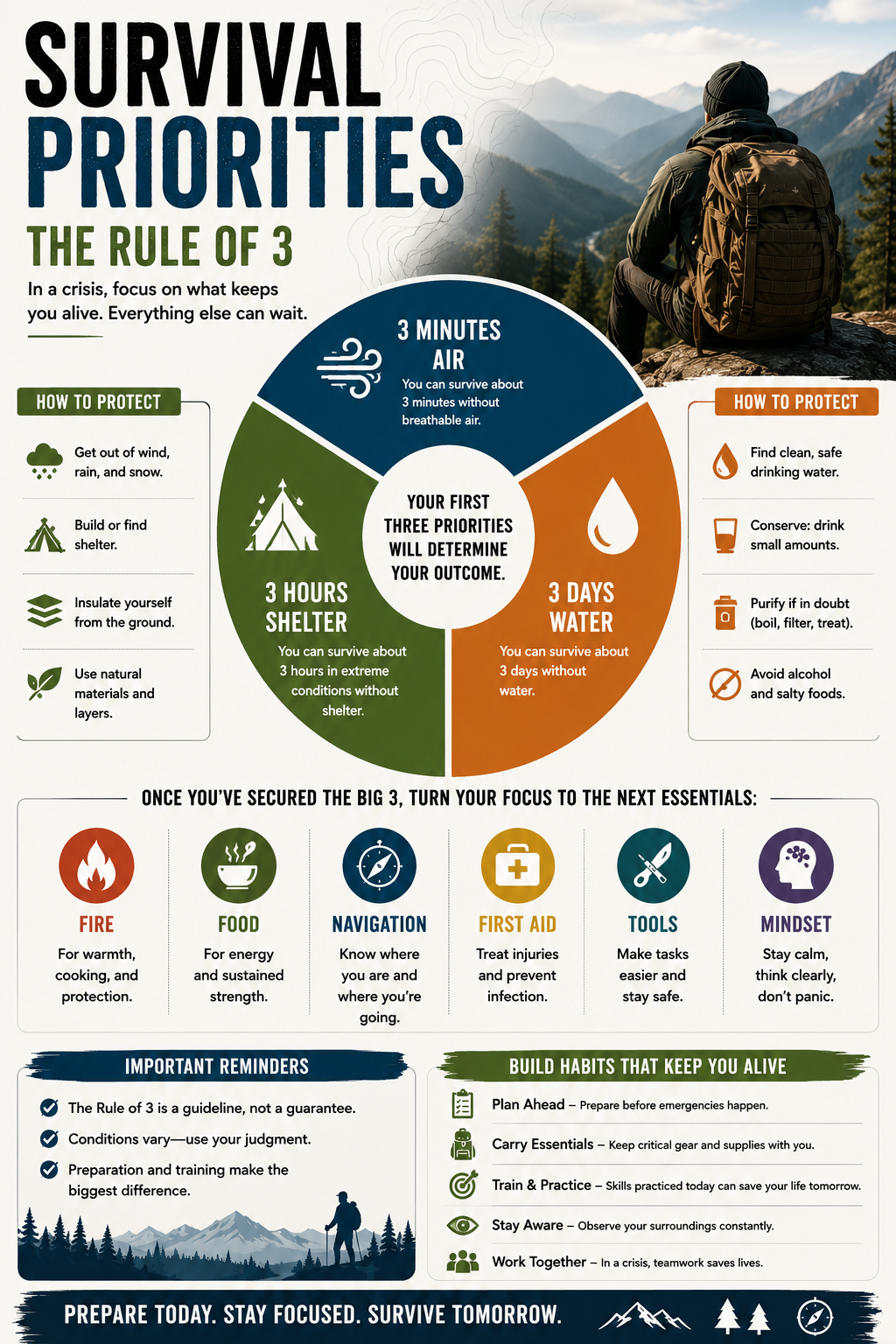
The first priority is always maintaining the ability to breathe and protecting the body from immediate environmental dangers. Air may seem obvious, but many emergencies involve smoke, toxic gases, dust, confined spaces, or water where breathing quickly becomes impossible. In extreme weather, exposure can become just as deadly. A severe winter storm, freezing rain, or high winds can lower body temperature to dangerous levels long before hunger becomes a concern. Recognizing hazards that threaten breathing or rapidly reduce body temperature allows you to focus on finding safety before attempting any other survival task.
Once immediate dangers have been addressed, securing a dependable source of safe drinking water becomes the next major objective. Dehydration gradually reduces physical strength, mental clarity, and decision-making ability, making every other survival task more difficult. Many people underestimate how quickly dehydration affects judgment, particularly during hot weather or strenuous activity. Equally important is recognizing that not every clear-looking water source is safe to drink. Learning to identify, collect, conserve, and purify water greatly increases the likelihood of remaining healthy long enough to solve the next challenges.
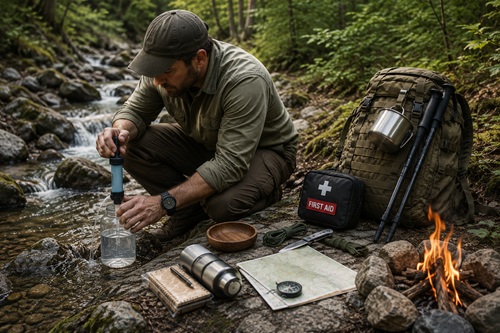
Only after the most immediate threats have been controlled should attention shift toward longer-term survival needs such as fire, food, navigation, first aid, tools, and maintaining a positive mindset. Fire provides warmth, light, cooking, signaling, and water purification. First aid prevents small injuries from becoming life-threatening infections. Navigation reduces the risk of becoming even more lost, while reliable tools make nearly every survival task safer and more efficient. Food eventually becomes important, but most healthy people can survive far longer without food than without shelter or water. Understanding these priorities helps prevent wasted effort and improves overall efficiency.
Perhaps the greatest benefit of the Rule of Three is that it provides a mental framework during stressful situations. Emergencies often create panic because there are many competing problems demanding attention at the same time. Instead of trying to solve everything at once, experienced outdoorsmen, search-and-rescue professionals, and survival instructors continually evaluate which problem poses the greatest immediate threat. By concentrating on one priority before moving to the next, complex emergencies become a series of manageable tasks rather than an overwhelming crisis.
Preparedness begins long before an emergency ever occurs. The best survival equipment is only effective when combined with knowledge, practice, and sound decision-making. Learning basic shelter construction, water purification methods, fire building, first aid, and navigation skills before they are needed dramatically increases confidence and self-reliance. The Rule of Three is not simply a survival slogan—it is a practical decision-making tool that helps prioritize actions when time, energy, and resources are limited. Mastering this principle enables anyone to respond more effectively, reduce unnecessary risks, and improve their chances of safely overcoming unexpected situations.
© Prepping Communities. This content is for informational purposes only and not professional advice. Use at your own risk.
Terms | Privacy | Guidelines