
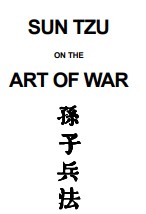
The Art of War by Sun Tzu is one of the most influential military strategy texts ever written, focusing not only on warfare but also on leadership, psychology, planning, deception, adaptability, intelligence gathering, and decision-making under pressure. This edition uses the famous 1910 English translation by Lionel Giles, whose work remains one of the standard translations used throughout the English-speaking world. The book teaches that victory is achieved not through brute force alone, but through preparation, understanding both yourself and your opponent, exploiting weaknesses, controlling information, and adapting to changing circumstances.
The opening chapters emphasize that war is a matter of national survival and therefore requires careful planning, discipline, and strategic calculation. Sun Tzu explains that success depends on factors such as leadership, terrain, morale, timing, organization, and the ability to deceive opponents. One of the book’s most famous principles states that “all warfare is based on deception,” encouraging leaders to conceal intentions, appear weak when strong, create confusion, and manipulate enemy expectations. Throughout the text, Sun Tzu argues that the highest form of victory is winning without direct conflict whenever possible.
A major theme throughout the book is adaptability. Sun Tzu repeatedly warns against rigid thinking, explaining that successful commanders constantly adjust tactics based on terrain, enemy behavior, morale, timing, logistics, and changing battlefield conditions. Chapters covering maneuvering, terrain, weak points, and the nine situations teach how positioning, speed, surprise, intelligence, and flexibility often matter more than raw strength or numbers. The text also stresses the importance of maintaining discipline while preserving morale and cohesion within an organization or army.
The final sections focus heavily on intelligence gathering and the use of spies, arguing that accurate information and foreknowledge are among the most valuable assets in conflict. Sun Tzu explains that leaders who understand both themselves and their opponents can avoid unnecessary losses and greatly improve their chances of success. Although originally written for warfare, the book’s lessons have been widely applied to business, politics, negotiation, cybersecurity, sports, preparedness, leadership, and personal strategy because of its focus on psychology, planning, resource management, and strategic thinking.
Lionel Giles Translation
© Prepping Communities. This content is for informational purposes only and not professional advice. Use at your own risk.
Terms | Privacy | Guidelines