
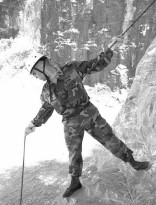
Rappelling (TC 21-24) is the official U.S. Army Training Circular covering the equipment, techniques, safety procedures, personnel requirements, rope management practices, and operational standards used for military rappelling operations. Published by the Department of the Army in January 2008, the manual serves as the Army’s primary training reference for tower, ground, and helicopter rappelling.
The manual begins by introducing tower rappelling, which serves as the foundation for all advanced rappelling training. It explains the duties and responsibilities of rappel masters, safety officers, lane NCOs, belayers, and rappellers. Detailed safety procedures are emphasized throughout the publication, reflecting the Army’s recognition that rappelling is inherently hazardous and requires strict adherence to established standards. The guide outlines inspection procedures, risk management requirements, safety briefings, medical support requirements, and training progression standards.
A major portion of the handbook focuses on practical rappelling techniques. The publication covers seat-hip rappelling, Australian rappelling, tower procedures, ground rappelling, cliff operations, and helicopter insertion methods. Numerous diagrams illustrate construction of rappel seats, rope hookups, anchor systems, descent techniques, emergency lock-in procedures, and proper body positioning. The manual also explains how to establish safe rappel points, construct anchor systems, equalize anchors, and operate rappel lanes under varying conditions.
The equipment chapters provide extensive information about ropes, carabiners (snaplinks), descenders, gloves, anchors, and rope inspection. The manual teaches rope terminology, maintenance procedures, storage practices, and serviceability inspections designed to prevent equipment failures. A substantial section is devoted to knots, including figure-eight knots, bowlines, Prusik knots, water knots, clove hitches, Munter hitches, and numerous other knots commonly used in military mountaineering and rappelling operations.
For preparedness-minded readers, the greatest value lies in the manual’s systematic approach to rope systems, anchor construction, safety procedures, equipment inspection, and controlled descent techniques. While designed for military training, the principles discussed apply broadly to wilderness travel, search and rescue, climbing support operations, obstacle crossing, and emergency rope work where safe vertical movement is required.
© Prepping Communities. This content is for informational purposes only and not professional advice. Use at your own risk.
Terms | Privacy | Guidelines