
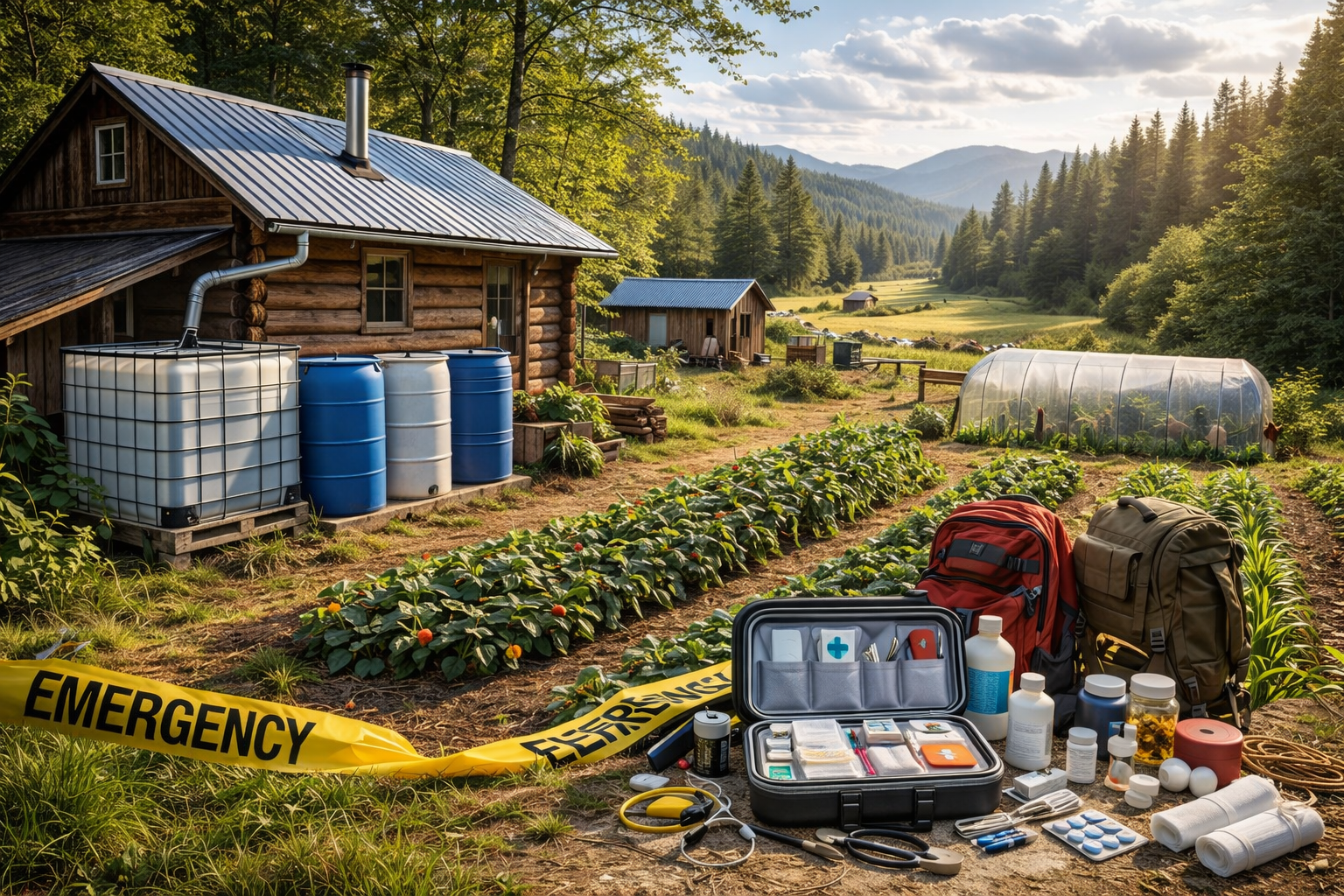
Practical Prepper Guide (Without Spending Much)
Most people think emergency medicine is about having a big first aid kit.
It’s not.
It’s about knowing what to do when things go wrong fast—and help isn’t coming.
In real scenarios:
- Ambulances are delayed
- Hospitals are overwhelmed
- Supplies are limited
And the biggest danger?
Simple mistakes that turn small problems into serious ones
Mistake #1: Relying on Gear Instead of Knowledge
Buying supplies feels productive.
But without training:
- You hesitate
- You misuse equipment
- You make things worse
Reality:
A person with:
- Basic training
- Minimal supplies
Will outperform someone with a full kit and no knowledge
Fix:
- Learn basic first aid
- Understand bleeding control
- Practice scenarios
Skill > gear
Mistake #2: Not Controlling Bleeding First
This is the #1 preventable cause of death in trauma.
Common Errors:
- Focusing on minor injuries
- Not applying enough pressure
- Delaying action
Correct Approach:
- Direct pressure immediately
- Use cloth/bandage
- Apply tourniquet if needed
Seconds matter
Mistake #3: Poor Wound Cleaning
Infections become major threats when care is limited.
Mistakes:
- Leaving debris in wounds
- Using dirty water
- Sealing wounds too early
Correct Method:
- Flush thoroughly with clean water
- Remove debris
- Keep wound clean and covered
Infection can be worse than the injury
Mistake #4: Ignoring Small Injuries
Minor cuts and burns can escalate quickly.
Why This Matters:
- Infection spreads
- Pain limits function
- Healing slows under stress
Treat everything early—even “small” issues
Mistake #5: Overlooking Hydration and Shock
People focus on injuries—but forget body response.
Signs of Shock:
- Pale skin
- Weak pulse
- Confusion
- Rapid breathing
What To Do:
- Lay person down
- Elevate legs (if safe)
- Keep warm
- Provide fluids if conscious
Shock kills quietly
Mistake #6: No Plan for Pain Management
Pain affects:
- Decision-making
- Movement
- Morale
Simple Solutions:
- Over-the-counter meds
- Rest and immobilization
- Proper positioning
👉 Managing pain = maintaining function
Mistake #7: No Redundancy in Medical Supplies
Running out is common.
Mistake:
- One kit
- One location
Fix:
- Multiple kits (home, vehicle, bag)
- Backup supplies
Spread your risk
Mistake #8: Poor Organization
In emergencies:
You don’t have time to search
Fix:
- Organize by category:
- Bleeding
- Wounds
- Medications
- Label clearly
Speed saves lives
Mistake #9: No Hygiene Control
This is a silent killer.
Risks:
- Dirty hands
- Contaminated tools
- Unsanitary environment
Fix:
- Gloves
- Hand cleaning
- Clean work area
Prevention beats treatment
Mistake #10: No Practice Under Pressure
Reading isn’t enough.
Reality:
- Stress changes everything
- Fine motor skills drop
- Decision-making slows
Train:
- Simulate scenarios
- Time yourself
- Work under mild stress
Practice builds confidence
Mistake #11: Spending Too Much in the Wrong Areas
You don’t need expensive gear.
High Value Items:
- Gloves
- Gauze
- Tape
- Basic meds
Low Priority:
- Fancy kits with items you don’t understand
Keep it simple and effective
Real-World Scenario
In a crisis:
- First 5 minutes → chaos
- First 30 minutes → critical decisions
- First few hours → determine outcome
Prepared people:
- Act quickly
- Stay calm
- Use simple, effective methods
What You Can Do Today (Without Spending Much)
Today:
- Build a basic kit with essentials
- Learn bleeding control
- Organize your supplies
This Week:
- Practice wound care
- Review shock response
- Add backup supplies
This Month:
- Take a first aid course
- Run practice scenarios
- Improve your system
Final Thought
Emergency medicine isn’t about being perfect.
It’s about:
- Acting fast
- Avoiding mistakes
- Keeping problems from getting worse
Because in a real situation…
- You are the first responder.
And what you do in those first moments…
- Makes all the difference.