
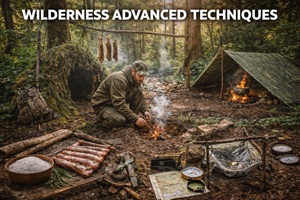
Category: Wilderness
Focus: Survival • Fieldcraft • Self Sufficiency • Navigation • Adaptability
Objective: Develop advanced wilderness skills that allow you to operate, survive, and adapt in harsh environments with minimal resources
1. WHAT “ADVANCED” REALLY MEANS
Advanced wilderness skills are not about:
- harder conditions
- more suffering
- extreme challenges
They are about:
- efficiency
- awareness
- control
Beginners survive.
Advanced practitioners operate.
2. THE ADVANCED MINDSET
At this level, your mindset shifts:
- you think ahead constantly
- you anticipate problems before they happen
- you conserve energy at all times
Core Rule:
Every action should reduce future effort
3. MICRO-LOCATION SELECTION (MOST OVERLOOKED SKILL)
Beginners:
Pick a “good area”
Advanced:
Pick the exact spot
What to Look For:
- wind direction (natural barriers)
- drainage (avoid water pooling)
- sun exposure (morning vs afternoon)
- proximity to resources
10 feet can change everything
4. ADVANCED SHELTER STRATEGY
Goal:
Control temperature, not just block elements
Techniques:
Thermal Layering
- base structure
- insulation layer (leaves, moss)
- outer waterproof layer
Heat Reflection
- build reflective wall behind fire
- use logs or stones
Ground Insulation
- elevate bedding
- thick debris layer
Ground contact = heat loss
5. FIRE CONTROL (NOT JUST FIRE BUILDING)
Advanced Focus:
- fuel efficiency
- smoke control
- heat direction
Techniques:
Dakota Fire Hole
- low visibility
- efficient burn
- wind resistant
Long Fire
- consistent heat for sleeping
Coal Management
- maintain heat overnight
Fire is a tool, not just warmth
6. WATER PROCUREMENT (BEYOND THE BASICS)
Advanced Methods:
Solar Still (backup)
- dig pit
- place container
- cover with plastic
- collect condensation
Dew Collection
- cloth dragged across vegetation
Snow Processing
- never eat directly
- melt slowly
Dehydration = performance drop first, death later
7. ADVANCED NAVIGATION (NO GPS)
Techniques:
Terrain Association
- read land shapes
- use ridgelines and valleys
Dead Reckoning
- track distance + direction
Natural Indicators
- sun path
- moss (secondary only)
- wind patterns
Navigation is about not getting lost, not finding your way back
8. CALORIE MANAGEMENT (CRITICAL)
Advanced Truth:
You don’t need more food – you need to burn less energy
Strategy:
- move efficiently
- avoid unnecessary travel
- work during optimal times
Energy = survival currency
9. ADVANCED FOOD PROCUREMENT
Focus on:
- high return, low effort
Techniques:
Passive Fishing
- set lines
- fish traps
Trapping (where legal)
- small game focus
Foraging (advanced only)
- identify safe plants
Don’t waste energy chasing food
10. TOOLLESS SKILLS (CRITICAL BACKUP)
You Should Be Able To:
- start fire without modern tools
- build shelter from natural materials
- improvise cordage
Gear fails—skills don’t
11. WEATHER READING (REAL-TIME)
Watch:
- cloud movement
- wind shifts
- temperature drops
Adjust BEFORE:
- storms hit
- temperatures drop
Reacting late costs energy
12. CAMOUFLAGE AND LOW PROFILE
Advanced Principle:
Avoid being seen
Techniques:
- blend with environment
- control movement
- reduce noise
Sometimes survival = not being noticed
13. NIGHT OPERATIONS
Risks:
- injury
- disorientation
Strategy:
- limit movement
- prep before dark
- maintain fire safely
Night is for maintaining, not exploring
14. INJURY MANAGEMENT (FIELD REALITY)
Plan For:
- sprains
- cuts
- fractures
Strategy:
- immobilize
- reduce movement
- adapt plan immediately
One injury changes everything
15. LONG-TERM WILDERNESS LIVING
You Need:
- sustainable water
- renewable food sources
- shelter upgrades
- tool maintenance
Short-term survival ≠ long-term living
16. DECISION-MAKING UNDER STRESS
Advanced Skill:
Calm thinking
Rule:
- stop
- assess
- act deliberately
Bad decisions kill faster than conditions
17. SYSTEM THINKING (NEXT LEVEL)
Everything connects:
- shelter affects energy
- energy affects movement
- movement affects survival
Think in systems, not tasks
18. PRACTICE (THE REAL DIFFERENCE)
Do This:
- spend nights outside
- test skills regularly
- simulate bad conditions
Knowledge without practice = failure
19. COMMON ADVANCED FAILURES
- overconfidence
- unnecessary movement
- poor energy management
- ignoring small problems
Small mistakes compound fast
20. FINAL TAKEAWAY
Advanced wilderness survival is not about:
- toughness
- suffering
It’s about:
- efficiency
- awareness
- adaptability
If you can:
- control your environment
- manage your energy
- think clearly
you can operate in almost any wilderness scenario