
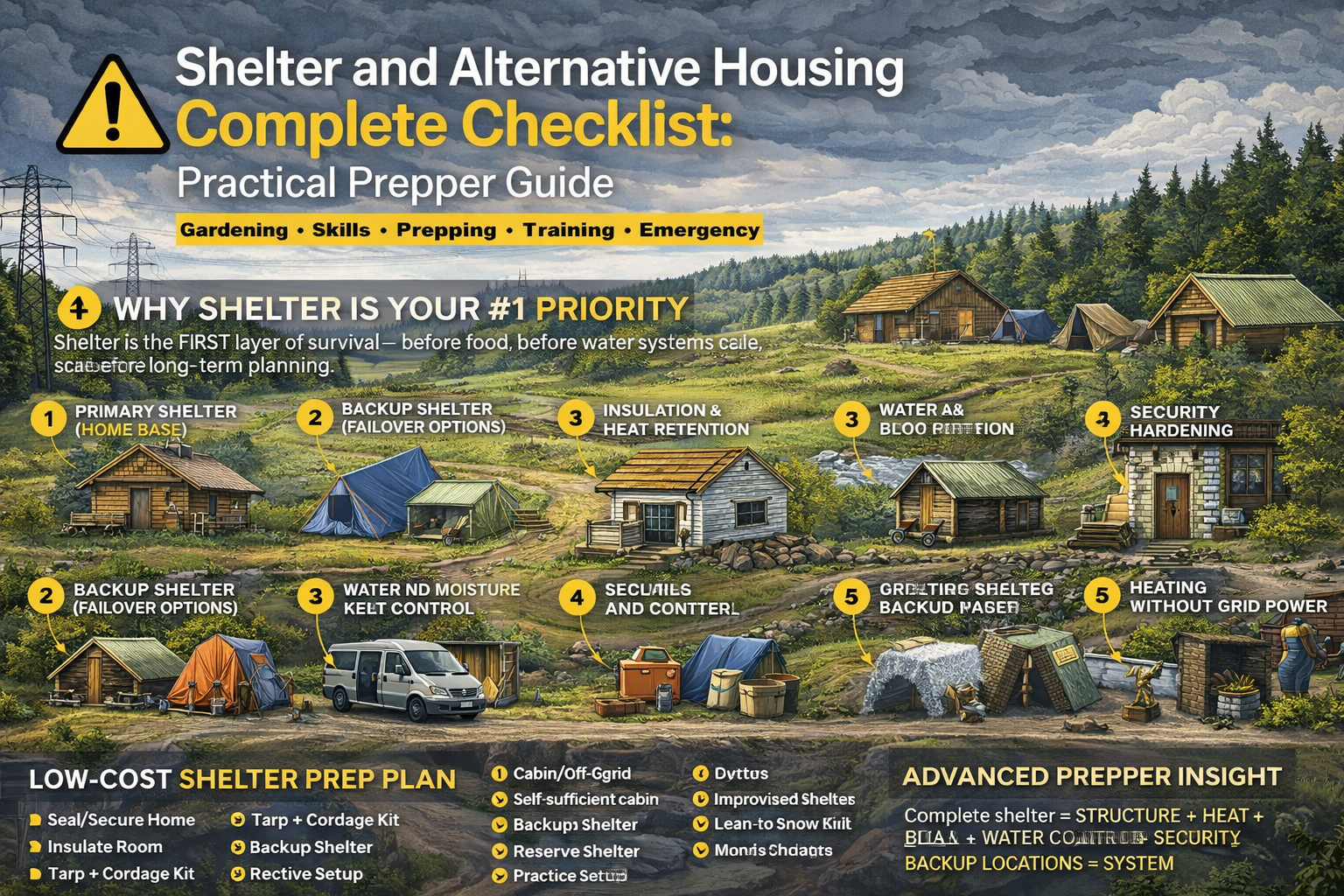
Shelter is the first layer of survival—before food, before water systems scale, before long-term planning.
Without proper shelter:
- Exposure kills faster than starvation
- Morale collapses quickly
- Security becomes nearly impossible
- Energy use skyrockets
This guide gives you a complete, no-fluff checklist to build layered, resilient shelter systems.
CORE PRINCIPLES OF PREPPER SHELTER
- Protection from environment (cold, heat, wind, moisture)
- Security from threats (people, animals)
- Energy efficiency (retain heat, reduce fuel use)
- Redundancy (multiple shelter options)
- Mobility (if relocation becomes necessary)
COMPLETE SHELTER CHECKLIST
1. PRIMARY SHELTER (HOME BASE)
Structural Integrity
- Roof condition (no leaks, reinforced if possible)
- Walls insulated and sealed
- Windows double-pane or sealed with plastic in winter
- Doors reinforced (solid core, secure locks)
Weatherproofing
- Seal drafts (windows, doors, vents)
- Install thermal curtains or covers
- Waterproof foundation and exterior walls
- Add windbreaks (trees, fencing, barriers)
Heating Readiness
- Primary heat source (wood stove, propane, etc.)
- Backup heating (portable heater, blankets, insulation layers)
- Carbon monoxide detector installed
Cooling (Hot Climates)
- Shade structures
- Ventilation (cross-breeze airflow)
- Reflective materials (roof, windows)
2. BACKUP SHELTER (FAILOVER OPTIONS)
Secondary Locations
- Family or group member homes
- Rural fallback property
- Hidden or low-profile shelter sites
Quick Setup Options
- Tents (4-season preferred)
- Tarps (heavy-duty, multiple sizes)
- Portable shelters (pop-up, military surplus)
Cache Supplies
- Sleeping bags (rated for local climate)
- Ground insulation (pads, foam)
- Emergency blankets
3. INSULATION AND HEAT RETENTION
Critical for Survival
- Foam board insulation
- Reflectix or radiant barriers
- Rugs and floor insulation
- Door draft blockers
Low-Cost Hacks
- Use blankets on walls
- Plastic wrap windows
- Build “warm room” (heat only one space)
4. WATER AND MOISTURE CONTROL
Why It Matters
Moisture destroys shelter and causes illness.
Checklist
- Proper drainage around structure
- Gutters and downspouts functional
- Dehumidification (passive or active)
- Raised sleeping area (avoid ground moisture)
5. SANITATION IN SHELTER
Must-Have
- Emergency toilet setup (bucket + liner + absorbent material)
- Ventilation for waste areas
- Greywater disposal plan
Backup Supplies
- Lime or sawdust for odor control
- Trash bags and sanitation kits
6. SECURITY HARDENING
Physical Security
- Reinforced doors and locks
- Window coverings (visibility control)
- Exterior lighting (solar if possible)
Low-Profile Strategy
- Avoid drawing attention (light discipline at night)
- Conceal improvements where possible
7. ALTERNATIVE HOUSING OPTIONS
Cabin / Off-Grid Structure
- Best for long-term survival
- Requires land and setup time
- Highly sustainable if done right
Tent Systems (Short-Term / Mobile)
- Lightweight and portable
- Must be weather-rated
- Requires insulation upgrades in cold climates
Vehicle Living (Bug-Out Ready)
- Vans, trucks, RVs
- Mobility advantage
- Limited long-term comfort without upgrades
Improvised Shelters
- Lean-to structures
- Debris huts
- Snow shelters (winter)
Use Case: Emergency survival when no infrastructure exists
8. HEATING WITHOUT GRID POWER
Primary Options
- Wood stove (most reliable long-term)
- Rocket stove (efficient, low fuel use)
- Propane heaters (short-term use)
Fuel Planning
- Firewood stockpile (seasoned)
- Propane storage
- Backup ignition (matches, lighters, ferro rods)
9. COOKING IN SHELTER
- Indoor-safe cooking method (ventilated)
- Outdoor backup cooking area
- Fuel redundancy (wood, propane, alcohol)
10. LOCATION STRATEGY (CRITICAL)
Avoid:
- Flood zones
- High population density
- Disaster-prone areas
Look For:
- Water access
- Natural wind protection
- Elevation (drainage and visibility)
LOW-COST SHELTER PREP PLAN
Step-by-Step (Budget Friendly):
- Seal your current home (biggest impact, lowest cost)
- Create one insulated “survival room”
- Buy tarps + cordage (cheap, versatile shelter options)
- Build a basic backup shelter kit
- Start a firewood or fuel reserve
- Practice setting up emergency shelter
ADVANCED PREPPER INSIGHT
Most people think shelter = structure.
Reality: Shelter = system.
A complete system includes:
- Structure
- Heat
- Insulation
- Water control
- Security
- Backup locations
If one fails, the entire system is compromised.
TOP MISTAKES TO AVOID
- Only relying on one shelter location
- Ignoring insulation (huge energy waste)
- No backup heating method
- Poor ventilation (causes illness)
- Overcomplicating instead of simplifying
- Not testing your setup before an emergency
FINAL TAKEAWAY
You don’t need a bunker or expensive build to be prepared.
If you:
- Seal your environment
- Control heat and moisture
- Build redundancy
- Keep it simple
…you can create a highly effective shelter system without spending much.