
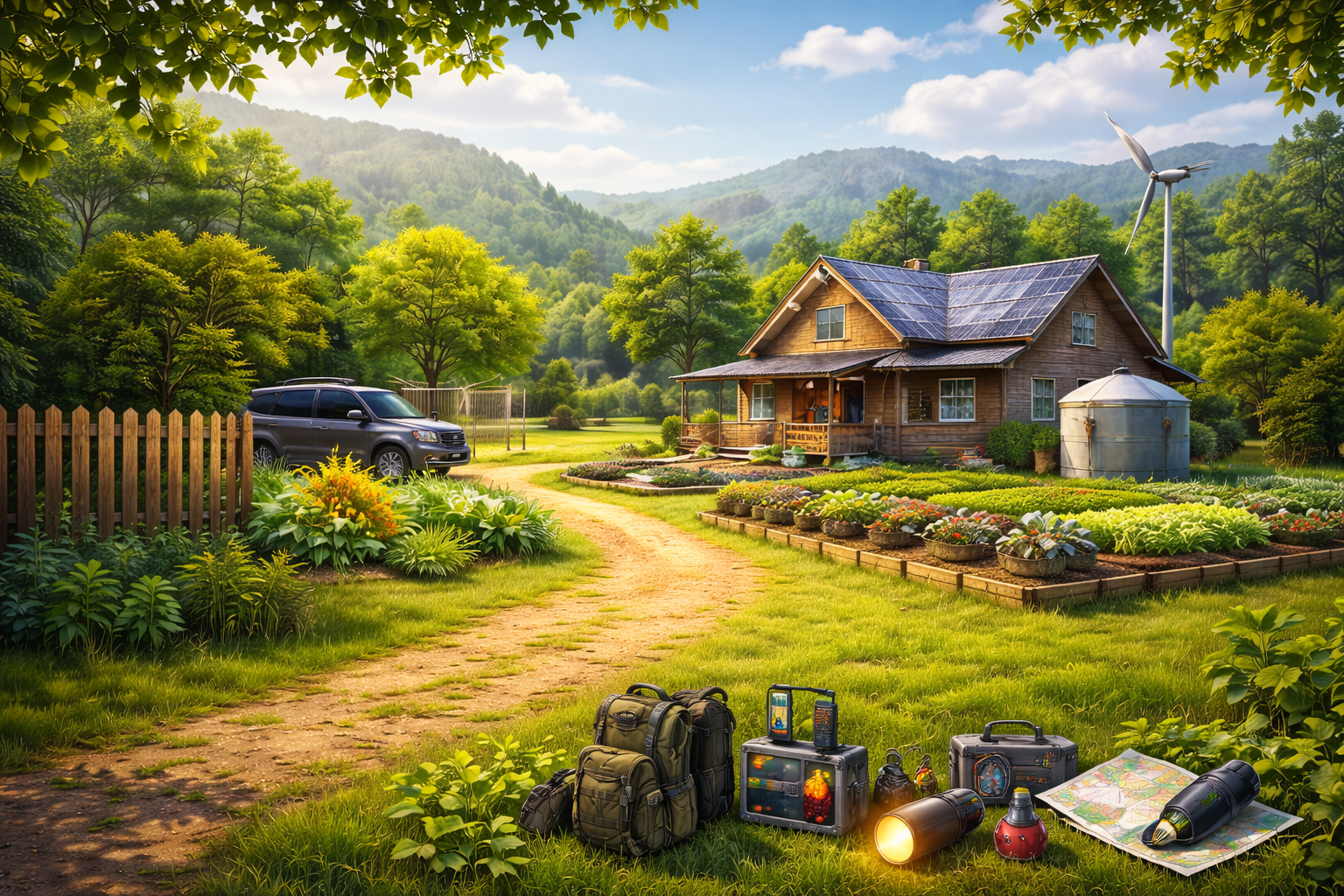
Most people think security = weapons.
That’s wrong.
Real security is:
- Awareness
- Preparation
- Deterrence
- Community
- Redundancy
If one layer fails, another takes over.
CORE SECURITY PRINCIPLES
- Layered Defense (not just one solution)
- Low Profile (don’t attract attention)
- Early Warning (see problems before they reach you)
- Control Access (limit entry points)
- Sustainability (works long-term, not just short-term)
COMPLETE SECURITY CHECKLIST
1. PERIMETER SECURITY (FIRST LINE OF DEFENSE)
Goal: Detect and slow threats before they reach your home
Checklist:
- Fencing or natural barriers (hedges, terrain)
- Controlled entry points (gates, limited access paths)
- Motion lights (solar preferred)
- Noise alerts (gravel paths, trip lines, dogs)
- Cameras (even basic or temporary setups)
Low-Cost Options:
- Gravel driveways for sound
- DIY alarms (cans, bells, string lines)
- Strategic lighting placement
2. HOME HARDENING (SECOND LAYER)
Goal: Make forced entry difficult and time-consuming
Checklist:
- Solid core or reinforced doors
- Deadbolts (long screws into frame)
- Reinforced strike plates
- Window locks and coverings
- Security film or boarding (if needed)
Advanced:
- Hidden safe room or fallback area
- Steel door upgrades
3. VISIBILITY CONTROL (LOW PROFILE STRATEGY)
Mistake: Showing what you have
Fix:
- Block line of sight into home (curtains, coverings)
- No visible stockpiles or gear
- Limit outdoor lighting at night (light discipline)
- Avoid obvious “prepper” signals
4. EARLY WARNING SYSTEMS
Goal: Know before someone is at your door
Options:
- Dogs (best natural alarm system)
- Motion sensors (battery/solar)
- Radios/scanners for local activity
- Neighborhood watch communication
5. PERSONAL SECURITY PREP
Checklist:
- Self-defense training (critical)
- Situational awareness habits
- Everyday carry essentials (legal tools only)
- Fitness (you are your first defense)
6. COMMUNICATION SECURITY
Goal: Stay informed and connected
Checklist:
- Backup communication (radios, walkie-talkies)
- Agreed family contact plan
- Emergency signals or codes
- Offline communication methods
7. RESOURCE SECURITY (PROTECT WHAT YOU HAVE)
Targets in Crisis:
- Food
- Water
- Fuel
- Medical supplies
Checklist:
- Store supplies out of sight
- Use multiple storage locations
- Rotate and manage inventory
- Avoid discussing supplies publicly
8. COMMUNITY DEFENSE (FORCE MULTIPLIER)
Reality: Lone wolf = weak
Better Strategy:
- Build trust with neighbors
- Share responsibilities (watch, patrol, communication)
- Establish simple plans
9. LIGHT DISCIPLINE & NIGHT SECURITY
Mistake: Broadcasting your position at night
Fix:
- Cover windows
- Use red/low-light options
- Limit generator noise/light exposure
- Keep movement discreet
10. CONTINGENCY PLANNING
Ask Yourself:
- What if someone breaches the perimeter?
- What if I have to leave quickly?
- What if power is gone long-term?
Checklist:
- Bug-in plan (primary)
- Bug-out plan (backup)
- Rally points
- Emergency roles for family members
TOP SECURITY MISTAKES
- Relying on one method (gun, camera, etc.)
- Advertising supplies or gear
- No communication plan
- Ignoring neighbors
- No drills or practice
LOW-COST SECURITY PLAN (START HERE)
- Reinforce doors and windows
- Add motion lights
- Build simple alarm systems
- Get radios for communication
- Create a family plan
- Start building neighbor relationships
ADVANCED PREPPER INSIGHT
Security is not about being the strongest—
it’s about being the hardest target.
Most threats look for:
- Easy access
- Low resistance
- High reward
If you remove those, you reduce risk drastically.
FINAL TAKEAWAY
You don’t need expensive gear to be secure.
If you:
- Layer your defenses
- Stay low profile
- Work with others
- Plan ahead
…you can create a strong, sustainable security system that works when it matters most.