
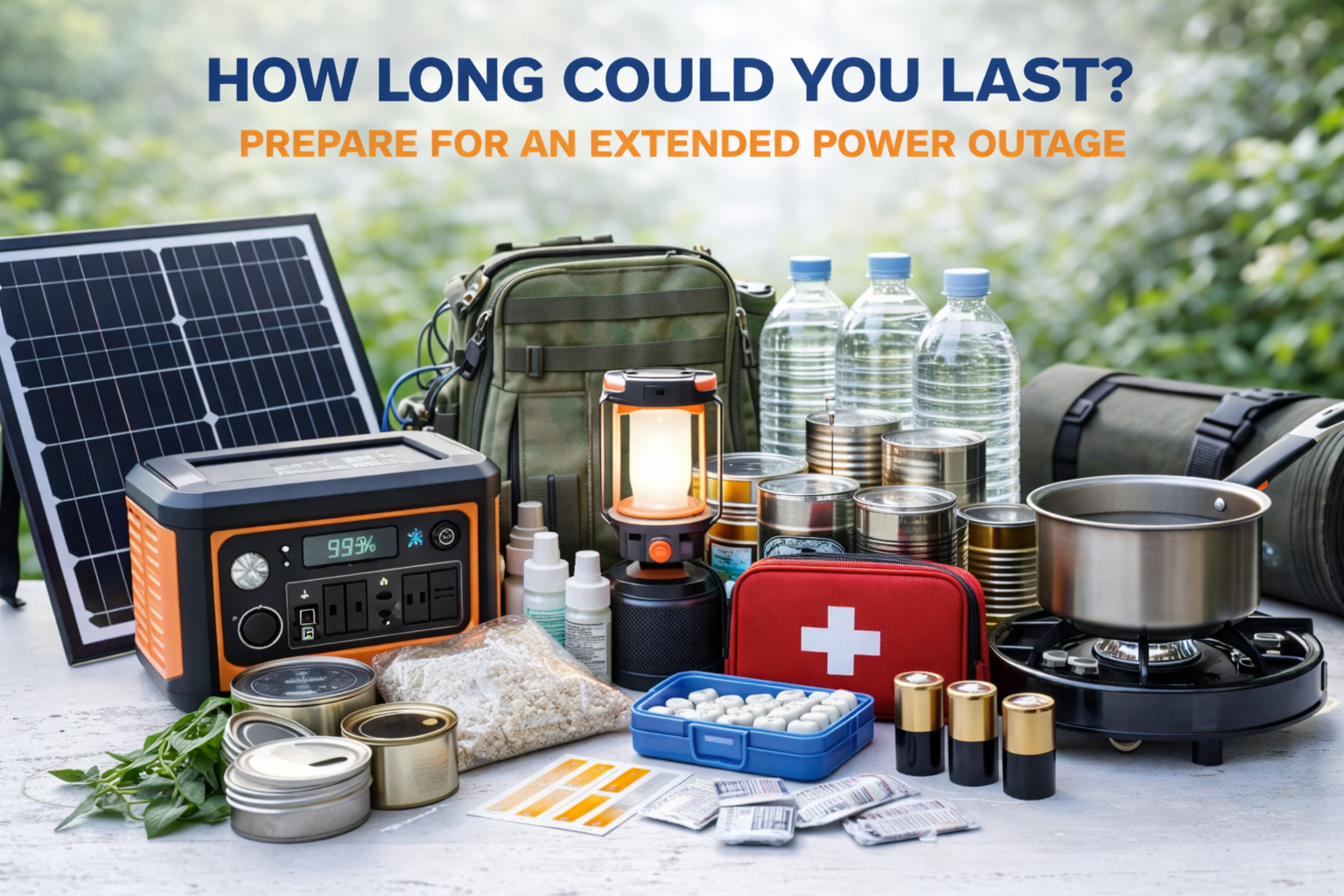
Most People Think Short-Term – But This Is Where That Fails
A lot of people prepare for power outages like they’re temporary.
A few hours.
Maybe a day.
Maybe a storm.
But what happens when it doesn’t come back?
Not quickly.
Not predictably.
Maybe not at all for an extended period.
That’s where most plans break down.
The Reality Most People Don’t Plan For
Modern life depends on electricity in ways most people don’t fully realize:
water systems rely on pumps
grocery stores rely on supply chains and refrigeration
fuel systems rely on power to operate
communication depends on charged devices and infrastructure
When power goes down long enough…
everything starts to cascade.
The First 24–72 Hours
This is where things still feel manageable.
You’re using:
stored food
backup lighting
charged devices
But already:
stores are emptying
fuel access becomes limited
people begin reacting
Most people are still thinking short-term here.
That’s the mistake.
The Shift After a Few Days
This is where things change.
Water becomes harder to access
Refrigerated food is gone
Communication starts failing
And people begin to realize:
this isn’t temporary
That’s when pressure builds.
The Four Systems You Actually Need
Instead of thinking in terms of items, think in systems.
1. Food System
Not just stored food — but:
how long it lasts
how you prepare it without power
how you stretch it
2. Water System
Not just storage — but:
purification
reuse
backup sources
3. Power System
Not full house power – but:
critical devices
communication
lighting
Even small, reliable backup options make a difference
4. Sanitation System
This is the one most people overlook.
Without proper sanitation:
illness spreads
living conditions degrade quickly
Why Backup Power Is No Longer Optional
Most people think backup power is a “nice to have.”
It’s not.
Even limited power allows you to:
keep communication devices running
maintain basic lighting
support small but critical tools
You don’t need to power everything.
You need to power what matters
Water: The Hidden Failure Point
When the grid goes down, water systems follow.
Even if water still flows:
pressure may drop
quality may decline
treatment systems may fail
Having:
stored water
purification methods
Becomes critical fast
Mobility Still Matters
Your vehicle becomes more important than ever.
But there’s a problem:
Fuel systems rely on electricity.
That means:
gas stations may not work
supply becomes inconsistent
Keeping your vehicle ready and fuel levels high is not overkill.
It’s a buffer
Communication Breakdown
Phones don’t fail immediately.
But networks do degrade.
Over time:
towers go down
congestion increases
access becomes unreliable
Having multiple ways to stay informed gives you an advantage.
The Financial Side People Ignore
In longer disruptions:
digital payments may not work
ATMs may be offline
transactions become limited
Having flexibility in how you operate financially matters more than people expect
The Biggest Mistake: Waiting for Clarity
Most people wait for confirmation:
“Let’s see how bad this gets.”
That delay costs time.
And in these situations:
time is your biggest advantage
Build Buffer, Not Panic
This isn’t about extremes.
It’s about creating space between you and the problem.
extra food
extra water
backup power
simple systems
Each layer reduces pressure.
The Mindset Shift
Preparedness isn’t about reacting.
It’s about staying ahead of the curve.
Because once systems fail:
catching up is hard
Community Discussion
How long could you realistically go without power right now?
Not comfortably…
but functionally
And what’s your weakest system:
food
water
power
sanitation
Final Thought
Power isn’t just convenience.
It’s the backbone of everything around you.
And when it’s gone long enough…
the real test isn’t what you have
It’s how well your systems hold together