
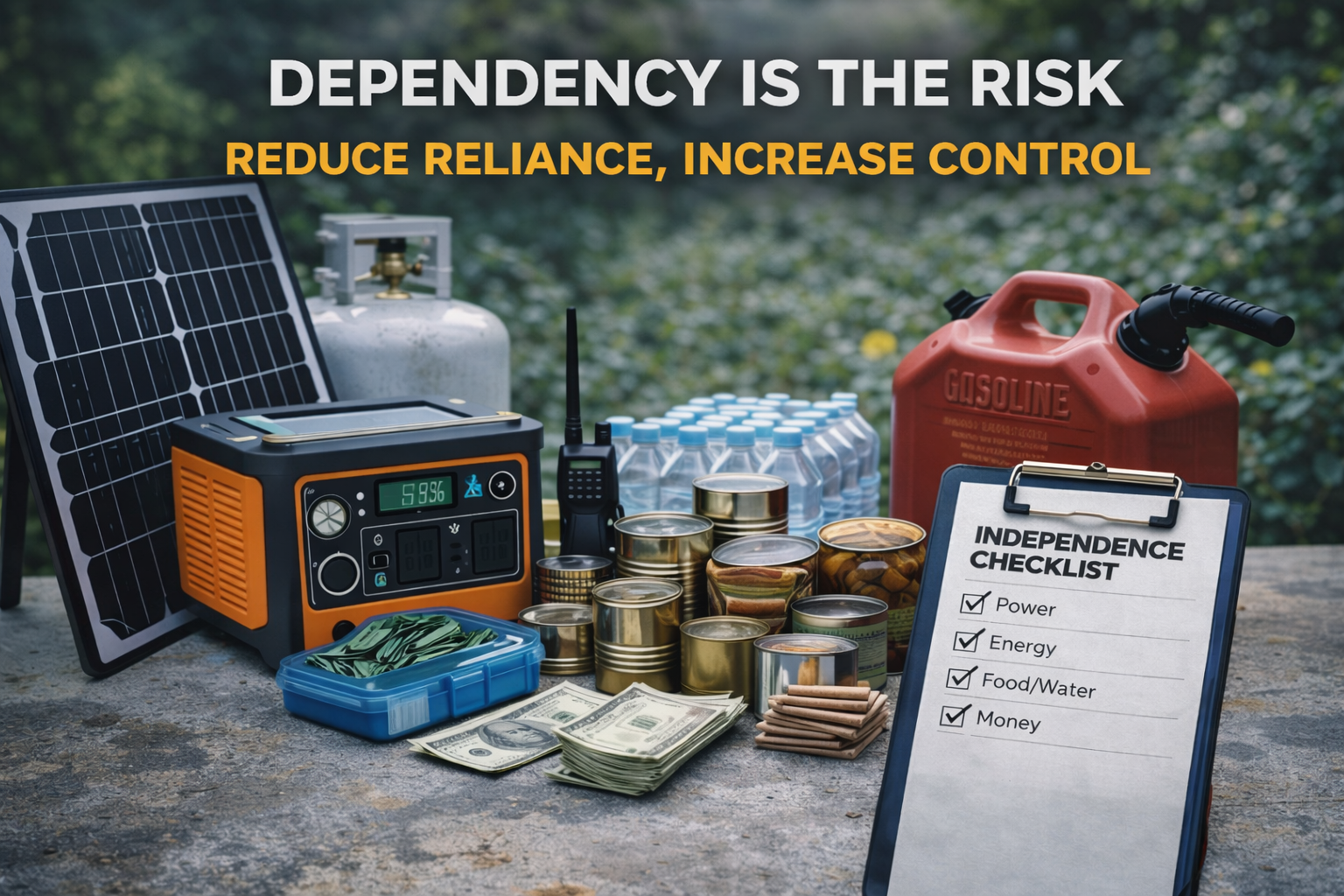
Preparedness Is No Longer Just About Stockpiling — It’s About Reducing Reliance
For a long time, prepping was built around one assumption:
If something goes wrong…
eventually things go back to normal.
So the focus was:
store supplies
ride it out
wait for recovery
But the reality many people are starting to recognize is different.
The more dependent you are on systems you don’t control…
the more exposed you are when those systems stop working.
The Shift Most People Haven’t Made Yet
Preparedness used to be about temporary disruption.
Storms
Power outages
Supply chain hiccups
Now the conversation is shifting toward something else:
longer disruptions
unstable infrastructure
reduced reliability
That doesn’t mean collapse tomorrow.
But it does mean:
relying 100% on centralized systems is a weak position
The Hidden Risk of Convenience
Modern life is built on convenience:
digital payments
just-in-time food delivery
centralized energy
connected devices
It works great…
until it doesn’t.
And when it stops, even briefly:
access becomes limited
options shrink
control shifts away from you
The Core Idea: Reduce Points of Failure
Preparedness isn’t about rejecting systems completely.
It’s about not being fully dependent on them.
That means asking:
What happens if this stops working?
Do I have a backup?
How long can I operate without it?
Because every dependency is a potential failure point.
The Three Areas That Matter Most
1. Energy Independence (Even Partial)
You don’t need to go fully off-grid.
But having some level of independent power:
reduces reliance on the grid
keeps essential tools running
gives you flexibility
Even small setups can make a big difference.
2. Financial Flexibility
If everything you rely on is digital:
you need systems to access it
you need permission to use it
Having alternatives:
cash
tangible goods
local trade
gives you options when systems are disrupted.
3. Life Support Basics
At the end of the day, survival comes down to:
food
water
basic health
The more of that you can manage yourself:
the less vulnerable you are
Why “All-In” Thinking Fails
Some people go all-in on one solution:
all digital
all solar
all fuel
all storage
But real-world situations aren’t that clean.
Every system has limits:
solar depends on conditions
fuel runs out
storage gets used up
The strongest setups are layered.
The Reality Check
You don’t need to disappear from society to be prepared.
But you do need to recognize:
Full dependence = reduced control
And reducing that dependence, even slightly, puts you ahead.
A Note on Extreme Claims
There are a lot of strong opinions out there about systems being intentionally designed to fail or control people.
Some of that discussion exists in preparedness circles and is reflected in materials like
But regardless of where you stand on those views…
You don’t need to agree with extreme conclusions to take practical steps.
Because the core idea still holds:
the less dependent you are, the more resilient you become
What This Looks Like in Practice
This doesn’t have to be extreme.
Start simple:
add backup power (even small)
keep extra water and food
have multiple ways to pay
build local connections
Each step reduces reliance.
Community Discussion
What’s one system you rely on daily that you could realistically reduce dependence on?
Final Thought
Preparedness isn’t about fear.
It’s about control.
Not controlling the world…
but controlling your ability to function when things change
Because when systems fail…
the people who adapt are the ones who planned ahead