
When people think about emergency preparedness, food is often the first thing that comes to mind. In reality, water is far more critical. The human body can survive weeks without food, but only a few days without water. That makes water security the foundation of any serious preparedness plan.
A strong water strategy does not rely on a single solution. Instead, it combines stored water, filtration, purification methods, and knowledge of where additional water can be found if normal systems fail. The goal is to ensure that no matter what happens—power outages, natural disasters, infrastructure failures, or supply disruptions—you always have safe drinking water available.
Minimum Water Storage: Start with the Basics
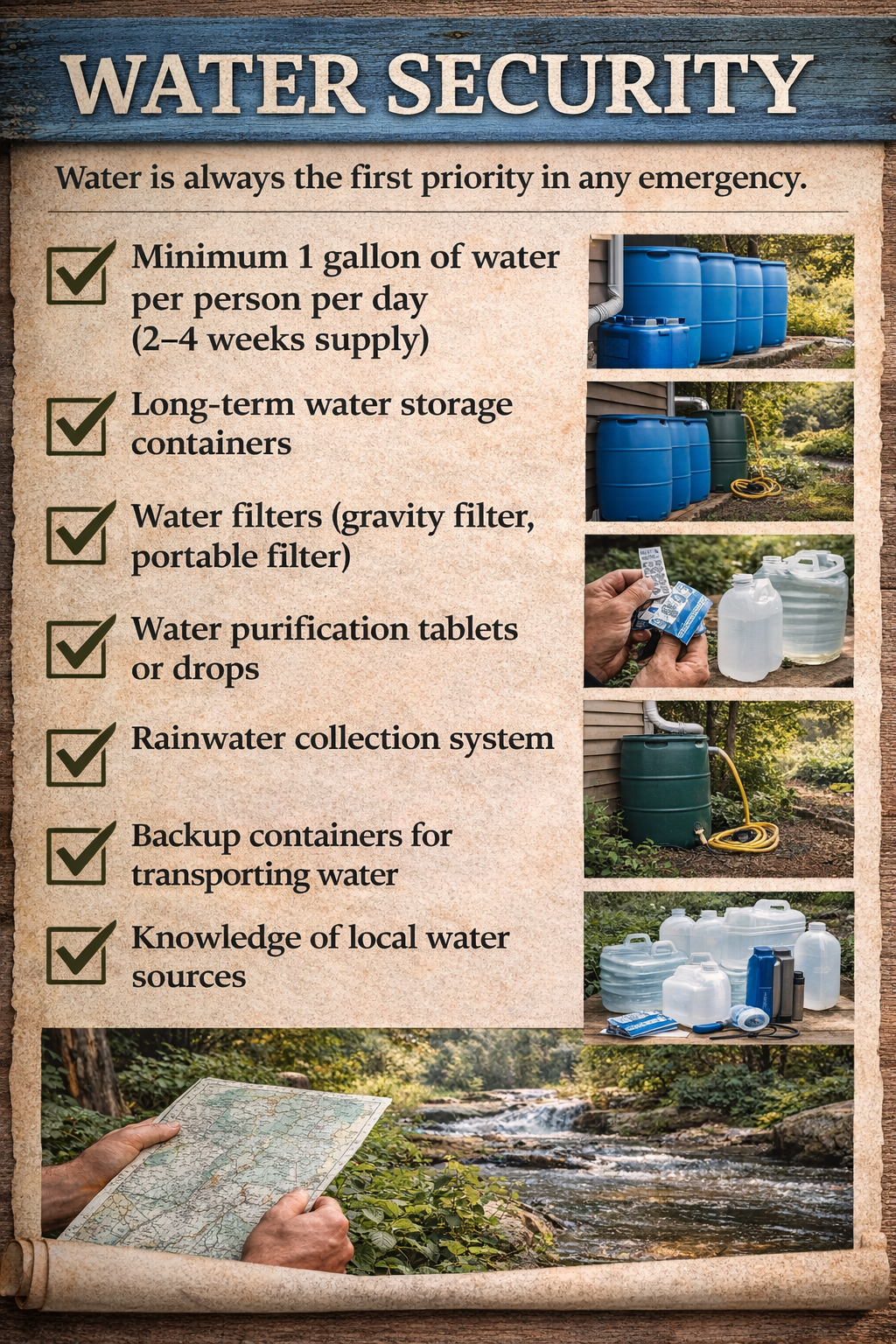
The most widely accepted guideline is to store at least one gallon of water per person per day. This amount covers basic drinking and minimal food preparation. In warmer climates or physically demanding situations, the need may increase.
For short emergencies, a three-day supply may be sufficient, but many preparedness experts recommend storing two to four weeks of water if possible.
For example:
A household of four would need at least 28 gallons for one week.
For a month, that same household would need around 120 gallons.
Stored water provides an immediate buffer during disruptions, giving families time to adapt and secure additional sources if necessary.
Long-Term Water Storage Containers
Choosing the right containers is important for maintaining water quality over time. Containers designed specifically for potable water storage help prevent contamination and make it easier to rotate supplies.
Common options include:
Food-grade water jugs that store several gallons each
Large water barrels that can hold 30 to 55 gallons
Stackable water bricks designed for efficient storage
Commercial emergency water containers designed for long shelf life
Stored water should be kept in a cool, dark location away from chemicals, sunlight, or extreme temperatures. Many households rotate stored water every six to twelve months to maintain freshness.
Water Filtration: Turning Unsafe Water into Drinkable Water
Even with stored supplies, it is wise to plan for situations where additional water must be gathered from outside sources. Water filters remove bacteria, sediment, and many contaminants from natural water sources such as lakes, rivers, or collected rainwater.
There are several types of filters commonly used in preparedness planning:
Gravity filters
These systems allow water to slowly pass through filtration elements using gravity. They are excellent for households because they can filter large amounts of water without electricity.
Portable filters
Small personal filters can be carried in emergency kits or backpacks. These are useful when traveling, evacuating, or gathering water from nearby streams.
Pump filters
Manual pump systems can quickly filter water from lakes or rivers and are often used for outdoor survival situations.
Having at least one reliable filtration system ensures that natural water sources can be safely used if stored supplies run low.
Water Purification Tablets and Chemical Treatment
Filtration removes many contaminants, but chemical purification provides an additional layer of protection. Tablets or liquid purification drops are lightweight and easy to store, making them a valuable backup method.
These treatments are commonly used in emergency situations where boiling water or filtration may not be possible. After adding the treatment solution, the water must sit for a specified period to allow the chemicals to neutralize bacteria and pathogens.
While chemical purification may slightly affect taste, it can make questionable water sources significantly safer during emergencies.
Rainwater Collection Systems
Rainwater harvesting is one of the most practical long-term water solutions. Even small collection systems can produce meaningful amounts of water during rainy seasons.
Basic rainwater collection systems typically include:
Roof gutters that channel rainwater
Downspouts directing water to containers
Storage barrels or tanks
Screens or filters to remove debris
Rainwater can be used for gardening, washing, or filtered and purified for drinking. For households focused on long-term resilience, rainwater systems provide an ongoing water supply independent of municipal infrastructure.
Backup Containers for Transporting Water
In many emergency scenarios, water may need to be collected from a nearby source and carried back home. Having containers specifically designed for transporting water makes this much easier.
Useful options include:
Collapsible water containers
Five-gallon water jugs
Portable water carriers designed for camping
Durable buckets with lids
These containers allow families to gather water from community distribution points, natural sources, or emergency aid stations.
Understanding Local Water Sources
Perhaps the most overlooked part of water preparedness is simply knowing where water exists nearby. Local knowledge can make the difference between struggling during a crisis and adapting quickly.
Important sources to identify include:
Rivers and streams
Lakes or ponds
Natural springs
Community wells
Public water distribution points
Rainwater opportunities
Maps, local knowledge, and simple exploration can reveal many potential sources of water in a given region. Even in urban environments, water can often be found in unexpected places.
Building a Complete Water Security Plan
True water preparedness comes from combining several strategies:
Store enough water to handle short disruptions.
Use reliable containers designed for long-term storage.
Maintain filtration systems that allow natural water sources to be used safely.
Keep purification tablets as a backup method.
Collect rainwater when possible.
Understand where water exists in the local area.
When these elements work together, households gain something incredibly valuable during uncertain times: confidence that one of life’s most essential resources will remain available no matter what challenges arise.